Key takeaways
- Dry hardwood ash contains 5-7% potassium (potash, K2O) and 25-35% calcium carbonate, giving a useful potash and liming effect
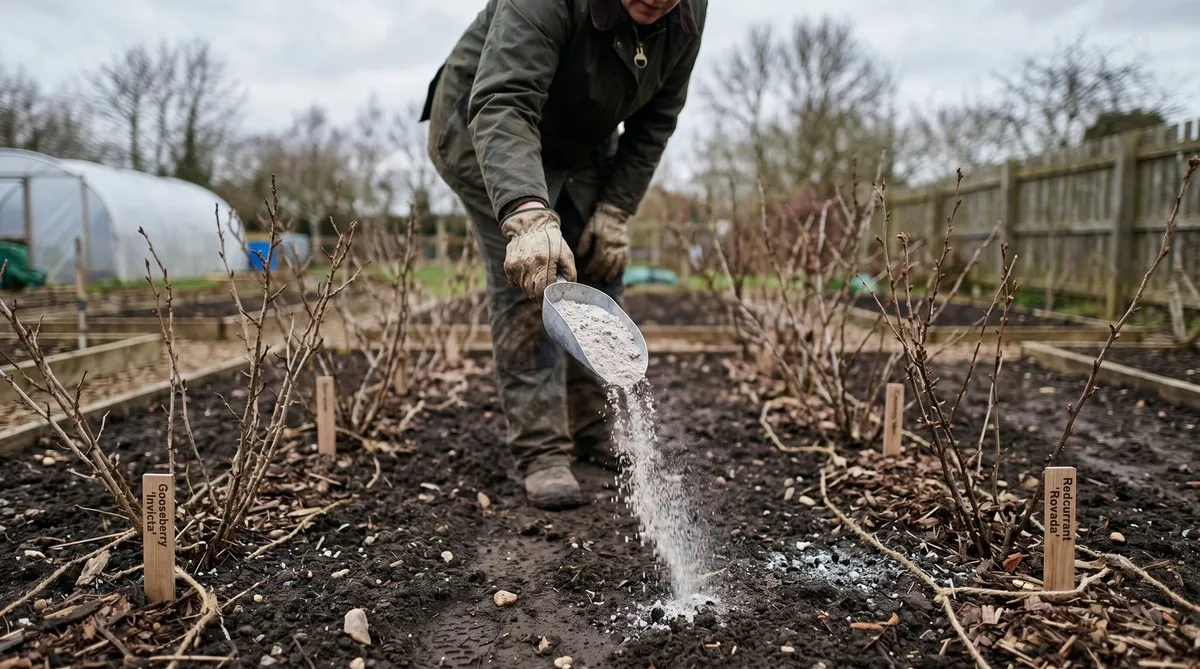
- Apply 50-100g per square metre once a year in late February, never on chalk soils or near acid-loving plants like blueberries and rhododendrons
- Never burn or use ash from treated wood, painted wood, MDF, manufactured boards, charcoal briquettes or coal (toxic residues)
- Best uses: gooseberries, currants, apple trees, brassica beds (clubroot suppression) and a thin sprinkle on the compost heap (5% by volume maximum)
- Store ash dry in a lidded plastic bin, never galvanised metal, because wet ash forms caustic lye that corrodes zinc and burns plant tissue
- Garden bonfires are legal in most of England but smoke control areas under the Clean Air Act 1993 restrict what fuel you can burn
Wood ash and soot were the Victorian gardener’s free fertiliser. Every household had a coal fire and a woodburner, and the bucket of cool ash went straight onto the kitchen garden or the rhubarb patch. Modern UK gardens still produce wood ash from woodburners and allotment bonfires, but the rules have moved on. The Clean Air Act 1993 controls what we can burn. The science of soil chemistry tells us where ash helps and where it ruins a bed. And the once-praised coal soot is now firmly off the list.
What is wood ash and what does it contain
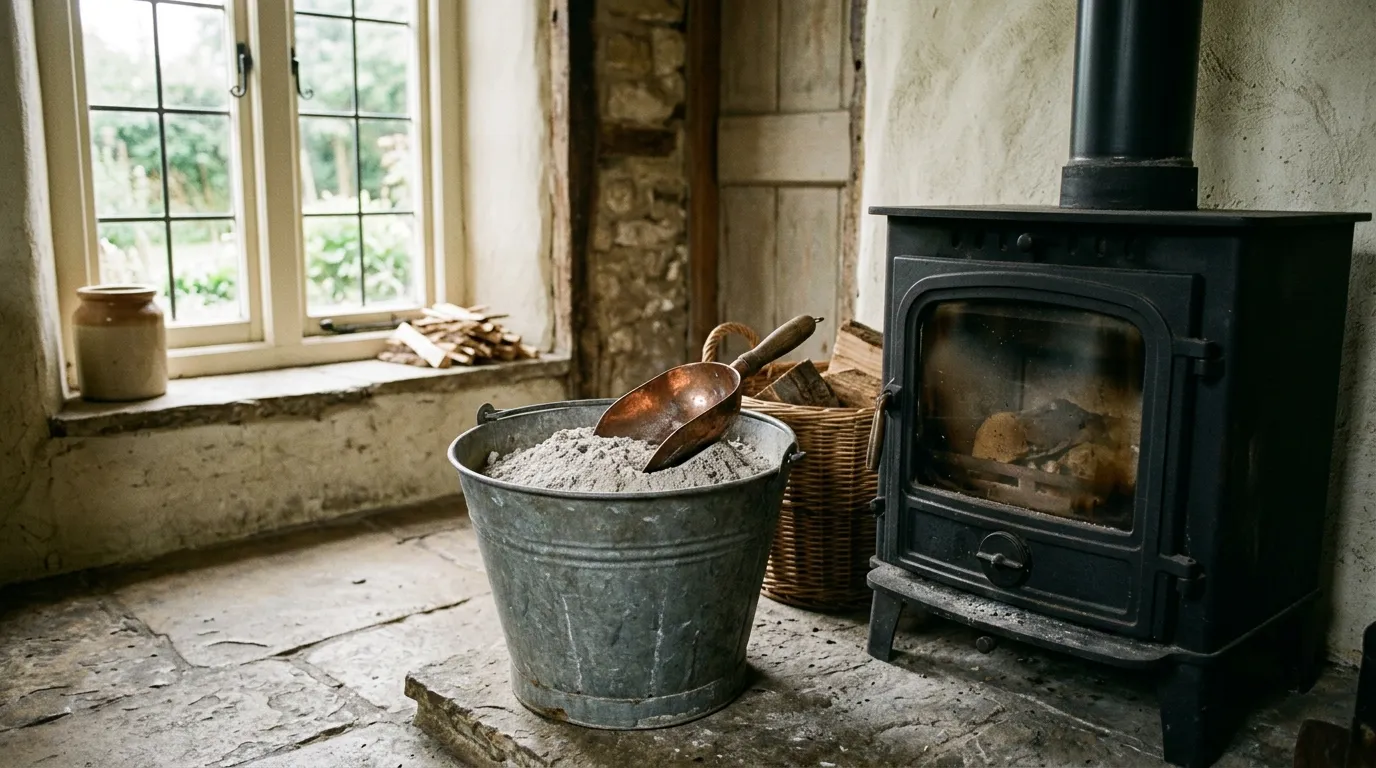
Wood ash is the pale-grey to white powder left after wood burns to completion. The composition varies by species, age and burn temperature, but a typical UK hardwood ash from a domestic woodburner contains:
- 5-7% potassium (K, expressed as K2O or potash), the primary fertiliser value
- 25-35% calcium carbonate (CaCO3), the source of the liming effect
- 1-2% phosphorus (P, expressed as P2O5), useful but minor
- 0.5-1% magnesium (Mg), trace plant food
- Trace iron, manganese, boron, copper, zinc, useful micronutrients
- No nitrogen (all volatilised in the fire as ammonia and oxides)
Softwood ash (pine, spruce, larch) sits at the lower end of those numbers. Hardwood ash (oak, ash, beech, hornbeam, sycamore, fruit wood) sits at the upper end. The denser the wood, the richer the ash.
Potassium is the third macronutrient on a UK fertiliser bag, the K in NPK. Potash boosts fruit and flower formation, drought tolerance and frost hardiness. It is what tomato feed is mostly made of, and the reason a thin dressing of wood ash on gooseberries and currants in late February pays back in summer. For the wider feeding picture see best fertilisers for UK gardens.
Which wood is safe to burn for ash
This is the most important rule in the whole guide. The wrong fuel produces ash that should never go near food crops or worms.
Safe:
- Dry untreated hardwood logs (oak, ash, beech, sycamore, hornbeam, fruit wood)
- Dry untreated softwood logs (pine, spruce, larch)
- Untreated branches, twigs and prunings from the garden
- Clean pine cones, nut shells, untreated paper kindling
Never burn or use the ash from:
- Pressure-treated timber (green or brown tanalised wood, fence posts, decking offcuts), which contains copper, chromium and sometimes arsenic
- Painted, varnished or stained wood, which contains lead, cadmium and solvents
- MDF, plywood, chipboard, OSB, which contain formaldehyde resins
- Old furniture, doors, skirting, usually painted or treated
- Charcoal briquettes, which contain binders, accelerants and sometimes coal dust
- Anthracite, smokeless coal, house coal, which contain sulphur and heavy metals
- Wood pellets containing recycled material (check the bag for “100% virgin wood”)
- Driftwood, usually salt-loaded and sometimes oil-contaminated
If you burn the wrong fuel by mistake, bag the ash and dispose of it through household waste, not the garden. There is no rescue route for contaminated ash.
How to store ash safely between burns
Ash arrives hot, cools over 12-48 hours, and then needs storing dry until you spread it. Wet ash is a different and dangerous substance.
Water plus wood ash equals potassium hydroxide and calcium hydroxide, the chemistry that Victorian housewives used to make soap. The same lye that saponifies fat burns plant tissue, kills earthworms and corrodes galvanised steel. A bin of wet ash will rust through the bottom of a galvanised tub in one winter, and any plant on the receiving end of a wet-ash dressing yellows within days.
The storage rules:
- Wait 24-48 hours after the fire is out before scooping ash (test the bottom of the bucket for warmth)
- Store in a lidded plastic dustbin or heavy-duty plastic feed sack
- Never store in galvanised metal, copper or zinc-coated containers
- Keep the bin under cover (shed, garage, lean-to), never outside under rain
- Label the bin clearly and keep it away from children and pets
- Use within 18 months because leaching of potassium starts as moisture sneaks in
Our practice is one bin per winter season. The bin fills from November to March, sits closed in the shed, and empties in late February into measured applications around the garden.
How much to apply: the 50-100g rule
This is the single most-broken rule on UK allotments. Gardeners scoop generous shovelfuls onto beds without weighing, see the white dressing and assume more is better. Wood ash is alkaline and concentrated. Over-application pushes pH past 8, locks up phosphorus and iron, and burns root tips.
The safe annual dose for UK soils sits between 50g and 100g per square metre. Convert that to common kitchen measures:
| Dose | Per square metre | Coverage from a 5kg bag |
|---|---|---|
| Light dressing (acid lawn, compost heap, near plants) | 25-50g | 100-200 square metres |
| Standard dressing (vegetable bed, soft fruit) | 50-100g | 50-100 square metres |
| Heavier dressing (brassica bed only, every 3 years) | 100-150g | 33-50 square metres |
| Never exceed | 200g per square metre per year | n/a |
50g is roughly two heaped tablespoons or one small handful. 100g is roughly half a 250ml mug. Weigh the first application on a kitchen scale until you have the feel.
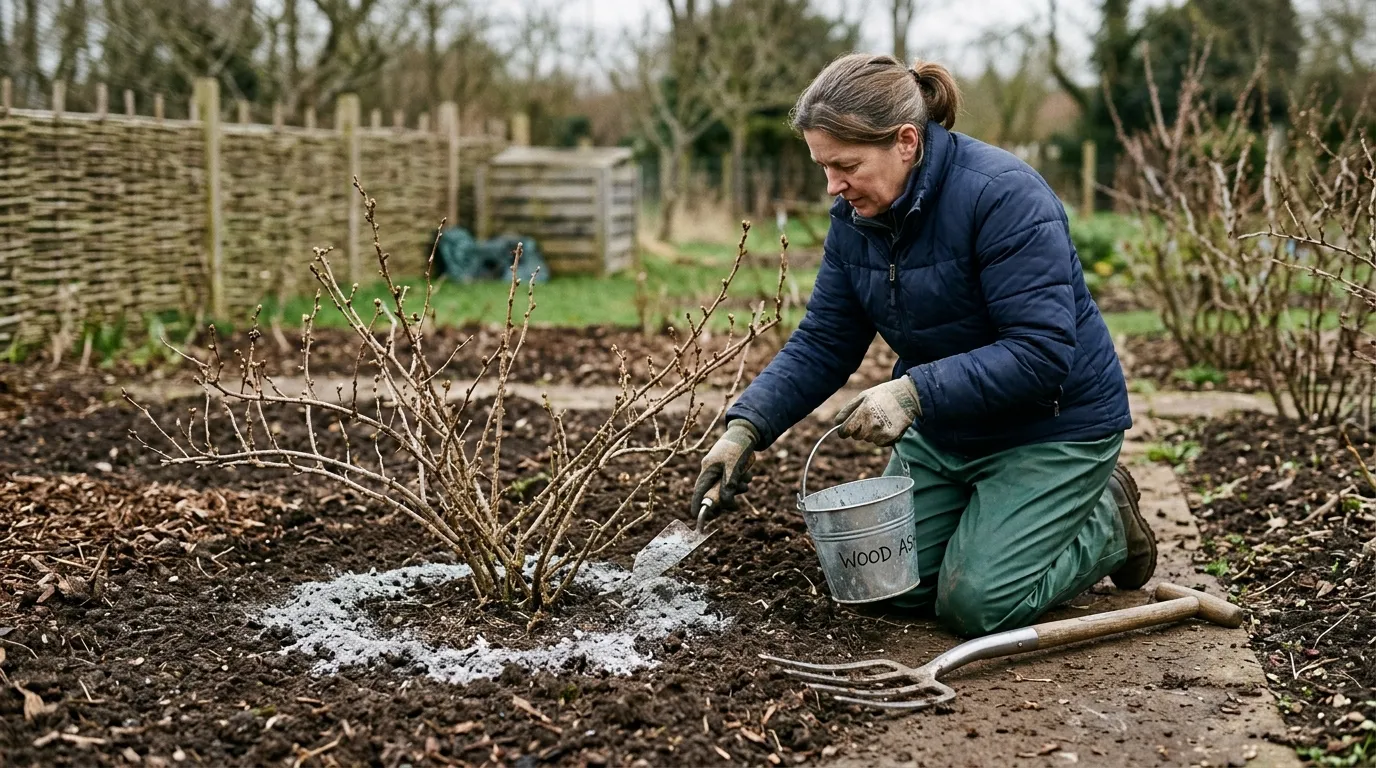
Spread ash thinly on bare soil with a gloved hand or a metal scoop, then lightly rake it into the top 25mm. Do not heap it. Do not water it in (rain will do the job in days). Wear gloves and a dust mask if there is any breeze because fine ash is alkaline on skin and abrasive in lungs.
Where to use wood ash in the garden
The right targets are plants that want potassium, will tolerate or actively benefit from a small pH bump, and produce fruit or flowers worth the effort.
Currants, gooseberries and rhubarb. A 60-80g per square metre dressing in late February around blackcurrants, redcurrants, whitecurrants, gooseberries and rhubarb crowns sets the potash level for flower and fruit formation. Spread to the drip line of the bush, not just at the stem.
Apple, pear and plum trees. A 75-100g per square metre dressing over the root zone of fruit trees in late winter. For a mature dwarf bush apple on M9 rootstock with a 2m spread, that is roughly 300-400g around the tree. Avoid the trunk itself.
Brassica bed. Cabbages, sprouts, kale, broccoli, cauliflower and swedes all benefit from raised pH because clubroot fungus dislikes alkaline conditions. A 100g per square metre dressing in late February, raked in before transplanting in April, drops clubroot incidence on previously affected ground. Test pH first if you have not had this bed limed before.
Tomato, courgette, squash and bean beds. A 50-75g per square metre dressing in late winter feeds the potash hunger of fruiting vegetables. Tomatoes especially appreciate the boost because flower and fruit formation depend on K.
Acid lawns showing moss. A 50g per square metre dressing on moss-prone lawns over winter raises pH and gently disadvantages the moss. Combine with proper aeration and shade reduction for the real fix.
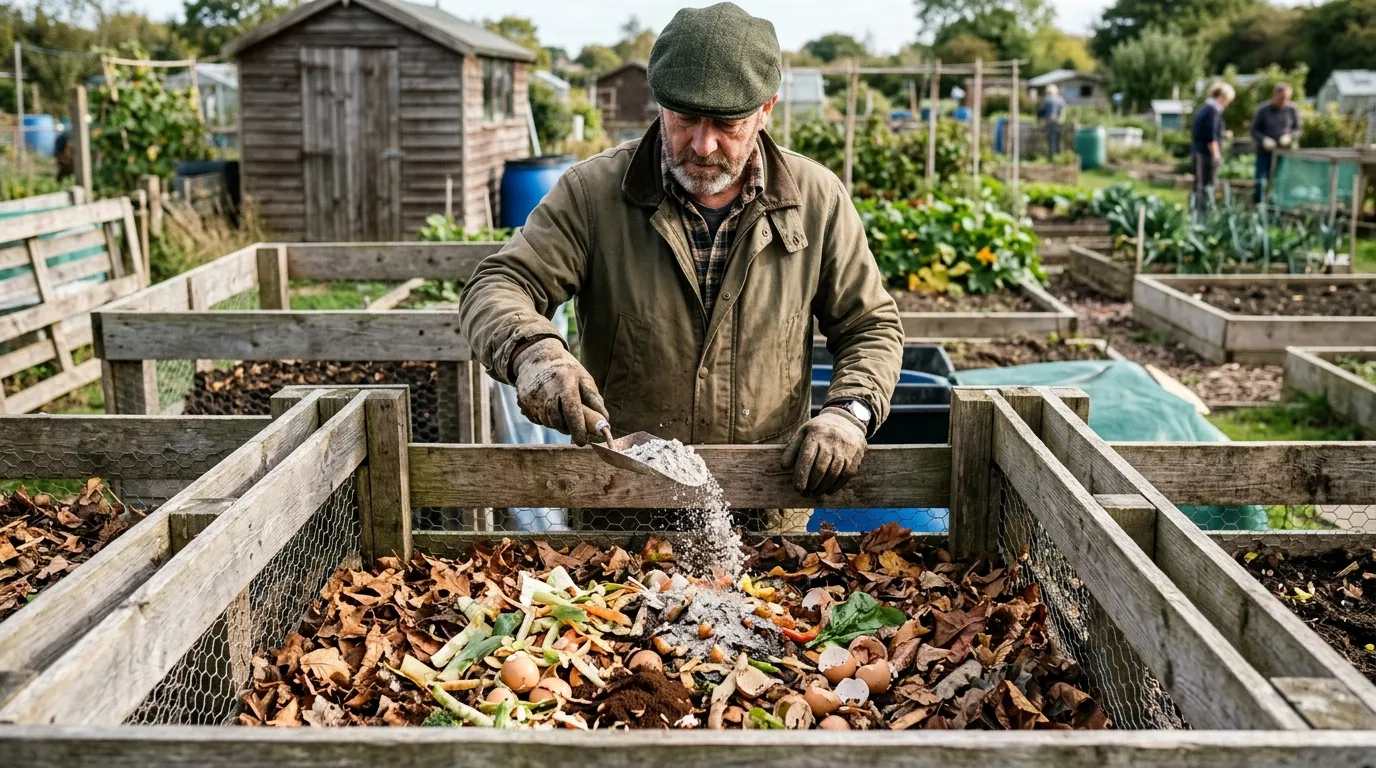
Compost heap. A thin sprinkle of ash across each compostable layer, never more than 5% of the heap volume overall, raises pH and adds potash. Heavier than 5% slows decomposition and produces an alkaline finished compost that is hard to place. For the full method see the how to make compost UK guide and the related compost tea method.
Where to never use wood ash
The bans are absolute. Even one dressing in the wrong place produces problems that take years to fix.
Acid-loving plants. Blueberries, lingonberries, cranberries, rhododendrons, azaleas, camellias, pieris, gaultheria, heathers, skimmia. These plants depend on a pH below 5.5 and lock up nutrients above pH 6. Ash near their roots yellows the leaves within weeks. The fix is a full bed swap to ericaceous compost.
Alkaline chalk soils. Most of the South Downs, the Chilterns, the Yorkshire Wolds and the North Downs sit on chalk with native pH above 7.5. Adding ash pushes pH to 8 and beyond, where iron, manganese and phosphorus all lock up. Test your soil with a pH meter before any application. For the full method see soil testing and pH adjustment UK.
Potato ground. Potato scab is a fungal disease that loves alkaline soil. Wood ash on potato beds dramatically increases scab incidence. Skip the ash entirely on rotation slots earmarked for potatoes.
Seedlings and young transplants. Direct contact between fresh ash and soft plant tissue burns. Keep ash 50mm clear of stems and 100mm clear of fresh seedlings.
Ericaceous mulches and pots. Anything potted in ericaceous compost (peat-free or peat-based) sits at pH 4.5-5.5 deliberately. Even a thin dusting of ash neutralises that pH within weeks. For a peat-free guide see the UK peat-free compost guide.
Best timing for UK gardens
Late winter is the right window for most applications. Aim for the last week of February through the second week of March, depending on regional weather.
Three reasons:
- Spring rains carry the potash into the root zone. February and March in the UK average 70-90mm of rainfall, the right wash-in volume.
- Plants are about to wake up. Roots start drawing nutrients from late March, so the ash arrives just before demand peaks.
- The soil is bare enough to spread on. Most beds are between crops or holding dormant fruit canes, so the ash hits soil not foliage.
Avoid spreading on frozen ground (the ash sits on the surface and blows away) or on wet sticky ground (compaction risk and runoff). A dry overcast day with no rain forecast for 24 hours is ideal.
Wood ash vs garden lime vs sulphate of potash vs comfrey
Four common potash and pH inputs compared by cost, speed, precision and risk:
| Input | Potash content | pH effect | Cost (2026 UK) | Speed | Best for |
|---|---|---|---|---|---|
| Wood ash (hardwood, dry) | 5-7% K2O | Raises pH 0.1-0.3 per kg/m2 | Free if you have a woodburner | Slow release over 6-12 months | Fruit, brassicas, mixed-use beds |
| Garden lime (calcium carbonate) | 0% | Raises pH 0.5-1.0 per kg/m2 | 4-7 pounds per 25kg | Slow release over 6-9 months | Pure pH correction, no nutrient need |
| Sulphate of potash | 50% K2O | Neutral, very slight lowering | 14-22 pounds per 5kg | Fast release in 4-8 weeks | Precision potash on established crops |
| Comfrey liquid (5-6 weeks brewed) | 0.5-0.8% K2O (dilute) | Neutral to slightly acidic | Free if you grow comfrey | Fast in 1-2 weeks | Tomatoes, runner beans, courgettes mid-season |
The choice depends on what the bed needs. If pH and potash are both low, wood ash does both jobs at once. If only pH needs adjusting, garden lime is more controllable. If only potash is needed on a precise crop schedule, sulphate of potash from a fertiliser supplier is the predictable option. Comfrey liquid is a top-up feed in the growing season, not a base dressing.
For improving the soil structure that holds these nutrients in place see how to improve sandy soil UK.
Soot: a separate substance with separate rules
Soot is not the same as ash. Ash is the pale residue from complete combustion. Soot is the black, oily, carbon-rich deposit left in the flue or chimney from incomplete combustion. The two have very different chemistry, very different garden uses, and very different legal status today.
Wood soot from a domestic woodburner flue:
- Mostly carbon, with trace tar, creosote and unburned wood particles
- Acidic when fresh (pH 4.5-5.5)
- Becomes inert after six months of dry storage as volatiles evaporate
- Historic use as a nitrogen mulch is largely obsolete now
- Modern advice: small amounts (under 5% by volume) on the compost heap after dry storage are acceptable
- Larger quantities should go to household waste
Coal soot from open fires and coal-fired stoves:
- Contains polycyclic aromatic hydrocarbons (PAHs), heavy metals (lead, cadmium, mercury) and sulphur compounds
- The Victorian gardener’s nitrogen mulch is a banned substance for modern food gardens
- Build-up of heavy metals in soil over years contaminates worm casts, root crops and groundwater
- Dispose of through household waste, never the garden or the compost heap
The Clean Air Act 1993 made house coal effectively obsolete in UK smoke control areas, and the 2021 ban on bituminous house coal sales completed the transition. If you have legacy coal soot in a chimney being swept today, treat it as hazardous waste and bag it for disposal.
UK legal context: Clean Air Act, smoke control and bonfires
You can produce wood ash legally in three ways: from a domestic woodburner, from an allotment bonfire, or from a controlled garden burn. Each has its own rules.
Domestic woodburners. Since 2022, all new stoves sold in the UK must meet Ecodesign 2022 standards. Older non-compliant stoves can still be used but produce more soot and less ash. Burning only Ready to Burn certified wood (under 20% moisture) is required in smoke control areas under the Air Quality (Domestic Solid Fuels Standards) (England) Regulations 2020. Smoke control areas cover most English cities and large parts of urban Scotland and Wales. The DEFRA smoke control area finder shows which postcodes are affected.
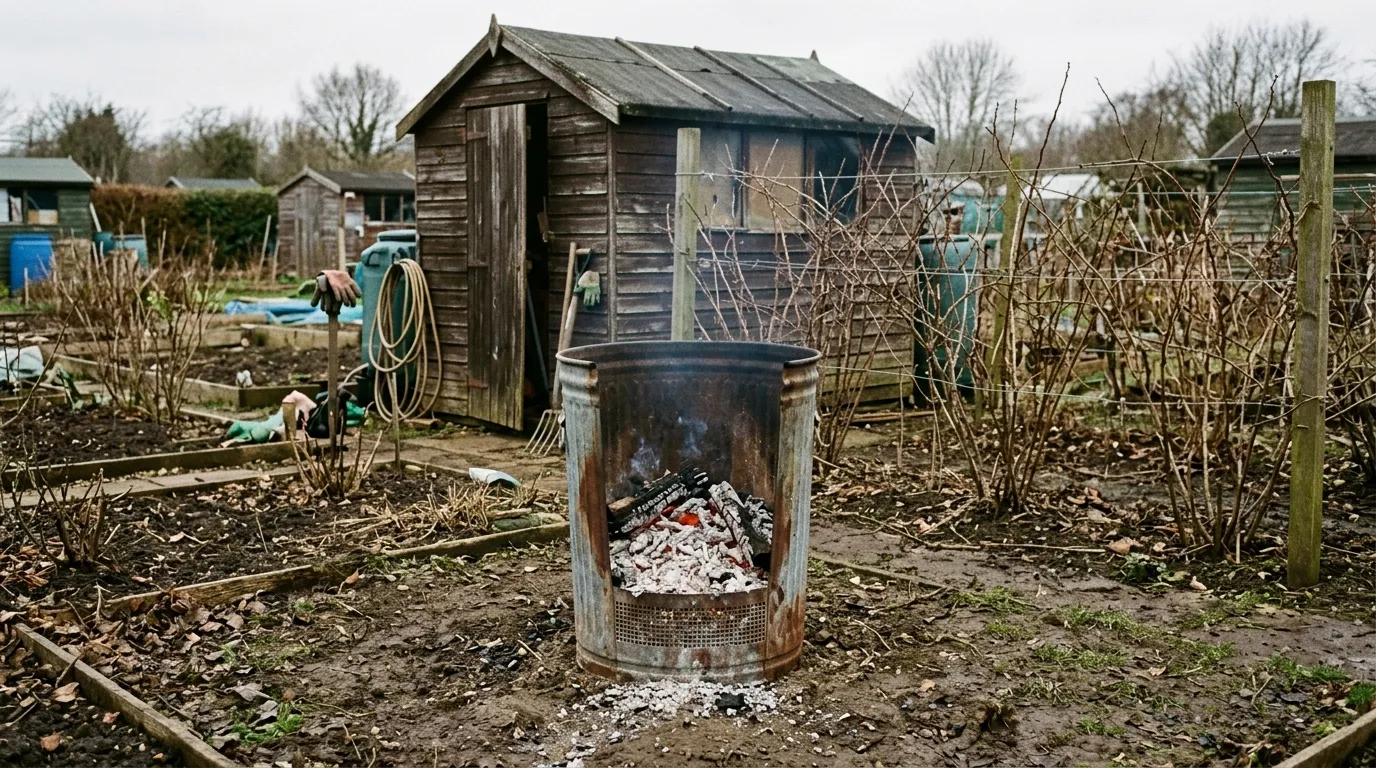
Allotment bonfires. Most UK allotments allow bonfires with site-specific restrictions: typically weekday daylight hours, no smouldering rubbish piles, only diseased plant material and woody prunings, and a fire extinguisher to hand. Some councils prohibit allotment bonfires entirely in summer. For the full rules see bonfires on UK allotments.
Garden bonfires. Legal in most of England, Scotland, Wales and Northern Ireland but subject to the Environmental Protection Act 1990 nuisance provisions. A neighbour can report you to the local council if smoke drifts across boundaries, blocks light or causes annoyance, and the council can issue an abatement notice. Best practice: burn only dry untreated wood, choose a still day with light wind blowing away from neighbours, and avoid evenings and weekends when washing is out.
The Garden Organic charity’s guidance on home composting and waste consistently recommends composting and shredding over burning for most garden waste, with bonfires reserved for diseased material that cannot safely compost.
- Unweighed dressings. A gardener tips a full builder’s bucket of ash onto a 3 square metre bed (around 600g per square metre). pH jumps from 6.8 to 8.2, brassicas yellow, no fix until the next year of acidifying mulches.
- Wet ash from an outdoor bin. Rain gets in, the ash leaches potash into the surrounding ground (kills the lawn underneath), the remaining lye burns the next bed it lands on.
- Coal ash from a multifuel stove. Looks similar to wood ash, contains sulphur and heavy metals, ends up on the veg patch. Worms vanish from that bed within a year.
- Ash on blueberries. A well-meaning dressing on pot-grown blueberries pushes pH from 5.0 to 6.5. Leaves yellow, fruit drops, plant takes 18 months to recover after a full repot.
- Storage in a galvanised dustbin. The bin lasts one winter. The ash leaches through the rusted base into the shed floor, the shed timber rots, and the residual lye burns fingers on next use.
The fix on all five is the same: weigh the dose, keep the storage dry and plastic, identify the fuel source before using the ash, and never assume ash is universal.
How to test if your soil needs wood ash
Before applying any ash, test your soil pH. A basic pH meter or test kit costs 8-25 pounds and reads in 30 seconds.
- pH below 6.0, soil is acidic, ash will help most plants except those listed as acid-lovers
- pH 6.0-6.8, soil is mildly acidic, ash is fine on fruit and brassicas, skip elsewhere
- pH 6.8-7.5, soil is near neutral, use ash sparingly only where potash is needed (gooseberries, tomatoes), not for pH
- pH above 7.5, soil is alkaline, never apply ash, focus on sulphur or ericaceous additives instead
Test in three or four spots across the bed and take the average. UK soils vary by metre, especially on imported topsoil or near old buildings.
A useful field test: where do nettles, dock and clover grow well on your plot? Those species like pH 6.0-7.0. Where do bracken, sorrel and rhododendron thrive? That ground is below pH 5.5 and well-suited to ash. Where does charlock, scarlet pimpernel and field pansy dominate? That is alkaline ground over 7.5 where ash will only make things worse.
Soft fruit zone (12 square metres of gooseberries and currants):
- Dose: 60g per square metre annually, last week of February
- pH change: 6.4 to 6.7 over four years
- Yield change on gooseberries: from 1.8kg per bush to 2.6kg per bush (+44%)
- Yield change on Ben Lomond blackcurrant: from 2.2kg per bush to 3.1kg per bush (+41%)
Brassica bed (8 square metres of cabbages, sprouts and kale on a 3-year rotation):
- Dose: 100g per square metre annually, raked in before April transplanting
- pH change: 6.4 to 7.0 over four years
- Clubroot incidence: 30% of plants affected in 2020, 14% in 2021, 8% in 2022, under 5% in 2023
- Calabrese head size at harvest: 380g average to 520g average (+37%)
Lawn zone (40 square metres of acid lawn under birch):
- Dose: 50g per square metre every other year, spread in March
- pH change: 5.8 to 6.2 over four years
- Moss coverage: from roughly 35% to roughly 15% by year four
- Grass density: visibly thicker after year two
Related guides
For composting the rest of your garden waste safely see how to make compost UK. For testing and adjusting soil pH the proper way see soil testing and pH adjustment UK. For peat-free growing media on acid-loving plants see the UK peat-free compost guide. For the wider fertiliser picture see best fertilisers for UK gardens. For allotment bonfire rules see bonfires on UK allotments. For a different home-brewed feed see how to make compost tea UK. And if your starting soil is sandy and drains too fast for ash to do much, see how to improve sandy soil UK.
Our team produces practical UK gardening guidance from source research, contributor records and established horticultural practice. Editorial standards are overseen by Matt W.