Key takeaways
- Crocosmia, helenium and dahlias carry orange through summer into autumn
- Calendula and nasturtium give fast, cheap orange from a packet of seed
- Most orange flowers want full sun and free-draining soil
- Orange with blue or purple gives the strongest border contrast
- Single open flowers feed bees, double blooms feed almost nothing
Orange reads as energy in a planting. Use it where you want the eye to land, and balance its heat with cool blue or purple nearby.
Every plant here earned its place on three measures. Flowering length came first, scored in days from the first open bloom to the last. Pollinator value came second, counted as insect visits on a warm day. Hardiness and ease came third, since a plant that needs constant fuss is no use in most gardens.
The list below is ordered by usefulness in a real border, balancing flowering length, pollinator value and ease of growing. For wider seasonal context, see our guide to the best summer flowers for UK gardens.
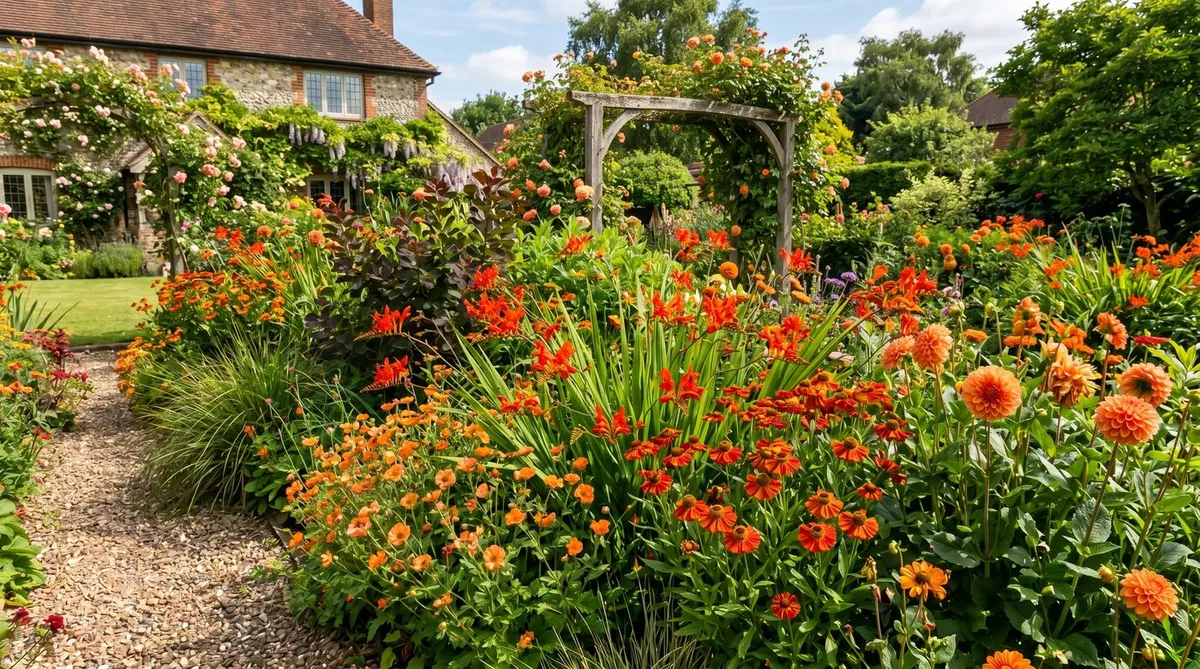
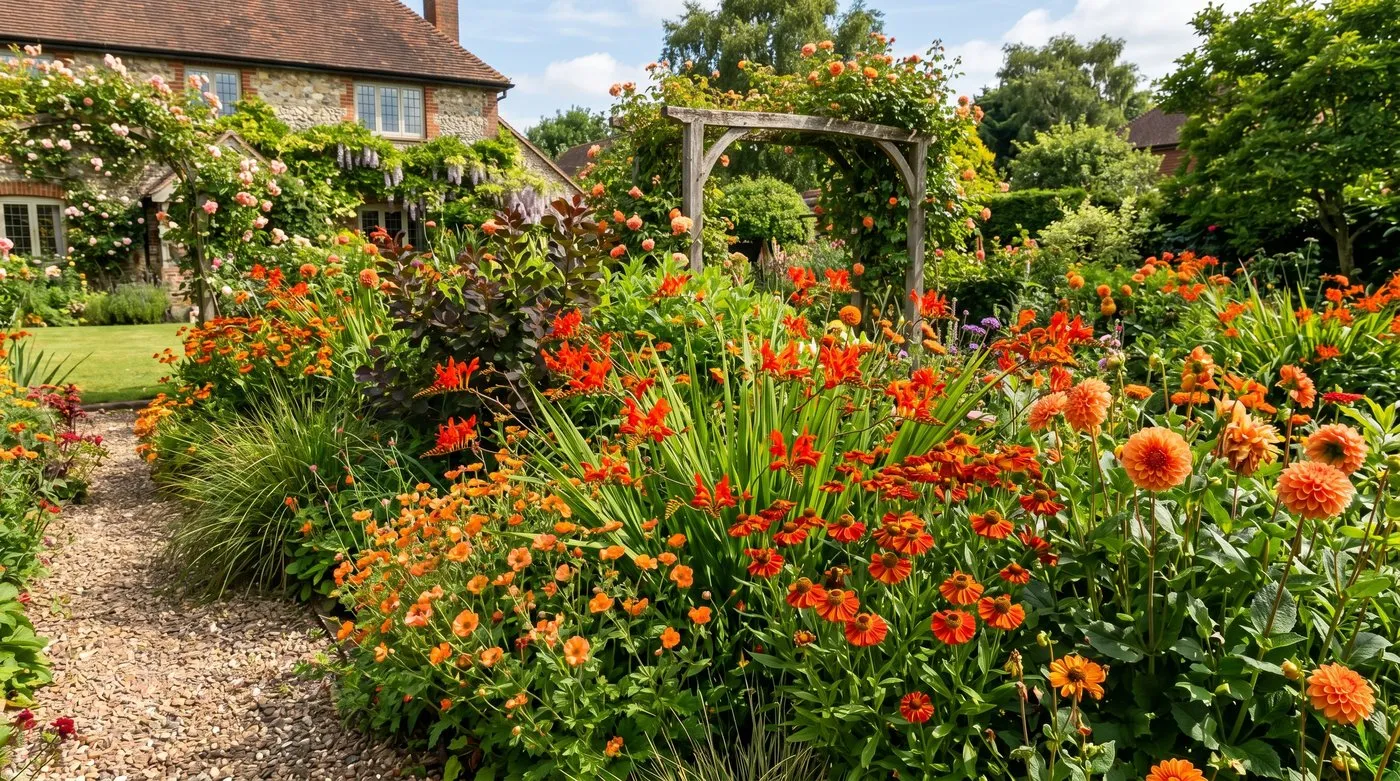 A worked orange border in August. Geum, helenium, crocosmia and dahlias give months of overlapping warmth.
Long-flowering orange perennials that return each year
Orange perennials are the backbone of a warm scheme. They come back each spring, bulk up over a few years, and many flower for months with a little deadheading. These earned their keep across five seasons.
Geum Totally Tangerine tops the list. It reaches 75cm, flowers May to September, and is fully hardy. The airy apricot-orange flowers wave above the foliage and suit the front of a border. Crocosmia Emily McKenzie opens bright orange flowers with a red throat in August and September, later than the scarlet Lucifer. Our guide to growing crocosmia covers dividing the corms.
Helenium Sahin’s Early Flowerer carries orange-and-red daisies from June to October and is the best of the group for bees. Kniphofia red hot pokers send up orange torches on dry, poor soil. Euphorbia griffithii Fireglow glows orange-red in May and June with good autumn leaf colour. For the design thinking behind mixing these, read our notes on the best perennial plants for UK gardens.
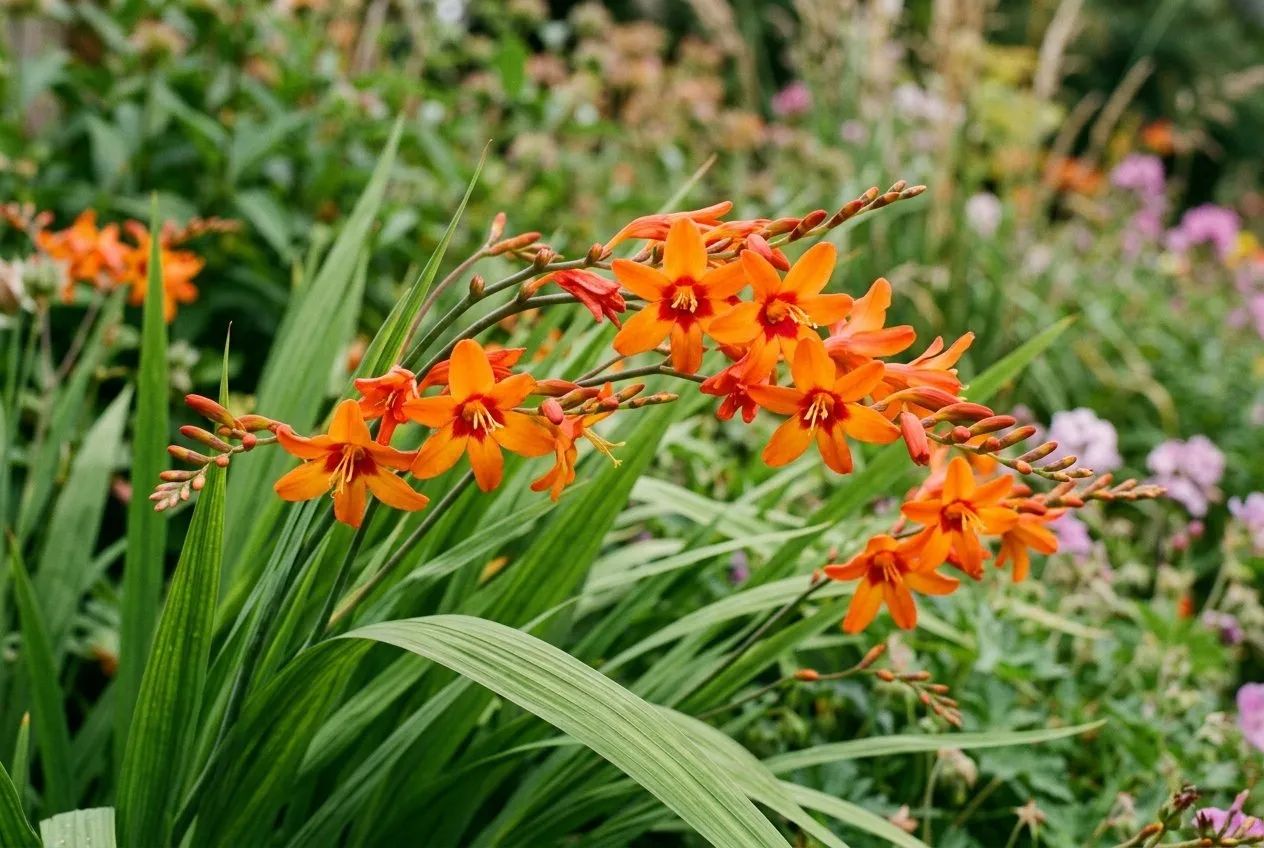 Crocosmia Emily McKenzie opens in August, weeks after the scarlet forms, extending orange into early autumn.
Gardener’s tip: Deadhead geum every week and it flowers five months instead of three. Left to set seed, the plant slows by July. A quick once-over with snips keeps the apricot flowers coming until September.
Orange dahlias for high-summer impact
Dahlias give some of the boldest orange in the garden and flower from late June to the first frost. They are not fully hardy, so lift the tubers in cold areas or mulch deeply on free-draining soil.
Dahlia David Howard is the standout, with warm orange double flowers above dark bronze foliage at 1.1m. The dark leaves set off the orange and earn the plant its space all season. Dahlia Bishop of Oxford pairs single orange flowers with bronze foliage, and the open form feeds bees well.
For pots and the front of a border, shorter orange bedding dahlias flower non-stop from a single planting. Deadhead all dahlias every two to three days to keep them running. A faded flower tells the plant to set seed and stop. Our full guide to growing dahlias in the UK covers lifting, storing and dividing tubers.
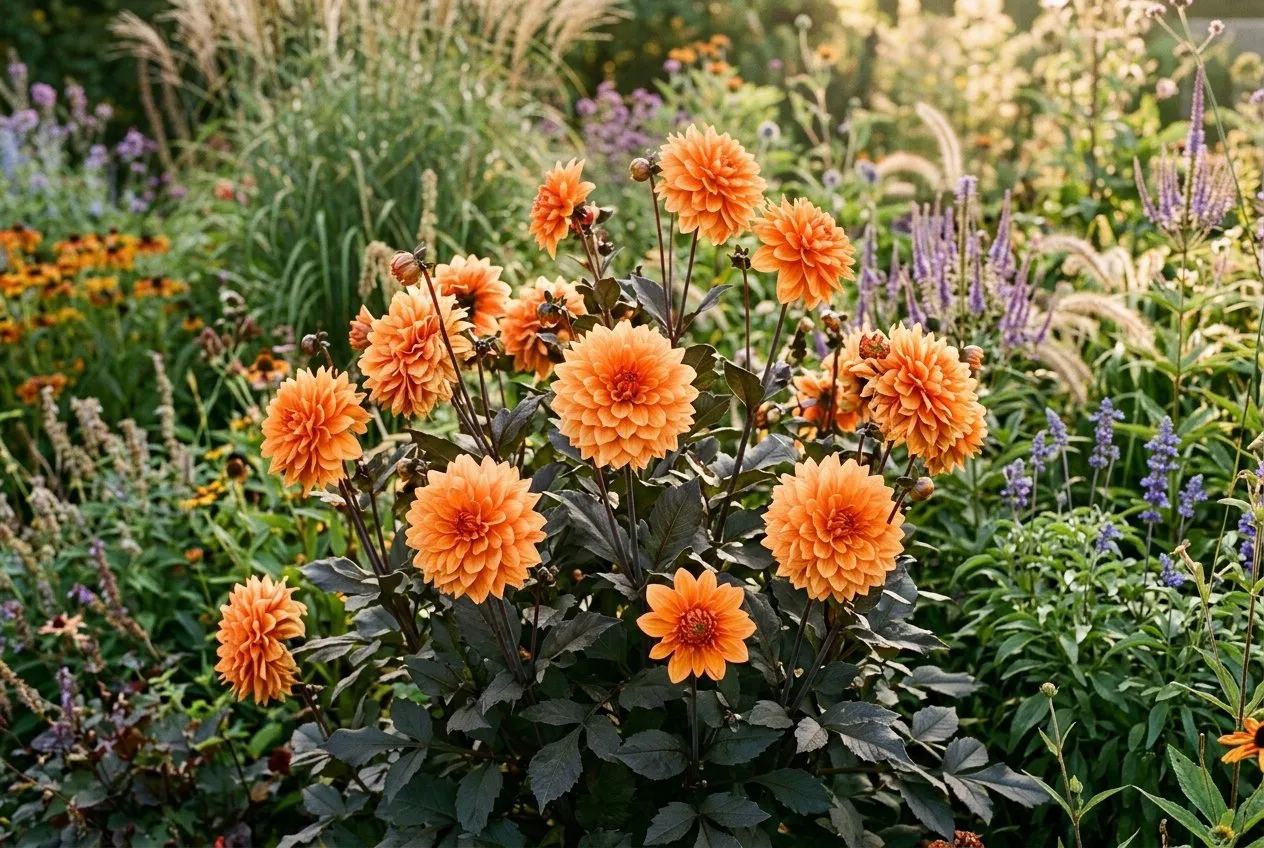 Dahlia David Howard. Warm orange doubles against bronze leaves, flowering from late June to the first frost.
Helenium and daisies for pollinators and autumn warmth
Daisy-shaped flowers give the easiest nectar for insects, and several of the best are orange. They flower late, when bees and hoverflies most need feeding, and carry a border into autumn.
These daisies want full sun and free-draining soil and resent winter wet, which rots the crowns. Cut them back in spring rather than autumn, leaving the seed heads for finches and winter structure. Their open shape makes them a magnet for the insects covered in pairing schemes throughout this site.
Orange flowers compared by height, season and role
This table ranks the most useful oranges by flowering length, the measure that earns a plant its space. Find the height and season you need, then check the role each plays in the border.
| Plant | Type | Height | Flowering months | Effectiveness (days in flower) | Role |
|---|---|---|---|---|---|
| Geum Totally Tangerine | Perennial | 75cm | May to September | Around 134 | Long-season front filler |
| Helenium Sahin’s Early Flowerer | Perennial | 90cm | June to October | Around 110 | Pollinator magnet |
| Dahlia David Howard | Tuber | 1.1m | Late June to frost | Up to 140 | High-summer centrepiece |
| Crocosmia Emily McKenzie | Corm | 60cm | August to September | Around 45 | Late structure |
| Calendula | Annual | 50cm | June to October | Around 120 | Cheap fast colour |
| Euphorbia griffithii Fireglow | Perennial | 90cm | May to June | Around 35 | Early glow plus autumn leaf |
| Nasturtium | Annual | Trailing | June to October | Around 120 | Edible groundcover |
The gold standard for a long orange display is layering season. No single plant flowers all year, so lead with geum from May, let helenium and dahlias take over high summer, and finish with late crocosmia. Sow calendula and nasturtium for cheap orange to fill gaps in the first year while perennials establish.
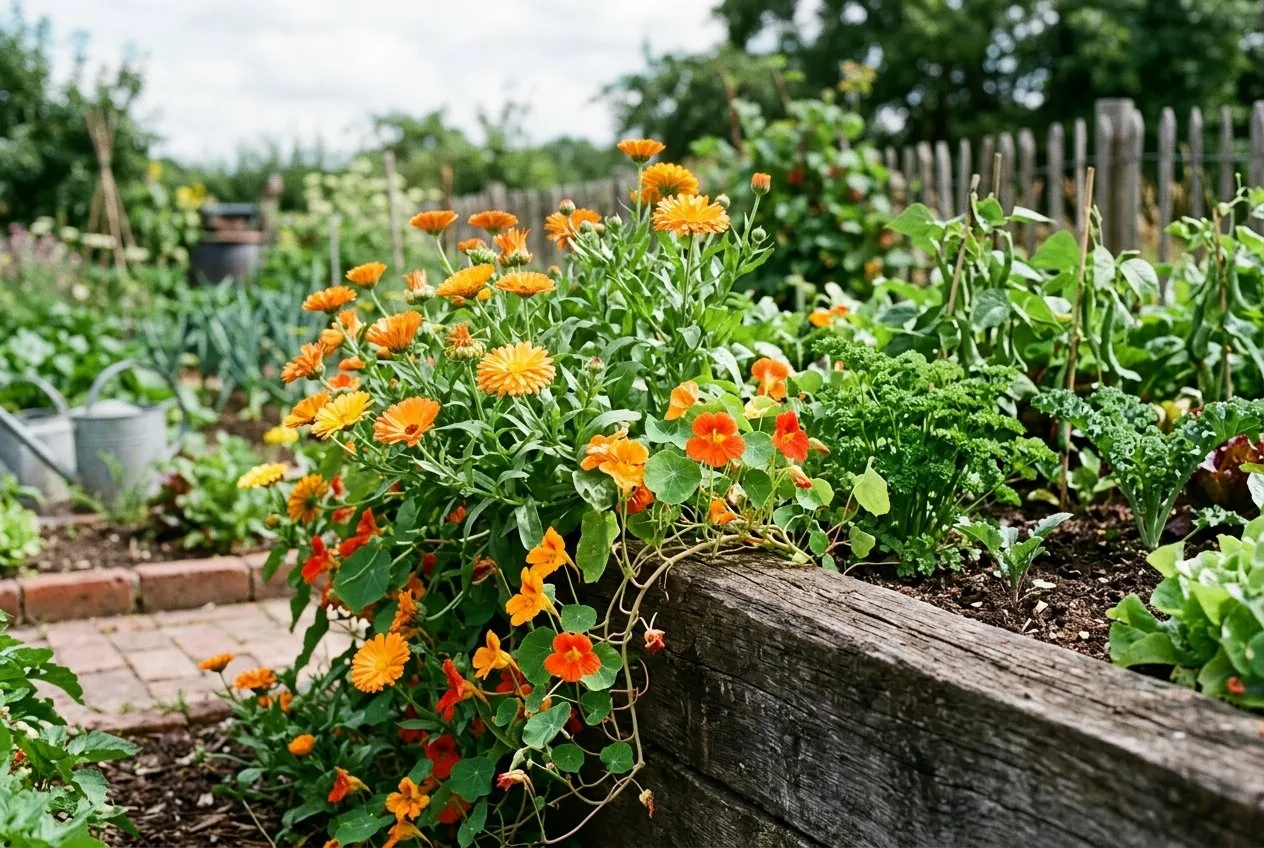 Calendula and nasturtium give fast, cheap orange from seed, and both are edible additions to a kitchen garden.
A month-by-month plan for orange garden colour
Orange can run from late spring to the first frost with the right succession. This calendar shows what to do and when each orange peaks in an average UK garden.
| Month | Action and what is in flower |
|---|---|
| January | Order dahlia tubers and annual seed, plan hot drifts |
| February | Sow calendula indoors from late month, chit dahlias |
| March | Plant geum and helenium, sow nasturtium under cover |
| April | Euphorbia griffithii colours up, harden off seedlings |
| May | Geum and euphorbia flower, plant dahlias after frost risk |
| June | Helenium and calendula start, first dahlias open late month |
| July | Geum, helenium and dahlias all flower together |
| August | Crocosmia Emily McKenzie opens, deadhead dahlias often |
| September | Geum and crocosmia carry on, heleniums peak for bees |
| October | Last heleniums and dahlias flower until the first frost |
| November | Lift dahlia tubers after blackening, leave daisy seed heads |
| December | Review the year’s notes, reorder oranges that underperformed |
Totally Tangerine is sterile, so it sets no seed and puts all its energy into flowering. That is why it runs so long, but it also means you propagate it by division rather than seed. Lift and split the clump every three years to keep it vigorous.
Common mistakes when planting orange flowers
Most orange schemes disappoint for the same few reasons. These are the errors that waste a season.
- Placing orange next to pink. The two clash badly. Set orange against blue, purple or yellow instead, or separate the two with green foliage.
- Choosing double flowers for pollinators. Double orange dahlias hide their nectar. Pick single or daisy-shaped forms if you want bees and hoverflies.
- Growing heleniums on wet soil. Daisy perennials rot in winter wet. Give them full sun and free-draining ground, and cut back in spring not autumn.
- Letting geum set seed. Unfed and undeadheaded, geum slows by midsummer. A weekly deadhead doubles the flowering season.
- Sowing tender annuals too early. Nasturtium and Tithonia hate frost. Sow under cover and plant out only once the last frost has passed.
How to pair orange with other colours
Orange needs a contrast to look its best. The boldest pairing is orange with blue or purple, which sit opposite on the colour wheel and intensify each other. Salvias, agapanthus and purple verbena all set off orange vividly.
For a hot scheme, pair orange with red and yellow for a fiery late-summer border that glows in low autumn light. To cool the heat, set orange against silver or grey foliage. Avoid pink next to orange, which jars rather than complements.
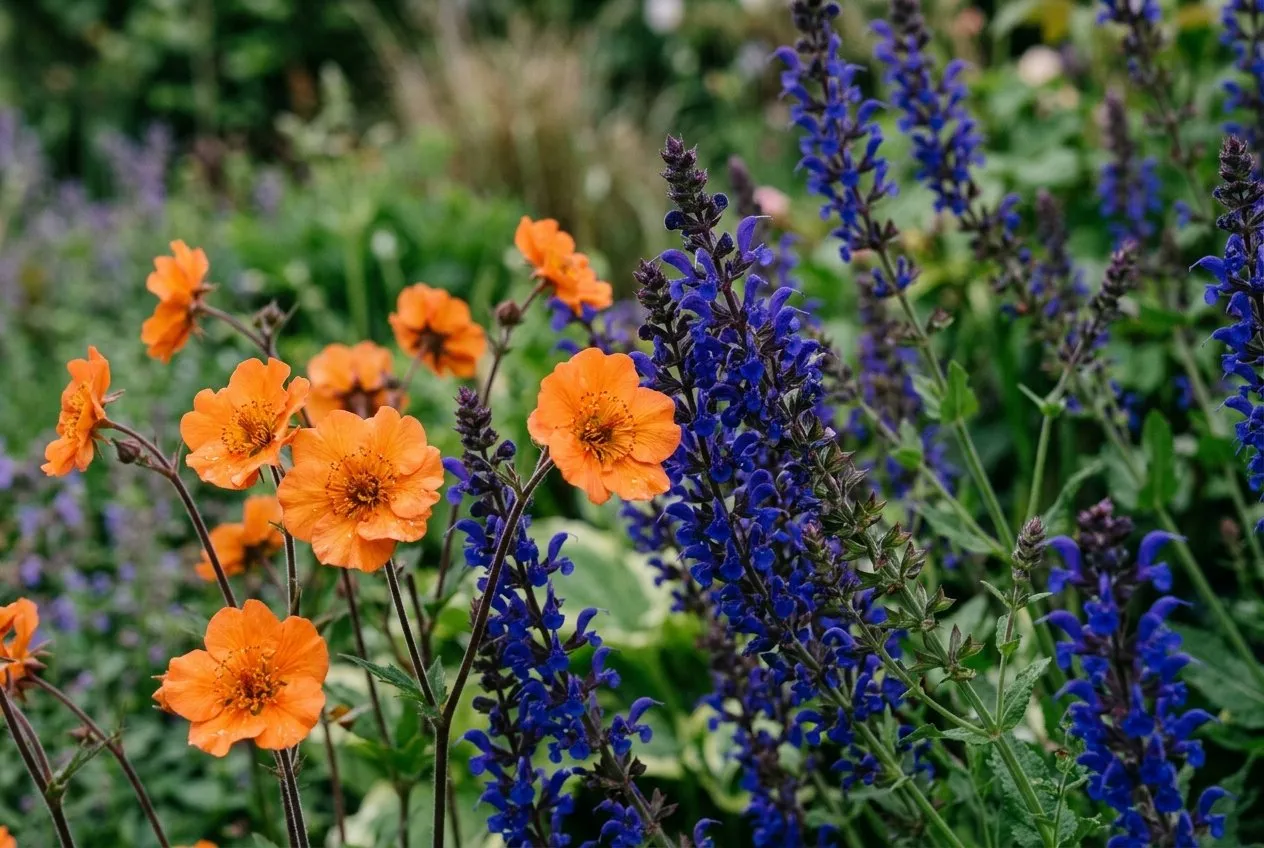 Orange against blue is the strongest pairing. Geum and salvia sit opposite on the colour wheel and lift each other. For the cooler tones to contrast against, see our roundups of the best purple, pink and blue flowers and the best yellow flowers for UK gardens. The Royal Horticultural Society’s Plants for Pollinators list is worth checking to pick oranges that feed insects too.
Frequently asked questions
What is the best orange flower for a UK garden?
Geum Totally Tangerine is the best all-rounder. It flowers from May to September, far longer than most, and is fully hardy. The airy apricot-orange flowers suit the front and middle of a border. Deadhead weekly to keep it going right through summer.
Which orange flowers bloom for the longest?
Are there orange perennials that come back every year?
Yes, geum, crocosmia, helenium, kniphofia and Euphorbia griffithii are all hardy perennials. They return each year and bulk up over time. Orange dahlias survive if lifted or mulched. Calendula and nasturtium are annuals but self-seed reliably.
What orange flowers grow quickly from seed?
Calendula and nasturtium are the fastest. Calendula flowers 8 to 10 weeks from sowing, nasturtium a little after. California poppy and Tithonia also grow fast from a spring sowing. All give cheap, generous orange in their first year outdoors.
What colours go well with orange in a border?
Blue and purple give the strongest contrast with orange. Salvias, agapanthus and purple verbena set off orange flowers vividly. For a hot scheme, pair orange with red and yellow. Avoid pink next to orange, as the two colours clash rather than complement.
Do orange flowers attract pollinators?
Single orange flowers attract bees, hoverflies and butterflies well. Helenium, single dahlias and crocosmia draw the most insects. Open daisy shapes give easy access to nectar. Double orange blooms look full but hide their nectar and feed very little.
Now you have the oranges that work, build the rest of the scheme around them. Read our guide to the best yellow flowers for UK gardens to extend the warm end of the border, or browse the full plants section for more ideas.
Our team produces practical UK gardening guidance from source research, contributor records and established horticultural practice. Editorial standards are overseen by Matt W.