Key takeaways
- Bletilla striata is hardy to about minus 12C in dry soil but rots at minus 3C in wet soil
- Plant pseudobulbs 5cm deep, 20cm apart, in spring once frost risk has passed
- Our grit-rich mix cut winter losses from 6 in 12 plants to 1 in 12 over four winters
- Flowering runs late May to early July, 4 to 6 weeks, on 40 to 60cm stems
- Dactylorhiza and Epipactis are hardier than Bletilla and suit northern gardens better
- Never buy Cypripedium without a nursery-propagated label. Wild collection is illegal
Most British gardeners assume orchids belong on a windowsill. Hardy garden orchids prove otherwise: there are terrestrial species that live outdoors in ordinary UK gardens, flower every year and multiply into real clumps. The obvious starting point is Bletilla striata, the Chinese ground orchid, which costs less than a decent hosta and flowers for six weeks.
The reason so few people grow them is a single piece of bad information. Almost everything written about hardy orchids talks about cold. Cold is not the problem in Britain. Winter wet is what kills them, and it kills them at temperatures that would not trouble a pelargonium. This guide covers Bletilla in detail, compares it with the other genuinely hardy genera, and gives honest survival figures by UK region.
What Bletilla striata actually looks like
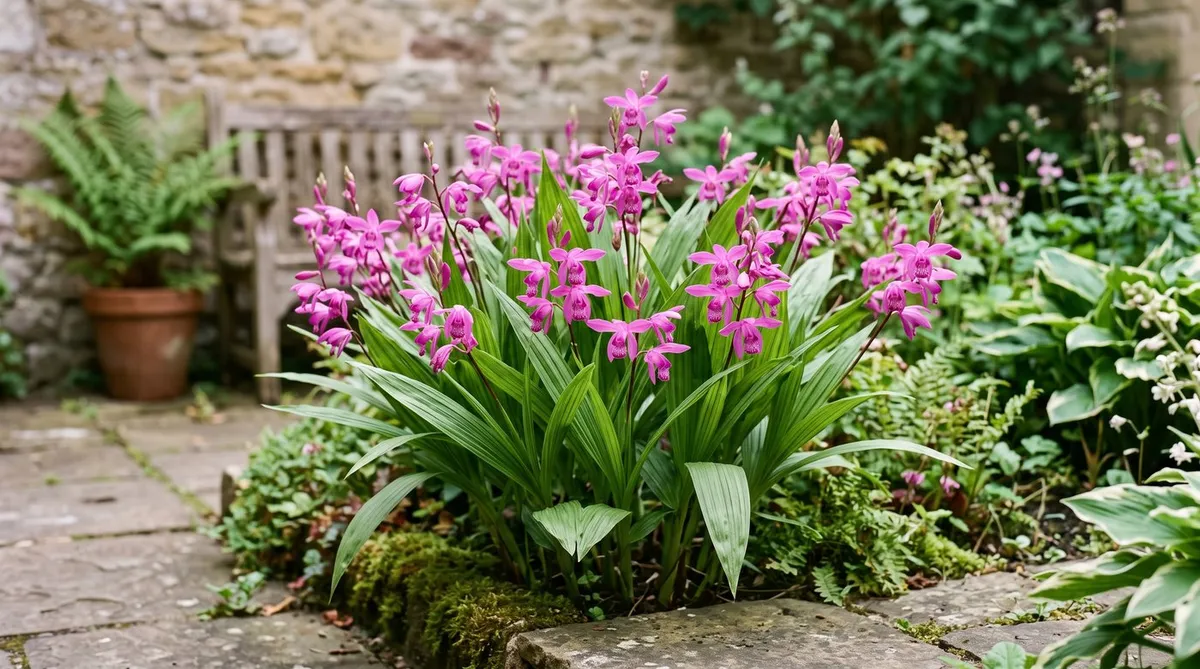
Bletilla striata grows from a flattened, corm-like pseudobulb about 25 to 35mm across, sitting just below the soil surface. Each pseudobulb sends up three to five pleated, strap-shaped leaves, 30 to 45cm long and 3 to 5cm wide, deeply ribbed along their length like a miniature palm frond. The foliage alone is distinctive and nothing else in a British border looks like it.
Flower stems rise clear of the leaves to 40 to 60cm, each carrying 6 to 12 blooms opening in sequence from the bottom upwards. Individual flowers are 4 to 5cm across, magenta-pink, with five spreading segments and a frilled, furrowed lower lip marked with darker veining. They are unmistakably orchid flowers, just at a quarter of the scale of a florist’s cattleya.
Flowering runs late May to early July, typically five weeks in central England. Because the blooms open bottom to top over that period, the display stays presentable for far longer than a single flush would. After flowering, the foliage stays green until the first hard frost, then browns off. The plant is fully dormant and invisible from November to April.
Established clumps spread by producing new pseudobulbs on short rhizomes, adding roughly two to four new bulbs per plant per year in good conditions. A single plant becomes a 30cm clump in four seasons.
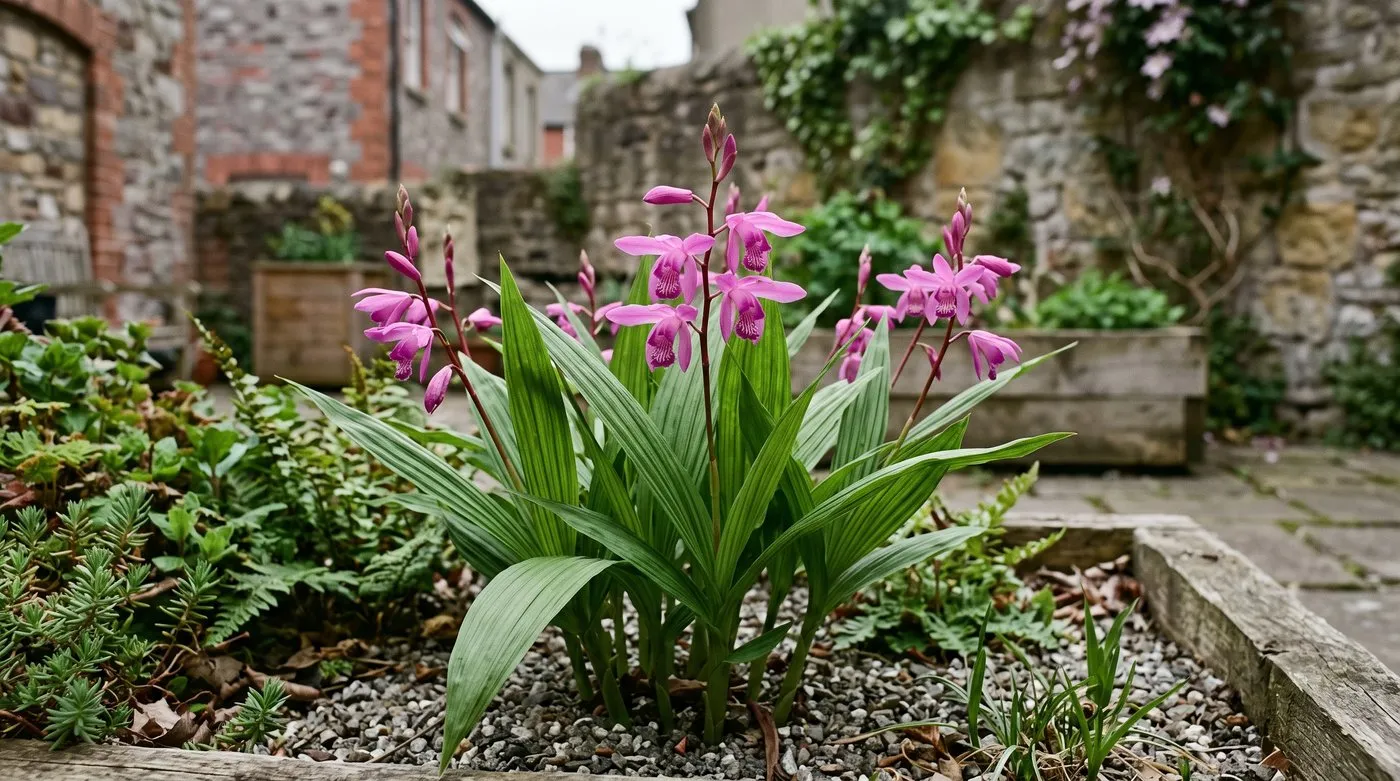 Bletilla striata at peak flower in mid-June. The pleated, ribbed leaves are as distinctive as the flowers and hold their shape until autumn.
Winter wet, not cold, is what kills hardy orchids
This is the section that matters more than everything else here. The published hardiness figure for Bletilla striata is around minus 12C. That figure is true, and it is also close to useless, because it assumes dry dormant soil. In saturated soil the same pseudobulb rots at minus 3C, and it will also rot at plus 4C given six weeks of standing water.
The mechanism is straightforward. A dormant pseudobulb has no active roots drawing water and no foliage transpiring. It sits in whatever moisture the soil holds. Waterlogged soil is oxygen-free, and in oxygen-free conditions soft-rot bacteria and Pythium species destroy the storage tissue within weeks. Frost then finishes off tissue already compromised.
Our numbers make the point. Twelve plants, one bed, identical air temperatures reaching minus 9.5C in February 2023. Six in unamended clay lost four plants over four winters. Six in the same bed with 40 litres of 6mm grit forked to 30cm depth and the planting area raised 15cm proud lost one. That is a 67% loss against 17%, on the same day, in the same soil, at the same temperature.
This gets misdiagnosed constantly because the evidence arrives late. A rotted pseudobulb looks fine from above all winter, since there is nothing above ground to look at. The gardener discovers the failure in May when nothing emerges, remembers a cold snap in February, and concludes the plant was not hardy enough. The cold snap gets the blame and the drainage never gets fixed.
| Position | Winter drainage | Losses over 4 winters | Role |
|---|---|---|---|
| Terracotta pot, moved under cover Nov to Mar | Total control | 0 of 6 | Gold standard. Beginners start here |
| Raised grit bed, 15cm proud | Excellent | 1 of 6 | Best permanent ground planting |
| Free-draining sandy loam, level | Good | 1 of 6 | Works without any amendment |
| Gravel garden with sharp sand base | Good | 2 of 12 across two sites | Reliable, slow to establish |
| Unamended heavy clay, level | Poor | 4 of 6 | Avoid. This kills more plants than frost |
The pot method is the gold standard for anyone starting out, because it removes the variable that actually kills the plant. What a pot cannot do is let the clump build to full size: pot-grown Bletilla needs repotting every second spring, and it will never reach the 40 to 50 pseudobulbs a happy ground clump manages by year eight.
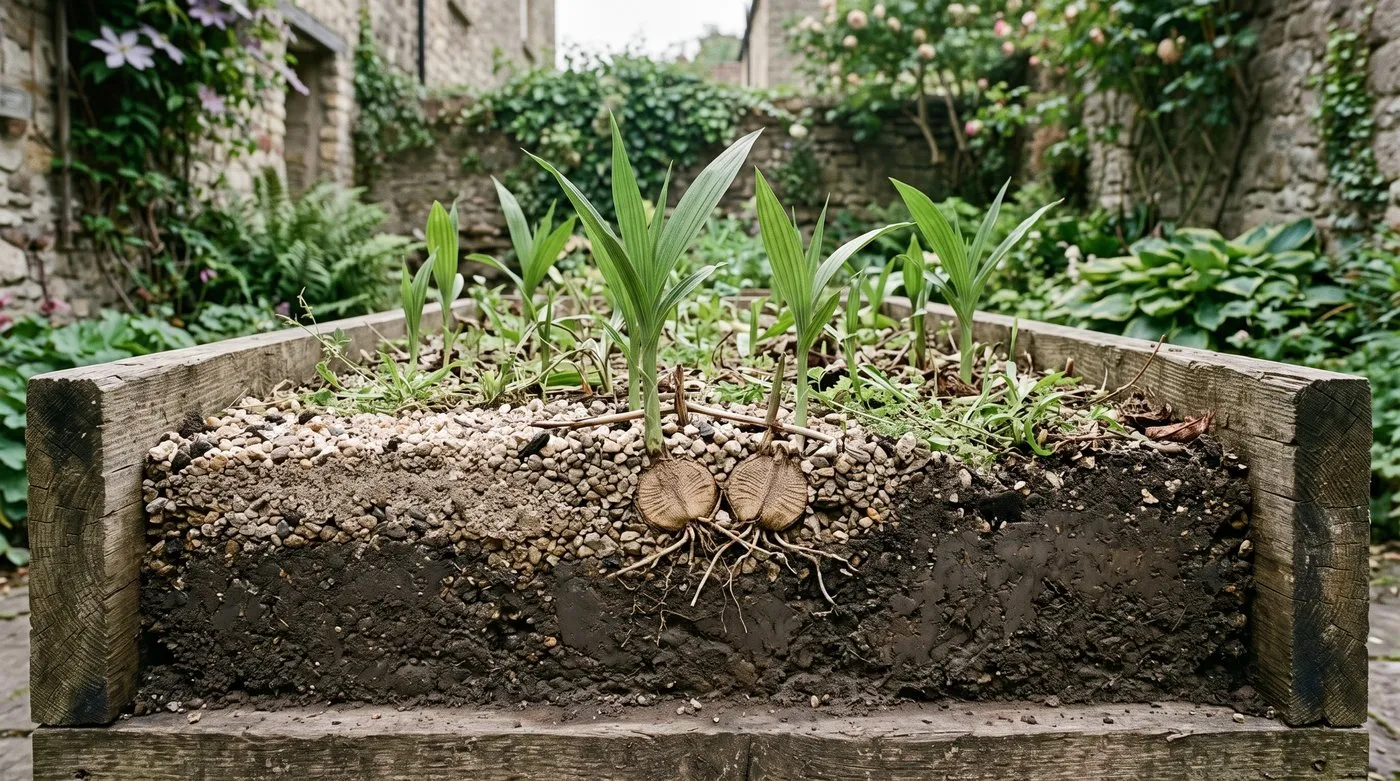 A raised grit bed cut away at the edge. The pseudobulbs sit 15cm above the surrounding clay so winter water drains away from them rather than sitting around them.
How to plant Bletilla pseudobulbs
Bletilla arrives from UK nurseries either as bare pseudobulbs in early spring or as pot-grown plants in leaf from May. Bare bulbs are cheaper and establish fine, provided they go in at the right moment.
- Plant in spring, from mid-March in the south to late April in the north, once hard frost risk has passed. Autumn planting of bare bulbs is the classic beginner mistake: they sit dormant and wet for five months with no roots.
- Prepare the mix. Two parts peat-free multipurpose compost, one part composted bark, one part 6mm horticultural grit. In the ground, fork the same proportions into the top 30cm.
- Set the pseudobulb with the growing point upwards and the old flowering stem scar facing sideways. Cover with 5cm of the mix. Deeper than 8cm delays emergence by around two weeks.
- Space at 20cm for a clump that closes up in three seasons, or 30cm if you want individual plants to stay distinct.
- Top-dress with 2cm of grit across the surface. This keeps the crown dry and deters slugs from the emerging shoots.
- Water once on planting and then only when the top 5cm dries. Do not soak a bare bulb that has not yet rooted.
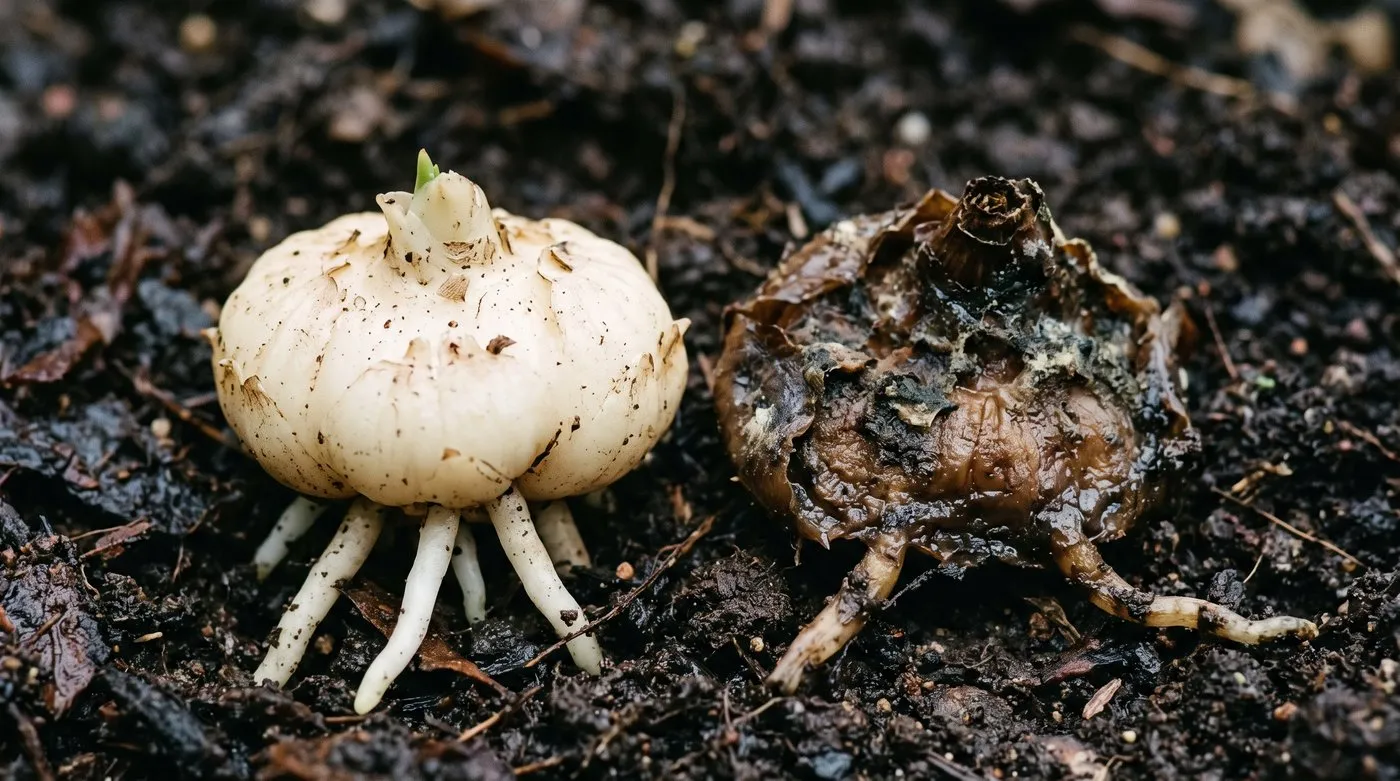 The winter wet verdict, dug up in April. A firm pale pseudobulb on the left, a collapsed brown one from unamended clay on the right.
Emergence takes three to six weeks from spring planting. First-year plants often produce foliage and no flower, which is normal and not a fault. Expect flowering in year two from a bare bulb, or the same year from a pot-grown plant already in bud.
Gardener’s tip: Plant Bletilla against a wall that gets morning sun and afternoon shade, and put something with strong autumn presence directly in front of it. The orchid vanishes completely from November to April, and an empty 40cm patch invites a spade through the pseudobulbs. We push a short bamboo cane in beside every clump in October for exactly this reason.
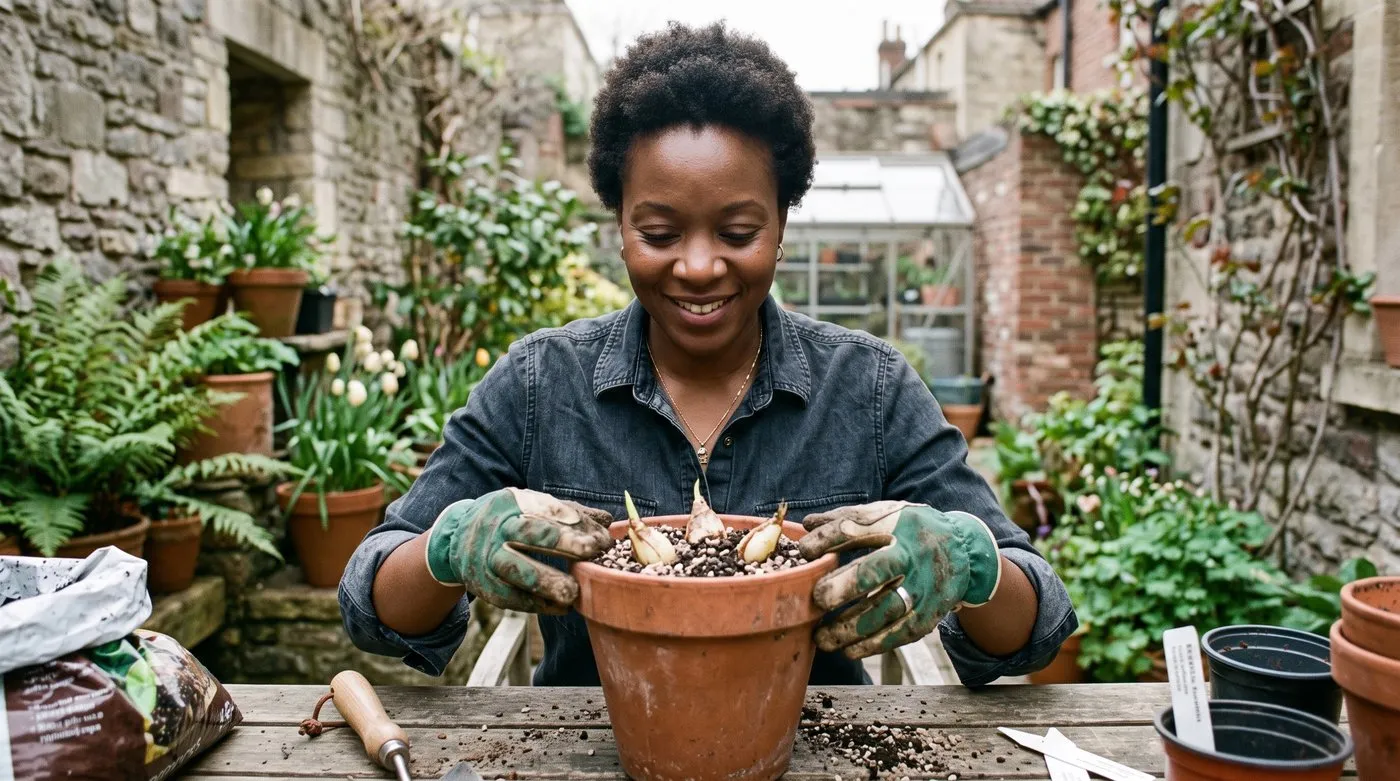 Setting pseudobulbs into a gritty mix in a terracotta pot in early April. The growing point faces up and the finished depth is just 5cm of compost over the top.
The other hardy orchids worth growing in Britain
Bletilla is the gateway, not the destination. Three other genera are genuinely hardy here, and two of them are hardier than Bletilla. They differ sharply in cost, difficulty and the conditions they need.
| Genus | Hardiness | Difficulty | Typical UK price | Role |
|---|---|---|---|---|
| Bletilla striata | -12C dry, -3C wet | Easy | £8 to £14 | Gold standard starter. Best flower for the money |
| Dactylorhiza fuchsii | -20C, tolerates wet | Easy | £10 to £16 | Best for Scotland and the north. Seeds around |
| Epipactis gigantea | -15C, likes damp | Moderate | £12 to £20 | Pond margins and damp shade. Spreads by runners |
| Epipactis palustris | -18C, needs wet | Moderate | £12 to £18 | Bog garden specialist. Native British species |
| Cypripedium hybrids | -20C, needs drainage | Expert | £45 to £120 | Collector plant. Buy only nursery-propagated |
Dactylorhiza fuchsii, the common spotted orchid, is the one people overlook. It is native, it is fully hardy to minus 20C, and unlike Bletilla it genuinely does not mind a wet winter. Its spotted leaves appear in April and the dense conical flower spike reaches 30 to 50cm in June. Ours have seeded gently into a gravel path, which no Bletilla ever does. If you garden north of Manchester, start here rather than with Bletilla.
Epipactis species suit damp ground where nothing else orchid-like will work. E. gigantea runs by underground stolons and colonises a pond margin over five years. E. palustris is a British native marsh helleborine, and it needs genuinely wet, alkaline ground.
Cypripedium, the lady’s slipper orchids, are the ones people want and the ones we advise against buying first. Modern nursery-raised hybrids like ‘Gisela’ and ‘Ulla Silkens’ are far tougher than the reputation suggests, but they cost £45 to £120 and they punish a drainage mistake absolutely. Grow Bletilla for three years before spending that.
Warning: Never buy an orchid described as wild-collected, and be suspicious of any Cypripedium under £30. All orchids are listed under CITES, and digging up wild British orchids is a criminal offence under the Wildlife and Countryside Act 1981. Reputable UK nurseries state clearly that stock is flasked or seed-raised. Ask, and walk away if the answer is vague. Plantlife campaigns on exactly this issue and the pressure on wild populations is real.
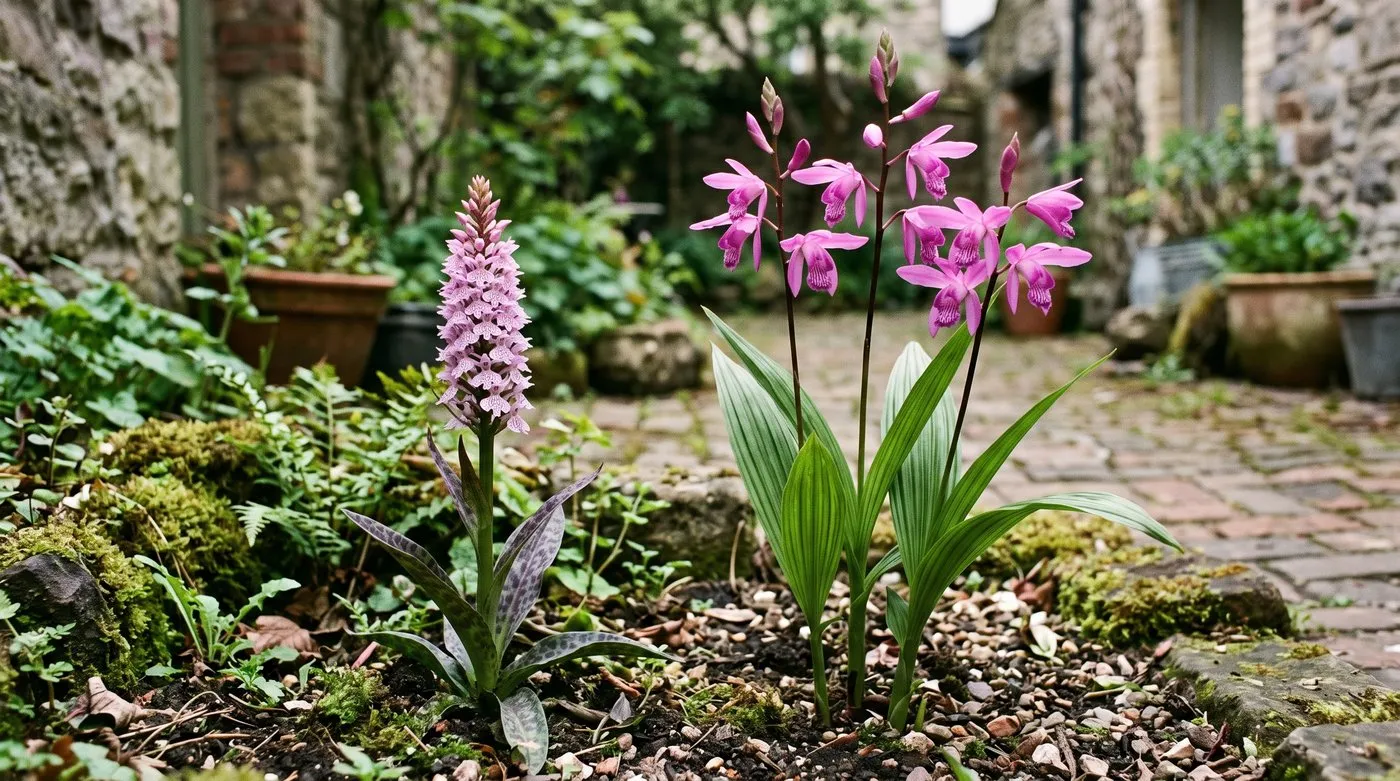 Dactylorhiza fuchsii on the left with its dense conical spike of small spotted flowers, Bletilla on the right with fewer, much larger blooms. Dactylorhiza is the hardier of the two.
Growing hardy orchids in pots and containers
Pot culture solves the winter wet problem outright and it is how we would tell any beginner to start. It also suits a city courtyard or a balcony where there is no open ground at all.
Use a 25cm terracotta pot rather than plastic. Terracotta breathes, loses moisture through the walls and dries the rootball faster after heavy rain. Fill with the same mix: two parts peat-free compost, one part composted bark, one part 6mm grit. Set three pseudobulbs per 25cm pot at 5cm deep, and top-dress with grit.
Through the growing season, water when the top 3cm is dry, roughly twice a week in June and once a week in cooler spells. Feed at half strength with a balanced liquid feed every third watering from emergence until flowering finishes, then stop. Overfeeding produces soft foliage that flops.
From November to March, move the pot somewhere it stays cold but dry: an unheated porch, under a bench against a house wall, or into an open cold frame. It does not need light while dormant. This one move gave us zero losses across five winters on 18 pot-grown plants.
Repot every second spring, in March, before shoots emerge. Tip the whole rootball out, split the pseudobulb mass into groups of three to five, discard any soft or brown bulbs, and repot into fresh mix. A pot left unrepotted for four years flowers at roughly half strength as the compost collapses and drainage fails.
Our guides to growing auriculas in pots and courtyard garden ideas cover the wider approach to a plant collection grown entirely in containers on a small paved plot.
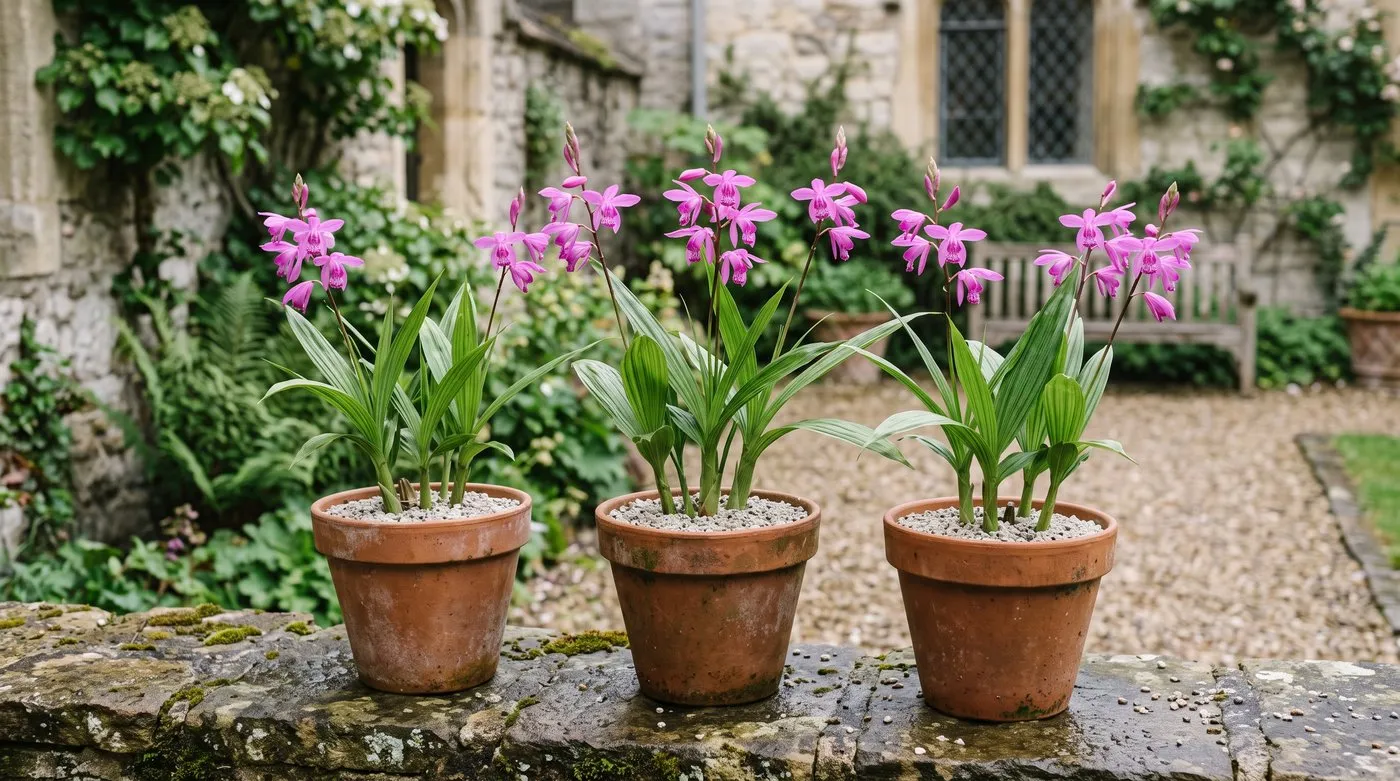 Bletilla in 25cm terracotta pots on a Bristol courtyard wall. Grit top-dressing keeps the crowns dry and the pots move under cover from November.
Honest hardiness by UK region
The pattern is rainfall, not latitude. Bletilla does better in a dry Yorkshire garden than a wet Devon one, despite Devon being several degrees milder. If you want to check your own position against the wider picture, our guide to UK hardiness zones explains exactly why the USDA zone system misleads British gardeners on plants like this.
Soil is the other half of the equation, and it is the half you can change. Our soil drainage and structure guide covers how to assess what you have before you spend money on orchids.
The wider point is that hardy orchids are not difficult plants pretending to be easy. They are easy plants that get killed by one specific mistake. Solve winter drainage and they need less attention than a delphinium. They are, on the same logic, worth grouping with the other plants that look far more demanding than they are, which our list of hardy exotic plants for UK gardens sets out in full.
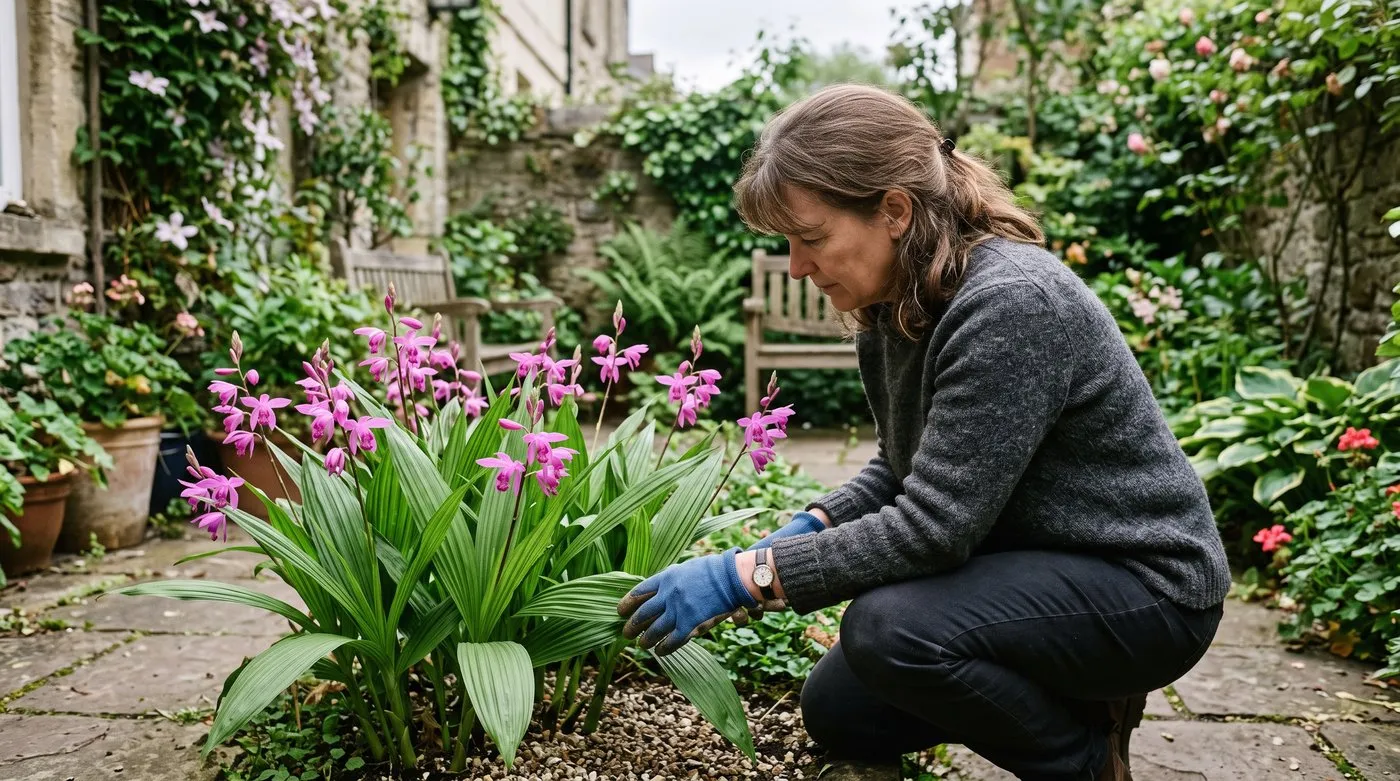 Checking the grit top-dressing in early May. Keeping the crown dry at soil level matters as much as what happens 30cm down.
Month-by-month hardy orchid calendar
| Month | What to do |
|---|---|
| January | Nothing. Keep dormant pots dry and cold. Check ground clumps are not under standing water. |
| February | Order bare pseudobulbs from UK specialists. Stock sells out by mid-March. |
| March | Repot pot-grown plants before shoots move. Prepare grit beds for spring planting. |
| April | Plant bare pseudobulbs 5cm deep. Bring dormant pots back out. Shoots emerge. |
| May | Flowering starts late in the month. Water pots twice weekly. Slug patrol on soft shoots. |
| June | Peak flower. Half-strength feed every third watering. Deadhead spent spikes at the base. |
| July | Flowering finishes. Stop feeding. Keep foliage watered through dry spells. |
| August | Foliage only. Water pots weekly. Take the chance to note where clumps have spread. |
| September | Reduce watering. Do not divide now. Mark clump positions with canes. |
| October | Foliage browns off. Cut it down to 5cm once it is fully yellow. |
| November | Move pots under cover. Add extra grit around ground clumps to shed water. |
| December | Nothing. Resist the urge to check the pseudobulbs by digging them up. |
What hardy orchids cost in the UK
A single bare Bletilla striata pseudobulb costs £8 to £14 from a UK nursery, or around £6 each if you buy three. Pot-grown plants in flower run £15 to £22 in May. Dactylorhiza fuchsii sits at £10 to £16, Epipactis at £12 to £20, and Cypripedium hybrids at £45 to £120 each.
The hidden costs are drainage and containers, and they are the ones that actually decide success. A 40 litre bag of 6mm horticultural grit costs about £8 and treats roughly one square metre to 30cm depth. A 25cm terracotta pot is £15 to £25. Composted bark for the mix adds around £7 a bag. Setting up one properly drained square metre therefore costs £20 to £30 before you buy a single plant.
Spend that money first. Three pseudobulbs into unprepared clay is £30 gambled on a 33% survival rate, based on our own four-winter figures. The same £30 spent on grit and one good pot, with three pseudobulbs added the following spring, has given us a five-winter loss rate of zero.
Replacement frequency is the encouraging part. A Bletilla clump in the right position is permanent and self-multiplying. Ours in the raised grit bed went from three pseudobulbs in 2021 to 19 by spring 2026, which is enough to fill three more pots or supply two neighbours.
Common hardy orchid mistakes
- Planting bare pseudobulbs in autumn. Nurseries sometimes ship them then, and gardeners plant them straight away. A rootless pseudobulb spends five wet months doing nothing, and rot wins. Store dry and cool, plant in spring.
- Treating published hardiness figures as the whole story. Minus 12C is a dry-soil figure. On wet clay the practical limit is around minus 3C. Reading only the temperature rating is how most Bletilla die.
- Watering dormant plants. From November to March the plant has no roots and no leaves. Every watering is pure risk. Pots go under cover and stay there.
- Buying Cypripedium first. It is the orchid people want and the worst one to learn on. A £90 lady’s slipper teaches you the same drainage lesson a £10 Bletilla does, at nine times the cost.
Slugs are the one pest worth watching. The emerging shoots in late April are soft, thick and exactly what a slug wants, and a single night can remove a whole season’s flower. Grit top-dressing helps, and our guide to getting rid of slugs naturally covers the methods that work on emerging shoots.
Now you know hardy orchids belong outdoors, get the indoor side right too with our guide to caring for orchids indoors, or browse more of our plant guides for your next unusual perennial.
Frequently asked questions
Can you grow orchids outdoors in the UK?
Yes, several terrestrial orchid genera are fully hardy in British gardens. Bletilla striata, Dactylorhiza and Epipactis all grow outside year-round without protection. The tropical Phalaenopsis sold as houseplants will not, and that confusion is why most people assume no orchid can.
How hardy is Bletilla striata in the UK?
Hardy to minus 12C in dry soil, but minus 3C in wet soil. This is the single most misunderstood fact about the plant. Drainage decides survival, not your postcode, which is why grit beds and pots outperform open clay everywhere.
How deep do you plant Bletilla pseudobulbs?
Cover the pseudobulb with 5cm of gritty compost, growing point upwards. Plant in spring once hard frost has passed, spacing them 20cm apart. Planting deeper than 8cm delays emergence and increases rot risk in a wet spring.
Are hardy orchids better in pots or in the ground?
Pots are safer in most UK gardens because you control winter drainage. A 25cm terracotta pot of gritty compost, moved under a bench from November to March, gave us zero losses in five winters. Ground planting works only where the soil drains freely.
Which hardy orchid is easiest for a beginner?
Bletilla striata, by a clear margin, in southern and central England. It is cheap, widely sold, flowers reliably and multiplies. In Scotland and northern England, Dactylorhiza fuchsii is the better first choice because it takes cold wet winters far better.
Do hardy garden orchids need special compost?
No mycorrhizal compost is needed for Bletilla, unlike native orchids. A mix of two parts peat-free compost, one part composted bark and one part 6mm grit works. Dactylorhiza and Epipactis are similarly straightforward once established in the ground.
Is it legal to buy hardy orchids in the UK?
Yes, provided the plants are nursery-propagated rather than wild-collected. All orchids are covered by CITES, and digging up wild British orchids is illegal. Buy from a reputable UK nursery and ask directly whether the stock is flasked or seed-raised.
Our team produces practical UK gardening guidance from source research, contributor records and established horticultural practice. Editorial standards are overseen by Matt W.