Key takeaways
- Fast-growing shrubs fill gaps, screen eyesores and add height in one or two seasons
- Buddleja, elder, Lavatera and Cornus are among the quickest flowering shrubs
- Photinia Red Robin, Elaeagnus and Viburnum tinus give fast evergreen cover
- Many put on 30 to 60cm a year; some regrow over a metre after a hard prune
- Fast growth means regular pruning, or the shrub outgrows its space quickly
- Plant in autumn or spring and water well in year one for the quickest establishment
When you take on a bare new-build plot, a fence you would rather not look at, or a border with a gaping hole, you want height and cover quickly, not in a decade. Fast-growing shrubs are the answer. The right ones fill a space, screen an eyesore, or carry a border in a single season or two, where a slow shrub would still be a twig. This guide covers the quickest flowering and evergreen shrubs for UK gardens, with real growth rates from the ground, and the one catch every fast grower shares.
The trick is to pick the right speed for the job, then keep it in check. A vigorous shrub is a gift in a new garden and a nuisance in a small one if you never reach for the secateurs.
What counts as a fast-growing shrub
Speed is relative, so it helps to know the numbers before you choose. A fast-growing shrub puts on roughly 40 to 60cm or more a year, against 20 to 40cm for an average shrub, with the quickest regrowing over a metre in a season. That difference decides how soon a plant earns its place.
Growth rate depends on more than the species. Soil, water, aspect and feeding all push or hold back a shrub, and almost every shrub starts slowly. The old rhyme holds: first year it sleeps, second it creeps, third it leaps. A fast grower simply leaps higher and sooner once its roots are down.
There is always a trade-off. The same vigour that fills a gap fast keeps coming, so fast shrubs need more pruning than slow ones. Choose them for the jobs that suit speed, a new plot, a screen, a quick splash, and pair them with slower, choicer plants for the long term. Our roundup of the best flowering shrubs covers the wider palette to draw from.
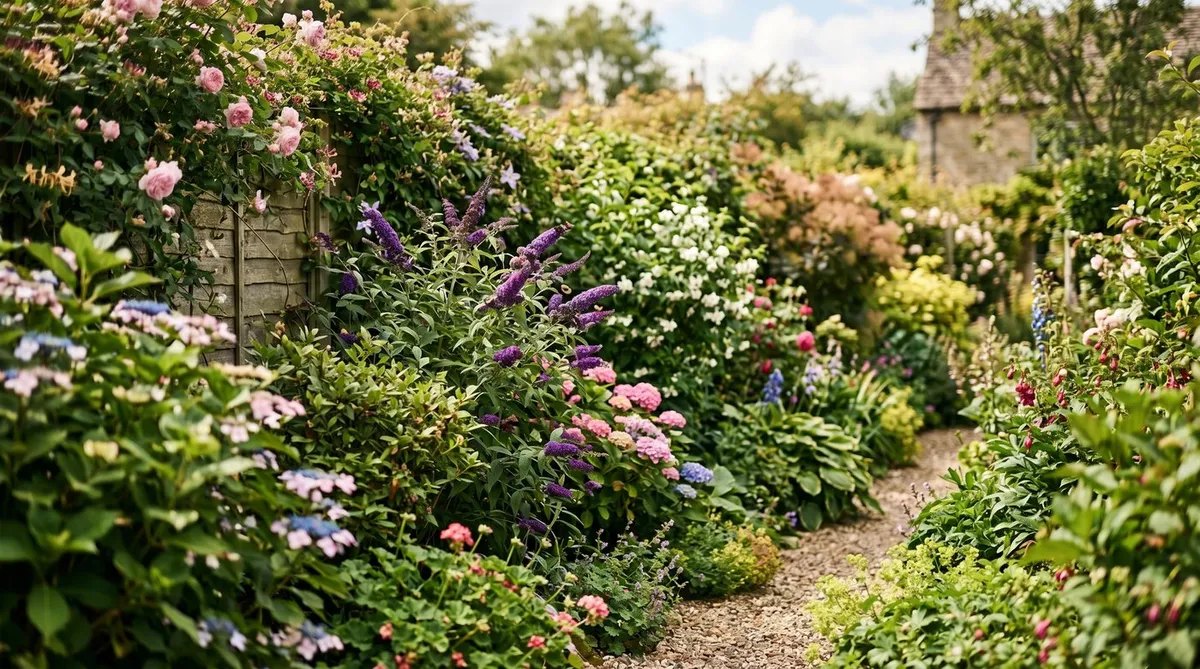
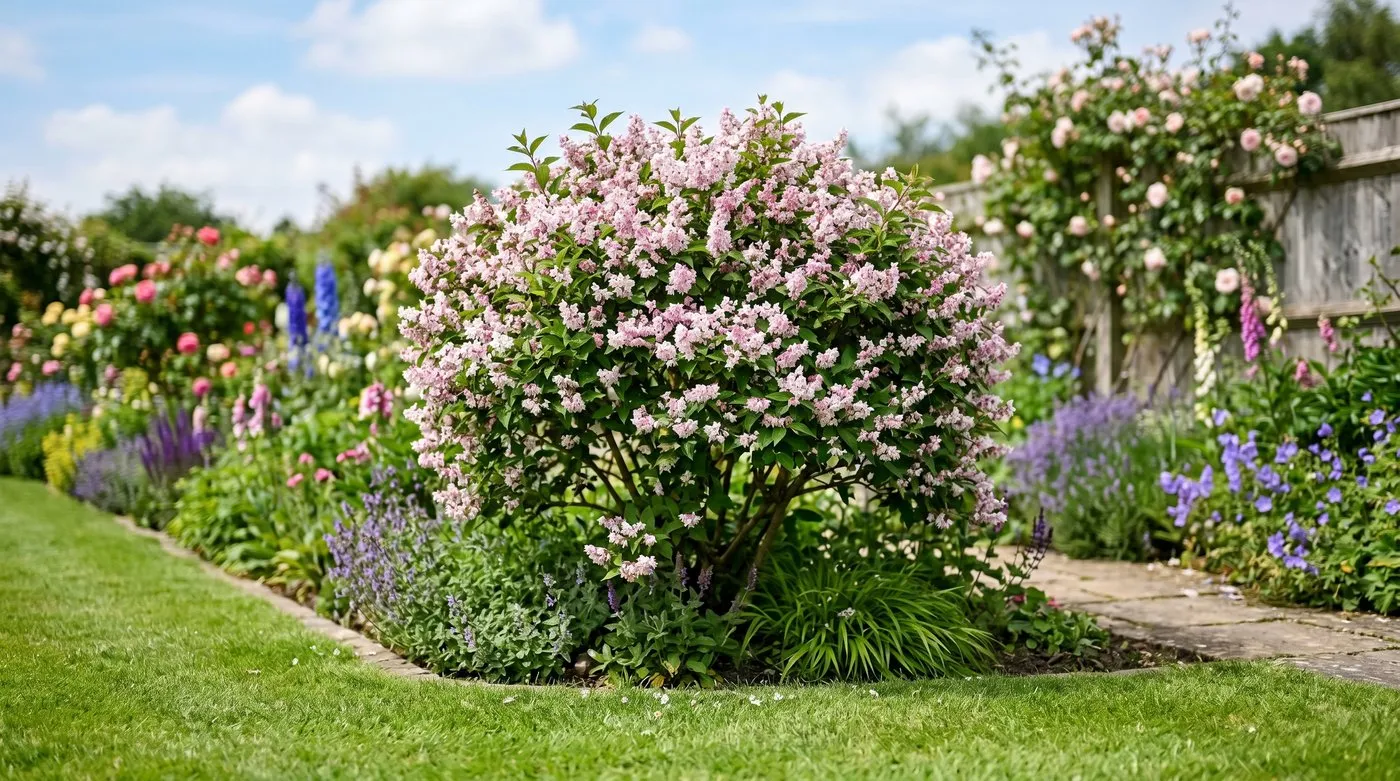 A vigorous specimen shrub can carry a border in a season or two. The same speed that fills the gap means it will keep coming, so plan to prune.
The best fast-growing evergreen shrubs
For year-round cover and screening, evergreens are what you want, and several grow surprisingly fast. Photinia Red Robin, Elaeagnus ebbingei and Viburnum tinus give the quickest evergreen cover, most adding 30 to 40cm a year. They earn their keep by working every month, not just in summer.
Photinia Red Robin is the go-to for fast evergreen height, with bright red new growth and a tolerance of trimming that makes it as good as a specimen or a screen. Elaeagnus ebbingei is tougher still, shrugging off wind and coastal sites while putting on fast, dense growth. Viburnum tinus adds winter flowers to fast evergreen cover, useful where you want more than a green wall.
For a fast screen specifically, these evergreens beat most hedging for flexibility as single specimens. Our guides to evergreen shrubs for year-round interest and growing Photinia Red Robin cover them in depth, and for a formal line, see fast-growing hedging plants.
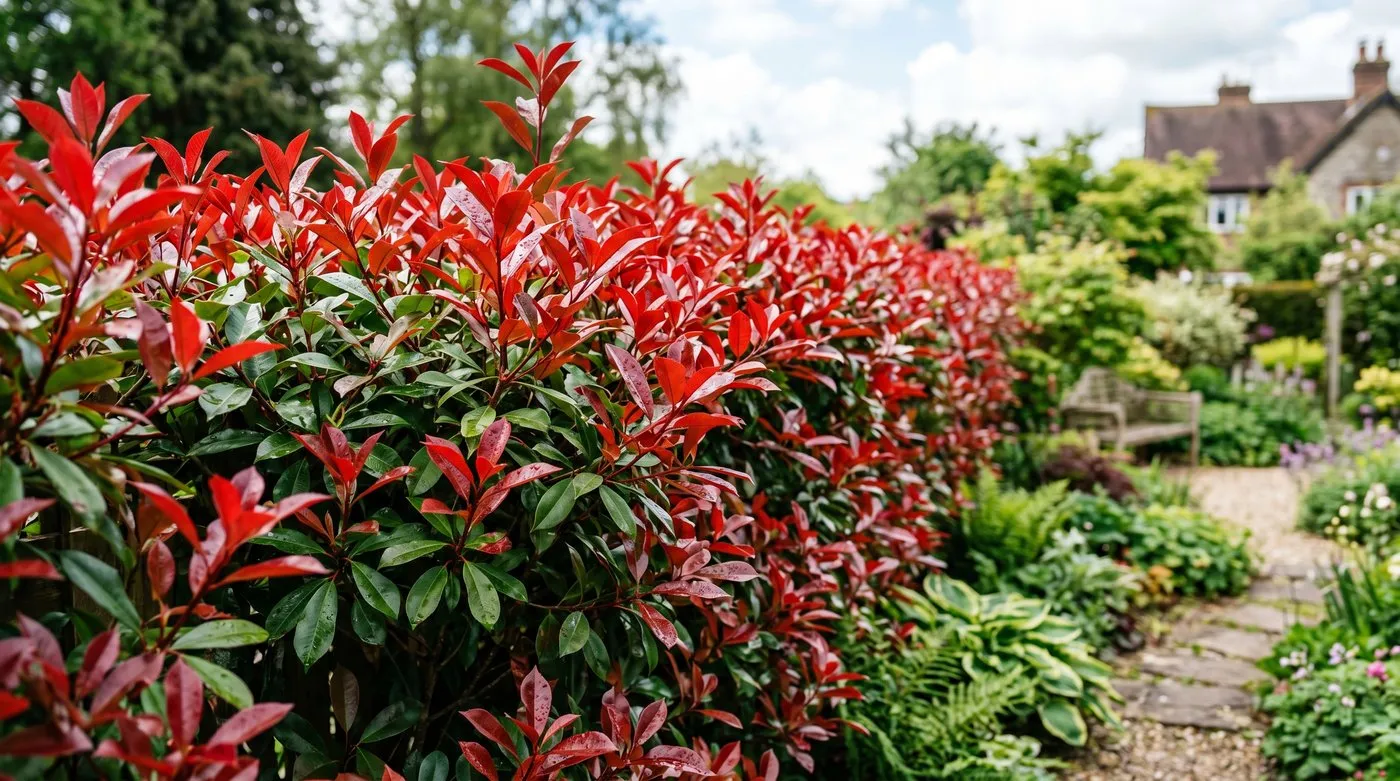 Photinia Red Robin puts on around 30 to 40cm a year and takes hard trimming, which makes it equally good as a specimen or a fast evergreen screen.
The best fast-growing flowering shrubs
If it is flower, colour and wildlife you are after, the deciduous fast growers deliver in their first summer. Buddleja, elder, Lavatera and Cornus are among the fastest flowering shrubs, with Buddleja regrowing over a metre in a single season. These are the shrubs for instant impact.
Buddleja davidii, the butterfly bush, is the champion for speed and wildlife, flowering on the current year’s growth so a hard March prune is rewarded with a fountain of summer bloom. Lavatera throws up tall, mallow-pink flowers all summer from a standing start. Elder (Sambucus) grows fast in sun or shade, with handsome dark-leaved forms, and Cornus gives both quick growth and fiery winter stems.
These shrubs are gifts in a new garden, but their speed is also their discipline. Most flower best on new wood, so an annual hard prune both controls them and improves the display. They also feed pollinators generously, fitting straight into a wildlife planting. For shadier spots, our list of the best shrubs for shade has fast options too.
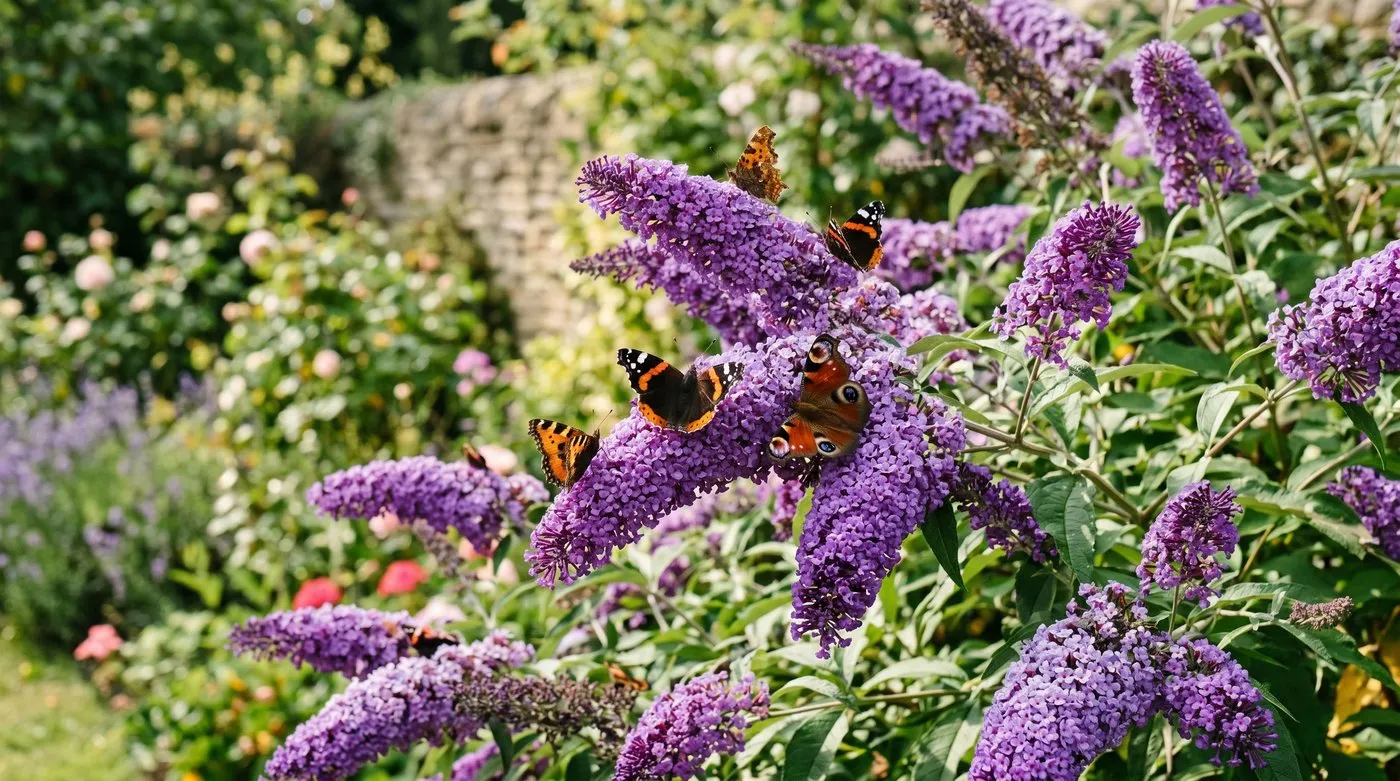 Buddleja flowers on the current year’s growth, so a hard March prune brings a fountain of summer bloom and a magnet for butterflies, all in one season.
Fast-growing shrubs compared
Different shrubs suit different jobs, so match the plant to what you need. This table ranks the main fast growers by type, rough growth rate and best use.
| Shrub | Type | Rough growth rate | Best for |
|---|---|---|---|
| Buddleja davidii | Deciduous, flowering | Over 1m a year on new wood | Instant flower, butterflies |
| Lavatera | Deciduous, flowering | 1m or more a year | Quick summer colour |
| Elder (Sambucus) | Deciduous, flowering | 50 to 100cm a year | Foliage, flowers, wildlife |
| Cornus (dogwood) | Deciduous, stems | 40 to 60cm a year | Fast growth, winter stems |
| Photinia Red Robin | Evergreen | 30 to 40cm a year | Evergreen screen or specimen |
| Elaeagnus ebbingei | Evergreen | 30 to 40cm a year | Tough, windy or coastal sites |
| Viburnum tinus | Evergreen | 30cm a year | Evergreen cover plus winter flower |
For instant flower and wildlife, the deciduous shrubs win outright, with Buddleja and Lavatera leading on raw speed. For year-round cover and screening, the evergreens are slower but work every month. The smart approach in a new garden is to use a few of each: fast flowering shrubs for the quick lift, fast evergreens for the lasting structure.
Planting for the fastest establishment
How you plant decides how soon a fast shrub hits full speed, so do not rush this part. Plant in autumn or early spring, dig in plenty of organic matter, and water well through the whole first growing season. Year one sets the pace for years two and three.
Dig a hole twice the width of the rootball but no deeper, and loosen the sides so roots can spread. Mix garden compost or well-rotted manure into the backfill, firm the shrub in at the same depth it grew in the pot, and water thoroughly. A mulch around the base locks in moisture and keeps weeds down while it establishes.
Watering in the first summer is the single biggest factor in fast establishment. A shrub that dries out in year one sulks for two; one kept moist powers away. Autumn planting helps, giving roots months to settle before the first dry spell. Our hedge planting guide covers the technique, which is the same for specimens.
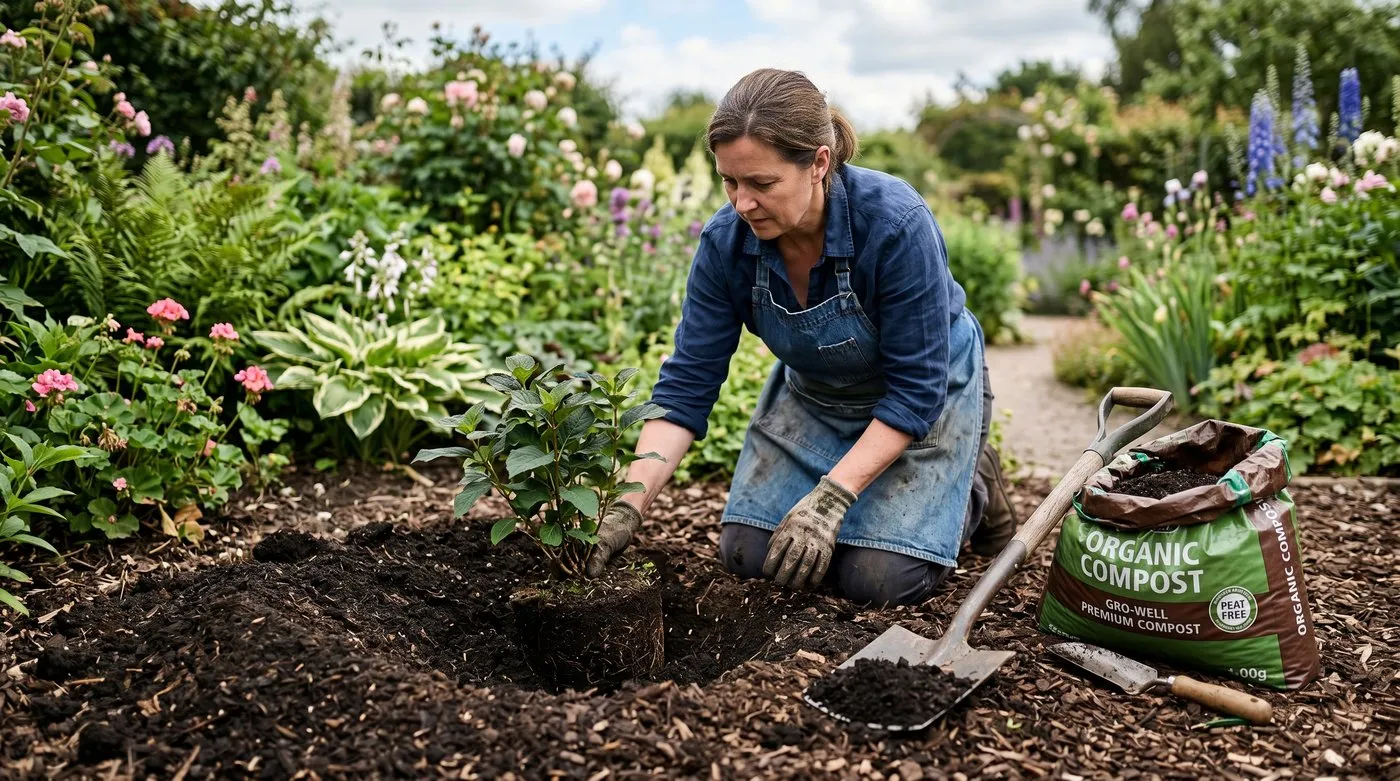 Plant into a wide hole with plenty of compost, firm in at the right depth and water well. How you plant in year one decides how fast the shrub leaps in year two.
Keeping fast growth in check
The final job is the one that separates a useful fast shrub from a problem one. Fast-growing shrubs need regular pruning to stay in bounds, flower well and avoid going bare and leggy at the base. Embrace the secateurs and a fast grower stays a friend.
The rule depends on the type. Shrubs that flower on new wood, like Buddleja and Lavatera, take a hard prune in early spring, cutting back to a low framework, which controls size and improves flowering in one go. Evergreens like Photinia and Elaeagnus take a trim once or twice in the growing season to keep a dense shape. Shrubs that flower on old wood are pruned just after flowering instead.
Do not let a fast shrub run for years unpruned. It quickly outgrows its spot, shades its neighbours, and turns bare and woody low down, where recovery is slow and ugly. Our guides to pruning shrubs and privacy screening with hedges and trees cover the cuts and the screening role. The RHS shrub pruning advice is a reliable reference for any species.
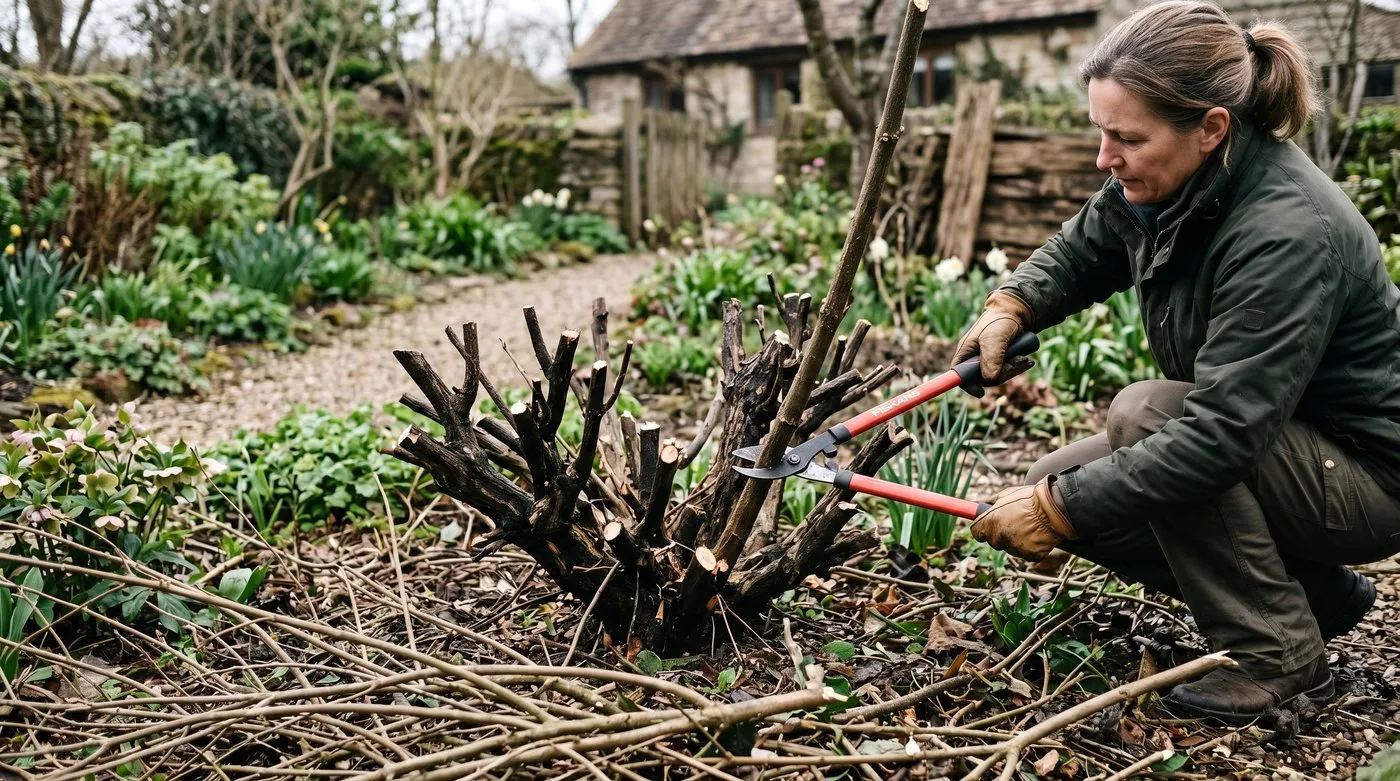 A hard March prune is the discipline that keeps a fast shrub useful. Buddleja cut to a low framework regrows and flowers the same summer, denser and better for it.
Frequently asked questions
What are the fastest-growing shrubs in the UK?
Buddleja, elder, Lavatera and Cornus are among the fastest flowering shrubs, while Photinia Red Robin, Elaeagnus and Viburnum tinus lead the evergreens. Many grow 30 to 60cm a year, and Buddleja can regrow over a metre in a single season after a hard prune. Choose by whether you want flowers, evergreen cover or screening.
What is the fastest shrub for screening?
For a fast evergreen screen, Photinia Red Robin and Elaeagnus ebbingei are hard to beat, both growing around 30 to 40cm a year and giving year-round cover. Bamboo in a root barrier is faster still. For a flowering screen, Buddleja gives quick summer height. Match the plant to whether you need cover all year or just in summer.
How fast do shrubs grow?
Most garden shrubs grow 20 to 40cm a year, while fast growers manage 40 to 60cm or more. Growth depends on the species, soil, water and aspect. Plants establish slowly in year one, then speed up in years two and three. Feeding, mulching and watering well in the first season all help a shrub reach full speed sooner.
Do fast-growing shrubs need more pruning?
Yes, fast-growing shrubs need regular pruning to stay in bounds and look their best. Vigorous shrubs like Buddleja and Lavatera benefit from a hard annual prune, while evergreens like Photinia need a trim once or twice a year. Skip pruning and a fast shrub soon outgrows its space and turns leggy and bare at the base.
When should I plant fast-growing shrubs?
Plant fast-growing shrubs in autumn or early spring, when the soil is moist and warm enough for roots to establish. Autumn planting gives roots a head start before summer. Water well through the first growing season, as establishment in year one sets the pace for years two and three. Container-grown shrubs can be planted almost any time if kept watered.
Pick the right speed for the job, plant well, and keep the secateurs handy, and a fast-growing shrub fills your garden in a season or two. Browse the rest of our plant guides to pair quick growers with the slower, choicer shrubs that follow.
Our team produces practical UK gardening guidance from source research, contributor records and established horticultural practice. Editorial standards are overseen by Matt W.