Key takeaways
- Cistus is evergreen and flowers from May to July — each bloom lasts only one day but plants produce hundreds over the season
- C. x purpureus is the hardiest widely available variety, tolerating -15C in well-drained soil
- Never hard prune cistus — it does not regenerate from old wood and will die if cut back to bare stems
- Plant in poor, well-drained soil in full sun — cistus rots on heavy wet clay without drainage improvement
- Cistus produces labdanum resin, a sticky aromatic substance used in perfumery for over 3,000 years
- Take semi-ripe cuttings in July or August — cistus roots easily from 10cm heel cuttings in gritty compost
Cistus rock rose is a tough evergreen shrub that flowers hard in conditions most plants hate. From May to July it throws out hundreds of tissue-paper blooms in baking sun and dry soil. It comes from Mediterranean scrubland, so poor ground and full exposure suit it fine. Give it drainage and sun and it asks for little else.
This guide covers the best cistus varieties for British gardens, plus how to plant and look after them. It is an easy shrub that more UK gardeners should try. If you grow drought-tolerant plants or have a south-facing garden, cistus is a natural fit.
What is cistus and where does it come from?
Cistus belongs to the family Cistaceae and originates from the dry scrubland (maquis and garrigue) of southern Europe, North Africa, and the Canary Islands. Over 20 species exist in the wild, with dozens more garden hybrids bred for hardiness and flower size. The common name “rock rose” comes from the resemblance of its flowers to single wild roses, though cistus is unrelated to the Rosa genus.
In the wild it grows on rocky hillsides, in thin limestone soil and among coastal scrub. It is a fire-ecology plant. Mediterranean wildfires clear competing vegetation, and cistus seeds germinate in the heat-sterilised soil left behind. That is why it does so well in poor, lean ground and sulks in rich, fertile borders.
Several species, C. ladanifer especially, produce labdanum resin on their leaves. People have harvested this sticky, aromatic substance for perfumery and incense for over 3,000 years. Ancient Greek shepherds combed it from goat beards after the animals had pushed through cistus scrub. In a UK garden you can smell it on warm days, once the sun has heated the foliage.
Cistus is evergreen, holding its small, often grey-green leaves through winter. Most species form rounded, bushy shrubs from 60cm to 2m tall, depending on variety. The flowers are the main attraction — five-petalled, crinkled like tissue paper, in white, pink, or purple, often with a contrasting blotch at the base. Each flower lasts a single day, opening at dawn and shedding its petals by evening.
Best cistus varieties for UK gardens
Six cistus varieties perform reliably across most of the UK, provided drainage is sharp and the site gets full sun. The table below compares them by height, hardiness, flower colour, and best use.
| Variety | Height | Spread | Hardy to | Flower | Best use |
|---|---|---|---|---|---|
| C. x purpureus | 1.5m | 1.5m | -15C | Pink with maroon blotch | Borders, specimen |
| C. x hybridus (C. x corbariensis) | 1m | 1.5m | -15C | White with yellow centre | Ground cover, banks |
| C. ladanifer | 2m | 1.5m | -10C | White with crimson blotch | Specimen, back of border |
| C. ‘Silver Pink’ | 75cm | 90cm | -12C | Silver-pink | Front of border, containers |
| C. x dansereaui ‘Decumbens’ | 60cm | 1m | -10C | White with crimson blotch | Ground cover, walls |
| C. x lenis ‘Grayswood Pink’ | 1m | 1.2m | -12C | Pale pink | Mixed borders, gravel |
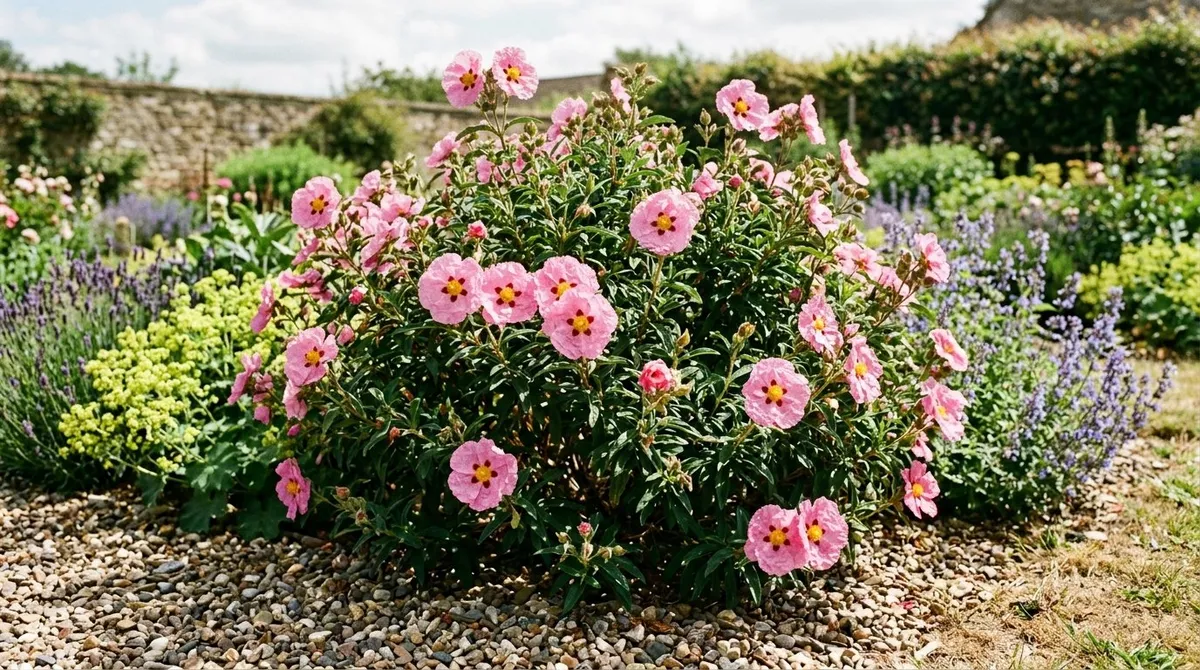
C. x purpureus is the best all-round choice for UK gardens. The large pink flowers with dark maroon basal blotches appear from late May, and it is the hardiest of the large-flowered types. It holds an RHS Award of Garden Merit and grows well in all but the coldest and wettest UK regions.
C. x hybridus (often sold as C. x corbariensis) is the hardiest species overall. Its white flowers are smaller than C. x purpureus, but the plant is denser and more spreading, making excellent ground cover on dry banks. It tolerates more exposure than other varieties and suits coastal gardens.
C. ladanifer (gum cistus) is the largest species and the most aromatic. Its white flowers with crimson blotches reach 10cm across — the biggest of any cistus. The leaves are coated in sticky labdanum resin. It is slightly less hardy than the hybrids and needs a sheltered spot in colder areas.
C. ‘Silver Pink’ is a compact hybrid with subtle silver-pink flowers. It suits small gardens, containers, and chalky alkaline soils where its low height and tidy habit work well at the front of a border.
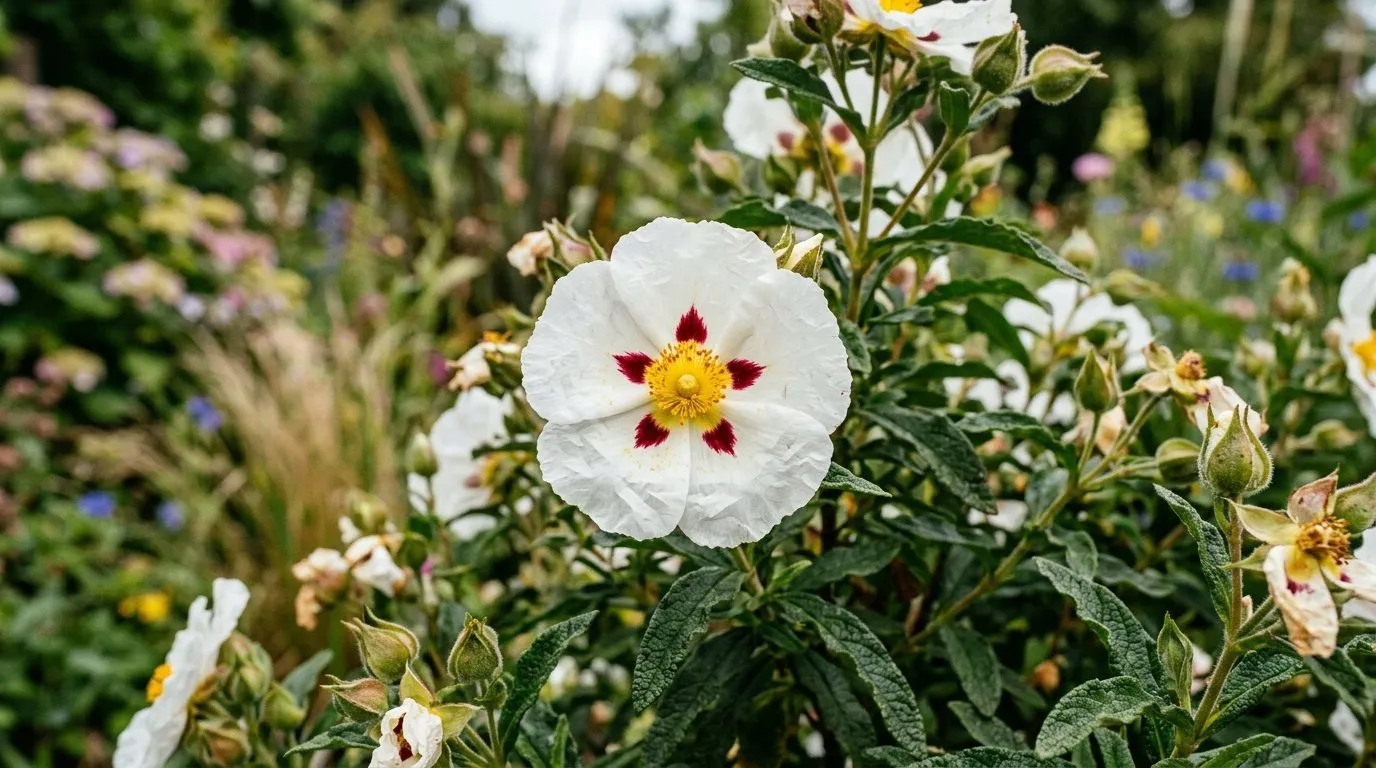
C. x purpureus in full flower — each bloom lasts one day, but a mature plant opens dozens of fresh ones every morning.
How to plant cistus rock rose
Plant cistus in late spring (April to June) for the best establishment before winter. Autumn planting risks root rot on cold, wet soils. Choose the sunniest spot in your garden — a south-facing or west-facing position is ideal.
Cistus needs poor, well-drained soil. Rich, fertile ground produces leggy, soft growth that is vulnerable to frost damage and disease. If your soil is naturally poor and sandy or chalky, plant directly without amendment. On heavy clay, dig a 50cm-wide hole and backfill with a 50:50 mix of garden soil and horticultural grit. A bucket of grit per planting hole is not excessive.
Set the plant at the same depth it sat in its pot. Bury the crown and it rots. Water it in well, then leave it alone. Cistus puts down a deep root system quickly and resents regular watering once settled. Mulch with gravel, never bark or compost, because organic mulches trap moisture against the stems and invite fungal disease.
Space plants according to their mature spread. C. x purpureus needs 1.2-1.5m between plants. C. ‘Silver Pink’ needs just 60-75cm. Planting too closely restricts airflow and creates damp conditions that cistus dislikes.
Against a wall, leave a 30cm gap between the plant and the masonry. A south-facing wall throws back useful heat, but it can also trap damp at the base, which cistus hates. Given a warm, sheltered spot, a wall-trained plant can reach 2m.
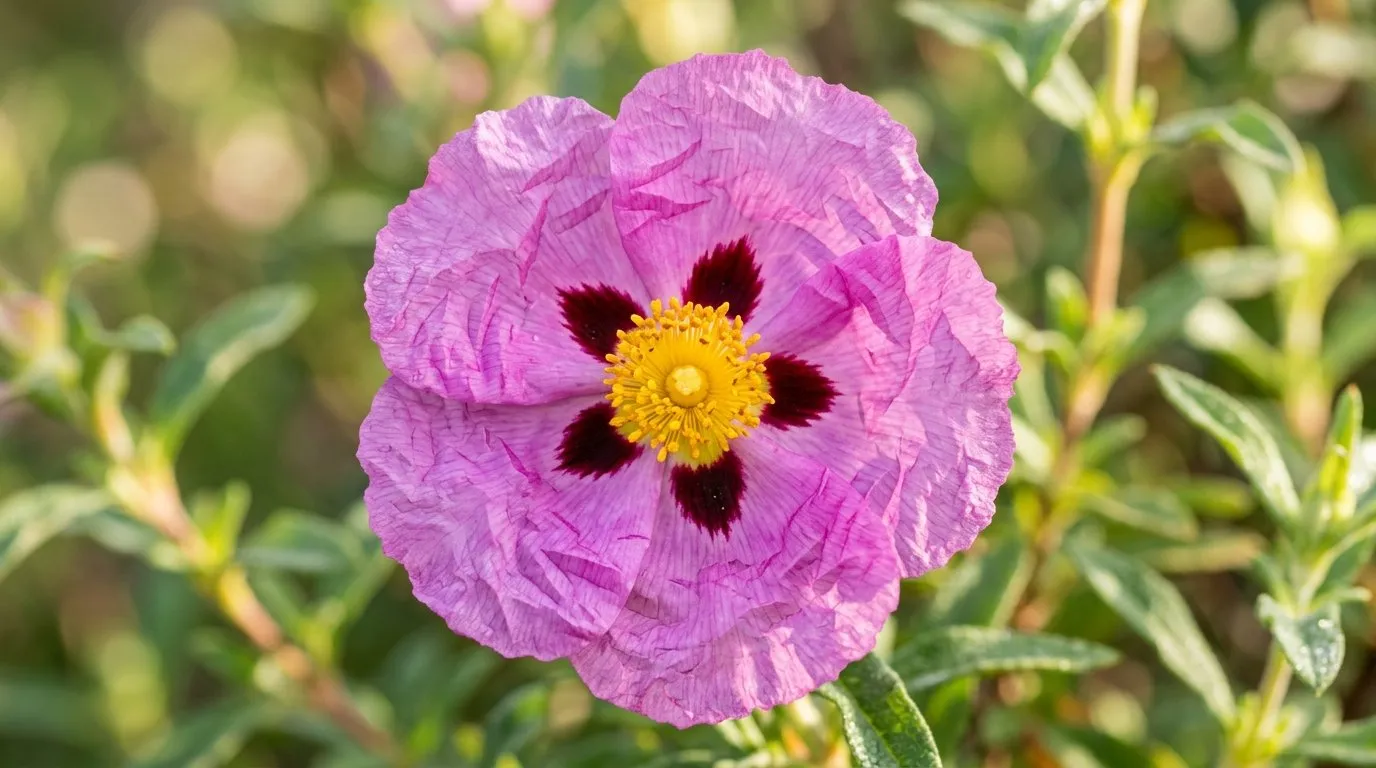
The distinctive maroon blotch at the base of each C. x purpureus petal fades by late afternoon as the flower drops.
Does cistus need pruning?
Cistus needs almost no pruning, and hard pruning kills it. Unlike lavender or rosemary, cistus will not regenerate from old, bare wood. Cut it back to leafless stems and nothing reshoots. This is the one fact to remember about cistus, and getting it wrong is the most common reason the plant dies in UK gardens.
After flowering finishes in July, you can lightly trim the current season’s growth to keep the shape tidy. Remove spent flower shoots and any frost-damaged tips in late spring. Use secateurs, not shears — a rough shearing cut creates entry points for disease.
If a cistus has gone leggy and bare at the base after 8-10 years, replace it. Take summer cuttings (cistus roots easily) and grow on a new plant. Trying to renovate an old, woody one with hard pruning never works.
The one exception is storm-damaged or dead branches. Cut these back to a point where healthy, leafy growth remains. Leave green foliage on every cut stem and the plant recovers. Whatever you do, never cut into bare wood.
Can cistus survive UK winters?
Cold temperatures rarely kill cistus — winter wet does. C. x purpureus and C. x hybridus tolerate -15C in well-drained soil, which covers all but the most extreme UK winters. The problem is saturated ground. Roots sitting in cold, waterlogged clay rot before spring arrives.
In the mild south-west, coastal areas, and urban heat islands, most cistus species overwinter without protection. In the Midlands and North, choose the hardiest varieties (C. x purpureus, C. x hybridus) and plant against a south-facing wall or fence. The extra warmth and shelter make a measurable difference.
Established plants rarely need fleece. Young ones are more at risk in their first winter, so a temporary fleece cover during a long sub-zero spell is worth having. Take it off as soon as temperatures climb above freezing, or moisture builds up underneath.
For cold, exposed gardens, C. x hybridus is the safest choice. Its low, spreading habit keeps it out of the worst wind, and its hardiness to -15C matches any UK location. Pair it with other evergreen shrubs for year-round structure.
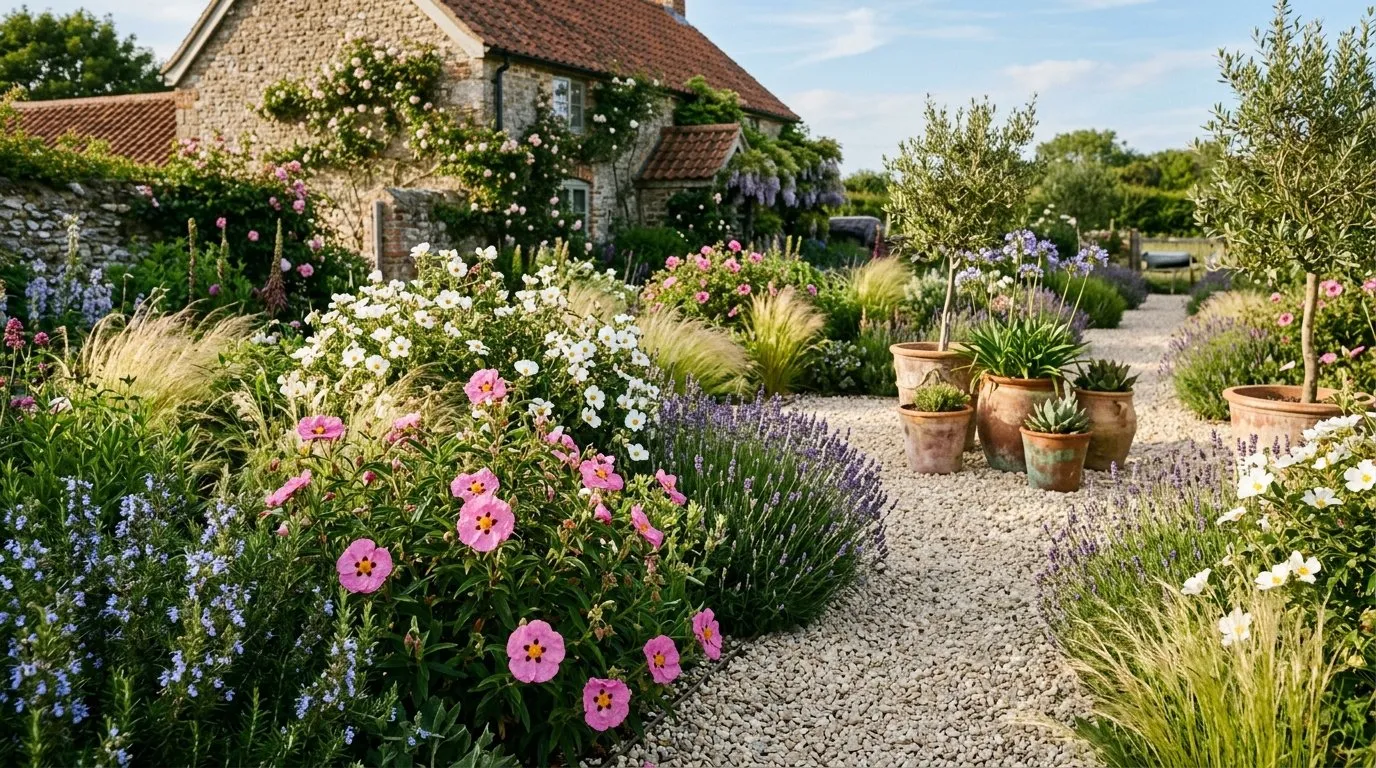
Cistus thrives in gravel gardens where sharp drainage and reflected heat mimic its native Mediterranean habitat.
How to propagate cistus from cuttings
Semi-ripe cuttings taken in July or August are the most reliable way to propagate cistus. Seed germination is possible but erratic, and named hybrids do not come true from seed. Cuttings produce identical copies of the parent plant and root within 4-6 weeks.
Select healthy, non-flowering side shoots of the current season’s growth. Cut 10cm lengths with a heel — pull the shoot away from the main stem so a sliver of older bark comes with it. Strip the lower leaves and dip the heel end in hormone rooting powder.
Insert cuttings into pots of 50:50 perlite and peat-free compost. Water lightly and cover with a clear plastic bag or place in an unheated propagator. Keep out of direct sun. Roots typically form in 4-6 weeks. Pot on individually when roots are visible through the drainage holes.
Overwinter young plants in a cold frame or unheated greenhouse for their first season. Plant out the following spring once the risk of hard frost has passed. For more on this technique, our guide to plant propagation from cuttings covers the principles in detail.
Cistus can also be propagated from softwood cuttings taken in June, though success rates are lower. Layering works for low-growing species like C. x dansereaui ‘Decumbens’ — pin a low branch to the soil, and it roots where it contacts the ground over one growing season.
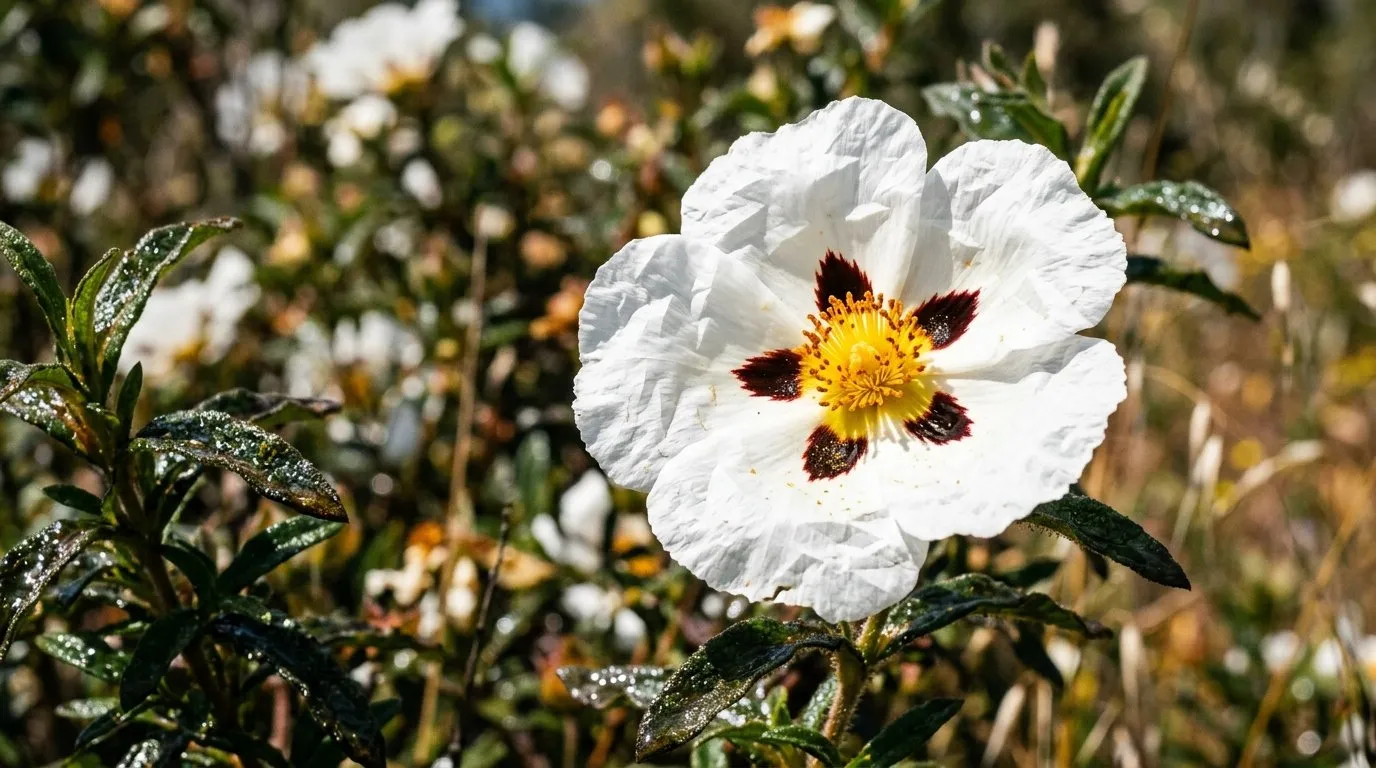
C. ladanifer produces the largest flowers of any cistus — up to 10cm across with a sticky, resinous fragrance on warm days.
Best uses for cistus in garden design
Cistus suits gravel gardens, Mediterranean borders, coastal planting, and dry banks where other shrubs struggle. Its evergreen habit and summer flowers fill a gap that few other drought-tolerant shrubs cover so effectively.
Gravel gardens are the natural home for cistus in UK design. Plant alongside Stipa grasses, lavender, rosemary, and Phlomis for a planting scheme that needs no irrigation once established. Beth Chatto’s dry garden in Essex showed that this style works in the driest parts of England, and cistus is one of its key plants. Building a gravel garden on free-draining soil is the closest you can get to Mediterranean conditions in the UK.
Coastal gardens suit cistus perfectly. Salt spray, wind, and thin sandy soil are conditions it evolved to handle. C. x hybridus is the best choice for exposed coastal positions — its low, dense habit resists wind damage.
Dry banks and slopes are awkward to plant and keep tidy. C. x dansereaui ‘Decumbens’ spreads across slopes, roots where its stems touch soil, and holds the bank together with a fibrous root system. Once settled it smothers weeds and needs no watering, a real low-maintenance solution for problem areas.
Mixed borders work when cistus is given the sunniest, driest position. Plant it towards the front or on the edge where it gets maximum light and is not shaded by taller perennials. Avoid placing it in the middle of a lush border where irrigation from neighbouring plants keeps the soil damp.
The Royal Horticultural Society’s cistus guide covers the full range of species and cultivars available in UK nurseries, including several with AGM status.
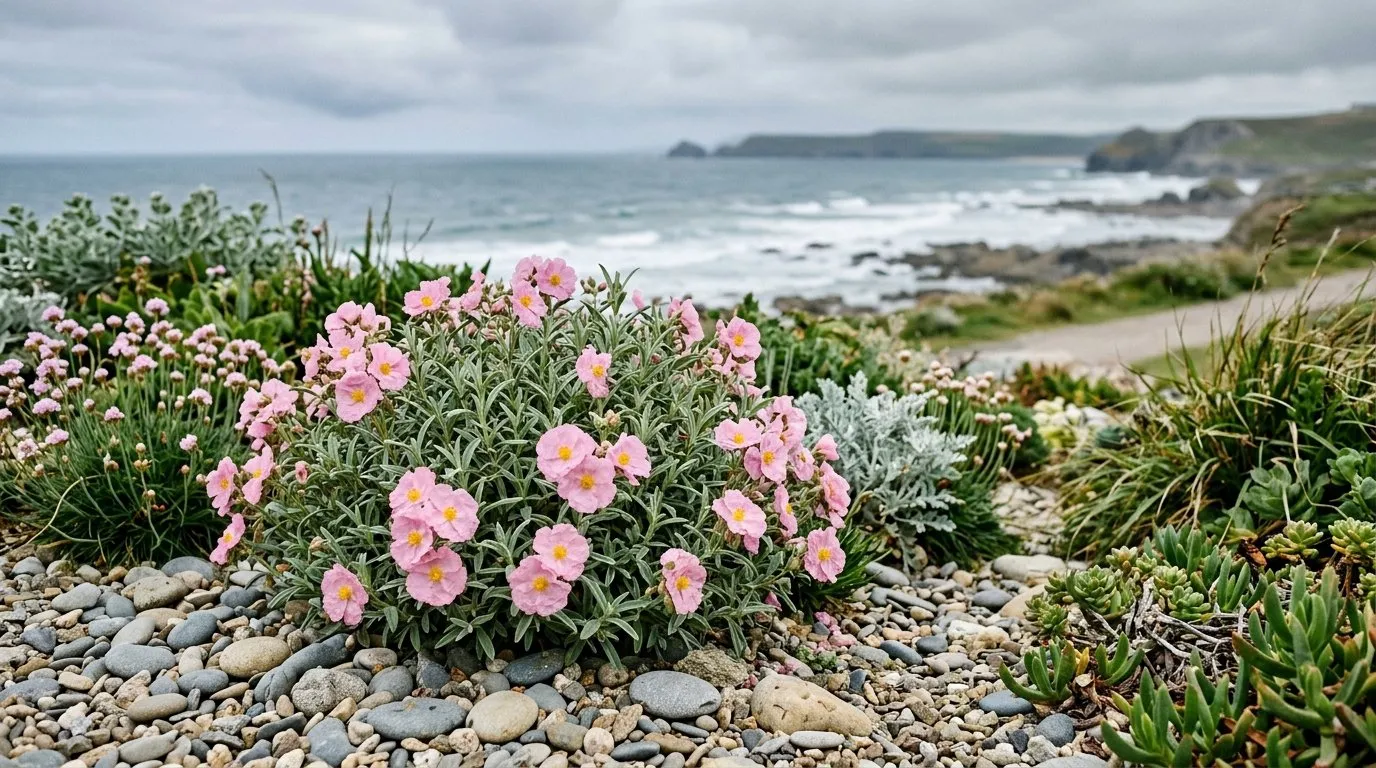
C. ‘Silver Pink’ suits containers and front-of-border positions, staying compact at 75cm in the best-drained soils.
For more flowering shrub options that pair with cistus in sunny borders, several share the same cultural requirements and bloom on a similar schedule.
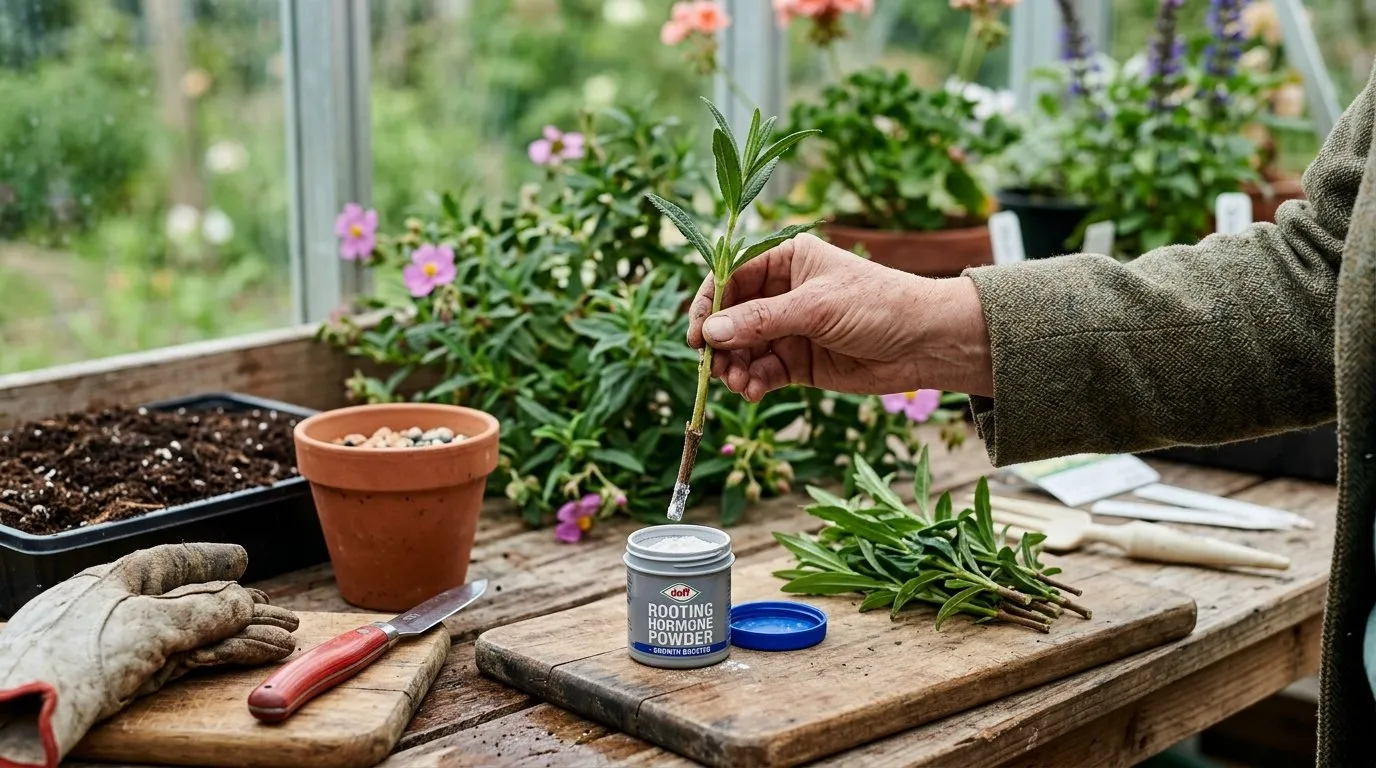 Cistus semi-ripe cuttings taken in July. 10cm heel cuttings root in 6-8 weeks in gritty compost — the easiest way to replace ageing plants.
Frequently asked questions
Is cistus rock rose hardy in the UK?
Most cistus varieties are hardy to -10C, covering the majority of UK gardens. C. x purpureus and C. x hybridus tolerate -15C in well-drained soil. Winter wet kills more cistus plants than cold temperatures. Plant against a south-facing wall and ensure sharp drainage to maximise winter survival in colder regions.
Can you hard prune cistus?
No — cistus does not regenerate from old wood. Hard pruning kills the plant. Only trim lightly after flowering, removing spent flower shoots and shaping gently. Never cut into bare, woody stems. If a cistus becomes leggy and bare at the base, replace it rather than attempting renovation pruning.
How long does a cistus plant live?
Cistus plants typically live 10-15 years in UK gardens. They are fast-growing and reach full size within 3-4 years. After 10 years, most become leggy and woody at the base. Plan to replace ageing plants with cuttings taken from them in their prime, around years 4-6.
Why are my cistus flowers falling off so quickly?
This is normal behaviour, not a problem. Each cistus flower lasts only one day. Petals open at dawn and drop by evening. A healthy plant produces so many buds that fresh flowers replace fallen ones daily throughout the May-to-July flowering period. The ground beneath a mature cistus is carpeted with dropped petals every morning.
Does cistus grow in clay soil?
Cistus struggles on heavy, undrained clay. It needs free-draining soil and rots if roots sit in winter wet. On clay, dig a 50cm-wide hole and backfill with a 50:50 mix of garden soil and sharp horticultural grit. Alternatively, plant in a raised bed with gritty compost. A slope that sheds surface water also helps.
What is labdanum resin from cistus?
Labdanum is a sticky, aromatic resin produced on cistus leaves and stems, particularly on C. ladanifer. It has been harvested in the Mediterranean for over 3,000 years for perfumery and incense. In UK gardens, you can smell it on warm days — run a hand through the foliage on a hot afternoon and it leaves a fragrant, resinous residue.
When is the best time to plant cistus in the UK?
Plant cistus in late spring, from April to June. This gives roots a full growing season to establish before winter. Autumn planting is riskier because young plants sitting in cold, wet soil through their first winter often rot before they can establish drainage-tolerant root systems.
Our team produces practical UK gardening guidance from source research, contributor records and established horticultural practice. Editorial standards are overseen by Matt W.