Key takeaways
- Sow direct outdoors March-June; do not transplant
- Poor, well-drained soil and full sun
- Flowers June to October if dead-headed
- Self-seeds reliably; almost weed-like in suitable sites
- Best varieties: Sun Shades, Buttermilk, Apricot Chiffon
- Drought-tolerant once established
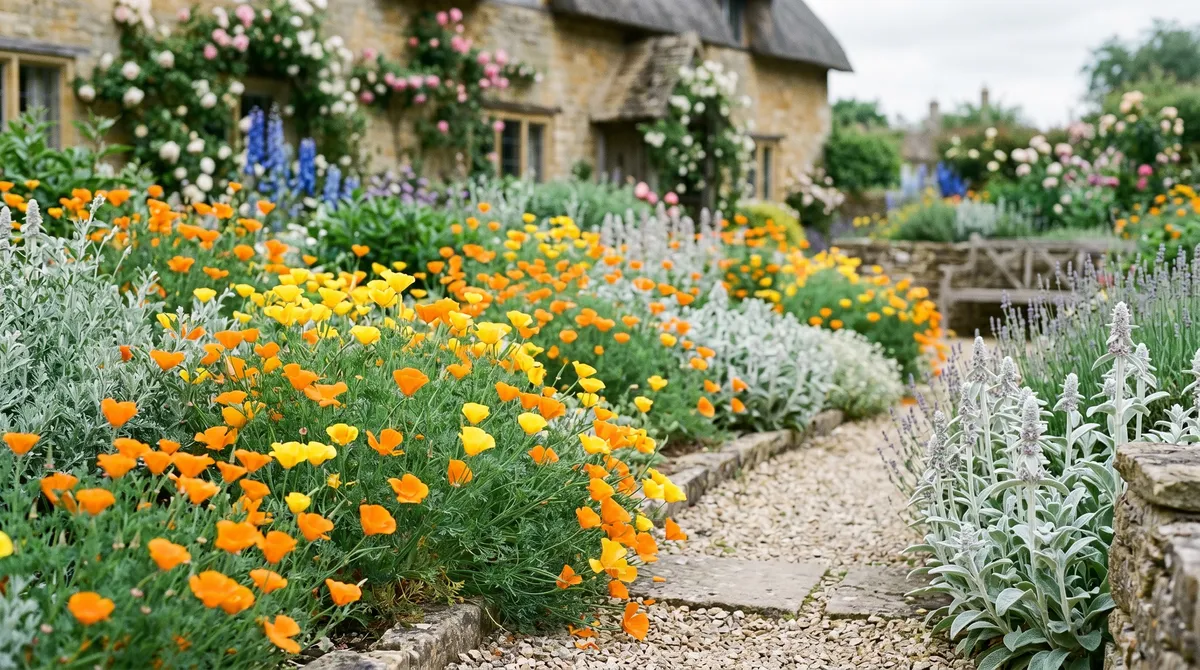
California poppies (Eschscholzia californica) are one of the easiest UK annuals from seed. Bright orange-yellow cups on silvery-blue foliage flower from June to first frost, in any sunny well-drained spot. This guide covers sowing dates, the variety choices that go beyond classic orange, the self-seeding management that builds a year-on-year display, and the soil and feeding rules that maximise flowering.
Best UK California Poppy Varieties
The standard wild form is orange-yellow. UK gardens now have access to 15+ named varieties spanning cream, peach, pink, red and bicolour.
| Variety | Colour | Height | Flowering | Notes |
|---|---|---|---|---|
| Wild form (Eschscholzia californica) | Orange-yellow | 300-400mm | Jun-Oct | The classic |
| Sun Shades Mixed | Orange, yellow, cream | 200-300mm | Jun-Sep | Dwarf bedding mix |
| Buttermilk | Cream-yellow | 300-400mm | Jun-Oct | Soft cottage colour |
| Apricot Chiffon | Peach-apricot | 250-350mm | Jul-Oct | Sought-after recent |
| Carmine King | Pink-red | 300-400mm | Jul-Oct | Deeper colour |
| Thai Silk Mixed | Frilled doubles | 200-300mm | Jun-Sep | Frilled-petal form |
| Mahogany Red | Deep red-brown | 250-350mm | Jul-Oct | Unusual deep tone |
| Mission Bells | Bicolour mix | 250-350mm | Jun-Oct | Pink-orange blends |
For UK first-time growers, Sun Shades Mixed (£2.50-£4.50 per packet from Suttons, Sarah Raven, Mr Fothergill’s) gives the most reliable show. Apricot Chiffon is the sought-after specialist variety.
Sowing and Establishment
Direct sow outdoors from late March to early June. California poppies dislike transplanting; the deep taproot suffers irreversible damage.
Method:
- Rake bed level, removing stones and weeds
- Soil should be poor and well-drained (add sharp sand if heavy clay)
- Sow seed on the soil surface or barely cover (light helps germination)
- Sow at 3-5 seeds per 150mm space
- Water lightly
- Germinate in 14-21 days
- Thin seedlings to 150mm apart at 4-leaf stage
Successional sowing: Sow March, April and May for flowering from June through to October. Each batch flowers 10-14 weeks after sowing.
Module raising (if you must): Use deep root-trainer modules (200mm deep). Sow one seed per module. Plant out at 3-leaf stage with minimum root disturbance. Flowering will still be 20-30% reduced versus direct sown.
Site and Soil
California poppies need three things: full sun, poor soil, and good drainage.
Best UK sites:
- South or south-west facing borders
- Gravel gardens
- Sunny dry banks
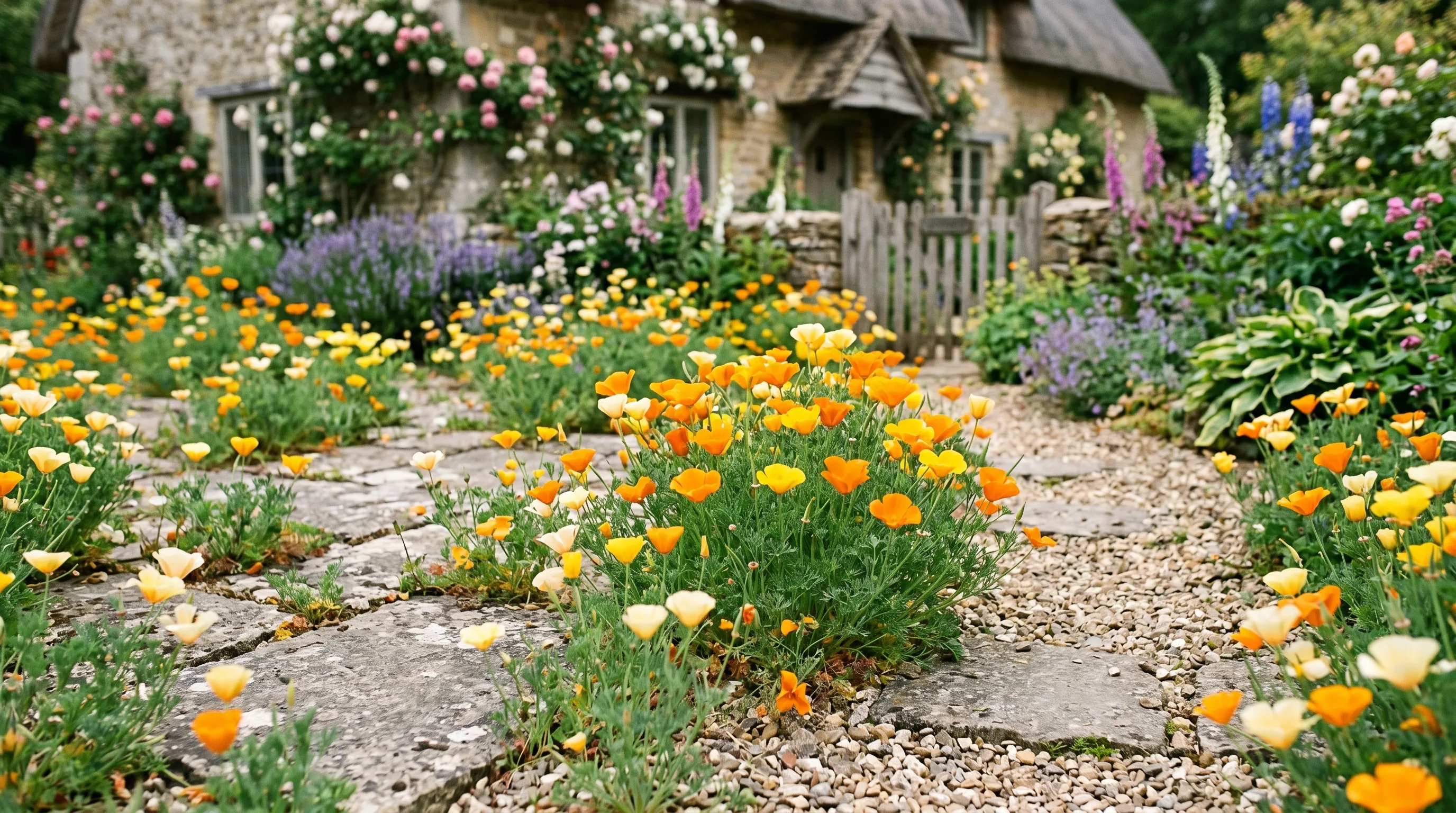
- Cracks in stone or brick paving
- Container plantings (in poor compost)
Avoid:
- Damp shaded borders
- Rich, recently manured beds
- Heavy clay without drainage improvements
- Lawn edges (lawn grass outcompetes seedlings)
Feeding and Watering
Do not feed. Rich soil produces lush leaves and few flowers. California poppies evolved in poor Californian chaparral soil and outperform on equivalent UK conditions.
Watering:
- Water-in newly sown seed
- Water every 5-7 days for first 4 weeks
- After establishment, water only in 14+ day drought
- Container-grown plants need watering twice weekly in summer
No mulch needed. Mulch retains moisture and slows seed germination. The bare soil between plants is essential for self-seeding.
Dead-Heading and Self-Seeding
For long flowering, dead-head spent flowers every 3-4 days. Plants continue producing new buds through October if seed heads are removed.
For self-seeding in late summer:
- Stop dead-heading from mid-August onwards
- Let plants produce 30-50 seed pods
- Allow pods to ripen and split naturally
- Light raking spreads seed across the bed
- Or shake seed heads over desired new areas
- Seedlings emerge the following March-April
Companion Planting
California poppies pair well with UK drought-tolerant cottage plants.
| Companion | Effect |
|---|---|
| Silvery lambs ear (Stachys byzantina) | Foliage contrast |
| Catmint (Nepeta) | Blue complement |
| Hardy geranium ‘Rozanne’ | Blue and orange together |
| Cornflower (Centaurea cyanus) | Annual cottage mix |
| Eryngium (sea holly) | Spiky contrast |
| Achillea ‘Moonshine’ | Yellow harmony |
| Salvia ‘Caradonna’ | Dark purple contrast |
For the wider UK annual planning, our annual bedding guide covers companions and colour pairings.
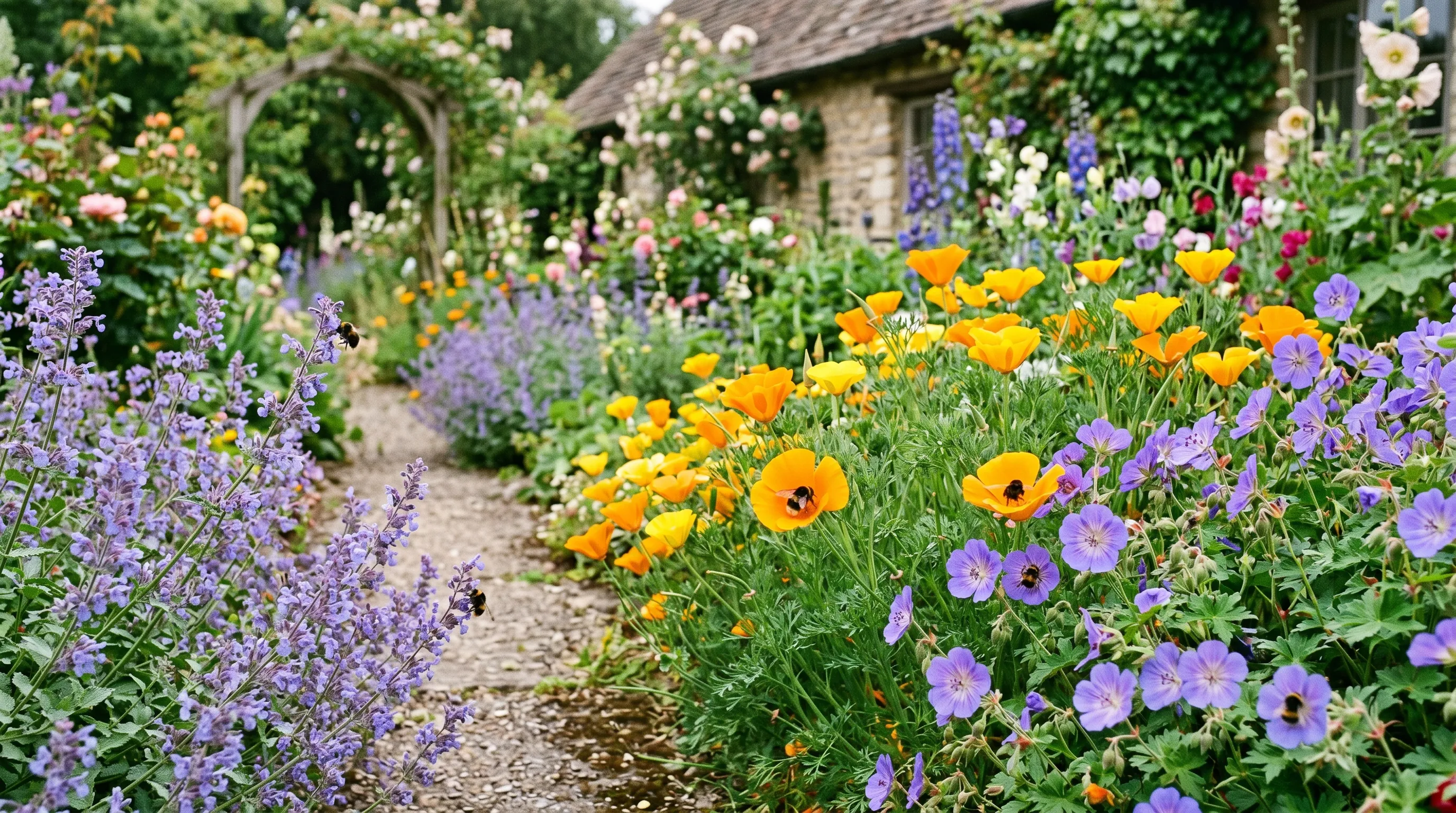 California poppies with catmint and hardy geranium in the Staffordshire border. Blue and orange companions pull out the poppy colour while attracting bumblebees, honeybees and hoverflies.
Common Mistakes With California Poppies
Mistake 1: transplanting from modules. The taproot suffers irreversible damage. Always direct sow.
Mistake 2: feeding the plants. Lush leaves and no flowers. Never feed.
Mistake 3: rich soil planting. Same result as feeding. Use poor unimproved soil only.
Mistake 4: over-watering. Roots rot in damp soil. Water only during establishment and severe drought.
Mistake 5: dead-heading after mid-August. Stops self-seeding. Allow seed pods to form for next year’s plants.
For the wider UK annual border, our annual bedding guide covers companions. For drought-tolerant planting partners, our drought guide covers the wider palette.
California Poppy Calendar UK Month-by-Month
| Month | California poppy task |
|---|---|
| January | Order seed for spring sowing |
| February | Prepare poor-soil bed |
| March | First direct sowing late March |
| April | Continue successional sowing |
| May | Final successional sowing |
| June | First flowers from March sowings |
| July | Peak flowering. Dead-head every 3-4 days |
| August | Stop dead-heading mid-month for self-seeding |
| September | Allow seed heads to form and ripen |
| October | Final flowers as frosts approach |
| November | Plants die back. Light raking spreads seed |
| December | No action. Plants dormant |
Frequently asked questions
When should I sow California poppies in the UK?
Direct sow outdoors from late March to early June. The seeds need light to germinate, so sow on the surface or barely cover. Plants flower 10-14 weeks after sowing. Avoid module-raising; the taproot resents transplanting.
Do California poppies come back every year?
California poppies are annuals in UK gardens but self-seed so reliably they often appear perennial. Allow some plants to set seed in late summer, scatter the seed heads, and new plants emerge the following spring. After 2-3 years, populations are self-perpetuating.
What soil do California poppies need?
Poor, well-drained, sandy soil. Rich UK garden soil produces lush foliage with few flowers. If your soil is heavy clay, add 50:50 sharp sand at planting. Full sun position essential. Do not feed during the season.
How tall do California poppies grow?
Standard California poppies reach 250-400mm tall and 200-300mm wide. Dwarf varieties (Sun Shades) stay at 200-300mm. Plants form a low spreading mound covered in flowers from June to October.
Are California poppies invasive in the UK?
They self-seed enthusiastically but are not invasive under UK conditions. Unwanted seedlings pull out easily. Self-sown populations rarely spread beyond the original bed. Naturalised populations exist on UK railway embankments without ecological harm.
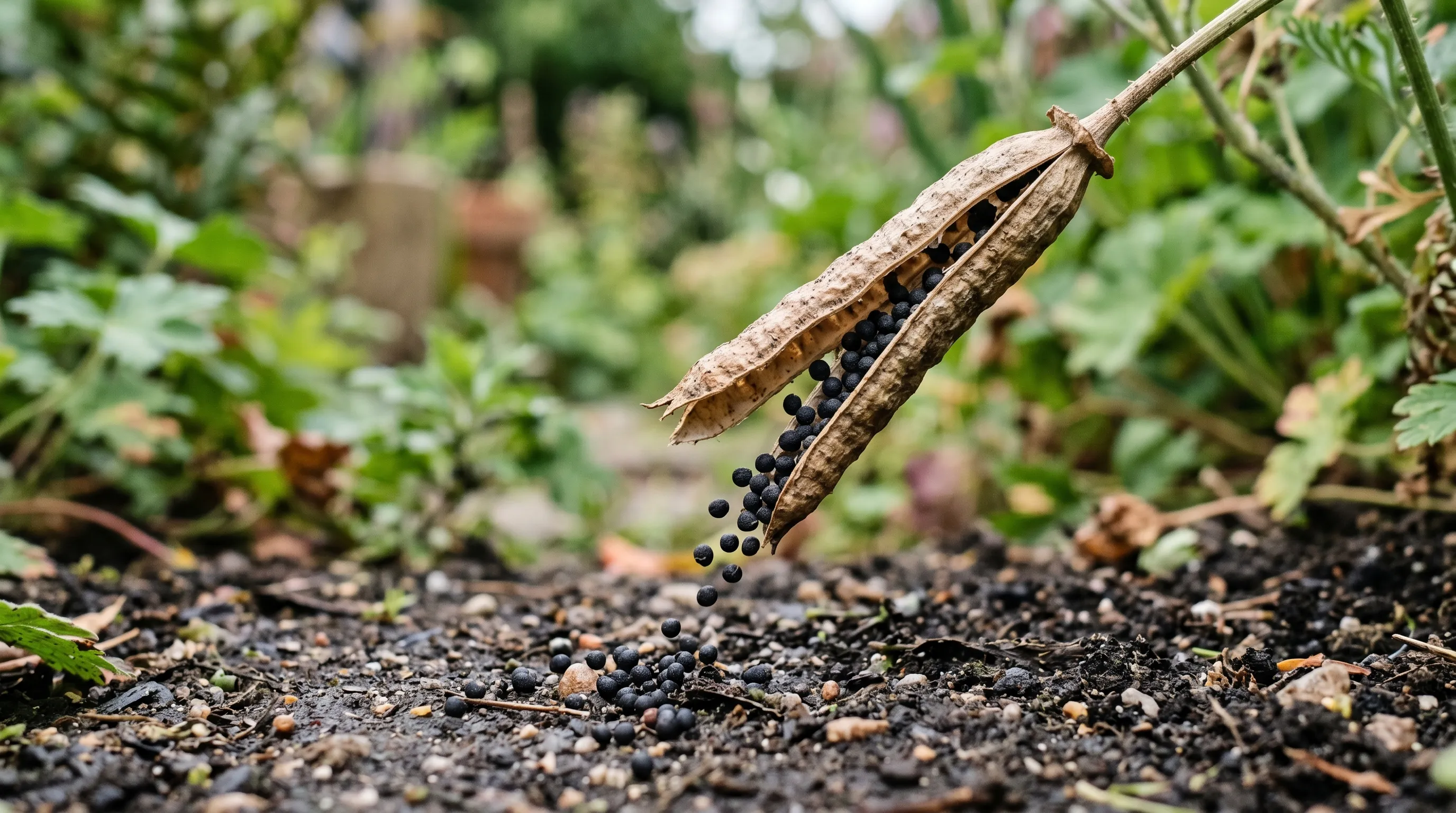 Late-summer seed pods on Staffordshire California poppies. Each pod releases 30-50 small black seeds that fall to the soil to germinate next spring. The self-seeding mechanism that makes the species near-perennial in UK gardens.
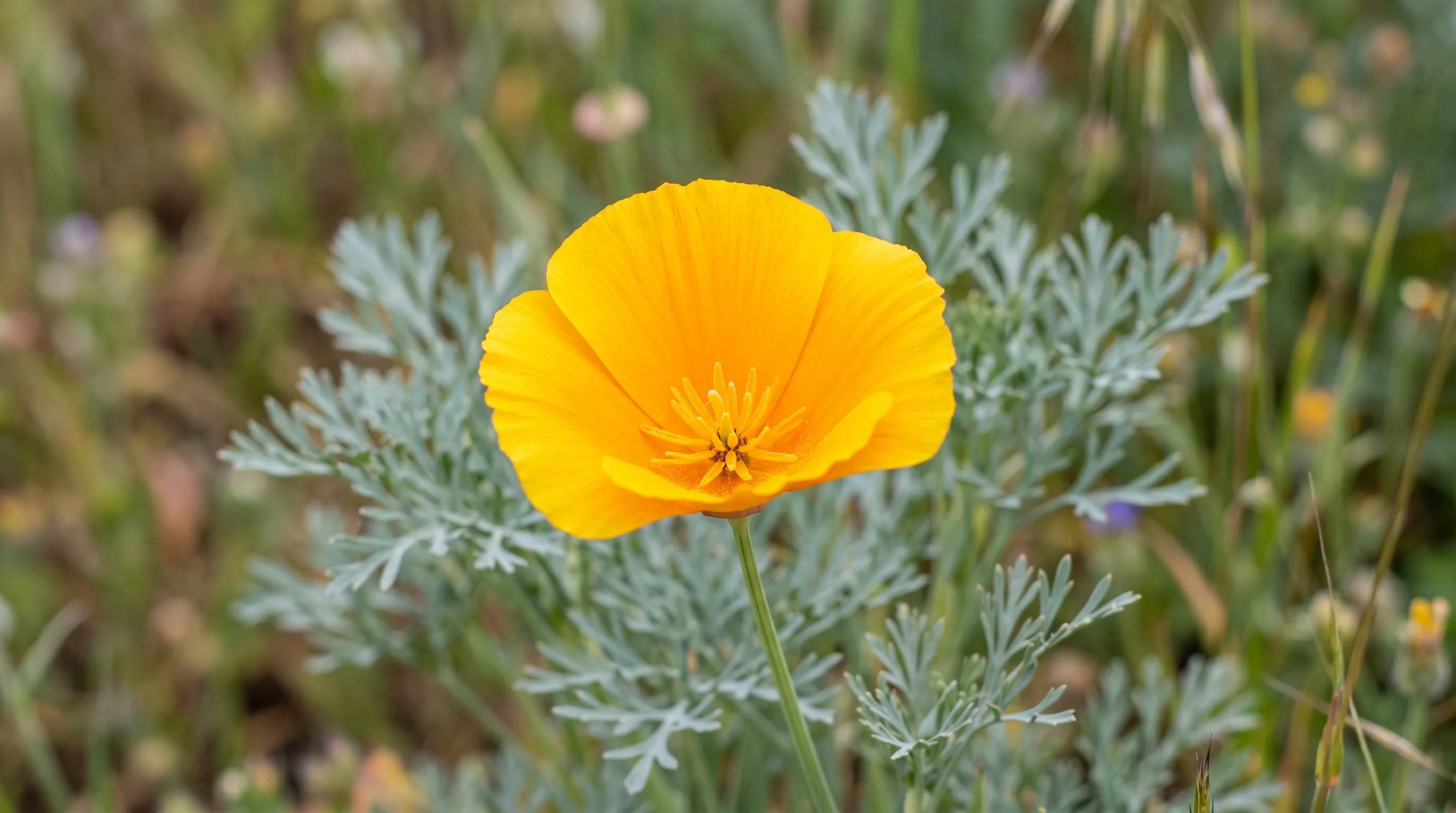 A single Eschscholzia californica flower at peak. The four overlapping petals open in sunshine and close at night and in rain. Silvery-blue feathery foliage gives the species its distinctive cottage-garden look.
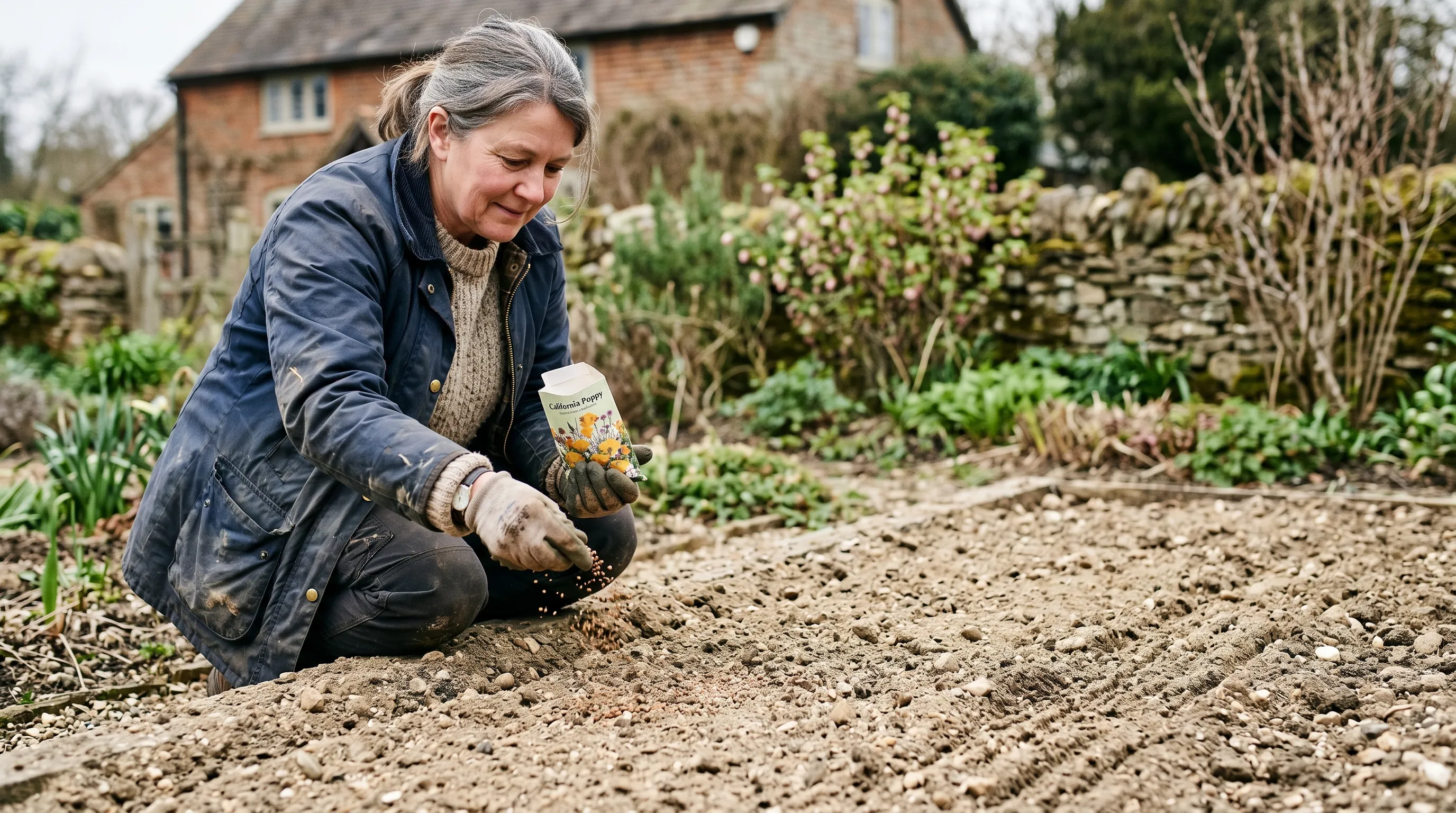 Direct sowing California poppy seed onto a poor sandy bed in late March. Seed scattered on the surface, lightly raked in, watered gently. Germination in 14-21 days, flowers 10-14 weeks later.
Now plan the wider cottage garden
California poppies pair with many UK cottage plants. Our best annual bedding plants UK guide covers companion plants and colour pairings. For drought-tolerant planting partners, our drought guide covers the wider palette. To extend the season into autumn, our best autumn flowers UK guide covers asters, rudbeckia and other late-season companions. And for the wider cut-flower planning, our how to grow cut flowers UK guide covers the full year’s planting plan. Fellow direct-sown poppies are worth a look too: our breadseed poppy guide covers the seed-producing cousin and the law around it.
Our team produces practical UK gardening guidance from source research, contributor records and established horticultural practice. Editorial standards are overseen by Matt W.