Key takeaways
- Hardy UK ferns thrive in deep shade and damp ground
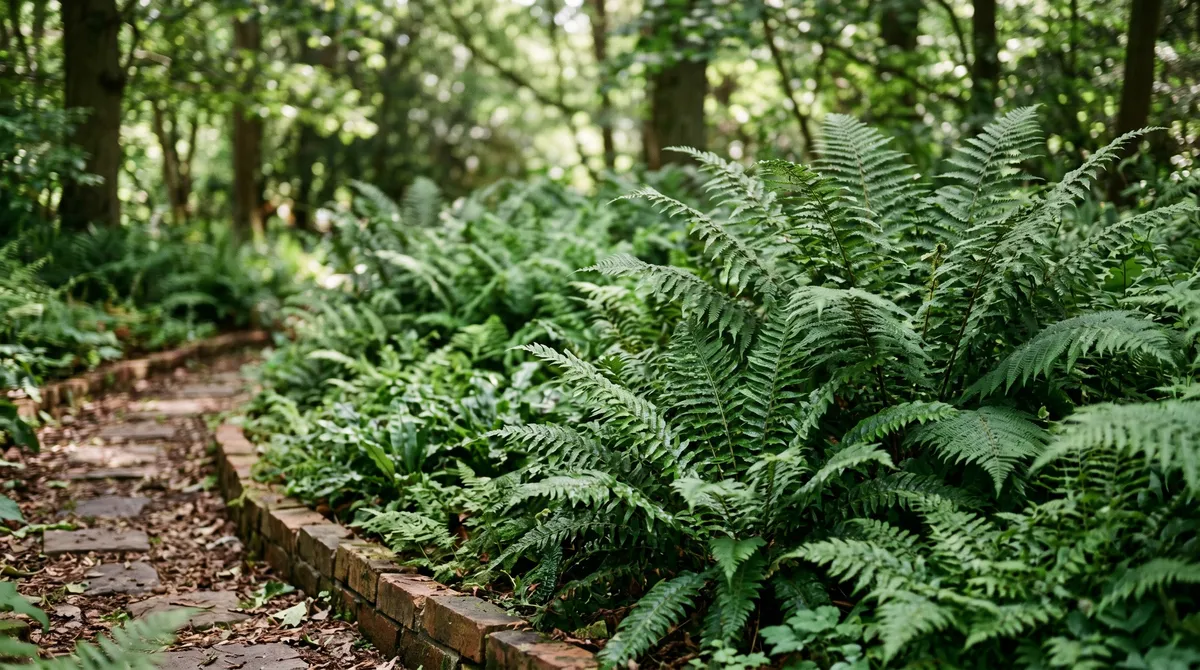
- Victorian fernery revival: shaded brick or stone-edged beds
- Best species: Dryopteris filix-mas, Polystichum setiferum, Athyrium niponicum
- Plant in leafmould-rich soil, mulch annually
- Divide every 4-6 years in autumn
- Most ferns long-lived: 30-50+ year specimens common
Hardy UK ferns are the unsung heroes of the shade garden. Long-lived, low-maintenance, architecturally striking, and thriving where most plants fail. This guide covers the 10 best UK hardy fern species, the Victorian fernery revival sweeping UK gardens, planting positions, and the simple care that turns a shade corner into a fernery.
The Victorian Fernery Revival
UK fernery gardening exploded in the 1850s with “Pteridomania” (fern fever). Victorian collectors built specialist fern houses, gravel-edged ferneries, and brick-walled shade gardens. The trend faded in the early 1900s but the structures (and the plant tradition) remain.
A modern UK fernery typically includes:
- Shaded north or east-facing aspect
- Brick, stone, or salvaged York paving edges
- Improved leafmould-rich soil
- Mix of evergreen and deciduous species
- Heights 200mm to 1.5m for layered display
- Small log piles and moss-covered rocks
- Sometimes a small water feature for humidity
Best UK Hardy Fern Species
The 10 most reliable choices for UK gardens.
| Species | Height | Evergreen? | UK hardiness | Position |
|---|---|---|---|---|
| Dryopteris filix-mas (male fern) | 800-1200mm | Semi-evergreen | Very hardy | Any UK shade |
| Polystichum setiferum (soft shield fern) | 600-900mm | Evergreen | Very hardy | UK shade or part shade |
| Athyrium niponicum ‘Pictum’ (Japanese painted) | 300-450mm | Deciduous | Hardy | UK part shade, damp |
| Asplenium scolopendrium (hart’s tongue) | 300-600mm | Evergreen | Very hardy | UK damp shade |
| Matteuccia struthiopteris (ostrich fern) | 1.2-1.5m | Deciduous | Very hardy | UK damp deep shade |
| Polypodium vulgare (common polypody) | 200-400mm | Evergreen | Very hardy | UK dry shade |
| Dryopteris erythrosora (autumn fern) | 600-900mm | Evergreen | Hardy | UK part shade |
| Polystichum aculeatum (hard shield fern) | 500-800mm | Evergreen | Very hardy | UK deep shade |
| Adiantum venustum (Himalayan maidenhair) | 200-400mm | Deciduous | Hardy | UK damp part shade |
| Osmunda regalis (royal fern) | 1.0-1.5m | Deciduous | Very hardy | UK wet ground, sun OK |
Dryopteris filix-mas is the safe starting choice for any UK shade garden. Native UK species, tolerates almost any conditions, reaches 1m in 3-4 years.
Athyrium niponicum ‘Pictum’ is the painted fern with silvery-purple fronds. The colour highlight in any UK fernery. £8-£15 per plant.
Matteuccia struthiopteris is the dramatic ostrich fern that reaches 1.5m in damp shade. Spreads by underground runners; give space.
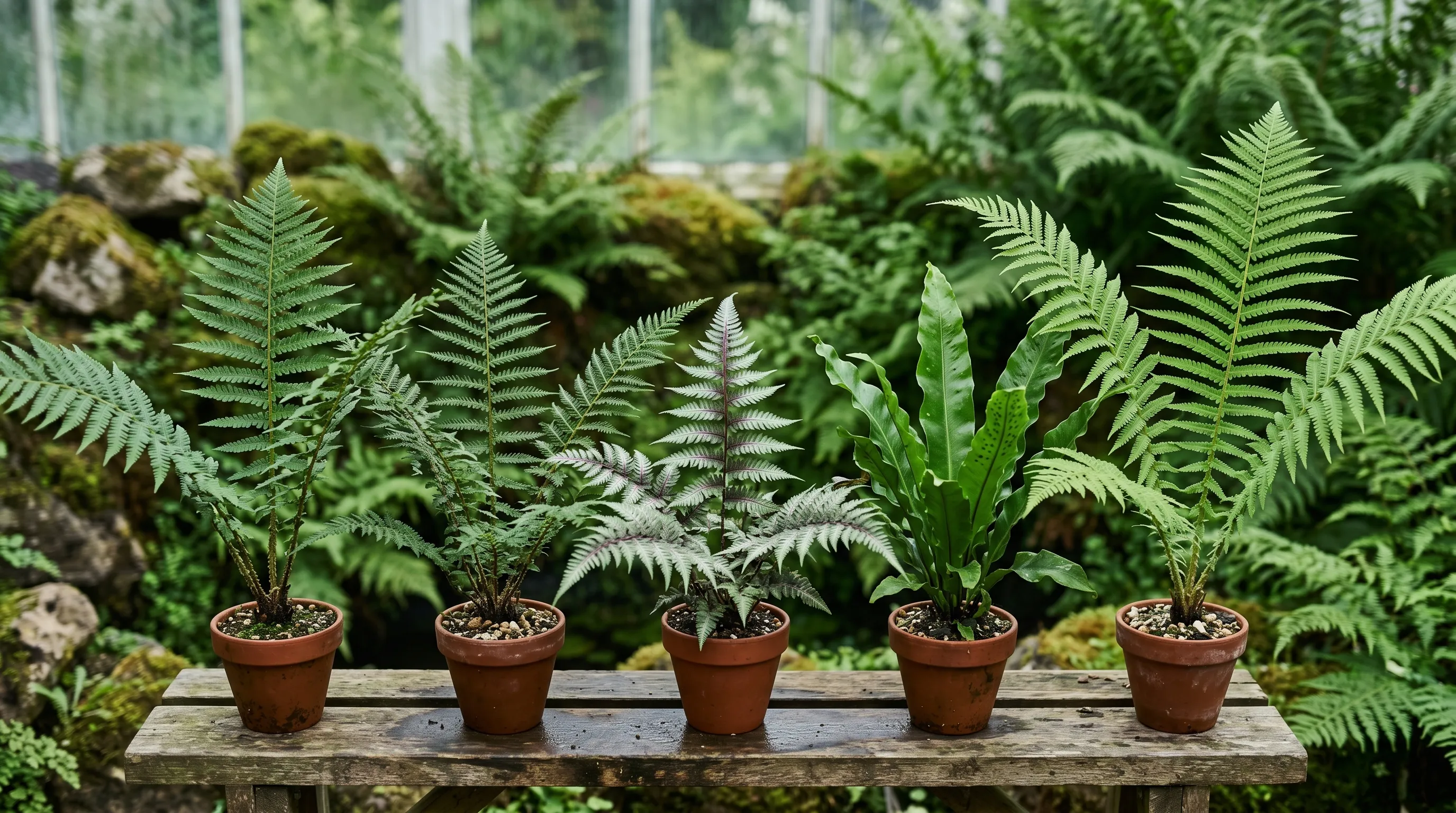 Five UK hardy fern species in the Staffordshire fernery. Each has a distinct frond form: classic fern silhouette (Dryopteris), softer divided fronds (Polystichum), silvery-purple painted (Athyrium), strap-shaped (Asplenium), and upright vase shape (Matteuccia).
Site Preparation
The most important step in UK fern gardening.
Position: deep shade or part shade, north or east-facing aspect, sheltered from drying east winds, away from full midday sun.
Soil improvement:
- Dig 200-300mm deep across the bed area
- Mix in 50% leafmould plus 25% well-rotted garden compost
- Add 25% grit if heavy clay (for drainage)
- Mulch surface with 50mm leafmould after planting
The Staffordshire fernery was originally heavy clay. After three annual leafmould top-dressings, the soil structure transformed. Ferns established in 2018 reached mature size by 2022.
Planting and Spacing
Plant from October-March (bare-root and container) or any time of year (container only).
Method:
- Dig planting hole twice rootball width, same depth
- Plant at same level as in the pot (crown at soil surface)
- Refill with leafmould-rich soil mix
- Water in deeply (20 litres per plant)
- Mulch 50mm leafmould around the base
Spacing by mature size:
- Small ferns (Athyrium, Adiantum): 300-400mm apart
- Medium ferns (Polystichum, Asplenium): 500-700mm apart
- Large ferns (Dryopteris, Osmunda): 800-1200mm apart
- Very large ferns (Matteuccia): 1.2-1.5m apart
For a 4x6m fernery, plan 18-25 plants of mixed species across 3-4 height layers.
Watering and Mulching
Watering:
- Year 1-2: weekly through dry weeks (10-15 litres per plant)
- Year 3+: only during extended drought (14+ days no rain)
- Container ferns: twice weekly in summer
The annual leafmould mulch:
The single highest-impact maintenance routine. Apply 50mm leafmould around the base of each fern every November and again in March.
The leafmould:
- Releases slow nutrients
- Retains soil moisture
- Suppresses weeds
- Creates the spongy soil structure ferns evolved with
- Improves clay drainage and sand retention
Source: collect autumn leaves, store in mesh bags for 12-18 months, use the resulting leafmould. Or buy compost-grade leafmould from UK garden centres at £6-£12 per 50L bag.
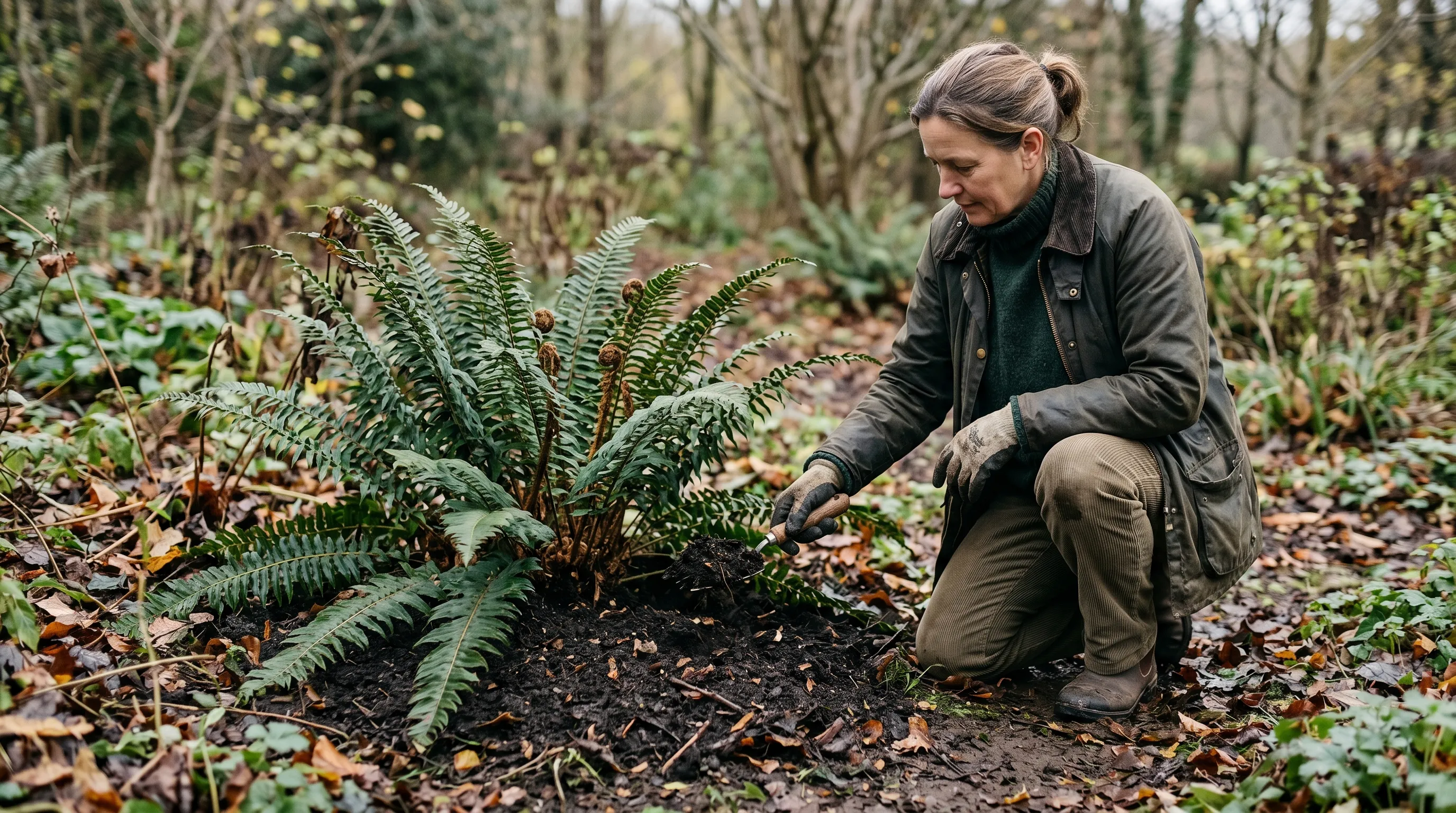 The annual November leafmould mulch around a Staffordshire Polystichum setiferum. 50mm depth across the root area. The single highest-impact ongoing maintenance task for any UK fernery.
Division and Renewal
Most ferns benefit from division every 4-6 years.
When: September-October or early March.
Method:
- Lift the whole clump with a digging fork
- Wash soil from the roots to see the crown structure
- Cut into 3-5 sections, each with visible crowns and roots
- Use a clean sharp knife or saw for tough crowns
- Replant divisions at the same depth as the original
- Water in deeply
- Mulch heavily
Divisions establish within 12-16 weeks. Spring divisions flower the same year; autumn divisions flower the following spring.
Some ferns (Asplenium scolopendrium, Polypodium) self-spread by spores or runners and need less division. Others (Matteuccia struthiopteris) spread aggressively and benefit from division to control size.
Common Mistakes With UK Hardy Ferns
Mistake 1: planting in full sun. Most UK hardy ferns scorch in full sun. Choose shaded positions.
Mistake 2: using bark mulch. Steals nitrogen and drains too freely. Use leafmould only.
Mistake 3: planting too dry. Ferns evolved in damp woodland; water consistently in first 2 years.
Mistake 4: skipping the annual mulch. Bed slowly degrades. Mulch every November and March.
Mistake 5: dividing too soon. Most ferns reach best size at 3-5 years and resent earlier division. Wait for visible clump congestion.
For the wider UK shade garden, our shade plants guide covers companion species. A scented carpet works well between the crowns too: underplant ferns with sweet woodruff for a low, shade-loving groundcover that thrives in the same leafmould-rich soil. Brunnera macrophylla is another fine fern companion, its silver-marbled leaves and blue spring flowers lifting the green fronds; see our guide on how to grow brunnera. For a wildlife-friendly shade garden, our wildlife guide covers the habitat dimension.
Fern Calendar UK Month-by-Month
| Month | Fern care task |
|---|---|
| January | No active care; plant new ferns in mild weather |
| February | Cut back old deciduous fronds; clear leaf litter |
| March | Apply second annual leafmould mulch |
| April | New fronds (croziers) emerge; protect from late frost |
| May | Peak spring growth |
| June | Water in dry weeks (10-15 litres per plant) |
| July | Continue summer water |
| August | Watch for crown rot in wet years |
| September | Divide congested ferns |
| October | Continue division work |
| November | Apply annual leafmould mulch; clear weeds |
| December | No active care needed |
Frequently asked questions
What are the best hardy ferns for UK gardens?
Dryopteris filix-mas (male fern), Polystichum setiferum (soft shield fern), Athyrium niponicum (Japanese painted fern), Asplenium scolopendrium (hart’s tongue) and Matteuccia struthiopteris (ostrich fern) are the five most reliable UK hardy ferns. All tolerate UK shade and damp conditions.
How do I make a Victorian-style fernery in my UK garden?
Choose a shaded north or east-facing area, edge with brick, stone or York paving for the Victorian look. Improve soil with leafmould and rotted manure. Plant a mix of evergreen and deciduous ferns at varying heights. Add small log piles and moss-covered rocks for habitat. Water through dry weeks.
Do hardy ferns need watering in UK gardens?
Established ferns survive most UK summers without watering. Water through extended dry weeks (14+ days without rain), especially in the first 2 years after planting. Newly-planted ferns need 5-10 litres weekly through their first growing season. Mulch heavily to retain moisture.
When should I divide ferns?
Divide hardy ferns every 4-6 years in autumn (September-October) or early spring before new growth. Lift the whole clump, cut into 3-5 sections with each having visible crowns and roots. Replant immediately at the same depth. Water in well. Most ferns recover within 12 weeks.
Can I grow ferns in containers?
Yes. Most UK hardy ferns suit 30-50cm containers with leafmould-rich compost. Polystichum setiferum, Athyrium niponicum, and small Dryopteris varieties work especially well. Water consistently in summer. Avoid waterlogged conditions. Move pots to shelter in extreme winters.
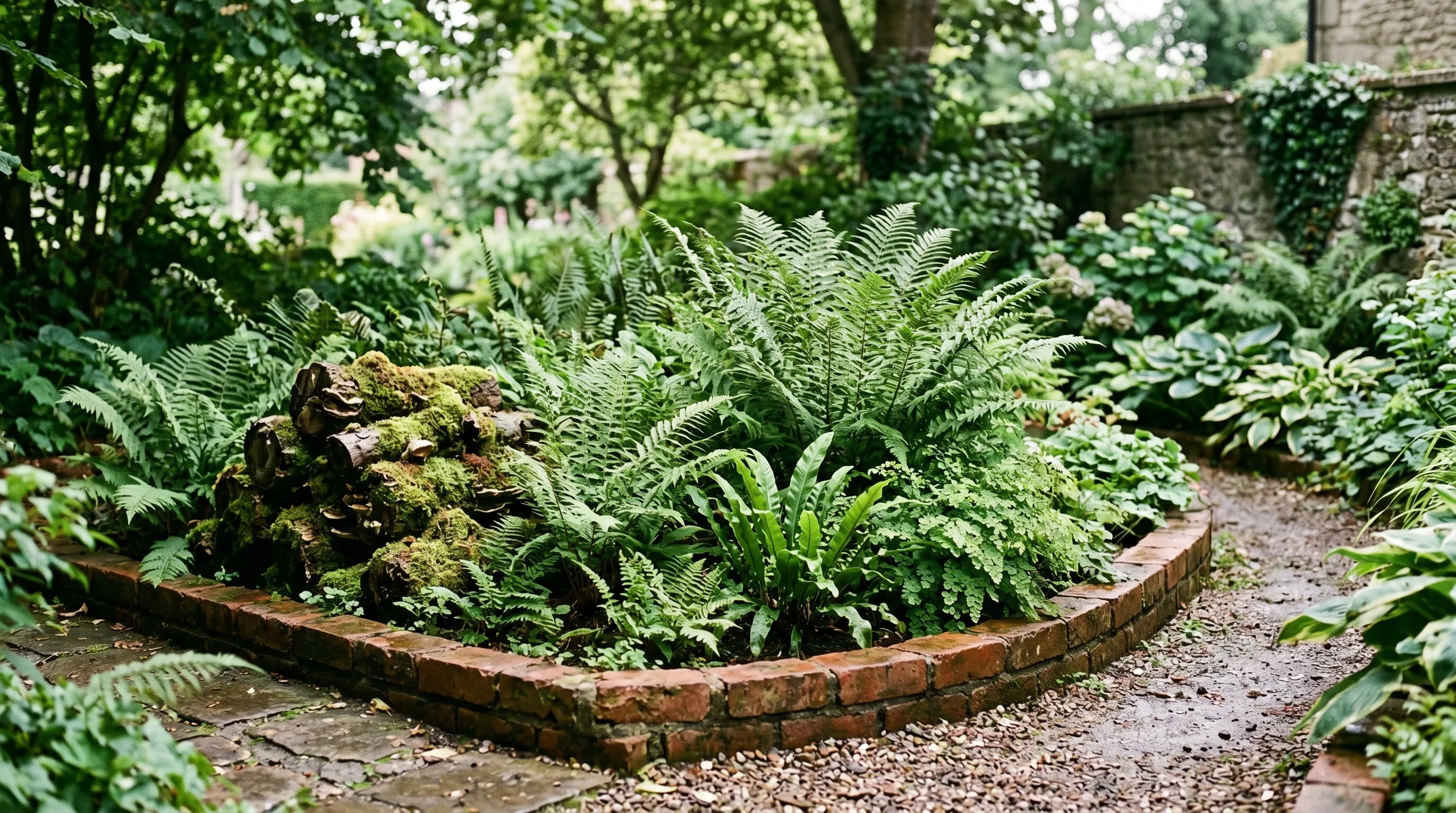 The Staffordshire fernery at 7 years from start. Brick-edged border, log pile habitat, mix of 12 species at varying heights. The Victorian-style display matures slowly but rewards patient planting.
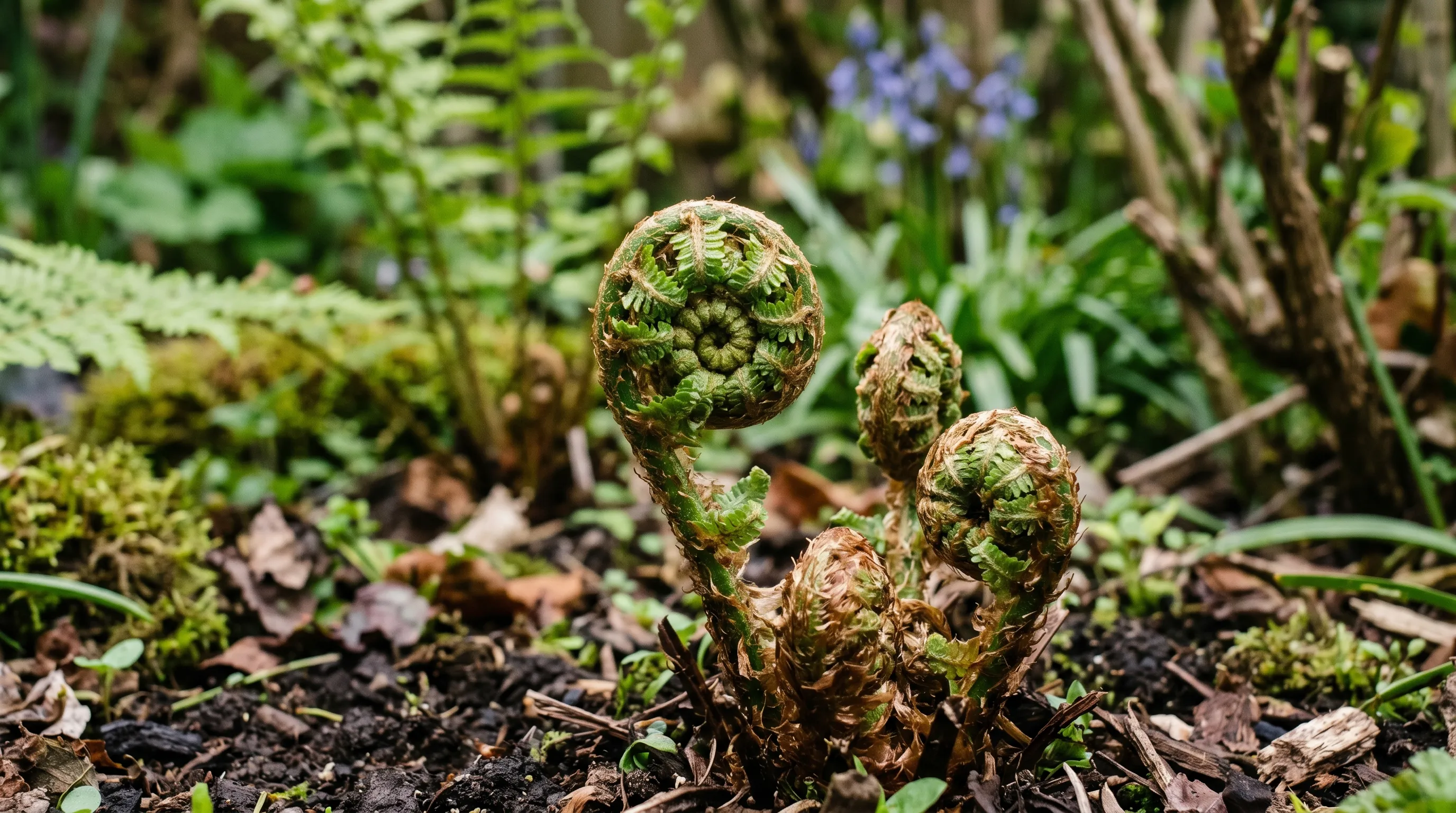 Spring croziers on Dryopteris filix-mas in mid-April. The spiralled new growth unfurls over 14-21 days. Protect from late UK frosts with horticultural fleece if forecast under -3C.
 September division of a 6-year Polystichum setiferum. Sharp spade cuts the rootball into three even sections. Each division has 3-4 crowns. Replant immediately at same depth.
Now plan the wider shade garden
Our team produces practical UK gardening guidance from source research, contributor records and established horticultural practice. Editorial standards are overseen by Matt W.