Key takeaways
- Plant the large bulbs ON THEIR SIDE at 20cm deep in September to October so water drains out of the hollow crown
- Crown Imperial reaches 0.9-1m and flowers in late April, weeks after most spring bulbs finish
- Pick 'Rubra' (orange-red), 'Lutea' (yellow) or 'Aurora' (deep red orange) for the classic whorl of bells
- The musky foxy smell deters mice, squirrels and moles, and reputedly deer, from the surrounding bed
Crown Imperial (Fritillaria imperialis) is the boldest spring bulb you can grow in a UK garden. The stately 0.9-1m stems carry a whorl of pendant bells topped by a leafy green tuft, like a pineapple wearing a crown. They open in late April, weeks after daffodils and tulips have finished, so they bridge the gap into early summer. This guide is species-specific to F. imperialis, the Crown Imperial. Our wider fritillaria guide covers the rest of the genus, including snake’s head fritillary and Persian lily.
What Crown Imperial looks like and where it comes from
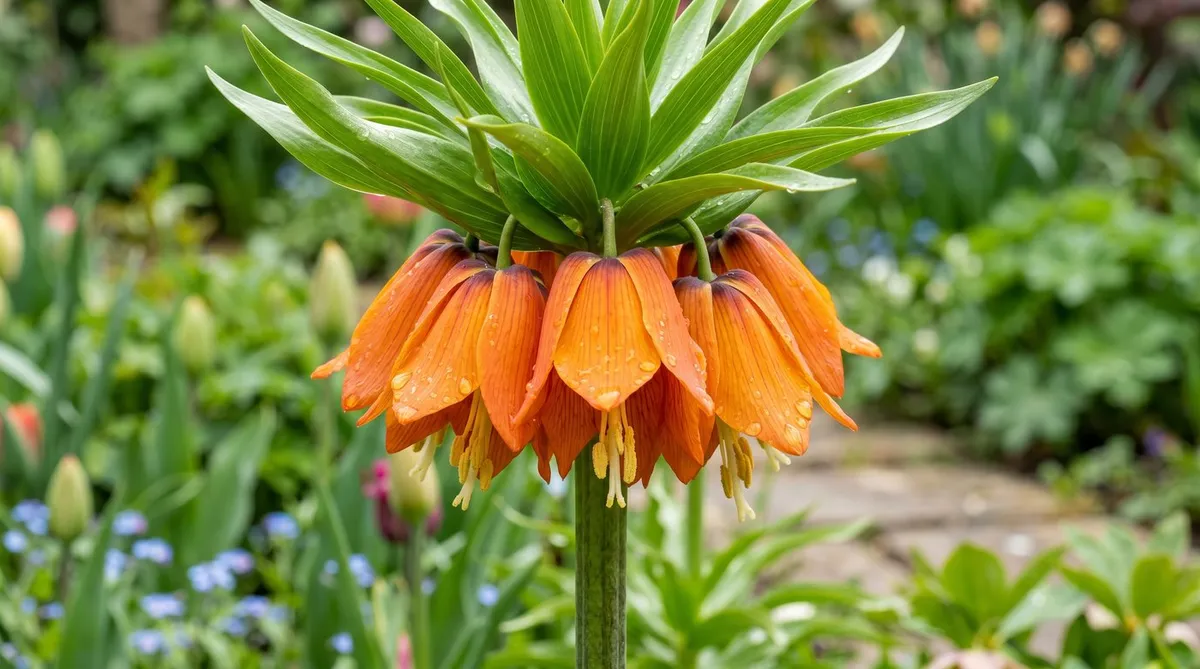
Fritillaria imperialis is a tall, architectural bulb native to the rocky hillsides of Turkey, Iran and the western Himalayas. In a UK garden it reaches 0.9-1m in a good year, occasionally 1.2m. A single thick stem clad in glossy lance-shaped leaves rises fast through April. At the top sits the signature feature: a ring of large pendant bell flowers, then a leafy topknot of bracts above them.
Each bell hangs 5-6cm long and holds glistening nectar drops at its base, which is unusual among hardy bulbs. The flowers carry no scent worth seeking out, but the foliage and bulb give off a strong musky, foxy smell that is the plant’s calling card. That odour comes from sulphur compounds and works as a built-in pest deterrent, covered later in this guide.
The Royal Horticultural Society lists F. imperialis as fully hardy across the UK, rated H5 to roughly -15C once established. Frost is rarely the killer. Wet is.
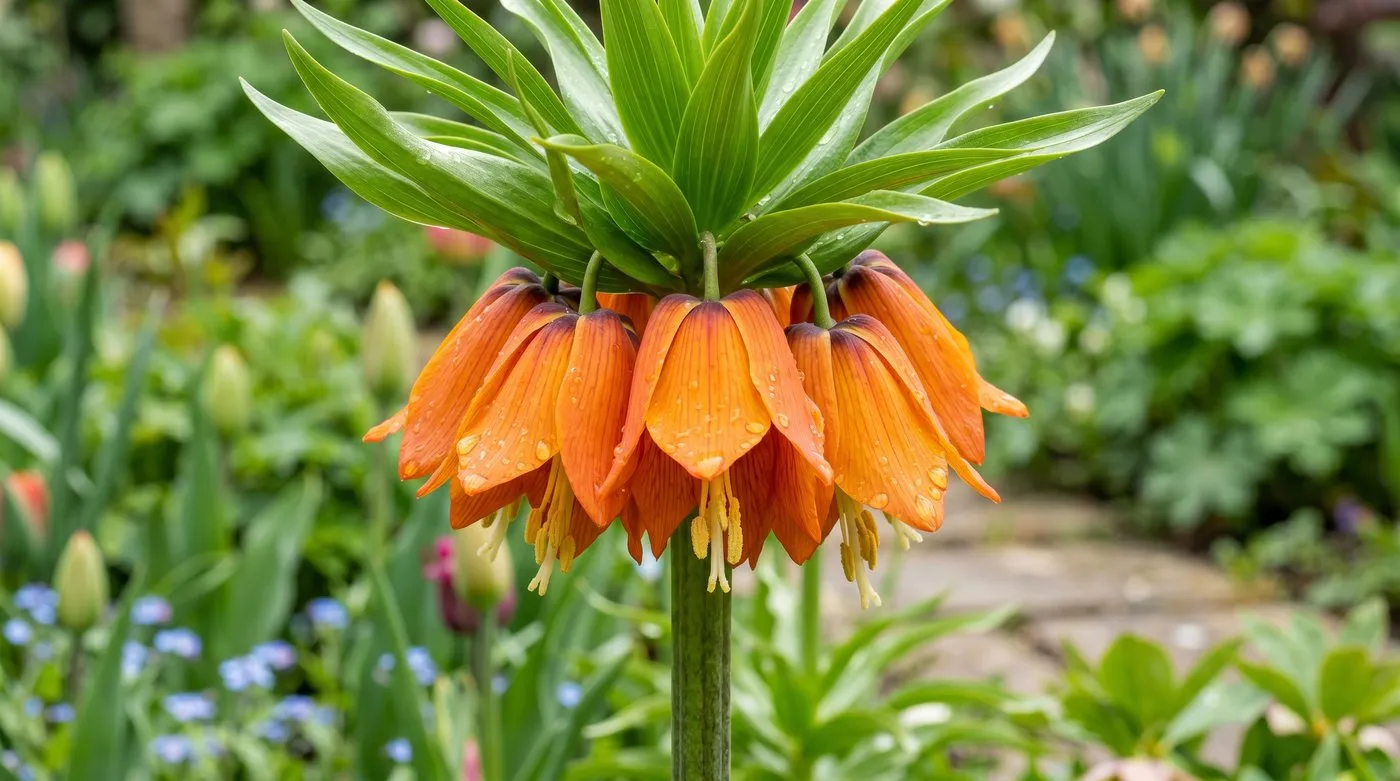 The unmistakable whorl of orange bells beneath a leafy topknot, opening in late April in a suburban Midlands border.
Why you plant the bulbs on their side
The most important technique with Crown Imperial is planting each bulb on its side, not crown-up. Look at the bulb and you see a deep hollow crater where the old flower stem rotted away. Plant it upright and that crater becomes a cup. Rain collects, sits against the soft tissue, and the bulb rots from the centre out before it ever roots.
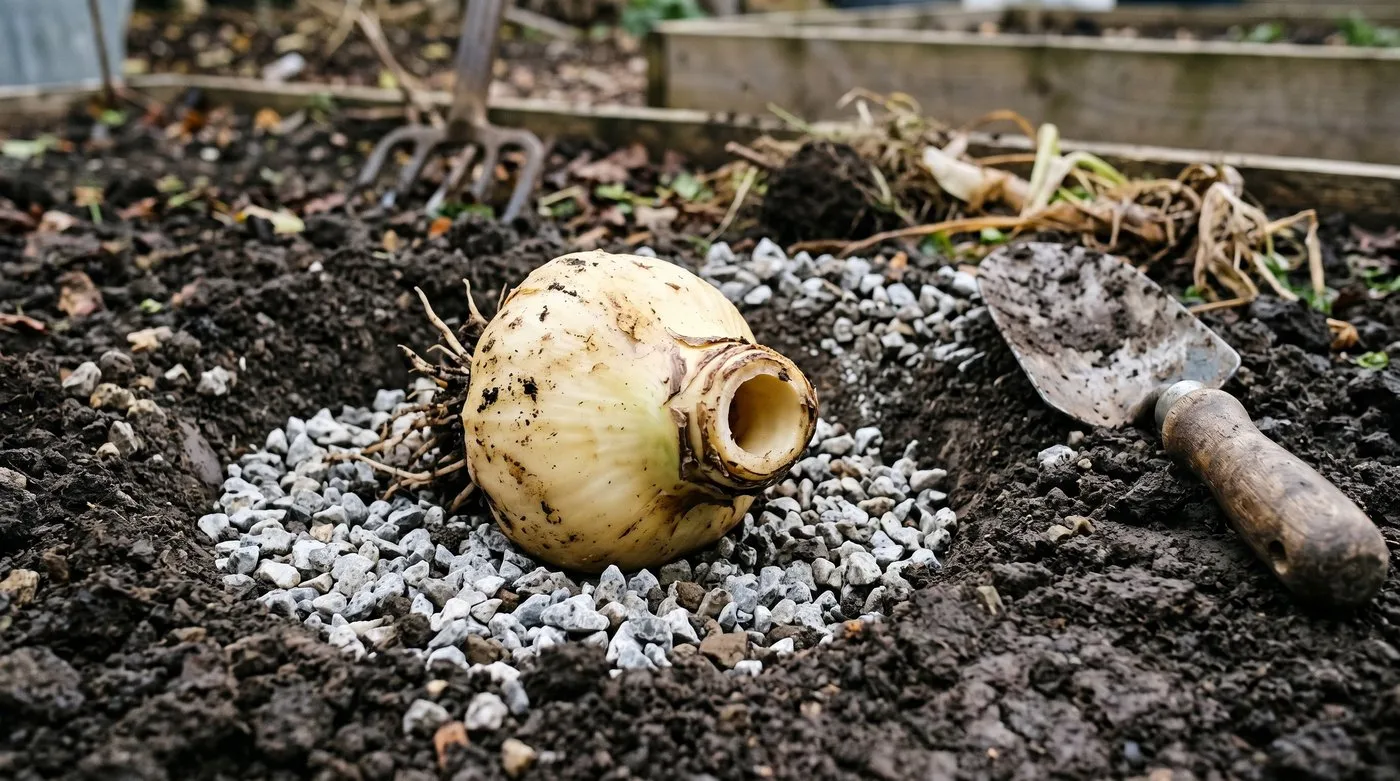 A bulb set on its side on a bed of sharp grit. The hollow crown faces sideways so no water can pool inside it.
How deep and how far apart to plant
Crown Imperial bulbs are big, often 8-10cm across and the size of a small fist. They need depth to anchor the tall stems and keep the bulb cool and stable. Plant at 20cm deep, measured to the top of the bulb, which is roughly three times the bulb’s height.
Space bulbs 25-30cm apart. Closer than this and the heavy stems crowd each other and compete for water. Plant in groups of three or five for the best show; a single Crown Imperial can look lonely, while a clump reads as a deliberate focal point.
Dig a generous hole and work in a handful of sharp horticultural grit at the base, then sit the bulb on its side on top. Backfill with the excavated soil mixed with more grit if your ground is heavy. Firm gently and water in once. The depth also helps in summer: a deeply planted bulb stays cooler and drier through its dormant rest, which Crown Imperial needs to reflower well.
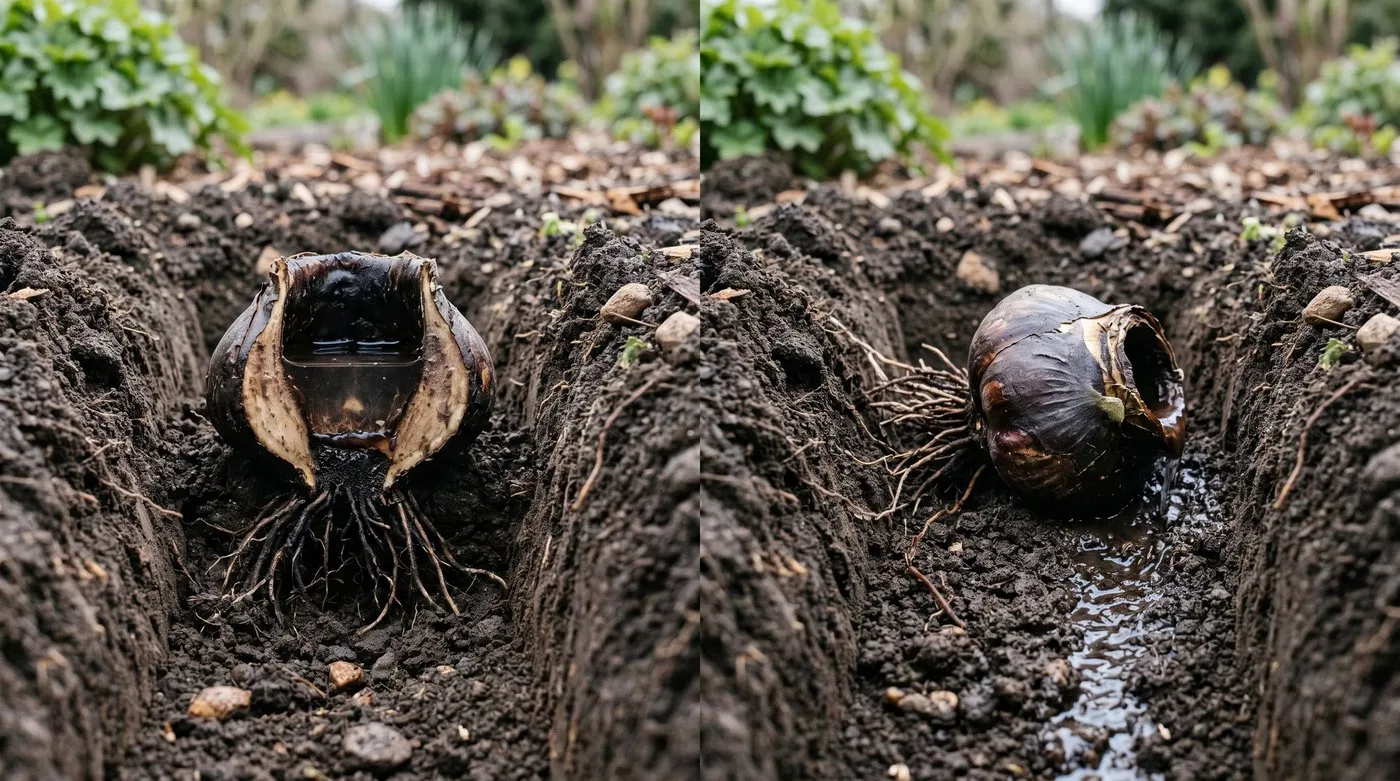 Left, an upright bulb with water sitting in the crown. Right, the same bulb tipped on its side, draining freely. This difference drives the rot rates in the table above.
Choosing the right variety and colour
Three colour groups cover most of what you will find on sale, and they all share the same form. Pick by colour and by height if a strong wind regularly crosses your garden.
| Variety | Colour | Height | Flowering | Notes |
|---|---|---|---|---|
| ’Rubra’ | Burnt orange-red | 0.9-1m | Late April | The classic, most widely sold, reliable |
| ’Lutea’ | Clear yellow | 0.9-1m | Late April | Brightest in shade-edge borders, AGM holder |
| ’Aurora’ | Deep red-orange | 0.8-0.9m | Mid to late April | Shortest and sturdiest, best for wind |
| ’Maxima’ | Orange | Up to 1.2m | Late April | Tallest, needs the most shelter |
| ’The Premier’ | Soft orange | 1m | Late April | Larger bells, slightly later |
For a first attempt, ‘Rubra’ is the safest buy: vigorous, easy to find and the colour most people picture. ‘Aurora’ is the one to choose if your border catches wind, as its shorter stems stand up better. ‘Lutea’ lifts a darker corner where the yellow glows. Mix two for contrast, but plant each variety in its own group rather than scattering single bulbs.
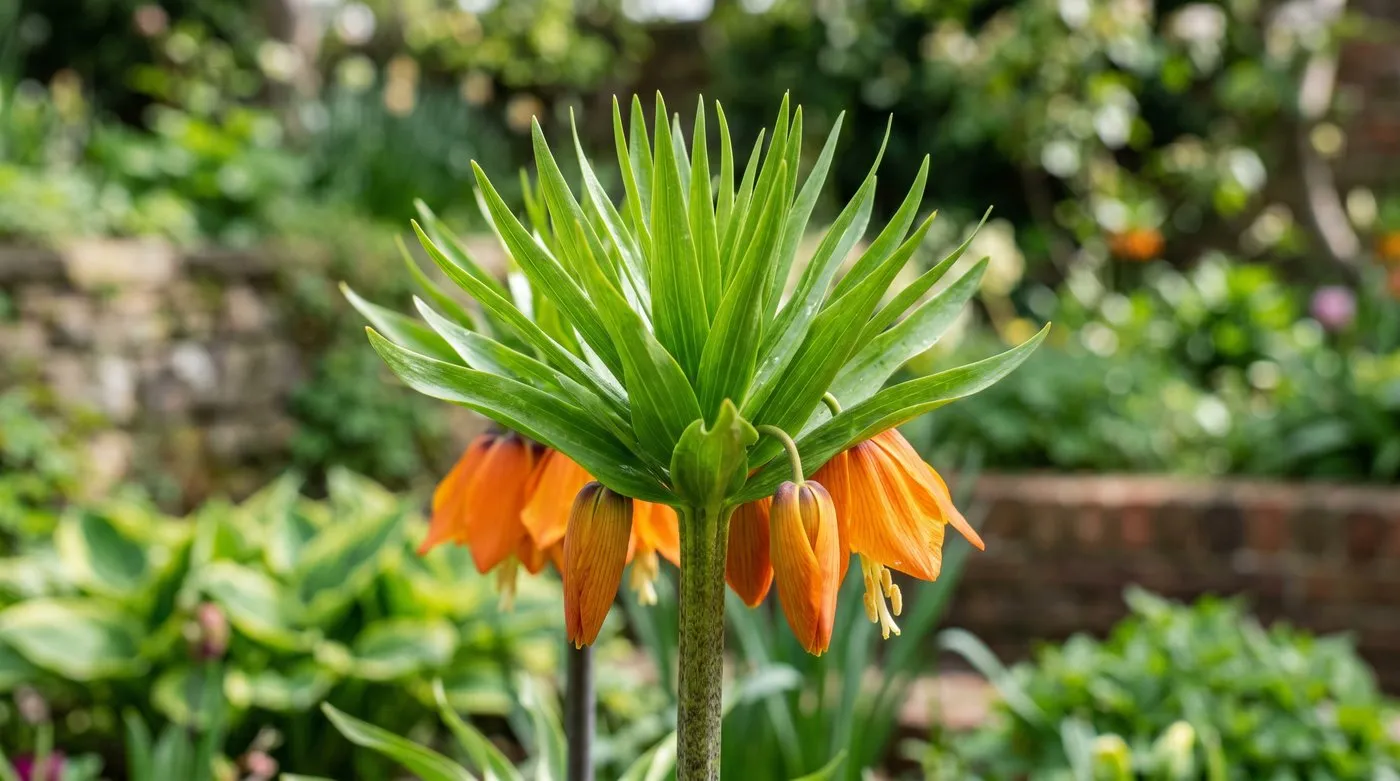 The leafy topknot above the bells gives Crown Imperial its pineapple look. Every variety carries this crown of bracts, whatever the flower colour.
Gardener’s tip: Buy your bulbs in person where you can. Crown Imperial bulbs lack a papery skin, so they dry out fast and the best ones feel heavy and firm with no soft brown patches. A light, hollow-feeling bulb has already lost moisture and may never recover.
How to handle the bulbs before planting
Crown Imperial bulbs are different from tulips or daffodils in one key way: they have no tunic, the dry papery skin that protects most bulbs. The flesh is exposed, so the bulbs lose water quickly and bruise easily. Treat them like fresh produce, not dry stores.
Buy and plant within a few days. If a bulb arrives looking shrivelled, stand it base-down on a tray of barely damp sand for two to three days to plump up before planting. Handle each bulb gently and avoid knocking the soft growing point. Wear gloves if the foxy smell bothers you, as it lingers on skin.
Never store loose Crown Imperial bulbs in a warm shed over winter waiting for a better day. They will dry to a husk. If you genuinely cannot plant on time, pot them temporarily in gritty compost and keep them cool and just moist until you can move them out.
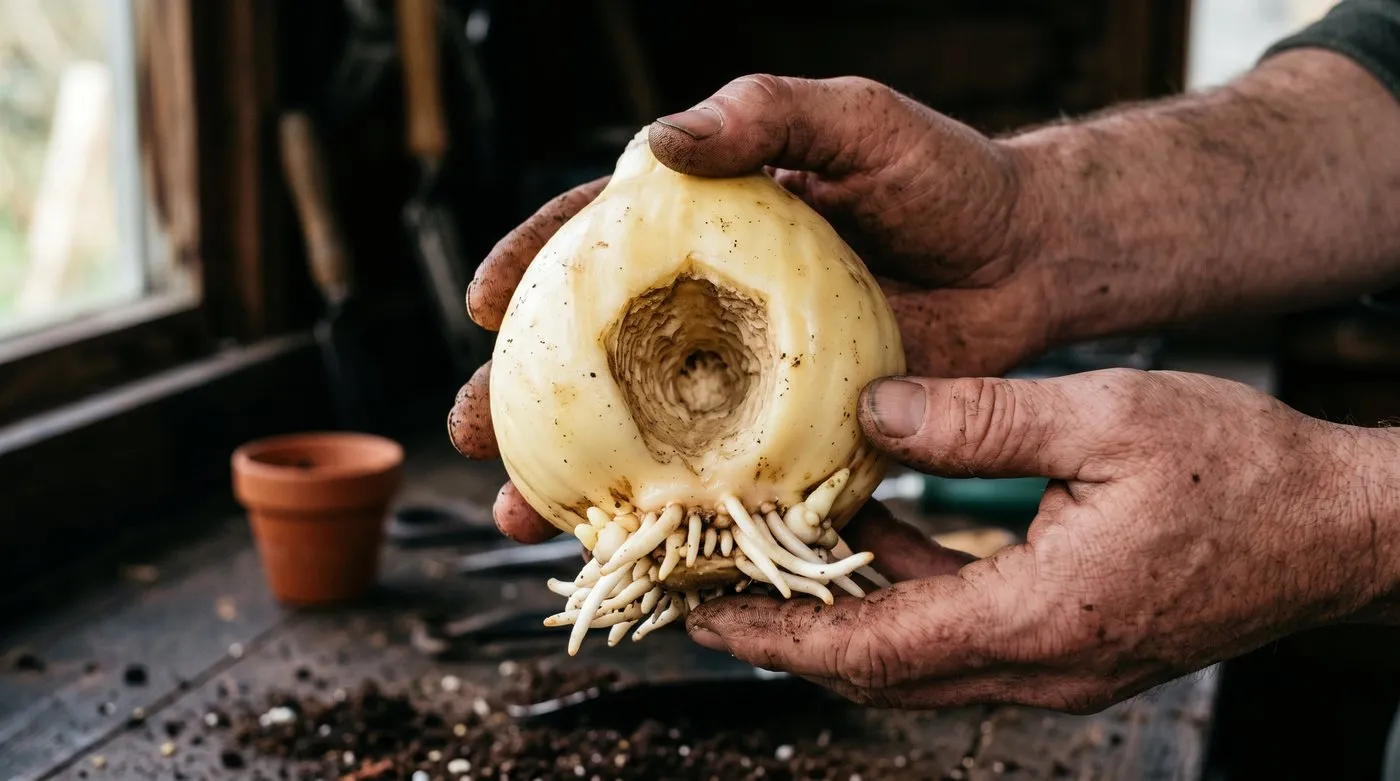 The exposed flesh and deep central crater are clear here. With no protective tunic, these bulbs dry out within days, so plant them fast.
The musky smell that deters mice, squirrels and deer
The foxy odour of Crown Imperial is its secret weapon. The whole plant, bulb included, releases sulphur compounds that smell strongly of fox or skunk on a warm day. To most browsing animals this signals danger, and they keep clear.
In practice this means mice, squirrels, voles and moles tend to avoid the bed where Crown Imperial grows. Gardeners use this deliberately. Plant a Crown Imperial among tulips and crocus, which rodents love to dig up, and the smell helps protect the whole group. For more on the bulbs they do target, see our guides to growing tulips in the UK and crocus in the UK.
The plant is also widely reported to deter deer and rabbits, though no plant is ever fully deer-proof in a hungry winter. The deterrent effect is real but local: it protects the immediate area, not the whole garden. The smell fades as the flowers go over in May, so it is a spring shield rather than a year-round one.
What conditions Crown Imperial needs
Get the site right and the rest is easy. Crown Imperial wants the opposite of a damp woodland bulb: it is a sun-lover from dry hillsides.
Sun: Plant in full sun or, at most, very light afternoon shade. Deep shade gives weak, leaning stems and few flowers.
Drainage: Sharp drainage is essential. The bulb tolerates cold easily but hates sitting wet, especially in summer dormancy. On clay, raise the bed, add grit, or build a low mound. Our guides to improving clay soil and the best plants for clay soil cover the groundwork that makes the difference here.
Soil: A fertile, free-draining loam suits it best, neutral to slightly alkaline. Work in grit and well-rotted compost before planting, but avoid fresh manure, which holds wet against the bulb.
Shelter: The tall stems catch wind. A spot with a wall, hedge or fence to the prevailing-wind side keeps the 1m spires upright without staking.
 Crown Imperials hold their height in a sheltered, sunny border. This Welsh valley garden gives them the drainage and shelter they need.
Month-by-month Crown Imperial calendar
Crown Imperial follows a clear yearly rhythm. The work concentrates into autumn planting and a short spring feeding window.
| Month | What to do |
|---|---|
| January | Bulbs dormant underground. Check beds are not waterlogged; clear blocked drainage if water stands. |
| February | First red-purple shoots may push through on early sites. Protect emerging tips from heavy slug damage. |
| March | Stems rise fast. Apply sulphate of potash around each clump as growth speeds up. Stake ‘Maxima’ if exposed. |
| April | Peak display in late April. Enjoy the whorl of bells. Water in any dry spell while in full growth. |
| May | Flowers fade. Leave all foliage to die back naturally; it feeds next year’s bulb. Do not cut green leaves. |
| June | Foliage yellows and collapses. Now is the only safe time to lift and divide congested clumps if needed. |
| July | Bulbs enter dry summer dormancy. Keep the bed on the dry side. Avoid watering nearby thirsty plants here. |
| August | Order new bulbs early for autumn. Choose firm, heavy stock from a reliable supplier. |
| September | Prime planting month. Plant bulbs on their side at 20cm deep on a grit base while soil is still warm. |
| October | Continue planting. Finish before cold, wet soil sets in. Mulch lightly around established clumps. |
| November | Planting window closing on heavy ground. Ensure beds drain freely before winter rain arrives. |
| December | Bulbs settling and rooting below ground. Keep beds clear of standing water through winter. |
Common mistakes when growing Crown Imperial
Most Crown Imperial failures trace back to a handful of avoidable errors. Each one is easy to fix once you know it.
Leaving bulbs to dry out before planting. With no tunic, these bulbs lose moisture fast. A bulb left loose in a shed for weeks turns to a husk. Buy late, plant fast, and keep bulbs cool until they go in.
Growing on wet, shaded ground. Crown Imperial is a sun-and-drainage plant. Damp shade gives weak stems, few flowers and rapid rot. Match the site to the plant rather than fighting the conditions.
Cutting back foliage too soon. Removing green leaves after flowering starves the bulb. Let all foliage yellow and collapse naturally through May and June before clearing it.
Warning: Do not lift and store Crown Imperial bulbs every year as you might tulips. The exposed flesh dries out in storage and the rot risk rises each time you disturb them. Lift only to divide a congested clump in June, and replant within hours.
The takeaway is simple. Crown Imperial does not die of cold in the UK; it dies of wet. Every technique that moves water away from the bulb pays off, and side-planting over grit does the most for the least effort.
Growing Crown Imperial alongside other spring bulbs
Crown Imperial flowers late for a spring bulb, opening in late April when most are over. That makes it a useful bridge plant. Underplant it with earlier bulbs so one group hands over to the next as the season runs on.
Good partners flower before Crown Imperial and clear the ground before its stems crowd them. Daffodils fill March and early April beneath the rising stems. Alliums take over in May as the Crown Imperials fade, so the same patch stays in flower for months. For lower, shade-edge colour, anemones weave through the front of the group.
Keep the tall Crown Imperials at the back or centre of a border where their height reads as structure. Browse the rest of our plant growing guides for more spring bulbs that pair well with them. A planting of daffodils, then Crown Imperials, then alliums gives a single border eight weeks of changing colour from one square metre.
Now you’ve mastered Crown Imperial, read our guide to growing fritillaria in the UK for the snake’s head fritillary and Persian lily that share the same on-its-side planting trick.
Frequently asked questions about growing Crown Imperial
Why do you plant Crown Imperial bulbs on their side?
How deep should I plant Crown Imperial fritillaria?
Plant Crown Imperial bulbs 20cm deep and 25-30cm apart. These are large bulbs, often 8-10cm across, so the hole needs to be roughly three times the bulb height. Deep planting anchors the tall 1m stems against wind and keeps the bulb cool. On heavy soil, sit each bulb on a handful of sharp grit to lift it clear of standing water.
When should I plant Crown Imperial bulbs in the UK?
Plant in September to October, as early as you can buy good bulbs. The bulbs have no papery tunic, so they dry out within days of leaving the nursery. Buy firm, heavy bulbs and get them in the ground fast. Late planting into cold November soil slows rooting and raises the rot risk on wet clay.
Why does Crown Imperial smell bad?
The whole plant gives off a strong musky, foxy odour from sulphur compounds in the bulb and stems. The smell is a natural defence and it deters mice, squirrels and moles from digging nearby. Many gardeners plant Crown Imperials beside tulips and crocus to protect those tastier bulbs. The scent is strongest on warm April days and fades as the flowers age.
Why has my Crown Imperial stopped flowering?
What colours does Crown Imperial come in?
The classic colours are orange, yellow and red. ‘Rubra’ gives burnt orange-red bells, ‘Lutea’ is clear yellow, and ‘Aurora’ is a deep red-orange. ‘Maxima’ grows tallest at up to 1.2m. All carry the same whorl of pendant bells beneath a leafy topknot. Mix two or three for a bold late-April display in a sunny border.
Do squirrels and mice eat Crown Imperial bulbs?
No, the foxy smell makes Crown Imperial bulbs one of the few rodents avoid. The sulphur scent that puts people off is exactly what deters mice, squirrels and voles. This is why they are useful planted among tulips, which rodents love. Deer and rabbits also tend to leave the whole plant alone, though no plant is fully deer-proof.
Can I grow Crown Imperial in a pot?
Yes, but use a deep pot at least 40cm across and 35cm deep. The tall stems need a heavy, stable container so they do not blow over. Fill with loam-based compost mixed with one third grit for drainage. Stand the pot off the ground on feet so water runs away freely, and never let it sit in a saucer over winter.
Our team produces practical UK gardening guidance from source research, contributor records and established horticultural practice. Editorial standards are overseen by Matt W.