Key takeaways
- Escallonia tolerates salt spray and coastal wind better than almost any other flowering hedge
- Hardy to -10C to -15C depending on cultivar — 'Apple Blossom' and 'Donard Seedling' are the toughest
- Flowers from June to October on current season's growth, attracting bees and butterflies throughout summer
- Plant hedging 45-60cm apart in spring for a dense windbreak within 2-3 years
- Prune immediately after the main flowering flush in late August — cutting later removes next year's flower buds
- Escallonia leaf spot is the most common problem but rarely kills established plants
Escallonia is one of the toughest flowering hedging shrubs you can plant in a UK garden. It shrugs off salt spray, laughs at coastal gales, and still produces clusters of pink, red, or white flowers from June right through to October. Few hedging plants combine that level of wind resistance with genuine flower power.
Originally from South America, escallonia arrived in British gardens in the 1800s and quickly became the go-to hedge for coastal areas of Cornwall, Devon, Wales, and western Scotland. It works inland too, provided you pick the right cultivar and give it a sunny, sheltered spot. This guide covers which varieties perform best in UK conditions, how to plant and maintain an escallonia hedge, and what to do when problems arise.
Which escallonia varieties grow best in the UK?
Not all escallonia cultivars handle UK winters equally. The difference between a plant that sails through a -12C night and one that dies back to the ground comes down to cultivar choice. The table below compares the six most widely available varieties.
| Variety | Height | Flower colour | Hardy to | Best use |
|---|---|---|---|---|
| ’Apple Blossom’ | 2-2.5m | Pink and white | -15C | Hedging, borders, exposed sites |
| ’Crimson Spire’ | 2-3m | Deep crimson red | -10C | Tall hedging, screening |
| ’Red Dream’ | 1-1.5m | Rose red | -10C | Low hedging, containers, borders |
| ’Donard Seedling’ | 2-2.5m | Pale pink fading white | -15C | Hedging, coastal windbreak |
| ’Iveyi’ | 2.5-3m | Pure white | -10C | Specimen shrub, wall training |
| ’Gold Brian’ | 1-1.5m | Pink | -10C | Foliage interest, borders, pots |
‘Apple Blossom’ is the best all-rounder for most UK gardens. It has AGM (Award of Garden Merit) status from the RHS, tolerates the coldest winters, and produces two-toned pink and white flowers from June to September. The habit is neat and bushy without heavy pruning. If you need a tall screen quickly, ‘Crimson Spire’ grows more vigorously and reaches 3m, but it is less hardy inland.
‘Donard Seedling’ matches ‘Apple Blossom’ for hardiness and produces arching sprays of pale pink flowers that fade to white. It works particularly well as an informal hedge where you want a softer, more relaxed profile. ‘Gold Brian’ earns its place through foliage rather than flowers — the bright golden-yellow leaves bring colour to borders year-round.
For shorter hedges and borders, ‘Red Dream’ stays compact at 1-1.5m. It flowers heavily and responds well to clipping. In containers, it makes a useful evergreen specimen for sheltered patios. ‘Iveyi’ is the pick for white flowers. It reaches 3m and produces large panicles of pure white blooms in late summer. It is slightly less hardy than ‘Apple Blossom’ so suits milder areas or wall-trained positions.
If you are choosing flowering shrubs for year-round interest, escallonia fills the summer-to-autumn gap that many other hedging plants leave empty.
How to plant escallonia hedging
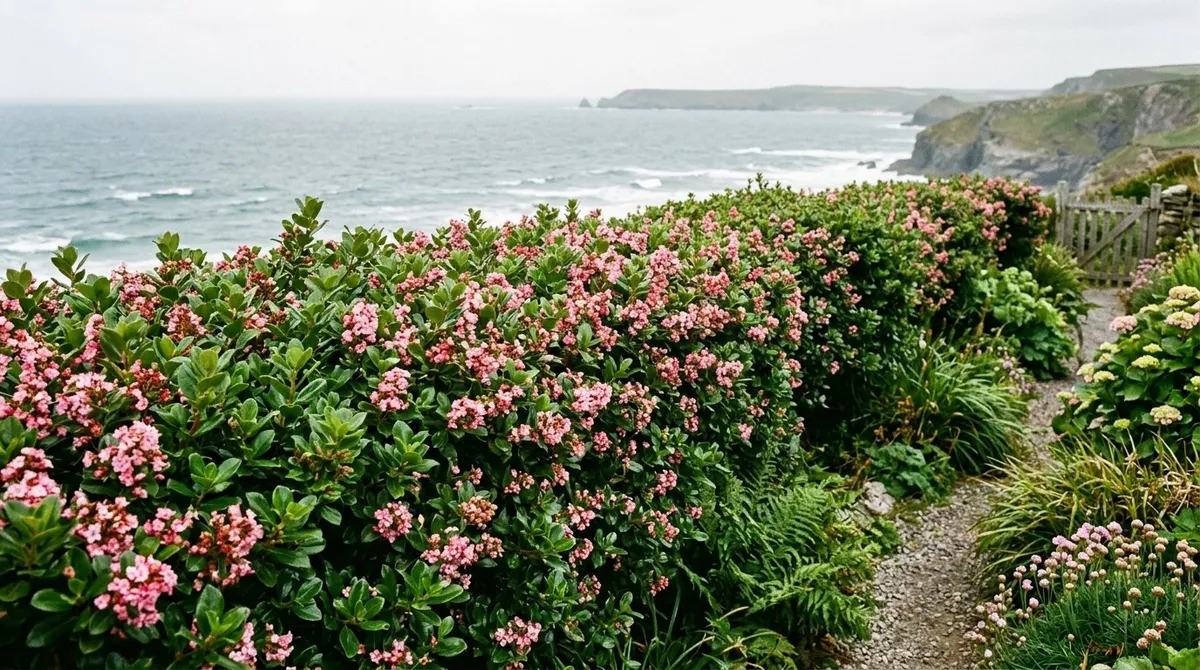
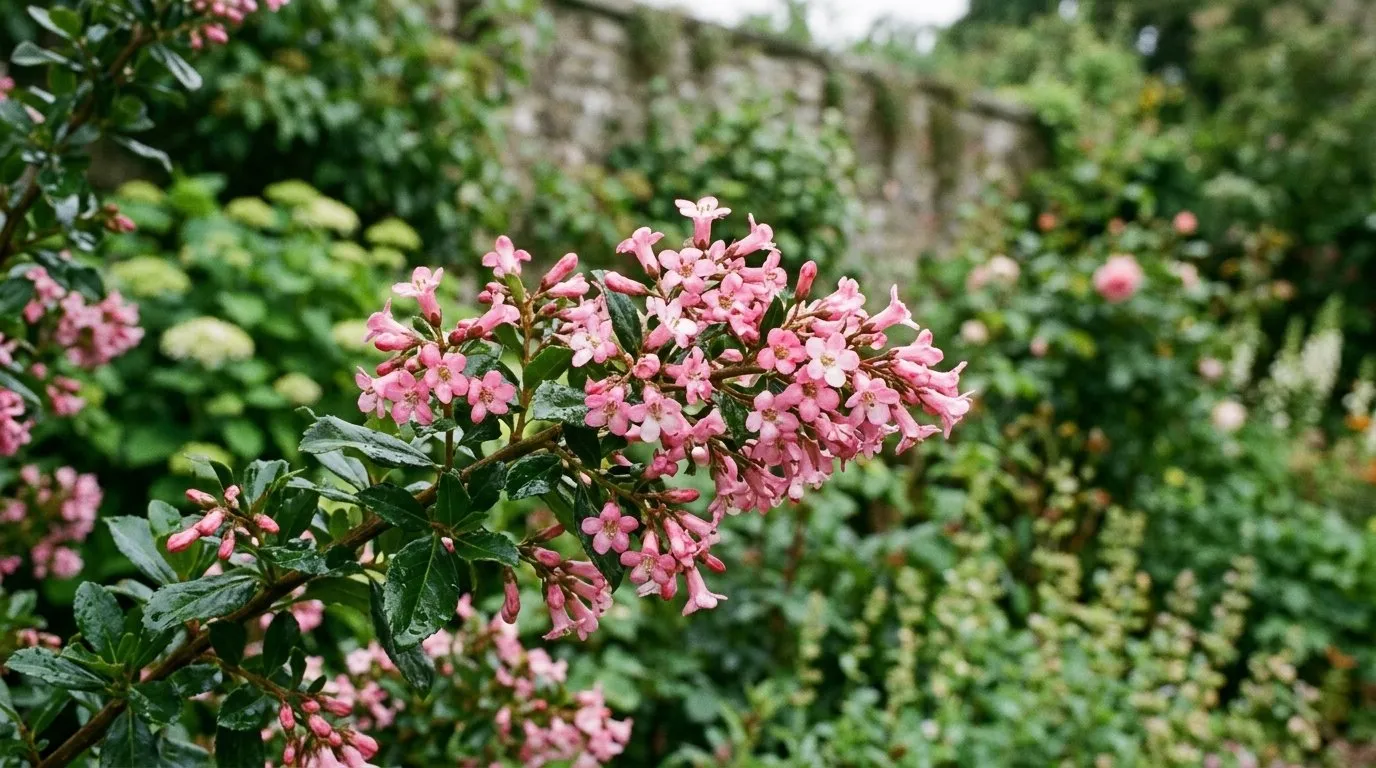 An established escallonia hedge in full flower along a coastal garden boundary.
Spring is the best time to plant escallonia. March to May gives roots several months of warm soil to establish before winter. Autumn planting (September to October) also works in mild coastal areas, but inland gardens risk frost damage on newly planted stock that hasn’t anchored yet.
Site and soil. Escallonia needs full sun and well-drained soil. It thrives on sandy, loamy, and chalky soils. Heavy clay needs improving with grit and organic matter before planting — waterlogged roots rot quickly. A south or west-facing aspect is ideal. Avoid frost pockets and north-facing walls where cold air settles.
Spacing. For hedging, plant 45-60cm apart in a single row. Closer spacing fills gaps faster. For an exposed coastal windbreak, a double staggered row at 50cm spacing with 40cm between rows creates a denser barrier within two years.
Planting method. Dig each hole twice the width of the root ball and the same depth. Set the plant so the top of the root ball sits level with the surrounding soil. Backfill, firm gently, and water thoroughly. Mulch around the base with bark or garden compost, keeping the mulch 5cm clear of the stems.
After planting. Water weekly from April to September in the first year. Once established, escallonia is reasonably drought-tolerant and rarely needs supplementary watering except in prolonged dry spells. Feed with a balanced granular fertiliser in April each year to support flowering.
For a complete guide on spacing, trench preparation, and first-year care across all hedging species, see our hedge planting guide.
When and how to prune escallonia
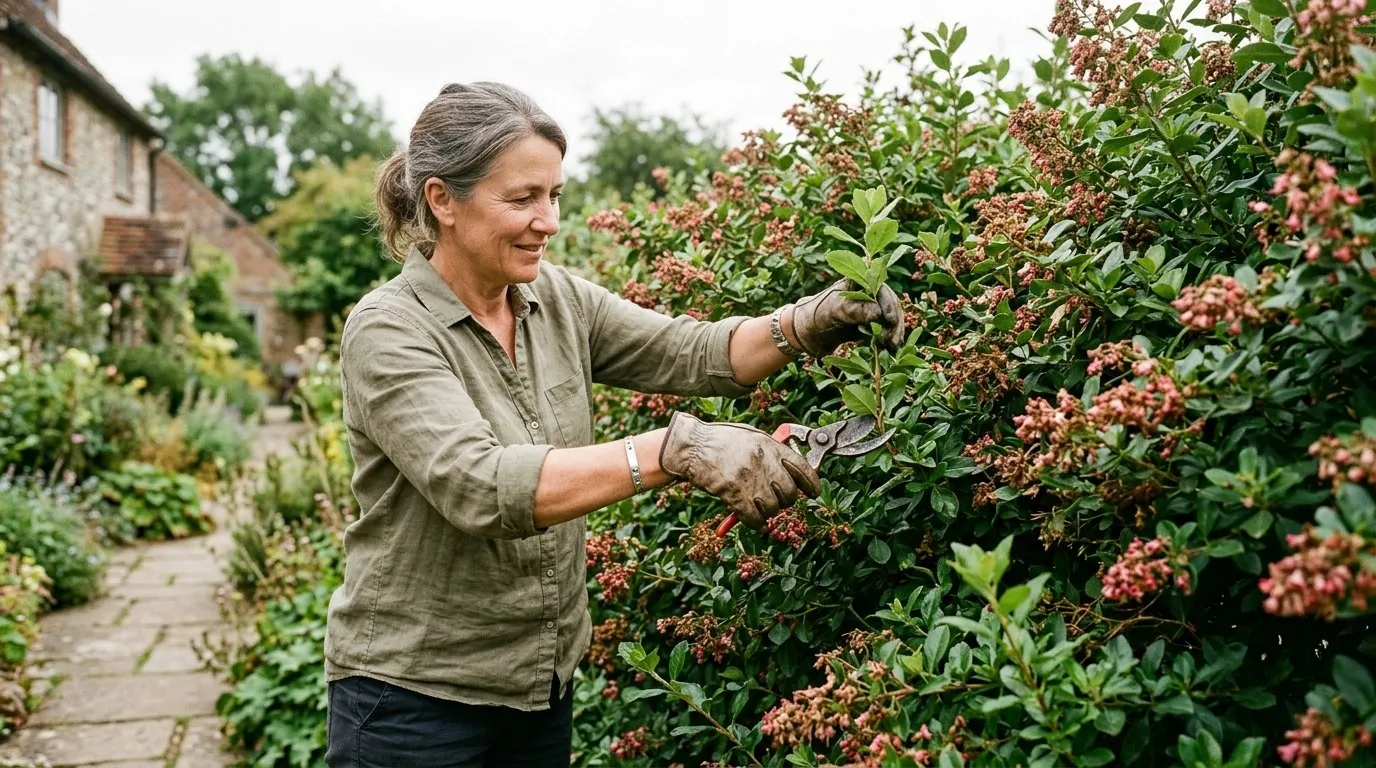 Pruning escallonia after the main flowering flush preserves next year’s buds.
Timing is everything with escallonia pruning. Prune in late August, immediately after the main flowering flush finishes. Escallonia flowers on the current season’s growth. Cutting after August removes developing buds and reduces the following year’s display.
Hedge trimming. Use hedge shears or a powered trimmer to clip hedges to shape in late August. Remove about one-third of the current season’s growth. This keeps the hedge dense and compact. Escallonia responds well to shearing and thickens up quickly.
Free-standing shrubs. Use secateurs rather than shears. Remove one in three of the oldest, woodiest stems at the base each year. This opens the plant up, improves air circulation, and encourages vigorous new flowering shoots from the base.
Renovation pruning. If an escallonia has become leggy or overgrown, cut the entire plant back hard to 30-45cm in late April. Most cultivars regrow strongly from old wood and will be back to flowering height within two growing seasons. Feed generously after hard pruning.
Frost-damaged growth. Wait until late April to assess winter damage. What looks dead in March often pushes new growth in April. Cut back to live green wood once you can see where new buds are breaking. If you are unsure how to assess damaged growth, our guide on pruning shrubs covers the technique in detail.
Can escallonia survive cold winters?
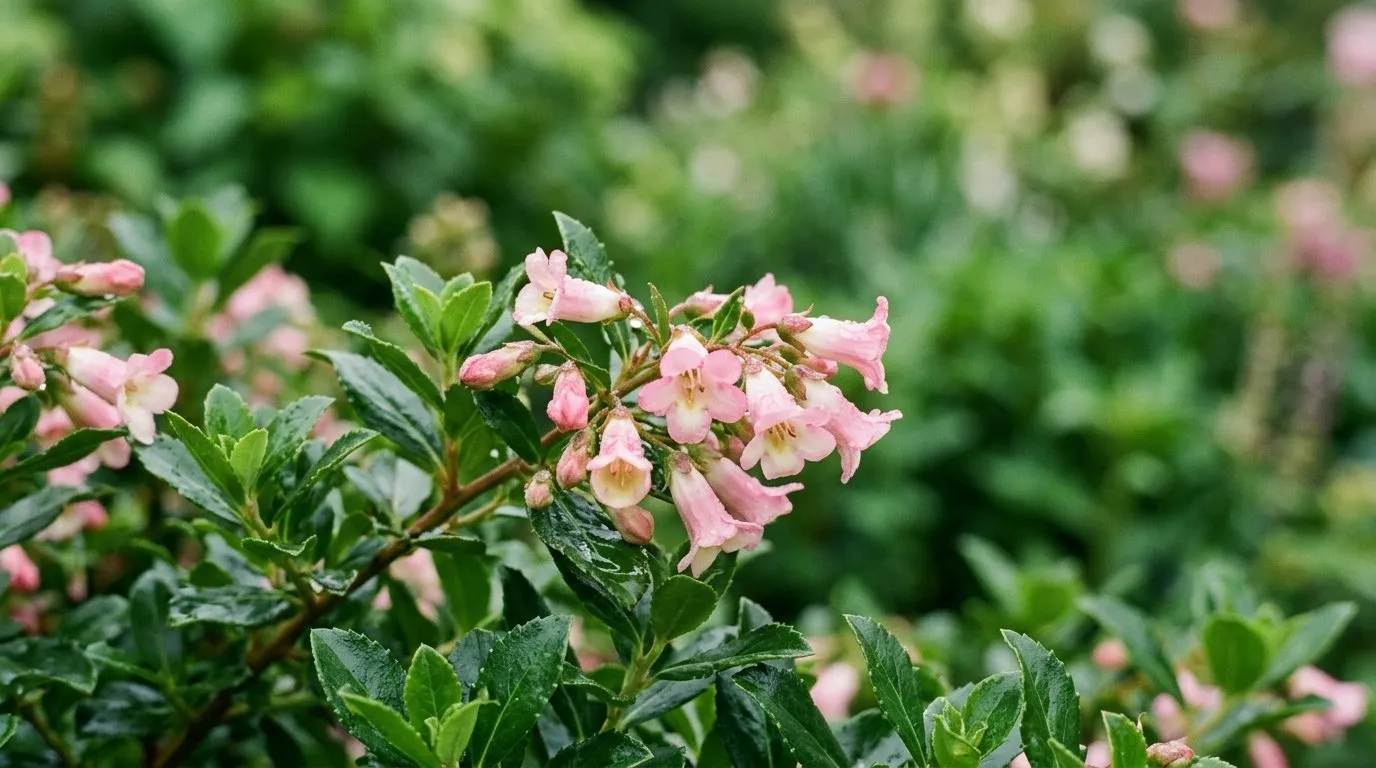 ‘Apple Blossom’ is one of the hardiest cultivars, surviving temperatures down to -15C.
Escallonia is hardier than its reputation suggests. The toughest cultivars — ‘Apple Blossom’ and ‘Donard Seedling’ — tolerate temperatures down to -15C. That covers all but the most extreme UK winters. Less hardy varieties like ‘Crimson Spire’ and ‘Iveyi’ handle -10C, which still suits most of southern and central England.
The real risk is not average cold but sharp late frosts on new spring growth. A -5C frost in early May damages soft new shoots even on the hardiest cultivar. Position matters more than cultivar choice in many cases. A south-facing wall raises the effective temperature by 2-3C. A frost pocket at the bottom of a slope does the opposite.
Protecting escallonia in cold areas. In exposed inland sites, mulch the root zone with 8-10cm of bark or compost in November. This insulates the roots even if the top growth suffers. Fleece young plants during their first two winters. After that, the wood hardens and resilience improves considerably.
Is escallonia good for coastal gardens?
Escallonia is one of the best hedging choices for UK coastal gardens. It tolerates direct salt spray, constant wind, and sandy soils with minimal organic content. In Cornwall, Devon, Pembrokeshire, and the west of Scotland, escallonia hedges line cliff-top paths and seafront gardens where few other flowering shrubs survive.
The glossy, leathery leaves resist salt burn. The dense, twiggy growth filters wind rather than blocking it rigidly, which prevents the turbulence that solid barriers create. A 2m escallonia hedge reduces wind speed for a distance of roughly 10-15m on the sheltered side, creating a microclimate where tender plants can thrive.
Plant escallonia as a first-line defence with more delicate shrubs behind it. Hebe, choisya, and pittosporum all benefit from the shelter that an established escallonia hedge provides. In coastal garden design, layering tough plants at the boundary with progressively more tender ones inland is the standard approach.
The RHS escallonia growing guide confirms its suitability for coastal conditions and lists several cultivars with Award of Garden Merit status.
Inland performance. Escallonia also works well inland in mild areas. It performs reliably across southern England, the Midlands, and sheltered parts of the north. Choose ‘Apple Blossom’ or ‘Donard Seedling’ for the best cold tolerance.
Common escallonia problems and solutions
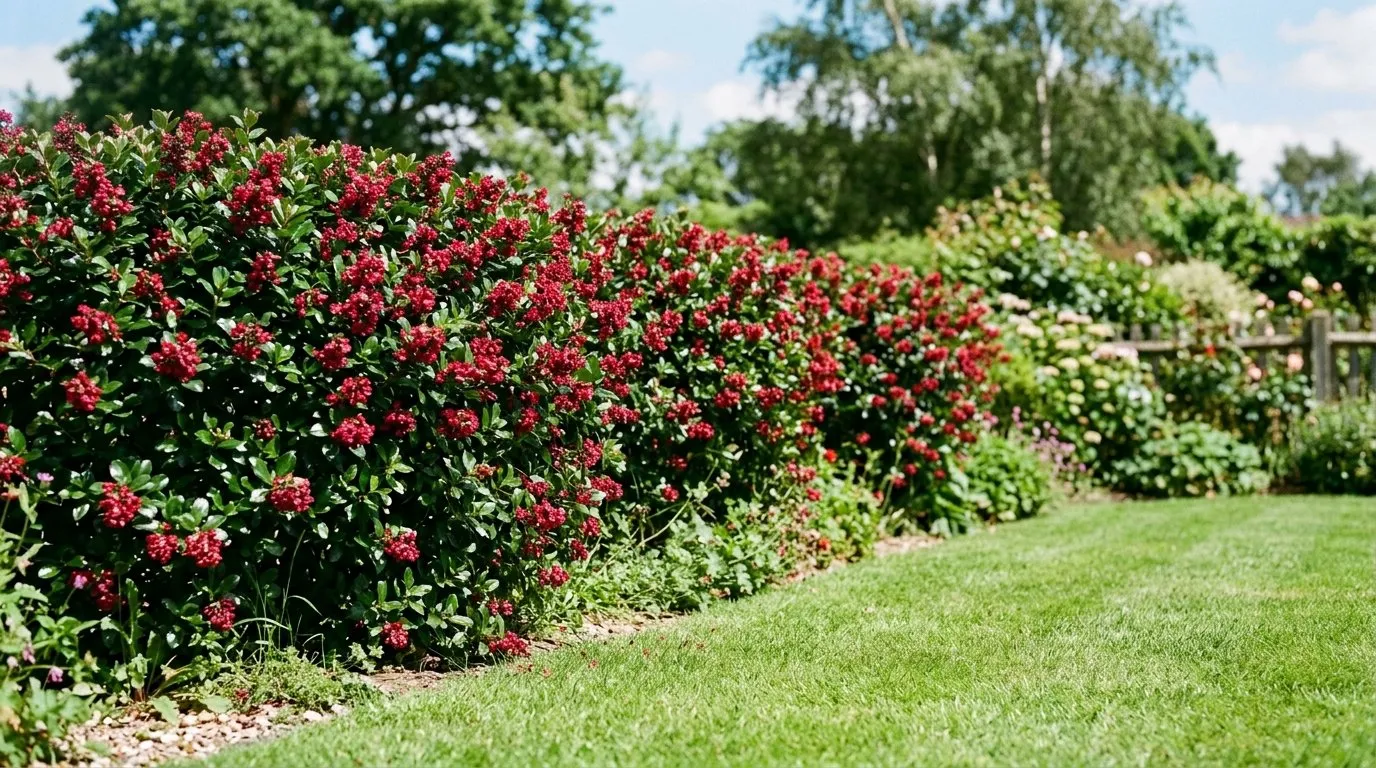 ‘Crimson Spire’ provides a tall, dense screen with vivid red flowers from June.
Escallonia leaf spot is the most common problem. This fungal disease causes dark brown or black circular spots on leaves, often with a yellow halo. Badly affected leaves drop, leaving bare patches on the plant. Wet summers and poor air circulation make it worse. Rake up and dispose of fallen infected leaves. Thin congested growth to improve airflow. The disease is unsightly but rarely kills established plants.
Frost damage shows as blackened shoot tips and brown, wilted leaves in spring. Wait until late April before cutting anything back — many shoots that look dead in March push new growth in April. Cut back to green, healthy wood. Hard-hit plants usually regenerate from the base.
Leggy, bare growth at the base happens when hedges are clipped only at the top. Always trim the sides of a hedge to a slight taper — wider at the base than the top. This ensures light reaches the lower branches and prevents bare, woody stems.
Scale insects occasionally colonise escallonia stems, appearing as small brown bumps along the branches. They suck sap and weaken the plant. Scrub them off with an old toothbrush or treat with an organic insecticidal soap in early summer when the crawlers are active.
Best companion plants for escallonia
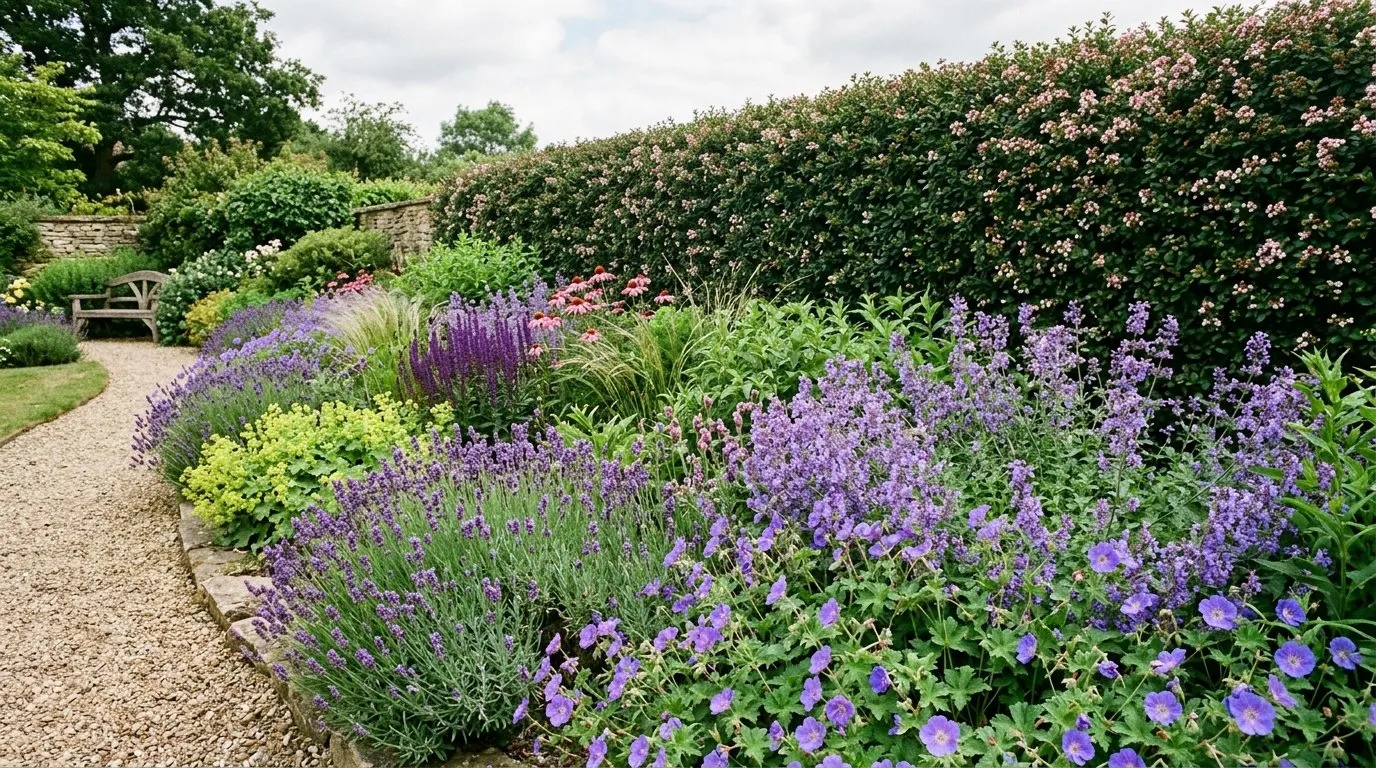 Escallonia pairs naturally with other sun-loving, drought-tolerant shrubs.
Escallonia combines well with plants that share its preference for sun, drainage, and tough growing conditions. The best companions tolerate similar exposure without competing aggressively.
Hebe is the natural partner. Both are evergreen, flower in summer, attract pollinators, and tolerate coastal conditions. Plant compact hebes such as ‘Autumn Glory’ or ‘Great Orme’ in front of an escallonia hedge for a layered effect.
Lavender planted at the base of an escallonia hedge creates a striking combination in July when both are in full flower. The silver-grey lavender foliage contrasts with the dark green escallonia leaves. Both handle dry, well-drained soil. See our guide to drought-tolerant plants for more pairing ideas.
Choisya ternata (Mexican orange blossom) fills gaps between escallonia plants with glossy evergreen foliage and white scented flowers in May. It makes a useful mid-ground shrub between escallonia and lower plantings.
Euonymus fortunei varieties such as ‘Emerald Gaiety’ and ‘Silver Queen’ work as ground cover beneath escallonia. They tolerate the dry shade cast by the hedge canopy.
Grasses and perennials. On the sunny side, plant ornamental grasses like Stipa tenuissima or drought-tolerant perennials such as erigeron, nepeta, and salvia. These soften the base of the hedge and extend the flowering season into autumn. If you are building a mixed border around evergreen trees, escallonia provides the mid-storey screening between tall trees and ground-level planting.
For ideas on what to plant in front of hedges and boundaries, see our guides on when to cut hedges for timing rules that apply to escallonia hedging alongside native species.
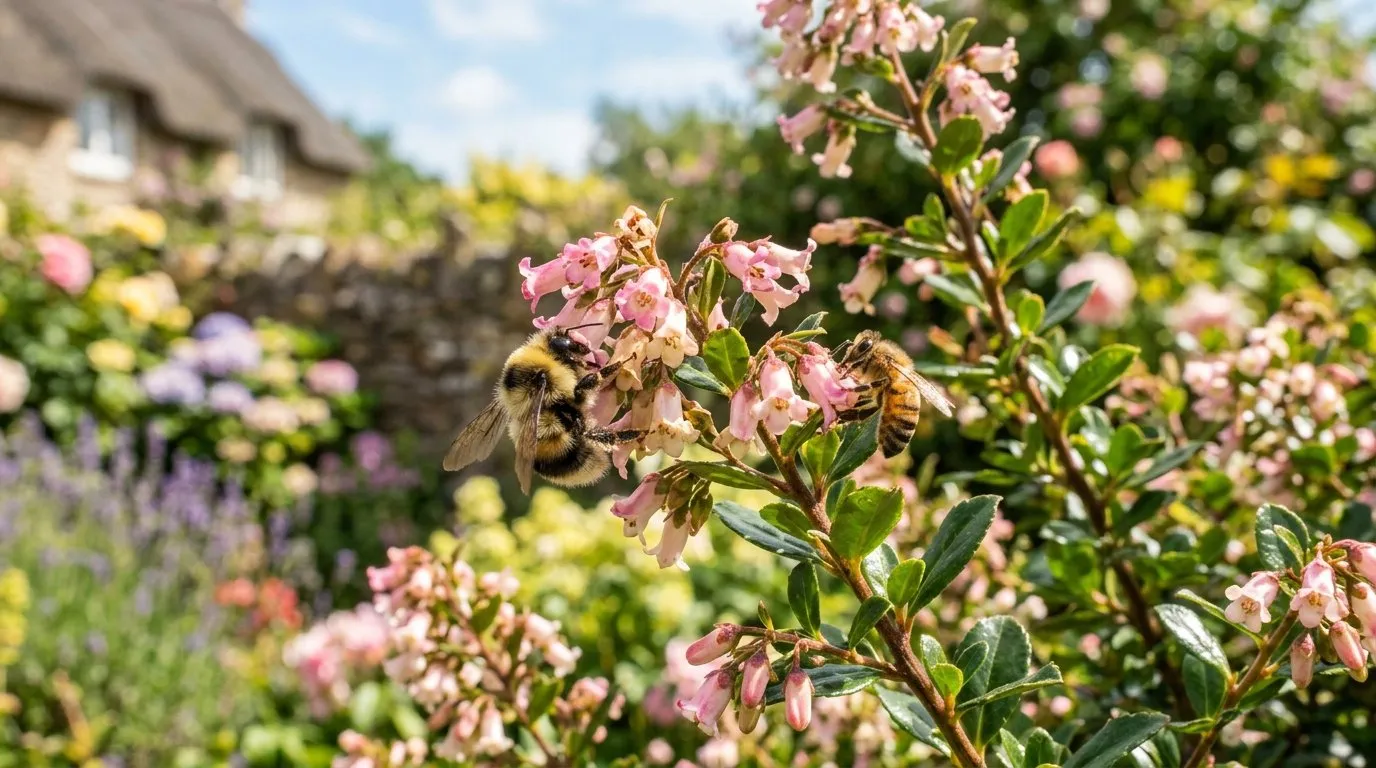 Escallonia is a magnet for pollinators — bumblebees, honeybees, and hoverflies work the flowers from June to September, far longer than most flowering shrubs.
Frequently asked questions
Is escallonia an evergreen?
Yes, escallonia is an evergreen shrub. It retains its glossy dark green leaves throughout winter, providing year-round screening and structure. In severe winters below -10C, some cultivars may lose leaves on exposed branches but regrow from the base in spring. The foliage is dense enough to make an effective visual barrier even in its first full year of growth.
How fast does escallonia grow in the UK?
Escallonia grows 30-45cm per year in UK conditions. A hedge planted at 60cm tall typically reaches 1.5m within two to three years. Growth is fastest in mild coastal areas and on well-drained soil in full sun. Inland gardens with cold winters produce slightly slower growth. Regular feeding with a balanced fertiliser in April accelerates establishment.
When should I prune escallonia?
Prune escallonia in late August after the main flowering flush finishes. This timing allows new growth to harden before autumn frosts. Pruning later than September removes developing flower buds and reduces next year’s display. For hedges, trim to shape with shears. For free-standing shrubs, use secateurs to remove one in three of the oldest stems at the base to keep the plant open and productive.
Can escallonia survive frost in the UK?
Most garden cultivars survive temperatures down to -10C to -15C. ‘Apple Blossom’ and ‘Donard Seedling’ are the hardiest, reliably surviving inland UK winters. ‘Crimson Spire’ and ‘Red Dream’ are slightly less hardy. In exposed inland sites, plant against a south or west-facing wall. Even frost-damaged plants usually regrow from the base in spring. Mulch the root zone in autumn to protect against ground frost.
How far apart should I plant escallonia hedging?
Plant escallonia hedge plants 45-60cm apart for a dense screen. Closer spacing at 45cm fills in faster but costs more in plants. Wider spacing at 60cm works well for informal hedges where a looser look suits the garden. For a double-row windbreak, stagger plants 50cm apart with 40cm between rows. Most garden centres sell escallonia as 40-60cm pot-grown plants ready for hedge planting.
Does escallonia grow well in shade?
Escallonia performs best in full sun. It tolerates light dappled shade for part of the day but flowers less freely in anything deeper. A south or west-facing position produces the most blooms. In north-facing or heavily shaded spots, choose a different hedging plant such as yew, hornbeam, or laurel. Against a shaded wall, pyracantha or cotoneaster are better alternatives.
What is escallonia leaf spot?
Escallonia leaf spot is a fungal disease causing dark brown or black spots on leaves, often with yellow halos. Affected leaves drop prematurely, leaving bare patches. It is most common in wet summers and on plants in poor air circulation. Rake up fallen leaves to reduce reinfection. Thin congested growth to improve airflow. Badly affected branches can be cut back in spring. The disease rarely kills established plants but weakens them over time.
Our team produces practical UK gardening guidance from source research, contributor records and established horticultural practice. Editorial standards are overseen by Matt W.