Key takeaways
- Laburnum x watereri 'Vossii' is the top choice, with 50-60cm racemes and sparse seed set
- Flowers hang in golden chains from mid May to mid June for around 3 weeks
- Reaches roughly 7-8m in height and spread, ideal trained over an arch
- Every part is toxic, especially seeds and pods, which contain the alkaloid cytisine
- Plant bare-root October to March in full sun on any well-drained soil including chalk
- Prune only in late summer; cutting in winter or spring makes the tree bleed sap
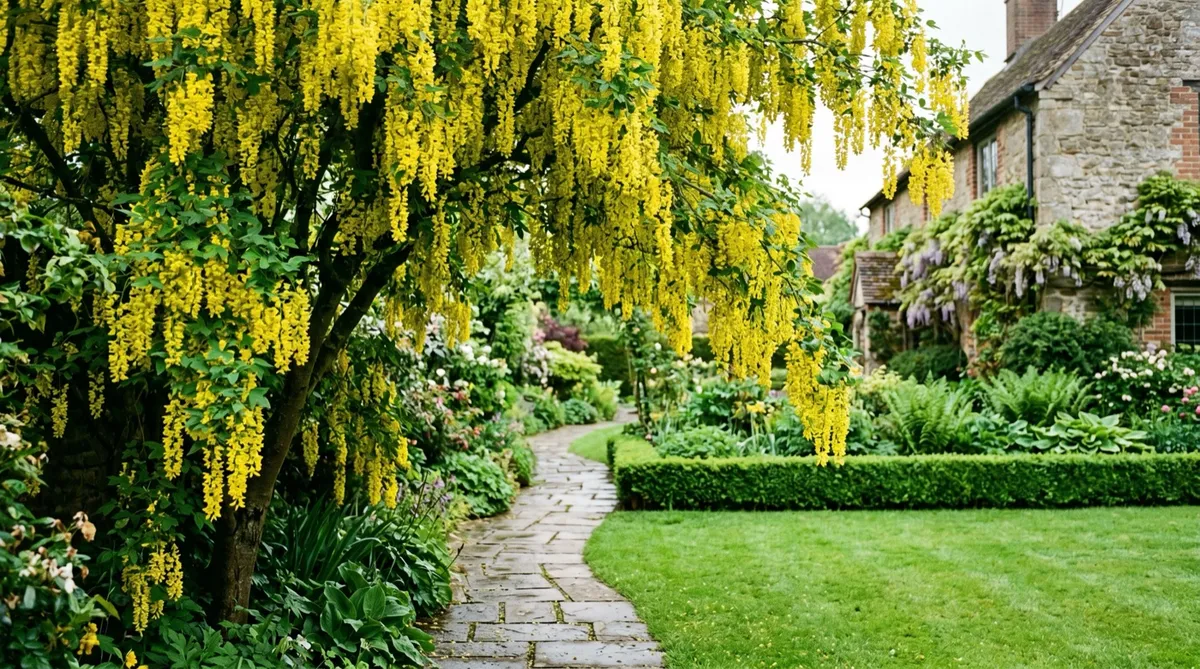
Laburnum is the tree that turns a UK garden gold for three weeks every spring. The golden chain tree drips hanging yellow racemes from mid May, then fades quietly into a neat green canopy for the rest of the year. Grown well it reaches 7-8m, tolerates chalk and clay, and trains into the spectacular flowering arches you see at Bodnant Garden. This guide covers which laburnum to plant, where to put it, how to train an arch, and the one thing every grower must know: the whole tree is toxic.
The headline choice is Laburnum x watereri ‘Vossii’. It carries the longest flowers and the fewest poisonous seed pods, so it is both the showiest and the safest. Get the cultivar right and the rest of the job is straightforward.
Choosing between Vossii, common, and Scotch laburnum
Three laburnums turn up in UK garden centres, and they are not equal. The differences in flower length and seed pod load matter for both display and safety.
Laburnum x watereri ‘Vossii’ is a hybrid between the common and Scotch species. It produces the longest racemes, at 50-60cm, in a dense, even curtain of gold. Crucially, it is largely sterile, so it sets very few seed pods. Fewer pods means far less of the toxin cytisine lying around. For most gardens ‘Vossii’ is the only laburnum worth planting.
Laburnum anagyroides, the common laburnum, is the wild parent. Its racemes are shorter, around 25-30cm, and it sets heavy crops of pea-like pods every year. Those pods are the main poisoning risk, so it is a poor choice near children or pets.
Laburnum alpinum, the Scotch laburnum, is the hardiest of the three. It flowers a week or two later, into early June, with slender racemes around 30-40cm and a glossier leaf. It suits cold northern and Scottish gardens where late frosts trouble the others.
How the golden chain flowering cycle works
Laburnum flowers on a tight annual rhythm, and understanding it tells you when to prune and what to expect. The tree belongs to the pea family, Fabaceae, so its flowers are classic pea shapes strung along a hanging stalk called a raceme.
- Bud set, late summer. Flower buds for next spring form on the current year’s wood from July onward. This is why late-summer pruning matters: cut later and you remove next year’s display.
- Dormancy, November to February. The tree drops its leaves and rests. Sap pressure is high in this window, which is exactly why you must not prune now.
- Leaf and bud break, March to April. Trifoliate leaves unfurl and the flower racemes begin to extend from the buds.
- Full bloom, mid May to mid June. Racemes hang fully open for around three weeks, peaking in late May across most of England.
- Seed pod development, June to September. Fertilised flowers swell into flat green pods that ripen brown. On ‘Vossii’ this stage barely happens; on common laburnum it is heavy.
The critical mistake most people make is pruning in winter or early spring, when the tree looks bare and tidy-minded gardeners reach for the secateurs. Cut then and laburnum bleeds sap heavily from every wound, draining the tree and inviting infection. Always wait until the foliage is fully out.
Where to plant laburnum and what soil it likes
Plant laburnum in full sun for the heaviest flowering, though it tolerates light or partial shade with a thinner display. It is one of the most soil-tolerant ornamental trees, thriving on most well-drained ground including chalk, clay, sand, and loam across a wide pH range of 5.5 to 8.0.
Give a free-standing tree room for its 7-8m eventual spread. Site it away from ponds, patios, and paths where children sit, because fallen pods drop straight onto those surfaces. Honeysuckle and clematis make better choices for a seating-area screen, and you can compare those climbers in our guide to growing honeysuckle.
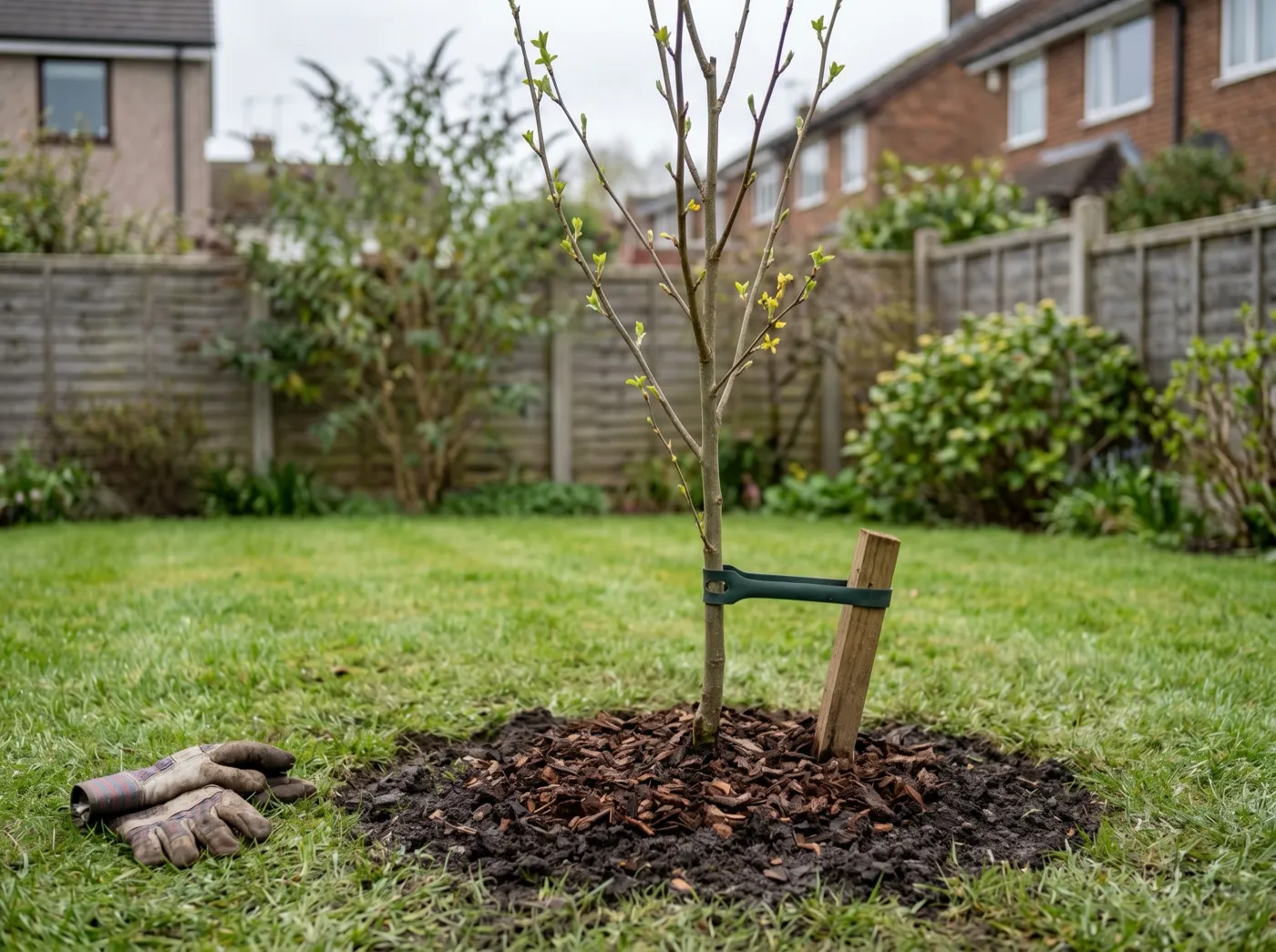 A young laburnum staked low and tied with a soft buckle tie. The stake supports the lower third of the stem for the first two years only.
Planting laburnum, bare-root and container
Laburnum goes in two ways, and the cheaper route is usually the better one. Bare-root trees, sold from October to March, establish fast and cost a fraction of potted stock. Container-grown trees can go in year-round but settle best planted in autumn or spring.
Dig a hole twice the width of the roots but no deeper than the existing soil mark on the stem. Tease out circling roots on potted trees. Set the tree so the graft union sits clear of the soil, backfill with the dug soil, and firm gently. Water in with a full 10-litre can even in wet weather to settle soil around the roots.
Stake the tree low, with a short stake driven in at an angle and a soft tie fixed to the lower third of the stem. Low staking lets the top flex and build trunk strength. Remove the stake after two years once the roots have gripped. Water through the first two summers in any dry spell, soaking deeply once a week rather than little and often.
Gardener’s tip: Mulch a 1m circle around the trunk with 5-7cm of bark or compost, keeping it clear of the bark itself. This holds moisture through the establishment years and saves you watering in all but the driest weeks.
Training a laburnum arch or tunnel
A laburnum arch is one of the great spring sights, and the famous Bodnant Garden tunnel in north Wales shows what the technique achieves at scale. The principle scales down to a single garden arch with patience.
Use a strong galvanised steel frame at least 2.2m high so flower racemes can hang clear of your head. Plant young, whippy trees 3-4m apart along the structure, choosing ‘Vossii’ for its long, clean-hanging racemes. Tie the leading stems to the frame as they grow, spreading them along the top to form the canopy.
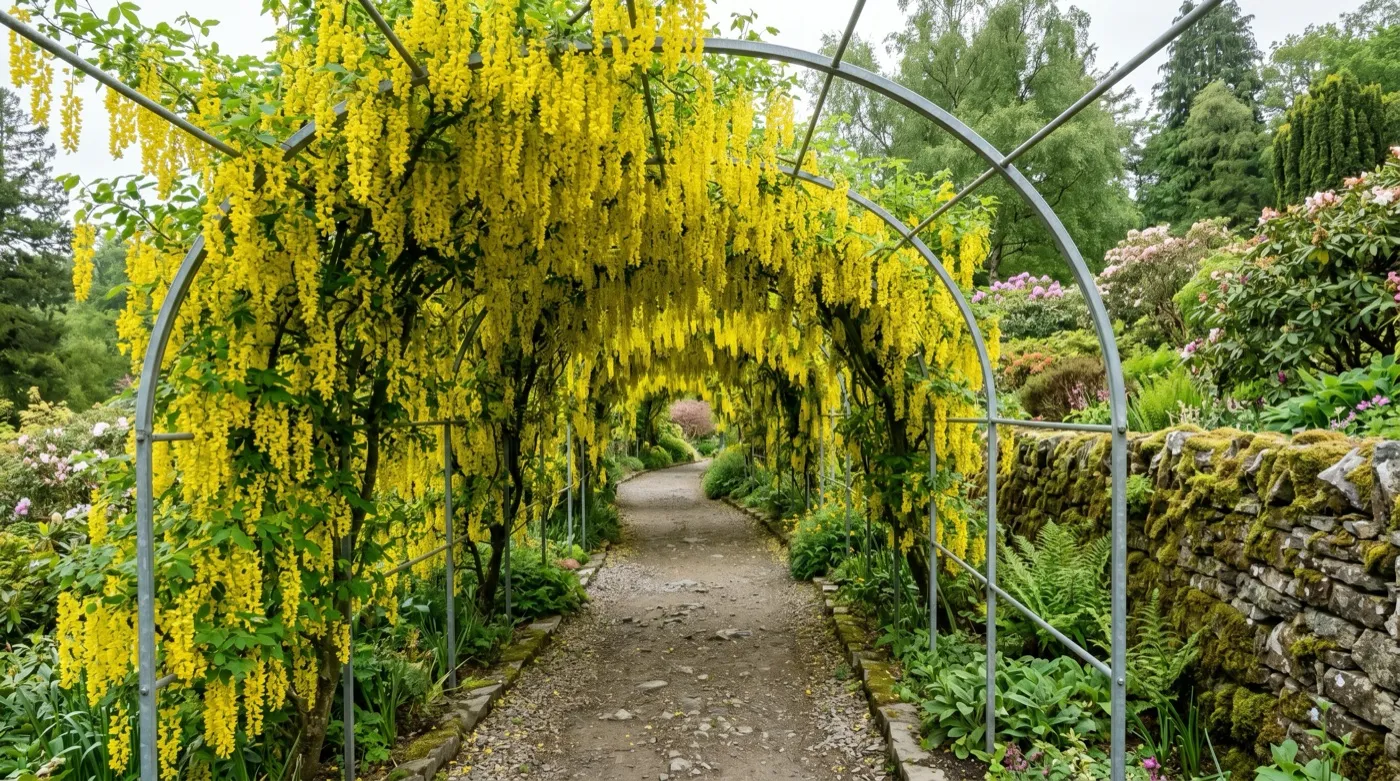 A trained laburnum tunnel in full bloom. Racemes hang cleanly inside the frame, which is why the long-flowered ‘Vossii’ is the standard choice.
Comparing the three laburnum types for garden use
Not all laburnums earn a place in a family garden. This table ranks the three common types by overall garden suitability, weighing flower display against the toxic pod load that matters most where children and pets are about.
| Type | Raceme length | Seed/pod load (toxicity risk) | Hardiness | Role / best for |
|---|---|---|---|---|
| L. x watereri ‘Vossii’ | 50-60cm | Very low (largely sterile) | Hardy to -20C | Gold standard: best display, safest, ideal for arches and family gardens |
| Laburnum alpinum (Scotch) | 30-40cm | Moderate | Very hardy, to -25C | Cold and northern gardens, later flowering, away from children |
| Laburnum anagyroides (common) | 25-30cm | Very high | Hardy to -20C | Wild and naturalised settings only, never near children or pets |
‘Vossii’ is the gold standard. It gives the longest, densest flower display and, being near-sterile, the lowest toxic pod load of the three. What it cannot do is self-seed for a wild planting, which is the one job the heavy-seeding common laburnum still suits. For garden design ideas where a single specimen tree carries the space, see our roundup of the best trees for small gardens.
Pruning, feeding, and year-round care
Laburnum needs little routine care, and over-pruning does more harm than neglect. Prune only from July to September, removing dead, crossing, or crowded branches and lightly shaping arch growth. Never prune in winter or spring, when cuts bleed sap badly. The Royal Horticultural Society sets out the same late-summer timing in its guidance on growing laburnum.
Feed sparingly. A handful of general fertiliser around the base each spring is plenty on most soils. Over-feeding pushes soft, leafy growth at the expense of flowers and makes the wood more prone to disease. Established trees rarely need watering.
The main pest is the laburnum leaf miner, a moth larva that tunnels pale blotches inside the leaves from midsummer. The damage is cosmetic only and needs no treatment; the tree shrugs it off. Laburnum can also suffer twig and branch dieback in wet years, which late-summer removal of affected wood keeps in check.
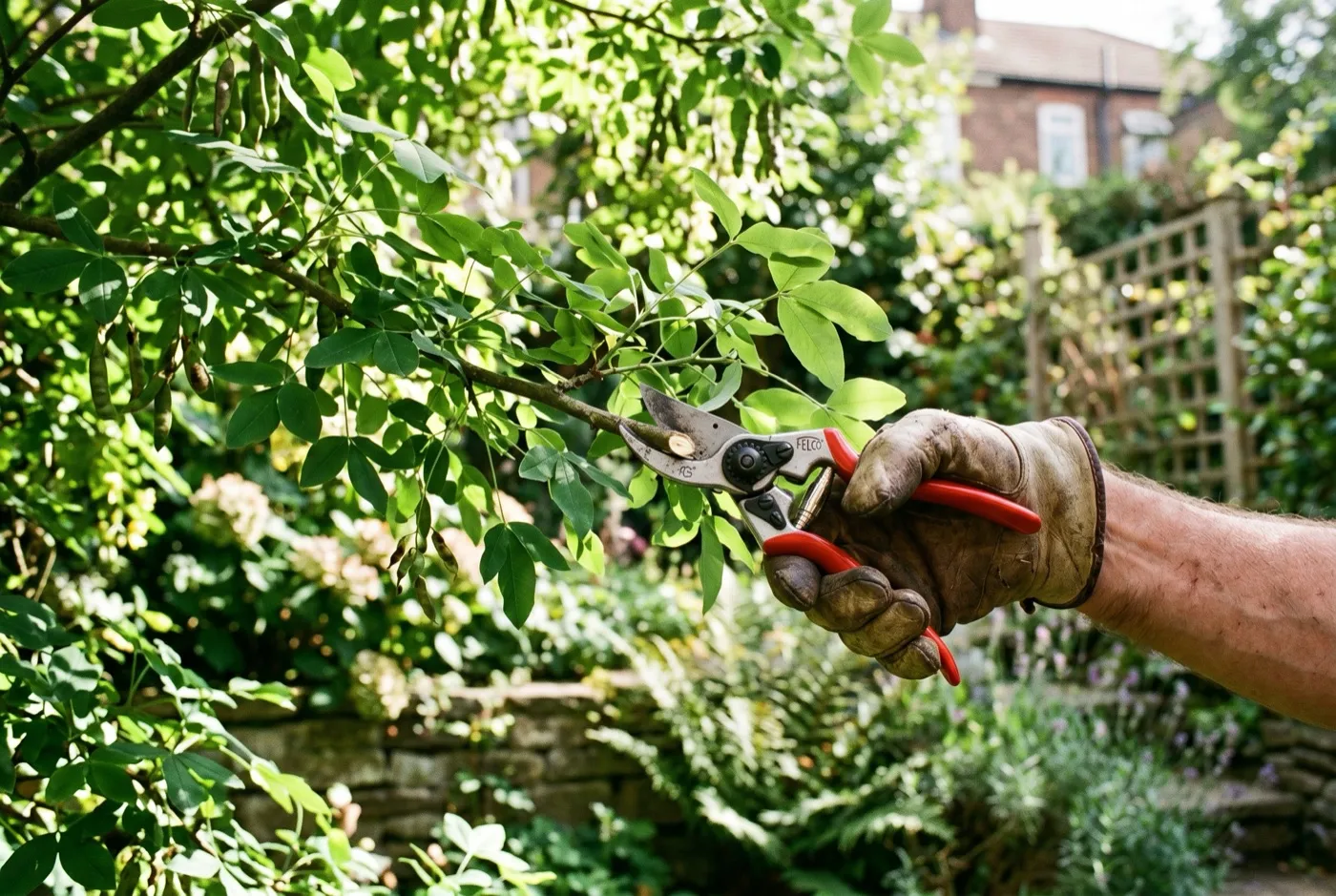 A clean late-summer cut on a laburnum in full leaf. Pruning now avoids the heavy sap bleeding that winter cuts cause.
| Month | Task |
|---|---|
| October to March | Plant bare-root trees, stake low, mulch the base |
| April | Apply a light spring feed, check ties and stakes |
| May to June | Peak flowering, enjoy the display, no work needed |
| July to September | Prune dead and crossing wood, train arch growth |
| September onward | Clear fallen pods near paths, play areas, and paddocks |
The toxicity of laburnum and how to manage it safely
Every part of laburnum is poisonous, and this is the single most important fact about the tree. The toxin is an alkaloid called cytisine, concentrated most heavily in the seeds and pods, which resemble small green pea pods and tempt children to pick them. Bark, leaves, and flowers are toxic too, but the seeds carry the highest dose.
Cytisine is dangerous to children, dogs, and horses. Symptoms of poisoning include sickness, drowsiness, and in serious cases breathing and heart problems. Horses are especially at risk where branches overhang a paddock fence, so site any laburnum well back from grazing.
The root cause of laburnum poisoning is the attractive seed pod, not the tree itself. Remove that risk and a laburnum is no more hazardous than many garden plants. The permanent fix is twofold: plant the near-sterile ‘Vossii’, which sets a fraction of the pods, and clear any fallen pods from September wherever children or animals gather. Before planting near pets, cross-check our guides to plants toxic to dogs and plants toxic to cats so the whole garden is safe, not just this one tree.
Warning: Never let children handle laburnum seed pods, which look like edible peas. Teach them the tree is off-limits, and pick up fallen pods promptly through autumn.
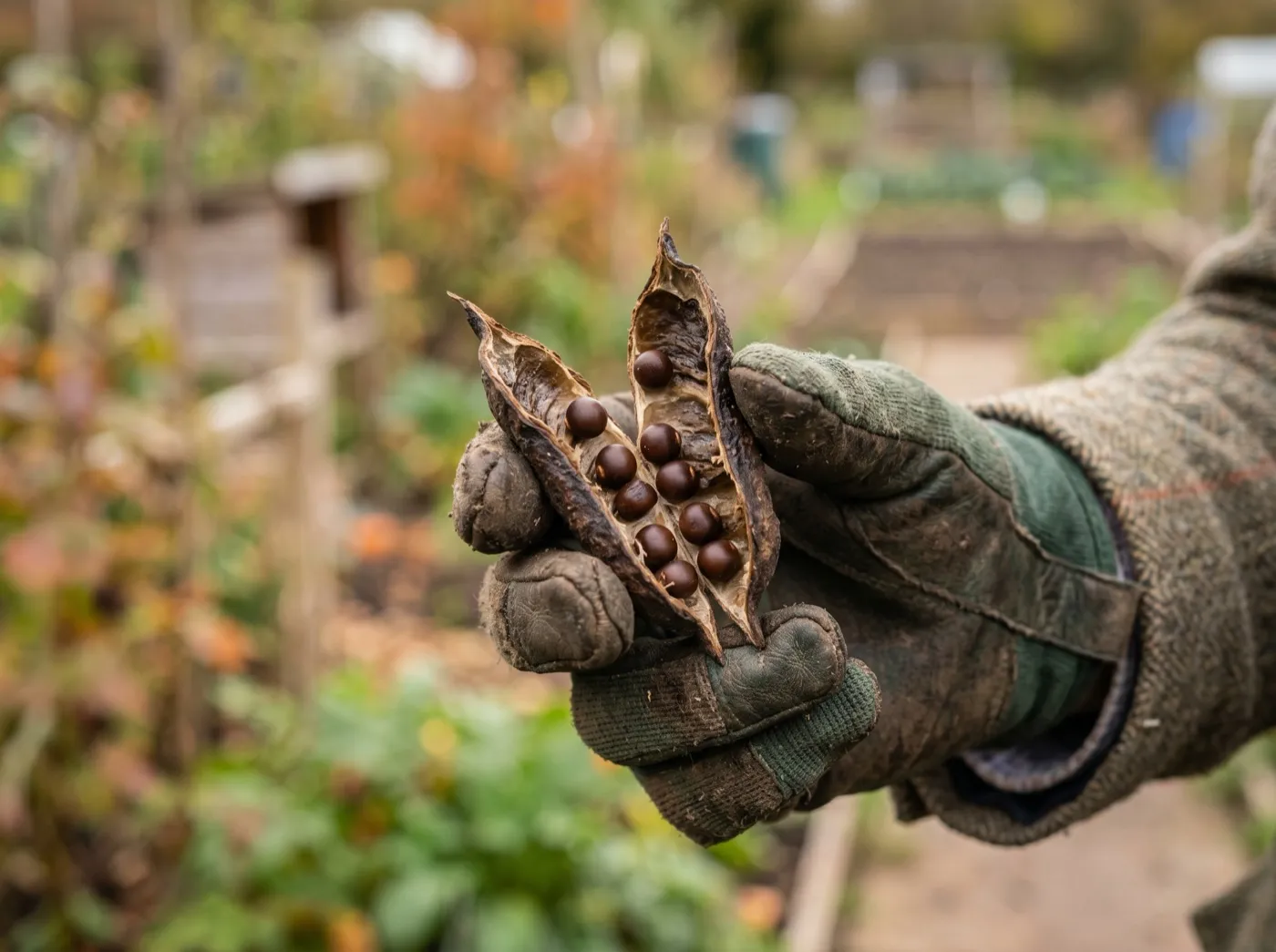 The brown seed pods carry the highest dose of cytisine. Clearing these from paths and play areas is the key safety step every autumn.
A near-sterile tree also puts its energy into next year’s flowers rather than seed production, so ‘Vossii’ tends to flower more reliably year on year than the seed-heavy common laburnum.
Common laburnum growing mistakes to avoid
Most laburnum problems trace back to wrong timing or the wrong species choice. These are the errors that cost flowers, vigour, or safety.
For more spring climbers and trees to pair with laburnum, browse the full plants section and our companion guides on growing wisteria and growing clematis.
Frequently asked questions
Which is the best laburnum tree to grow in a UK garden?
Laburnum x watereri ‘Vossii’ is the best garden choice. It carries the longest racemes, at 50-60cm, and sets far fewer toxic seed pods than the common species. That makes it both the showiest and the safest laburnum for a family garden. It is widely sold bare-root and container-grown across the UK.
Is laburnum poisonous to children, dogs, and horses?
Yes, every part of laburnum is poisonous, especially the seeds. The toxin is an alkaloid called cytisine, found in the pea-like pods. It is dangerous to children, dogs, and horses if eaten. Choose ‘Vossii’ for its sparse seed set and remove fallen pods near play areas and paddocks.
When does laburnum flower in the UK?
Laburnum flowers from mid May to mid June. The hanging yellow racemes last around three weeks, peaking in late May in most of England. Scotch laburnum, Laburnum alpinum, flowers a week or two later. Cold northern gardens see the display run into early June.
How big does a laburnum tree grow?
A laburnum reaches roughly 7-8m in height and spread. It grows fast when young, adding 40-60cm a year, then slows after about 15 years. Trained over an arch it stays more compact. Most garden specimens live 20-30 years before declining.
When and how should I prune laburnum?
Prune laburnum only in late summer, from July to September. Cutting in winter or spring causes heavy sap bleeding that weakens the tree. Remove dead, crossing, or crowded branches and shorten arch growth to the framework. Keep pruning light, as laburnum resents hard cutting.
Can you grow laburnum over an arch or pergola?
Yes, laburnum trains beautifully over an arch or tunnel. Bodnant Garden in Wales has the famous example. Plant young trees 3-4m apart, tie new growth to the frame, and prune in late summer. ‘Vossii’ is the standard choice because its long racemes hang cleanly through the structure.
Now you know how to grow a golden chain tree, learn the late-summer cutting timing that laburnum shares with another spring climber in our guide to pruning wisteria.
Our team produces practical UK gardening guidance from source research, contributor records and established horticultural practice. Editorial standards are overseen by Matt W.