Key takeaways
- Lobelia erinus is the trailing annual for baskets; Lobelia cardinalis is a tall red perennial
- Sow annual lobelia indoors in January or February — germination takes 3 weeks
- Pelleted seed is worth the extra cost because raw seed is dust-fine and hard to handle
- Pinch seedlings at 5cm to create bushy plants with more flowers
- Trim annual lobelia hard in mid-July to force a second flush of flower
- Lobelia cardinalis and L. tupa need wet soil and full sun in a UK bog garden
The name lobelia covers two very different UK garden plants. There is the tiny trailing annual Lobelia erinus that drips blue from every hanging basket across Britain every summer. And then there is Lobelia cardinalis, a tall red perennial for wet clay and pondsides that looks nothing like its small cousin. Most gardeners only know the trailing one. This guide covers both properly.
When should I sow lobelia seed in the UK?
Sow lobelia seed indoors between mid-January and late February for flowering baskets by May. Lobelia needs 12-14 weeks from sowing to first flower. Germination alone takes 3 weeks which is slow compared to almost any other annual. Start too late and your baskets will not flower until July.
Use a heated propagator set to 18-20C. Sow on the surface of damp seed compost. Do not cover the seed. Lobelia needs light to germinate. Cover the tray with a clear lid or bag to keep humidity high. Never let the surface dry out or germination stops permanently. See our guide to sowing seeds indoors for the full method with heat mats and propagators.
Why is lobelia seed so hard to handle?
Raw lobelia seed is almost as fine as dust and impossible to sow evenly. A single packet contains several thousand seeds. Sprinkle directly from the packet and you get dense clumps with bald patches between. The result is patchy trays and wasted seed.
If you only have raw seed, mix it with silver sand at 1 part seed to 10 parts sand. Sprinkle the mix thinly. It is not as accurate as pelleted but workable.
What are the best annual lobelia varieties?
Crystal Palace has the deepest blue flower of any lobelia variety. Almost navy with bronze foliage. It is upright rather than trailing so works best in bedding schemes and pot edges. Cambridge Blue is lighter sky blue with green leaves. Sapphire is a classic trailing type with a white eye.
Crystal Palace (Lobelia erinus)
Upright compact habit reaching 12-15cm. Dark bronze foliage makes the deep blue flowers pop. Excellent for edging and front-of-border bedding. Flowers from June to October with trimming. Hold its shape well without pinching.
Sapphire
Trailing variety with a distinctive white eye in each blue flower. Trail length 30-40cm by midsummer. The traditional hanging basket lobelia. Works brilliantly with white bacopa and pink petunias.
Cambridge Blue
Soft sky-blue flowers on a compact upright plant. Grows 15cm tall. Useful in pots and bedding where you want a lighter colour than Crystal Palace. Open habit makes it airy rather than dense.
Cascade series
Trailing forms bred for hanging baskets. Available in Blue Cascade, Red Cascade, White Cascade, and Cascade Mixed. Trail length reaches 40cm+. Colour choice is the main reason to pick this series over Sapphire.
Variety comparison at a glance
Here is how the main UK lobelia varieties compare for habit, colour, and best use.
| Variety | Habit | Colour | Height/Trail | Best for |
|---|---|---|---|---|
| Crystal Palace | Upright | Deep navy blue | 12-15cm | Edging, pot front |
| Cambridge Blue | Upright | Sky blue | 15cm | Light colour pots |
| Sapphire Cascade | Trailing | Blue with white eye | 30-40cm | Classic baskets |
| Blue Cascade | Trailing | Mid-blue | 40cm | Hanging baskets |
| Red Cascade | Trailing | Carmine red | 40cm | Colour contrast |
| Cascade Mixed | Trailing | Mixed blues, reds, whites | 40cm | Mixed baskets |
| Riviera Blue | Compact upright | Bright blue | 15cm | Early bedding |
| White Lady | Trailing | Pure white | 30cm | Moon gardens |
How do I pinch lobelia seedlings for bushier plants?
Pinch out the growing tip when seedlings reach 5cm tall to force side shoots. Use fingers or small scissors to remove the top 1cm of growth. The plant responds by producing 2-3 new shoots from the leaf joints below. Each new shoot flowers, giving you denser coverage.
Pinch once at 5cm and again at 10cm if the plants are slow to bush up. Do not pinch after the first flower buds form or you delay flowering for 2-3 weeks.
Bacopa and lobelia respond to the same technique so pinch everything in the same session. For more tips on boosting seedling performance, see our guide to growing annuals from seed.
How do I plant up a lobelia hanging basket?
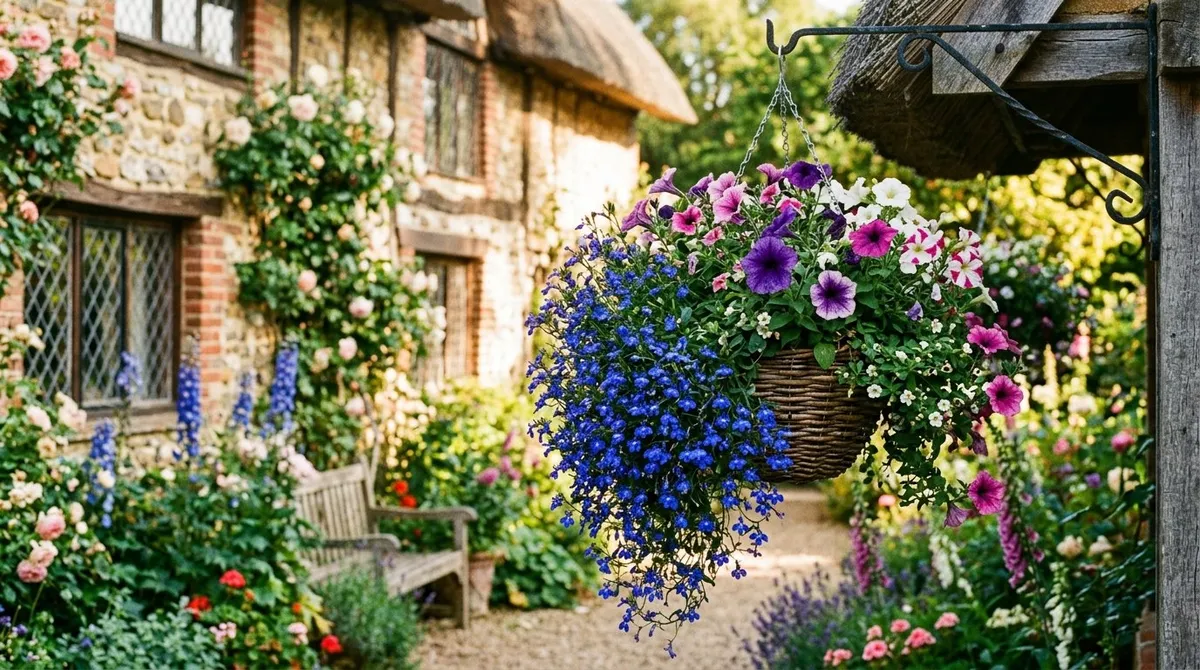
Line a 35cm basket with moss or coir liner, fill with peat-free compost, and plant 6-8 lobelia around the edge. Combine with trailing fuchsia, petunias, bacopa, or verbena in the centre for a mixed effect. Water deeply at planting and hang up once the frosts are over in late May.
Recipe for a classic blue lobelia basket
- 6 x Lobelia Sapphire Cascade (edge)
- 3 x white Bacopa (midway)
- 1 x blue trailing petunia (centre)
- 2 x silver Helichrysum petiolare for foliage
For a full basket layout guide see our hanging baskets how-to. Pair lobelia with petunias for a classic blue and pink scheme that UK gardeners have planted for generations.
How do I keep my lobelia flowering into autumn?
Trim the whole basket back by half in mid-July. Use shears, do not be delicate. The plants look bare for a week then burst back into flower within 2-3 weeks. Water heavily and liquid feed with a high-potash fertiliser (tomato feed works) once a week.
Without the trim, flowering slows in August and the plants look tired by September. With the trim, baskets stay in full colour until the first frost, usually late October in the West Midlands.
Keep watering daily through hot weather. Hanging baskets dry out faster than anything else in the garden. Lobelia wilts dramatically when dry but usually recovers if watered quickly. Chronic drought kills them permanently.
What is Lobelia cardinalis and how do I grow it?
Lobelia cardinalis is a hardy perennial from North American wetlands that reaches 90cm tall with brilliant red flower spikes from July to September. It wants wet soil and full sun. This is nothing like the annual trailing lobelia despite sharing the name.
The key to success is moisture. Cardinal flower needs permanently wet roots. Plant in a bog garden, pond margin, or moisture-retentive clay border. On dry soil it sulks and dies within a year. On wet clay it spreads gently and lives for decades.
Hardy to -15C if the roots stay damp. Mulch with bark in autumn for the first two winters. After that it looks after itself.
Lobelia cardinalis care checklist
- Soil: Permanently moist clay or loam
- Sun: Full sun ideal, light shade tolerated
- Height: 70-90cm
- Flowering: July to September
- Hardiness: -15C with wet roots
- Spacing: 30cm apart in drifts of 5+
- Feed: Not needed in bog gardens
Is Lobelia tupa worth growing in the UK?
Yes, Lobelia tupa is the most dramatic lobelia for sheltered UK gardens. A Chilean native reaching 1.8m with smoky dark red flower spikes and grey-green leaves. Often called the devil’s tobacco. Much less common than the other species but striking where it settles.
Worth growing if you want something most UK gardens do not have. Expect to pay £12-£18 for a 1L pot from specialist nurseries. Cuttings root easily in June if you want to build up stock.
What pests and diseases attack lobelia?
Slugs are the main pest on young lobelia seedlings in the garden. Hanging baskets usually escape slug damage because they are out of reach, but bedding plants get hammered in the first week after planting out. Use copper tape around pots or try nematodes on the soil before planting.
Aphids attack stressed plants in hot weather. Treat with a strong water spray or insecticidal soap. Healthy plants usually shrug off light aphid attacks.
Powdery mildew affects tired plants in late summer. The July trim-back largely prevents it. Water at the base not the leaves. Avoid evening watering in humid weather.
For wider sowing timings across the season, consult the UK seed sowing calendar. The RHS plant guide for Lobelia erinus has additional variety suggestions if you want to branch beyond the Cascade series.
Frequently asked questions
When should I sow lobelia seed in the UK?
Sow lobelia seed indoors from mid-January to late February. Lobelia needs 12-14 weeks from sowing to flowering. Germination takes 3 weeks which is slow for annuals. Use a heated propagator at 18-20C. Sow on the surface and do not cover. Pelleted seed is far easier to handle than raw.
Is lobelia a perennial or annual?
It depends on the species, Lobelia erinus is an annual, Lobelia cardinalis is a perennial. The trailing blue lobelia in hanging baskets is Lobelia erinus, a tender annual. The tall red cardinal flower is Lobelia cardinalis, a hardy bog perennial. Both share the name lobelia but grow completely differently.
How do I get lobelia to flower all summer?
Trim annual lobelia hard in mid-July to force a second flush of flower. Cut back by half with shears. Water well and liquid feed once a week. Fresh flowers reappear within 2-3 weeks and last until the first frost. Without trimming, flowers slow in August and tail off by September.
Why is my lobelia seed not germinating?
Lobelia seed needs light to germinate and will not sprout if covered. Sow on the surface of damp seed compost and press gently. Keep at 18-20C with a propagator lid to maintain humidity. Germination takes 2-3 weeks. Never cover with compost. Never let the surface dry out before germination.
What is the best trailing lobelia for hanging baskets?
The Cascade series is the best trailing lobelia for UK hanging baskets. Sapphire Cascade has deep blue flowers with a white eye. Red Cascade brings strong colour. Cascade Mixed gives a full range. Trail length reaches 40cm by midsummer. Crystal Palace is more upright but has deeper blue flowers than any other variety.
Does Lobelia cardinalis grow well in the UK?
Yes, Lobelia cardinalis thrives in UK bog gardens and moist clay borders. It reaches 90cm tall with brilliant red flower spikes from July to September. Needs full sun and permanently moist soil. Hardy to -15C if roots stay wet. Mulch in autumn. It self-seeds gently in the right conditions.
Can I save lobelia seed from year to year?
Yes, annual lobelia produces dust-fine seed that stores well for 3 years. Let the last flowers run to seed in September. Collect the papery pods before they burst. Store in paper envelopes in a cool dark place. Germination drops each year so use fresh seed for the best results.
Our team produces practical UK gardening guidance from source research, contributor records and established horticultural practice. Editorial standards are overseen by Matt W.