Key takeaways
- Evergreen shrub with apricot-scented white or orange flowers
- Best UK varieties: O. burkwoodii, O. delavayi, O. heterophyllus
- Hardy to -10C in sheltered UK positions
- Plant in sun or part shade with shelter from cold winds
- Light prune after flowering only
- Slow growing: 100-200mm per year, mature 2-3m over 15 years
Osmanthus (tea olive) is one of the most under-planted UK evergreen shrubs. Apricot-scented flowers in spring or autumn, glossy holly-like foliage year-round, slow steady growth to a manageable size. This guide covers the best UK species, planting position, the simple pruning routine, and the borderline-hardy question for the famous fragrant O. fragrans.
UK Osmanthus Species Compared
Four species dominate the UK garden trade.
| Species | Flowering | Height | Scent | Hardiness |
|---|---|---|---|---|
| Osmanthus burkwoodii | April-May | 2-3m | Strong apricot | -10C hardy |
| Osmanthus delavayi | March-April | 1.5-2m | Strong apricot | -10C hardy |
| Osmanthus heterophyllus | October | 2-4m | Sweet, holly-like leaves | -10C hardy |
| Osmanthus fragrans | October-March | 2-3m | Very strong apricot-vanilla | -5C borderline |
| Osmanthus armatus | September-November | 3-5m | Sweet, larger leaves | -10C hardy |
O. burkwoodii is the most popular UK garden choice. Reliable, hardy, fragrant, manageable size. £25-£60 per 2-3 year plant from UK garden centres.
O. delavayi is slightly earlier flowering and stays more compact. £25-£50 per plant.
O. heterophyllus has holly-like spiky leaves and autumn flowers. Some forms have variegated leaves. £35-£70 per plant.
O. fragrans is the famous “tea olive” of Asian cooking and perfumery but is borderline-hardy in the UK. Best treated as a conservatory or sheltered south-wall plant.
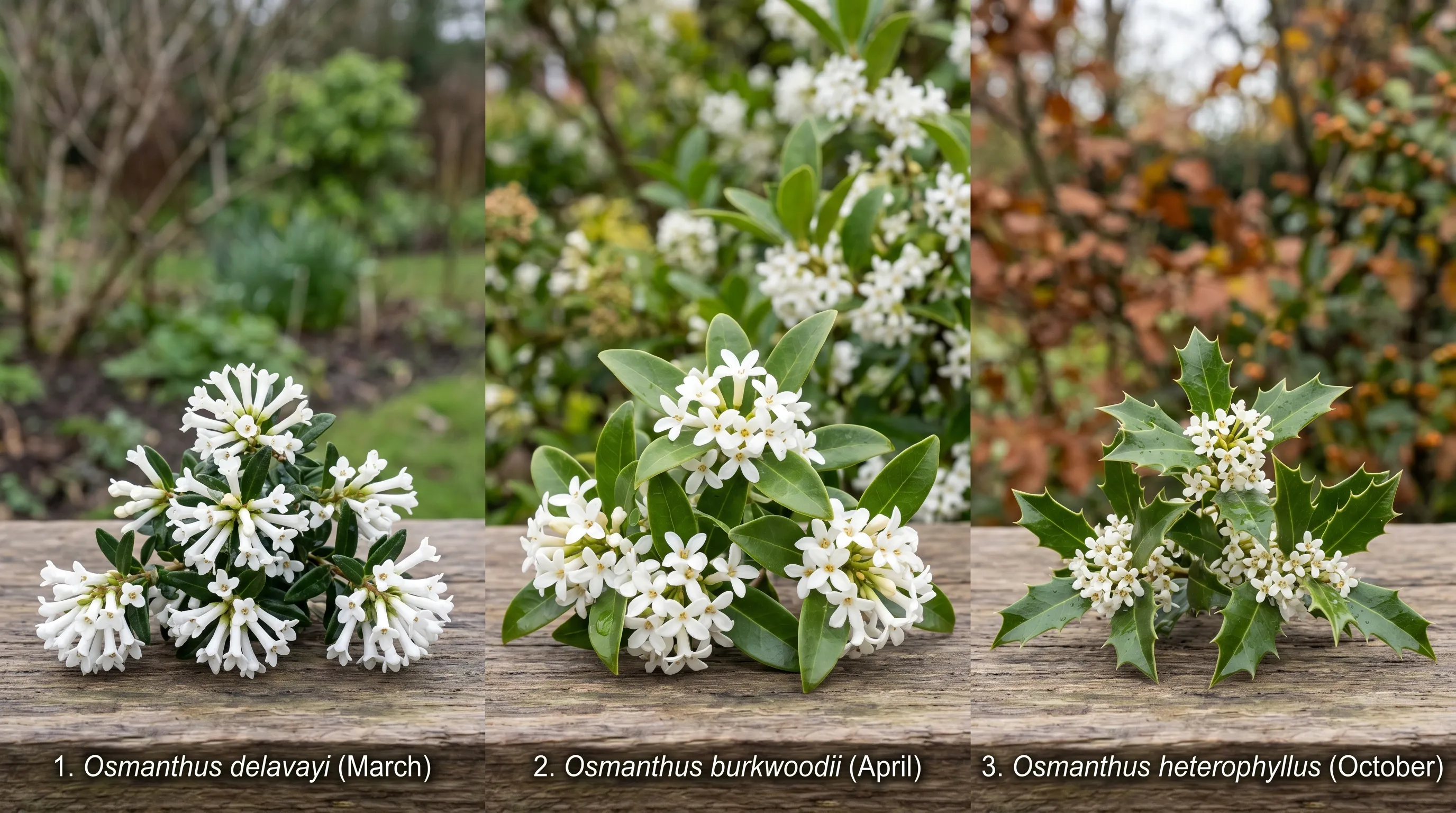 Three UK-hardy Osmanthus species in flower. O. delavayi (left, March), O. burkwoodii (centre, April), O. heterophyllus (right, October). All produce sweetly apricot-scented small white tubular flowers.
Planting Position and Soil
Position requirements:
- Sun or partial shade (4+ hours direct sun)
- Shelter from cold east winds
- Well-drained soil
- Tolerant of pH 5.5-7.5 (most UK garden soils)
Best sites:
- South-facing or west-facing fence or wall
- Sheltered front-garden positions
- Mixed shrub borders with taller shelter
- Container on sheltered sunny patio
Avoid:
- Exposed north or east aspects (wind-scorched buds)
- Heavy waterlogged clay (rots roots)
- Deep shade (flowering reduced)
- Frost pockets
Planting
Plant during the dormant season (October-March) for bare-root or any time of year for container-grown.
Method:
- Dig a planting hole twice the width of the rootball, same depth
- Mix half the excavated soil with garden compost
- Loosen rootball edges if rootbound
- Plant at the same level as in the pot
- Refill with the soil/compost mix
- Water deeply
- Mulch 50mm around the base (not touching the stem)
- Stake if planting tall plants in windy positions
First-year care: water weekly during dry weather (10-15 litres per session). After year 1, only water in extended drought.
Pruning and Maintenance
Osmanthus needs surprisingly little pruning.
Annual maintenance:
- After flowering (May for spring-flowering species, November for autumn)
- Remove any crossing or rubbing branches
- Trim overlong shoots back to a healthy bud
- Remove any dead or damaged wood
- Aim to maintain natural shape; do not shear
Avoid:
- Hard pruning back to old wood (regrowth slow)
- Late-summer pruning (removes flower buds)
- Annual hedge-style shearing (reduces flowers and ages plant)
Plants left unpruned for 3-4 years can be rejuvenated by removing 1-2 oldest stems at ground level. This stimulates new growth from the base.
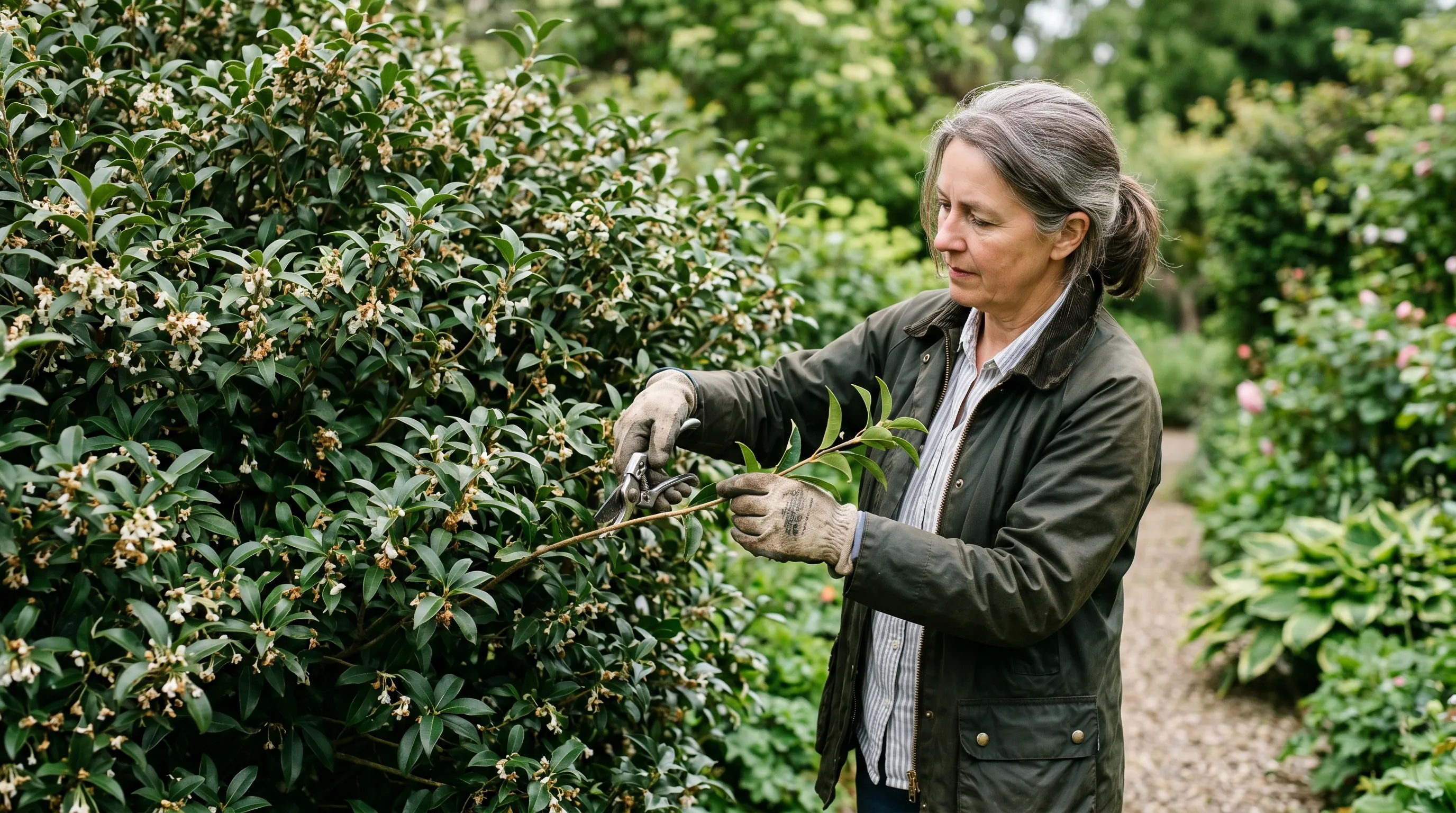 Light post-flowering pruning on a Staffordshire Osmanthus burkwoodii. Single overlong shoots trimmed to a healthy bud. Crossing branches removed. Natural shape maintained.
Container Growing
Osmanthus thrives in containers for 10-15 years before needing larger pot or planting out.
Container specifications:
- 50-60cm diameter for 2-year plant
- 70-80cm for mature plant after 5-8 years
- Peat-free multipurpose compost with 30% added John Innes No. 3
- Drainage holes essential
Container care:
- Water consistently in summer (twice weekly in dry weeks)
- Feed half-strength tomato feed monthly May-September
- Repot or top-dress with fresh compost every 3-4 years
- Move pot to sheltered position in extreme winters
The Staffordshire container O. burkwoodii in a 60cm pot has flowered reliably for 6 years with annual top-dressing only.
Common Mistakes With UK Osmanthus
Mistake 1: planting in exposed east position. Cold winds scorch buds and reduce flowering by 60-80%. Always shelter from east.
Mistake 2: hard pruning. Regrowth slow and weak. Light annual prune only.
Mistake 3: choosing O. fragrans for outdoor borders. Borderline-hardy; needs conservatory.
Mistake 4: rich heavy clay soil. Roots rot. Improve drainage with sand and grit at planting.
Mistake 5: expecting fast growth. 100-200mm per year is normal. Plan position for 10-15 year mature size.
For the wider UK evergreen shrub selection, our evergreen guide covers other year-round shrubs.
Osmanthus Calendar UK Month-by-Month
| Month | Osmanthus task |
|---|---|
| January | No active care; plant if mild weather |
| February | Prune any winter damage |
| March | O. delavayi flowers begin |
| April | Peak O. burkwoodii flowering |
| May | Post-flowering prune. Mulch base |
| June | Container feed monthly |
| July | Water during dry weeks |
| August | Continue summer care |
| September | Prepare for autumn-flowering species |
| October | O. heterophyllus flowers; harvest leaves for tea |
| November | Post-flowering prune autumn-flowering species |
| December | Wind protection check for exposed plants |
Frequently asked questions
Is Osmanthus hardy in the UK?
Most Osmanthus species are hardy to -10C in sheltered UK positions. O. burkwoodii, O. delavayi and O. heterophyllus all reliably survive UK winters in sheltered borders. O. fragrans (the famous tea olive) is borderline-hardy and needs conservatory protection in most of the UK.
When does Osmanthus flower in the UK?
Spring-flowering: O. delavayi (March-April), O. burkwoodii (April-May). Autumn-flowering: O. heterophyllus (October). Conservatory: O. fragrans (October to March). The spring-flowering species are the most popular UK garden choice.
Does Osmanthus need pruning?
Light pruning only, immediately after flowering. Shape the shrub by removing crossing branches and trimming overlong shoots. Avoid hard pruning; the shrub responds slowly. Light annual prune produces denser growth and more flowers the following year.
What is the best Osmanthus variety for a small UK garden?
Osmanthus burkwoodii is the safe choice for most UK gardens: hardy, reliable, fragrant, slow-growing to 2m. Osmanthus delavayi flowers slightly earlier (March-April) and stays more compact at 1.5m. Both work in sun or part shade and tolerate any well-drained soil.
Can I grow Osmanthus in a pot?
Yes. Most species suit 50-60cm containers with peat-free compost and good drainage. Container-grown plants reach 1.5-2m over 10 years. Repot every 3-4 years. Water consistently in summer. Move pot to sheltered position in extreme winters.
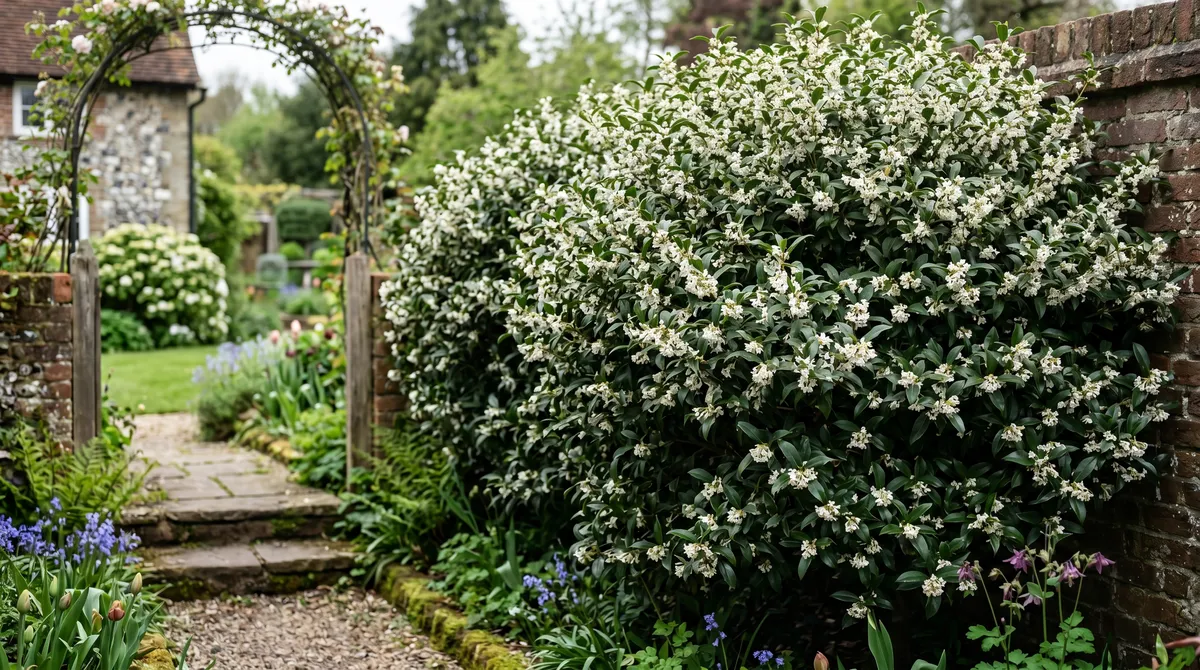
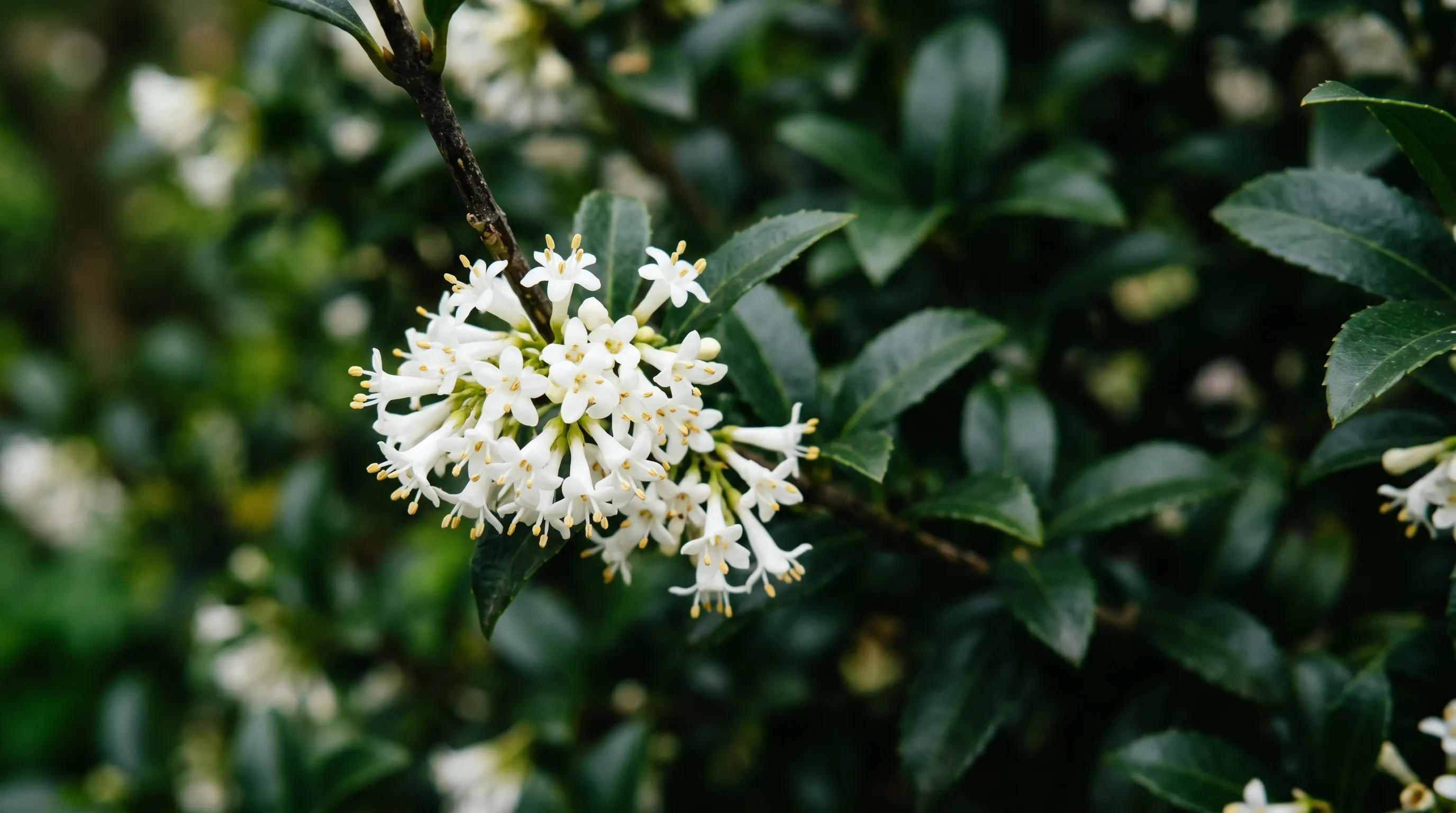 Osmanthus burkwoodii in full flower in late April. Small white tubular flowers densely clustered along the stems, releasing strong apricot scent. Dark glossy evergreen foliage frames the display.
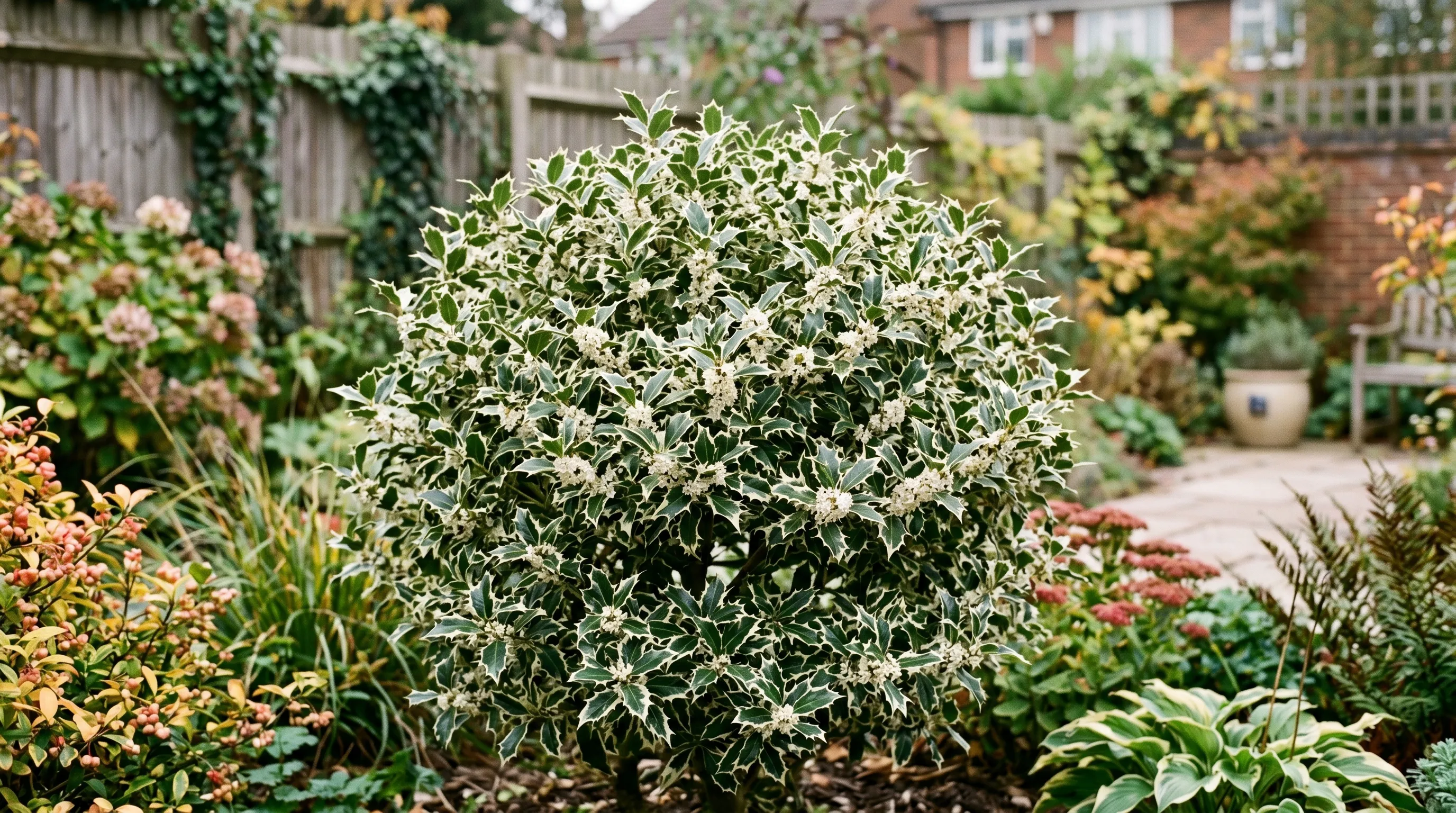 Osmanthus heterophyllus in October flower. Holly-like spiky leaves often confused with Ilex. White tubular flowers release evening scent. Variegated forms (‘Goshiki’, ‘Variegatus’) add year-round interest.
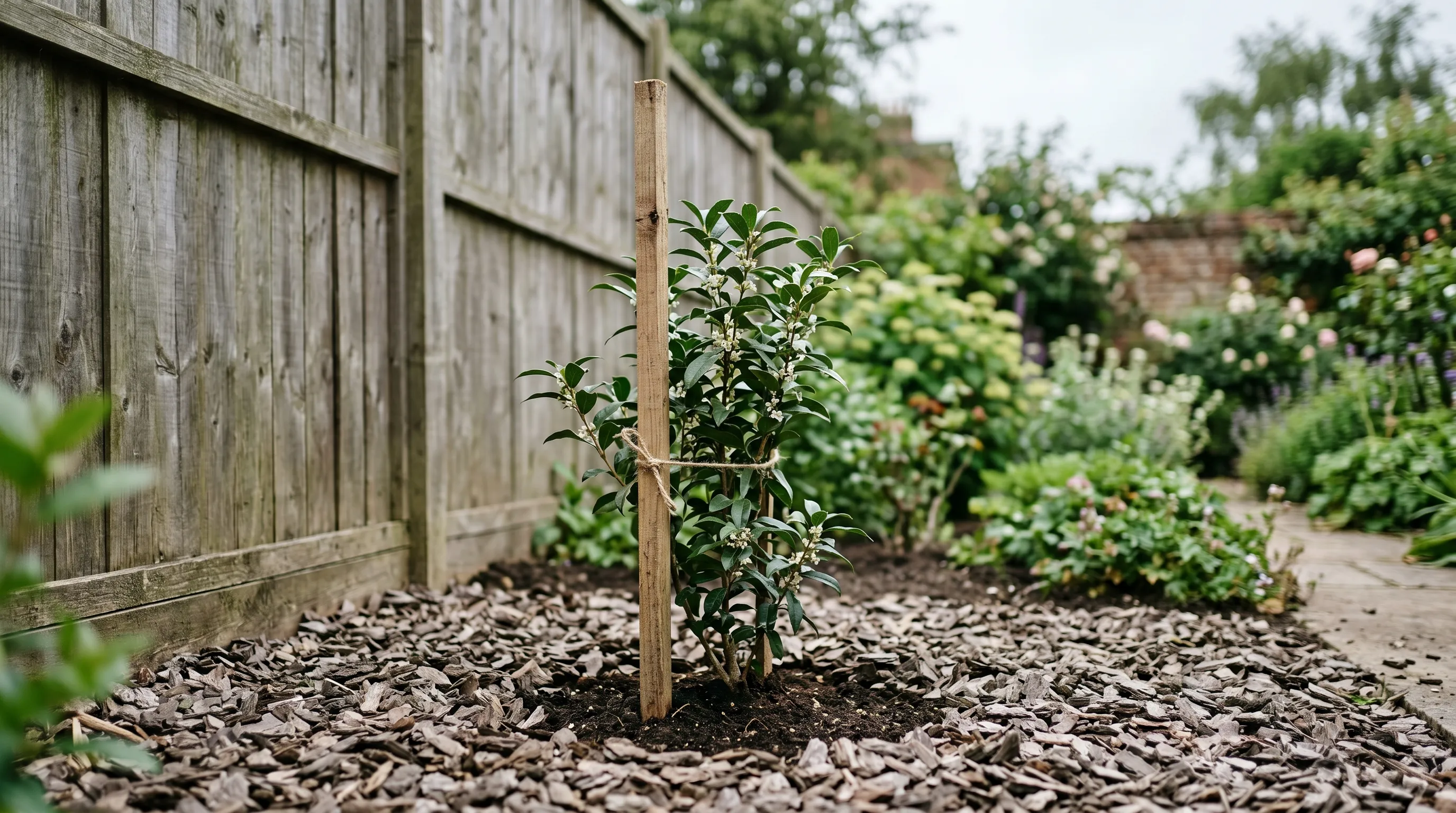 A new Staffordshire Osmanthus planting at the foot of a south-facing fence. Bark mulch holds moisture. First-year stake provides wind support during establishment. Mature size in 10 years: 2m tall and wide.
Now plan the wider evergreen border
Our team produces practical UK gardening guidance from source research, contributor records and established horticultural practice. Editorial standards are overseen by Matt W.