Key takeaways
- Deadhead spent blooms to keep the plant tidy and prevent petal blight
- Prune lightly straight after flowering, never in summer or autumn
- Feed with an ericaceous (acidic) fertiliser once flowering finishes
- Water consistently June to August, when next year's buds form
- Drought in summer is the main cause of bud drop the following spring
- Use rainwater and an acidic mulch; tap water and lime cause yellow leaves
The weeks just after a camellia finishes flowering are the most important of its year, even though the plant looks like it is winding down. This is when you deadhead, prune if needed, feed, and above all start the summer watering that sets next spring’s flowers. Most camellia problems people notice in March, bare buds that never opened or a plant that dropped its flowers, trace straight back to what was done, or not done, the previous summer. This guide covers the full aftercare routine in the right order, and explains the watering rule that prevents the most common camellia disappointment of all.
Camellias flower from late winter into spring, roughly February to May in UK gardens depending on type. Once the last blooms fade, the clock starts on next year.
Deadhead spent camellia flowers
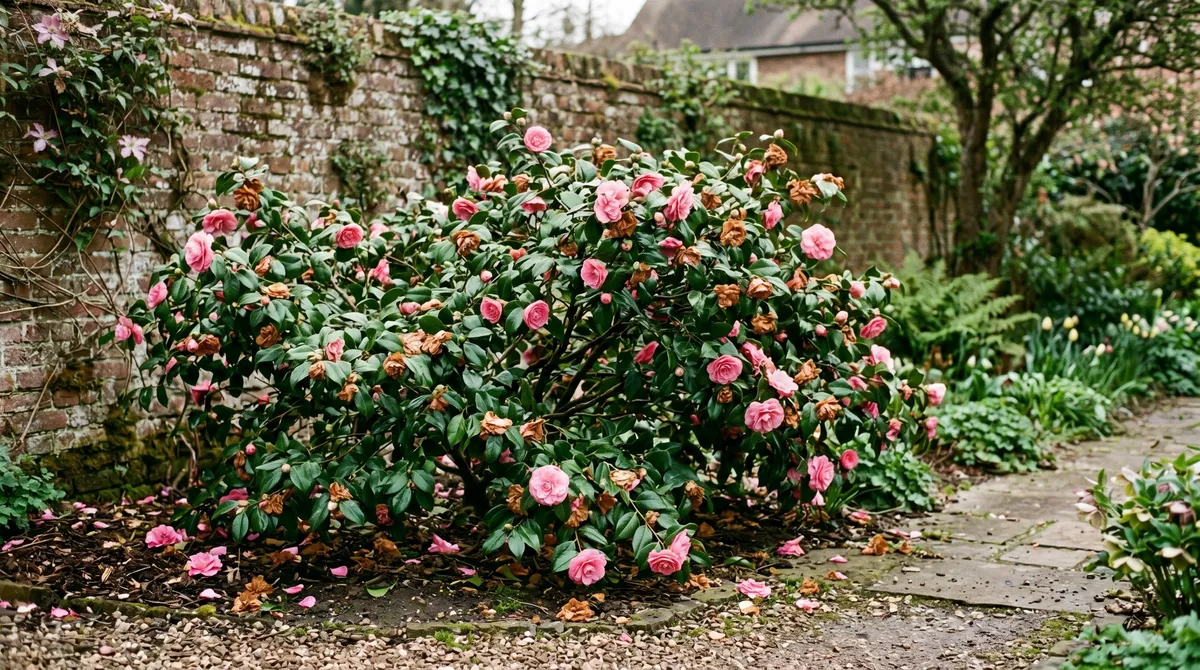
Start by deadheading, removing the faded flowers. Whether this matters depends on the type. Most Camellia japonica varieties hold their dead, brown flowers on the plant, where they look untidy and can harbour disease. Camellia williamsii types, by contrast, drop their spent blooms cleanly and need little attention. Sasanqua autumn camellias also shed neatly.
The main reason to deadhead is camellia petal blight, a fungal disease that turns flowers brown and slimy and overwinters in fallen petals. Picking off spent blooms and clearing them from the ground, rather than composting them, breaks the disease cycle. Deadheading also stops the plant wasting energy on seed production and keeps it looking presentable. Simply hold the stem and twist or pick off each faded flower. There is no need to be precise, as you are removing the bloom, not pruning the stem.
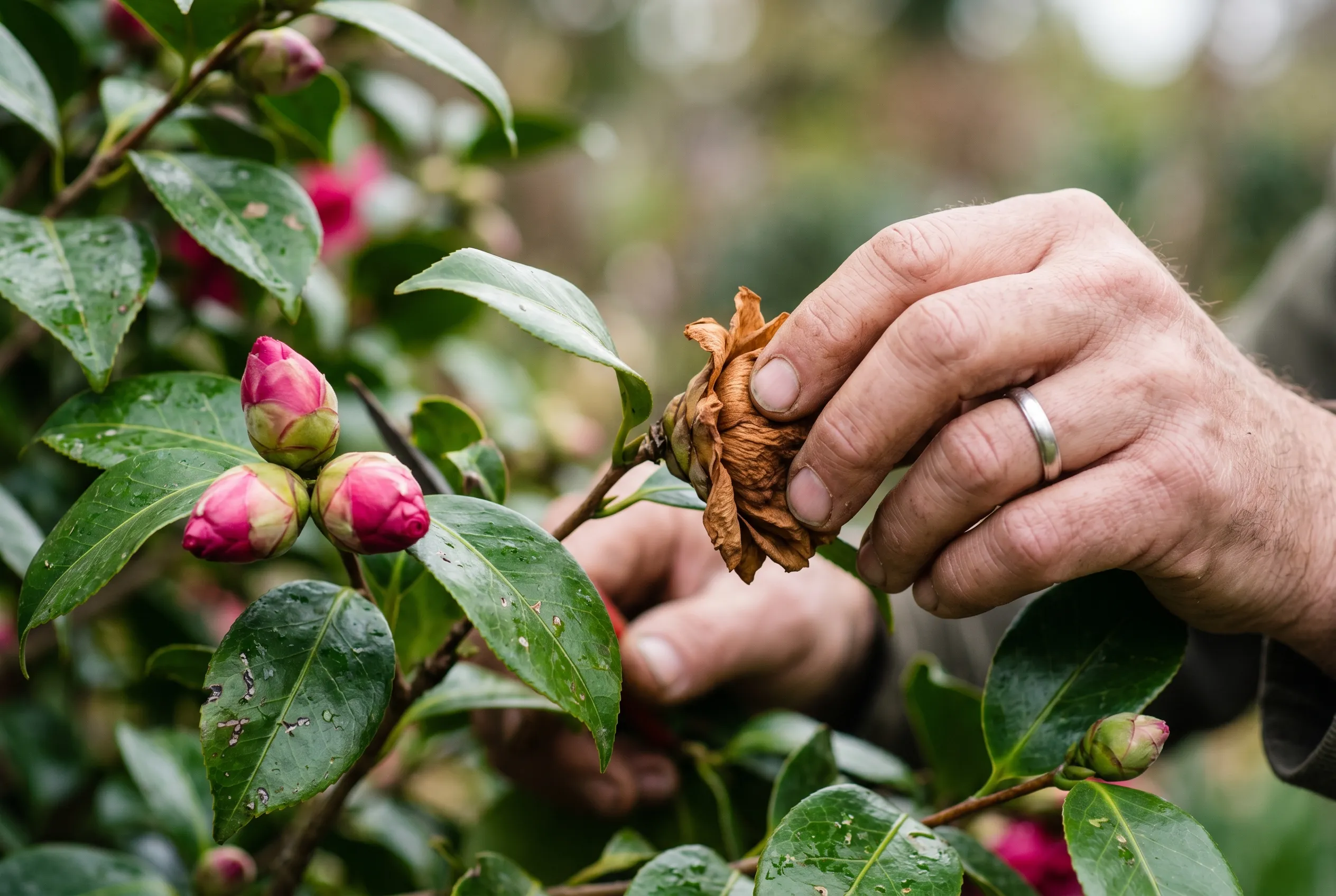 Pick off spent blooms, especially on japonicas that hold their dead flowers. Clear fallen petals to prevent petal blight.
When and how to prune camellias
Camellias need little pruning, but if you must shape or reduce one, do it straight after flowering and at no other time. This timing is not optional. Camellias set their flower buds for next year in early summer, from around June. Prune in summer, autumn, or winter and you cut off the very buds the plant has just made, losing a whole year of flowers.
Most established camellias only need light work: remove any dead, damaged, or crossing branches, and shorten the odd wayward shoot to keep a balanced shape. Cut just above a leaf node or bud. Healthy, well-placed camellias can go years without pruning at all. If a plant has grown too large or bare at the base, camellias do tolerate hard renovation pruning after flowering, cutting back into old wood, from which they usually resprout, though they may take a year or two to flower again. Our guide on pruning shrubs covers the general technique.
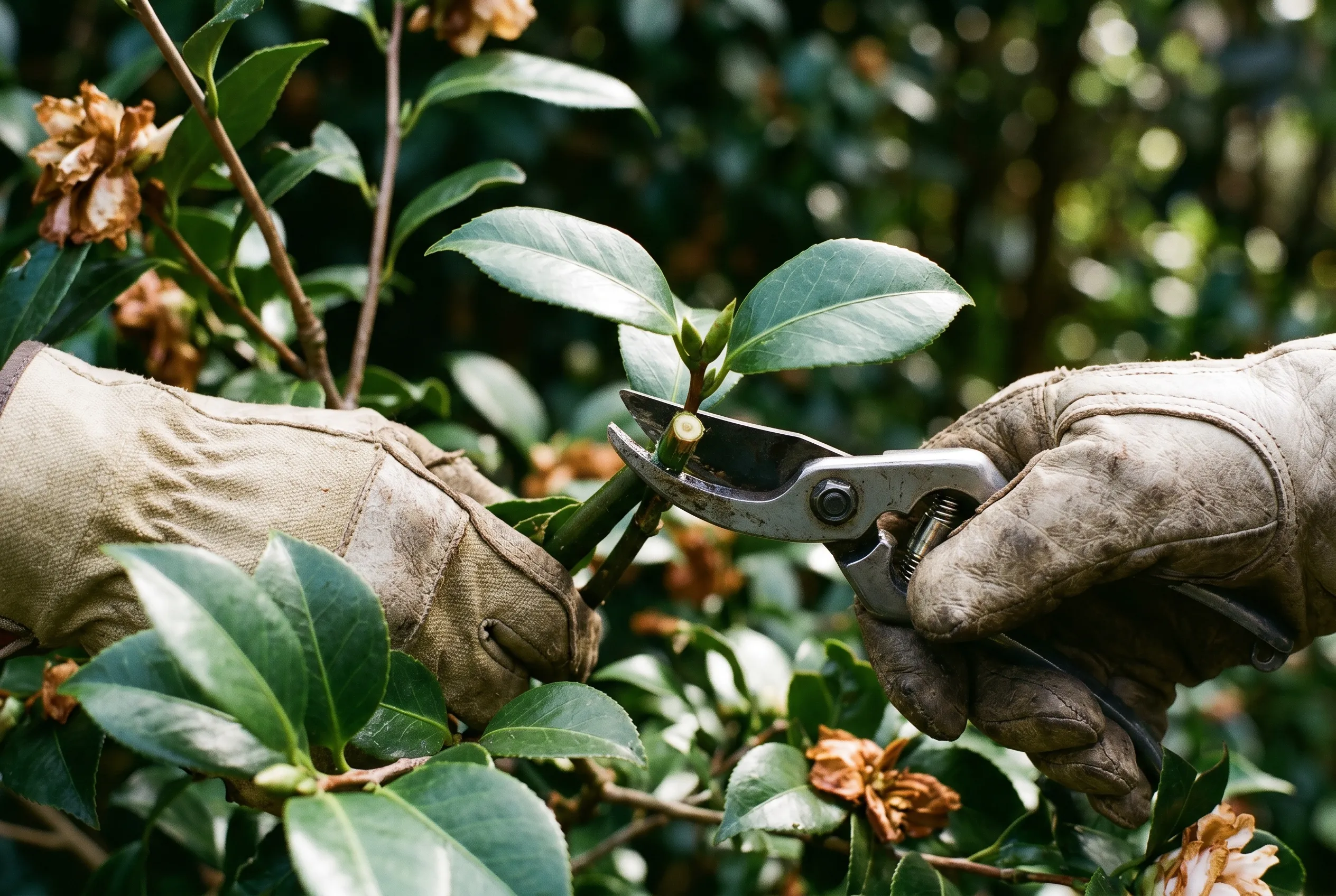 Prune only straight after flowering. Cut above a leaf node, and keep it light unless the plant needs renovating.
Feed and mulch after flowering
Camellias are acid-loving plants, so feed them with an ericaceous fertiliser formulated for lime-haters, not a general garden feed. Apply the first dose as flowering finishes, and a second in June, following the pack rate. The post-flowering feed supports the flush of new growth and the bud-setting that follows. Stop feeding by late July, as feeding into autumn pushes soft growth that frost damages.
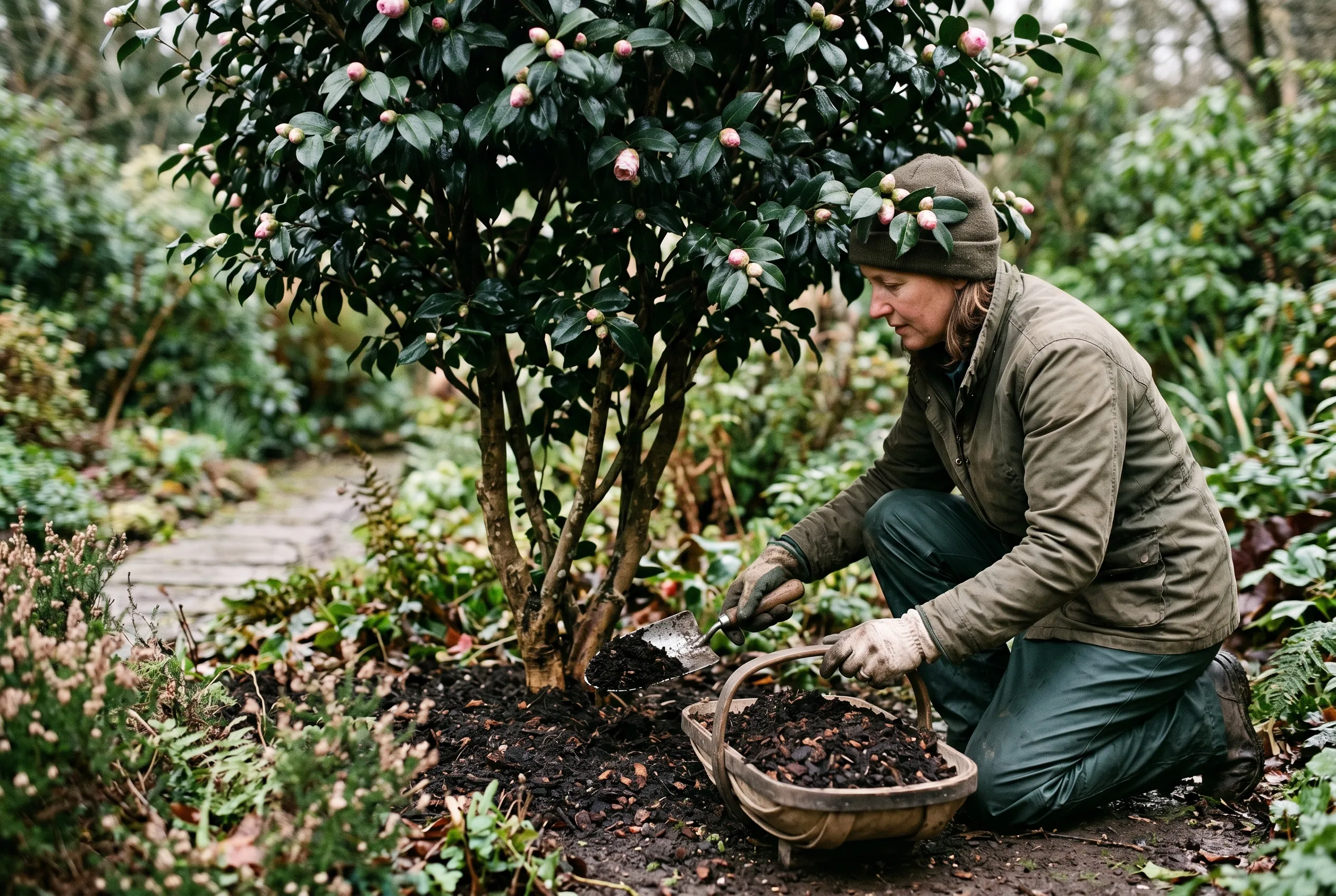 An acidic mulch of bark or leaf mould keeps the shallow roots cool and moist and maintains soil acidity.
The summer watering rule that sets next year’s flowers
This is the single most important job, and the one most often missed. Camellias form their flower buds from June to August, the warmest, driest months. If the roots dry out during this window, the plant sheds those buds the following spring. The gardener then blames the cold March weather, when the real cause was a dry July.
Water deeply and consistently through summer, especially in dry spells and for plants in pots or against walls where soil dries fast. Use rainwater wherever possible. Hard tap water is alkaline and, over time, raises the soil pH and locks up iron. A water butt or two pays for itself in camellia health alone. Keep watering into autumn if the weather stays dry, since the buds, now formed, still need moisture to develop. This summer care is what separates a camellia smothered in bloom from one that opens half its buds.
Warning: Do not rely on rain alone for camellias in containers or under the eaves of a house. These spots stay dry even in wet weather, and a single dry fortnight in July can cost the entire following spring’s flowers.
Camellia types and their aftercare needs
The three main groups grown in UK gardens differ in flowering time and how much deadheading they need.
| Type | Flowering season | Deadheading | Notes |
|---|---|---|---|
| Camellia japonica | February to April | Needed, holds dead flowers | Most popular; many double forms |
| Camellia williamsii | February to May | Little, drops blooms cleanly | Tough, free-flowering, self-cleaning |
| Camellia sasanqua | October to December | Little, sheds neatly | Autumn flowering, scented, sun-tolerant |
| Hardy hybrids | March to May | Variable | Bred for cold tolerance |
All three follow the same core aftercare: deadhead if they hold their flowers, prune only after flowering, feed ericaceous, and water through summer. For choosing and growing them well from the start, see our camellia growing guide and our roundup of the best winter-flowering shrubs.
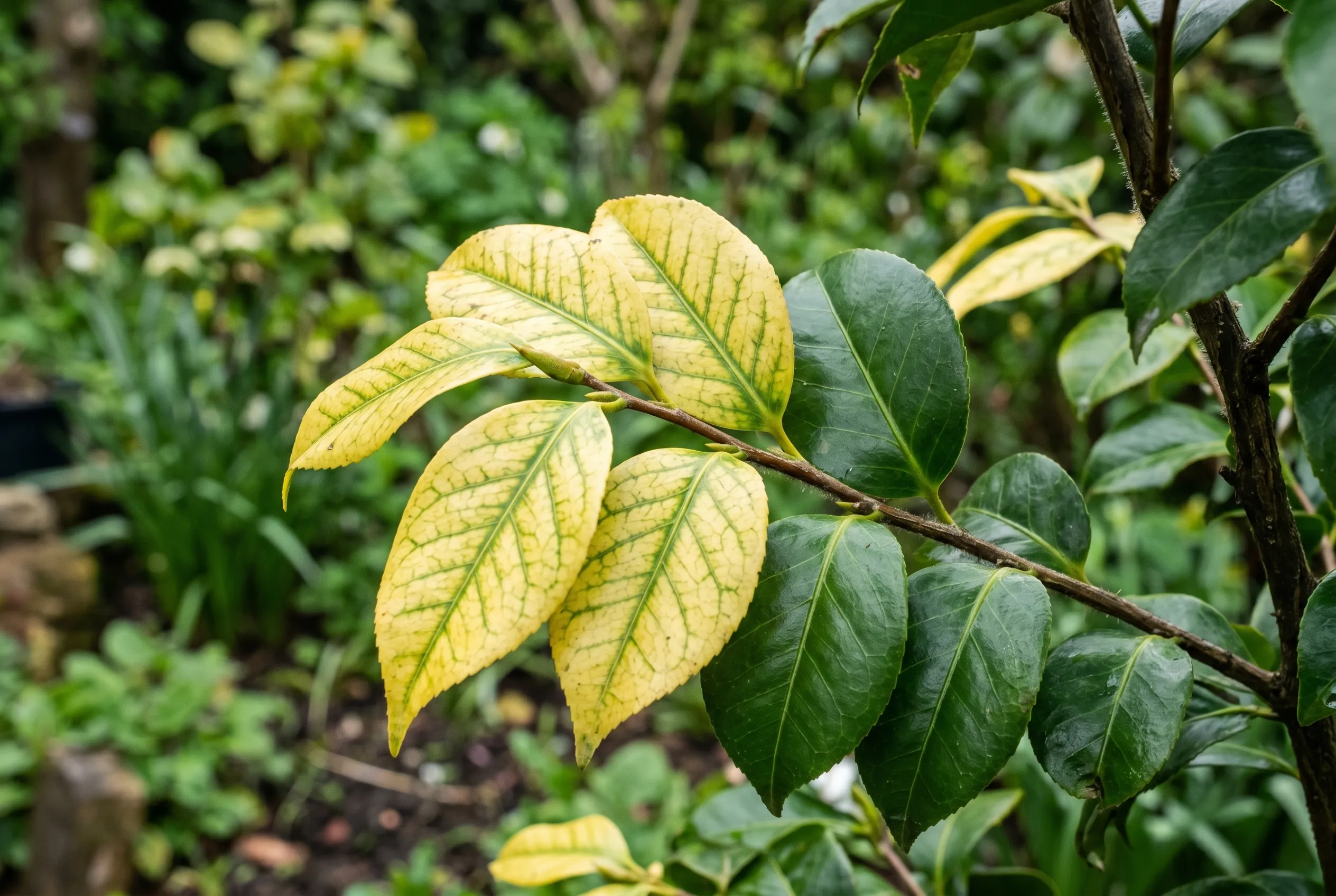 Yellow leaves with green veins mean lime-induced chlorosis. Treat with rainwater, acidic mulch, and sequestered iron.
Camellia aftercare month by month
The aftercare jobs fall into a clear annual rhythm. Once you know the sequence, the plant looks after itself.
| Month | Job |
|---|---|
| February to April | Flowering. Deadhead spent blooms, clear fallen petals |
| March to May | Prune lightly if needed, straight after flowering finishes |
| April to May | First ericaceous feed and a fresh acidic mulch |
| June | Second ericaceous feed. Flower buds begin forming |
| June to August | Water deeply and consistently. This sets next year’s buds |
| September to October | Keep watering in dry spells until rain returns |
| November to January | Protect early buds from morning sun and hard frost |
The whole year turns on the June to August watering. Everything else is tidying and feeding, but if the roots dry out in high summer the buds drop and the rest of the year’s care counts for nothing. Mark those three months as the non-negotiable part of the routine.
Common camellia aftercare mistakes
These are the errors that cost flowers and health.
- Pruning at the wrong time. Cutting back in summer or winter removes next year’s buds. Prune only straight after flowering.
- Letting the roots dry out in summer. The number one cause of bud drop. Water steadily from June to August.
- Using a general or lime-rich feed. Camellias need ericaceous feed. The wrong feed causes yellowing and poor growth.
- Watering with hard tap water. Over time it raises pH and causes chlorosis. Use rainwater wherever you can.
- Leaving fallen petals. Spent blooms harbour petal blight. Clear and bin them rather than composting.
Extra care for camellias in pots
Container camellias need closer attention than those in the ground, because a pot dries out far faster and holds a fixed, dwindling supply of nutrients. Use a loam-based ericaceous compost, such as an acidic John Innes type, which holds moisture and feed better than peat-free multipurpose. Check the compost daily through summer and water before it dries, ideally with rainwater.
Pot-grown plants also exhaust their feed sooner, so the June ericaceous feed matters even more here. Top-dress each spring by scraping off the top 5cm of old compost and replacing it with fresh, and repot into the next size up every two or three years just after flowering. A camellia that suddenly flowers poorly in a pot is often simply pot-bound and starved, not diseased.
Pair good summer care with the right position; camellias do best in part shade, sheltered from early morning sun that can scorch frosted buds. Our guides to the best shrubs for shade and evergreen shrubs for year-round interest cover suitable companions. The Royal Horticultural Society’s camellia advice confirms the summer-watering and after-flowering pruning rules.
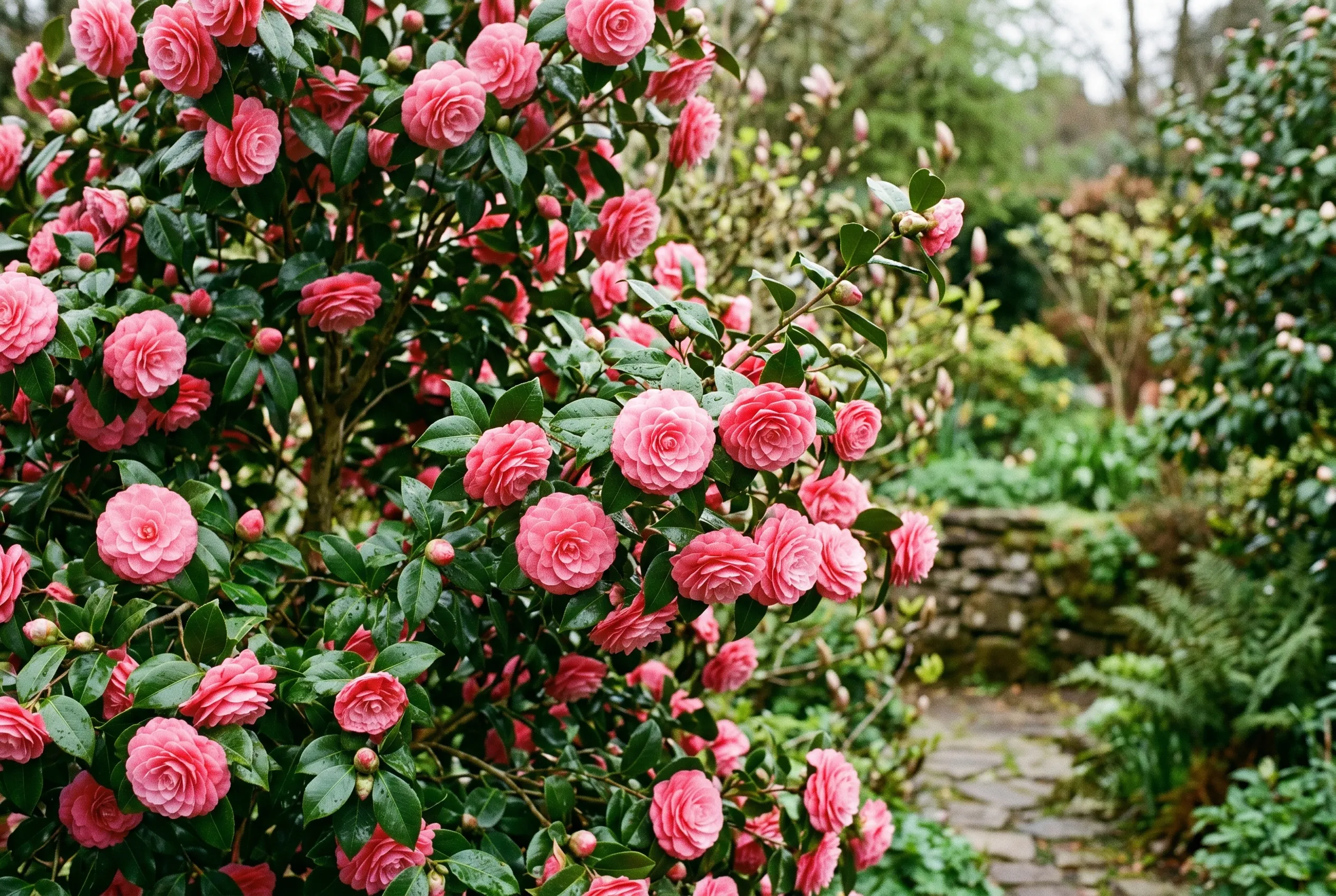 The reward for good aftercare: a camellia smothered in bloom the following spring, every bud opened.
Frequently asked questions
What do you do with camellias after they flower?
Deadhead the spent blooms, prune lightly only if shaping is needed, and feed with an ericaceous fertiliser. Then keep the plant well watered through summer. This is when next year’s flower buds form, so consistent moisture now decides next spring’s display.
Should you deadhead camellias?
Yes, deadhead camellias that hold their dead flowers, like most japonicas. Picking off the faded brown blooms keeps the plant tidy and reduces camellia petal blight. Williamsii types drop their flowers cleanly and need little deadheading.
When should you prune a camellia?
Prune camellias straight after flowering, between March and May. This is the only safe window. The plant sets next year’s flower buds in early summer, so pruning later than May removes the buds and means no flowers the following spring.
Why is my camellia dropping its buds?
Bud drop is almost always caused by the roots drying out the previous summer. Camellias set buds from June to August and need steady moisture then. A dry spell at that time causes the buds to shed the next spring, even though the plant looks healthy.
What fertiliser is best for camellias?
Use an ericaceous fertiliser made for acid-loving plants. Apply it once after flowering and again in June. Avoid general feeds high in lime. A mulch of composted bark or leaf mould keeps the soil acidic and the roots cool and moist.
Why are my camellia leaves turning yellow?
Yellow leaves with green veins signal lime-induced chlorosis, caused by alkaline soil or hard tap water locking up iron. Water with rainwater, mulch with acidic material, and apply sequestered iron. New growth should then return to glossy dark green.
Now you know the aftercare, grow its acid-loving companions with our rhododendron growing guide, and browse all our plant guides for more shrubs to extend the season.
Our team produces practical UK gardening guidance from source research, contributor records and established horticultural practice. Editorial standards are overseen by Matt W.