Key takeaways
- Brown soft-rot patches with greyish concentric fungal spores
- Affects UK plums, cherries, peaches, apricots, nectarines
- Spreads from fruit to fruit in 3-5 days
- Remove and destroy all mummified fruit on tree and ground
- Prune for airflow; reduces humidity around fruit
- Copper sprays at bud-break and petal fall for chronic problems
Brown rot (Monilinia species) is the most common UK stone fruit disease, affecting plums, cherries, peaches and apricots. Spores overwinter on mummified fruit and explode in spring, infecting blossoms and developing fruit. This guide covers identification (the concentric grey spore rings are unmistakable), the sanitation routine, pruning for airflow, and the copper spray programme for chronic problems.
Identifying Brown Rot
UK brown rot is unmistakable once you know the symptoms.
On fruit:
- Brown soft-rot patches starting at a single spot (usually a wound or insect damage)
- Spreads outward in concentric rings across the fruit surface
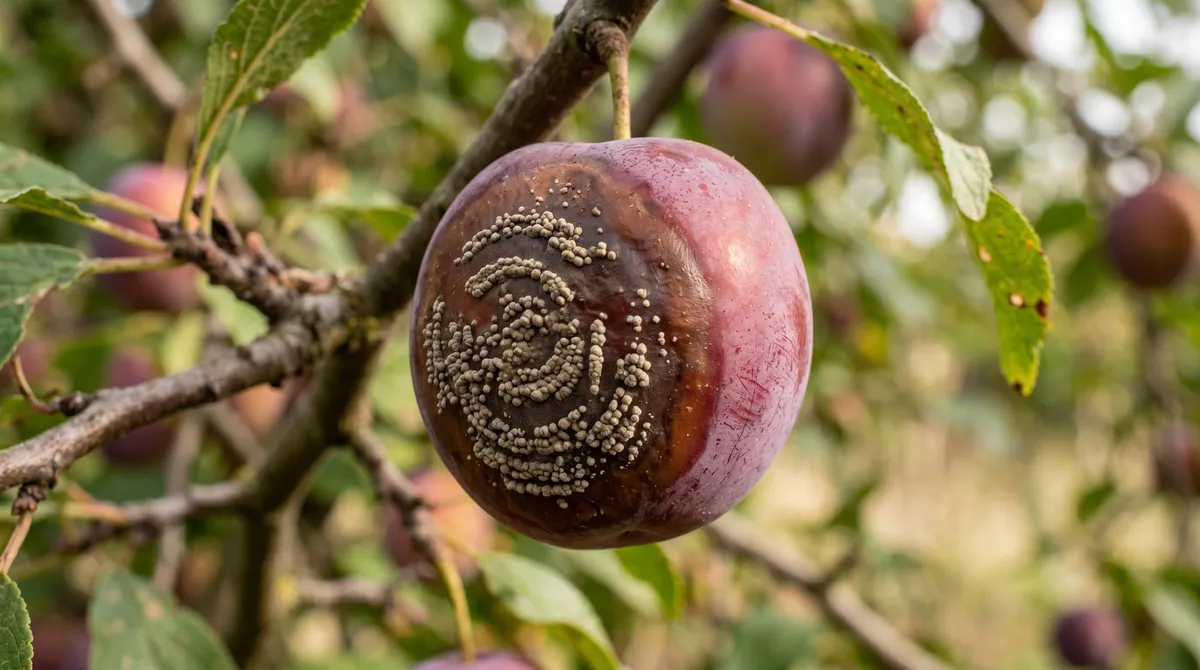
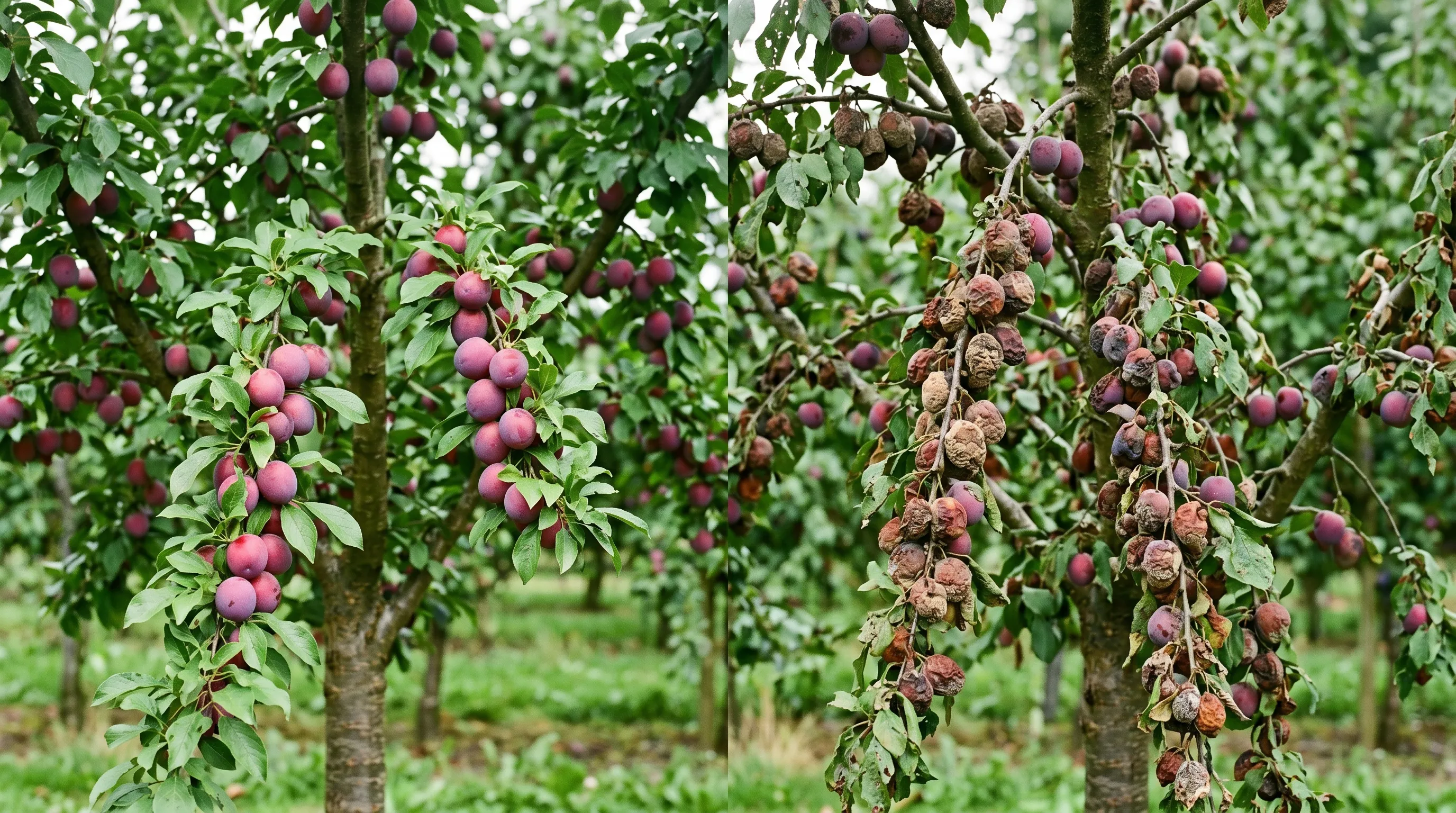
- Greyish-tan fungal spore pads emerge in rings from the rot
- Affected fruit shrivels and dries
- May mummify on the tree (dried, hard, dark brown) instead of falling
On blossoms:
- Wilted blossoms in spring with brown petals
- Spur die-back behind affected blossoms
- Branches may show cankers at affected spur bases
- This stage is Monilinia laxa (blossom blight)
On wood:
- Sunken cankers on branches and shoots
- Gum oozing from canker edges
- Multiple cankers along a branch indicate established infection
The diagnostic feature is concentric grey spore rings on rotting fruit. No other UK stone fruit disease shows this pattern.
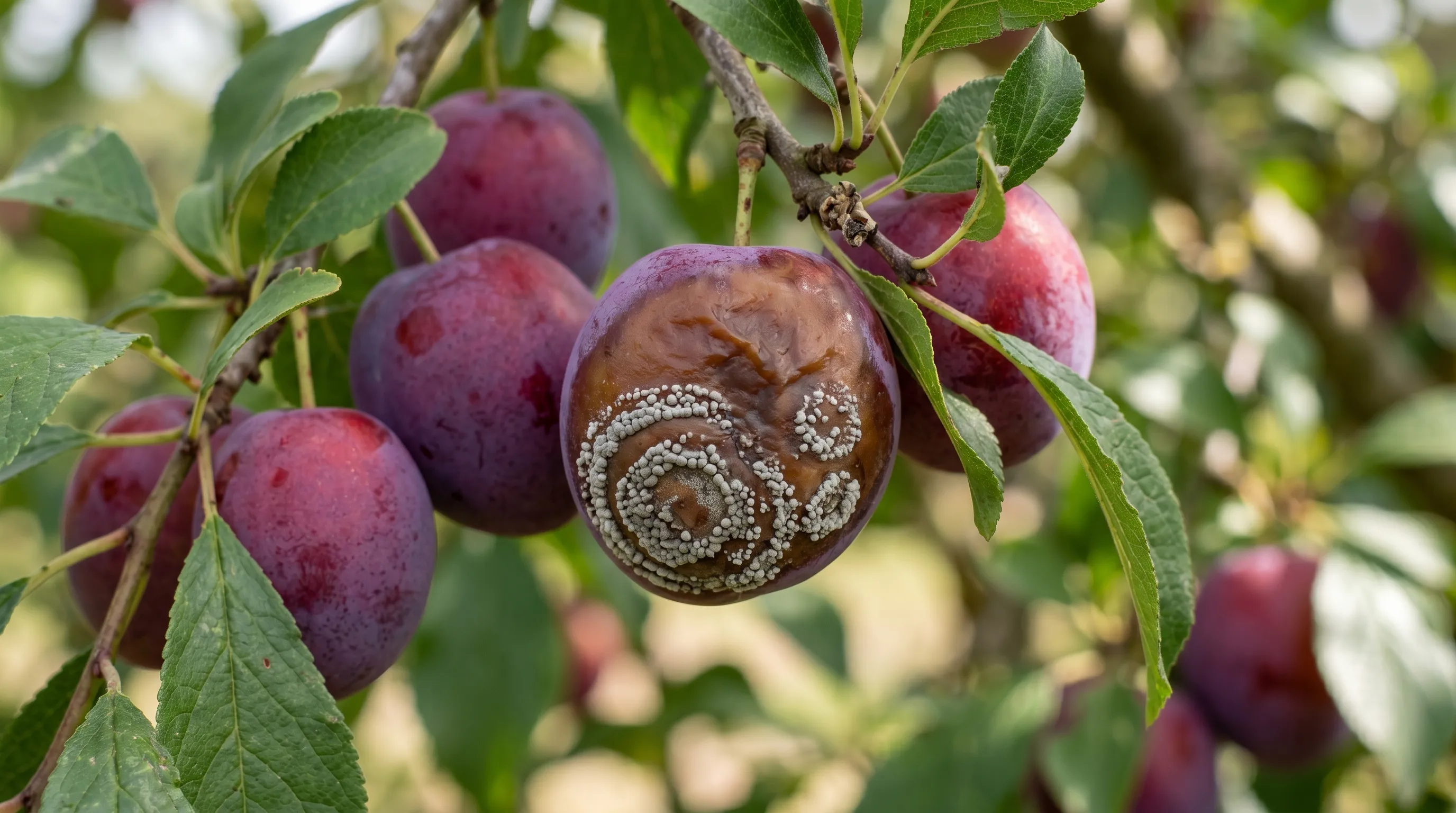 Classic UK brown rot on a Victoria plum. Brown soft-rot patch with concentric grey spore rings emerging from the surface. Healthy plums on the same branch will be infected within 3-5 days if the rotting fruit is not removed.
The Monilinia Lifecycle
Understanding the lifecycle drives control timing.
Stage 1 (winter): Fungus overwinters on mummified fruit (on tree or ground) and in bark cankers.
Stage 2 (early spring): Warm wet weather triggers spore release from mummified fruit and cankers.
Stage 3 (blossom): Spores infect open blossoms during wet periods. Monilinia laxa kills blossoms and spurs.
Stage 4 (fruit development): Spring spores survive and infect developing fruit through wounds.
Stage 5 (fruit ripening, summer): Monilinia fructigena infects ripening fruit through bird, insect or wind damage. Each rotting fruit produces millions of spores.
Stage 6 (autumn): Infected fruit either falls or mummifies on the tree. Both forms harbour overwintering spores for next year.
The critical control point is breaking the overwintering stage. Removing every mummified fruit and pruning cankers in winter eliminates 70-80% of next year’s spore load.
The Sanitation Routine
The single most effective UK brown rot control.
Winter (December-February):
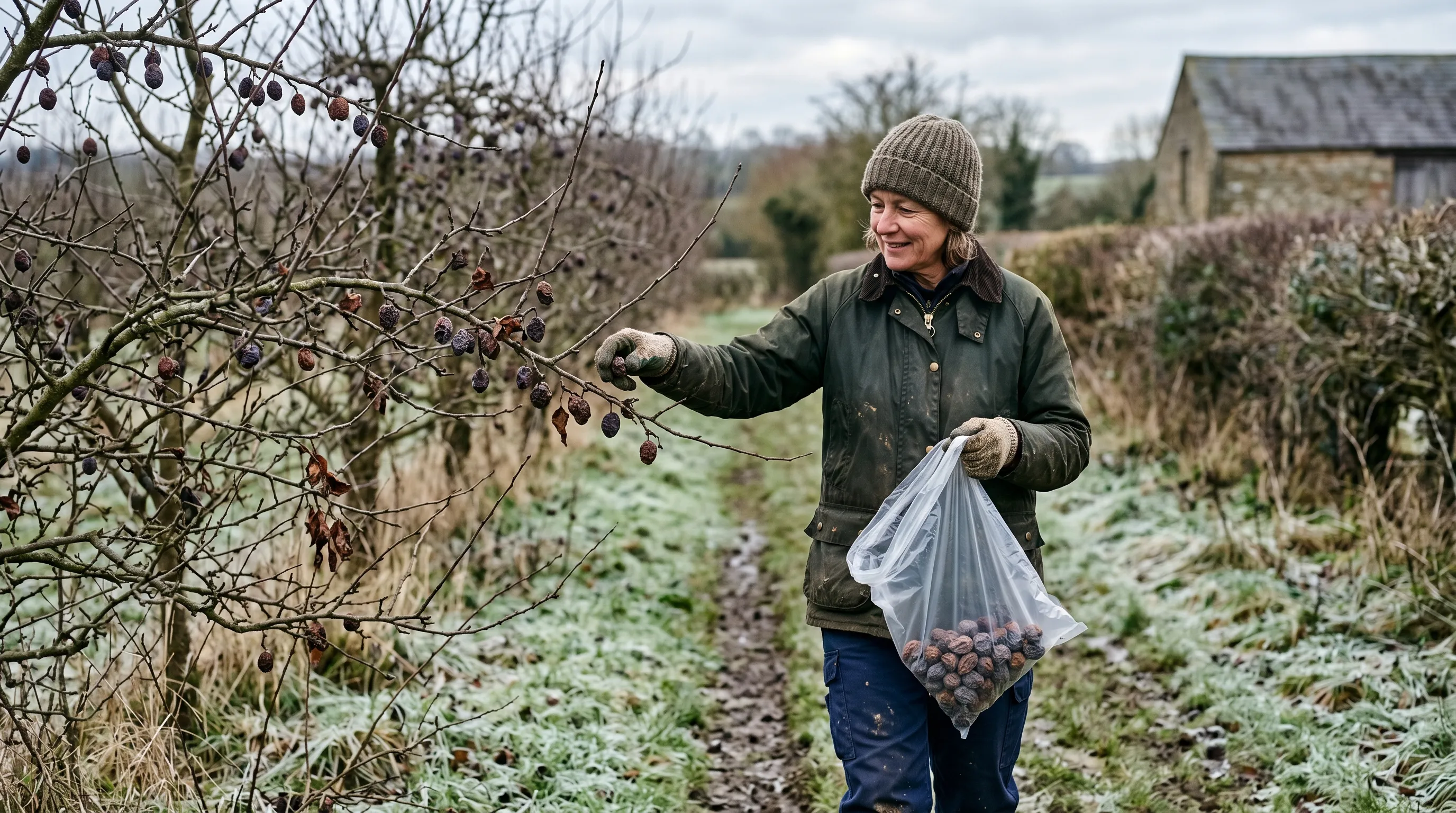
- Walk every tree and remove every mummified fruit hanging on branches
- Rake under the tree and collect every fallen fruit and leaf
- Inspect branches for cankers; prune out cankered wood entirely
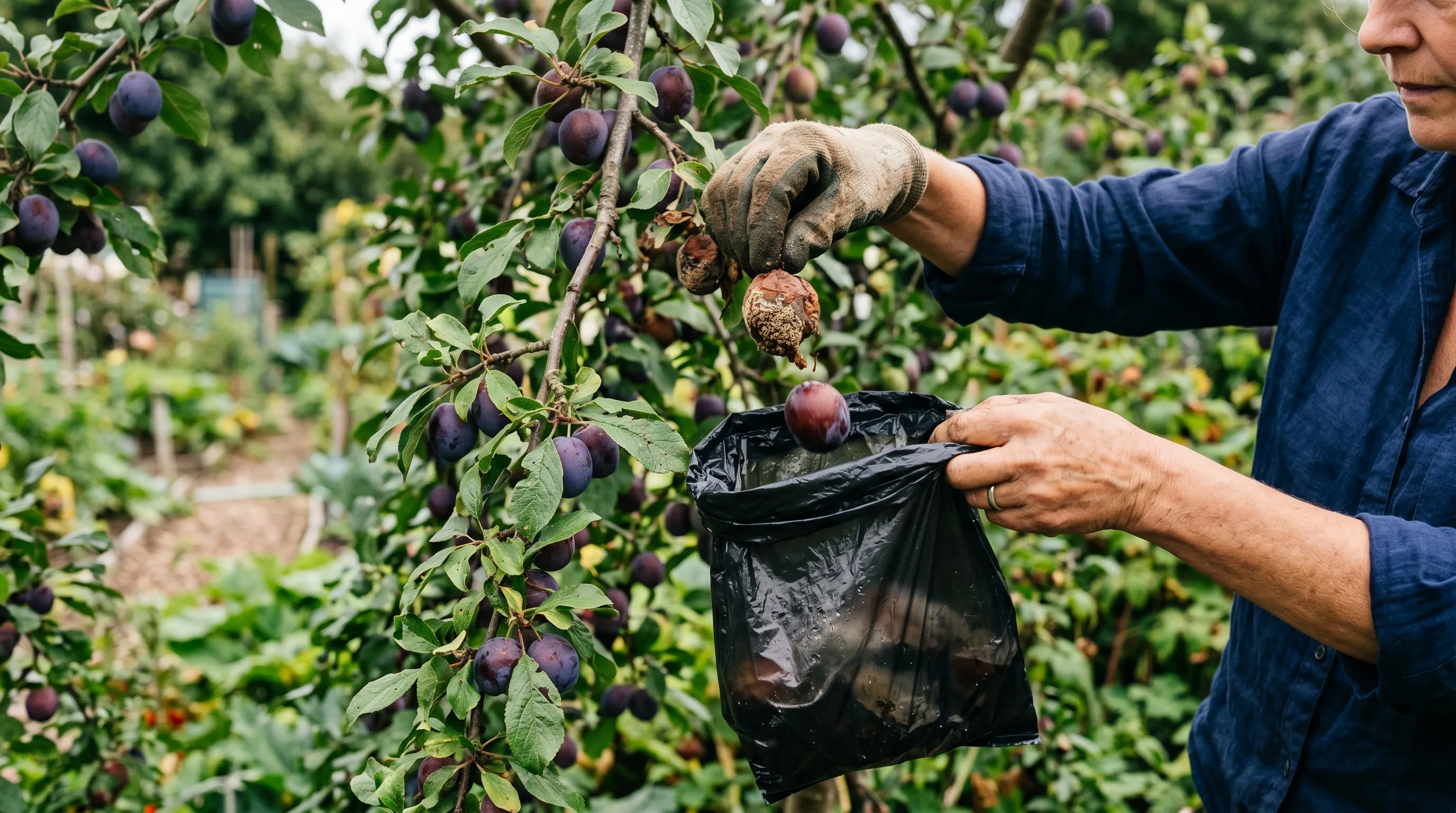
- Bag everything in sealed black plastic for landfill or burn
- Never compost (spores survive composting)
During the season (May-September):
- Walk trees twice weekly during fruit ripening
- Remove every fruit showing brown rot symptoms immediately
- Pick up all fallen fruit daily during peak fruit drop
- Bag and dispose
- Wash hands and tools between trees if infection seen
For the wider UK fruit tree maintenance approach, our canker guide covers related bark disease management.
Pruning for Airflow
Open-canopy pruning reduces fruit-to-fruit humidity that allows spread.
Winter pruning targets:
- Remove all crossing branches
- Open the canopy to vase shape
- Remove any branches with visible cankers (cut 100mm beyond the canker)
- Aim for 200-300mm air gaps between major branches
- Pick up all prunings and burn or bag
Summer pruning (peaches only):
- Light tip pruning after fruit set
- Removes excess growth that shades developing fruit
- Increases air circulation around ripening fruit
- Reduces brown rot incidence by 20-30%
Copper Spray Programme
For UK chronic brown rot orchards (50%+ fruit loss in normal years), copper sprays add control.
Timing:
- Bud-break (March-April): when first green showing at bud tips
- Petal fall (April-May): when flowers have dropped, before fruitlets visible
- Optional pre-harvest: for stubborn cases, 14 days before picking
UK products:
- Vitax Bordeaux Mixture (£8-£15 per pack): organic-approved
- Doff Copper Fungicide (£6-£12 per pack): general fungicide
- Headland Crystal Sulphur (£5-£10 per pack): alternative for orchard organic
Application:
- Mix per pack instructions
- Use knapsack sprayer or pressure sprayer
- Spray to cover blossom buds thoroughly
- Apply on dry days with no rain forecast for 24 hours
- Avoid spraying when bees are active on open flowers
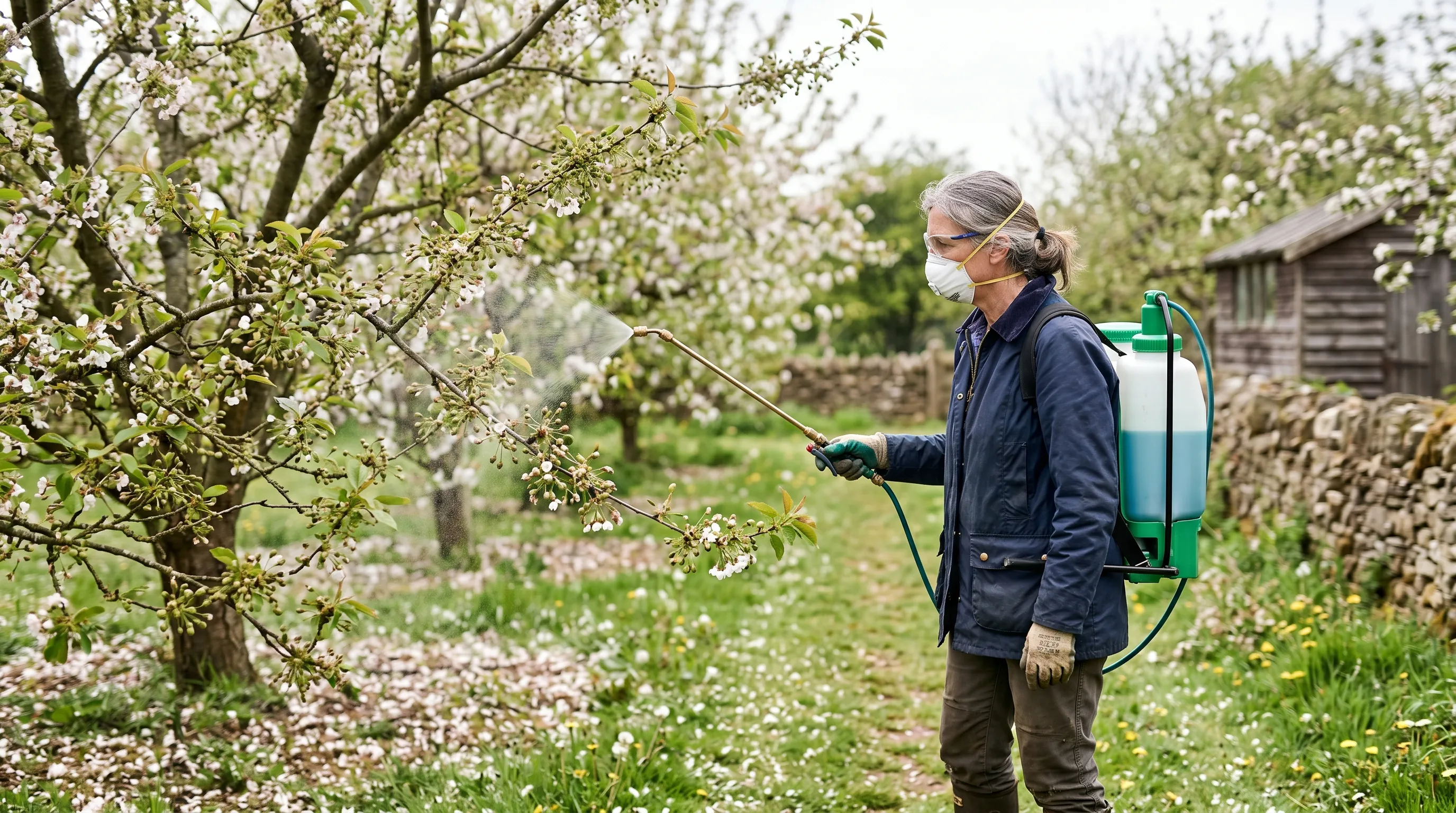 Petal fall copper spray on a Staffordshire Victoria plum. Spray covers developing fruitlets and remaining flower stalks. Apply on dry day with no rain forecast for 24 hours.
Variety Choice: The Long-Term Fix
Some UK stone fruit varieties show better brown rot resistance.
UK plums (most resistant first):
- Czar (very resistant)
- Marjorie’s Seedling (resistant)
- Opal (good resistance)
- Cambridge Gage (moderate)
- Victoria (susceptible; the UK’s most popular but also most prone)
- Quetsche (very susceptible)
UK cherries:
- Stella (moderate resistance)
- Sunburst (moderate)
- Morello (cooking, resistant)
- Lapins (moderate)
UK peaches:
- Peregrine (good for UK)
- Rochester (good for UK)
- Avalon Pride (excellent UK choice, leaf curl resistant too)
For new UK plantings in damp sites, resistant varieties drop brown rot loss by 40-60% versus susceptible varieties under the same management.
For the wider UK fruit tree variety selection, our pear varieties guide covers the parallel UK fruit choices.
Disposal and Storage
Disposal of brown-rotted fruit:
- Sealed black plastic to landfill (UK preferred)
- Hot bonfire (rural plots only)
- Buried 600mm+ deep away from any fruit tree
- Never compost (spores survive)
- Never leave on the ground
Storage of healthy harvested fruit:
- Inspect every fruit at picking; reject any showing damage or soft spots
- Single-layer storage; one rotting fruit infects neighbours
- Cool storage (4-8C) slows disease but cannot stop it
- Plums and cherries last 7-14 days; peaches 5-10 days
- Inspect daily through storage; remove any showing damage
Even one infected fruit in a stored batch can ruin the whole harvest within 5-7 days.
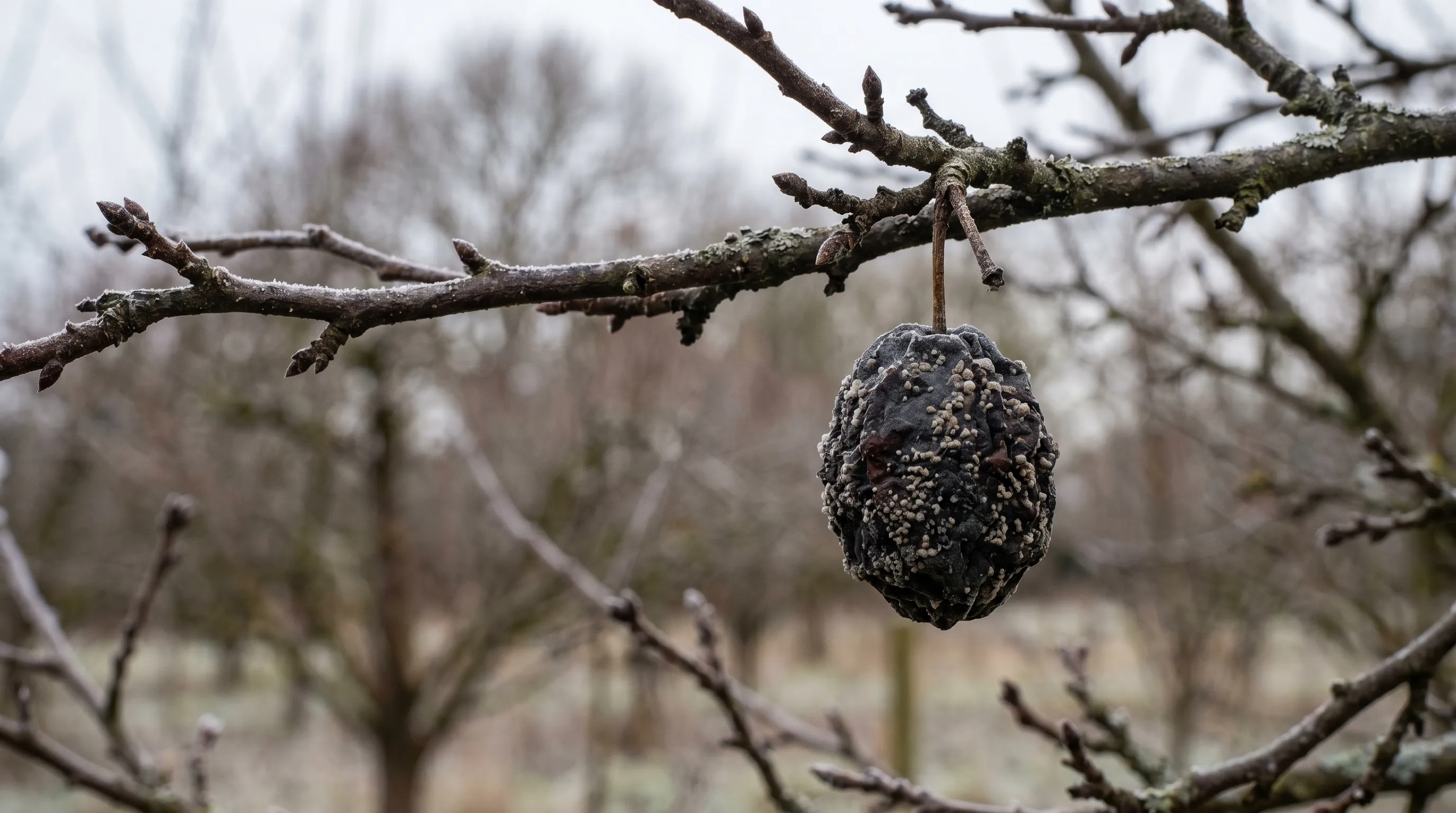 A January mummified plum on a Staffordshire Victoria. This single dried fruit will produce 100,000+ spores in the spring. Remove every mummy in winter to break the disease cycle.
Common Mistakes With UK Brown Rot Control
Mistake 1: leaving mummified fruit on the tree. Each mummy produces 100,000+ spores in spring. Remove every winter.
Mistake 2: composting rotting fruit. Spores survive composting and re-emerge when compost is spread. Sealed-bag to landfill.
Mistake 3: spraying after symptoms appear. Sprays prevent infection; they do not cure existing rot. Spring preventative sprays only.
Mistake 4: stocking only Victoria plums. Most popular but most susceptible variety. Mix in resistant varieties.
Mistake 5: ignoring boundary trees. Neighbouring infected trees provide ongoing spore source. Discuss community-level management.
For the related fruit tree canker disease, our canker guide covers the related bark issue. For the wider UK orchard pruning approach, our fan training guide covers structure principles.
Brown Rot Calendar UK Month-by-Month
| Month | Brown rot task |
|---|---|
| January | Main mummy removal window; prune cankers |
| February | Continue winter sanitation |
| March | Bud-break copper spray (if used) |
| April | Petal fall spray; watch blossoms for blight |
| May | Daily inspection of developing fruit |
| June | Continued inspection; remove any early rot |
| July | Peak monitoring as fruit swells |
| August | Pick and dispose any rotting fruit immediately |
| September | Harvest healthy fruit; collect fallen daily |
| October | Final inspection; ground clearance |
| November | Begin winter sanitation walk |
| December | Continue winter mummy removal |
Frequently asked questions
How do I identify brown rot on UK stone fruit?
Brown soft-rot patches starting at a single spot on the fruit, spreading outward in concentric rings. Greyish-tan fungal spore pads emerge from the rotting tissue in rings. Affected fruit shrivels and may mummify on the tree (dried, hard, dark brown) rather than falling.
What causes brown rot on UK plums?
Two fungi: Monilinia laxa (spring blossom blight) and Monilinia fructigena (fruit rot). Spores overwinter on mummified fruit and bark cankers. Spring rain and warmth (above 10C) triggers spore release. Infection requires 4+ hours of wetness on flowers or wounded fruit.
Should I remove brown-rotted fruit?
Yes immediately. Each rotting fruit produces millions of spores that infect neighbouring fruit within 3-5 days. Pick all visibly rotting fruit on the tree. Pick up all fallen fruit from the ground. Bag and bin or burn; never compost (spores survive composting).
Will copper sprays prevent brown rot?
Yes for chronic problems. Spray copper-based fungicide at bud-break (March-April) and again at petal fall (April-May). Two applications reduce brown rot by 60-80% in trial conditions. Combined with sanitation, achieves 90%+ control on susceptible UK varieties.
What stone fruit varieties resist brown rot?
Some UK plum varieties show better resistance: Czar, Marjorie’s Seedling, Opal. Avoid Victoria for chronic brown rot orchards. Cherries: Stella and Sunburst are moderately resistant. Peach: Peregrine and Rochester less affected than older varieties. Variety choice is the easiest long-term control.
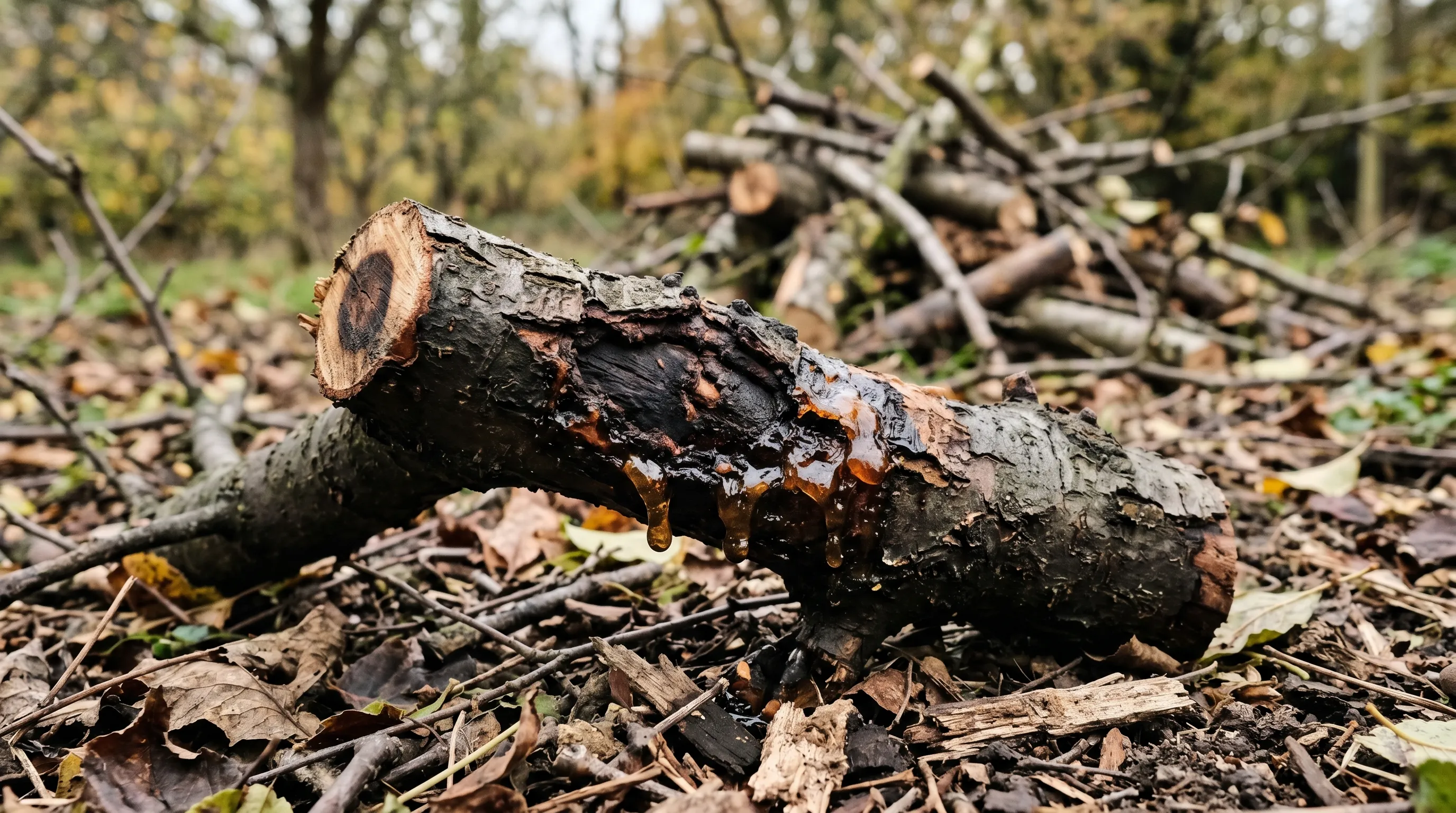 Pruned canker wood from a Staffordshire plum in February. Cut 100mm beyond the visible canker. The cankers harbour overwintering Monilinia spores and must be removed entirely for effective control.
Now plan the wider orchard care
Brown rot is one of several UK stone fruit diseases. If your cherries drop before ripening rather than rotting on the branch, see our guide to cherry fruit drop. For the related canker disease, our canker guide covers bark problems. For the wider UK pear varieties, our pear guide covers disease-resistant choices. To prune the orchard for airflow that suppresses both brown rot and canker, our fan training fruit tree guide covers structure principles. And for the broader autumn orchard work, our autumn gardening jobs guide covers sanitation alongside other late-season tasks.
Our team produces practical UK gardening guidance from source research, contributor records and established horticultural practice. Editorial standards are overseen by Matt W.