Key takeaways
- White powdery felt on shoot tips, leaves and berries is American gooseberry mildew
- The fungus Podosphaera mors-uvae spreads fastest in warm, humid air on soft, crowded growth
- It overwinters on the shoot tips, so cutting white tips out in winter breaks the cycle
- Resistant varieties like Invicta cut mildew to almost nothing without any spraying
- High-nitrogen feeds push soft growth the fungus loves, so feed potash instead
- Some old varieties are sulphur-shy and are damaged by sulphur sprays, so check first
If your gooseberries are turning up with a white, powdery, felt-like coating on the shoots and berries that later goes brown and leathery, that is American gooseberry mildew. It is caused by the fungus Podosphaera mors-uvae, and it is the commonest and most disfiguring disease of gooseberries in the UK. It coats the shoot tips, leaves and fruit, stunts growth, and spoils the crop, spreading fastest in warm, humid weather on soft, crowded bushes. The reassuring part is that the affected berries are still edible, and the disease is very beatable without reaching for a sprayer.
This guide covers how to recognise American gooseberry mildew, how it survives the winter to attack again, and the control programme that actually works: open pruning, sensible feeding, cutting out the overwintering shoot tips, and, above all, the resistant varieties that make the problem almost disappear. It applies to gooseberries and, in a milder form, to blackcurrants.
What American gooseberry mildew looks like
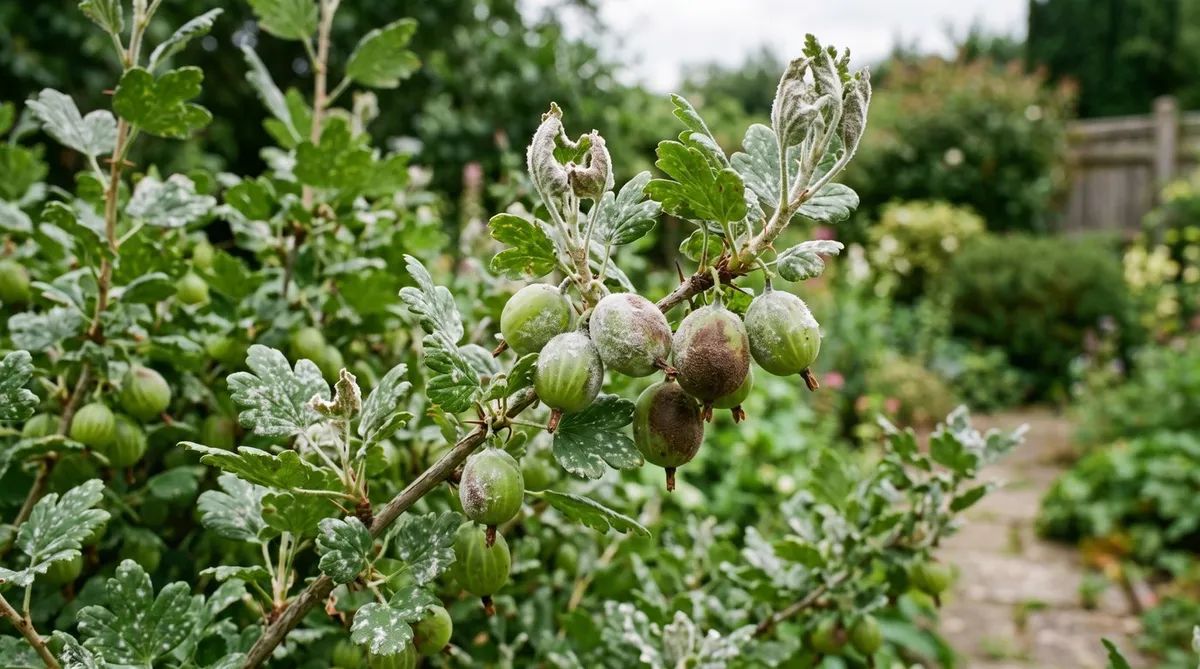
American gooseberry mildew starts at the tips. The first sign is a white, powdery, felt-like coating on the youngest leaves and the soft growing tips of the shoots, usually from late spring. It looks as though the growth has been dusted with talc or fine flour. Rub it and it smears.
From the tips it spreads to the berries, and this is where it does the visible damage. The fruit develops the same white felt, which later thickens and turns a buff or brown, leathery patch across the skin. Badly affected berries may stay small, crack, or fail to swell properly. The shoots themselves can distort and their growth stunts, so a heavily infected bush looks stopped in its tracks by midsummer.
Do not confuse it with the other main gooseberry problem. Gooseberry sawfly strips the leaves off a bush from the inside out in days, leaving bare stems and green caterpillars, and has nothing white about it. Mildew coats surfaces in white felt and leaves the foliage on the plant. Our guide to gooseberry sawfly identification and control covers that separate pest. If your bush is being defoliated rather than coated, that is sawfly, not mildew.
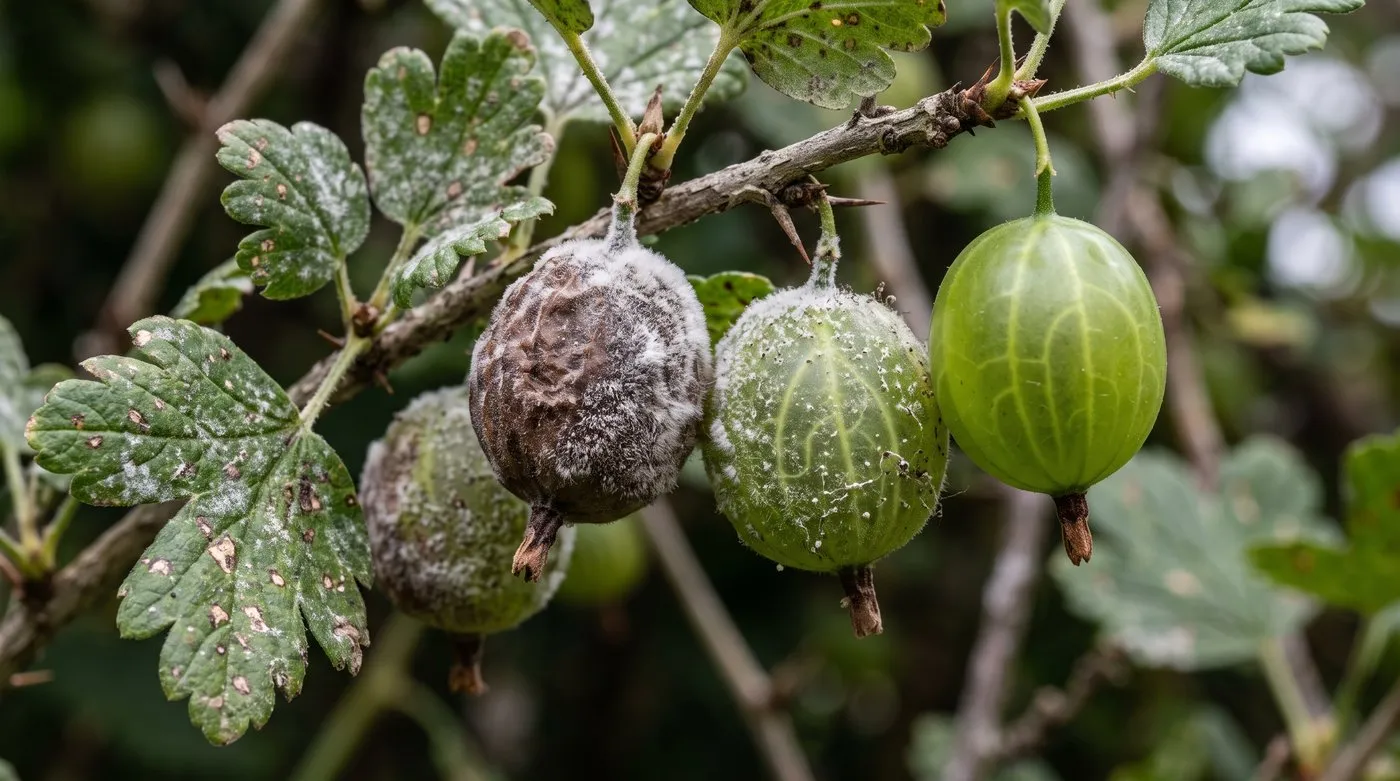 The white felt on the berries later turns brown and leathery. It rubs off, and the fruit underneath is still edible.
The lifecycle: where the mildew hides in winter
Understanding where the fungus survives the winter is what turns mildew from an annual certainty into a solved problem, because it hides somewhere you can cut off.
Podosphaera mors-uvae runs an annual cycle:
- Winter, on the shoot tips. The fungus survives the cold as resting bodies on the infected shoot tips and among the bud scales. This is the key. It does not blow in fresh each year; it is already on the bush.
- Spring, primary infection. As growth starts, the overwintered fungus produces spores that infect the new soft leaves and tips nearby.
- Summer, the explosion. In warm, humid weather the white felt produces vast numbers of secondary spores that spread across the bush and onto the berries. Growth is fastest at around 20-25C with high humidity around the leaves.
- The soft-growth link. Lush, sappy growth from too much nitrogen is far more susceptible than firm growth, because the fungus penetrates soft tissue easily.
- Late summer, back to the tips. The fungus moves into the new shoot tips, where it will overwinter, and the cycle closes.
Here is the critical mistake most people make: they treat the white felt on the berries in summer and ignore the shoot tips in winter. The summer felt is the symptom. The overwintering fungus on the shoot tips is the cause, and it sits there all winter within easy reach of the secateurs. Cut those tips out and you remove next year’s starting inoculum. Spray the berries in July and you have treated this year’s symptom while carefully leaving the source in place for next year.
Pruning for air flow and cutting out the fungus
Two pruning jobs do most of the work, and neither needs a chemical.
Open the bush for air flow. Mildew needs still, humid air around the leaves to establish. A congested gooseberry bush, full of crossing and inward growth, holds that humidity for hours. Prune to an open, goblet-shaped bush with an empty centre, so air moves freely through it and the foliage dries quickly after rain or dew. Aim for a framework of about 6-8 main branches with the middle kept clear. Good spacing between bushes matters too. Our guide to growing gooseberries covers the full pruning framework for a productive open bush.
Cut out the overwintering tips. In late summer, and again at winter pruning, remove the shoot tips showing white or brown felt. These carry the fungus through to spring. Prune each affected tip back to clean, healthy wood, and take the prunings off the plot to bin or burn. This single job, done every winter, steadily lowers the disease pressure year on year, because you are removing the inoculum before it can act.
Gardener’s tip: When you winter-prune, tip back all the leading shoots by about a quarter anyway. On a gooseberry this both builds a stronger fruiting framework and conveniently removes the very shoot tips where mildew overwinters. One job, two wins.
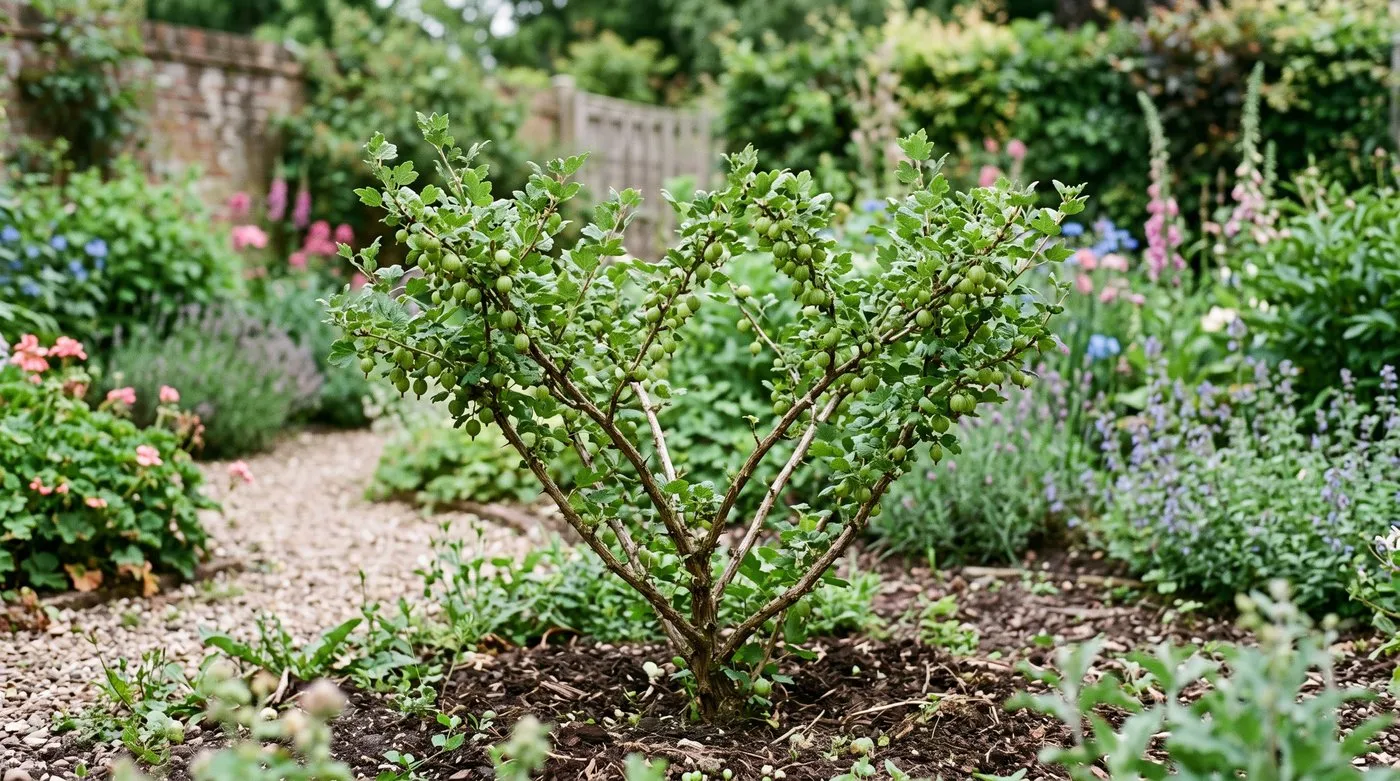 An open, goblet-shaped bush with an empty centre lets air move through and dries the foliage fast, denying mildew the still, humid conditions it needs.
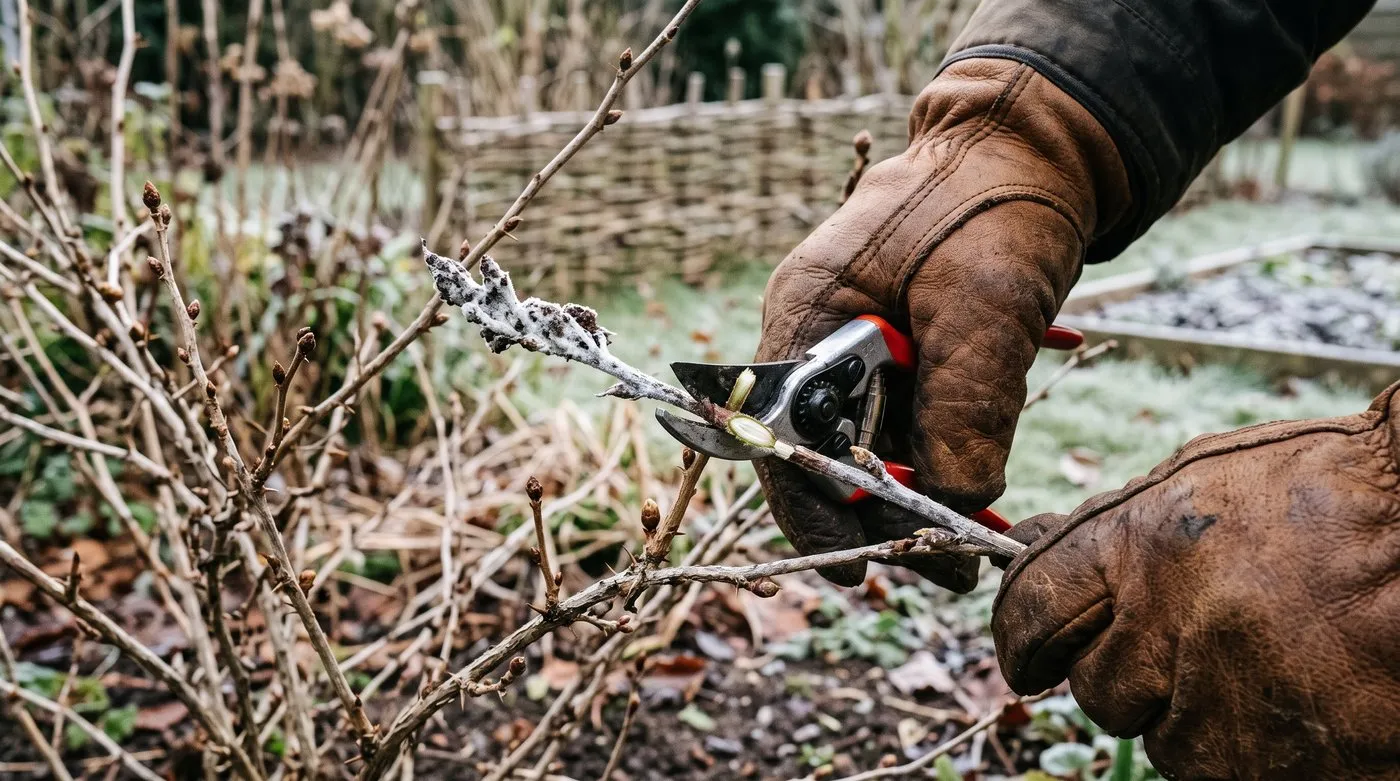 Cut out the white-felted shoot tips at winter pruning. That is where the fungus overwinters, so removing them breaks the cycle at its source.
Feeding: why nitrogen makes it worse
Feeding is where well-meaning gardeners accidentally grow their own mildew. Soft, sappy growth is far more prone to mildew than firm growth, and the fastest way to produce soft growth is a heavy nitrogen feed.
Gooseberries need potassium, not a nitrogen push. Feed in late winter with sulphate of potash at around 30g per square metre, which firms the growth and improves both disease resistance and fruit quality. Avoid high-nitrogen general feeds and fresh manures around the bushes, which drive exactly the lush growth the fungus wants. A mulch of compost over the root area in spring conserves moisture and feeds gently without the nitrogen surge.
The watering rule matters too. Water at the base in dry spells, never over the foliage, and keep the plant evenly moist. Drought-stressed bushes are more susceptible, but wet foliage overnight helps the fungus, so put the water in the soil and keep it off the leaves.
Warning: Do not try to green up a mildewed, struggling bush with a quick nitrogen feed. The flush of soft growth it produces is more susceptible to mildew, not less, and you will make the attack worse within a fortnight. Feed potash, mulch, and prune for air instead.
Resistant varieties: the real fix
If one thing on this page ends the mildew problem, it is variety choice. Modern breeding has produced gooseberries with strong resistance to American gooseberry mildew, and on a susceptible bush nothing else comes close.
Invicta is the standard resistant variety, a heavy-cropping green culinary gooseberry that shrugs off mildew in conditions that would coat an old variety. Other good resistant choices include Greenfinch, Rokula (red), Pax (nearly spineless) and Captivator (red, almost thornless). By contrast, the fine old dessert varieties Careless, Leveller and Golden Drop are susceptible and also, importantly, sulphur-shy, meaning a sulphur spray damages their foliage.
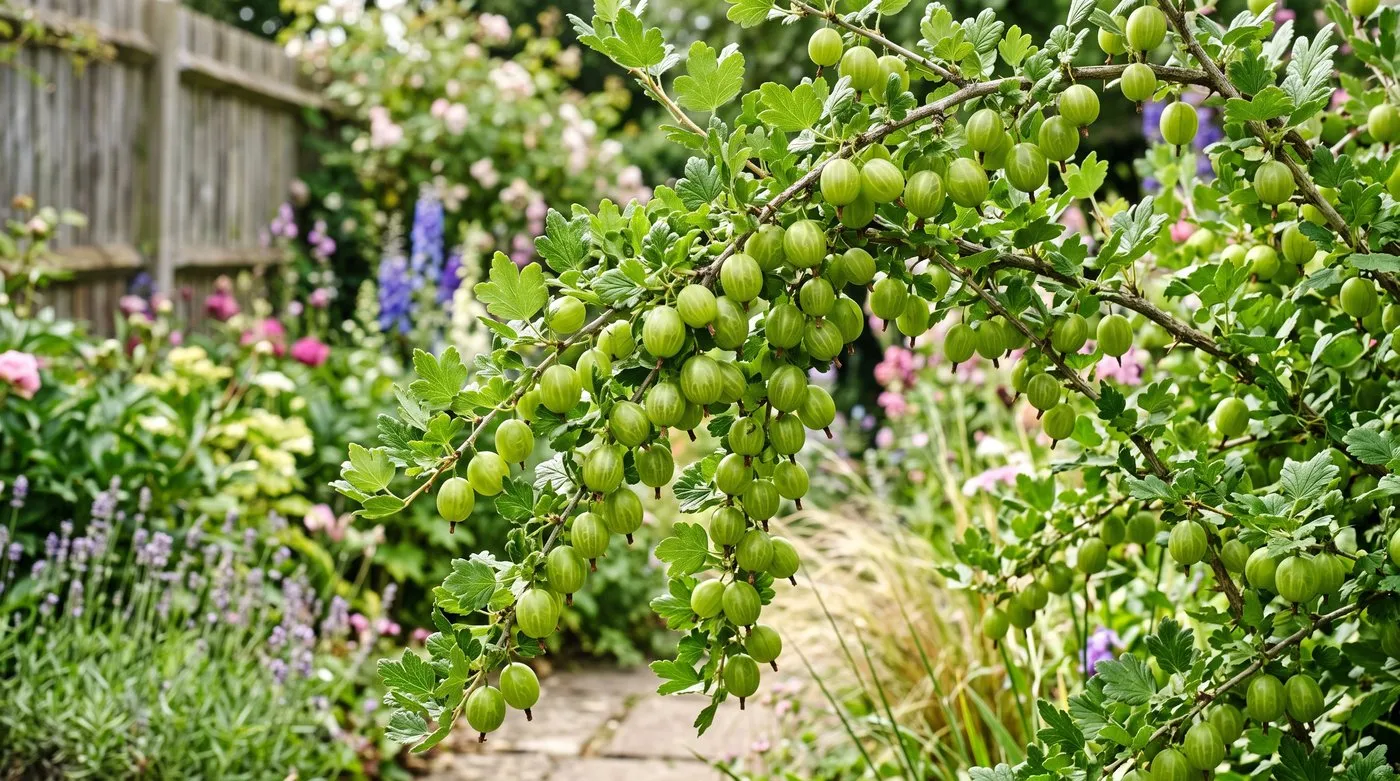 Resistant ‘Invicta’ cropping clean in the same conditions that coat a susceptible variety. Variety choice is the single biggest lever against mildew.
 Clean, sound fruit from a well-pruned, resistant bush. Even a lightly mildewed berry is still good once the surface felt is rubbed off.
Sprays: what works, what to avoid, and the sulphur trap
Sprays sit at the bottom of the control list, and one of them can do real harm on the wrong variety.
The milk and bicarbonate folk remedies have a small, genuine effect. A spray of potassium bicarbonate or ordinary bicarbonate of soda raises the leaf surface pH and can suppress a light infection. A diluted milk spray works on a similar principle. Neither clears an established attack or beats mildew on a susceptible bush, so treat them as minor support, not a cure.
Sulphur is an effective traditional fungicide against mildew, but here is the trap: several old gooseberry varieties are sulphur-shy, and a sulphur spray scorches and drops their leaves. Careless, Leveller, Golden Drop, Roaring Lion and Early Sulphur are among the sulphur-sensitive ones. Never apply sulphur to a gooseberry without checking the variety first, and never in bright hot sun, which worsens the scorch. On a resistant variety you would not need it anyway.
Control methods ranked by effectiveness
Treating these as equal is how people spray all summer and still lose berries. Ordered by what each actually delivers.
The gold standard is the top two rows together: grow a resistant variety and cut the white tips out each winter. On a resistant bush the rest is barely needed. On a susceptible one, no amount of spraying matches simply replacing it. The sprays are a minor support, and the sulphur line is on the table mainly as a warning about which varieties it harms.
Month-by-month gooseberry mildew calendar
| Month | What to do |
|---|---|
| January-February | Winter prune to an open goblet. Cut out all white-felted shoot tips. Feed sulphate of potash. |
| March | Mulch the root area with compost. Avoid high-nitrogen feeds. |
| April-May | First white felt appears on new shoot tips. Remove affected tips as you see them. |
| June | Warm humid spells spread it to the berries. Keep foliage dry, water at the base. |
| July | Peak mildew on the fruit. Rub felt off berries at picking. Bicarbonate spray if using one. |
| August | Continue removing white-tipped shoots. Note which bushes suffered for replacement planning. |
| September-October | Late summer prune out mildewed tips before leaf fall. |
| November-December | Plan resistant replacements for any bush that mildewed badly. Order Invicta or Greenfinch. |
Common mistakes with gooseberry mildew
- Treating the berries in summer and ignoring the tips in winter. The white felt on the fruit is the symptom. The fungus overwinters on the shoot tips. Cut the tips out and you remove the cause.
- Feeding nitrogen to a mildewed bush. Soft growth is more susceptible. A nitrogen feed makes the attack worse within a fortnight. Feed potash instead.
- Spraying sulphur on a sulphur-shy variety. Careless, Leveller and Golden Drop drop their leaves if sprayed with sulphur. Always check the variety first.
- Leaving the bush congested. Still, humid air in a crowded bush is exactly what the fungus needs. Prune to an open centre so air moves through.
- Nursing a susceptible variety year after year. If a bush mildews badly every year despite good care, replace it with a resistant variety. That is the fix, not another spray.
The short version on American gooseberry mildew
American gooseberry mildew is white, it starts at the shoot tips, and it overwinters on those same tips where your secateurs can reach it. That is the whole game. Cut the white tips out each winter, prune the bush open so air moves through it, feed potash rather than nitrogen, and you starve the fungus of everything it needs.
And if a variety mildews every year whatever you do, stop fighting it and plant Invicta or another resistant sort instead. The affected berries are still perfectly good once you rub the felt off, so a light attack is no disaster, but a resistant variety spares you the bother entirely. For the wider run of soft-fruit troubles, work through the garden problems section, and the general powdery mildew treatment guide covers the same fungus family on other crops. The RHS guidance on gooseberry mildews is a sound second reference.
Frequently asked questions
What is the white powder on my gooseberries?
American gooseberry mildew, a fungus called Podosphaera mors-uvae. It starts as a white, powdery, felt-like coating on the shoot tips and young leaves, then spreads to the berries. On the fruit the white felt later turns brown and leathery. It is the commonest disease of gooseberries in the UK and also affects blackcurrants.
Can you eat gooseberries with mildew?
Yes, mildewed gooseberries are safe to eat once the felt is rubbed off. The brown felting on the skin is only on the surface and wipes away, leaving sound fruit underneath. Badly affected berries may be small or cracked, but the disease does not make them toxic. Wash and rub the berries before cooking.
How do I get rid of American gooseberry mildew?
Prune for an open centre, cut out white shoot tips, and grow a resistant variety. Air flow through an open bush stops the humid, still conditions the fungus needs. Removing the mildewed shoot tips in winter takes out the overwintering fungus. Avoid high-nitrogen feeds. On susceptible bushes a resistant variety like Invicta is the real fix.
Which gooseberry varieties resist mildew?
Invicta, Greenfinch, Rokula, Pax and Captivator all resist American gooseberry mildew well. Invicta is the most widely grown and crops heavily. Older dessert varieties like Careless, Leveller and Golden Drop are susceptible and also sulphur-shy. If mildew is a yearly problem, replacing a susceptible bush with a resistant one is the most effective single step.
Does bicarbonate of soda cure gooseberry mildew?
It helps a little but does not cure it. A potassium bicarbonate or bicarbonate of soda spray raises the leaf surface pH and slows the fungus, so it can suppress a light attack. It will not clear an established infection or beat the disease on a susceptible variety. Treat it as a minor support alongside pruning and variety choice.
Should I remove leaves with gooseberry mildew?
Cut out the white-coated shoot tips, which carry the overwintering fungus. In late summer or winter, prune off the tips showing white or brown felt and bin or burn them. This removes the main source of next year’s infection. Removing individual leaves matters less than taking off the infected shoot tips where the fungus survives the winter.
Why do my gooseberries get mildew every year?
Usually a susceptible variety in warm, crowded, over-fed conditions. Soft growth from too much nitrogen, a congested bush holding humid air, and a variety with no resistance together guarantee mildew. Open the bush, feed potash not nitrogen, cut out white tips, and if it persists, switch to a resistant variety like Invicta.
Our team produces practical UK gardening guidance from source research, contributor records and established horticultural practice. Editorial standards are overseen by Matt W.