Key takeaways
- Greater plantain is a native perennial with broad, strongly ribbed leaves in a low rosette
- Its growing point can sit at or below soil level, so regular mowing rarely removes it
- Large plants can produce 30,000 seeds, while wet seeds become sticky and travel on feet
- Lever out the whole crown and rootstock when the soil is moist
- Compare fork penetration in worn and unworn turf before planning lawn repair
- Aeration, overseeding and redirecting foot traffic address the conditions that favour it
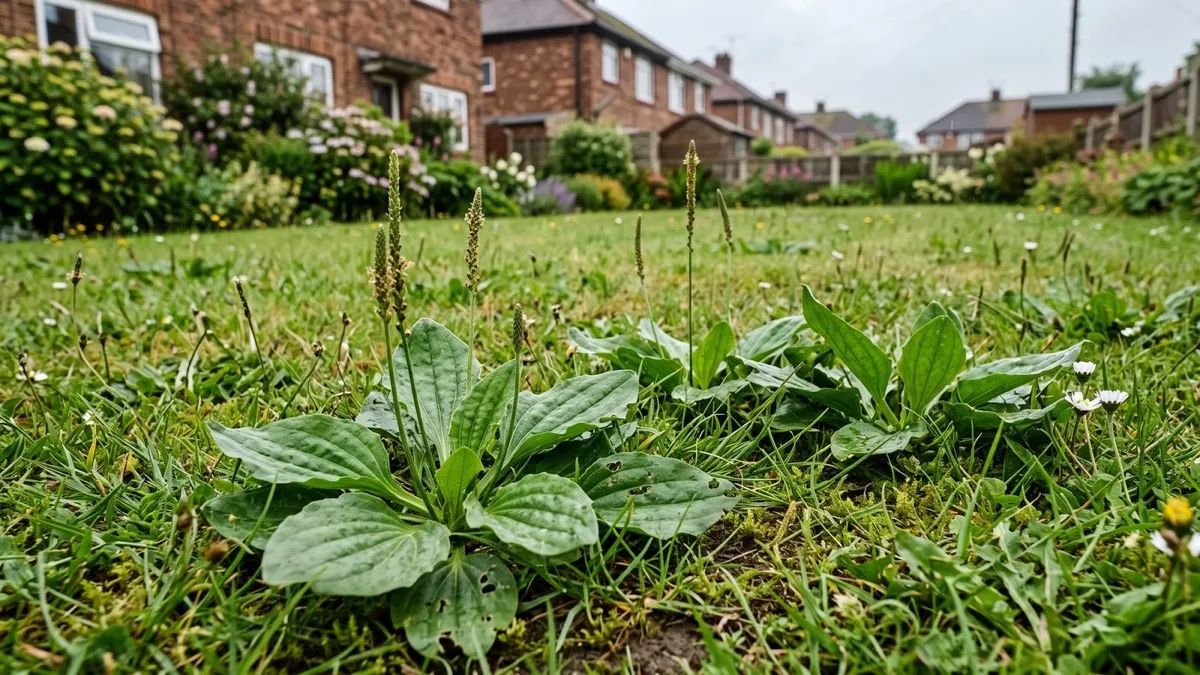
Greater plantain in lawns is easiest to control when you treat the worn turf beneath it. Greater plantain, Plantago major, forms broad ribbed leaves in a low rosette. That shape lets established plants sit below many mower blades. The plant also tolerates trampling and compacted ground better than weakened grass.
Remove a few plants by levering out each crown and rootstock. A scattered colony needs a second step. Compare the worn patch with protected turf, then aerate and overseed where grass roots are struggling. If feet follow the same line every day, redirect the route or add stepping stones. This guide shows how to choose the smallest useful response.
How to identify greater plantain correctly
Greater plantain has broad, oval or spoon-shaped leaves arranged in a basal rosette. Strong, nearly parallel ribs run from the leaf base towards its tip. Leaf stalks are short and channelled. The rosette may lie flat on a mown lawn or stand slightly higher in longer grass.
Leafless flower stalks rise from the centre. Each carries a long, narrow spike of tightly packed greenish flowers. The spikes later hold small seed capsules. Plants usually flower between May and September in the UK.
Do not confuse it with ribwort plantain, Plantago lanceolata. Ribwort has narrow, lance-shaped leaves. Its flower head is short and dark, held on a longer bare stalk. Greater plantain has broader leaves and a much longer flower spike.
Our lawn weeds guide places both plantains beside other common turf weeds. The common garden weeds guide helps when several rosette weeds share one patch.
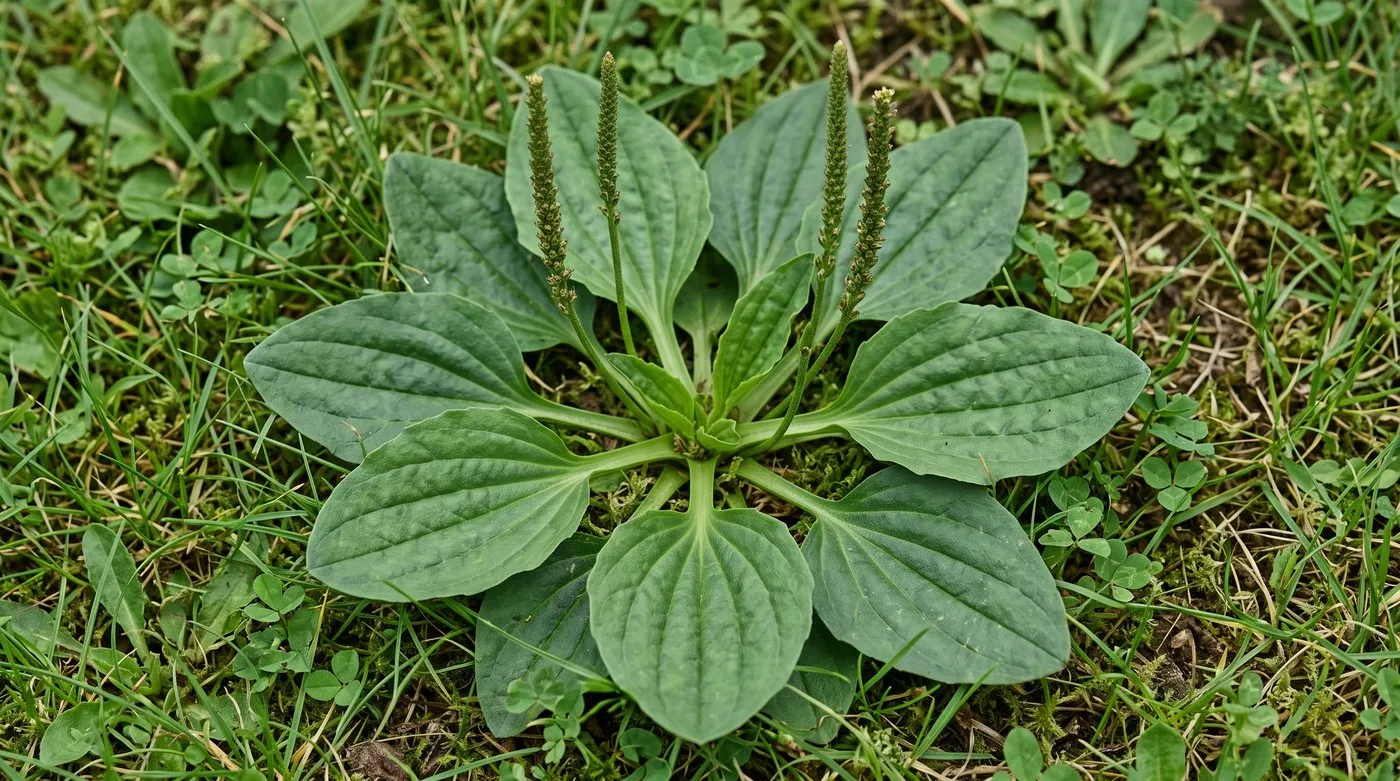 Greater plantain has broad ribbed leaves and long, narrow flower spikes. Ribwort plantain has narrow leaves and shorter flower heads.
Greater plantain versus ribwort plantain
Both species survive close cutting, but their leaves provide a quick distinction. Use several features rather than one damaged leaf.
| Feature | Greater plantain | Ribwort plantain |
|---|---|---|
| Botanical name | Plantago major | Plantago lanceolata |
| Leaf shape | Broad, oval or spoon-shaped | Narrow and lance-shaped |
| Leaf position | Often pressed close to soil | Usually more upright |
| Flower head | Long, narrow green-brown spike | Short, dark, bullet-shaped head |
| Typical lawn clue | Worn paths and compacted patches | Dry or close-cut grassland and lawns |
Check the whole rosette before removing it. Young greater plantain leaves can look narrower than mature leaves. Mower damage can also shorten both species.
The distinction matters mainly for identification. The practical response is similar. Remove isolated crowns before they seed, then strengthen thin turf. A mixed patch usually points to lawn conditions rather than two separate control problems.
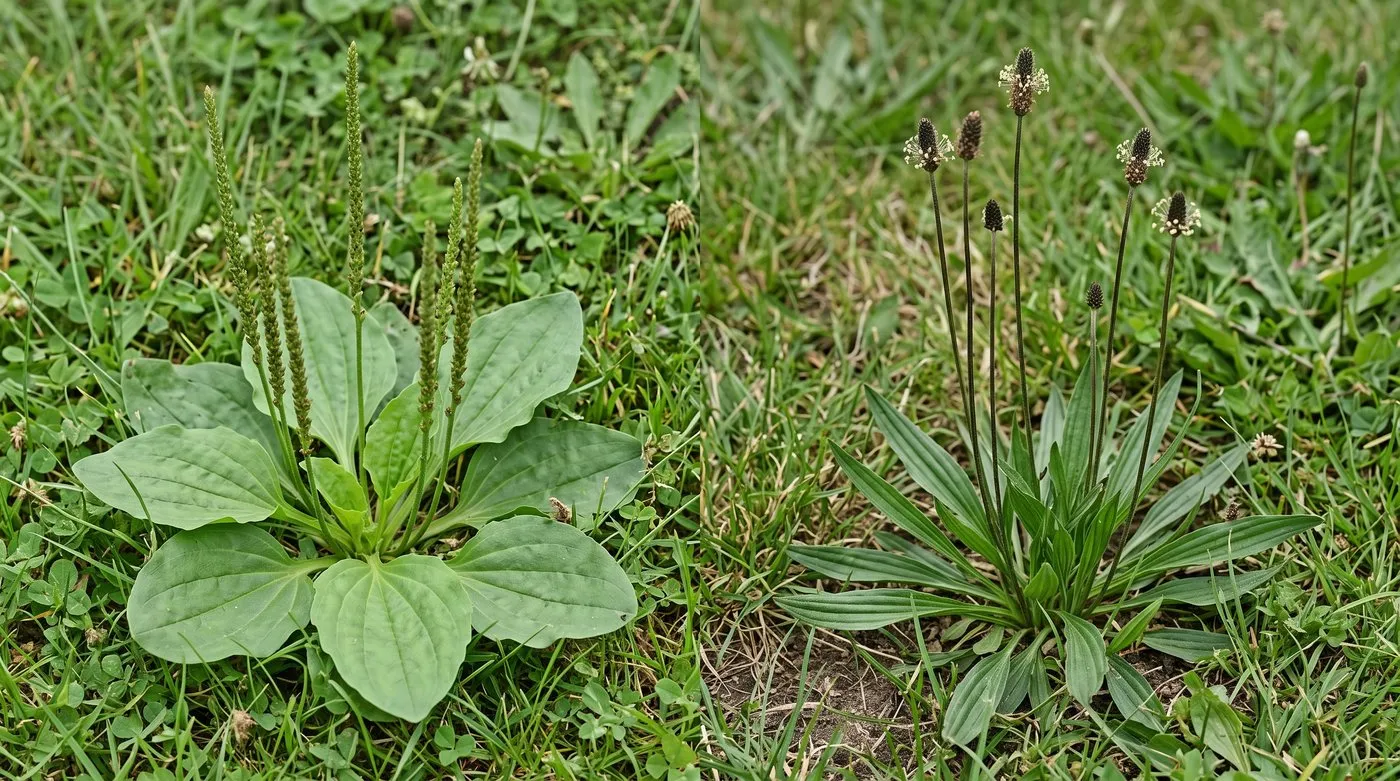 Greater plantain sits left with broad leaves and long spikes. Ribwort sits right with narrow leaves and short flower heads.
Why greater plantain survives mowing and wear
Its growing point can sit at or below soil level. The mower removes tall flower stalks but misses the centre of the rosette. Regular cutting can therefore leave the perennial crown alive.
The plant changes shape with its surroundings. In closely trampled ground, leaves stay small and low. In longer grass, the same species can hold larger leaves above the soil. This plastic growth habit helps explain why one plant looks different across a lawn.
Greater plantain also tolerates heavy and compacted soils. Repeated foot traffic squeezes pore spaces from the ground. Grass roots then receive less air and have less room to grow. Thin grass leaves open soil where plantain seedlings can establish.
Mowing alone does not stop seed production. Research collected by Garden Organic’s greater plantain review records seed shed under regular mowing. It also links trampling with the compacted conditions that favour plantain.
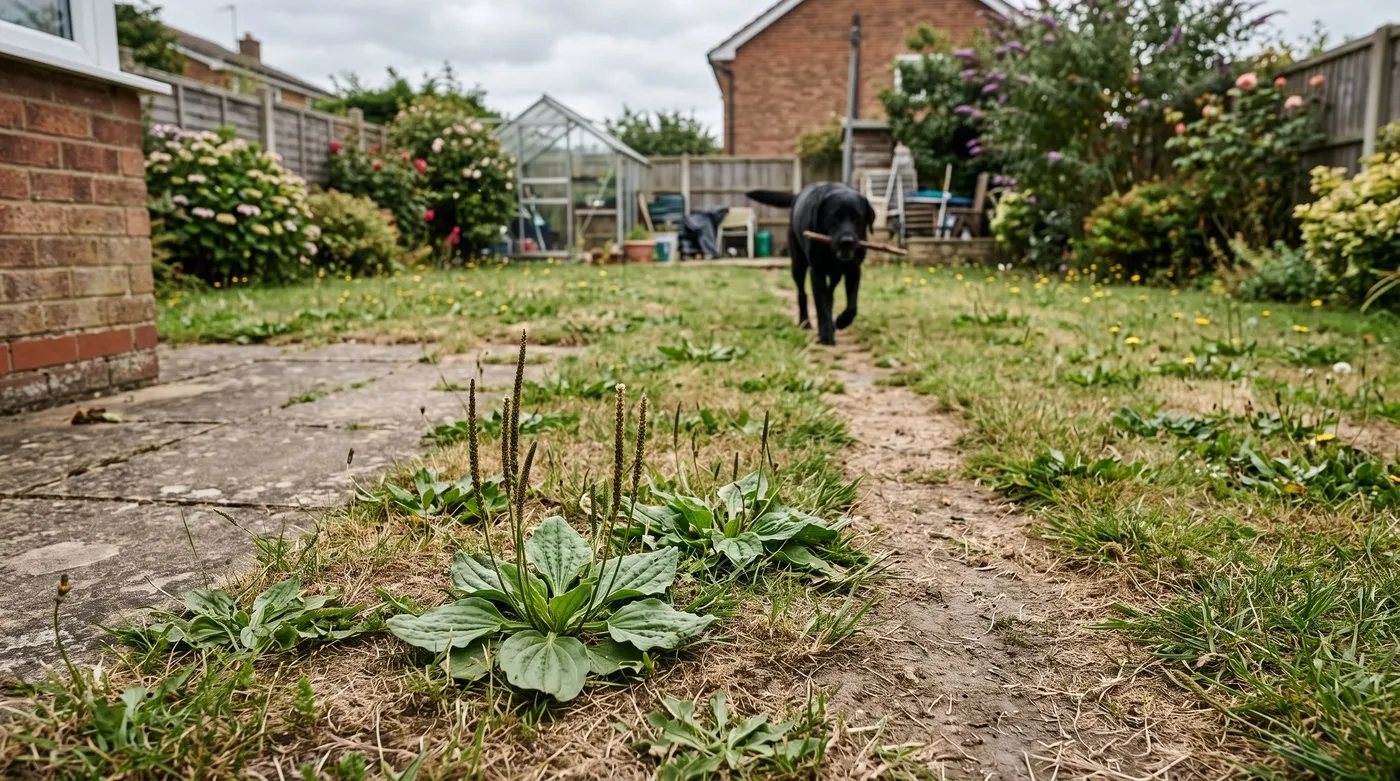 Plantain often follows a repeated route across thin turf. Redirecting the traffic can matter more than another round of weeding.
A two-minute compaction check before treatment
Compare the affected patch with healthy turf nearby. This relative check avoids pretending that every lawn needs the same aeration depth.
- Choose one worn square containing plantain.
- Choose a protected square with thicker grass on the same lawn.
- Push the same garden fork into moist soil at three points in each square.
- Note the tine depth reached with similar pressure.
- Compare the soil plugs, standing water and grass-root density.
Stones, tree roots and buried rubble can stop a fork. Move the test point if one result looks unusual. Several shallower readings in the worn square make compaction more likely.
Next, judge plant density. One isolated rosette calls for removal. A line of rosettes along a foot route calls for removal plus traffic management. A broad patch with thin grass needs area-wide lawn repair.
This is a practical triage method, not a laboratory soil test. Its value comes from comparing two parts of the same lawn. It tells you whether to fix a plant, a path or the whole patch.
How to dig out isolated greater plantain
Lever out the full crown and its strong rootstock. Use a hand fork or narrow daisy grubber. Work when the soil is moist, but not waterlogged.
Push the tool beside the crown rather than through its centre. Ease the handle back until the rootstock lifts. Check the hole for thick root pieces. Greater plantain does not spread mainly through creeping roots, but an incomplete crown can regrow.
Fill the hole with screened topsoil. Firm it level with the surrounding turf. Scatter a suitable lawn seed over bare soil, then rake lightly. Keep the surface damp during germination, following the seed supplier’s instructions.
Remove flower spikes before mature seed sheds. A large plant may produce 30,000 seeds in one year. Wet seed coats form sticky mucilage, which helps seed travel on shoes and animals. Seedlings emerge best near the soil surface, especially in open ground.
The patchy lawn repair guide covers seed choice and aftercare for larger holes.
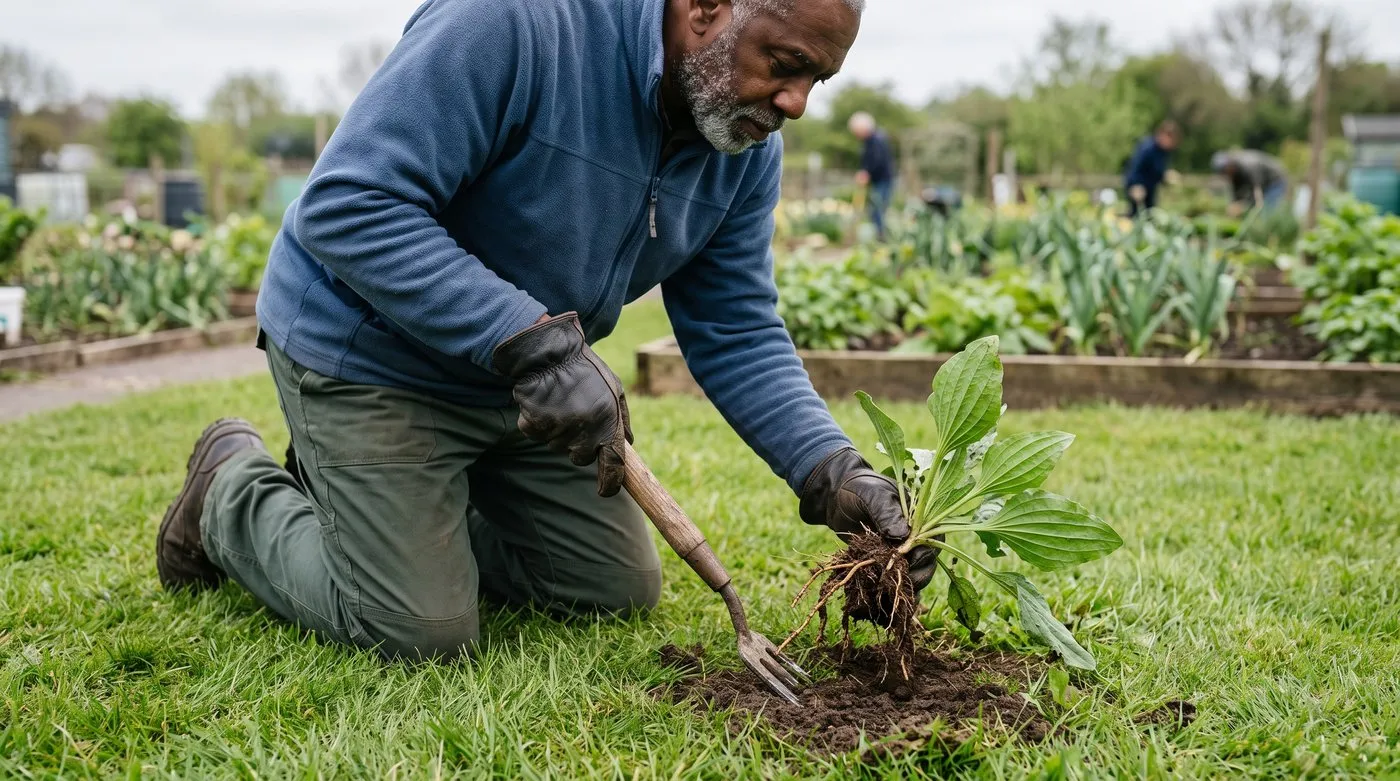 Place the grubber beside the crown and lever slowly. The aim is to lift the rootstock without enlarging the bare patch.
How to repair a plantain-filled lawn
Core aeration suits heavily worn soil better than repeated surface spiking. Hollow tines remove narrow plugs and leave channels through compacted turf. Solid tines make holes but can press soil sideways on very dense ground.
Work in early autumn while grass can still recover. Mow first and clear loose material. Pass the hollow-tine aerator over the affected area. Leave the extracted cores to dry, then break them up or collect them.
Brush a compatible sandy loam top-dressing into the holes. Do not use builders’ sand. Its grading and salts may be unsuitable for turf. Match the dressing to the existing soil instead of adding a thick alien layer.
Overseed thin areas after aeration. Choose a hard-wearing lawn mix where children, pets or regular walking create wear. Keep people off the repair while seedlings establish. Our lawn feeding guide explains how feeding fits around seasonal lawn work.
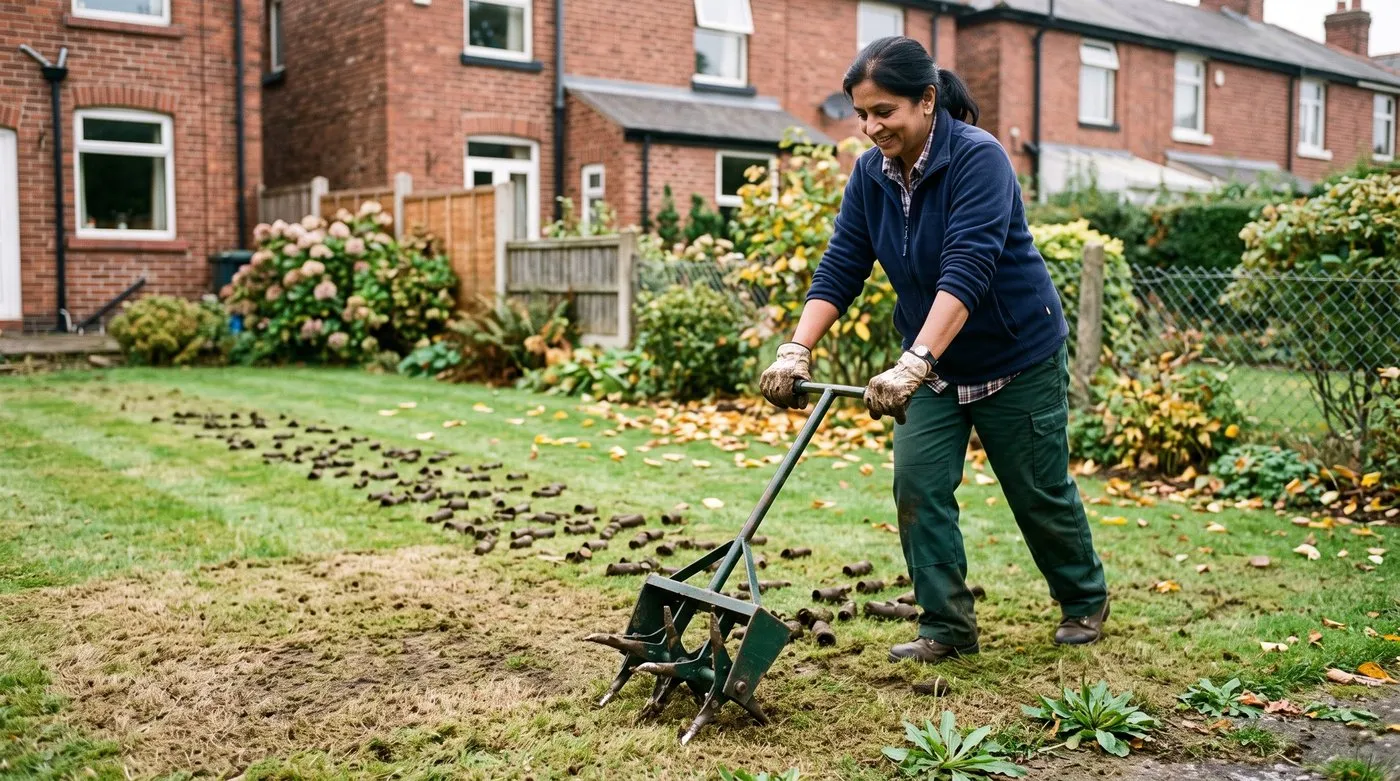 Hollow tines remove soil cores from compacted turf. Work across the affected area rather than only around each weed.
What the soil cores tell you
The extracted cores provide a useful visual check. Compare cores from the worn route with cores from stronger turf.
Look for depth, texture and root distribution. A short dense core with few visible grass roots supports the compaction diagnosis. A deeper crumbly core with roots throughout suggests a healthier structure. Water sitting in holes may point to poor drainage below the surface.
Do not fill every hole with pure sharp sand by habit. Repeated layers of mismatched material can create a perched interface. Use a turf top-dressing compatible with the lawn’s soil. Where drainage remains poor after aeration, investigate the wider drainage problem.
A worn path may compact again within weeks if traffic continues. Add stepping stones, widen the route or move the access point. This is often the only lasting answer where the lawn functions as a walkway.
Expert tip: Photograph the same repaired square after one, four and eight weeks. Repeat the fork comparison before planning another pass.
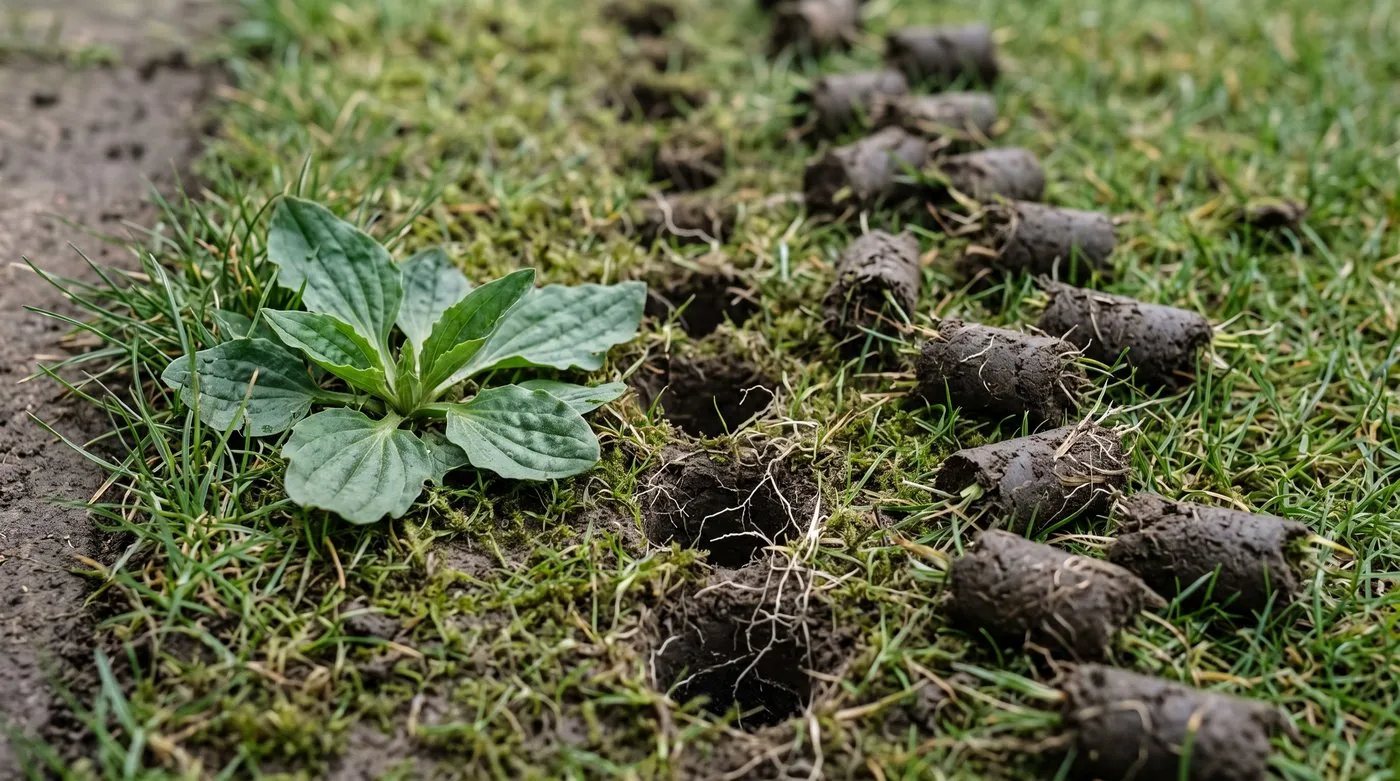 Compare cores from worn and protected turf. Root distribution and crumb structure help show whether the whole patch needs repair.
Greater plantain control methods ranked
The best method depends on plant density and lawn condition. These options solve different parts of the problem.
| Method | Role | Useful outcome | Limitation |
|---|---|---|---|
| Lever out crown and rootstock | Direct control | Removes an isolated perennial plant immediately | Leaves the worn soil unchanged |
| Core aerate and overseed | Root-cause repair | Opens compacted turf and closes bare ground | Needs suitable weather and aftercare |
| Redirect foot traffic | Prevention | Stops the same strip being compressed again | May require stepping stones or a path |
| Remove flower spikes | Seed reduction | Prevents that spike from maturing on the lawn | Does not remove the crown |
| Selective lawn weedkiller | Escalation | May control listed broad-leaved weeds | Product-specific and does not fix compaction |
| Regular mowing alone | Maintenance only | Keeps flower stalks shorter | Low rosettes can survive and set seed |
The best default response combines the first three rows. Remove established plants, repair thin turf and stop repeated wear. Chemical control is an escalation, not the starting point.
Warning: Check the HSE garden pesticide database before buying or using weedkiller. Use only an authorised product whose label covers lawns and the target weed. Follow every label restriction for children, pets, application and disposal.
When to tackle plantain through the year
Greater plantain is perennial, so the crown can remain while seasonal growth changes. Time removal around soil condition and turf recovery.
| Month | Lawn task |
|---|---|
| January | Avoid walking repeatedly on frozen or waterlogged turf. |
| February | Mark worn routes and plan stepping stones before spring growth. |
| March | Lever out isolated rosettes when soil is workable. |
| April | Fill holes and overseed if soil temperatures suit your seed mix. |
| May | Remove new flower spikes before seed develops. |
| June | Continue hand removal and avoid opening large bare patches in drought. |
| July | Record dense colonies and postpone major renovation during dry weather. |
| August | Prepare seed, top-dressing and aeration tools for autumn repair. |
| September | Core aerate, top-dress and overseed worn areas. |
| October | Continue repairs while grass still grows. Keep traffic off seedlings. |
| November | Clear fallen leaves and watch for water sitting on compacted ground. |
| December | Use temporary boards when repeated access across soft turf is unavoidable. |
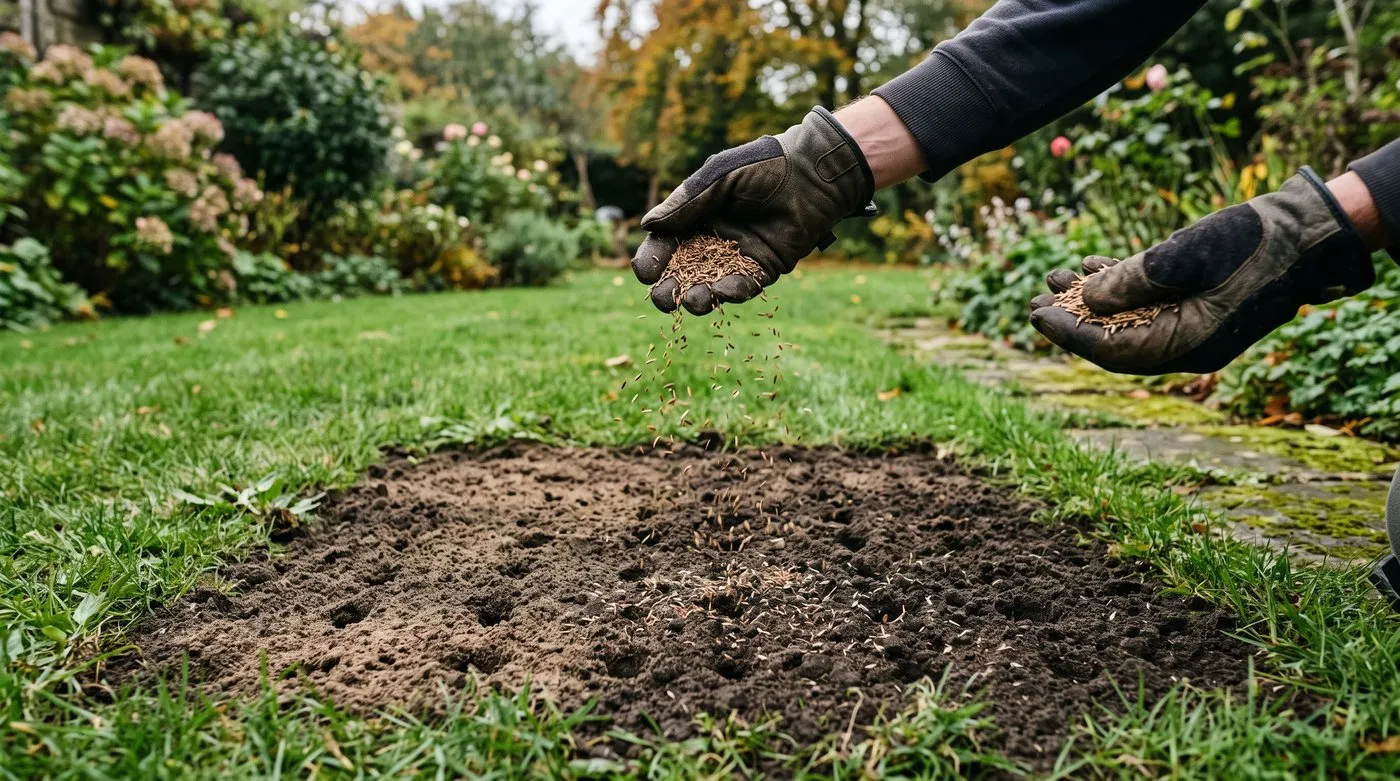 Overseed the holes and bare patches after aeration. Protect the repair from foot traffic while new grass establishes.
Common greater plantain control mistakes
- Relying on mowing. Cutting flower stalks may reduce some seed, but the low crown survives.
- Snapping leaves from the crown. The perennial rootstock remains and produces new leaves.
- Leaving an open hole. Bare surface soil gives incoming seed a place to establish.
- Aerating without changing the route. Daily traffic compacts the repaired strip again.
- Naming herbicide ingredients from memory. Product authorisations change, so check the current label and HSE database.
The first mistake wastes time. The fourth undoes good lawn work. Treat the route as part of the garden’s layout, especially near sheds, gates and washing lines.
Frequently asked questions
How do I identify greater plantain?
Look for broad ribbed leaves in a flat rosette beneath narrow flower spikes. The leaves are oval or spoon-shaped. Several strong veins run from base to tip. Ribwort plantain has narrow leaves and short, dark flower heads.
Why does greater plantain grow in my lawn?
Greater plantain favours trampled ground where grass has thinned. It tolerates compacted soils and repeated wear. Compare worn turf with a nearby protected patch before deciding how much repair is needed.
How do I remove greater plantain from a lawn?
Lever out the whole crown, then repair the compacted turf. Work after rain or watering. Fill the hole, overseed bare soil and keep the repaired patch moist during germination.
Does mowing kill greater plantain?
No. Regular mowing can leave low rosettes alive and still shedding seed. Cut flower spikes before they mature, but use removal or lawn repair for control.
Should I use weedkiller on greater plantain?
Use only an authorised lawn product whose label lists plantain. Check the current HSE garden database first. Follow the label and keep children and pets away as directed.
Now you can match the response to the lawn. Browse the Garden problems hub for other lawn and weed diagnoses.
Use our chemical-free weed prevention guide to reduce the next wave of seedlings.
Our team produces practical UK gardening guidance from source research, contributor records and established horticultural practice. Editorial standards are overseen by Matt W.