Key takeaways
- Hairy bittercress (Cardamine hirsuta) is a fast annual weed of pots, gravel and borders
- Its ripe pods launch 1mm seeds at over 10m per second and across a 2m radius
- Small plants average roughly 600 seeds and several generations can flower in one year
- It often arrives in the compost of newly bought pot plants, so check and remove it
- Hoe or hand-pull young plants before the pods form, when it comes up easily
- The peppery young leaves are edible, tasting like a mild wild cress
Hairy bittercress is the small rosette that fires seed when its ripe pods are touched. Hairy bittercress, Cardamine hirsuta, is a UK native annual in the cabbage family. Its pods can launch seeds at over 10m per second. Research has measured dispersal across a 2m radius. The plant remains easy to control because its roots are fine and shallow. Remove each flush before seed pods ripen. Clean young leaves are also edible.
This guide covers how to identify hairy bittercress, why it spreads so fast, how to control it before it explodes, where it keeps coming from, and how to turn the tables by eating it.
How to identify hairy bittercress
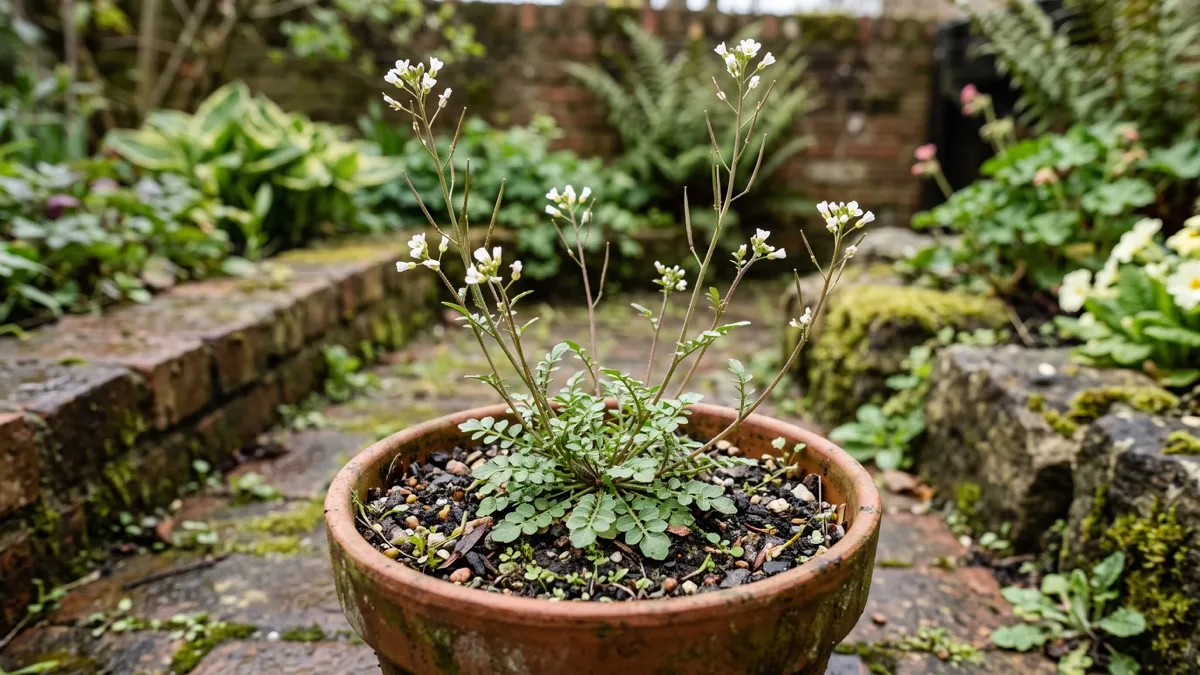
Hairy bittercress is a small plant, only 10-30cm tall in flower, and it starts as a neat flat rosette pressed to the soil. The rosette leaves are pinnate, meaning each leaf is divided into several small rounded leaflets along a central stalk, with a slightly larger leaflet at the tip. Despite the name, the plant is only sparsely hairy and does not look or feel especially hairy to the eye.
From the rosette it sends up thin flowering stems carrying clusters of tiny white flowers, each with four petals in the cross shape typical of the cabbage family (Brassicaceae). Above and among the flowers stand the slender, upright green seed pods, held close to the stem and often overtopping the flowers. These pods are the giveaway, and the source of all the trouble.
A close relative, wavy bittercress (Cardamine flexuosa), is very similar. Wavy bittercress usually has six stamens, while hairy bittercress usually has four. Its flexuous stem also carries more stem leaves. Both species respond to the same controls. Kew’s botanical description of Cardamine hirsuta records 2-6 pairs of lateral leaflets and 12-27mm pods. Our common UK garden weeds guide shows it beside chickweed.
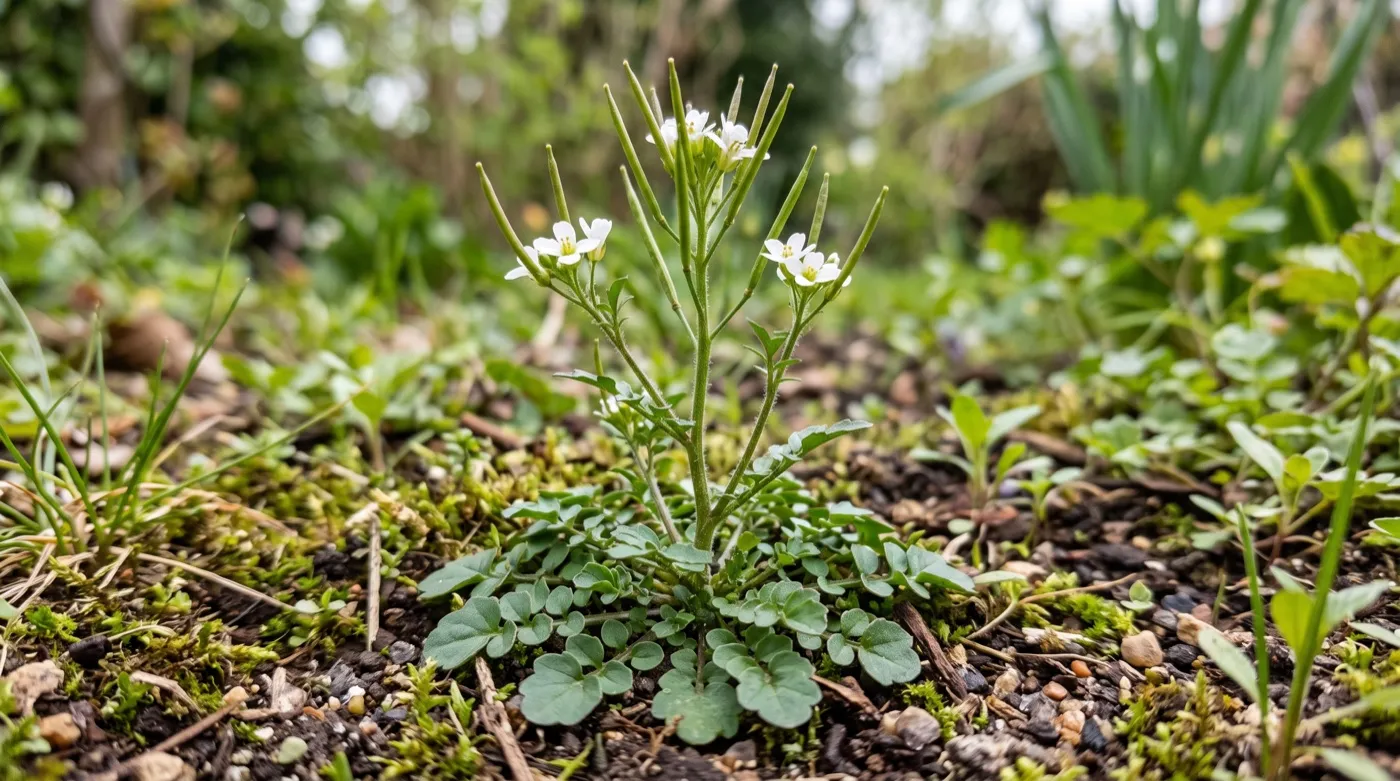 Hairy bittercress: a flat rosette of pinnate leaves, tiny white four-petalled flowers, and the slender upright seed pods that explode when ripe.
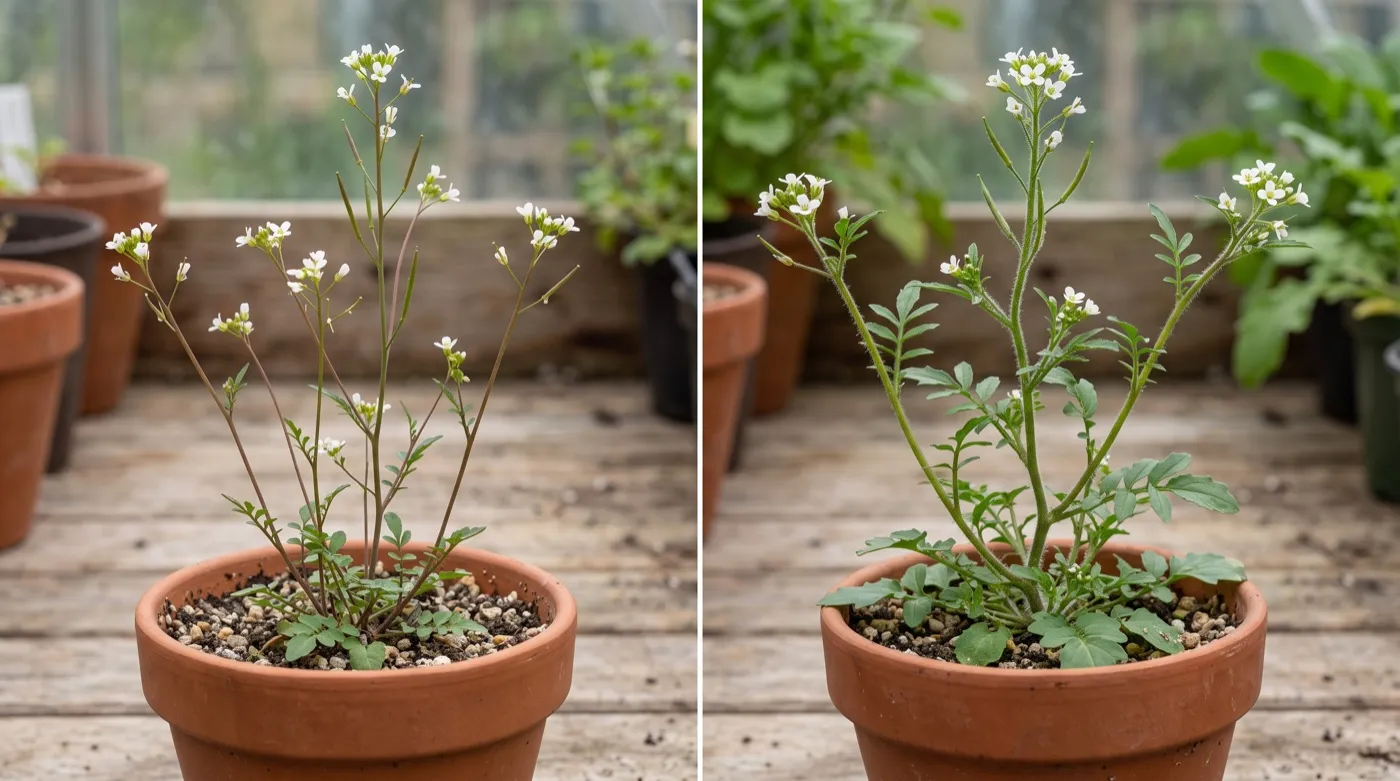 Hairy bittercress stays lower with fewer stem leaves. Wavy bittercress has a flexuous stem and usually reaches farther upward.
Why bittercress spreads so fast
Understanding the plant’s speed and its exploding pods explains why it seems to appear from nowhere and colonise so quickly.
Hairy bittercress is built for rapid turnover. It often flowers from March, with further generations flowering through June to October. In mild weather it can flower outside those months. Fresh seed may begin germinating after only two to three weeks, although dormancy varies between populations.
Then there are the exploding pods. As each slender pod ripens, tension builds in its walls. The valves coil in a fraction of a second and transfer stored energy to the seeds. High-speed research measured launch speeds above 10m per second and a landing radius of 2m. The peer-reviewed dispersal study explains why brushing a ripe plant can scatter the next generation across several pots.
Put together, short generations and explosive dispersal let one plant colonise a greenhouse bench. A typical small plant averages roughly 600 seeds, although output varies sharply with growing conditions. Seeds favour bare, moist soil and container compost. The counter to this speed is simple: never let the pods ripen.
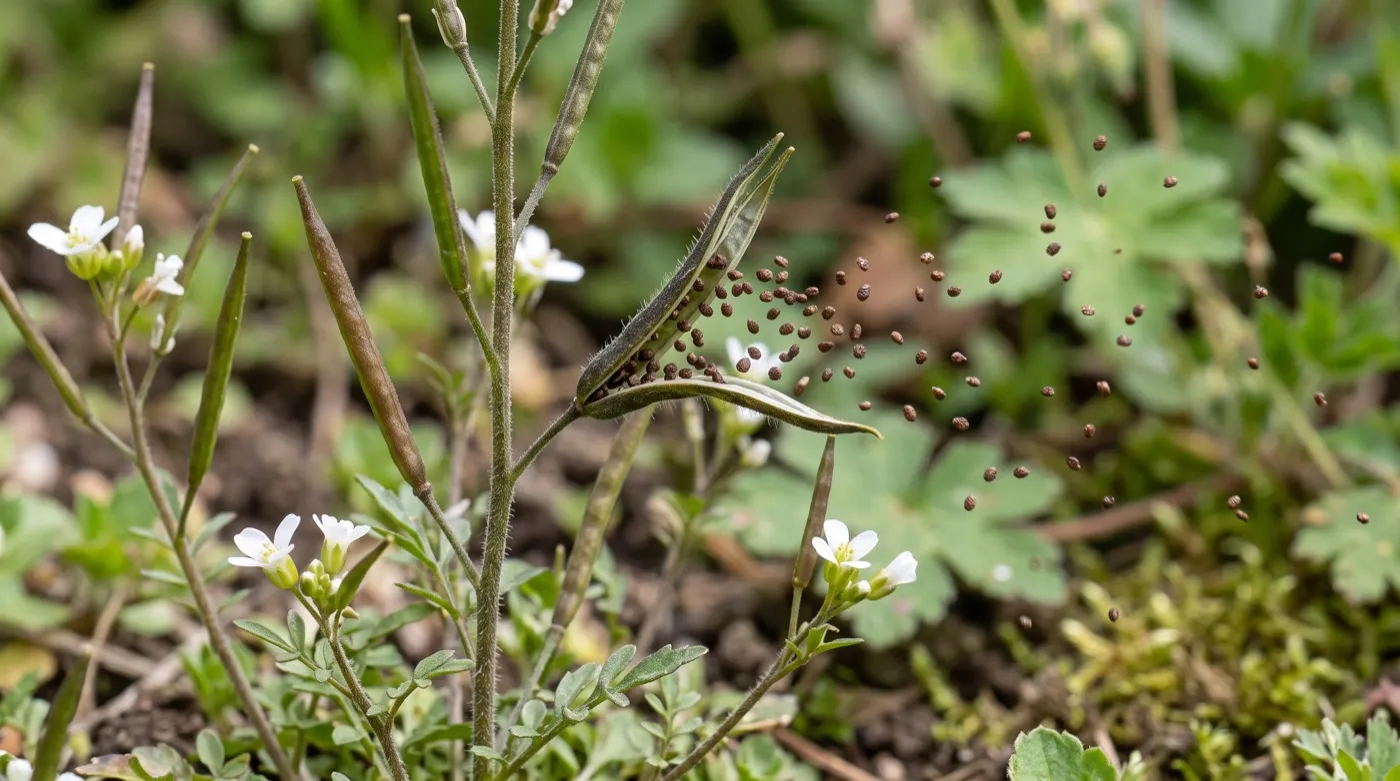 The ripe valves coil and launch 1mm seeds at more than 10m per second. Disturbing a seeding plant can scatter them across nearby pots.
Controlling bittercress: catch it young
The whole of bittercress control is one idea: kill it before it seeds. Because it is a shallow-rooted annual with no persistent root, a young plant is trivially easy to remove. The challenge is timing and consistency, not effort.
Hoe or hand-pull the seedlings. Bittercress has shallow roots and lifts with almost no resistance while young. A hoe run over gravel, greenhouse staging, pot tops and bare border soil slices off dozens of seedlings in seconds. Hand-pulling works for the odd plant. Do it while the rosettes are small and, crucially, before the flower stems and pods appear.
Work in flushes. Bittercress germinates intermittently, especially after damp weather. A single clearance is rarely enough. Check vulnerable areas every one to two weeks through spring and after wet spells. Hoe before flower stems rise.
Handle seeding plants gently. If a plant has already set pods, do not yank it, which triggers the explosion. Instead, snip or cup it and lift it carefully into a bag, or cover it with a hand before pulling, to contain the seed. Then step up the hoeing to catch the inevitable seedlings.
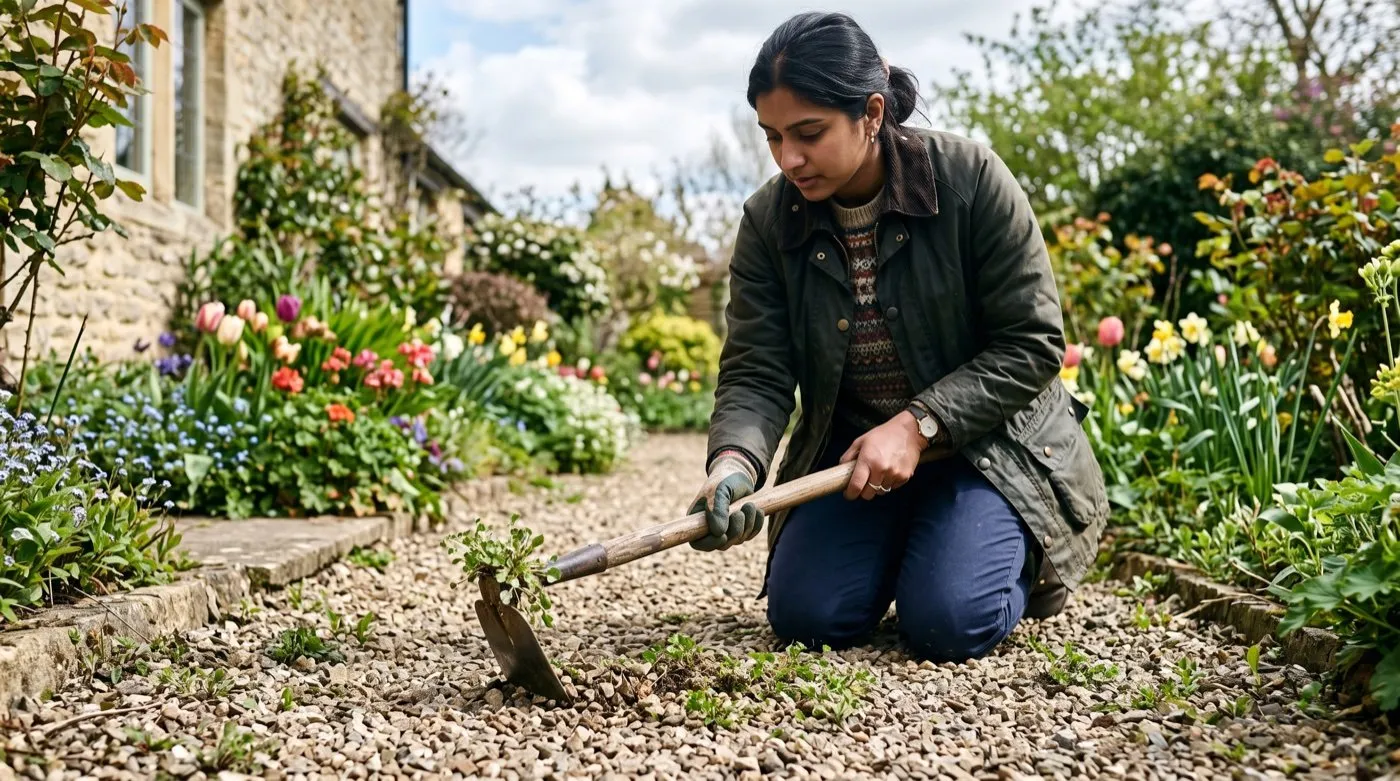 A shallow hoe pass severs bittercress below its rosette. Repeat after each germination flush and before flowers appear.
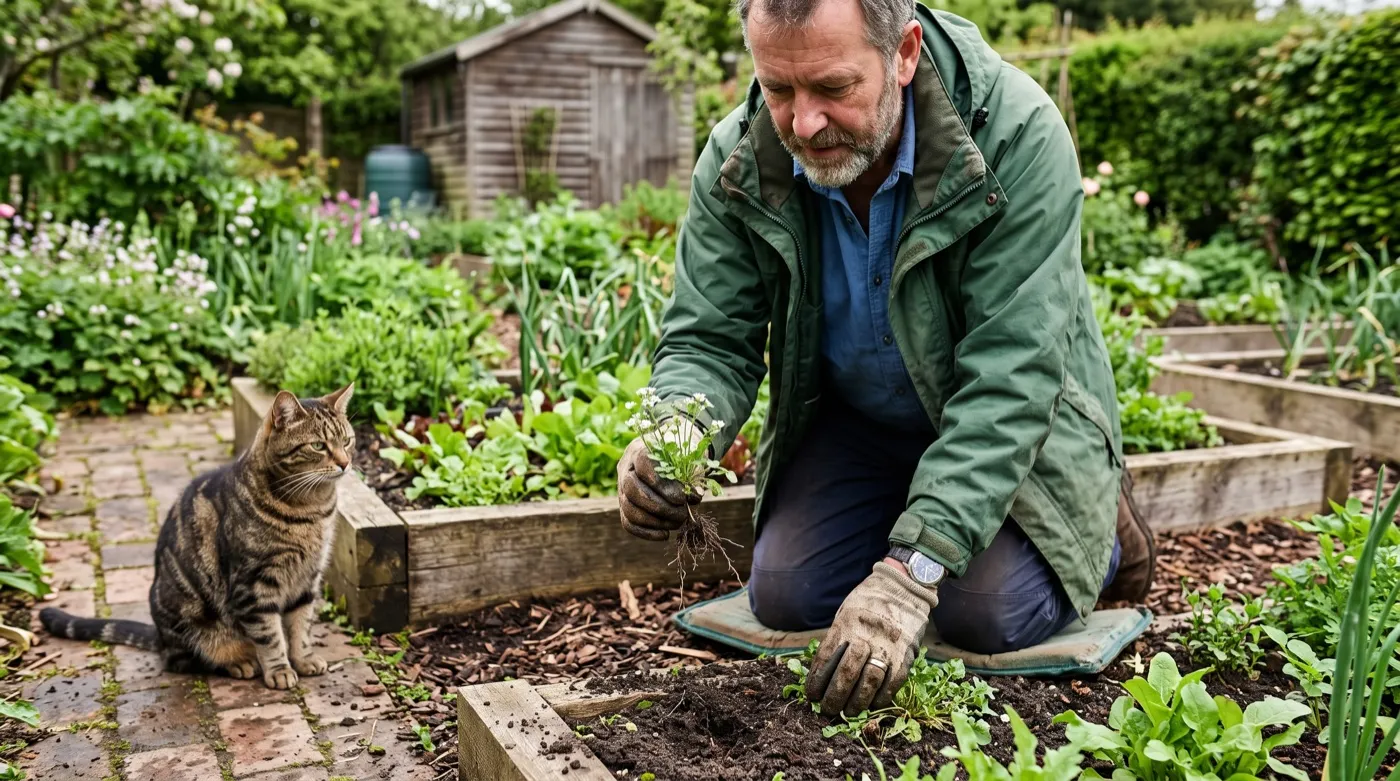 Check beds and pots every one to two weeks. Young plants lift easily before their upright seed pods develop.
Mulching and stopping it at the source
Two further measures cut how much bittercress you get in the first place, by denying it the bare, lit soil it needs and by blocking a common route in.
Mulch bare soil. The RHS advises an 8cm layer of organic matter or dense ground cover. This smothers seedlings and removes the open soil they colonise. Top the mulch up as it thins, then hoe any seedlings rooted in the surface. Our guide to mulching with cardboard and grass clippings covers low-cost options.
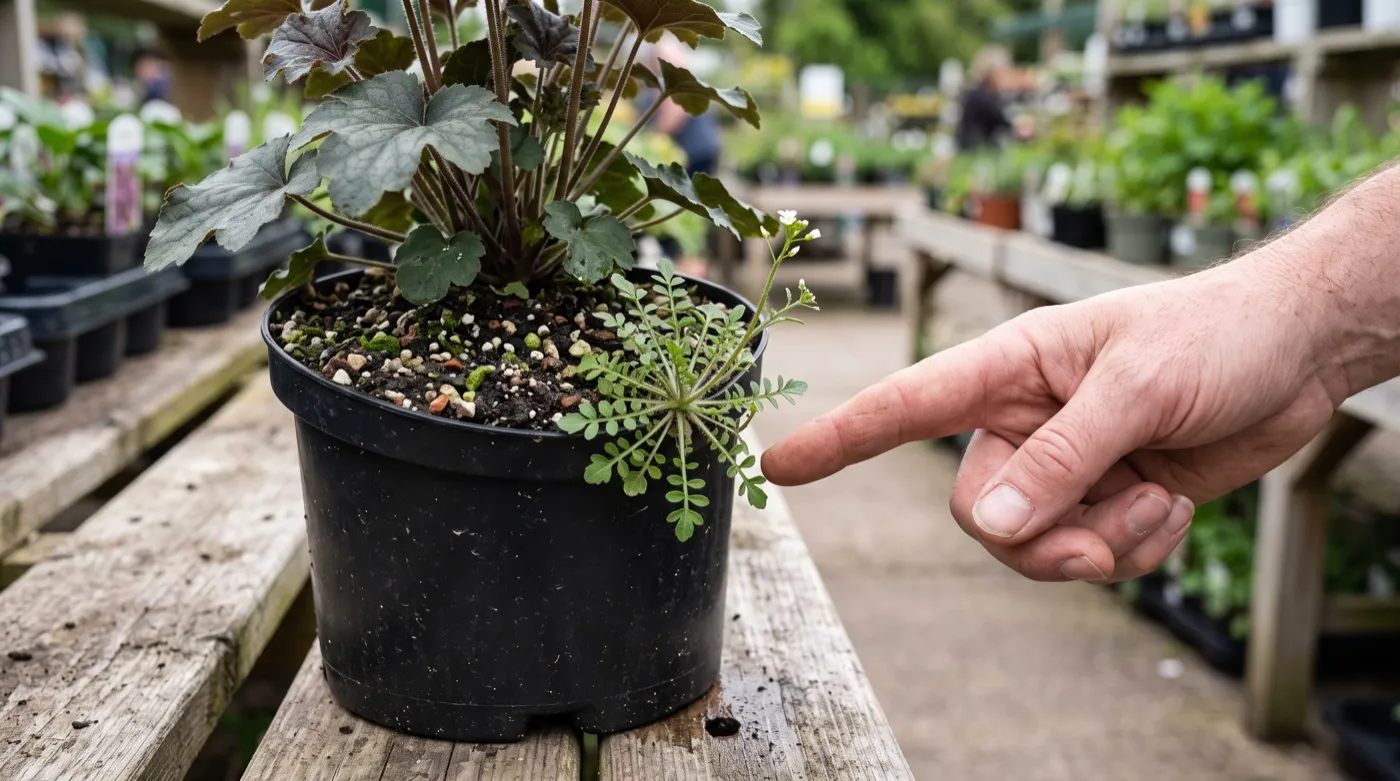 A common route in: bittercress growing in the compost of a garden-centre plant. Weed the top of every pot before planting to stop it seeding into your garden.
Check bought plants. One of the commonest ways bittercress arrives is in the compost of newly bought pot plants from garden centres, where it grows in the top of the pot and seeds into your garden after planting. Get into the habit of weeding the top of every bought plant before you plant it, removing any bittercress rosettes. The same applies to plants swapped with other gardeners. For plants raised from seed, keeping the surface of trays clean and using fresh compost helps, as our guide to bottom-watering seed trays notes, since surface watering encourages surface weed germination.
Gardener’s tip: Keep a hoe hanging by the greenhouse door and give the staging and pot tops a quick pass whenever you are in there with a spare minute. Bittercress control is not a job you schedule; it is a habit you keep. The plants you kill as tiny rosettes never become the ones that seed the bench.
Turn the tables: bittercress is edible
Before you resent this weed entirely, it is worth knowing that hairy bittercress is a genuinely pleasant edible, which softens the annoyance considerably.
Despite the name, the young leaves are not bitter but pleasantly peppery, much like a mild watercress or garden cress, to which it is related. The whole young rosette can be used as a salad leaf, a sandwich filling or a garnish, adding a fresh green heat. It is at its best in late winter and early spring, exactly when little else is croppable, which makes this abundant free weed genuinely useful.
The usual foraging sense applies: pick clean young leaves from plants you have not treated with any weedkiller and that are not beside a road or where animals foul. Wash them, and use the young growth rather than tough older stems. Our guide to edible garden weeds sets bittercress among the other weeds worth eating rather than binning. A weed you can put in a sandwich is a more tolerable neighbour than one you can only curse.
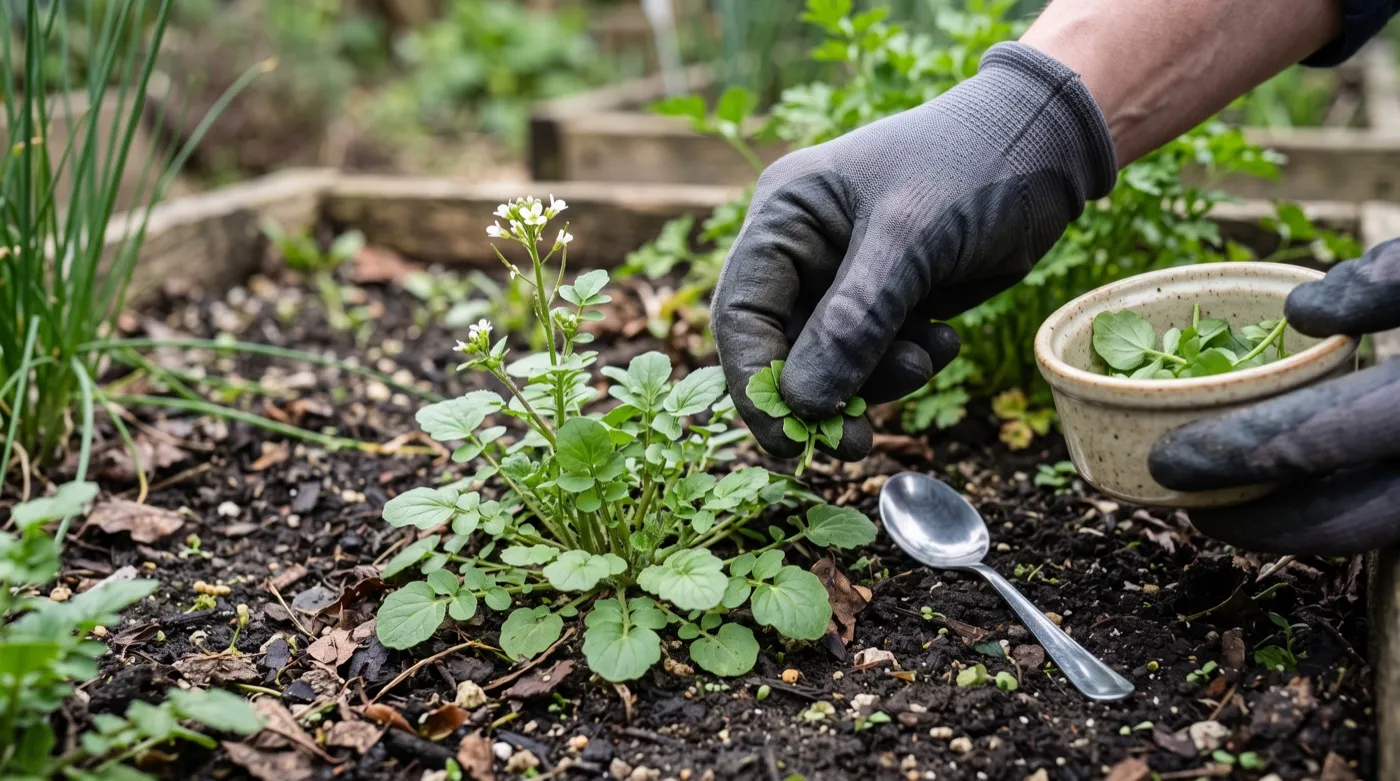 The young leaves are peppery, not bitter, and make a fresh cress-like salad leaf in late winter when little else is ready. Pick clean, untreated growth.
Control methods ranked by effectiveness
Treating these as equal is how people pull seeding plants and spread the weed further. Ordered by what each actually delivers on bittercress.
| Method | Role | Effectiveness | What it cannot do |
|---|---|---|---|
| Hoeing seedlings every 1-2 weeks | Primary | Kills flushes before they seed; fast and easy | Needs consistency through spring |
| Mulching bare soil to 80mm | Prevention | Smothers seedlings and removes open ground | Does not help on gravel or staging |
| Weeding bought plants before planting | Prevention | Stops a major route of arrival | Only addresses new introductions |
| Hand-pulling young plants | Maintenance | Easy on shallow roots when young | Triggers seed explosion if pods are ripe |
| Removing seeding plants carefully (bagged) | Damage control | Contains the seed from a mature plant | Slower; some seed usually escapes |
| Letting it flower then pulling | Not recommended | None; spreads seed everywhere | Makes the problem far worse |
The gold standard is the top two rows together: hoe the seedlings little and often, and mulch the bare soil. Between them they kill the young plants and stop most new ones germinating, which is the whole game with a fast-seeding annual. The bottom row is on the list only to warn you off it.
Month-by-month bittercress calendar
| Month | What to do |
|---|---|
| January-February | First rosettes and early flowers appear. Start hoeing in mild spells. Pick young leaves to eat. |
| March | Main germination flush begins. Hoe pot tops, gravel and staging every 10-14 days. |
| April | Peak growth and first seed. Keep hoeing after every wet spell. Mulch bare borders. |
| May | Continue hoeing flushes. Weed the tops of any bought plants before planting. |
| June-August | Ongoing generations in warm wet spells. Quick hoe passes whenever you pass vulnerable spots. |
| September-October | Autumn germination flush. Clear seedlings before they overwinter and seed early. |
| November-December | Overwintering rosettes present. Hoe on mild days. Top up mulch on bare soil. |
Common mistakes with hairy bittercress
- Waiting until it flowers. By the time you see the pods, the next generation is loaded. Hoe the rosettes while they are tiny.
- Yanking seeding plants. Pulling a plant with ripe pods triggers the explosion and scatters seed. Bag or cover mature plants instead.
- Leaving bare soil. Bittercress seed needs light. Unmulched borders germinate flush after flush. Cover the soil.
- Planting bought plants without checking. The pot compost often carries bittercress. Weed the top of every new plant before planting.
- Blitzing once and stopping. It germinates in waves. One clearance is not enough. Hoe little and often through spring.
The short version on hairy bittercress
Hairy bittercress is a weed of seed, not persistent roots. Its shallow root is easy to remove, but seed can remain viable for five years or more. Ripe pods fire 1mm seeds across nearby pots and beds. Beat it by hoeing small rosettes every week or two, applying an 8cm mulch, and checking every plant brought home.
When a plant escapes control, its clean young leaves still make a peppery salad addition. For other fast annual weeds, work through the garden problems section and the chemical-free weed prevention guide.
Frequently asked questions
How do I identify hairy bittercress?
Look for a low rosette, four-petalled white flowers and upright pods. Flower stems reach 5-30cm. The lower leaves have a terminal leaflet and two to six smaller pairs. Pods are 12-27mm long and about 1mm wide.
Why does bittercress spread so fast?
Its ripe pods launch seeds at more than 10m per second. Peer-reviewed measurements found seeds landing within a 2m radius. Small plants average roughly 600 seeds, and several generations can flower in one year.
How do I get rid of hairy bittercress?
Hoe or hand-pull the young plants before the seed pods form. It has shallow roots and pulls up easily, and a hoe run over gravel or pot tops kills seedlings in seconds. The key is to act before it flowers and seeds, and to keep at it every couple of weeks through spring, because it germinates in flushes. Mulch suppresses it in beds.
Does mulching stop bittercress?
An 8cm mulch suppresses bittercress seedlings and covers bare soil. Use organic matter or dense ground cover. Top up thin areas and hoe seedlings that root in the surface layer.
Is hairy bittercress edible?
Yes, the young leaves are edible and taste like a mild peppery cress. Despite the name, it is not bitter but pleasantly hot, and it is a good wild salad leaf or garnish, related to watercress. Pick clean young leaves from plants you have not treated with any chemical. It is one of the more useful edible weeds, so a crop of it is not all bad news.
Where does bittercress keep coming from?
Often from the compost of newly bought pot plants. Garden-centre plants frequently carry hairy bittercress in the top of the pot, which then seeds into your garden. It also blows in and germinates in any bare, moist soil, gravel or greenhouse staging. Checking and weeding the top of every bought plant before you plant it stops a common route in.
When should I control bittercress?
From late winter onwards, whenever seedlings appear, and always before the pods form. Bittercress flowers very early, sometimes from February, so start hoeing as soon as you see rosettes. Keep going every couple of weeks through spring and after any wet spell, because it germinates in flushes. Catching it young, before it seeds, is far easier than after.
Now you can stop hairy bittercress before it seeds. Use our common UK garden weeds guide to identify the next seedling.
Our team produces practical UK gardening guidance from source research, contributor records and established horticultural practice. Editorial standards are overseen by Matt W.