Key takeaways
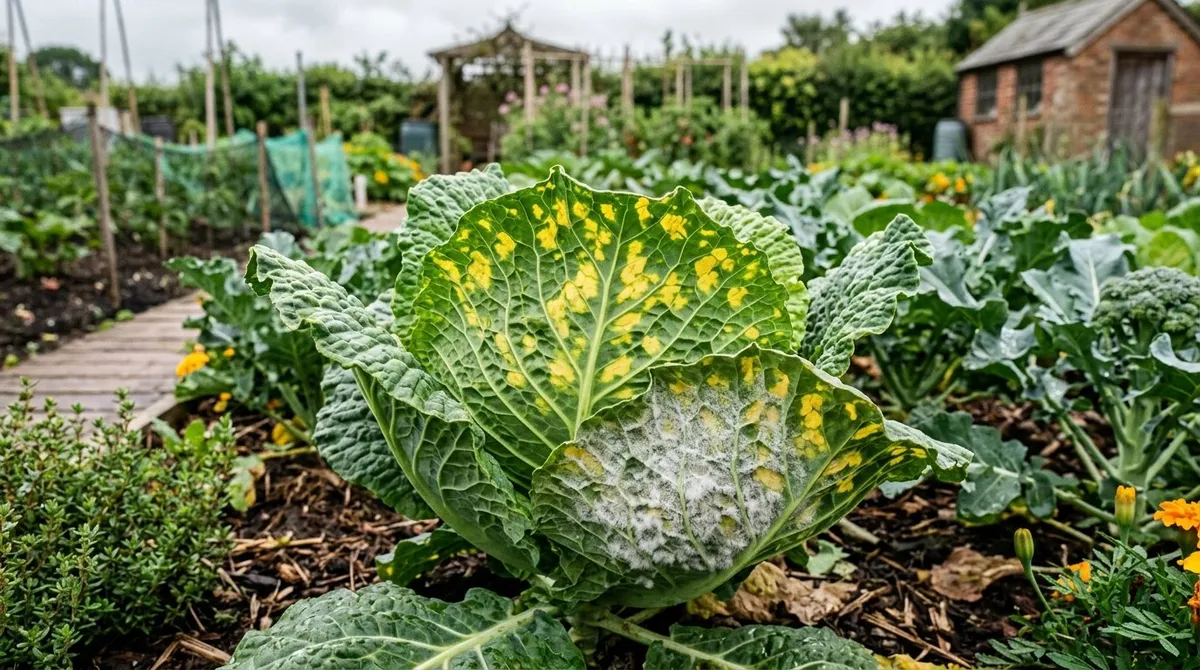
- Yellow angular patches on upper leaves with white-grey fuzzy growth underneath are the diagnostic signs of brassica downy mildew
- The pathogen thrives at 10-15C with high humidity, matching typical UK spring and autumn conditions perfectly
- Seedlings and young transplants are most vulnerable, with infection potentially killing plants within 2 weeks
- No fungicides are approved for amateur use against brassica downy mildew in the UK
- Wide spacing (45cm+ between plants) and avoiding overhead watering reduce infection rates by 40-60%
- Crop rotation of 4 years minimum reduces soil-borne oospore levels, though airborne spores can still arrive from neighbouring plots
Brassica downy mildew is one of the most common diseases of cabbages, cauliflower, broccoli, and other brassica crops in UK gardens. The pathogen thrives in the cool, damp conditions that define British springs and autumns. It spreads fast in crowded seedling trays and among closely planted transplants. Left unchecked, it weakens plants, delays development, and can kill young seedlings outright.
The disease is caused by Hyaloperonospora brassicae (formerly Peronospora parasitica), an oomycete pathogen related to the organisms that cause potato blight and lettuce downy mildew. It is not a true fungus, though it behaves like one. Understanding how it spreads and what conditions favour it lets you prevent most outbreaks before they start.
How do I identify brassica downy mildew?
Yellow angular patches on the upper leaf surface, bounded by leaf veins, are the hallmark of brassica downy mildew. Turn an affected leaf over and you will see a white to grey-purple fuzzy coating on the underside, directly beneath each yellow patch. This fuzzy layer consists of sporangiophores, the spore-producing structures of the pathogen.
On mature plants, outer leaves are affected first. The disease works inward if conditions remain favourable. Cauliflower is the most susceptible brassica at maturity because its large, tightly packed outer leaves trap moisture. Kale and purple sprouting broccoli tend to be more tolerant because their open growth habit allows better airflow around the foliage.
The angular shape of the leaf patches is the key diagnostic feature. Unlike bacterial leaf spots, which tend to be circular, downy mildew patches follow the leaf vein network. This angular patterning is visible even without seeing the fuzzy underside growth.
| Symptom | Location | Description |
|---|---|---|
| Yellow angular patches | Upper leaf surface | 5-30mm across, bounded by leaf veins |
| White-grey fuzzy growth | Lower leaf surface | Sporulation layer, visible in damp weather |
| Purple-grey discolouration | Cotyledons of seedlings | Often first sign, can kill seedling in 5-7 days |
| Brown necrotic lesions | Older infections | Dead tissue replaces yellow patches as they age |
| Stunted growth | Whole plant | Reduced head/curd/spear development |
How does brassica downy mildew spread?
Spores spread on wind, water splash, and contaminated seed, making the disease highly mobile across allotment sites and gardens. The pathogen has two reproduction methods, each spreading the disease in a different way.
Airborne sporangia are produced on the fuzzy growth beneath infected leaves. These sporangia are released into the air in the morning as humidity drops. Wind carries them up to several hundred metres. They land on healthy leaves and germinate in a thin film of water. Infection occurs within 4-8 hours of spore landing if the leaf stays wet. This is why morning dew followed by slow drying is the ideal infection window.
Soil-borne oospores are thick-walled survival spores produced inside infected leaf tissue. When leaves decompose, oospores are released into the soil. They can survive for 3-5 years. Oospores infect new brassica roots and seedling stems from below, particularly in wet soils. This is the main reason crop rotation helps reduce disease pressure over time.
Seed-borne infection is also documented. Contaminated seed can carry the pathogen into new growing areas. Always buy seed from reputable suppliers. Hot water seed treatment (50C for 25 minutes) kills the pathogen but requires precise temperature control to avoid damaging the seed.
What conditions favour brassica downy mildew?
Cool temperatures (10-15C) combined with high relative humidity (above 80%) create ideal conditions for brassica downy mildew. These conditions match UK spring and autumn weather almost exactly, which explains why the disease is so common here.
Sporangia germinate fastest between 8C and 15C. Above 20C, germination drops sharply. Above 25C, the pathogen is effectively dormant. This temperature profile means brassicas planted or sown in March-May and September-November face the highest risk. Midsummer crops have a natural reprieve.
Leaf wetness is the other critical factor. Sporangia need a film of water on the leaf surface for at least 4 hours to germinate and penetrate the plant. Overhead watering, heavy dew, fog, and rain all provide this moisture. Morning watering is worse than evening watering because it combines moisture application with the cool morning temperatures that favour infection.
| Risk factor | High risk | Low risk |
|---|---|---|
| Temperature | 10-15C | Above 20C |
| Humidity | Above 80% | Below 60% |
| Leaf wetness | 4+ hours of surface moisture | Dry leaves |
| Plant spacing | Less than 30cm | 45cm or more |
| Watering method | Overhead | Drip or capillary matting |
| Ventilation | Enclosed greenhouse, still air | Open site, good airflow |
| Season | March-May, September-November | June-August |
Which brassicas are most susceptible to downy mildew?
Cauliflower is the most susceptible brassica at all growth stages, followed by rocket, calabrese, and young cabbage transplants. The large, dense leaf canopy of cauliflower traps moisture and makes a humid microclimate at the leaf surface, which is exactly what the pathogen needs.
Rocket (Eruca sativa and Diplotaxis) is exceptionally susceptible. Repeated cut-and-come-again harvesting weakens the plant and exposes fresh tissue to infection. Rocket grown under cover in autumn is almost guaranteed to develop downy mildew unless ventilation is excellent. For tips on growing rocket without disease problems, spacing and airflow are the key factors.
How do I prevent brassica downy mildew?
Spacing plants at 45-60cm apart, watering from below, and ventilating protected crops are the three most effective prevention measures. No fungicides are available to home gardeners. Cultural controls are your only practical tools.
Bottom watering: Overhead watering deposits water on leaves, creating the surface moisture film that sporangia need to germinate. Switch to drip irrigation, soaker hoses, or watering at the base of each plant. For seedling trays in the greenhouse, use capillary matting or stand trays in a shallow tray of water for 20 minutes rather than watering from above.
Prompt removal of infected leaves: As soon as you see yellow patches, remove and destroy the affected leaves. Do not compost them. Bag and bin, or burn. Each sporulating leaf releases thousands of spores that will infect neighbouring plants within hours.
Does crop rotation help with brassica downy mildew?
A 4-year minimum crop rotation reduces soil-borne oospore levels but cannot fully prevent downy mildew because spores also spread through the air. Oospores survive in soil for 3-5 years, so growing brassicas on the same plot in consecutive years allows disease pressure to build steadily.
In practice, rotation is most valuable on allotment sites where club root is also present, because a 4-year rotation addresses both soil-borne problems simultaneously. Our crop rotation planner covers the standard 4-bed system for brassica family groupings.
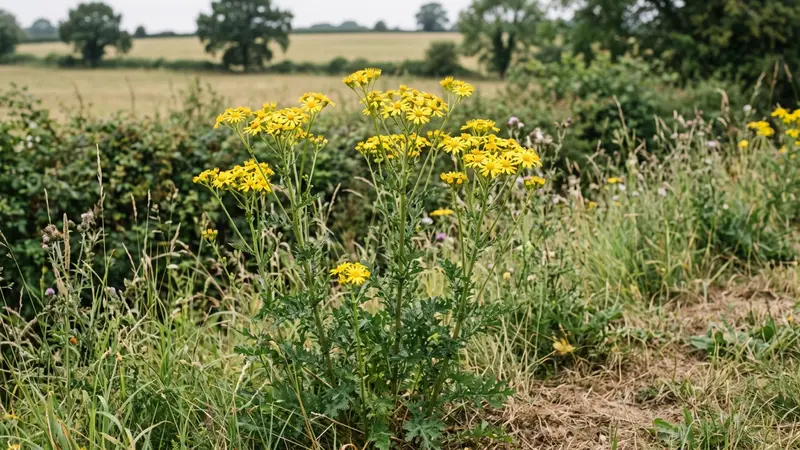
Even with perfect rotation, airborne sporangia from neighbouring allotment plots, wild brassica relatives (charlock, shepherd’s purse, hedge mustard), and residual soil oospores mean downy mildew can appear on any brassica crop in any year. Rotation reduces the baseline infection level but must be combined with spacing, watering, and ventilation for full effect.
Clean trays and pots between sowings. Wash seed trays with hot water and a mild disinfectant. Old compost from previous brassica sowings can harbour oospores. Always use fresh compost for brassica seed sowing.
Are there resistant brassica varieties?
Some varieties show useful partial resistance but none are fully immune to downy mildew. Resistance ratings in seed catalogues are a helpful guide but should not replace cultural controls.
For Brussels sprouts, modern F1 hybrids like ‘Crispus’ and ‘Doric’ have better field tolerance than older open-pollinated varieties. Their tighter button formation and upright habit promote better airflow around the plant.
Rocket has no commercially available resistant varieties. If you grow rocket regularly in autumn, accept that some downy mildew is almost inevitable unless ventilation is excellent. Sow small batches every 2-3 weeks rather than one large sowing to limit losses.
The RHS brassica downy mildew page maintains an updated list of recommended varieties with disease tolerance ratings.
How is downy mildew different from other brassica diseases?
Downy mildew produces yellow angular patches with fuzzy underside growth, which distinguishes it from club root, white blister, and ring spot. Each common brassica disease has distinct symptoms.
Club root causes swollen, distorted roots and wilting on warm days. It is a soil-borne disease with no foliar symptoms until the root system is badly damaged. Downy mildew is primarily a leaf disease that rarely affects roots directly.
White blister (Albugo candida) creates raised white pustules on the underside of leaves, quite unlike the flat fuzzy growth of downy mildew. The two diseases can occur on the same plant because both favour cool, damp conditions. White blister pustules are chalky white and firmly attached, while downy mildew growth is soft and fuzzy.
Ring spot (Mycosphaerella brassicicola) produces circular grey-brown lesions with concentric rings, most commonly on cabbage and Brussels sprout leaves in autumn. The circular shape distinguishes ring spot from the angular patches of downy mildew.
Powdery mildew grows on the upper leaf surface as a white powder, preferring warm dry conditions. It is essentially the opposite of downy mildew in every respect: different surface, different colour, different weather preference.
| Disease | Symptoms | Location | Conditions favouring | Soil-borne |
|---|---|---|---|---|
| Downy mildew | Yellow angular patches, fuzzy underside | Leaves (upper patches, lower sporulation) | Cool (10-15C), damp | Oospores survive 3-5 years |
| Powdery mildew | White powder on upper surface | Upper leaf surface | Warm (15-25C), dry | No |
| Club root | Swollen roots, wilting | Roots only | Wet, acid soil (pH below 7) | Spores survive 20+ years |
| White blister | Raised white pustules | Lower leaf surface | Cool, damp | Yes |
| Ring spot | Grey-brown concentric ring lesions | Both leaf surfaces | Autumn damp | Debris-borne |
How should I manage a downy mildew outbreak?
Remove and destroy all infected leaves immediately, improve air circulation, and stop overhead watering. Fast action limits the spread to neighbouring plants.
Increase spacing if possible by removing the worst-affected plants entirely. One heavily infected plant shedding spores among its neighbours will reinfect the whole row. Sacrificing a single plant can save the rest.
If the outbreak is in a greenhouse or cold frame, maximise ventilation immediately. Open all vents and doors. If seedlings are crowded on shelves, spread them out. Move trays to different areas of the greenhouse to break the cycle of spore accumulation.
For mature plants in the open garden, the outbreak will typically subside when temperatures rise above 20C in summer. Continue to remove infected leaves throughout the season. Monitor closely again in September when autumn conditions return.
Applying a potassium bicarbonate solution (1 tablespoon per litre of water) as a foliar spray has shown some effect against other downy mildews in research trials, though it is not specifically tested against H. brassicae. It raises leaf surface pH, which may inhibit spore germination. Use it as a supplementary measure, not a primary control.
For wider guidance on vegetable pests and diseases, including integrated approaches that address multiple problems at once, our main vegetable disease guide covers the full spectrum. Sap-sucking pests such as the mealy cabbage aphid often colonise the same stressed brassicas, so tackle both together.
Frequently asked questions
What does brassica downy mildew look like?
Yellow angular patches on the upper leaf surface are the first sign. Turn the leaf over and you will see white to grey-purple fuzzy growth on the underside, directly below the yellow patches. The fuzzy growth consists of sporangiophores (spore-bearing structures) of the pathogen. On seedlings, cotyledons and first true leaves develop grey-purple discolouration and collapse rapidly. On mature plants, older outer leaves are affected first.
Is brassica downy mildew the same as powdery mildew?
No, they are different diseases caused by different pathogens. Downy mildew (Hyaloperonospora brassicae) grows on the underside of leaves in damp conditions at cool temperatures. Powdery mildew grows on the upper leaf surface as a white powder and prefers warm, dry conditions. Downy mildew causes angular yellow patches bounded by leaf veins. Powdery mildew makes a uniform white coating. The two require opposite weather conditions and different management.
Can I eat brassicas affected by downy mildew?
Yes, brassicas with mild downy mildew damage are safe to eat. Remove affected outer leaves until you reach clean tissue. Cabbage hearts, cauliflower curds, and broccoli heads beneath damaged outer leaves are usually unaffected. Severely infected seedlings should be destroyed rather than eaten. The pathogen is specific to brassicas and poses no human health risk. Heavily infected crops may taste slightly bitter due to stress chemicals.
When is downy mildew worst on brassicas in the UK?
Spring (March-May) and autumn (September-November) are the highest-risk periods. These seasons provide the cool temperatures (10-15C) and high humidity that the pathogen needs. Crowded greenhouse seedlings in March are particularly vulnerable. Autumn crops standing in damp, still conditions face a second peak. Midsummer heat above 20C suppresses the pathogen, giving July-August brassicas a natural break from infection.
Does crop rotation prevent brassica downy mildew?
Crop rotation helps reduce soil-borne oospore levels but cannot prevent airborne infection. The pathogen produces thick-walled oospores that survive in soil and crop debris for 3-5 years. A minimum 4-year rotation reduces these reservoir populations. However, sporangia also spread on wind currents from neighbouring plots and wild brassica relatives. Rotation should be combined with spacing, ventilation, and prompt removal of infected leaves.
Are any brassica varieties resistant to downy mildew?
Some varieties show partial resistance but none are fully immune. Cauliflower ‘Clapton’ has clubroot resistance but no specific downy mildew resistance. Kale varieties are generally more tolerant than cauliflower. Calabrese ‘Ironman’ and cabbage ‘Kilaton’ show good field tolerance in trials. Rocket is consistently the most susceptible brassica. Check seed catalogues for disease-resistance ratings, but rely on cultural methods rather than resistance alone.
Should I spray brassicas for downy mildew?
No fungicides are currently approved for amateur gardeners against brassica downy mildew in the UK. Professional growers have access to a limited number of EAMU-permitted products, but these are not available for home garden use. Cultural controls including good airflow, bottom watering, wide spacing, and prompt removal of infected leaves are the only practical options. Copper-based fungicides are not effective against this particular downy mildew species.
Our team produces practical UK gardening guidance from source research, contributor records and established horticultural practice. Editorial standards are overseen by Matt W.