Key takeaways
- Green water is microscopic suspended algae (phytoplankton), a different problem from string-like blanketweed
- A UV clarifier matched to pond volume clears green water in 5 to 7 days and works in over 95 percent of cases
- Aim for 50 to 60 percent surface cover with floating and lily leaves to starve algae of light
- Barley straw at 50g per square metre suppresses new algae but takes 4 to 8 weeks to act
- A full water change makes green water worse because tap water carries nitrates that feed a new bloom
- New ponds turn green for 4 to 8 weeks then clear naturally as the filter matures
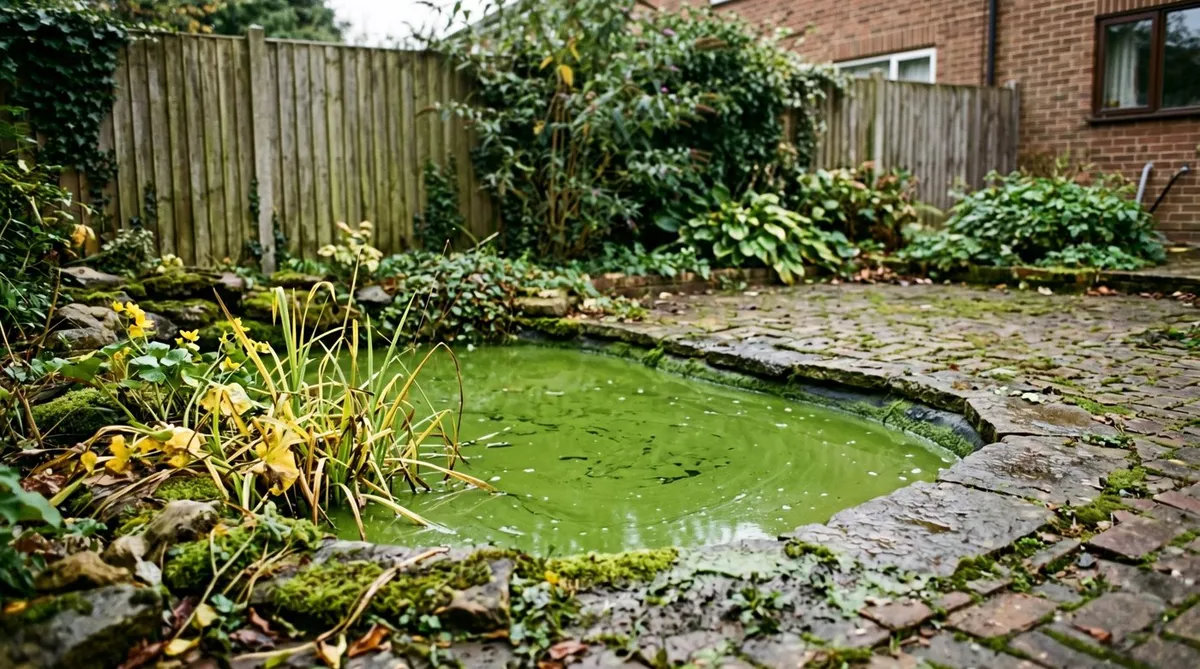
Green pond water is one of the most common pond problems in UK gardens, and it has a single root cause. That cloudy, opaque green colour is a bloom of microscopic single-celled algae suspended through the water. Gardeners often call it pea soup. It is a different problem from blanketweed, the string-like green algae that forms mats on rocks and plants.
Green Water Versus Blanketweed: Know Which You Have
Correct identification decides which treatment works, because these two algae respond to completely different methods. Both are green algae, but they live in different ways and need different fixes.
Green water is a bloom of single-celled phytoplankton, mainly species of Chlorella and Euglena. Each cell is 2 to 10 microns across, far too small to see. Billions of them suspend through the water column and turn it a flat, opaque green. You cannot see more than a few centimetres into the water. There is nothing to grab or pull out.
Blanketweed is filamentous algae, mostly Spirogyra and Cladophora. It grows as long green threads that tangle into hair-like or cotton-wool mats on surfaces, pump inlets and plant stems. You can twist it out on a stick or rake it off.
The key difference for treatment is this. A UV clarifier clumps the tiny suspended cells of green water so your filter can trap them, clearing the water in days. UV does almost nothing to blanketweed, which clings to surfaces out of the water flow. If you have green string algae rather than cloudy green water, follow our pond algae and blanketweed fixes instead, which covers that problem in full.
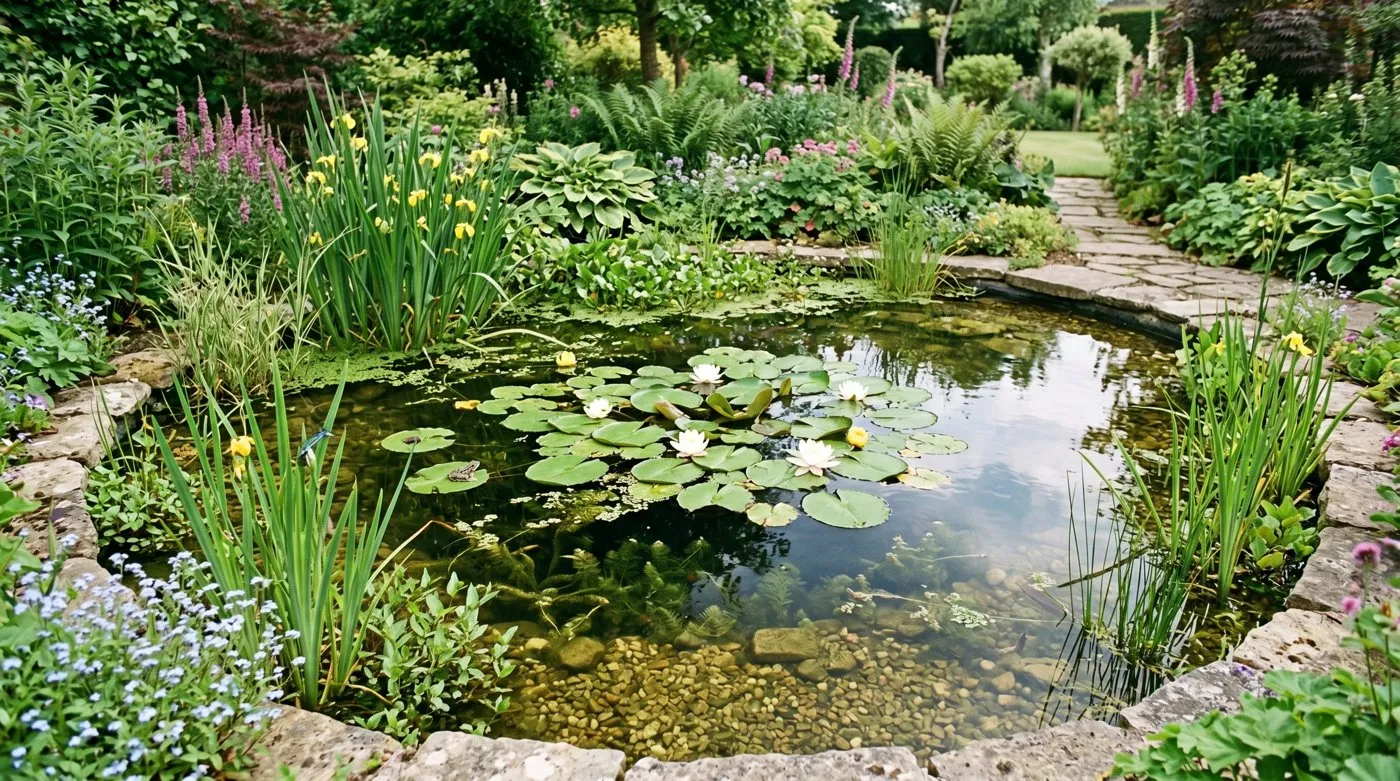 The goal: clear, balanced pond water you can see the bottom through, with plants covering part of the surface.
Why Ponds Turn Green: The Nutrient and Light Science
Green water needs three things to bloom: nutrients, light and warmth. Remove or reduce any one and the bloom fades. Understanding this is what separates a quick fix from months of frustration.
The nutrients are nitrate and phosphate. Algae use them as fertiliser exactly as garden plants do. They come from fish waste, uneaten fish food, decaying leaves, runoff from fed lawns and borders, and dead plant matter on the pond floor. A single goldfish produces enough waste to feed a visible bloom in warm water. Phosphate is usually the limiting nutrient, and even 0.05mg per litre can trigger green water.
Light drives photosynthesis. A pond in full sun for six or more hours a day heats faster and gives algae the energy to multiply. Water temperature above 15C speeds reproduction sharply, which is why blooms explode from May onwards in the UK.
How Fast Each Method Clears Green Water
Never treat all methods as equal. They differ hugely in speed, effort and cost. The table below ranks them by how reliably they clear an active green bloom, with the gold standard at the top.
| Method | How it works | Time to clear | Cost | Role |
|---|---|---|---|---|
| UV clarifier | UV light clumps algae cells so the filter traps them | 5 to 7 days | 40 to 120 pounds | Primary fix, most reliable |
| Oxygenating plants | Compete directly for nitrate and phosphate | 3 to 6 weeks | 8 to 20 pounds | Long-term nutrient control |
| Floating plants and lily leaves | Shade the water, cutting light to algae | 4 to 8 weeks | 6 to 25 pounds | Long-term light control |
| Reduce feeding and stocking | Cuts the nutrient supply at source | 2 to 6 weeks | Free | Root-cause prevention |
| Barley straw | Releases algae-inhibiting compounds as it rots | 4 to 8 weeks | 5 to 10 pounds | Slow suppression |
| Biological filter | Bacteria convert ammonia and nitrate | 4 to 8 weeks to mature | 50 to 200 pounds | Foundation of clarity |
| Partial water change | Dilutes dissolved nutrients | Immediate but temporary | Free | Supplementary only |
| Flocculants and algaecides | Chemically clump or kill algae | 1 to 3 days | 10 to 20 pounds | Last resort, short-lived |
The clear winner is the UV clarifier. In over 95 percent of green water cases, a correctly sized unit clears the water within a week and keeps it clear. Everything below it works on the underlying balance, which matters for long-term clarity but acts far more slowly.
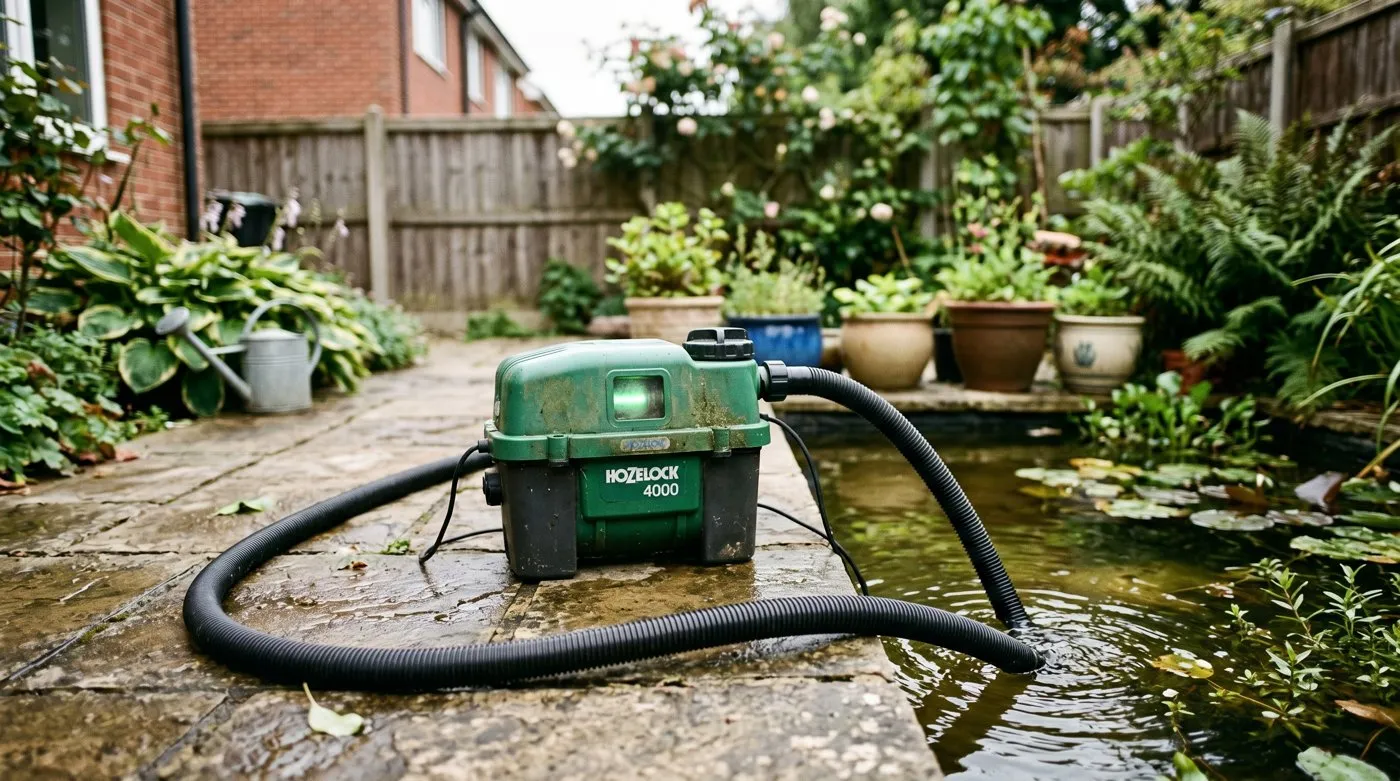 A UV clarifier plumbed inline after the pump. The water passes the UV tube, the algae clump, then the filter removes them.
How a UV Clarifier Clears the Water in Days
A UV clarifier is the gold standard for green water, and it works on physics rather than chemistry. Water is pumped through a sealed quartz tube past an ultraviolet-C lamp. The UV-C light at 254 nanometres damages the algae cells and makes them stick together in clumps. These clumps are then large enough for your filter to catch. Within 5 to 7 days the suspended algae are gone and the water runs clear.
Sizing is the part most people get wrong. As a rule, allow at least 10 watts of UV per 4,500 litres of pond water for a fish pond, and more for a sunny pond or one with many fish. An undersized lamp will only ever partly clear the water. Flow rate matters too. The water must pass the lamp slowly enough to receive a killing dose, so match the pump to the clarifier maker’s stated flow range.
The critical mistake is leaving the lamp in for years. UV-C lamps lose output steadily and stop working at around 9,000 hours, roughly one full season of continuous running, even though the lamp still glows. Replace the lamp every spring. The glow is visible light; the germicidal UV-C output fades long before the lamp dies.
Planting for Balance: Aim to Cover Half the Surface
Plants are the permanent answer to green water because they attack two of its three drivers at once. They compete for the same nutrients the algae need, and they shade the water to cut the light. A well planted pond rarely turns green once it settles.
The target is 50 to 60 percent surface cover in summer. Get there with three plant groups working together.
Submerged oxygenators are the workhorses. Hornwort (Ceratophyllum demersum), spiked water-milfoil and water starwort grow fast and strip nitrate and phosphate straight from the water, the exact nutrients the algae want. Plant 5 to 6 bunches per square metre of surface.
Floating plants provide instant shade. Frogbit (Hydrocharis morsus-ranae) and water soldier float on the surface and multiply through summer. They block light and mop up nutrients.
Water lilies give deeper shade with their broad pads. One lily covers up to 1 square metre. See our guide on how to plant a water lily for depth and basket advice. For a full planting list, our best pond plants for UK gardens ranks the most effective species.
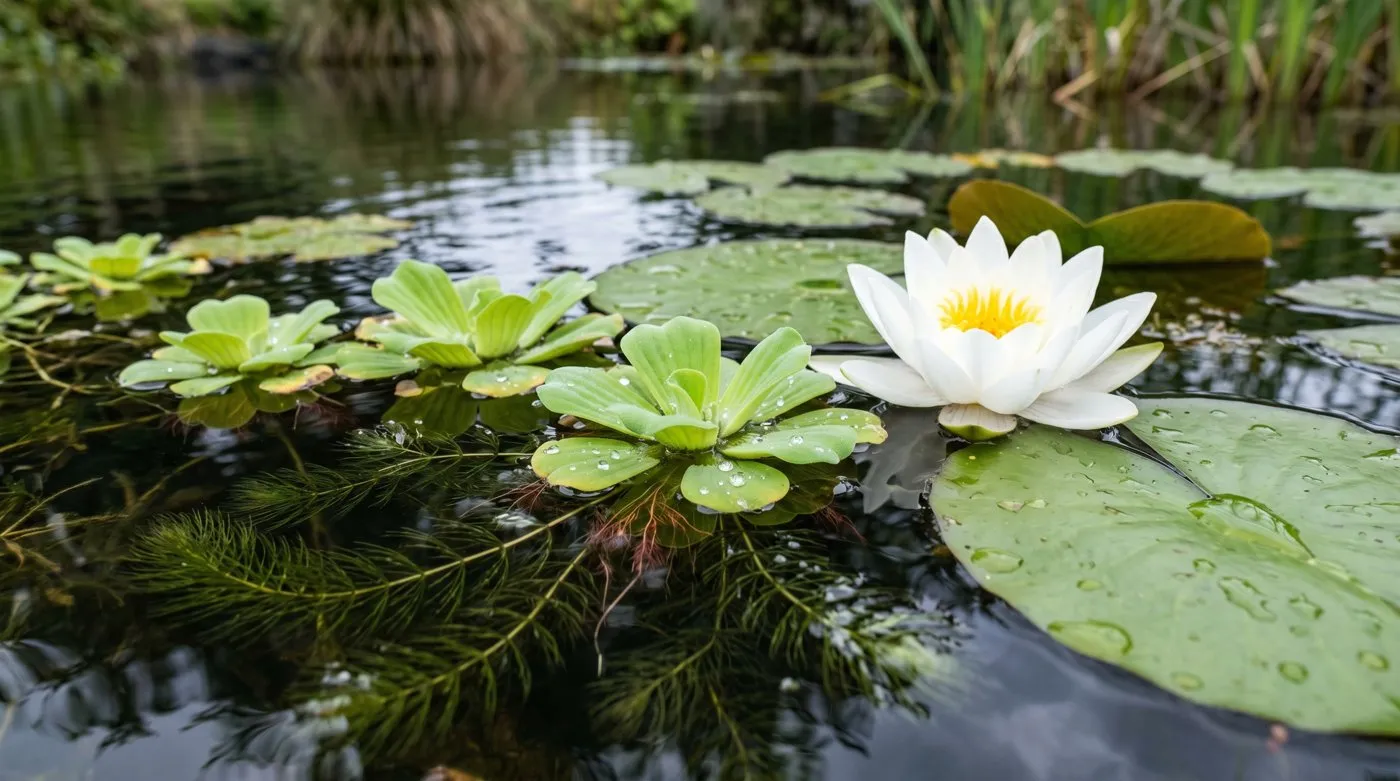 Frogbit, hornwort and a water lily working together to shade the surface and compete for nutrients.
Cutting the Nutrient Supply at Source
The fastest free win against green water is to cut the nutrients feeding it. This is the root cause most gardeners miss while chasing quick treatments.
Overfeeding fish is the biggest single source. Fish need far less food than people give them, especially in cool water. Feed only what they clear in two minutes, once a day in summer and not at all below 8C when their metabolism slows. Every uneaten pellet rots and releases phosphate.
Overstocking has the same effect. A common guide is 25cm of fish length per square metre of surface. Crowd the pond and the waste outpaces what any filter and plants can process. If your pond is heavily stocked, expect persistent green water until you reduce numbers.
Decaying leaves and dead plant matter feed the bloom from the bottom up. Net the pond in autumn, remove fallen leaves promptly, and trim back dying foliage before it sinks. A layer of rotting leaves on the floor releases nutrients all year.
Runoff carries fertiliser into the pond from fed lawns and borders nearby. Keep feed and lawn treatments well back from the water’s edge.
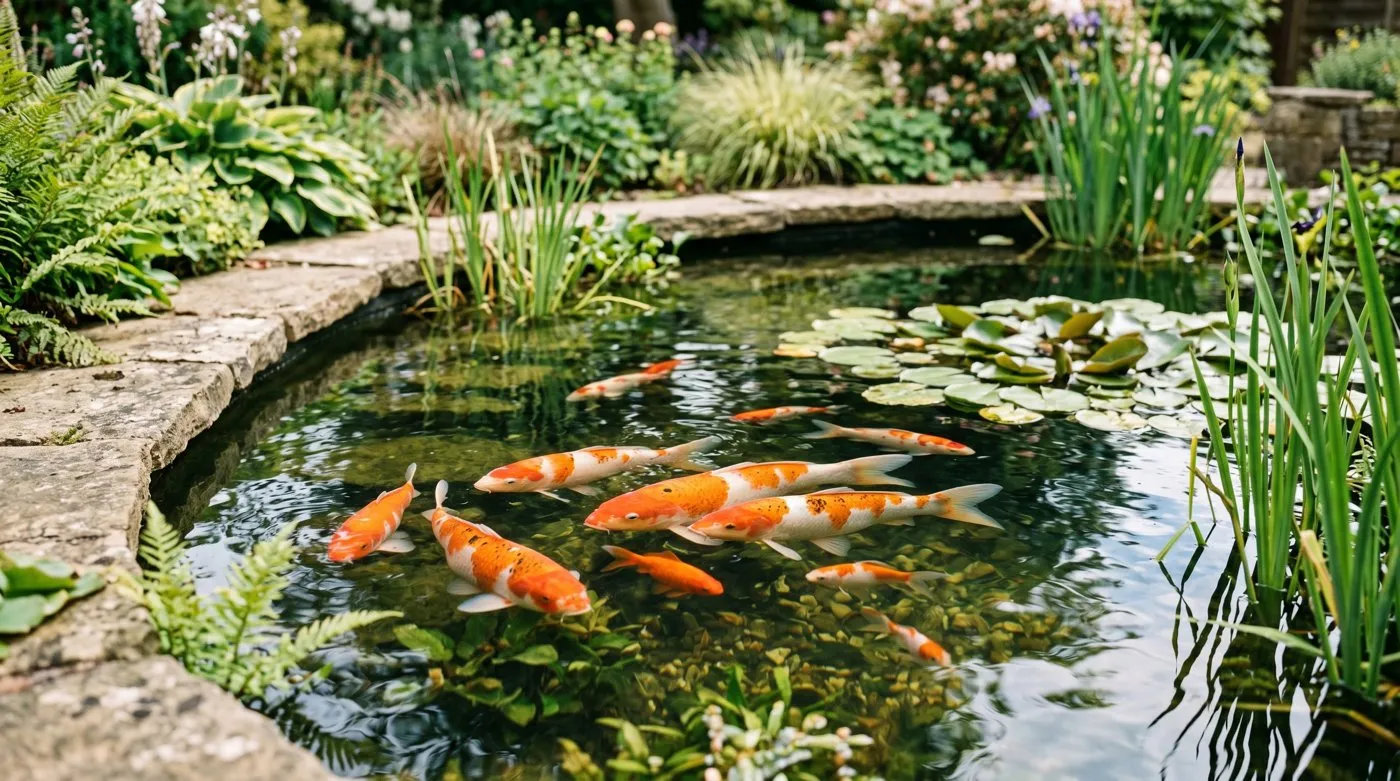 Stocking lightly and feeding sparingly keeps fish waste low, which is the main nutrient source for green water.
Barley Straw, Filtration and Other Supporting Methods
Several methods support clarity without being a fast standalone cure. Used alongside UV and planting, they hold green water at bay.
Barley straw works by slow chemistry. As it decomposes in oxygenated water it releases compounds that inhibit new algae growth. It does not kill an existing bloom quickly. Use 50g of straw per square metre of surface in a mesh net bag, placed where water flows past it. Add it in early spring before the bloom starts. It takes 4 to 8 weeks to begin working and lasts about 6 months before it needs replacing.
Biological filtration is the foundation under everything else. Filter bacteria convert toxic ammonia from fish waste into nitrite then nitrate. A mature filter keeps ammonia at zero, but it does not remove nitrate, which is why plants still matter. A new filter takes 4 to 8 weeks to mature, the same window as new pond syndrome.
Partial water changes help only in moderation. Swap 10 to 20 percent of the volume with dechlorinated water if nitrate is very high. Use a dechlorinator or rainwater, never raw tap water in large amounts, as chlorine harms fish and filter bacteria.
Flocculants and algaecides are the last resort. Flocculants clump algae for the filter to catch, similar to UV but as a one-off dose. Algaecides kill algae outright but can crash oxygen as the dead bloom rots, which risks the fish. Use chemicals only briefly and never as a routine fix.
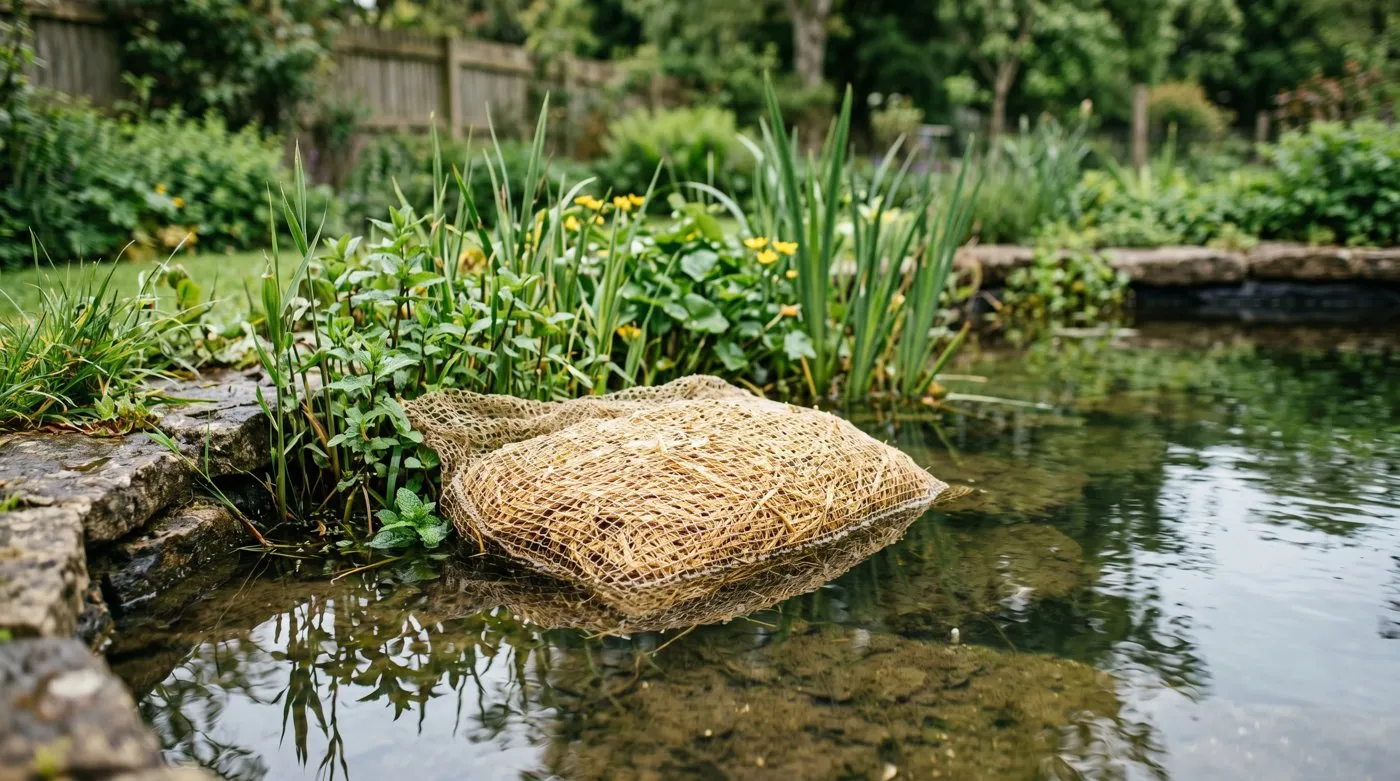 Barley straw in a mesh bag suppresses new algae as it slowly decomposes, but it acts over weeks not days.
Why a Full Water Change Makes Green Water Worse
It feels obvious to empty a green pond and refill it with clean water. This is the single worst thing you can do, and it traps many beginners.
A full water change does three damaging things. First, tap water is rich in nitrate and phosphate, the exact nutrients algae feed on, so you are refilling the pond with algae food. Within days the bloom returns, often worse than before. Second, you strip out the beneficial bacteria living on every surface and in the filter, resetting biological maturity to zero and recreating new pond syndrome. Third, the sudden change in temperature, pH and chemistry stresses fish, which can sicken or die from the shock.
The water clears for a day or two, then turns green again, and the gardener concludes the pond is hopeless. In reality the change reset the very balance that keeps water clear. Stick to small partial changes of 10 to 20 percent and let the filter and plants do the work.
Seasonal Pond Care Calendar for Clear Water
Green water follows the seasons. This UK calendar keeps the balance right month by month and stops blooms before they start.
| Month | Task |
|---|---|
| January | Keep an ice hole open for gas exchange. Do not feed fish. Leave the pump running unless freezing hard. |
| February | Check and clean filters. Order a replacement UV lamp ready for spring. |
| March | Replace the UV lamp. Restart and clean the filter. Add barley straw before algae wake up. |
| April | Start light fish feeding above 8C. Divide and replant oxygenators. Top up floating plants. |
| May | Watch for the first bloom as water passes 15C. Run UV continuously. Check surface cover building. |
| June | Aim for 50 to 60 percent surface cover. Net floating debris. Feed fish sparingly, once daily. |
| July | Peak bloom risk in heatwaves. Run a fountain or pump for oxygen. Skim algae and top up evaporation with rainwater. |
| August | Keep up oxygenation. Thin overgrown oxygenators. Avoid overfeeding fish in the heat. |
| September | Cut back dying marginal growth before it sinks. Reduce feeding as water cools. |
| October | Net the pond against falling leaves. Remove dead foliage. Lift tender plants. |
| November | Stop feeding below 8C. Remove pumps from deep zones or keep running to prevent ice. Clear remaining leaves. |
| December | Float a pond heater or ball in hard frost. Leave the pond undisturbed. Plan next year’s planting. |
Common Mistakes That Keep Ponds Green
Avoiding these errors clears far more ponds than any single treatment. Each one is a trap that keeps the bloom alive.
Overfeeding the fish
Feeding too much, too often, is the top cause of stubborn green water. Surplus food rots and releases phosphate straight into the bloom. Feed only what the fish clear in two minutes, and not at all below 8C.
Doing a full water change
As above, emptying and refilling with tap water feeds a fresh bloom and resets the filter. Beginners do this repeatedly and wonder why the pond never settles. Use small partial changes only.
Removing every scrap of algae
A little algae is normal and feeds the pond’s micro-life. Scrubbing every surface bare removes the beneficial film that competes with green water and supports the food chain that wildlife needs. Our build a wildlife pond guide explains the balance a living pond needs.
Not enough surface shade
A pond with bare, sunlit water will bloom every summer no matter what you dose it with. Without 50 to 60 percent plant cover, the light keeps feeding the algae. Plants are not optional for lasting clarity.
Skipping the autumn leaf clear-up
Fallen leaves sink, rot, and feed next year’s bloom all winter. Net the pond in autumn and clear leaves promptly. Skipping this guarantees a nutrient-rich start to spring.
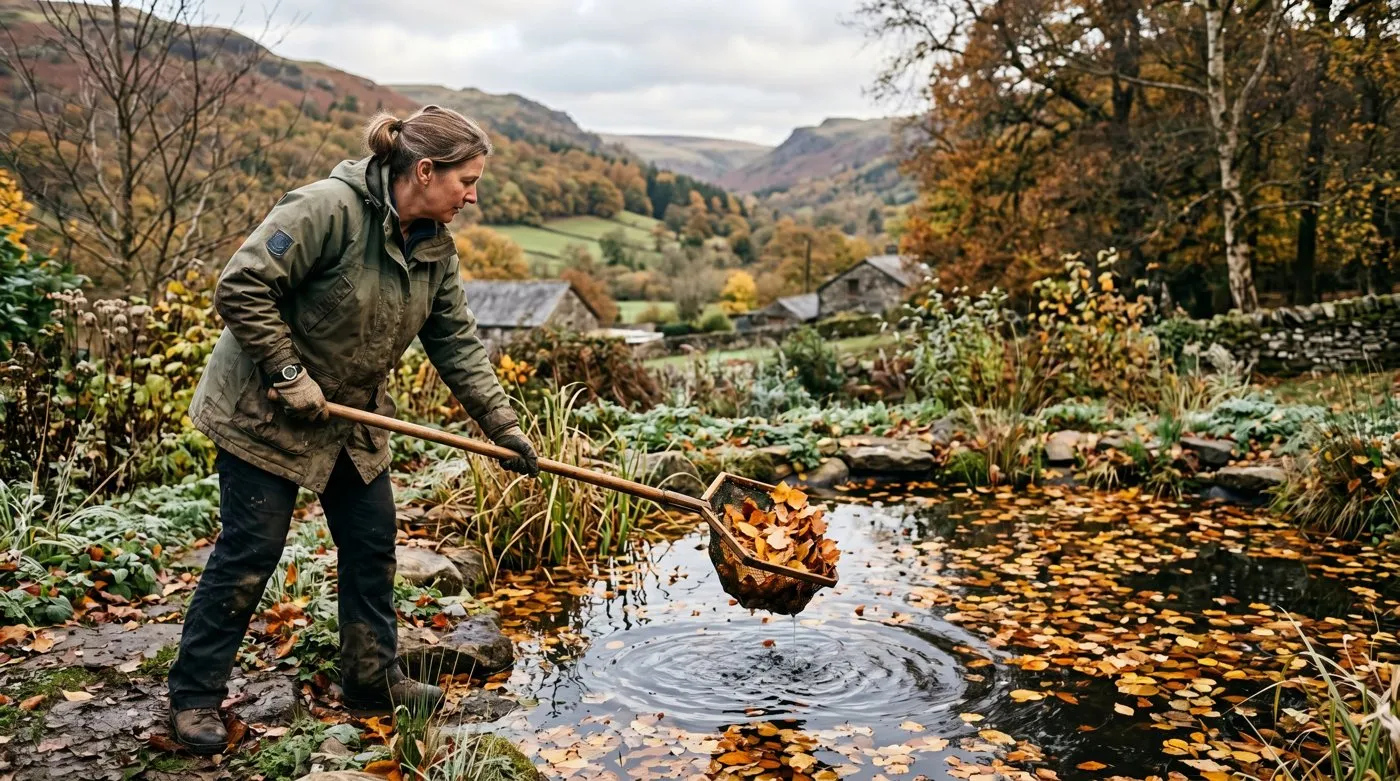 Netting leaves off the surface in autumn stops them rotting and feeding next summer’s algae bloom.
Clearing Green Water in Small and Container Ponds
Small ponds and container ponds turn green faster than large ones because they heat quickly and hold little water to buffer nutrients. The principles are the same but the scale changes.
For a small in-ground pond, a compact UV clarifier of 5 to 9 watts is enough and clears the water just as fast as a larger unit does in a big pond. Shade is even more important at small scale, so float frogbit and add a lily early in the season.
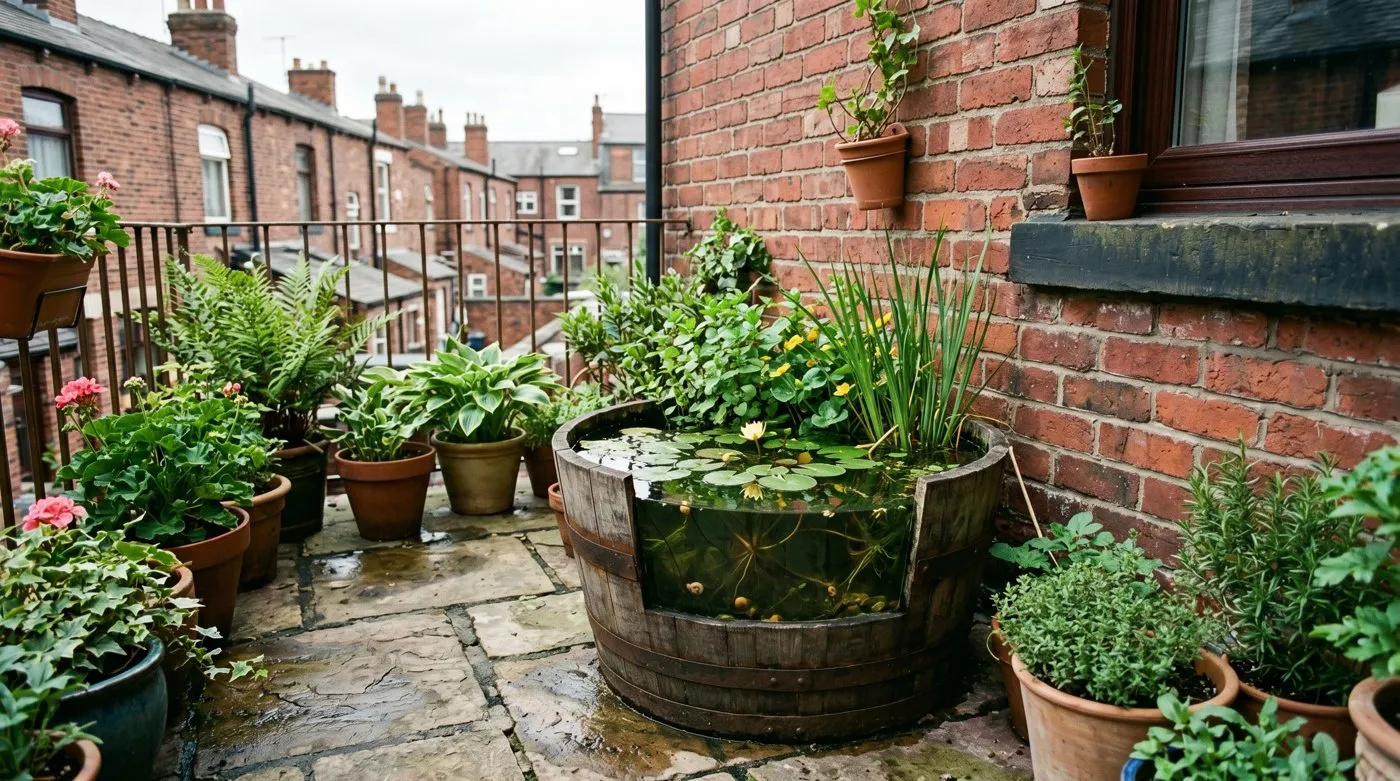 A heavily planted half-barrel pond stays clear through summer using surface cover and oxygenators rather than a filter.
Frequently asked questions
What is the fastest way to clear green pond water?
A UV clarifier is the fastest reliable fix. Matched to your pond volume, it clears green water in 5 to 7 days by clumping the algae so the filter traps it. Plants, barley straw and reduced feeding then keep the water clear, but none act as quickly as a UV unit.
Is green pond water the same as blanketweed?
No, they are different algae. Green water is microscopic single-celled phytoplankton suspended in the water column, turning it cloudy green. Blanketweed is filamentous string algae that forms green hair-like mats on surfaces. UV clarifiers clear green water but do not touch blanketweed. See our blanketweed guide for that problem.
Should I do a water change to clear green pond water?
No, avoid a full water change. Tap water carries nitrates and phosphates that feed a fresh algae bloom within days. A full change also strips beneficial bacteria from the filter. Only do small partial changes of 10 to 20 percent with dechlorinated water if nutrient levels are very high.
Why does my new pond keep turning green?
New ponds turn green for 4 to 8 weeks before they clear. This is new pond syndrome. The filter bacteria have not yet built up to process nutrients, and there are few plants competing for them. The water usually clears on its own once the filter matures and plants establish.
Does barley straw clear green pond water?
Barley straw suppresses green water but works slowly. As it decomposes it releases compounds that inhibit new algae growth. Use 50g per square metre of surface. It takes 4 to 8 weeks to act and prevents blooms rather than clearing an existing one quickly.
How many plants do I need to keep pond water clear?
Aim to cover 50 to 60 percent of the surface with plants. Floating plants and water lily leaves shade the water and starve algae of light. Submerged oxygenators compete directly for the same nutrients. A well planted pond rarely turns green once balanced.
Is green pond water harmful to fish?
Green water rarely harms fish directly. The algae produce oxygen by day, but a heavy bloom can crash overnight and drop oxygen levels. In hot weather, run a pump or fountain to keep the water aerated. Dense blooms also make it hard to spot sick or struggling fish.
Can I use a UV clarifier in a wildlife pond?
Use UV with caution in a wildlife pond. It kills suspended algae and some free-swimming microscopic life that small creatures feed on. Many wildlife ponds clear naturally through plants alone. If you fit UV, run it seasonally rather than year round to protect the food chain.
Warning: Never use an algaecide to clear a heavy green bloom in a stocked pond on a hot day. The dying algae rot fast and strip oxygen from warm water, which can kill fish overnight. If you must dose, do it in cool weather and run a fountain or pump throughout.
Our team produces practical UK gardening guidance from source research, contributor records and established horticultural practice. Editorial standards are overseen by Matt W.