Key takeaways
- Balling seals the bud in a brown papery shell so the flower never opens, then rots inside
- Rain soaks the outer petals, then fast sun fuses them shut: a wet-then-bright UK pattern
- Very double, thin-petalled and pale pink roses ball worst; single and semi-double resist it
- Peonies ball too, mostly the big doubles in a wet June, often worsened by planting too deep
- It is not grey mould or thrips: balling is dry and papery, botrytis is furry and grey
- There is no spray. Pick tolerant varieties, an open sunny airy spot, and remove balled buds fast
Flower balling is the wet-weather fault that leaves rose and peony buds sealed shut and rotting. It is one of the most misread problems in a UK summer garden. A plump bud forms, then it browns, softens and never opens. Gardeners blame disease, pests or bad luck. The real cause is the weather working on the petals.
This guide explains exactly what balling is and why it happens. It shows you how to tell balling apart from grey mould, thrips and bud blast, which look similar but need different fixes. It covers which roses and peonies ball worst, which shrug it off, and the cultural changes that cut it hard. There is no spray for balling, so the answer is variety, position and timing.
What Flower Balling Looks Like On The Bud
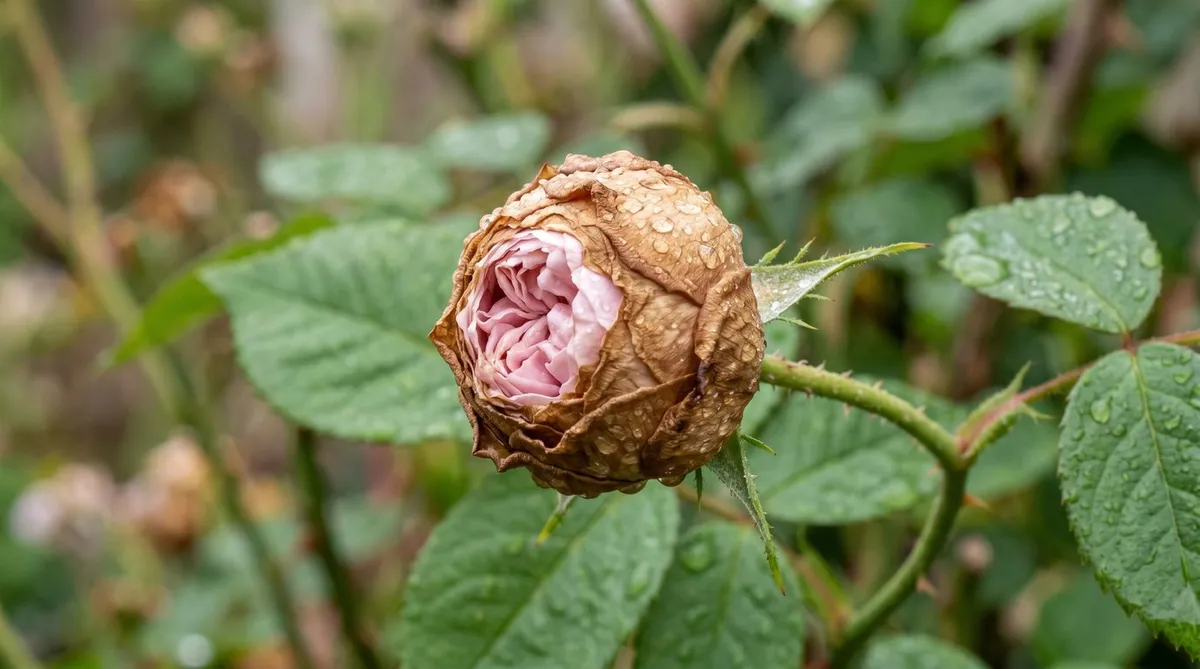
Flower balling is a physical disorder, not a disease. The bud develops to full size, then the outer petals fuse into a tight, papery shell that the inner petals cannot push through. The bloom is trapped. It sits there sealed for days, then rots from the inside.
Run your fingers over a suspect bud. A balled bud first feels soft and slightly slimy, then dries to a brown, crisp, papery casing in places. Prise the outer petals apart and the inner petals usually look normal underneath, just crushed and damp. That intact inner flower is the giveaway. A diseased bud is rotten right through.
The shell forms on the outside only. It is the outer ring of petals that takes the rain, swells, then bakes shut in the next burst of sun. The inner petals stay soft and pale because they never get the chance to expand. By the time you notice the brown casing, the window to open has gone.
Balling hits the first big flush hardest, in June and early July. That is when buds are fattest and UK weather swings fastest between downpour and bright spells. A later flush in a settled August often opens cleanly on the same bush.
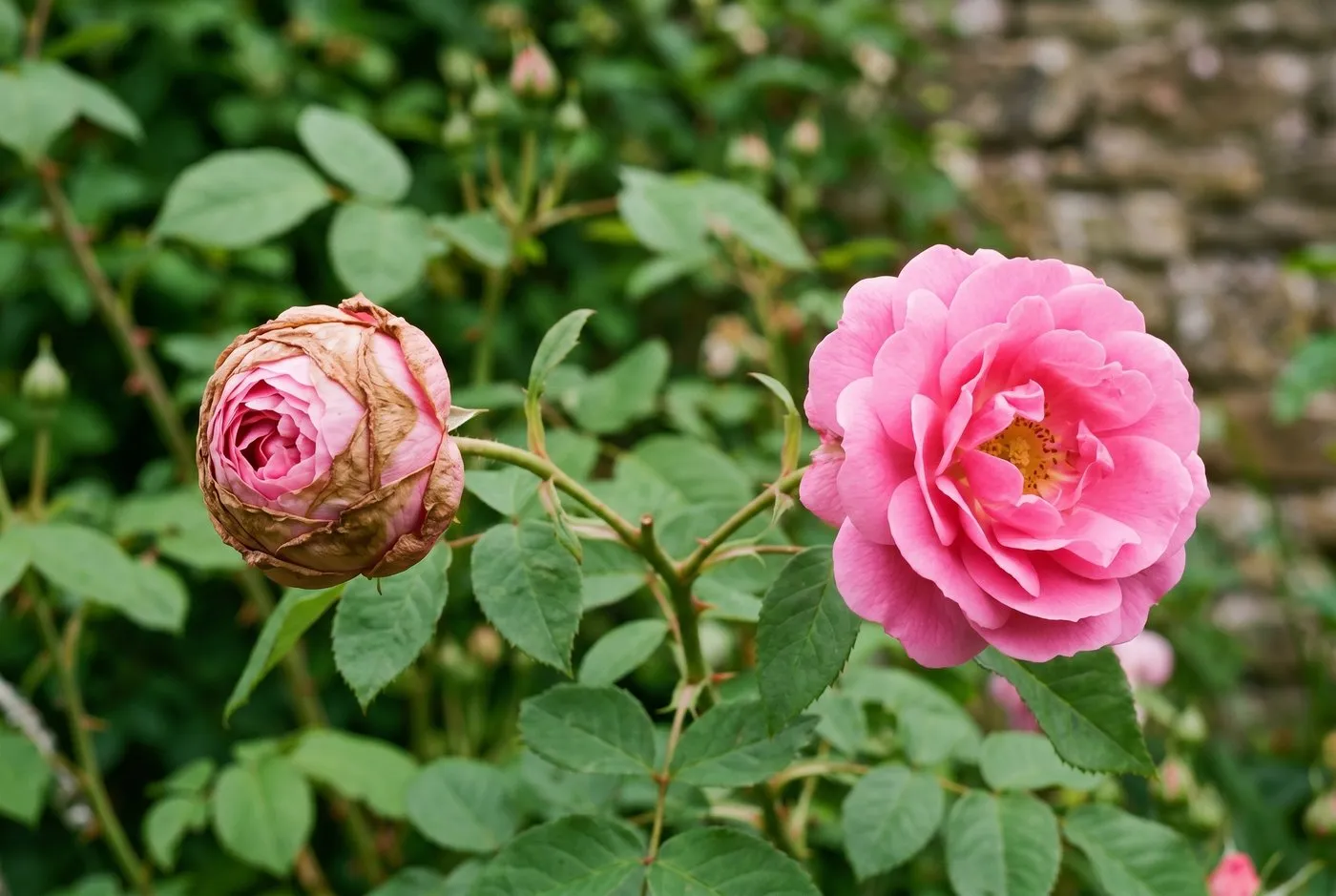 A balled bud beside a clean open bloom on the same Staffordshire rose. The sealed bud never opened, while its neighbour flowered the same week. Same plant, same weather, different petal count.
Why Rain And Sun Together Seal The Bud
Balling needs two weather events in a row. Rain soaks the outer petals, then fast, bright sun dries and fuses them before the bud can open. Either one alone does little harm. The combination is what sets the shell. This is why balling spikes after a showery night followed by a clear, warm morning.
The petals act like wet tissue paper. Soaked, they swell and cling together. Dried quickly, they shrink and bond at the edges, exactly as paper does when it dries flat. The thinner and more numerous the petals, the more surfaces there are to stick. A flower with 60 petals has far more contact points than one with 8.
Pale petals make it worse. White, cream and pale pink petals are thinner and softer than deep red ones, which carry more pigment and structure. Pigment-rich petals shed water and hold their shape better. This is why a pale pink English rose balls in a wet June while a dark red floribunda beside it opens fine.
Position decides how fast buds dry. A bud in shade or still air stays wet for hours, which gives the shell time to set hard. A bud in morning sun and moving air dries within the hour and often escapes. The weather pulls the trigger, but the spot you planted in loads the gun.
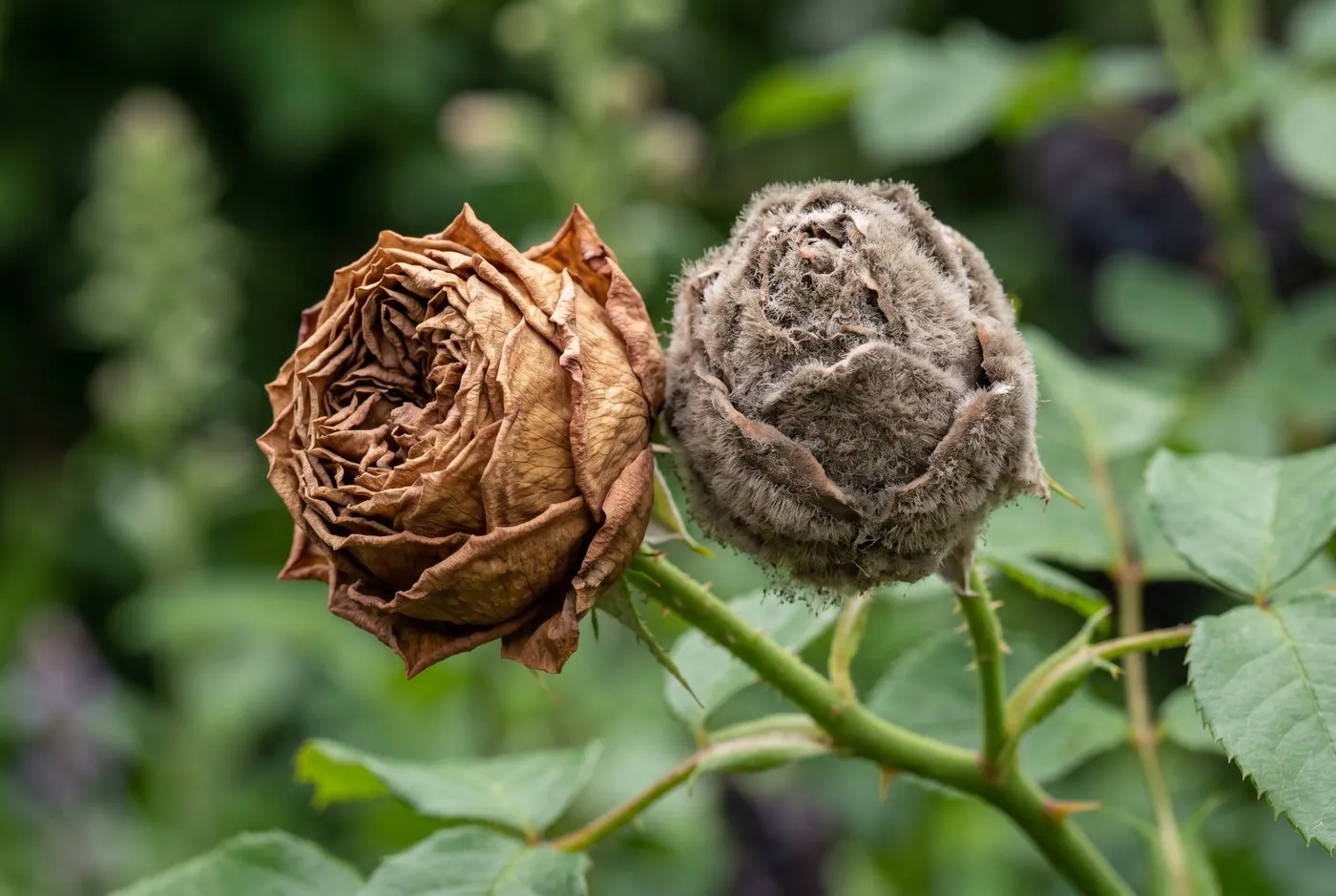 Balling on the left is dry and papery. Grey mould on the right is furry and grey. The two often appear together, but the balling comes first and the mould moves in afterwards.
Telling Balling Apart From Mould, Thrips And Bud Blast
Four different problems brown a bud and stop it opening. Each needs a different response, so diagnosis matters. The table below sorts them by their clearest tell.
| Problem | What you see | Feel and detail | What it is |
|---|---|---|---|
| Flower balling | Brown papery shell, bud sealed shut | Dry, crisp outer petals, normal inner petals | Weather disorder, not living |
| Grey mould (botrytis) | Fuzzy grey-brown furry coating | Soft, slimy, spreads to stems | Fungus, Botrytis cinerea |
| Thrips | Silver flecking, browned petal edges | Tiny black insects inside the bud | Sap-sucking insect |
| Bud blast | Bud browns small and dries early | Stays hard, never swells fully | Drought, frost or deep planting stress |
Thrips leave silver flecks and live insects, not a sealed shell. Bud blast stops the bud growing in the first place, so it never reaches full size. Balling buds reach full size, then fail at the last step. That timing difference is the cleanest way to separate them. A rose that forms fat buds and then fails is balling. A rose whose buds never fatten has a different problem, which our rose not flowering guide untangles.
Which Roses Ball Worst And Which Resist It
Petal count and petal colour decide a rose’s risk. Very double roses with thin pale petals ball worst. Single and semi-double roses with fewer, firmer petals usually open in any weather. If balling plagues your garden, variety choice fixes more than anything else you can do.
The pattern is consistent. Old-fashioned, English and many hybrid tea roses carry 40 to 100 petals, which gives the shell plenty to fuse. Single roses carry 5 petals, semi-doubles 8 to 20. Fewer petals means fewer surfaces to stick and a faster-drying bloom. Modern breeding has also bred better weather tolerance into newer cultivars.
| Rose type | Petal count | Balling risk | Why |
|---|---|---|---|
| Single (eg ‘Ballerina’) | 5 | Very low | Opens flat, sheds rain, dries fast |
| Semi-double | 8 to 20 | Low | Few petals, firm structure |
| Floribunda cluster types | 20 to 40 | Moderate | Open clusters, decent airflow |
| Hybrid tea, pale colours | 40 to 60 | High | Thin pale petals, slow to dry |
| Very double English and old roses | 60 to 100+ | Very high | Many thin petals, classic ballers |
Gardener’s tip: Colour is a shortcut to risk. Pale pink, white and cream roses ball far more than deep red, crimson and strong yellow ones. If you garden somewhere wet, weight your planting towards single or semi-double forms and richer colours, and keep the pale doubles for a sunny, sheltered, airy spot.
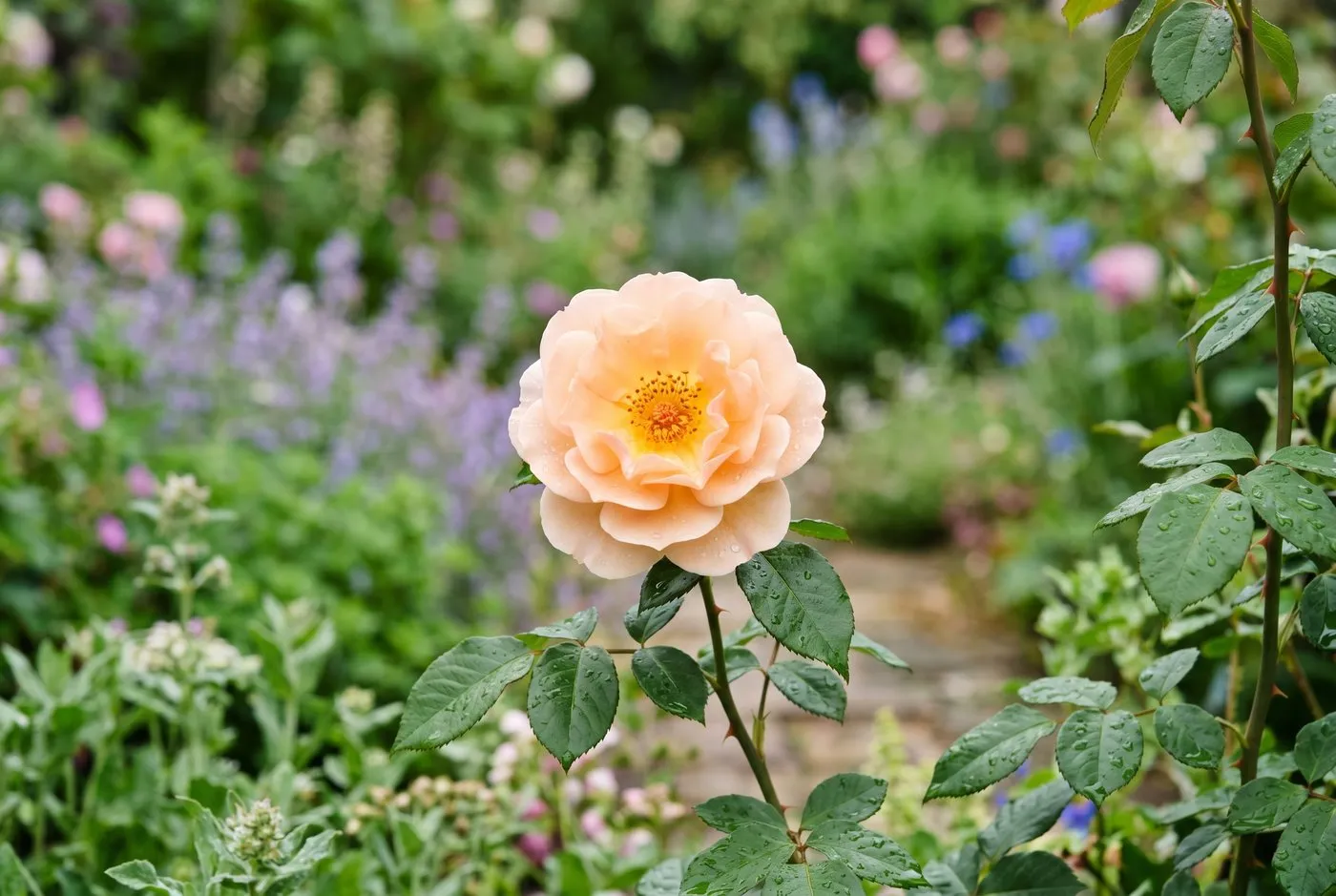 A semi-double cultivar opening cleanly after the same wet week that balled the doubles next to it. Fewer petals and an open form let the rain run off and the bloom dry quickly.
Why Peony Buds Ball And Brown Without Opening
Peonies ball for the same reason roses do, but with a few extra twists. The big double peonies are the usual victims, especially in a wet June when the heavy buds are at full size. Rain pools in the bud, the petals fuse, and the whole head browns and droops without opening. Single and Japanese-form peonies, with their open centres, rarely ball.
Peony balling has a partner problem: planting depth. A peony planted too deep flowers poorly and is more prone to bud failure. The growing eyes should sit no deeper than 3cm to 5cm below the surface. Bury them at 8cm or more and the plant sulks, throws weak buds, and those buds blast or ball far more readily. This is the most common peony mistake in UK gardens.
Support changes everything for a wet-June peony. A double peony head can weigh enough to flop into wet soil, where it stays soaked and balls. Ring or grid supports lift the buds into the air and light, so they drain and dry. Our guide on how to deadhead peonies covers removing the spent and balled heads cleanly so the plant builds next year’s crown.
If your peony browns every year, check the depth first, the support second, and the variety third. A correctly planted, well-supported single peony in sun rarely balls even in a soaking June.
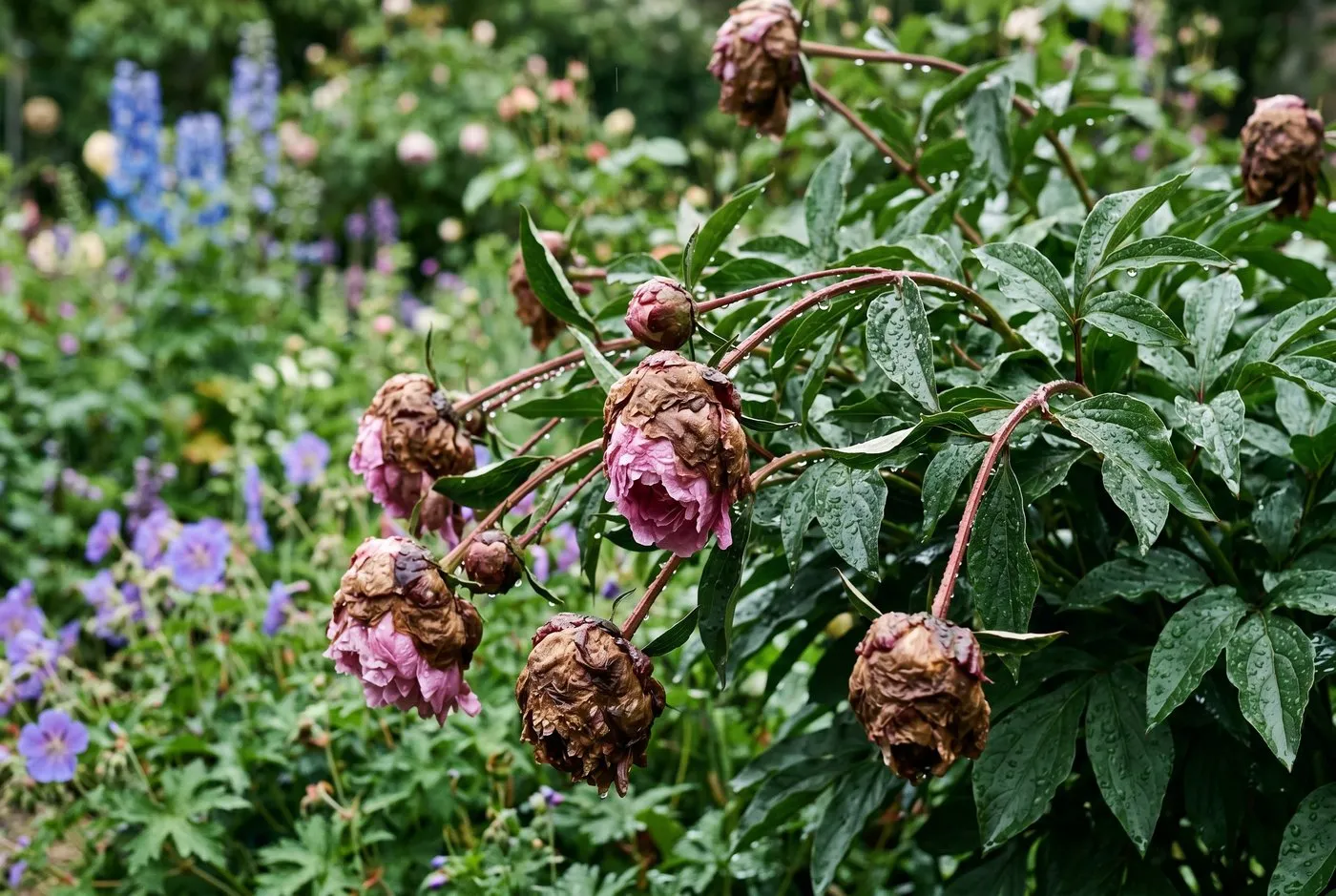 Double peony buds that browned and balled after a wet June on Staffordshire clay. The heavy heads flopped into damp foliage, stayed wet, and sealed shut before they could open.
Stopping Flower Balling: Fixes Ranked By What Works
There is no spray for balling, because it is a weather disorder, not a disease. No chemical treats it. Control is entirely about variety, position and management. Stack the methods below and even a wet UK June stops wrecking the display. They are ranked by how much they actually help.
| Method | Role | How well it works | What it cannot do |
|---|---|---|---|
| Tolerant variety in an open sunny spot | Primary prevention | Cuts balling from 45% to under 10% | Will not save a very double rose in deep shade |
| Single or semi-double varieties | Primary prevention | Few petals rarely ball at all | Changes the flower form you get |
| Open airy position, good airflow | Primary prevention | Buds dry fast, shell rarely sets | Limited help in a windless wet spell |
| Pruning for an open centre | Maintenance | Raises airflow through the bush | Slow to act, a yearly job |
| Watering the base, never the buds | Maintenance | Keeps petals from extra wetting | Useless once rain soaks the bud |
| Removing balled buds promptly | Emergency | Stops grey mould spreading to stems | Does not save the balled bloom |
The gold standard is a tolerant variety in an open, sunny, airy position. Those two together do more than every other method combined. Morning sun is the key detail. A bud that dries within an hour of dawn rarely balls, because the shell never gets time to bake shut. East-facing fences and shaded corners are the worst places for ball-prone roses.
Pruning earns its place by opening the bush. An open-centred rose or a well-thinned shrub lets air move through, so wet petals dry faster. Our guide on how to prune roses covers the open-goblet shape that keeps airflow high. Avoid wetting the buds when you water, and aim the can at the soil, never the flowers.
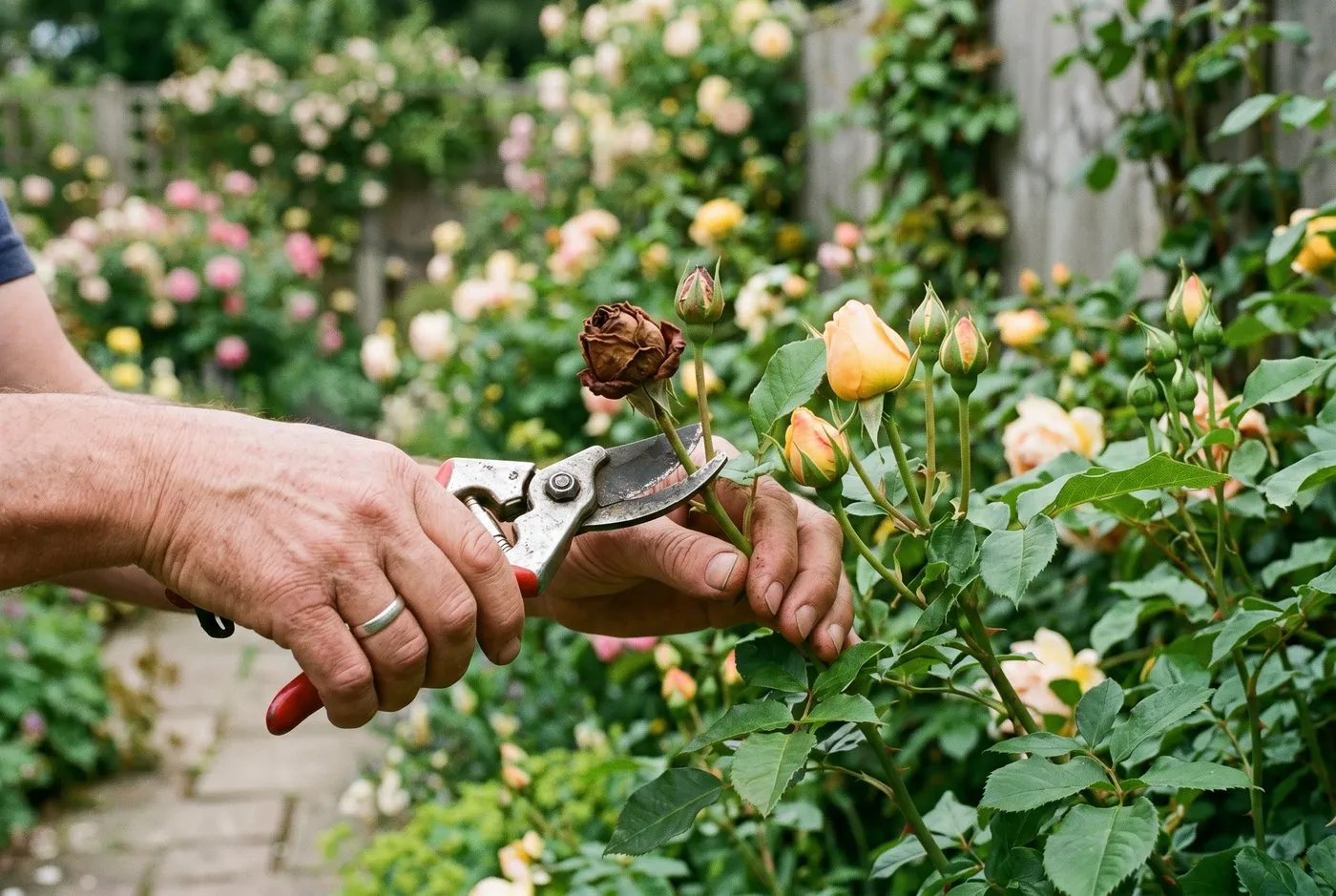 Removing a balled bud cleanly. Snip it off and bin it before grey mould takes hold, and the bush channels its energy into the next, often cleaner, flush of buds.
Position And Airflow: The Quiet Fix That Beats The Weather
Where you plant a ball-prone rose matters as much as which rose you choose. An open, sunny, airy spot dries buds before the shell can set. This is the cultural lever most gardeners overlook, and it is free. The weather is fixed, but the microclimate around each bush is yours to set.
Airflow finishes the job. Crowded planting traps humid, still air around the buds, so they stay wet. Space shrub roses by their expected width, usually 60cm to 90cm apart, and keep the centre of each bush open by pruning. Remove overhanging vegetation that shades and shelters the buds. A border that breathes balls far less than a packed one.
Flower Balling Through The UK Garden Year
Balling follows the weather and the flowering flush, so it has a clear seasonal rhythm. The danger window is the first flush in June and early July, when buds are fattest and UK weather is at its most changeable. Work with this calendar and you stay ahead of it.
| Month | What to do |
|---|---|
| March to April | Prune roses for an open centre, plan peony supports |
| May | Get ring supports on peonies before the buds fatten |
| June | Peak balling risk, watch the first flush after wet-then-sunny spells |
| Early July | Deadhead balled rose buds promptly, before grey mould sets in |
| Mid to late July | Second flush often opens cleanly, keep deadheading spent blooms |
| August | Lower risk in settled weather, tidy any late balled buds |
| September | Last flush, remove balled buds to stop botrytis on the stems |
| Autumn | Note which varieties balled, plan to move or replace the worst |
| Winter | Order single or semi-double tolerant varieties for spring planting |
The autumn note is the most useful entry. Write down which roses balled and which stayed clean, then act on it. Balling is repeatable: a variety that balls in one wet year balls in the next. The fix is to move the worst offenders to a sunnier, airier spot, or to replace them with tolerant forms next planting season for roses.
Common Flower Balling Mistakes To Avoid
Most repeat balling traces back to a few habits. Fix these and you remove the conditions the disorder needs.
Blaming disease and reaching for a spray. Balling is a weather disorder, not a fungus. No fungicide stops it. Spraying wastes money and time. The real levers are variety, position and airflow.
Keeping a ball-prone rose in deep shade. A very double pale rose against a shaded fence will ball every wet year. Move it to morning sun and open air, or accept the loss. Position beats hope.
Planting peonies too deep. Eyes buried below 5cm flower poorly and ball or blast more. Lift and replant with the eyes 3cm to 5cm down. This single fix transforms a sulking peony.
Leaving balled buds on the plant. A sealed bud is a perfect home for grey mould, which then spreads to healthy stems. Snip balled buds off and bin them promptly, never compost them.
Watering over the flowers in the evening. Wet petals overnight feed both balling and botrytis. Water the soil at the base, and if you must water from above, do it in the morning so foliage dries by dusk.
Frequently asked questions
What causes flower balling on roses and peonies?
Rain soaks the outer petals, then sun dries them into a sealed shell. The trapped bud cannot push through the fused papery casing, so it rots inside. Cool, wet weather followed by quick bright sun is the classic trigger in UK gardens.
Is flower balling the same as grey mould?
No, balling is a disorder, grey mould is a fungus. Balling is dry and papery first. Grey mould, Botrytis cinerea, shows a fuzzy grey coating and often colonises a balled bud afterwards. The balling comes first, the mould second.
Which roses are most prone to balling?
Very double, thin-petalled and pale pink roses ball worst. Old-fashioned and English shrub roses with 60 or more petals are the usual victims. Single and semi-double cultivars with 5 to 20 petals shed rain and resist it.
Why do my peony buds go brown and never open?
Usually balling after a wet June, sometimes bud blast from drought or deep planting. Balled peony buds feel soft, then dry brown. Plant peony eyes no deeper than 3cm to 5cm and give them sun, and the problem eases.
Can you do anything to stop a balled bud opening rot?
Remove balled buds promptly before grey mould sets in. There is no spray for the disorder. Snip the sealed bud off, bin it, and the plant pushes a cleaner second flush. Prevention is variety choice and an open airy position.
Does balling kill the rose or peony plant?
No, balling only spoils individual buds, not the whole plant. The plant stays healthy and flowers again. Heavy repeated balling wastes a flush, but the bush recovers. Grey mould spreading from balled buds is the real risk to nearby stems.
Now plant for cleaner blooms
Diagnosis is the first step. The lasting fix is variety and position worked together, then airflow and tidy deadheading on top. Start by listing which of your roses and peonies ball each wet year, then move the worst to a sunny, airy spot or replace them with single and semi-double forms. To choose the plants that suit your conditions, see our guides on how to grow roses and how to grow peonies, and browse the full set of plant problem guides to stay ahead of the next wet spell.
 An open, sunny border with airflow between the bushes. Morning sun dries the buds within an hour of dawn, which is the single best defence against balling in a wet UK summer.
External references: the RHS guide to flower balling sets out the wet-weather mechanism and removal advice, and the RHS rose problems FAQ backs up the variety and position guidance with their own trial notes.
Our team produces practical UK gardening guidance from source research, contributor records and established horticultural practice. Editorial standards are overseen by Matt W.