Key takeaways
- Ceanothus is naturally short-lived at 8 to 15 years and resents root disturbance
- Waterlogging and Phytophthora root rot on heavy or wet soil are the biggest killers
- Evergreen types scorch brown from frost and cold wind, deciduous types are tougher
- Cutting evergreen ceanothus into bare old wood is fatal, it will not reshoot
- Use the bark-scratch test: green under the bark means alive, brown means dead
- Heavy soil needs 50% grit or a 20 to 30cm raised mound before you plant
Start With the Bark-Scratch Test
Before you blame any single cause, find out what is actually dead. The bark-scratch test is the fastest diagnostic on any struggling shrub. Scrape a small patch of bark off a stem with your thumbnail or a knife. Green or greenish-white tissue underneath means that branch is alive. Brown, grey or dry tissue means it is dead.
Work from the branch tips down towards the base. The point where green turns to brown tells you how far the dieback has spread. If the green starts again low down, the plant has live growth to build on. If the whole framework scratches brown from the soil up, the roots have failed and the plant will not recover.
This single test saves a lot of guesswork. A ceanothus browning from the tips inwards, with green wood low down, often points to frost or wind. One that is brown from the base up almost always means root rot or honey fungus. Do this first, then read the cause sections below against what you found.
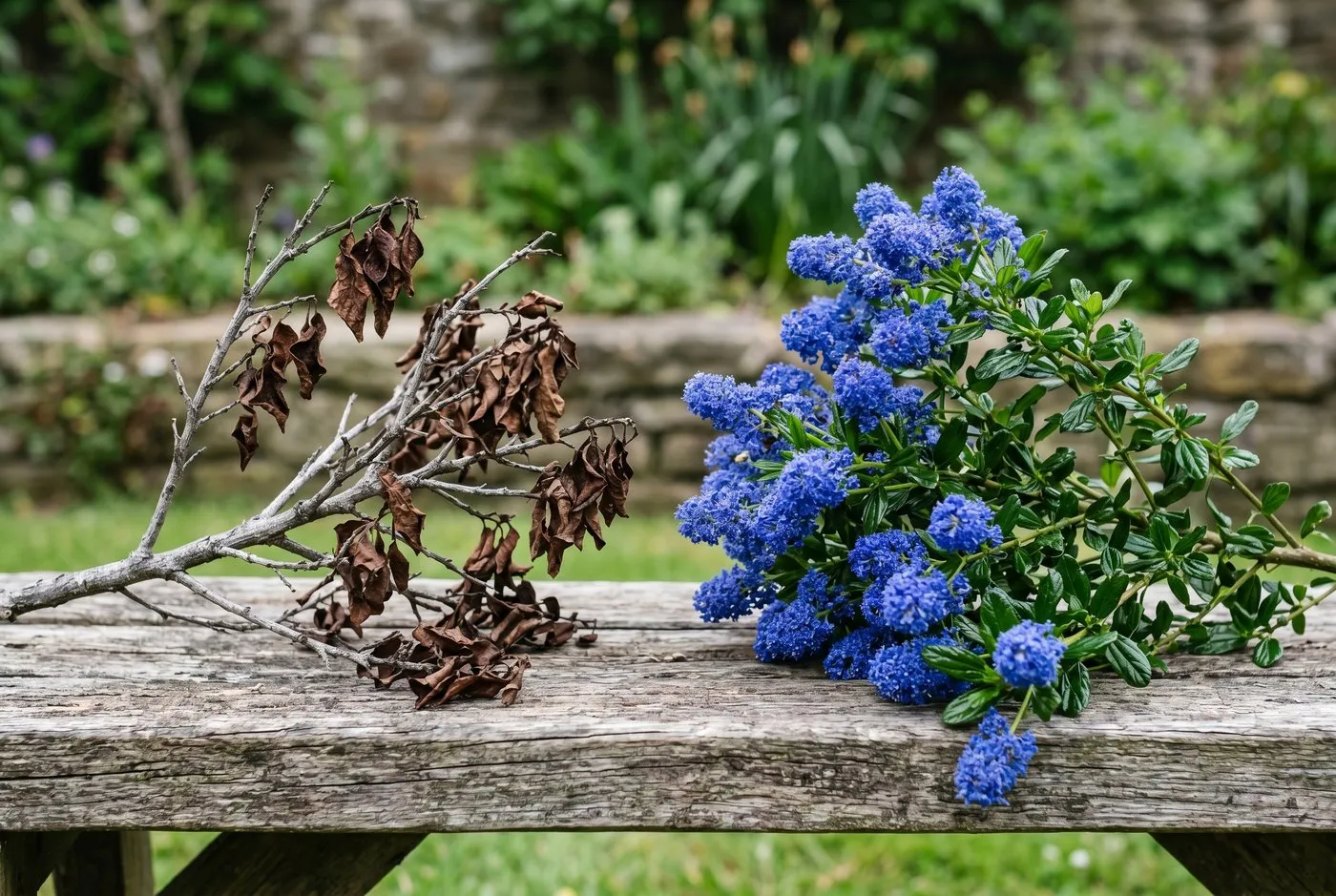 A dead branch beside a living one from the same plant. The bark-scratch test on each stem shows where green wood ends and dead wood begins.
Waterlogging and Root Rot: the Biggest Killer
Wet soil kills more ceanothus than anything else. The roots sit in the top 30cm of ground and need air. Sit them in standing water and they suffocate, then Phytophthora root rot moves in. This soil-borne pathogen thrives in cold, wet, poorly drained ground, which describes most UK clay in winter.
The symptoms are distinctive. The foliage turns a dull brown and wilts, often across whole branches at once rather than leaf by leaf. Growth looks lifeless, not crisp. Dig down to the roots and they are dark, soft and slimy, sometimes with a sour smell, instead of pale and firm. This is the pattern behind most sudden ceanothus deaths after a wet spell.
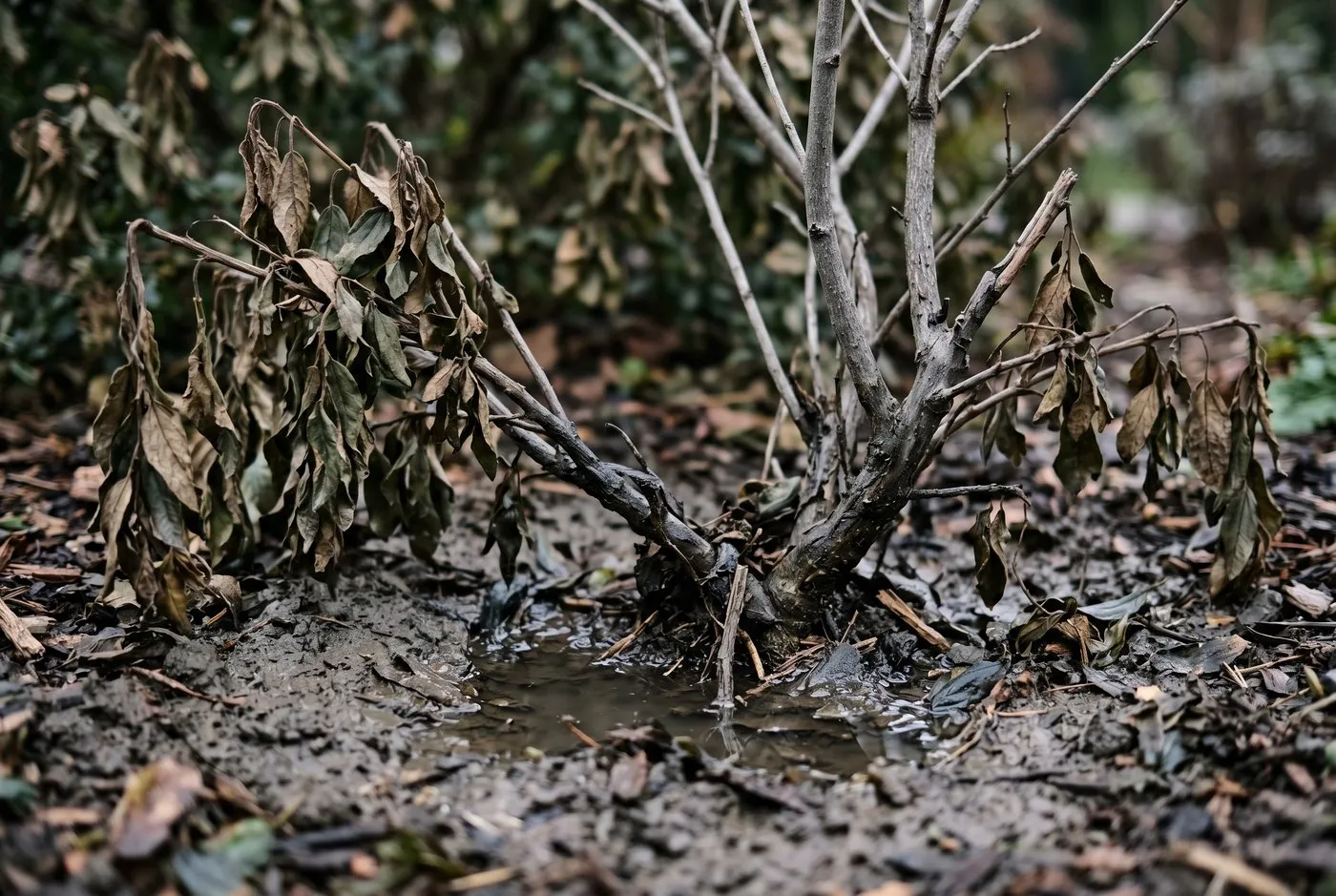 Root rot in progress on heavy clay. The dull, browning foliage and standing water at the base are the classic signs of a waterlogged ceanothus.
Frost and Cold-Wind Scorch on Evergreen Types
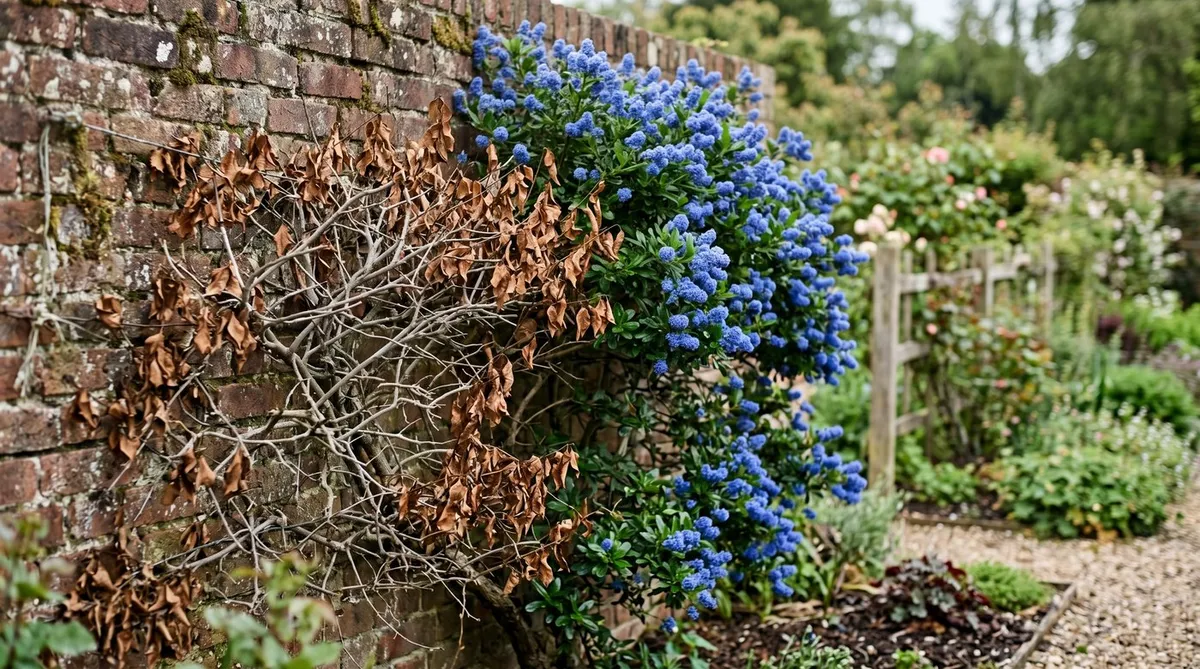
Evergreen ceanothus is the tender one. It keeps its leaves all winter, so cold dry wind pulls moisture from them faster than frozen roots can replace it. The result is wind scorch: leaves brown from the edges inwards and go papery and dry. The damage clusters on the windward side of the plant, which is the giveaway.
Frost adds to this. A light frost burns only the soft new growth, which the plant shrugs off by spring. A hard freeze below -12C can kill whole stems and, in the worst winters, the root zone. Evergreen types such as Concha and Puget Blue sit near their limit in a cold UK winter, especially out of shelter.
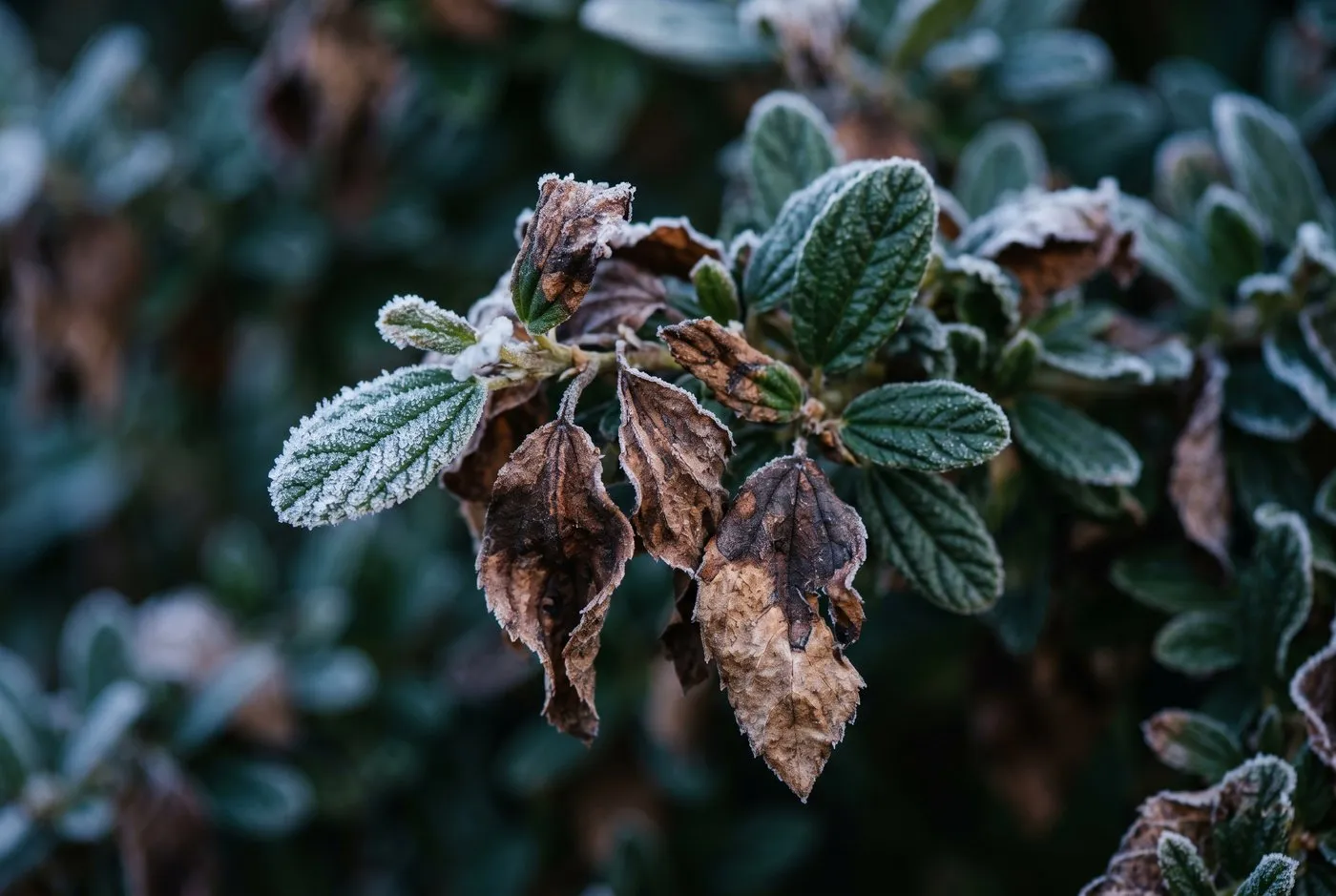 Wind and frost scorch on evergreen ceanothus. Leaves brown from the edges in and turn papery, worst on the side facing the prevailing wind.
Why Cutting Into Old Wood Kills Evergreen Ceanothus
Prune it the right way instead. Cut lightly, just after flowering, in June or July. Trim the flowered shoots back by no more than one-third to a half, and only ever into green growth with leaves on it. Never expose the woody framework. Deciduous types are the exception: they flower on new growth and take a hard cut to 30cm in March. For the wider rules, see our guide on how to prune shrubs, which sets out the same green-wood-only principle across the border.
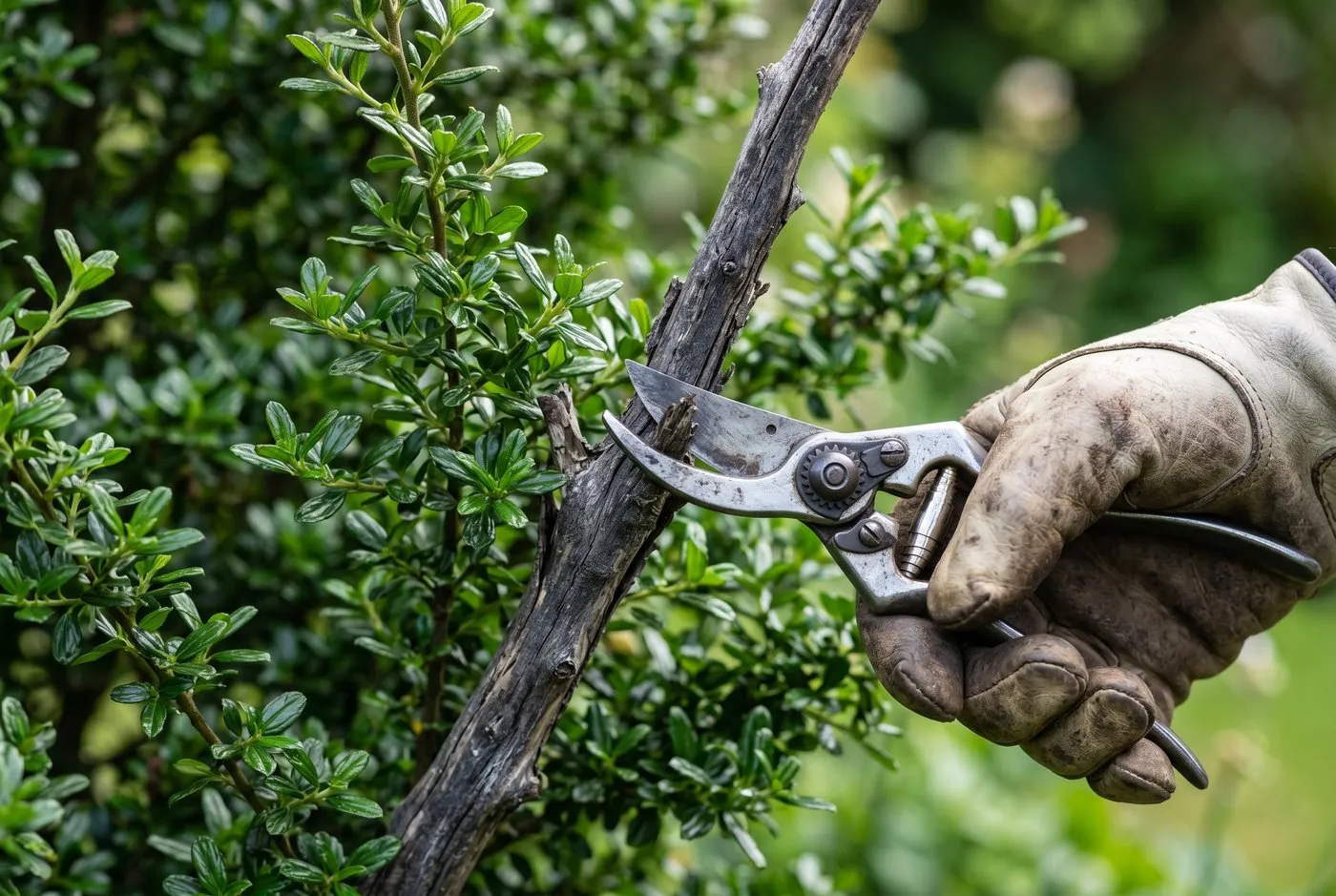 The fatal cut. This bare grey stem has no buds and will not reshoot, so cutting here leaves a permanent dead gap in an evergreen ceanothus.
Transplant Shock, Honey Fungus and Chalk Chlorosis
Three less common causes still kill ceanothus, and each looks different. Transplant shock comes from moving an established plant. Ceanothus has a coarse, fragile root system and resents root disturbance, so a moved specimen often wilts, browns and dies within a year. The lesson is blunt: plant ceanothus where it will stay, and never lift a mature one. Our guide to moving a shrub safely helps with shrubs that do transplant, but ceanothus is best left alone.
Honey fungus causes general wilting and dieback from the base. Look for honey-coloured toadstools at the plant’s foot in autumn, white fungal sheets under the bark with a mushroom smell, and flat black bootlace rhizomorphs in the soil. There is no cure, so the plant and as much root as possible must come out. Our guide on how to deal with honey fungus covers containment.
Chlorosis is the odd one out, because it yellows rather than browns. On shallow chalk, high lime locks up iron and manganese, so leaves go yellow with green veins. Feed sequestered iron, mulch with leaf mould, and avoid adding lime. This is a stress, not usually a killer, but it weakens a plant already coping with poor soil.
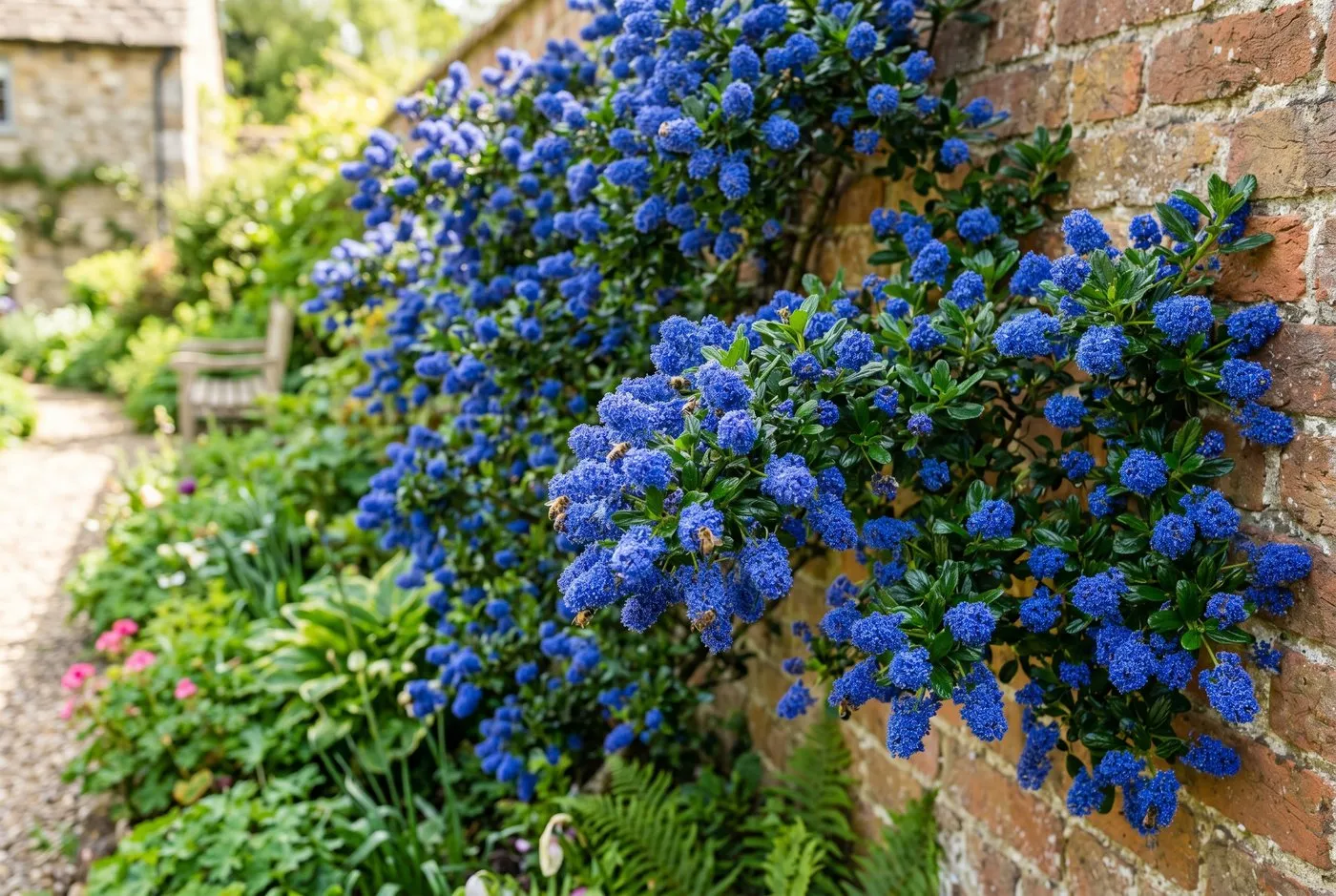 The goal. A well-sited ceanothus on free-draining soil against a sheltered wall, thriving and feeding bees, is what every cause in this guide aims to protect.
Match the Symptom to the Cause
Use this table as a quick diagnostic. Find the symptom that matches your plant, then read across to the likely cause and the fix. Run the bark-scratch test first so you know whether the damage starts at the tips or the base.
| Symptom you see | Most likely cause | The fix |
|---|---|---|
| Whole branches brown and wilt at once, base up | Root rot on wet soil | Improve drainage, replant on a grit mound |
| Leaves brown from edges in, worst on windward side | Cold-wind scorch | Shelter the plant, choose deciduous types |
| Soft new growth blackened after a freeze | Frost damage | Trim to green, fleece in hard winters |
| Dead gap after a hard prune into bare stems | Cut into old wood | Only prune lightly into green growth |
| Wilts and dies within a year of being moved | Transplant shock | Never move mature ceanothus |
| Toadstools and bootlaces at the base | Honey fungus | Remove plant and roots, do not replant alliums of risk |
| Yellow leaves with green veins | Chalk chlorosis | Feed sequestered iron, mulch, avoid lime |
| Gradual decline in a healthy plant past 10 years | Old age | Replace, take cuttings in July first |
The pattern is clear once you read it this way. Browning from the base means roots; browning from the tips means weather; a sudden gap means the secateurs. Knowing which one you have decides whether to save the plant or start again.
Ranking the Fixes by What Actually Saves Plants
The gold standard is the raised grit mound, paired with the right type for your conditions. Those two together prevent the rot and cold deaths that account for nearly every ceanothus we lose. Layer shelter and correct pruning on top, and even a clay garden can keep a ceanothus alive for its full lifespan.
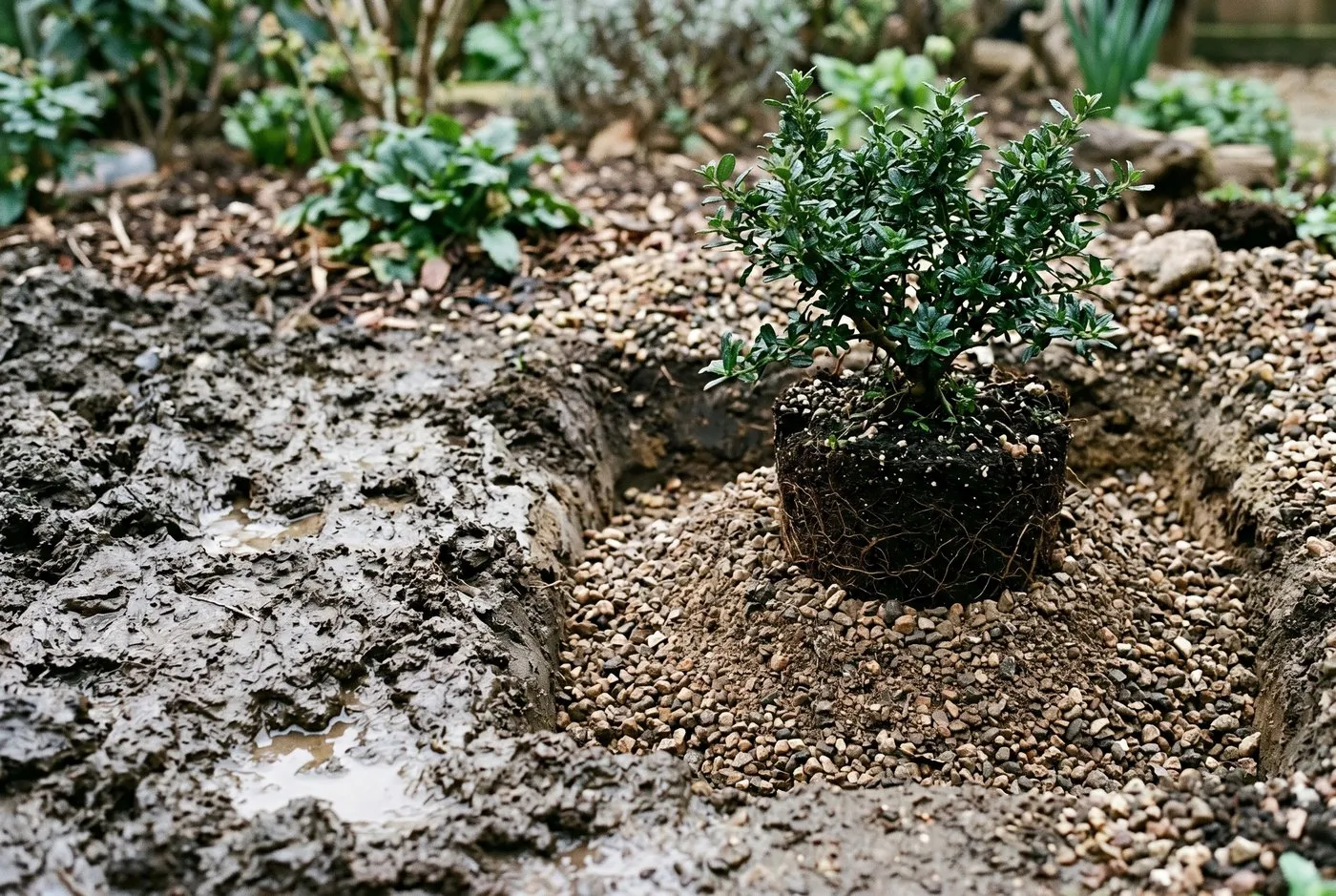 Free-draining mound planting versus wet clay. Setting the rootball above the surrounding soil keeps the shallow roots out of the winter water that causes root rot.
The Ceanothus Year: When to Plant, Prune and Protect
Timing prevents most ceanothus problems. The two windows that matter most are spring planting and the light post-flowering prune. Work with this calendar and you avoid the mistakes that kill plants.
| Month | What to do |
|---|---|
| March | Hard prune deciduous types to 30cm, plant nothing yet in cold ground |
| April to May | Plant new ceanothus on a grit mound once frost risk passes |
| June to July | Prune evergreen types lightly after flowering, into green wood only |
| July to August | Take semi-ripe cuttings to raise a replacement |
| August | Water new plants only, leave established ones to fend for themselves |
| September | Watch for honey-coloured toadstools at the base |
| October to November | Mulch with grit or leaf mould, never pile wet matter on the crown |
| December to February | Fleece evergreen types in hard frost, clear standing water from the root zone |
Spring planting is the key rule. Ceanothus is susceptible to root damage in wet winter soil, so an April or May planting gives roots a full season to settle before their first winter. Plant in autumn on cold clay and you stack the odds against the plant from day one.
Common Mistakes That Kill Ceanothus
Most ceanothus deaths trace back to a handful of habits. Fix these and you remove the conditions that finish the plant off.
Planting in a hole on heavy clay. A planting pit in clay acts as a sump that fills with water and rots the roots. Plant on a raised mound with plenty of grit instead, so the crown sits above the surrounding ground.
Moving an established plant. Ceanothus resents root disturbance and a moved specimen usually dies within a year. Decide on the right spot before you plant, and never lift a mature one.
Watering an established ceanothus through summer. Mature plants want dry feet. Summer irrigation keeps the soil wet and invites root rot. Water only in the first season, then stop.
Choosing an evergreen type for an exposed, cold garden. Evergreens scorch in cold wind and suffer below -12C. In an exposed garden, pick a deciduous variety that drops its leaves and takes the cold.
Frequently asked questions
Why is my ceanothus dying so suddenly?
Waterlogging is the usual cause of sudden ceanothus death. The shallow roots rot fast in wet soil. A heavy clay bed or a wet winter after a dry summer triggers a rapid collapse, with whole branches browning at once. Check the drainage and scratch the bark before assuming anything else.
Can a dying ceanothus be saved?
Sometimes, if only part of the plant is affected. Scratch each branch: green under the bark means alive, so cut dead wood back to green growth. Root rot and honey fungus are not curable, so a plant browning from the base up rarely recovers. Improve drainage for any survivor.
Will ceanothus grow back after cutting into old wood?
No, evergreen ceanothus will not reshoot from bare old wood. There are no dormant buds in the brown stems, so a hard cut leaves a permanent dead gap. Only prune lightly into green, leafy growth, just after flowering. Deciduous types are the exception and tolerate a hard March cut.
Does ceanothus die from frost?
Frost and cold wind both damage evergreen ceanothus. Foliage browns from the edges inwards and turns papery. Light frost burns only soft new growth, but a hard freeze below -12C can kill stems outright. Deciduous types like Gloire de Versailles shrug off cold far better than evergreens.
Why are my ceanothus leaves turning yellow?
Yellow leaves with green veins point to chlorosis on shallow chalk. The high lime locks up iron and manganese the plant needs. Feed sequestered iron, mulch with leaf mould, and avoid lime. Whole-plant yellowing with wilting is different and usually means root rot from wet soil.
How long do ceanothus plants live in the UK?
Most ceanothus live 8 to 15 years in UK gardens. Cold, wet or clay sites cut that short. A healthy, well-sited plant past 10 years that suddenly declines has often just reached the end of its natural life. Take cuttings in July to raise a replacement before it goes.
Save the next one
Diagnosis is only half the job. The lasting fix is to plant the right type, on free-draining ground, in shelter, and to prune only into green wood. Get those four right and a ceanothus rewards you for its full 8 to 15 years. Start by reading our full guide on how to grow ceanothus for variety choice and wall training, then browse the rest of our plant problem guides to stay ahead of the next shrub to struggle.
External references: the RHS ceanothus growing guide and the RHS guide to Phytophthora root rot back up the drainage, pruning and hardiness advice with their own trial notes.
Our team produces practical UK gardening guidance from source research, contributor records and established horticultural practice. Editorial standards are overseen by Matt W.