Key takeaways
- Leggy seedlings are caused by too little light for the temperature, not by feeding
- A south-facing UK windowsill gives 2,000-5,000 lux; seedlings want 10,000-15,000 lux
- Auxin is the hormone that makes stems elongate toward the brightest light
- Tomatoes and other solanums can be potted deeper to bury 60-70% of a leggy stem
- Brushing seedlings 20 times a day produced stems 30% thicker over four weeks
Leggy seedlings are the most common spring setback for UK growers starting plants indoors. Those pale, stretched, floppy stems mean one thing: the seedling has too little light for the warmth it is sitting in. Gardeners often blame poor compost or weak feed. The real cause is a light deficit, and it is entirely fixable once you understand what drives the stretch.
What leggy seedlings actually are
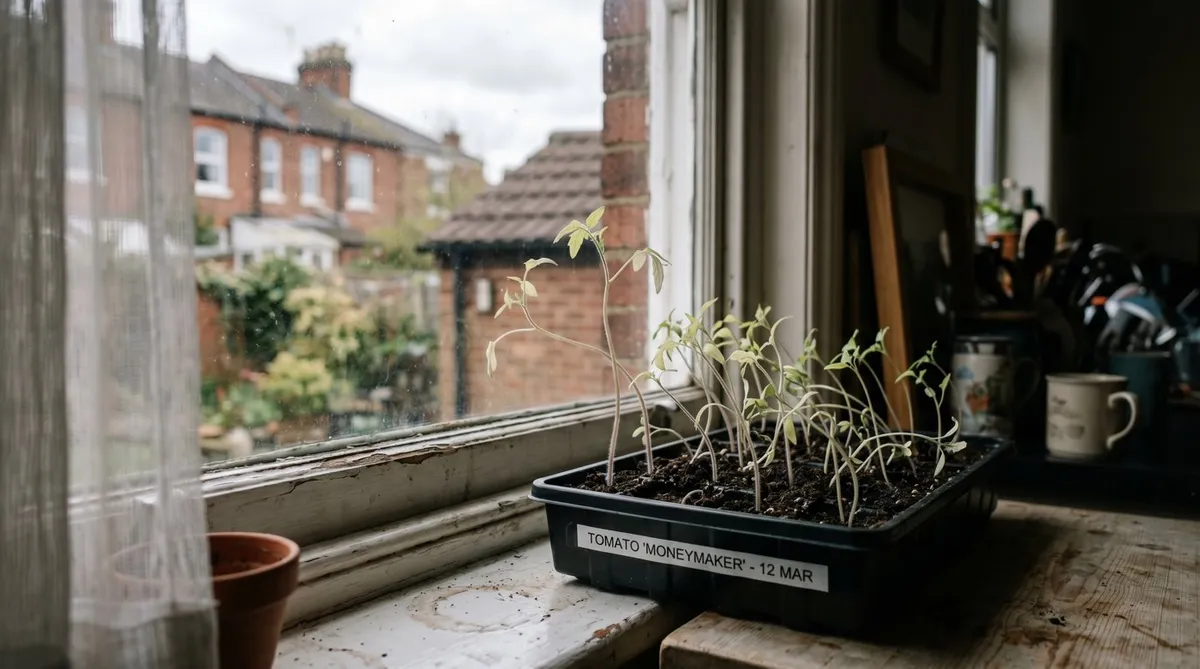
Leggy seedlings have long, thin, pale stems with wide gaps between the seed leaves and the first true leaves. The plant looks tall but feels weak. Pick one up and the stem flops sideways. This stretched form is called etiolation, and it is a survival response, not a disease.
A seedling germinating in shade behaves as though it is buried or shaded by taller plants. Its priority is to reach light fast. It pours energy into stem length rather than leaf area or root mass. The result is a plant that has grown too quickly in the wrong direction.
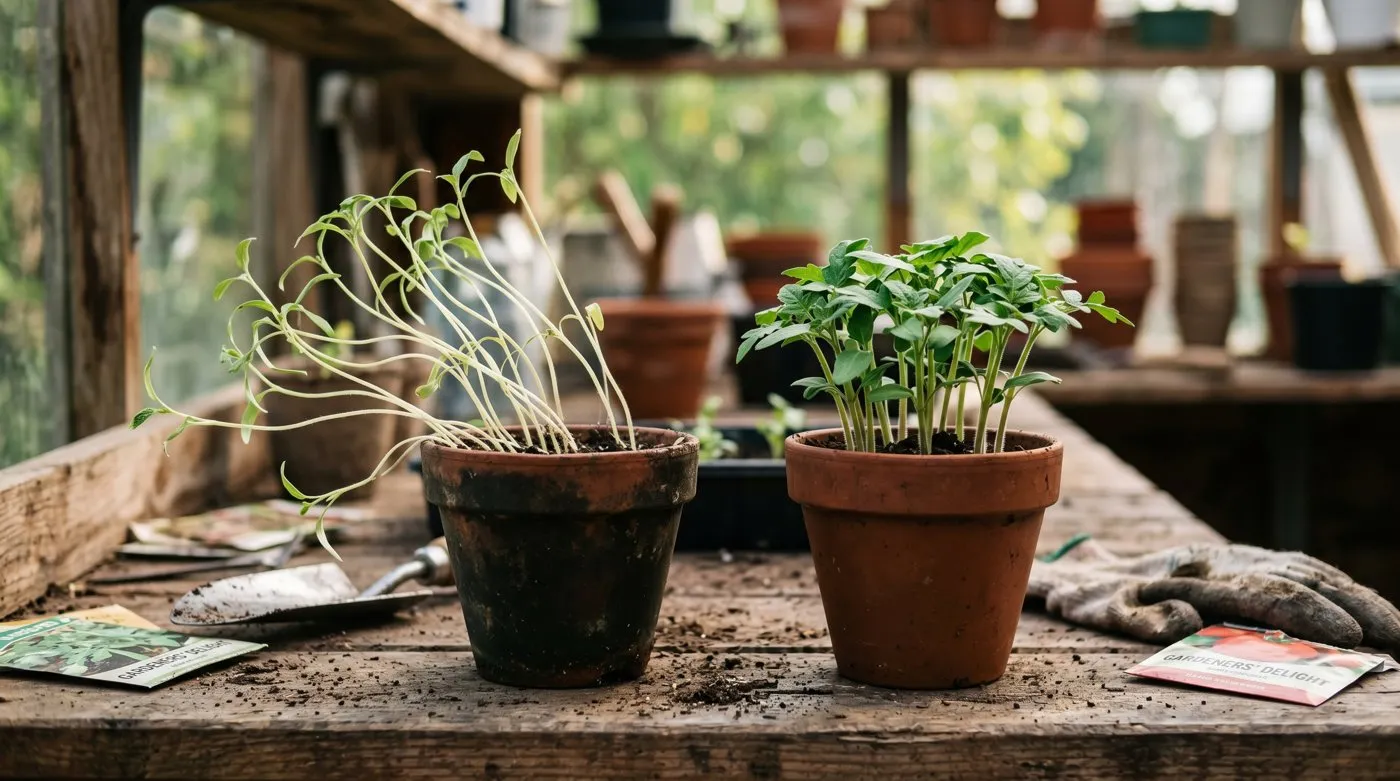 Left: a leggy seedling grown on a dim windowsill. Right: a stocky seedling raised under good light. Same variety, same age, sown the same day.
The science of etiolation and auxin
Etiolation is driven by a plant hormone called auxin. Auxin controls cell elongation in the stem. In low light, the seedling produces and redistributes auxin to push the stem upward fast, a hard-wired hunt for brighter conditions.
When light hits the growing tip, it triggers production of compounds that limit auxin’s stretching effect. Strong, even light keeps the stem short and thick. Weak light removes that brake, so the stem runs away upward. This is why warmth without light is so damaging. Heat speeds up cell division, and auxin keeps directing that growth into length.
Phototropism is the sideways version of the same process. When light comes from one direction, such as a window, auxin gathers on the shaded side of the stem. Those cells elongate more than the lit side, so the seedling bends toward the glass. This is why windowsill seedlings lean and curve.
How much light seedlings really need
Seedlings need far more light than most UK windowsills provide. The target is 10,000-15,000 lux for 14-16 hours a day. Below roughly 5,000 lux, most seedlings begin to stretch within days.
A south-facing windowsill in midsummer can hit 10,000 lux at midday. The same sill in February gives only 2,000-5,000 lux, and for just a few hours either side of noon. North-facing rooms drop below 1,000 lux. That is the core of the problem: people sow early into warm rooms with winter light levels.
Daylight hours matter as much as intensity. In the UK, daylight passes 12 hours around 20 March and reaches 16 hours by late May. Seedlings raised before mid-March almost always need supplementary light. Our grow lights for seed starting guide covers the kit in detail.
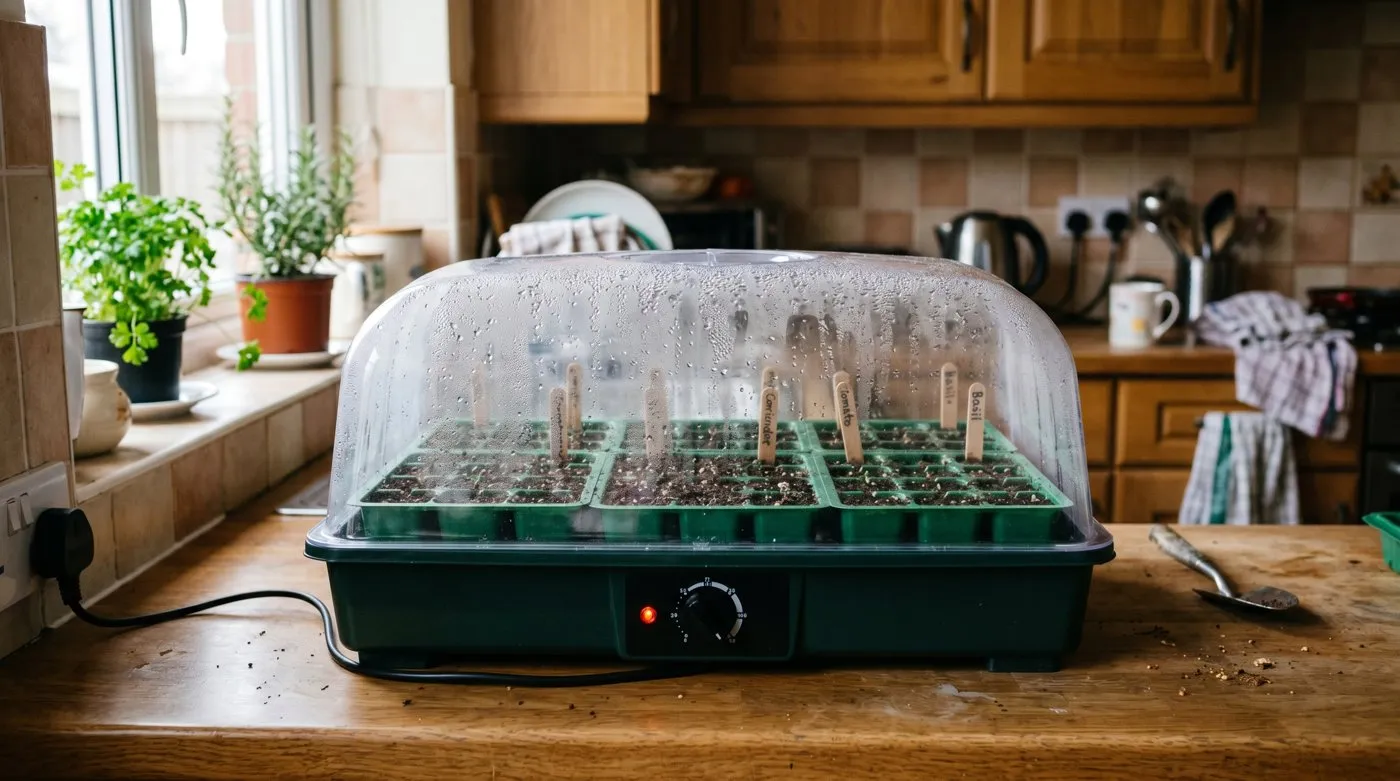 A heated propagator germinates seeds fast, but the warmth becomes a trap if the seedlings then sit in weak winter light.
What causes seedlings to go leggy
Legginess almost always comes from one of five causes, and usually a combination. Identifying yours points straight to the fix.
Too much warmth makes it worse. Germinating at 18-21C is correct, but leaving seedlings at that heat after they emerge drives soft, stretched growth. The cure is to move them somewhere cooler the moment the first leaves show.
Sowing too early combines both faults. Seeds started in January or February face the shortest days and weakest sun of the year. The plant cannot photosynthesise enough to stay compact.
Overcrowding forces seedlings to compete. Densely sown trays shade each other, so every plant stretches to rise above its neighbours. Thin to one strong seedling per cell early.
Late thinning and late potting on let roots and stems compete in cramped conditions for too long. A root-bound seedling stalls and stretches; our guide on fixing root-bound seedlings shows how to spot it.
Legginess versus damping off
Do not confuse legginess with damping off, a fungal disease. The two look different and need different responses. Getting this wrong wastes effort and can spread disease through a whole tray.
A leggy seedling is stretched but otherwise healthy. The stem is pale and thin along its whole length, the plant stands or leans, and it keeps growing. Improve the light and it recovers.
Damping off is caused by soil-borne fungi such as Pythium and Rhizoctonia. The stem collapses at compost level, turning brown, water-soaked and pinched. The seedling topples and dies within a day or two, and the rot spreads to neighbours. There is no cure once it starts.
Warning: If a seedling falls over with a brown, shrivelled base at soil level, it is damping off, not legginess. Remove it at once, improve airflow, water less, and use mains water rather than stored rainwater for young seedlings.
The prevention overlaps usefully. Good airflow, cooler temperatures, careful watering and not overcrowding all reduce both legginess and damping off.
Fixes ranked by how well they work
What grow lights cannot do is fix warmth. Even under good light, seedlings held at 21C still soften. Pair strong light with a cooler growing-on temperature for the best result.
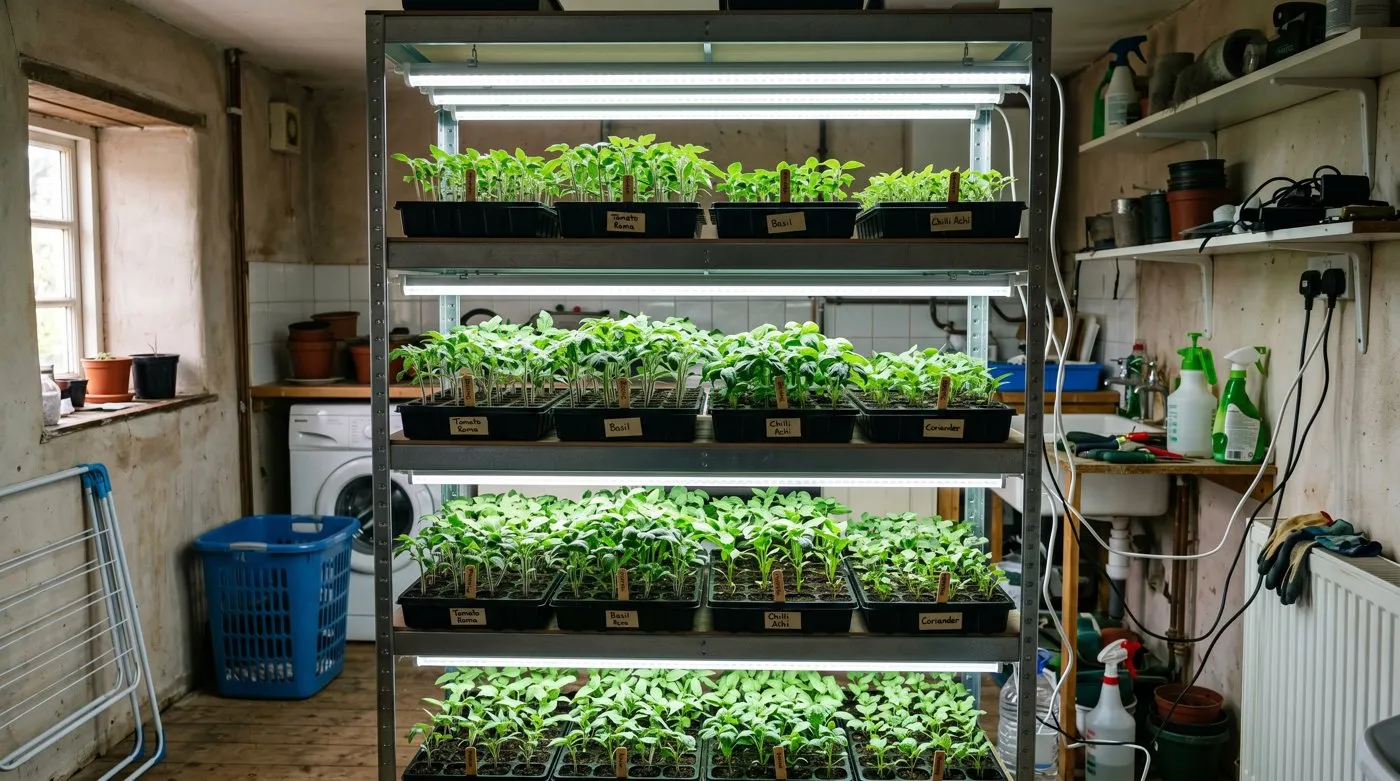 An LED grow-light shelf in a spare room. The light sits 15cm above the leaves and runs 16 hours a day on a timer.
How to rescue leggy seedlings you already have
A leggy seedling is not a lost cause. The right rescue depends on the plant family, because only some can be buried deeper.
Tomatoes, peppers, aubergines and other solanums root readily from their stems. Pinch off the lowest leaves, then pot the seedling deep enough to bury 60-70% of the bare stem. The buried tissue grows new roots within 10-14 days, giving a stronger plant than before. This is the single best rescue and turns a fault into an advantage.
Brassicas, lettuce and cosmos can be transplanted slightly lower, burying the stem up to the seed leaves but no further. They will not root along the stem like tomatoes, so deep burial risks rot.
Beans, peas and sweetcorn must not be buried deep. They rot at the buried stem. Instead, give them more light fast, support the stem with a thin cane, and they will firm up as they grow on.
For every type, the next steps are the same: move to the brightest spot or under a grow light, drop the temperature to 15-16C, increase airflow, and begin brushing the tops. Recovery growth is sturdy within two weeks. If you multi-sow, our multi-sowing vegetables guide shows which crops tolerate the technique without stretching.
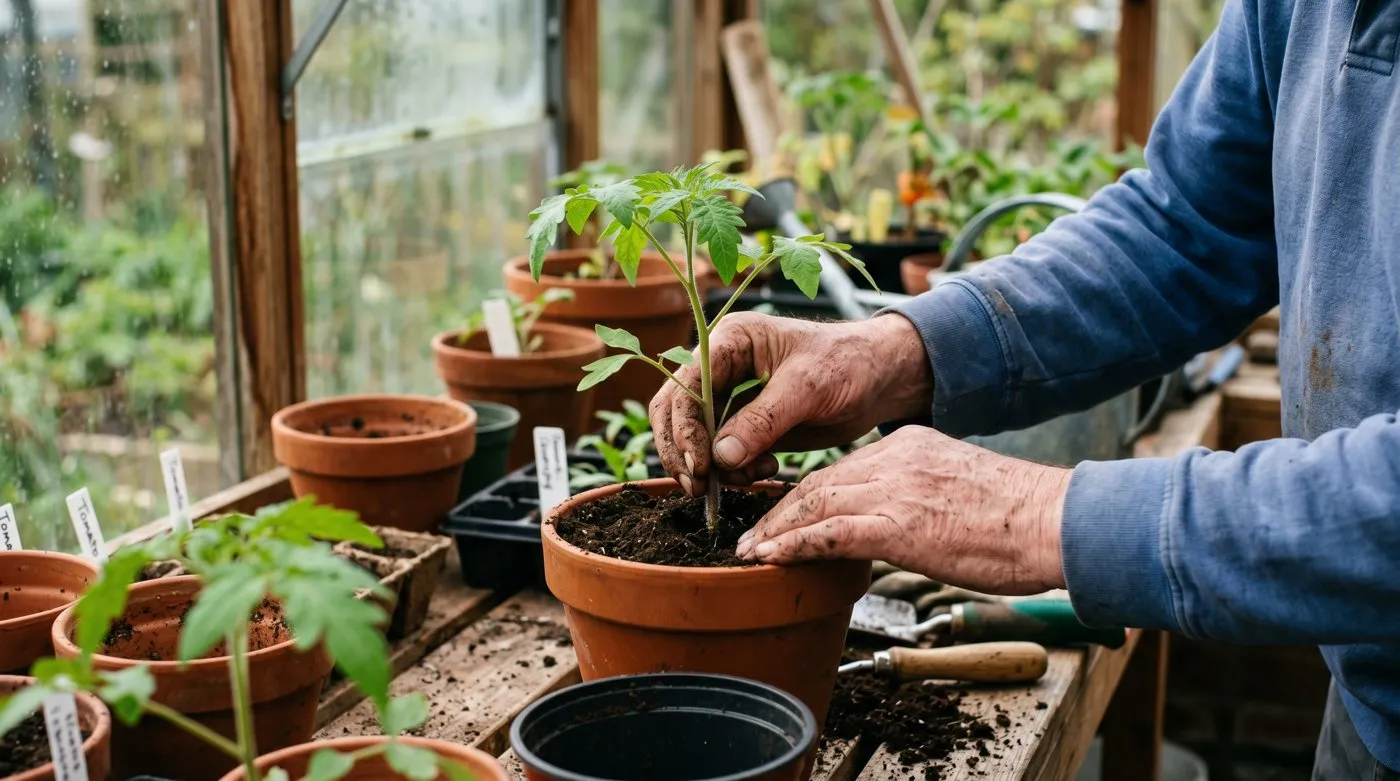 Potting a leggy tomato deeper. Burying 60-70% of the stem lets it root along its length and rescues the plant.
Brushing and airflow for sturdier stems
Seedlings respond to touch by growing shorter and thicker. This is called thigmomorphogenesis: mechanical stress triggers the plant to lay down stronger stem tissue. Outdoors, wind does this naturally. Indoors, you supply it.
A small fan on a low setting does the same job hands-free. Run it for a few hours a day, aimed to wobble the seedlings without drying them out. Airflow also lowers humidity around the stems, which cuts the risk of damping off at the same time.
Gardener’s tip: Start brushing as soon as the first true leaves appear. The earlier you begin, the sturdier the plant. A cheap clip-on fan on a timer is the easiest way to firm up a whole windowsill of seedlings while you are at work.
Hardening off without losing the gains
A sturdy indoor seedling still needs hardening off before it goes outside. Plants raised in still, warm, sheltered conditions have soft tissue and thin cuticles. Move them straight outdoors and wind, cold and UV can check or kill them.
Harden off over 7-14 days. Stand plants outside in a sheltered, shaded spot for an hour or two on the first day, then increase the time and exposure daily. A cold frame makes this far easier, since you can prop the lid open by day and close it at night. Bring plants in if frost threatens.
This stage also firms up any remaining softness. The wind continues the brushing effect, and cooler nights thicken the cell walls. Our full hardening off seedlings guide sets out the daily schedule.
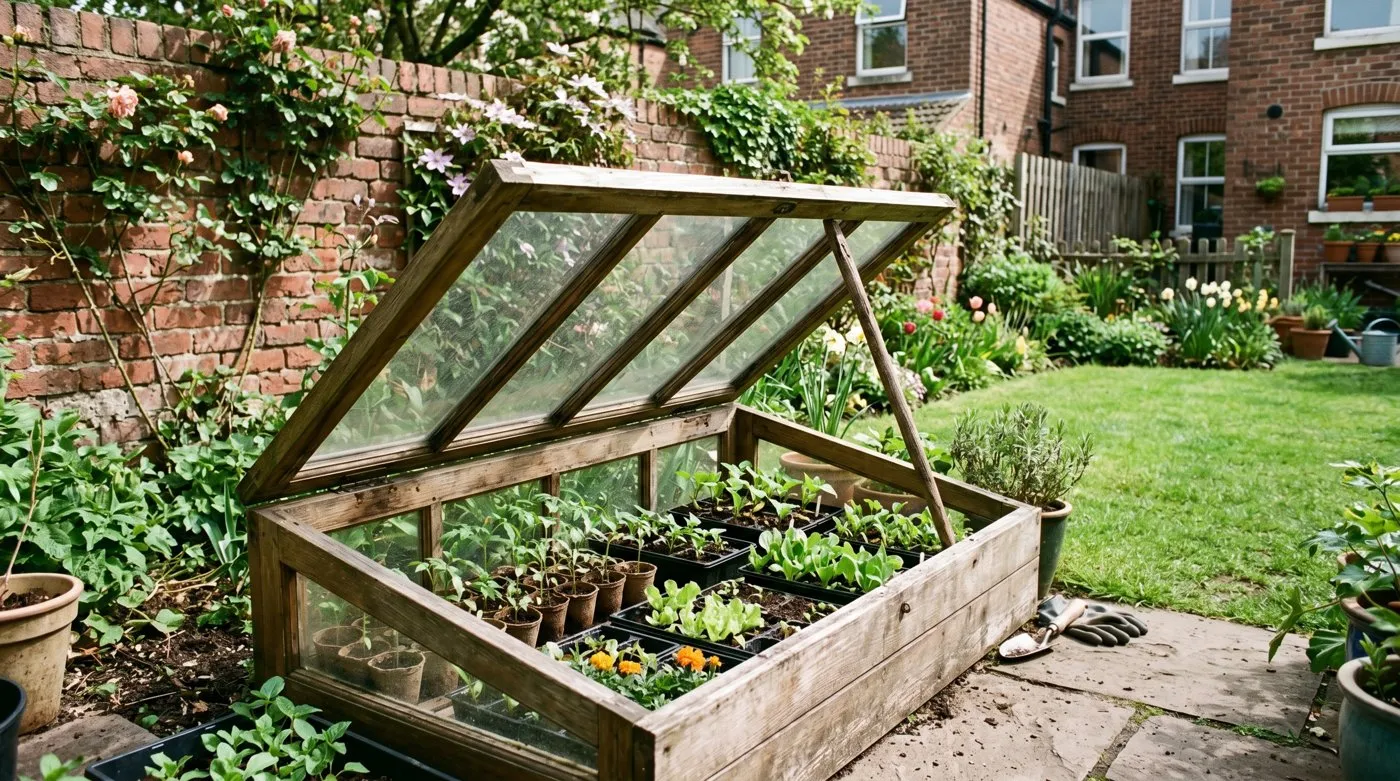 A cold frame with the lid propped open. Hardening off over two weeks firms up indoor-raised seedlings before planting out.
Month-by-month UK sowing and light calendar
Match your sowing to the light available and legginess largely solves itself. This calendar shows the daylight picture and what it means for sowing without grow lights in central UK conditions.
| Month | Approx daylight | Natural light for seedlings | Action |
|---|---|---|---|
| January | 8 hours | Far too low | Only sow with grow lights |
| February | 9-10 hours | Too low | Grow lights essential for most crops |
| March | 11-12 hours | Improving | Grow lights still help early in month |
| April | 13-14 hours | Good | Windowsill sowing viable, turn trays daily |
| May | 15-16 hours | Strong | Sow freely, harden off promptly |
| June | 16-17 hours | Peak | Direct sow and successional sow outdoors |
| July | 16 hours | Strong | Sow biennials and autumn crops |
| August | 14-15 hours | Good | Sow hardy annuals and salads |
| September | 12-13 hours | Falling | Sow under cover, watch for stretch |
| October | 10-11 hours | Low | Overwintering sowings only |
| November | 8-9 hours | Very low | Grow lights for any indoor sowing |
| December | 7-8 hours | Lowest | Avoid sowing unless fully lit |
The pattern is clear. Anything sown indoors before mid-March needs extra light. For timing each crop precisely, use our seed sowing calendar, and for flowers from seed see growing annuals from seed.
Common mistakes that cause leggy seedlings
Sowing too early out of impatience. A February sowing under winter light will stretch no matter how good your compost is. Wait three to four weeks, or commit to grow lights.
Leaving seedlings on the propagator after germination. The warmth that sprouts seeds becomes a stretching engine once leaves appear. Move trays off the heat and into bright light the day they emerge.
Sowing too thickly. Crowded seedlings shade each other and all stretch together. Sow thinly and thin to one strong plant per cell early.
Lighting from one side only. A single window pulls every stem sideways through phototropism. Turn trays 180 degrees daily, or light from directly above.
Feeding instead of fixing the light. Extra nitrogen on a light-starved seedling produces more soft, stretched growth, not stronger stems. Fix the light first; feed only well-lit, actively growing plants.
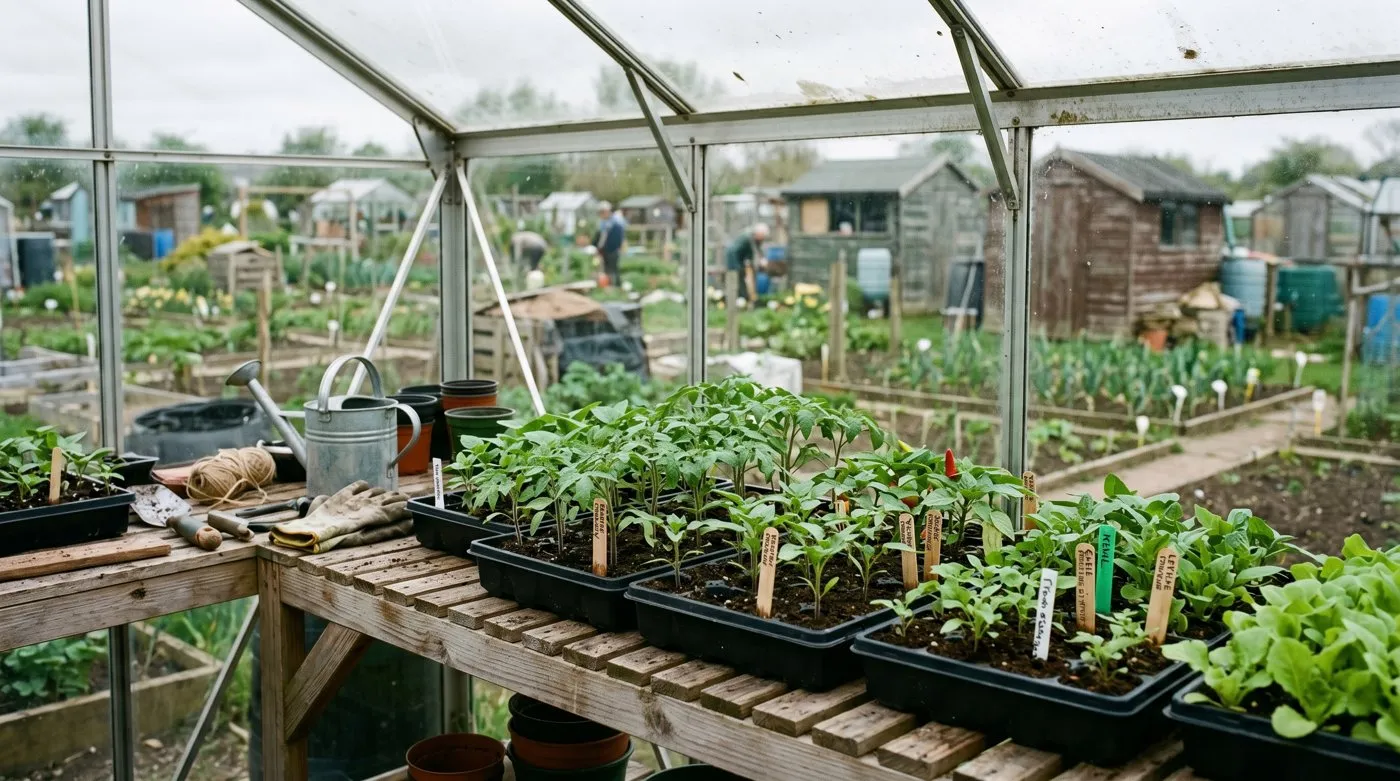 Seedlings raised on an unheated greenhouse bench. Plenty of light and cooler air keep them naturally short and sturdy.
Building the habit of stocky seedlings
The growers who never get leggy seedlings are not lucky. They sow at the right time, germinate warm but grow on cool, give the brightest light they can, and start brushing early. Do those four things and stretch rarely appears.
If you sow indoors in deep winter, treat a grow light as essential kit rather than a luxury. It pays for itself in a single season of strong plants. And remember the simplest fix of all: waiting a few weeks for the light to arrive costs nothing and works every time.
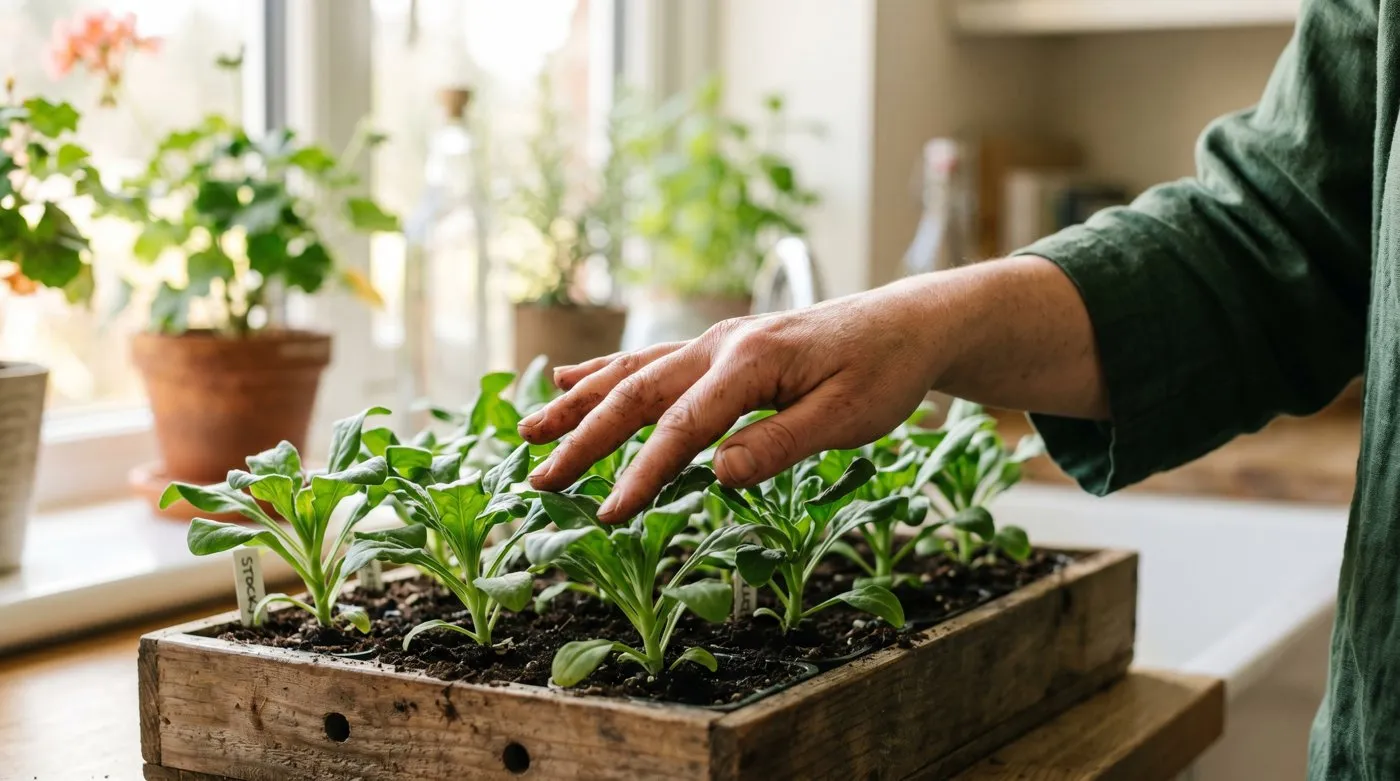 Brushing the seedling tops daily mimics wind and triggers shorter, thicker, stronger stems.
Frequently asked questions
Why are my seedlings tall and thin?
They lack light for the warmth they sit in. Stems elongate hunting brighter light. A heated windowsill in low winter daylight is the classic cause. Add grow lights, lower the temperature to 15-16C, and move plants to the brightest spot you have.
Can leggy seedlings be saved?
Yes, most leggy seedlings recover with the right action. Tomatoes, peppers and other solanums can be potted deeper to bury the bare stem, which then roots along its length. Brassicas and lettuce can be transplanted slightly lower. Brushing, cooler temperatures and more light produce sturdier new growth within two weeks.
Should I bury leggy tomato seedlings deeper?
Yes, bury up to 70% of a leggy tomato stem. Tomato stems grow roots from buried tissue, so deep potting fixes legginess and builds a stronger root system. Pinch off the lowest leaves first. This trick works for all solanums but not for brassicas, beans or peas, which rot if buried deep.
What temperature stops seedlings going leggy?
Grow seedlings on at 15-16C once they germinate. High warmth pushes fast, soft, stretched growth when light is limited. Germinate at 18-21C, then move trays somewhere cooler and brighter. Cooler air slows the stem and lets the plant build thickness instead of height.
How much light do seedlings need to stay stocky?
Seedlings want 10,000-15,000 lux for 14-16 hours a day. A bright UK windowsill gives only 2,000-5,000 lux in late winter. That gap is why indoor sowings stretch. An LED grow light 10-20cm above the leaves closes the gap cheaply and reliably.
Is legginess the same as damping off?
No, they are different problems. Legginess is healthy stretched growth from low light. Damping off is a fungal disease that collapses the stem at compost level, turning it brown and thin, and kills the seedling fast. Legginess is fixable; damping off is usually fatal once it starts.
Do grow lights stop leggy seedlings?
Why do seedlings lean toward the window?
They bend toward the brightest light through phototropism. Auxin gathers on the shaded side of the stem, making those cells grow longer, so the seedling curves toward the glass. Turn trays 180 degrees daily to keep stems straight, or light them evenly from above with a grow light.
Now you know why seedlings stretch and how to stop it, give your plants the best start by reading our guide to sowing seeds indoors for the right technique from day one.
Our team produces practical UK gardening guidance from source research, contributor records and established horticultural practice. Editorial standards are overseen by Matt W.