Key takeaways
- Powdery mildew is the most common disease, appearing as white powder on leaves from July and reducing yields by 20-40%
- Cucumber mosaic virus causes mottled leaves and stunted growth with no cure — remove infected plants immediately
- Grey mould (Botrytis) rots fruit and flowers in wet weather and thrives where airflow is poor
- Blossom end rot is a watering problem, not a disease — consistent moisture prevents calcium deficiency in fruit
- Fruit rot (Phytophthora) strikes fruit resting on wet soil — raise fruit on tiles or straw mulch
- Spacing plants 90cm apart and removing lower leaves improves airflow and prevents most fungal problems
Squash and courgettes are among the most productive crops in a UK vegetable garden. A single courgette plant can produce 15-20 fruit per season. But both crops are susceptible to a range of fungal, viral, and physiological diseases that can slash yields or kill plants outright. Knowing which disease you are dealing with is the first step to saving the crop.
Six diseases cause the vast majority of problems on UK squash and courgettes. Most are preventable with good spacing, consistent watering, and prompt removal of infected material. One, cucumber mosaic virus, has no cure and requires immediate removal. The rest are manageable with straightforward cultural practices that any gardener can adopt.
What does powdery mildew look like on squash and courgettes?
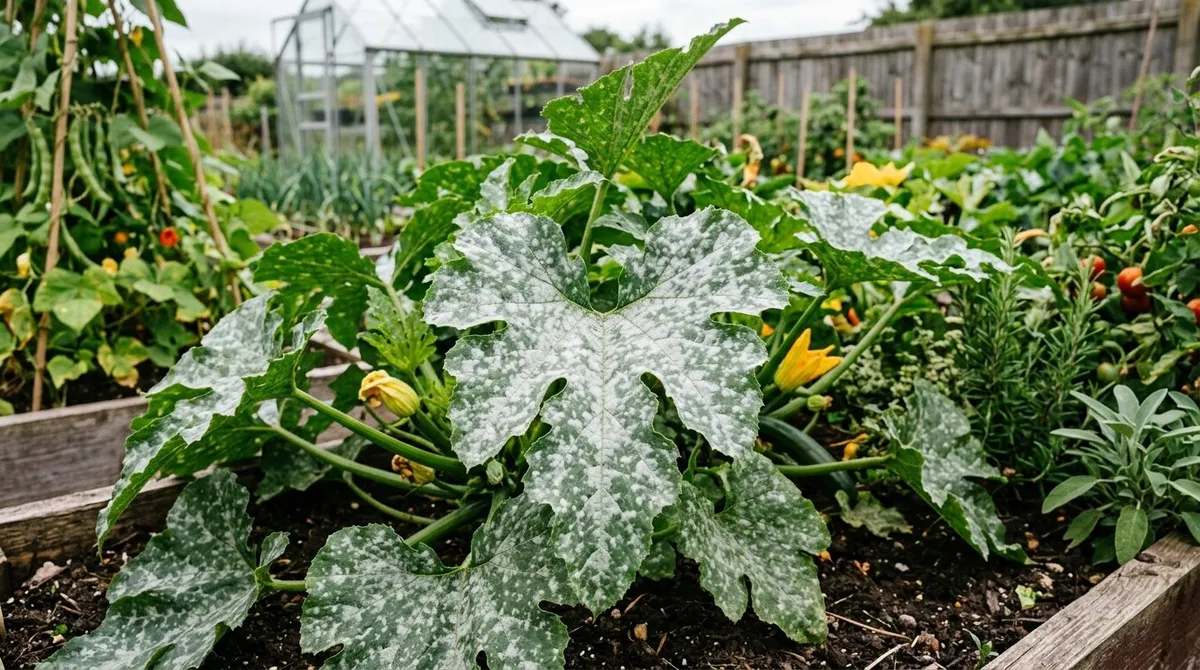
Powdery mildew appears as white or grey powdery patches on the upper surface of leaves, starting from July. The fungus Podosphaera xanthii is responsible in most UK cases. It is the single most common disease of squash and courgettes in British gardens.
The first patches are small, round, and white, typically 10-20mm in diameter. They spread rapidly in warm, dry weather. Within 2-3 weeks, entire leaves can be coated in white powder. Infected leaves gradually yellow, become papery, and die. The fungus does not usually kill the plant outright but reduces photosynthetic capacity by 50% or more on affected leaves.
Powdery mildew is unusual among fungal diseases because it thrives in dry, warm conditions rather than wet ones. High humidity encourages germination, but leaf wetness actually inhibits spore establishment. This is why the disease peaks in warm July and August weather when days are dry but nights are humid.
The RHS powdery mildew guide covers the disease across all garden plants. For squash-specific management, spacing and airflow are the most effective preventive measures.
How do I control powdery mildew on courgettes?
Remove the worst-affected leaves as soon as you spot the white patches. This slows spread and improves air movement through the canopy. Cut rather than tear leaves to avoid damaging stems. Bag removed leaves and compost them in a hot compost heap.
Potassium bicarbonate solution (1 tablespoon per litre of water) provides partial protection if applied preventatively before symptoms appear. Spray weekly from late June. It alters the leaf surface pH, making it less hospitable to fungal spores. It is not a cure for established infections.
Water at the base of plants using a watering can or drip irrigation. Never water over the top of squash foliage. Wet leaves in the evening create the humidity spike that triggers spore germination.
What is cucumber mosaic virus and how does it affect squash?
Cucumber mosaic virus (CMV) causes irregular yellow and green mosaic patterns on leaves, stunted growth, and deformed fruit. It is one of the most widespread plant viruses in the world and affects over 1,200 plant species. In UK gardens, it is the most serious viral disease of courgettes and squash.
Infected plants show mottled, puckered leaves with irregular patches of dark green, light green, and yellow. New growth is stunted. Fruit develops warty, bumpy skin and may be oddly shaped or miniature. The virus reduces yields to near zero on badly affected plants.
There is no cure for cucumber mosaic virus. Once a plant is infected, it remains infected for life. Every leaf, stem, and root cell carries the virus. No spray, fertiliser, or treatment can eliminate it.
Aphids are the primary vector. Over 80 species of aphid can transmit CMV, including the common peach-potato aphid (Myzus persicae). The aphid acquires the virus while feeding on an infected plant and transmits it to a healthy plant within seconds of probing. This makes aphid control critical, though no spray acts fast enough to prevent transmission because the virus transfers during the initial probe before the aphid settles to feed.
How to manage cucumber mosaic virus
Remove and destroy infected plants immediately. Do not compost them. Bag them and put them in general waste. Wash your hands and any tools that touched the infected plant with soap before handling healthy crops.
Control aphid populations on remaining plants. Encourage natural predators including ladybirds, lacewings, and hoverflies. Reflective mulch (silver-coloured) can deter aphids from landing.
Avoid growing squash near known CMV hosts including clover, chickweed, and ornamental plants in the Cucurbitaceae, Solanaceae, and Leguminosae families. The virus overwinters in perennial weed hosts.
What causes grey mould on courgettes?
Grey mould (Botrytis cinerea) causes soft, grey-brown rot on fruit, flowers, and wounded stems, especially during wet weather. It is one of the most common fungal diseases worldwide and thrives in cool, damp conditions between 15-20C.
On courgettes, grey mould typically starts at the flower end of developing fruit. The spent flower petals remain attached and trap moisture, creating an ideal environment for Botrytis spores to germinate. The rot spreads from the flower into the fruit, turning flesh soft and brown. A characteristic grey, fuzzy mould then covers the rotting area.
Stems can also be affected, especially at wound sites where leaves have been removed or snapped by wind. The fungus enters through damaged tissue and can girdle the stem, killing everything above the infection point.
Prevention is straightforward. Remove spent flowers from developing fruit once the fruit is 5-10cm long. This eliminates the moisture trap. Pick courgettes regularly rather than leaving them to grow large on the plant. Larger fruit with ageing flowers are more susceptible.
Good airflow reduces grey mould significantly. Space plants at 90cm and thin out dense foliage. Avoid overhead watering. Harvest in the morning when fruit is dry rather than evening when dew has settled.
On our clay beds, 2024 was a bad grey mould year due to wet July weather. Plants mulched with straw had 30% less fruit rot than those on bare clay because the mulch kept fruit off standing water.
What is blossom end rot on courgettes and squash?
Blossom end rot causes dark, sunken, leathery patches at the bottom (flower end) of developing fruit. Despite the name, it is not caused by a pathogen. It is a physiological disorder caused by calcium deficiency within the fruit tissue.
Calcium moves through the plant in the water stream. When soil moisture fluctuates, wet, then dry, then wet, the plant cannot transport calcium consistently to the fruit tip. The cells at the blossom end collapse and die, creating the characteristic dark, sunken lesion.
UK gardens on heavy clay are particularly prone because clay holds water when wet and bakes hard when dry. This creates exactly the moisture fluctuations that trigger blossom end rot. Sandy soils dry out too fast and cause similar problems.
The solution is consistent watering. Apply 2-3 litres per plant every 2 days during dry weather. Mulch with 5cm of straw, compost, or bark to reduce evaporation and buffer soil moisture. On our Staffordshire clay, mulched courgettes had zero blossom end rot in 2024 while unmulched plants lost 15% of fruit to the condition.
Adding calcium to the soil (lime or gypsum) does not fix blossom end rot if the real problem is inconsistent watering. UK soils rarely lack calcium. The issue is always water management, not soil chemistry.
Comparison of common squash and courgette diseases
| Disease | Cause | Symptoms | When it appears | Treatment | Prevention |
|---|---|---|---|---|---|
| Powdery mildew | Fungus (P. xanthii) | White powder on leaves | July-September | Remove affected leaves | 90cm spacing, airflow |
| Cucumber mosaic virus | Virus (aphid-spread) | Mottled leaves, stunted growth | May-August | No cure, remove plant | Control aphids, remove weeds |
| Grey mould (Botrytis) | Fungus (B. cinerea) | Soft grey rot on fruit/flowers | June-September (wet weather) | Remove infected material | Remove spent flowers, airflow |
| Blossom end rot | Calcium deficiency | Dark sunken patch at fruit base | June-August | Consistent watering | Mulch, regular water |
| Fruit rot (Phytophthora) | Water mould | Soft rot where fruit contacts wet soil | July-September | Remove infected fruit | Raise fruit off soil |
| Bacterial soft rot | Bacteria (Erwinia spp.) | Foul-smelling soft collapse | July-September (after damage) | Remove infected plant | Avoid wounds, good drainage |
What causes fruit rot on squash resting on wet soil?
Phytophthora fruit rot attacks squash and courgette fruit where it contacts wet soil. The Phytophthora water mould lives in soil and splashes onto fruit during rain or watering. Fruit resting directly on damp ground is most vulnerable.
The rot starts as a soft, water-soaked patch on the underside of the fruit. It spreads rapidly, turning the flesh mushy and brown. White fungal growth may appear on the surface in wet conditions. Affected fruit collapses within days and develops a sour smell.
Winter squash left to ripen on the ground in autumn is particularly at risk. September and October rain combined with cooling temperatures creates ideal conditions for Phytophthora. A single night of sitting in a puddle can trigger infection.
Prevention is simple. Raise fruit off the soil surface. Place tiles, slates, wooden boards, or a thick layer of straw underneath each fruit. This breaks the soil-to-fruit contact and allows air circulation underneath.
What is bacterial soft rot on squash?
Bacterial soft rot (Erwinia carotovora) causes foul-smelling, slimy collapse of fruit and stems. The bacteria enter through wounds, insect damage, or frost cracks. Once inside, they dissolve the plant tissue rapidly, producing a distinctive rotten smell.
This disease is secondary. It almost always follows physical damage from another cause: slug feeding, hail, frost, rough handling, or tool wounds. Healthy, undamaged tissue resists bacterial entry.
Affected fruit becomes soft, slimy, and foul within 2-3 days of infection. The rot spreads from the wound site outward. Entire fruit can collapse into a puddle of brown liquid. Stems develop water-soaked patches that quickly turn mushy.
Remove and destroy infected material immediately. Do not leave rotting fruit on the soil surface, the bacteria persist in plant debris and contaminate the soil for future crops. Avoid creating unnecessary wounds when harvesting. Cut courgettes with a sharp knife rather than twisting them off, which tears stem tissue.
Good garden hygiene and careful handling prevent most bacterial soft rot. Grow courgettes in well-drained soil and avoid overcrowding.
When should I remove a diseased squash plant entirely?
Remove plants immediately if they show mosaic virus symptoms or if stem rot has girdled the main stem. Mosaic virus is incurable and spreads to neighbouring cucurbits via aphids. A plant with girdled stem rot will not recover and is a source of fungal spores.
Powdery mildew alone is not usually reason enough to remove an entire plant. Remove the worst leaves, improve airflow, and the plant often continues producing fruit until the first frost. Many experienced growers accept some mildew as inevitable in late summer.
Grey mould on individual fruit does not mean the whole plant is doomed. Remove the affected fruit, clear spent flowers from developing fruit, and the plant usually continues cropping. Only remove the plant if the stem itself is rotting through.
For winter squash approaching harvest, weigh up whether fruit is mature enough to ripen off the plant. Squash harvested after the stem has dried and hardened (around September-October) will store for months. Squash cut early will not develop full flavour or storage life. Our pumpkin and squash growing guide covers harvest timing in detail.
Frequently asked questions
Why do my courgette leaves have white powder on them?
Powdery mildew causes the white coating on courgette and squash leaves. The fungus Podosphaera xanthii thrives in warm, dry weather from July onwards. It starts as small white patches on upper leaf surfaces and spreads rapidly. Affected leaves lose photosynthetic ability, reducing fruit yields by 20-40%. Remove badly affected leaves and improve airflow between plants.
Why are my courgette leaves mottled and yellow?
Mottled, distorted leaves usually indicate cucumber mosaic virus. The virus causes irregular yellow and green mosaic patterns on leaves, stunted growth, and distorted fruit. There is no cure. Aphids spread the virus between plants. Remove and destroy infected plants immediately to protect neighbouring squash. Do not compost infected material.
Why are my courgettes rotting on the plant?
Fruit rotting on the plant is usually grey mould or Phytophthora fruit rot. Grey mould (Botrytis) causes soft, grey-brown rot with visible fuzzy mould, typically starting at the flower end. Phytophthora attacks fruit resting on wet soil. Raise fruit onto tiles, slates, or straw. Remove rotting fruit immediately to prevent spores spreading to healthy plants.
What causes black ends on courgettes?
Black, sunken patches at the blossom end of courgettes are blossom end rot. This is caused by calcium deficiency in the developing fruit, triggered by irregular watering. The plant cannot transport calcium to the fruit tip when soil moisture fluctuates. Water consistently, applying 2-3 litres per plant every 2 days in dry weather. Mulch to retain soil moisture.
Should I remove courgette plants with mosaic virus?
Yes, remove plants with confirmed cucumber mosaic virus immediately. The virus is incurable and spreads via aphids to nearby cucurbits. Dig out the entire plant, roots included, and bag it for general waste. Do not compost it. Wash tools with disinfectant afterwards. Controlling aphids on remaining plants helps slow further spread.
How do I prevent powdery mildew on squash?
Space plants at least 90cm apart and remove lower leaves for airflow. Powdery mildew thrives in still, humid air around dense foliage. Water at the base, never over leaves. Some varieties like ‘Crown Prince’ show better mildew resistance. Potassium bicarbonate sprays (1 tablespoon per litre of water) provide partial protection if applied before symptoms appear.
Can I eat squash from a plant with powdery mildew?
Yes, fruit from mildewed plants is safe to eat. Powdery mildew affects leaves and stems, not the fruit flesh. However, heavily mildewed plants produce smaller fruit with lower sugar content because the diseased leaves photosynthesise poorly. Harvest fruit promptly once mature. Remove and compost affected foliage after harvest to reduce spore carryover.
Our team produces practical UK gardening guidance from source research, contributor records and established horticultural practice. Editorial standards are overseen by Matt W.