Key takeaways
- Woodlice are decomposers, not active plant pests in most cases
- Damage occurs only above 200 woodlice per m² in greenhouses
- Remove damp hiding spots (boards, debris, pots on soil)
- Drop greenhouse humidity below 70% to push them out
- Diatomaceous earth as a last resort barrier
- Most UK garden woodlice need no control at all
Woodlice are the UK garden’s most-feared but rarely-damaging pests. Gardeners spot the grey segmented bodies under pots and panic about plant damage. Reality: woodlice are decomposers, not active plant pests in most situations. This guide covers when woodlice actually cause problems, when to leave them alone, and the effective control methods for the few situations they need treating.
What Woodlice Actually Eat
UK woodlice (Oniscus asellus, Porcellio scaber, and 35 other UK species) are land-living crustaceans, not insects. They breathe through gill-like structures and need damp conditions to survive.
Their natural diet:
- Dead leaves and fallen plant debris
- Decaying wood and bark
- Fungal mycelium
- Animal droppings
- Other dead invertebrates
- Soft fruit at ground level (rotting strawberries, fallen apples)
What they rarely eat:
- Healthy living plant stems
- Established leaves above ground level
- Bulbs, tubers, roots
- Live seeds
For most UK garden situations, woodlice are part of the soil ecosystem. They speed decomposition of compost and leaf litter. They feed UK shrews, hedgehogs, robins, blackbirds, and many spider species. Removing them does no good and removes a food source.
When Woodlice Become a Problem
Three situations require intervention:
1. Greenhouse seedling damage. Above 200 woodlice per m² in a greenhouse, they may chew soft seedling stems at soil level. The seedling falls over and the woodlice feed on the dying tissue. Cucumber, tomato, courgette and brassica seedlings are most at risk.
2. Strawberry and ripening fruit damage. Ripe strawberries touching soil get hollowed out by woodlice. Most growers blame slugs; close inspection at dawn reveals woodlice clusters inside the fruit.
3. Indoor and conservatory pests. Large indoor woodlice populations indicate a damp problem (leaking pipes, condensation). The woodlice are a symptom, not the cause; fix the damp.
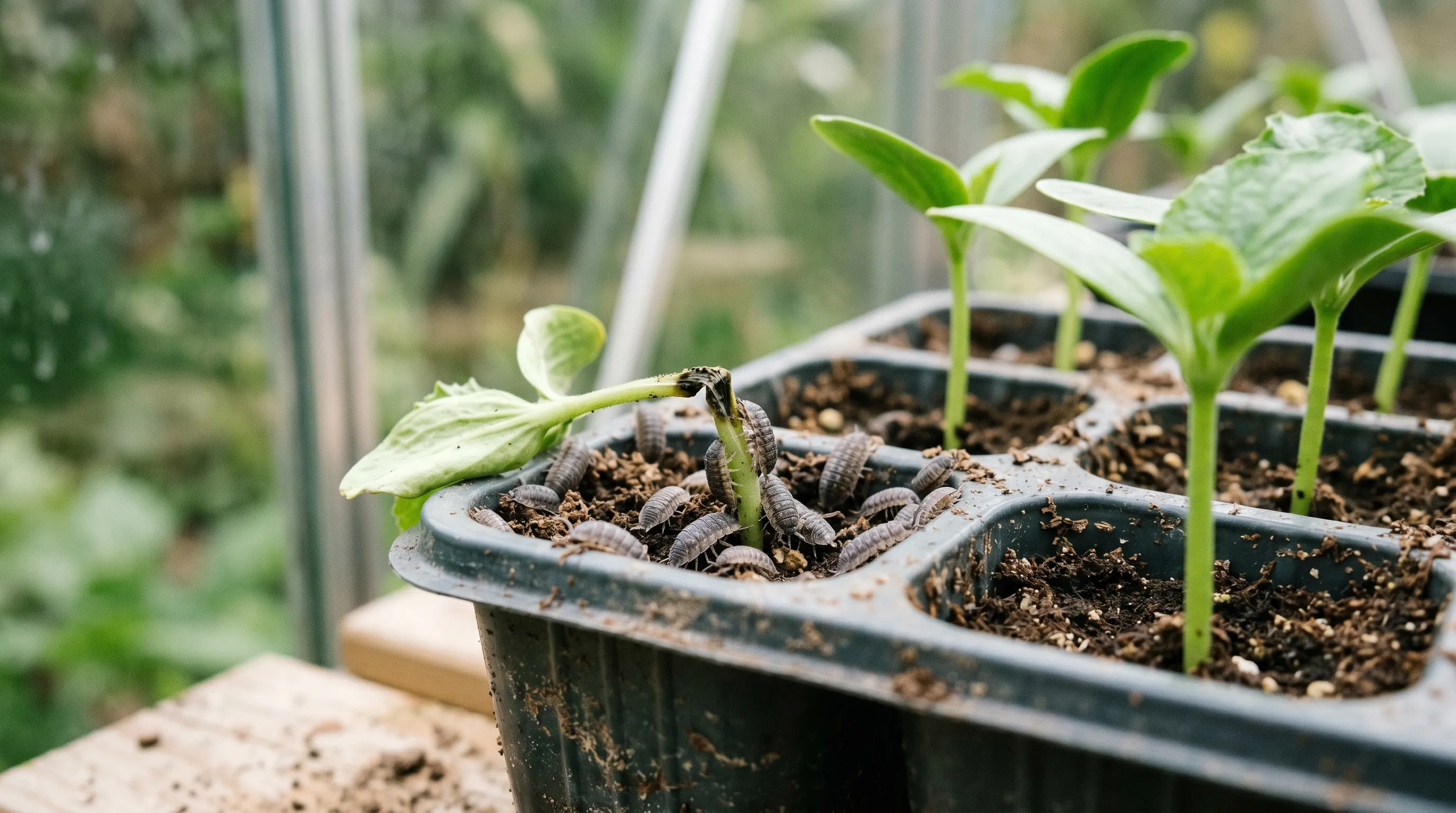 Classic woodlice damage on a cucumber seedling at soil level. Note the woodlice cluster feeding on the dying stem tissue. Above 200 woodlice per m² in a greenhouse, this damage becomes regular.
Habitat Removal: The First Step
Most UK woodlice problems resolve by removing the conditions they need.
Damp hiding spots to remove:
- Wooden boards laid flat on soil
- Old pots stacked on damp ground
- Fallen leaves and plant debris near vulnerable crops
- Hessian sacks and rags left damp
- Bricks and stones flat on greenhouse floor
- Cardboard sheets on greenhouse benches
Habitat to keep (woodlice tolerated here):
- Compost heaps (welcome breakdown)
- Mulch on top of soil (the woodlice work below the surface)
- Leaf litter in shrub borders
- Wildlife log piles
For the wider organic pest management approach, our organic guide covers the integrated approach that works for woodlice and many other UK garden invertebrates.
Greenhouse Humidity Control
The most effective long-term woodlice control in greenhouses is humidity reduction.
Target humidity:
- Below 70% RH prevents large woodlice populations
- 70-85% RH supports moderate populations
- 85%+ RH supports explosive population growth
How to reduce greenhouse humidity:
- Install a second roof vent (most UK greenhouses come with only one)
- Add a louvre vent at the lower wall
- Avoid overhead watering; use base watering or drip lines
- Water in the morning, not evening
- Space plants for airflow
- Open vents and doors during dry days
- Add a hygrometer (£6-£15) to monitor humidity
For the full greenhouse ventilation detail, our ventilation guide covers vent sizing, automatic openers and humidity control.
Diatomaceous Earth: The Effective Chemical-Free Treatment
For high-population woodlice problems that habitat removal does not solve, diatomaceous earth (DE) is the most effective chemical-free treatment.
DE is a fine silica powder made from fossilised diatoms (microscopic algae). Microscopically sharp particles damage the woodlice exoskeleton on contact and absorb the body wax that keeps them from dehydrating.
UK products: Diatom DE Plus (£12-£20 per 500g), Vitax Slug Off Pellets and Powder (£8-£15), Defenders Insect Powder (£10-£18 per 1kg).
Apply as a 25mm-wide barrier line along greenhouse base. Surround vulnerable seedling trays. Light dusting under benches and against walls. Reapply after every watering. Avoid pollinator-visited plants.
DE is food-grade safe for humans and pets. Wear a dust mask when applying to avoid inhalation. The powder is harmless once settled but irritates lungs at application.
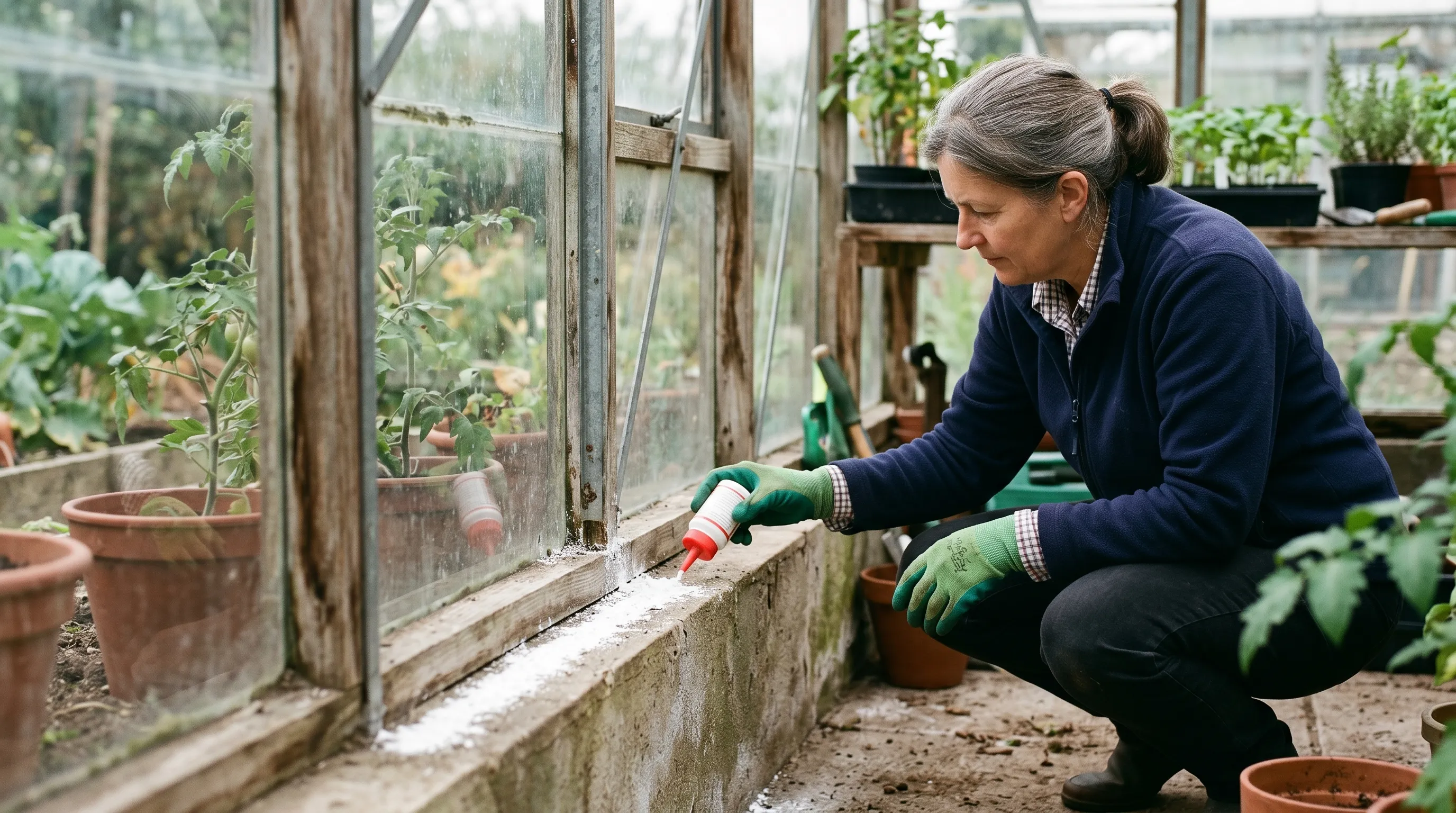 Diatomaceous earth applied as a barrier line at the greenhouse base. The sharp silica particles damage woodlice exoskeletons on contact. Reapply after watering or rain.
When Not to Treat (90% of UK Gardens)
Most UK gardens benefit from leaving woodlice alone. Woodlice are food for hedgehogs, shrews, robins, blackbirds, and beneficial spiders. They speed compost decomposition by 20-30%. They are part of the soil food web. Healthy outdoor populations cause no measurable plant damage. Indoor populations indicate a damp problem (treat the damp, not the woodlice).
Common Mistakes With Woodlice Control
Mistake 1: spraying with insecticide. Woodlice are crustaceans, not insects. Most garden insecticides do not affect them at standard rates.
Mistake 2: panicking at any woodlice. Outdoor garden woodlice are beneficial. Only intervene above 200 per m² in greenhouses or seedling areas.
Mistake 3: blaming woodlice for slug damage. Slugs do the lion’s share of seedling damage at night. Woodlice take the blame because they cluster at the dying tissue afterwards.
Mistake 4: applying DE to wet surfaces. DE works only when dry. Reapply after every watering.
Mistake 5: removing leaf litter from shrub borders. This removes ground beetles, hedgehogs, and other beneficial wildlife alongside the woodlice. Keep leaf litter; remove wood boards on damp soil instead.
For the wider organic pest control across UK gardens, our organic guide covers the integrated approach.
Woodlice Calendar UK Month-by-Month
| Month | Woodlice task |
|---|---|
| January | Clear greenhouse floor of debris from winter |
| February | Inspect under benches and pot stacks |
| March | Begin spring habitat clearance |
| April | Check humidity baseline; install vents if needed |
| May | Peak seedling vulnerability; monitor under trays |
| June | Continue habitat clearance through summer |
| July | Greenhouse humidity peak; check ventilation |
| August | Strawberry watch; remove fruit touching soil |
| September | Autumn clearance of debris before damp weather |
| October | Final greenhouse humidity check before winter |
| November | Clear plant debris before winter dormancy |
| December | Plan next year’s vent additions if needed |
Frequently asked questions
Do woodlice damage garden plants?
Rarely. Woodlice are decomposers feeding on dead organic matter. Damage to living plants occurs only at very high populations (200+ per m²) in damp greenhouses, where they may chew seedling stems and ripe strawberries. Healthy outdoor garden populations cause no significant damage.
How do I get rid of woodlice in a UK greenhouse?
Drop relative humidity below 70% by adding roof vents and a louvre vent. Remove damp hiding spots: old pots on soil, fallen leaves, wooden boards on the floor. Clear under staging benches weekly. Apply diatomaceous earth as a barrier only if populations remain high after habitat changes.
Are woodlice good or bad for the garden?
Mostly good. Woodlice break down dead leaves, plant debris and rotting wood into soil-improving organic matter. They are part of the compost food chain. Only become problematic at very high populations in greenhouses or seedling areas where they may damage soft tissue.
What kills woodlice in greenhouses?
Diatomaceous earth (food-grade silica powder) is the most effective UK chemical-free control. It damages the woodlice exoskeleton on contact and dehydrates them. Apply as a 25mm-wide line along greenhouse base and around vulnerable seedling trays. Reapply after watering.
Why do I have so many woodlice in my greenhouse?
Damp conditions, organic debris, and hiding spots. Greenhouses above 70% humidity with wooden boards, old pots and fallen leaves on the floor create perfect woodlice habitat. Populations can reach 500 per m² within 6 weeks. Drop humidity and clear debris to push them out.
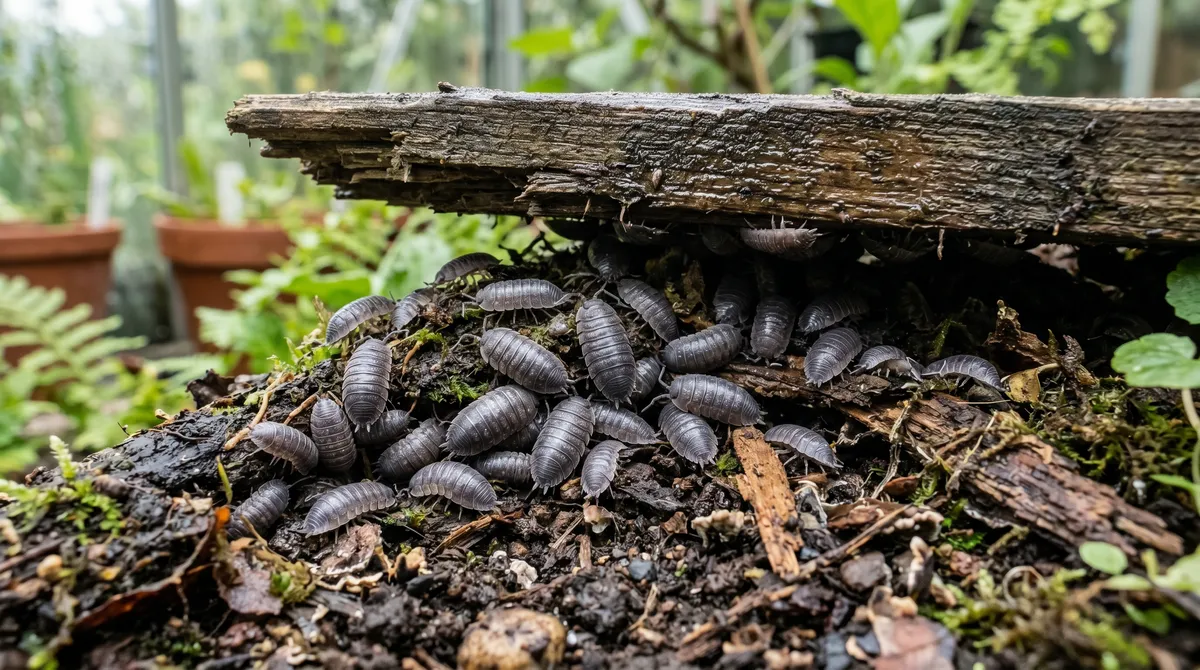
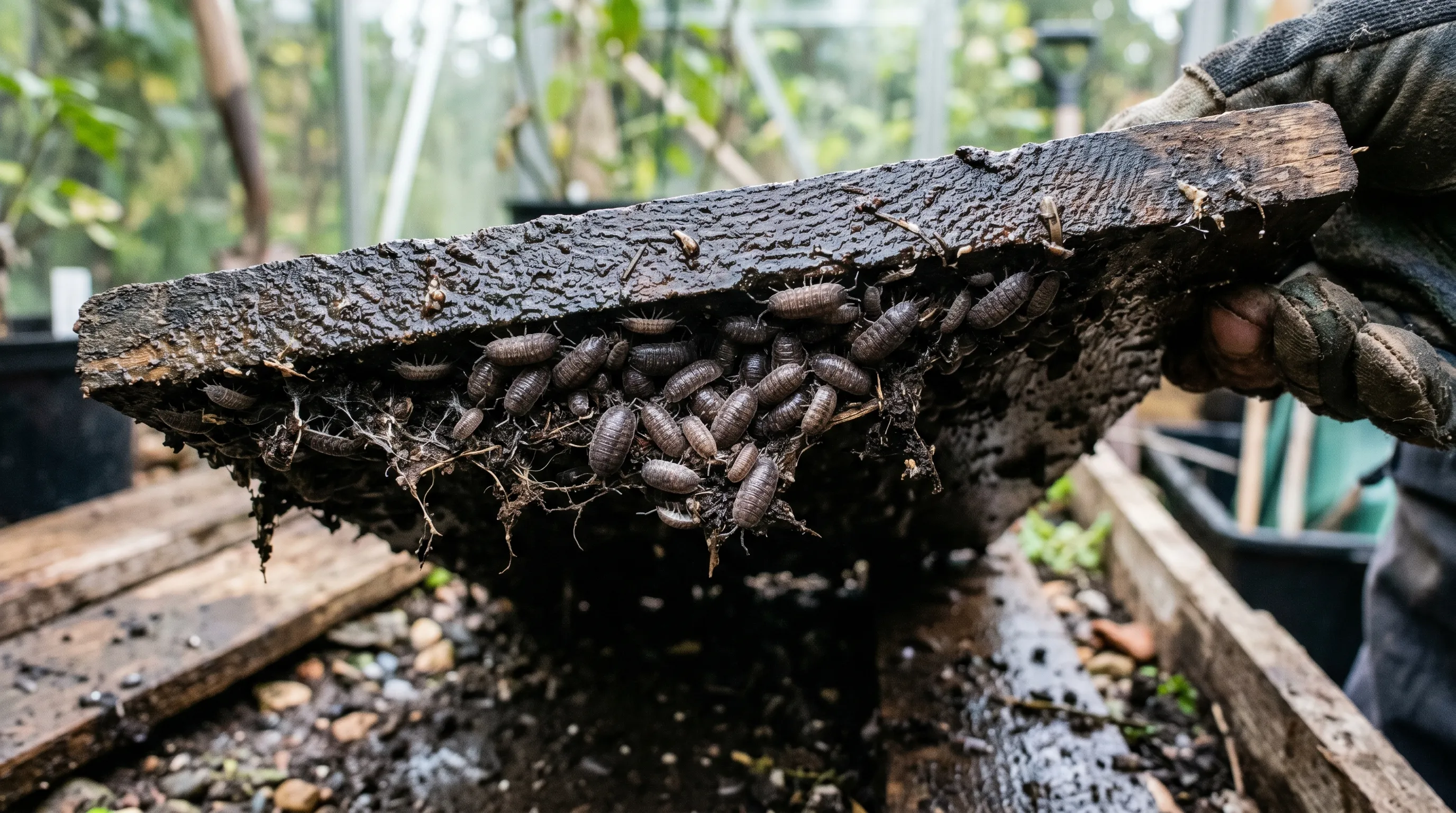 Typical woodlice cluster under a damp board left on the greenhouse floor. Remove all wooden boards from greenhouse floors to eliminate this habitat type. The single biggest source of greenhouse woodlice populations.
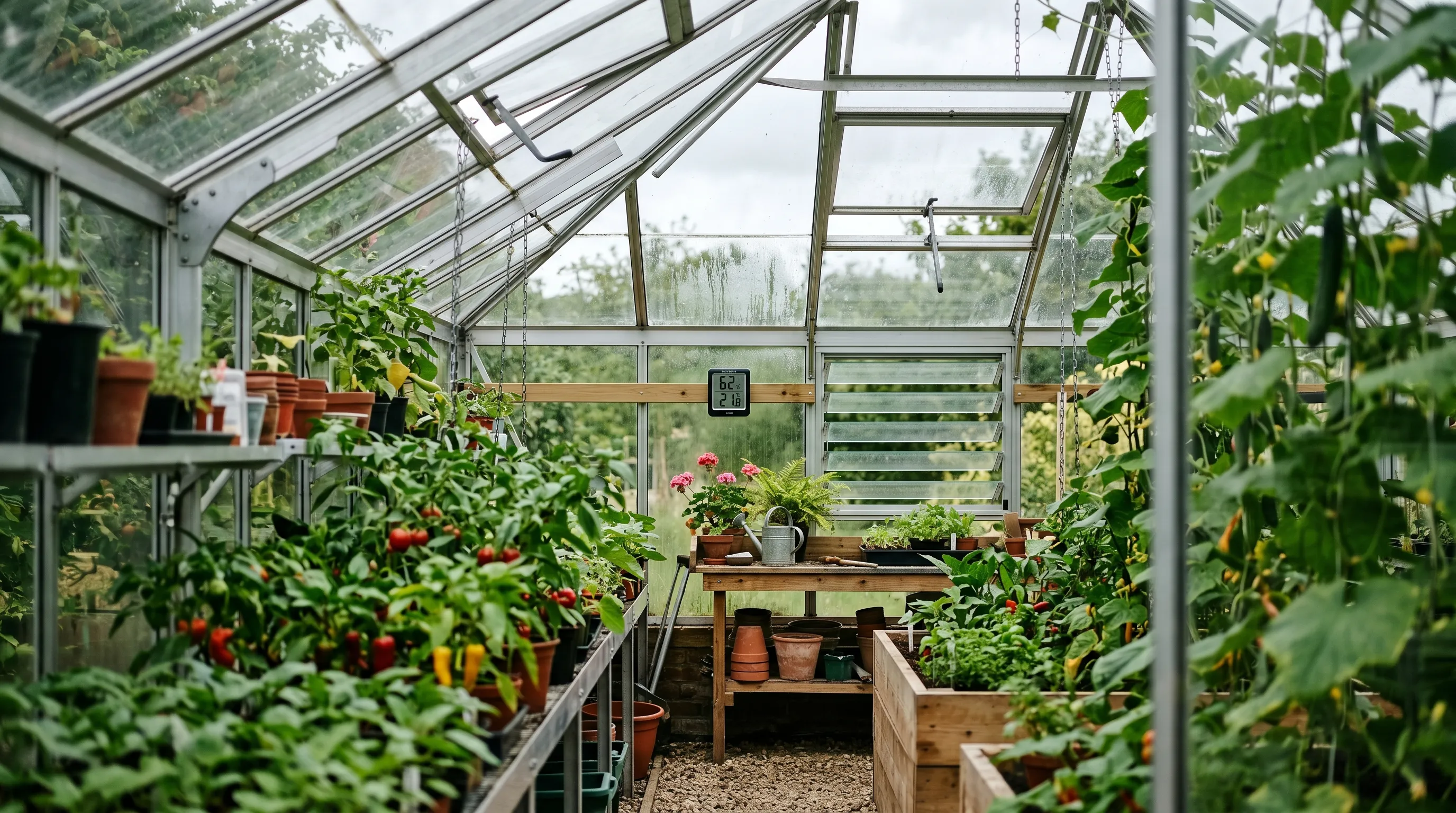
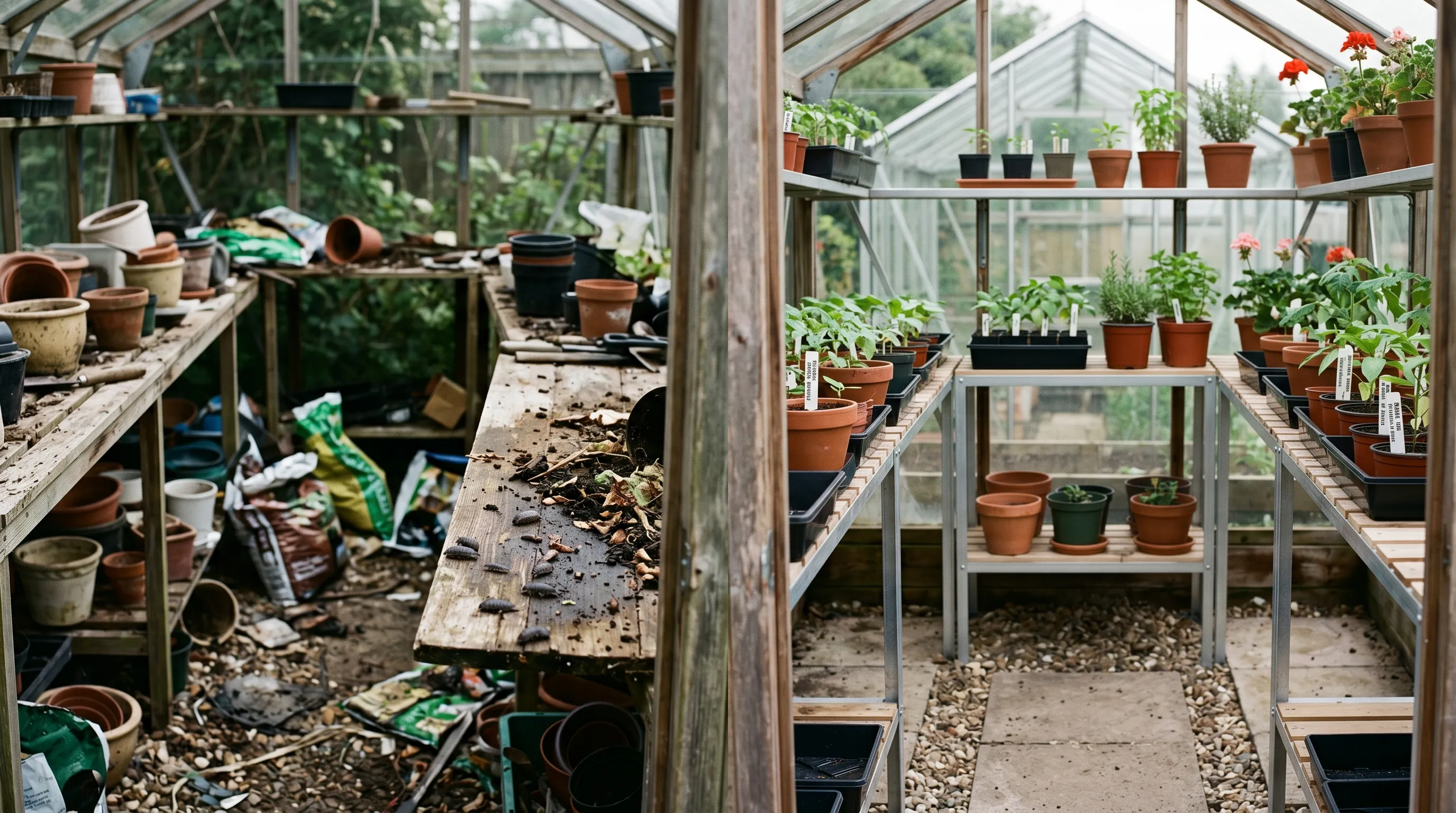 The habitat-removal difference. Left: cluttered greenhouse floor with debris-rich woodlice habitat. Right: cleared floor with only essential staging. The cleared greenhouse holds 70-85% lower woodlice populations.
Now build the wider greenhouse pest defence
Our team produces practical UK gardening guidance from source research, contributor records and established horticultural practice. Editorial standards are overseen by Matt W.