Key takeaways
- Phytophthora is a water mould (oomycete), not a fungus, so fungicides do not cure it
- It needs standing water: zoospores swim through wet soil to reach roots
- The giveaway is a dark reddish-brown stain under the bark at the stem base
- Honey fungus shows white sheets and black bootlaces; phytophthora shows neither
- No cure once established: improve drainage, destroy the plant, do not replant susceptible species
- P. ramorum on larch and rhododendron is notifiable to APHA in the UK
Phytophthora root rot is one of the most common reasons a healthy-looking shrub suddenly gives up and dies. It is a soil-borne water mould that rots roots and stem bases in wet, badly drained ground. Most people reach for honey fungus as the culprit, but phytophthora is far more widespread in gardens and behaves very differently. It thrives where water sits. On heavy clay, in a low border, or in a pot that never dries out, it finds the conditions it needs.
This guide covers what phytophthora actually is, how to tell it apart from honey fungus with a single bark cut, and why there is no cure once it takes hold. We cover the plants it hits hardest, the drainage fixes that stop it, and the resistant species worth replanting.
What phytophthora root rot actually is
Phytophthora is a genus of water moulds, or oomycetes. That word matters. Despite the “-phthora” ending and the rot it causes, it is not a true fungus. It sits in a separate group of organisms, the Straminipila, closer to algae than to mushrooms. Its cell walls are made of cellulose, not the chitin that fungi use. This single fact explains why ordinary garden fungicides do nothing against it.
There are more than 100 named species. In UK gardens the ones that matter most are P. cinnamomi, the classic warm-loving root killer, and P. ramorum and P. kernoviae, the notifiable pair behind larch and rhododendron dieback. Others include P. cambivora, tied to beech decline and sweet chestnut ink disease.
The name comes from the Greek for “plant destroyer”. It earns it. Phytophthora infestans caused the Irish potato famine, and its woody-plant relatives quietly kill shrubs and trees across Britain every wet winter.
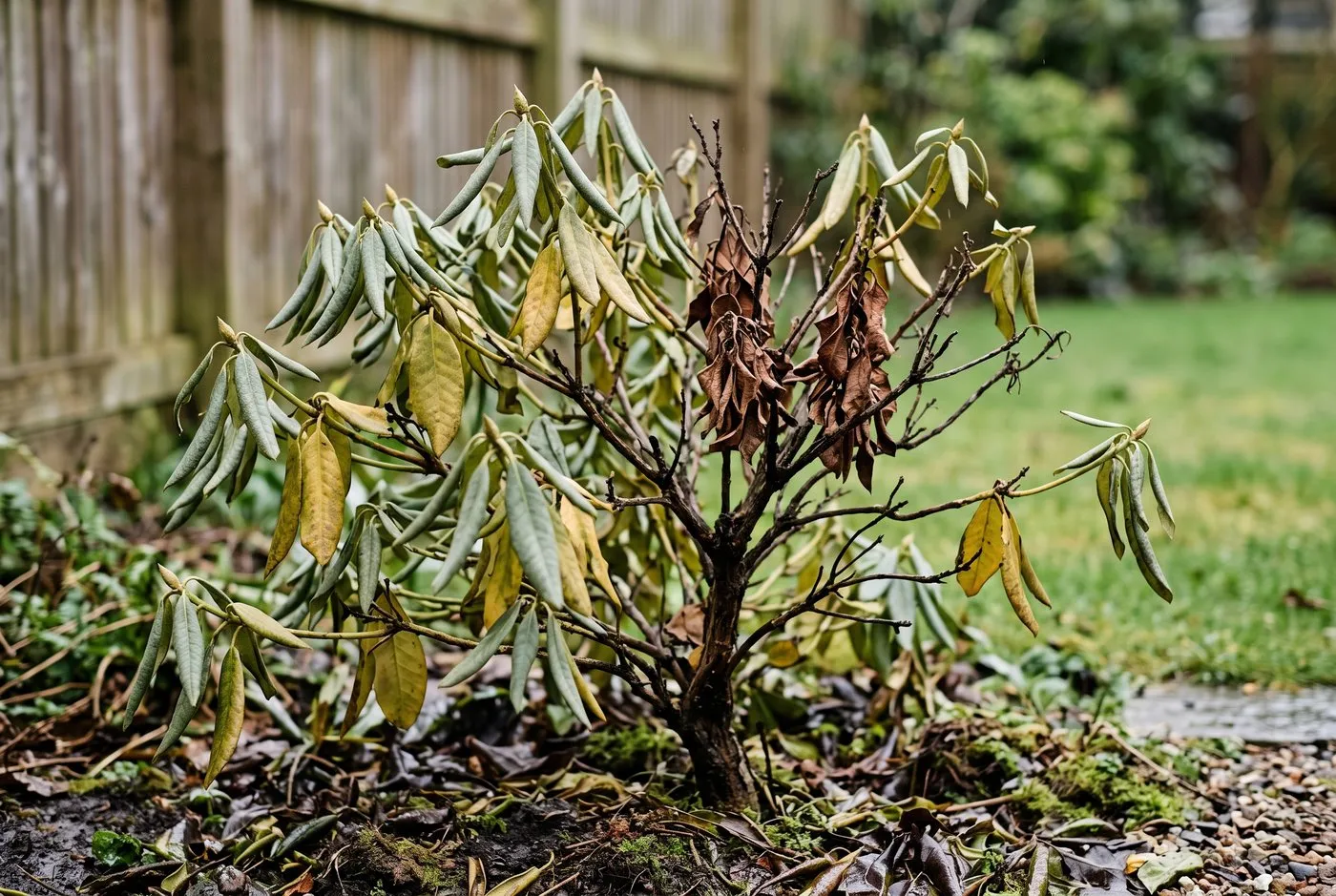 A rhododendron thinning and yellowing from the roots up. Sparse, dull foliage and whole-branch dieback in a wet spot are the first outward signs of phytophthora.
Phytophthora root rot or honey fungus? The bark test
The fastest way to separate the two is a single cut. Slice or peel a small window of bark at the base of the trunk, right at soil level. Phytophthora leaves a dark reddish-brown or chocolate stain in the inner bark and outer wood, often with a clear edge between dead brown tissue and healthy cream tissue above. Sometimes there is a dark, sticky bleed on the stem, called a bleeding canker.
Honey fungus looks nothing like this. Under the bark you find flat, creamy-white sheets of fungal growth that smell strongly of mushroom. In the surrounding soil you find black, bootlace-like strands called rhizomorphs. In autumn, clumps of honey-coloured toadstools may appear at the base. Phytophthora produces none of these. No white sheets, no bootlaces, no toadstools.
Get this diagnosis right before you act. The treatments differ, and so does the list of plants you can safely replant. Our full guide on how to deal with honey fungus covers that separate disease in detail. If you are unsure why a plant died at all, our sudden tree death diagnostic guide walks through the wider list of causes.
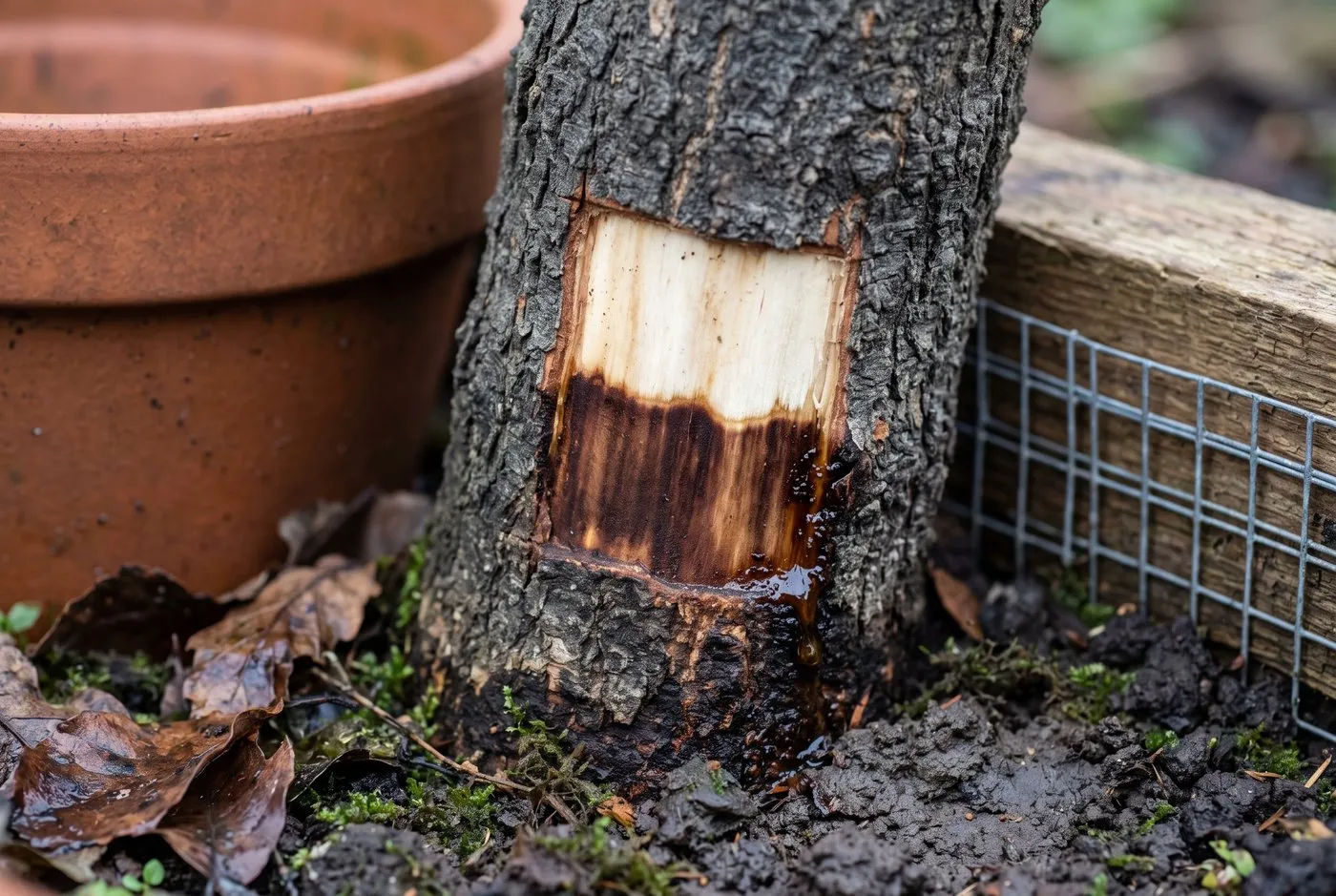 Peel a small window of bark at the collar. A dark chocolate-brown stain in the inner bark, with a clean edge against healthy cream tissue, confirms phytophthora.
The zoospore lifecycle behind the rot
Phytophthora needs water to spread, and understanding its lifecycle shows you exactly why drainage is the whole battle. The disease runs through clear stages.
- Resting spores wake up. Tough oospores and chlamydospores survive in the soil for years, in old root fragments and dead tissue. When soil warms above about 12 to 15C and turns wet, they germinate.
- Sporangia form. Each germinating spore produces a sac called a sporangium. This is the reproductive engine. It only forms in saturated soil.
- Zoospores swim. In waterlogged ground the sporangium releases dozens of zoospores, each with two tiny flagella. They swim through the films of water between soil particles. Most species are most active between 15 and 25C.
- Roots are invaded. Zoospores are drawn to chemicals leaking from root tips. They land, encyst, and push a thread into the fine feeder roots. The roots turn brown and mushy, and the plant loses its ability to take up water.
- The plant collapses. With the roots destroyed, the shrub wilts even in wet soil. This is the cruel signature: a plant dying of thirst while standing in mud.
The critical mistake most gardeners make is treating the symptoms above ground. They water the wilting plant more, which is exactly what the pathogen needs. More water means more zoospores, and faster death. The single act of understanding this cycle changes everything you do next.
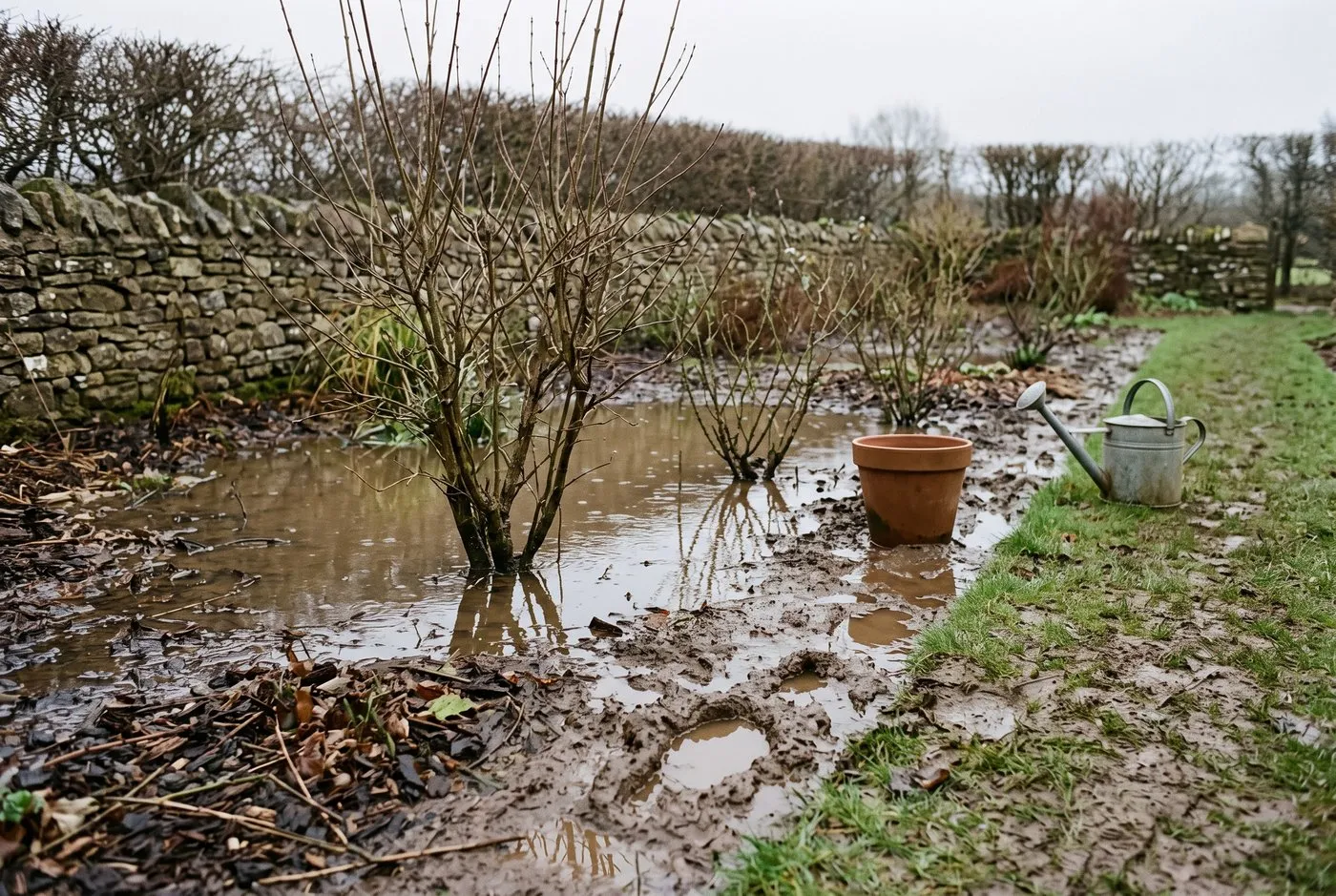 Phytophthora zoospores swim through films of water in saturated soil. A border that ponds like this after rain is the perfect nursery for the disease.
Symptoms of a shrub dying from the roots up
Phytophthora symptoms show above ground long after the damage is done below. The pattern is usually slow decline rather than a single dramatic collapse, though hot dry spells can trigger sudden wilting in a badly rotted plant.
Watch for sparse, undersized foliage that looks dull and off-colour. Leaves often turn yellow or bronze and drop early. Whole branches die back, frequently on one side of the plant first. Growth slows and shoots stay short. Evergreens like rhododendron and yew go a grey-green then brown, holding dead leaves rather than dropping them cleanly.
Below ground the roots tell the real story. Dig gently at the edge of the plant and the fine feeder roots are brown, soft and sloughing, not white and firm. The bark on larger roots peels away easily to show brown tissue underneath. In many shrubs the rot climbs from the roots into the collar, where you find the tell-tale stain.
A man examining the base of a failing shrub, hands on the trunk, is doing the right thing. The collar is where the evidence sits.
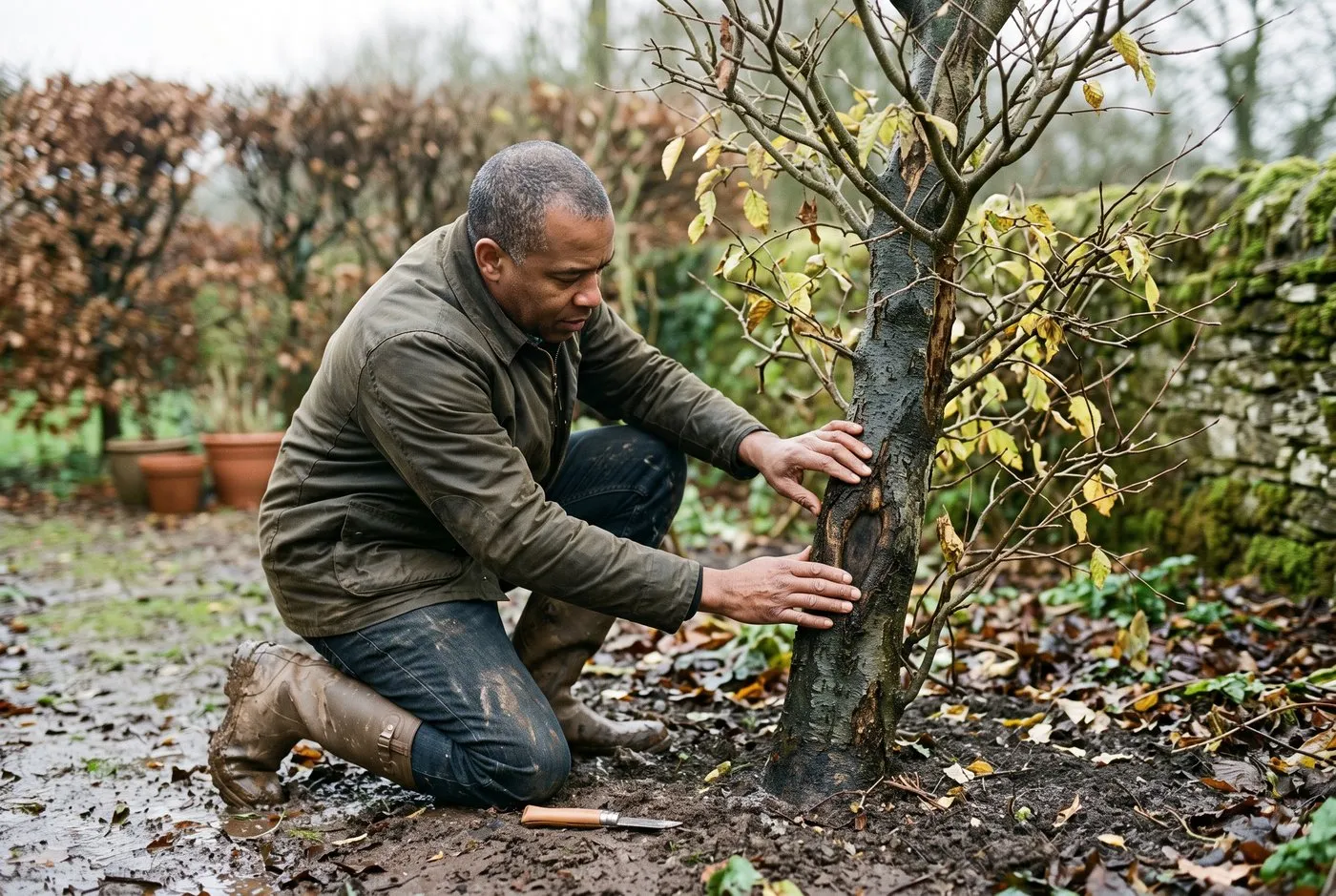 Checking the collar is the key diagnostic step. Feel for soft, sunken bark at soil level, then cut a small window to look for the brown stain.
Which plants phytophthora hits hardest
Some plants are far more vulnerable than others, and knowing the high-risk list helps you diagnose and replant well. Rhododendrons and larch top the list, both for ordinary root rots and for the notifiable P. ramorum. The table below ranks common UK garden and countryside plants by how badly phytophthora affects them.
| Plant | Common Phytophthora | Main symptom | Risk level |
|---|---|---|---|
| Rhododendron and azalea | ramorum, kernoviae, cinnamomi | Wilt, dieback, stem lesions | Very high |
| Larch (Larix) | ramorum | Bleeding cankers, whole-tree death | Very high |
| Lawson cypress (Chamaecyparis) | lateralis, root rots | Foliage browning, root death | High |
| Yew (Taxus) | cinnamomi, root rots | Grey-green then brown, dieback | High |
| Box (Buxus) | root rots (plus separate blight) | Root death, patchy die-off | Moderate to high |
| Beech (Fagus) | cambivora, kernoviae | Bleeding canker, crown thinning | Moderate |
| Sweet chestnut | cambivora, cinnamomi | Ink disease, root rot | Moderate |
| Apple and cherry | cactorum, root rots | Collar rot, gradual decline | Moderate |
Rhododendron is the single riskiest garden shrub because it hosts several Phytophthora species and spreads them to nearby plants. If you have lost a rhododendron to root rot, do not replant another in the same spot. Larch is the countryside problem: P. ramorum has led to millions of trees being felled across Britain. The Woodland Trust guide to Phytophthora ramorum covers the wider woodland picture. For garden shrubs, our rhododendron growing guide explains the drainage they need to stay healthy.
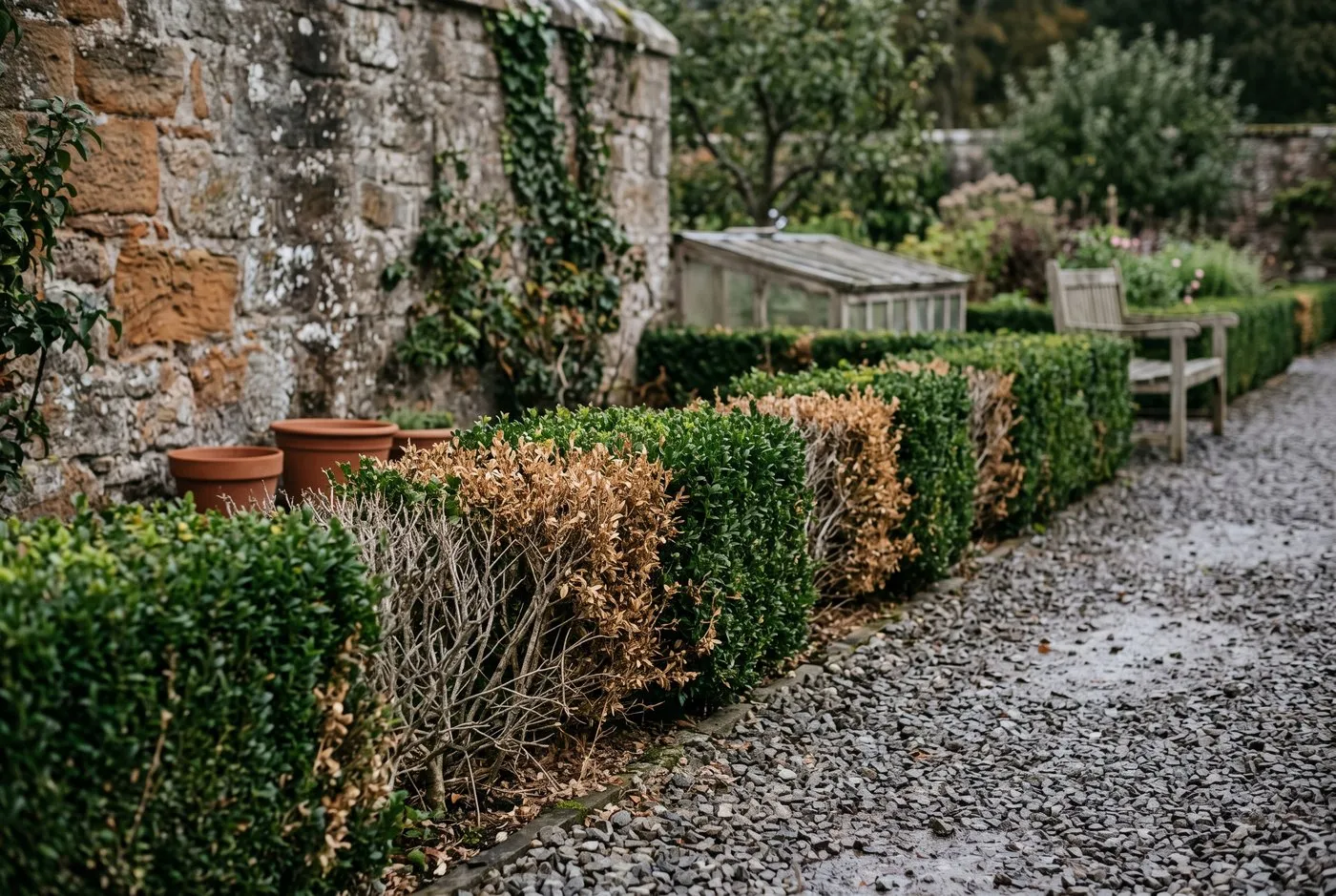 Patchy brown die-off along a formal box hedge. Root rots take box out in irregular patches, unlike box blight, which strips leaves from the top down.
Why the soil, not bad luck, killed your shrub
The root cause of phytophthora is almost always poor drainage, not the pathogen itself. The spores are present in most soils at low levels. They only turn deadly when the ground stays saturated long enough for zoospores to swim and multiply. Fix the water and you remove the weapon.
This is why phytophthora is so common on heavy clay, in compacted ground, at the bottom of slopes, and in pots with blocked drainage holes. It is also why the same wet corner of a garden kills plant after plant. Gardeners blame the plants or the weather. The real fault is a spot that holds water for days after rain.
Overwatering does the same thing in containers. A shrub sitting in a saucer of water, or in dense peat-based compost that never dries, rots from the roots up. Permanent prevention means changing the growing conditions, not treating the plant. Break up compacted subsoil, add coarse grit, dig a soakaway, or build the planting position up above the wet. Our guide to improving clay soil sets out the practical methods for opening up heavy, water-holding ground.
Gardener’s tip: After heavy rain, walk your garden and mark every spot where water still stands after two hours. Those puddles map your phytophthora risk exactly. Never plant a susceptible shrub in one without raising the ground first. A 25cm mound of free-draining soil does more than any spray.
Can you cure phytophthora root rot?
There is no cure for a plant already infected with phytophthora root rot. This is the hard truth most people do not want to hear. Once the roots and collar are rotted, the plant cannot recover, and no chemical available to gardeners will save it. Fungicides are designed for true fungi and do not touch an oomycete. The only useful actions are containment and prevention. The table below ranks them.
| Action | What it does | Effectiveness | Role |
|---|---|---|---|
| Improve drainage / raise beds | Removes the standing water zoospores need | Highest | Primary prevention |
| Choose resistant species | Avoids susceptible host plants | High | Primary at replanting |
| Remove and destroy the plant | Cuts the source of new spores | High for spread | Containment |
| Tool and boot hygiene | Stops spread to clean beds | Moderate | Supplementary |
| Phosphonate treatment (pro) | Boosts plant defences, slows spread | Low, never eradicant | Professional only |
| Garden fungicide drench | Nothing, wrong type of organism | None | Not recommended |
The gold-standard response is drainage plus resistant replanting. Everything else supports those two. When you remove a dead plant, dig out as much of the root system as you can and take away the surrounding soil if practical. Do not compost any of it. Burn it, bin it in general waste, or send it to a licensed green-waste facility. Clean your spade, fork and boots with a garden disinfectant afterwards, because muddy tools carry spores straight to the next bed. The RHS advice on Phytophthora root rots confirms there is no chemical cure available to home gardeners.
Warning: Phytophthora ramorum and P. kernoviae are notifiable in the UK. If a larch, rhododendron or nearby tree shows bleeding cankers and rapid dieback, you must report it to APHA or the Forestry Commission. Do not move plant material or soil off site, as this is how the disease has spread across the country.
For replanting, choose species that tolerate wet ground or resist the disease. Good resistant or tolerant shrubs include many dogwoods (Cornus), willows (Salix), elder (Sambucus), and hollies. Avoid rhododendron, larch, yew and lawson cypress on any ground that stays wet. After box losses, our box hedge alternatives guide lists tougher replacements for a formal hedge.
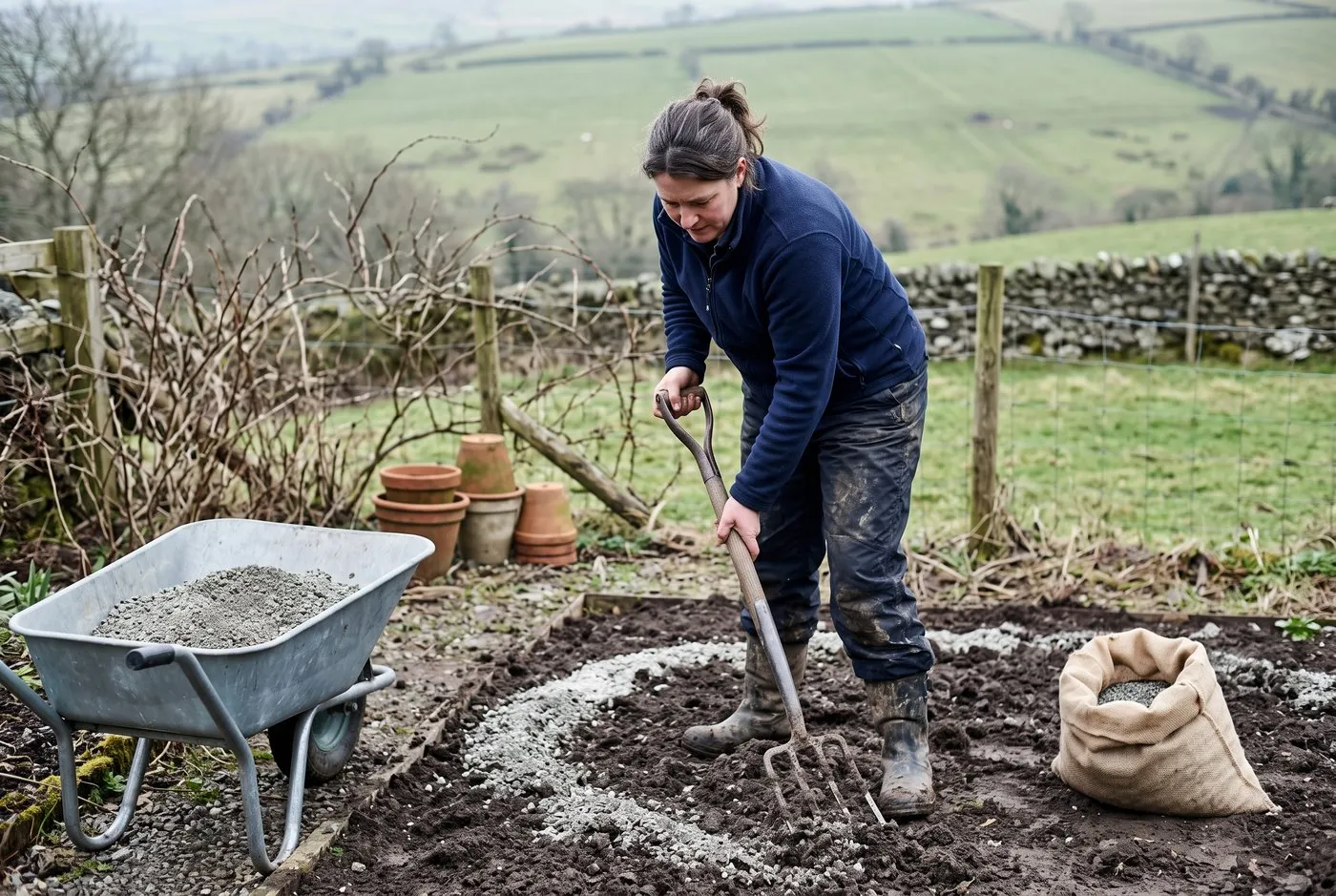 Working coarse grit into a heavy border lifts drainage and cuts phytophthora risk. Aim for a barrowload of grit per square metre on the wettest ground.
Month-by-month phytophthora watch
Phytophthora is most active in the warm, wet months, so your vigilance and drainage work should follow the calendar. This table sets out what to do through a UK gardening year.
| Month | Task |
|---|---|
| January | Check drainage on dormant beds. Mark spots that stay waterlogged after rain. Do not replant susceptible shrubs now. |
| February | Dig soakaways and improve drainage while soil is workable but not frozen. Plan resistant replacements for lost plants. |
| March | Soil warms above 12C, spores stir. Inspect evergreens for dull, thin foliage after winter wet. |
| April | Plant new shrubs on raised mounds now, into warming, draining soil. Avoid firming clay when sticky. |
| May | Growth checks reveal weak plants. Watch rhododendrons and yew for one-sided dieback as temperatures climb. |
| June | Peak zoospore activity in warm, wet spells. Never overwater containers. Keep pots off saucers of standing water. |
| July | Hot spells trigger sudden wilting in badly rotted plants. Check the collar for the brown stain before blaming drought. |
| August | Continue container care. Remove and destroy any confirmed phytophthora plant now rather than leaving it. |
| September | Autumn rains return. Clear blocked drains and gullies before the wet season builds. |
| October | Lift and store tender container shrubs somewhere free-draining. Avoid leaving pots in trays that fill with rain. |
| November | Report any suspected notifiable cases on larch or rhododendron to APHA before winter. Do not move soil. |
| December | Review the year’s losses. Any spot that killed two plants needs drainage work, not another shrub. |
Common mistakes when dealing with phytophthora
- Blaming honey fungus without checking. Honey fungus gets the blame for most mystery deaths, but phytophthora is more common in wet gardens. Always cut the bark and look for the brown stain before deciding. The wrong diagnosis leads to the wrong replanting.
- Watering the wilting plant. A shrub wilting in wet soil looks thirsty, so people water it. This feeds the pathogen and speeds the collapse. If the ground is already wet, more water is the last thing the plant needs.
- Replanting the same species in the same spot. Phytophthora rests in the soil for years. Put another rhododendron where one just died and it will follow. Change the species, change the drainage, or both.
- Composting the dead plant. Home heaps rarely reach the temperature needed to kill resting spores. Composting an infected plant spreads the disease straight back across the garden. Burn or bin it instead.
- Ignoring tool and boot hygiene. Muddy spades and wellies carry spores from bed to bed. After working around an infected plant, scrub and disinfect your kit before touching clean ground.
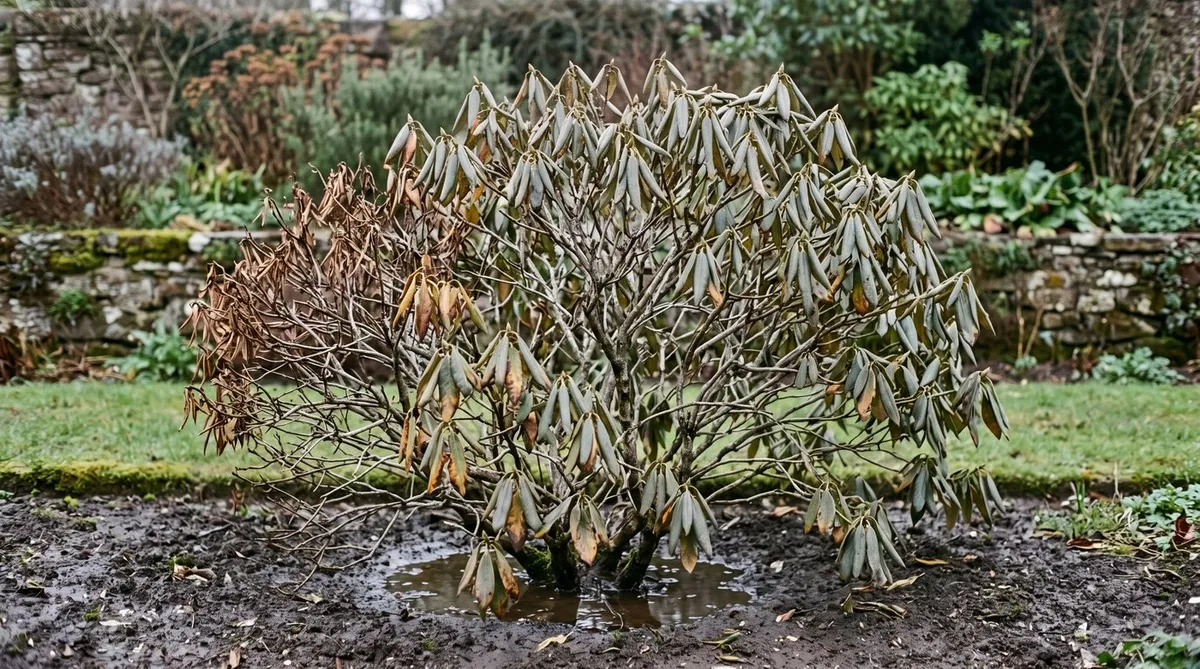
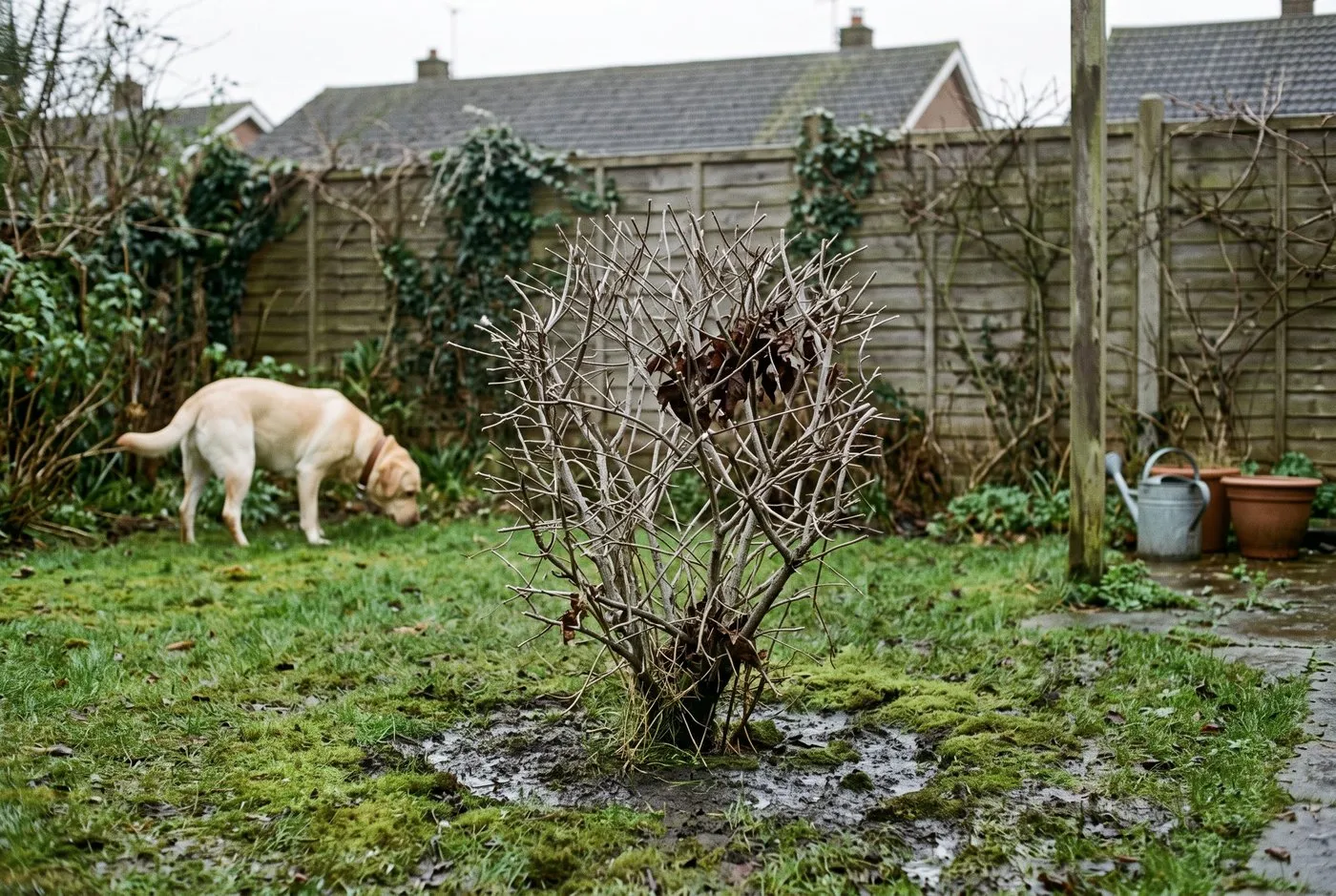 A shrub reduced to bare sticks on a wet lawn. Once the roots and collar have rotted, there is no bringing it back, so remove and destroy it.
Choosing resistant plants for wet ground
Rather than fighting phytophthora on ground it favours, work with plants that shrug it off. Species adapted to damp conditions rarely rot, because their roots cope with low oxygen and they are less attractive to the pathogen. This is the permanent fix for a chronically wet spot.
Reliable choices for damp UK gardens include dogwood (Cornus alba and C. sericea), willow (Salix), guelder rose (Viburnum opulus), alder (Alnus) and elder (Sambucus nigra). For structure, holly (Ilex) tolerates far more than most evergreens. Avoid the whole rhododendron and conifer camp on wet clay.
If the ground is genuinely boggy for much of the year, stop trying to grow ordinary shrubs there. A proper wet border or rain garden turns the problem into a feature. Our list of the best plants for wet, boggy soil gives 18 options that positively enjoy the conditions that kill susceptible shrubs.
Frequently asked questions
What is phytophthora root rot?
It is a root and stem-base disease caused by water moulds called Phytophthora. These are oomycetes, not true fungi. They rot the roots of shrubs and trees in wet, poorly drained soil, causing the plant to wilt, thin and die over weeks or years.
How do I tell phytophthora from honey fungus?
Cut the bark at the base: phytophthora shows a dark reddish-brown stain, honey fungus does not. Honey fungus has white sheets of mycelium under the bark that smell of mushroom, plus black bootlaces in the soil. Phytophthora has neither. That single bark check settles most cases.
Can phytophthora root rot be cured?
No, there is no cure once a plant is infected. Fungicides do not work because phytophthora is a water mould, not a fungus. Focus on drainage, removing the affected plant, and replanting resistant species. Professional phosphonate treatments only slow it and never eradicate it.
Which plants are most at risk from phytophthora?
Rhododendron, larch, yew, box, lawson cypress and beech are among the worst hit. Rhododendron and larch also carry the notifiable P. ramorum. Fruit trees, sweet chestnut and many container shrubs suffer too. Almost any woody plant in waterlogged soil is at some risk.
Does phytophthora stay in the soil?
Yes, phytophthora survives in soil for years as tough resting spores. It persists in old roots and moves in surface water and on muddy tools or boots. This is why you should not replant the same susceptible species in the same spot after a plant dies.
Can I compost a plant killed by phytophthora?
No, never compost it. Home compost heaps rarely get hot enough to kill the resting spores. Burn the plant, bin it, or take it to a licensed green-waste site. Composting it spreads the disease back across your garden the moment you use the compost.
Is phytophthora root rot the same as sudden oak death?
It is caused by the same genus but a specific species, Phytophthora ramorum. In the UK it has killed millions of larch trees rather than oaks. On rhododendron and larch it is notifiable, so report suspected cases to APHA or the Forestry Commission.
Our team produces practical UK gardening guidance from source research, contributor records and established horticultural practice. Editorial standards are overseen by Matt W.