Key takeaways
- Sensitive crops show damage at doses near 1 part per billion
- Tomatoes, beans, peas and potatoes are the worst affected
- New growth turns ferny, cupped and twisted at the plant's tip
- Aminopyralid can persist 12 to 30 months in soil and manure
- A broad bean bioassay confirms contamination in 2 to 3 weeks for about £2.50
- Hot composting, turned and kept moist, breaks it down over 12 to 18 months
How to Spot Aminopyralid Damage on Your Crops
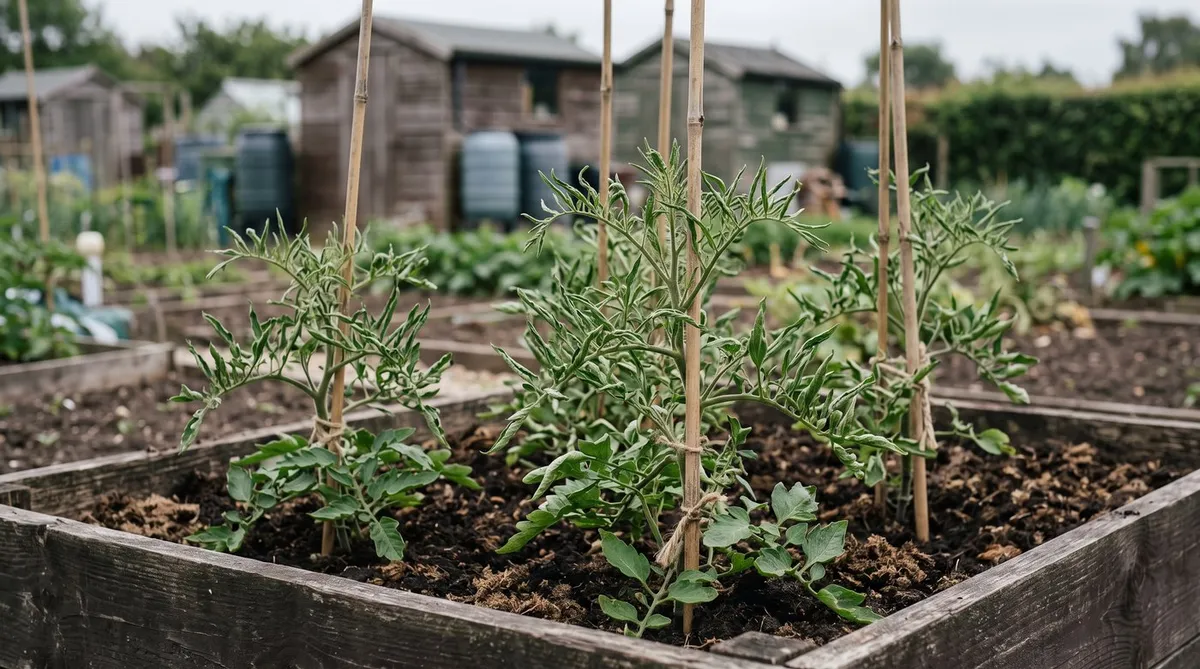
Aminopyralid damage has a signature look. Once you have seen it, you never mistake it again. The newest growth turns fern-like. Leaves grow narrow, cupped and fan-shaped, with parallel veins instead of the normal branching pattern. Growing tips curl and twist. Some stems flatten or fuse, an effect called fasciation.
The damage always shows worst on the youngest leaves at the top of the plant. Older leaves lower down often look normal. This top-down pattern is the key clue. It separates herbicide damage from most diseases, which usually start on older leaves and spread as spots or patches.
Tomatoes are the classic victim. The leaves shrink to thin ferny strands and the plant stops setting fruit. Broad beans and peas cup and curl their leaves, then stall. Potatoes throw up crinkled, feathery shoots. The plant is not diseased and not short of feed. It has been hit by a growth-regulator herbicide at a tiny dose. If your plants look like this and you added manure or fresh compost, suspect aminopyralid first. Our guide to common tomato diseases in the UK helps you rule out the look-alikes.
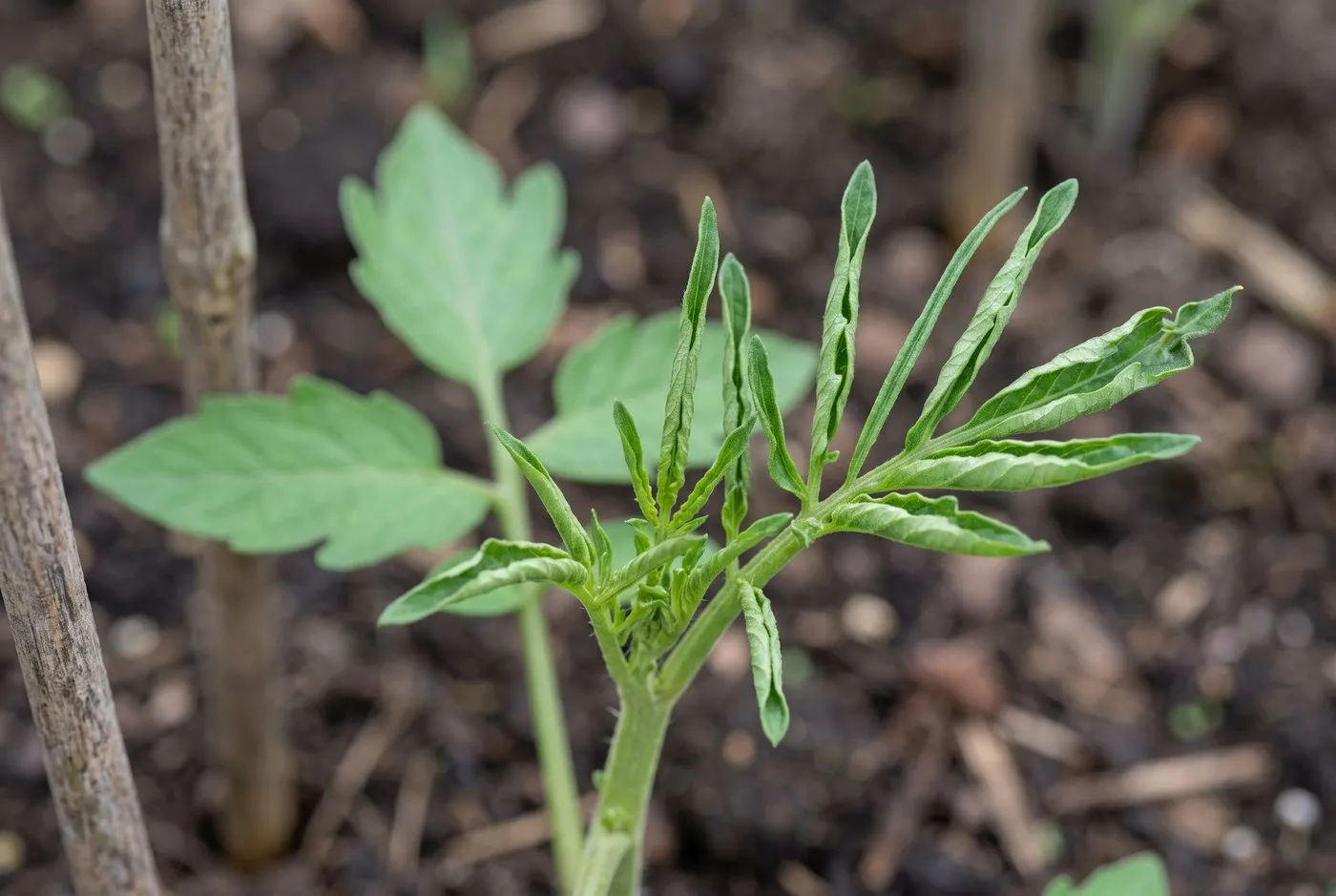 Classic aminopyralid damage: the newest tomato leaves grow thin, ferny and cupped with parallel veins. This plant was fed manure in a Midlands cottage veg patch.
How Weedkiller Gets Into Manure and Compost
The chemical starts life on farm grassland. Aminopyralid, and its close relatives clopyralid and picloram, are selective hormone herbicides. Farmers spray them on pasture to kill docks, thistles, nettles and buttercups while leaving the grass unharmed. Common UK product names include Forefront, GrazonPro, Halcyon, Pharaoh and Runway. The manufacturer is Corteva, formerly Dow AgroSciences.
Here is the problem. The herbicide binds tightly to the plant fibres in the grass. When a horse or cow eats treated grass, hay or silage, the chemical passes straight through the animal. It comes out in the dung and urine, still active. It survives stacking and rotting in the muck heap. It can even survive a trip through a commercial composting plant if the feedstock included treated straw or hay.
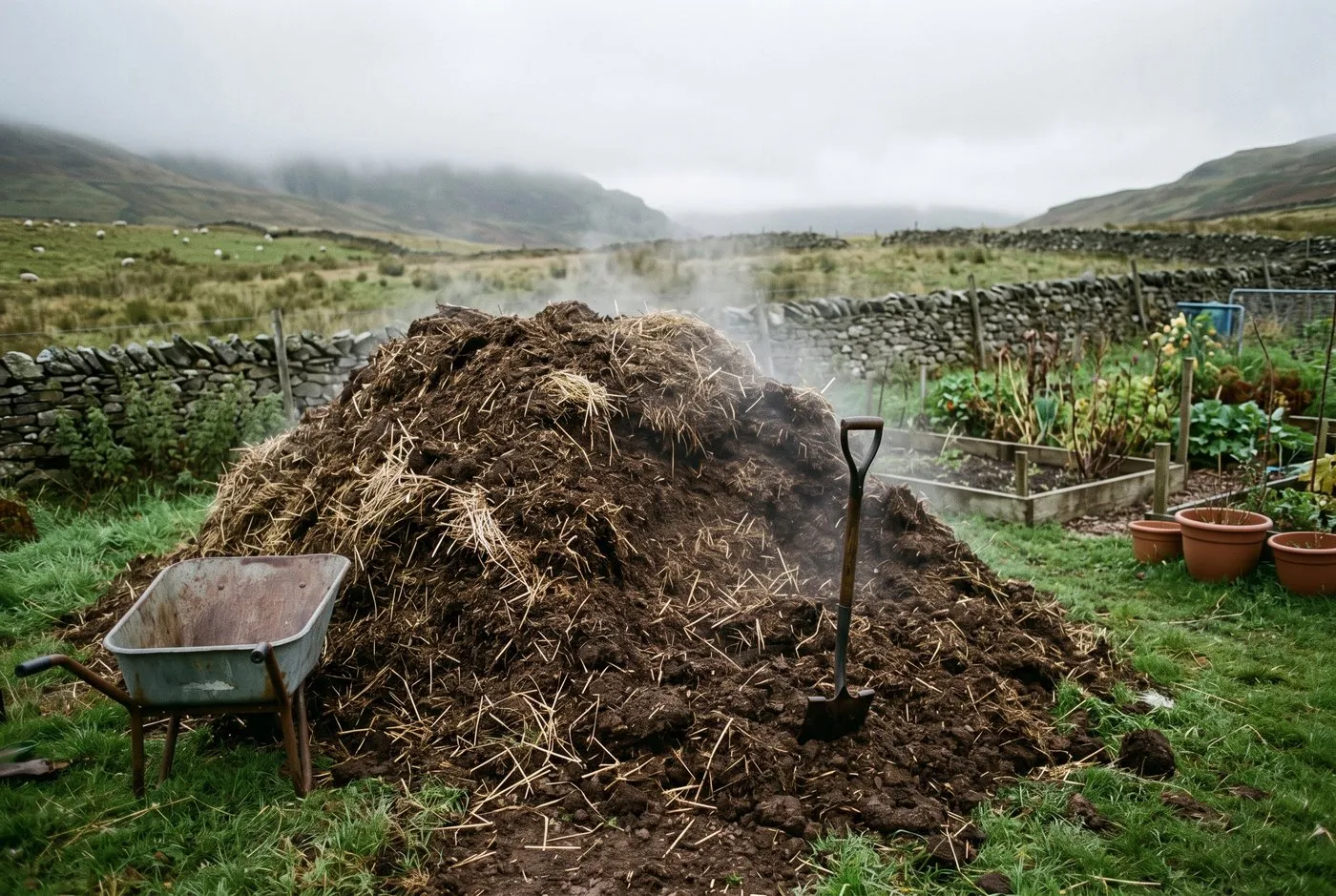 A well-rotted look means nothing here. Aminopyralid survives the muck heap intact. This pile sat beside a Welsh hillside smallholding garden.
How Long Aminopyralid Lasts and How It Breaks Down
Aminopyralid does not wash out of the soil. It breaks down only when soil microbes digest the plant material it is bound to. That process is slow, and it depends entirely on warmth, moisture and air. Understanding the stages tells you exactly what to do.
- Binding, day one. The chemical arrives locked onto lignin in the grass fibres in the manure. In this bound state it is stable and does little on its own.
- Release, months one to six. As microbes eat the organic matter, they release the herbicide into the soil solution. This is when crops take it up and show damage. Damage peaks in the first season.
- Microbial breakdown, months six to eighteen. Soil bacteria degrade the free herbicide. This runs fastest in warm, moist, aerobic soil above roughly 15C. It stalls in cold or waterlogged ground.
- Clearance, months eighteen to thirty. On heavy, cold or airless soil, full breakdown can take up to 30 months. On warm, well-worked soil it can finish inside 12.
The critical mistake most people make is assuming that time alone fixes it. It does not. Aminopyralid needs living, active soil to break down. Leave a contaminated bed cold, bare and compacted and the residue lingers far longer. The RHS guidance on aminopyralid confirms that microbial activity, not simple ageing, is what clears it.
| Condition | Soil temperature | Breakdown speed |
|---|---|---|
| Warm, moist, aerated, high organic matter | 15 to 25C | Fastest, 12 to 15 months |
| Average worked bed | 10 to 15C | Moderate, 15 to 24 months |
| Cold, heavy, compacted | Below 10C | Slow, 24 to 30 months |
| Waterlogged or airless | Any | Stalls, can exceed 30 months |
Which Crops Suffer Worst
Not all plants react the same way. A few are extremely sensitive and show damage at the tiniest trace. Others grow on with no visible effect. This matters for two reasons: it tells you what not to plant, and it tells you which crops make the best warning system.
If you must use manure you are unsure about, put it where sweetcorn or onions will go, never where tomatoes, broad beans or peas are planned. Better still, test it first.
 An allotment holder lifts a poisoned tomato plant. The whole top of the plant has gone ferny while the roots and lower stem look sound.
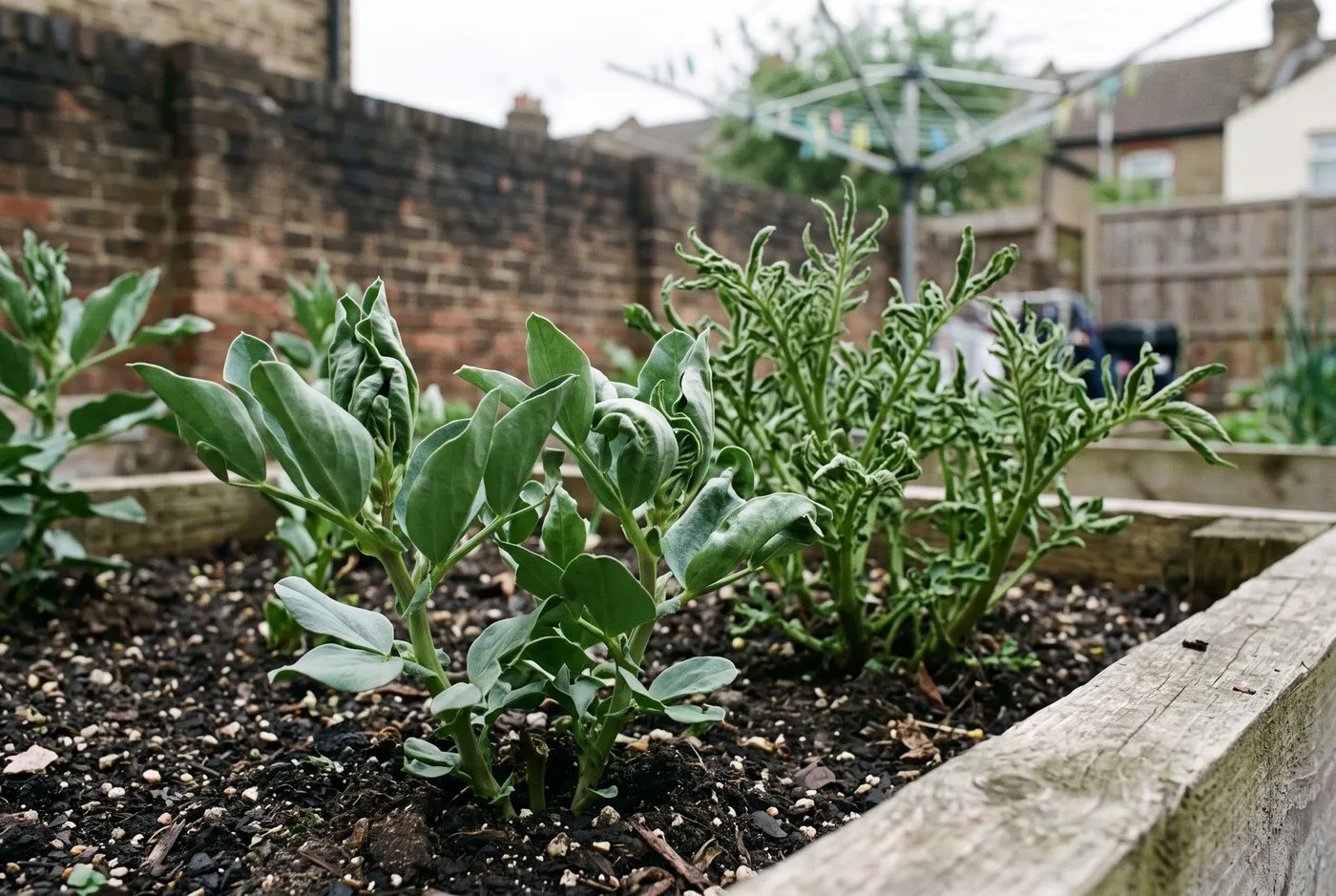 Broad beans cup their leaves and potatoes throw feathery shoots. Both reacted to contaminated manure in these terraced-street raised beds.
The Broad Bean Test: Prove Contamination at Home
Take the manure, compost or soil you suspect. Fill three or four pots with it. Fill the same number of matching pots with a compost you trust completely, ideally a fresh peat-free bag or your own home-made garden compost. Sow six broad beans or peas across the suspect pots and six in the clean control pots. Water both the same. Stand them somewhere warm and light.
Wait two to three weeks. Compare the first true leaves. If the beans in the suspect pots grow ferny, cupped or twisted while the control beans grow flat and normal, you have your answer. Contaminated. If both sets look identical and healthy, the material is safe to use.
Charles Dowding, who champions no-dig growing, recommends exactly this bean test before trusting any bulk organic matter. It has saved us a whole season more than once.
 Setting up the bean test: clean compost pots on the left, strawy suspect manure on the right, six beans sown in each batch. The potting bench sits against a walled garden.
 The result after 18 days. Control beans on the right grew normal leaves. The beans in suspect manure on the left came up ferny and cupped. Photographed in a seaside garden greenhouse.
Clearing Contaminated Manure: Methods Ranked
Once you have confirmed contamination, do not despair. The residue does break down. Your job is to speed that up. Not all methods work equally, so rank them by how well they clear the chemical and how fast.
| Method | How it works | Time to safe | Effectiveness | Role |
|---|---|---|---|---|
| Hot composting, turned monthly | microbes digest the bound herbicide in a warm, moist, aerobic heap | 12 to 18 months | High, near full breakdown | Gold standard recovery |
| Spread thinly on lawn or grass | grass is unaffected; living turf degrades the residue | 3 to 6 months | High for disposal | Best disposal route |
| Dig over and keep the bed active | aeration and warmth feed microbial breakdown | 18 to 30 months | Moderate | Slow in-place recovery |
| Remove and replace the soil or manure | physical removal of the source | Immediate | High but costly | Emergency, small beds |
| Do nothing, keep cropping sensitive plants | no breakdown driver at all | Never clears | None | Never do this |
The gold standard is hot composting. Turn the material into a heap, keep it as warm and moist as a working compost pile, and turn it every four to six weeks to keep air in. That combination is what powers the microbes that eat the herbicide. Our guide to hot, fast and cold compost methods sets out how to build and manage a heap that stays active. Spreading thinly on a lawn is the fastest disposal route, because grass ignores the chemical while the soil life underneath breaks it down.
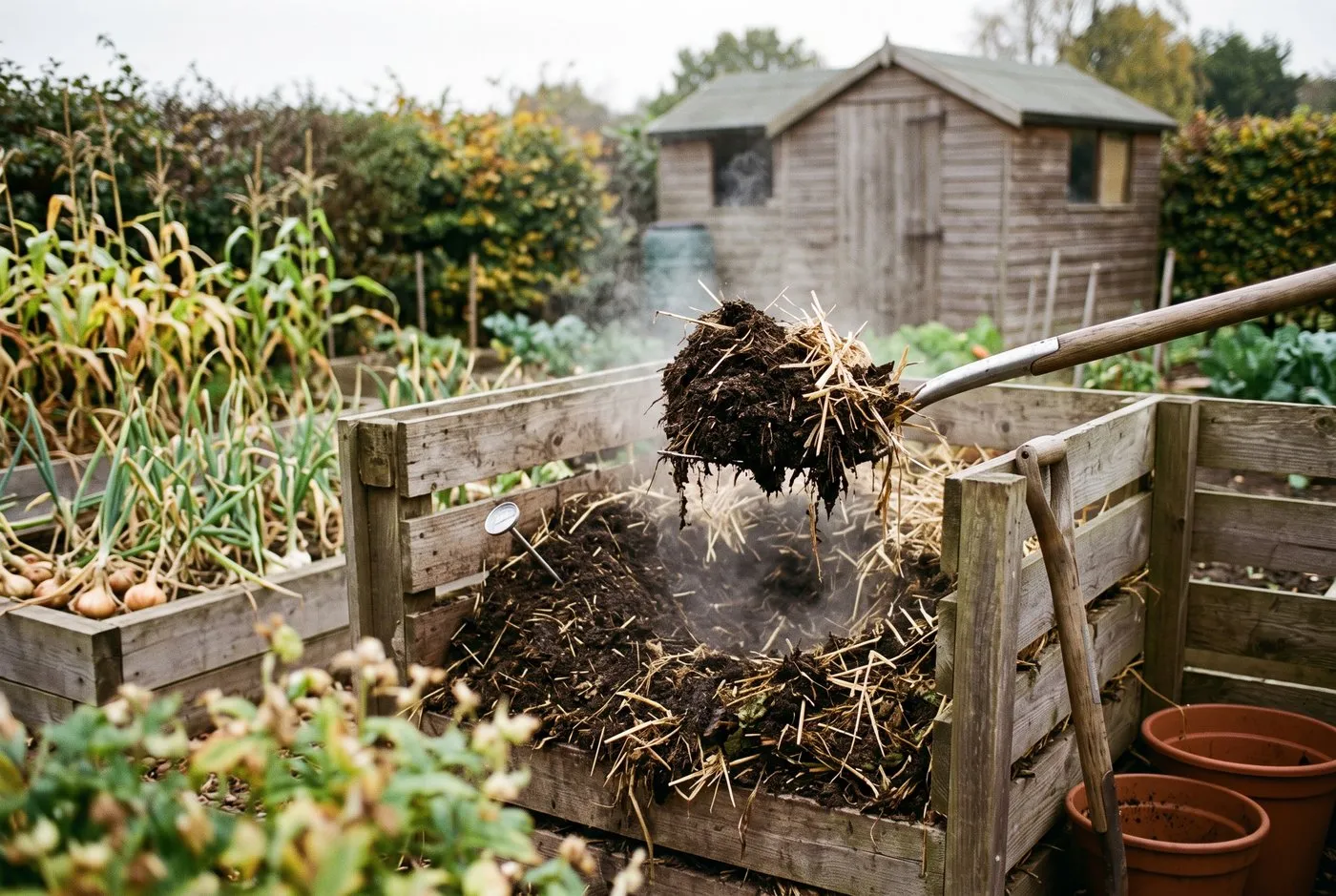 Turning the heap keeps air and warmth in, which is what drives the microbes that clear aminopyralid. This bay sits in a home veg garden compost corner.
Why Aminopyralid Keeps Catching Gardeners Out
The root cause sits in the supply chain, not in your garden. Manure looks safe. It is well-rotted, dark and crumbly, exactly what we are told to add. Nothing about its appearance warns you. The herbicide is invisible, odourless and active at one part per billion, so no amount of inspection reveals it. That is why careful, experienced gardeners get hit.
The first big UK outbreak was in 2008, which pushed Dow to suspend some products briefly. The issue has returned in waves ever since, because approval conditions rely on farmers and suppliers passing warnings down the chain. Often that message never reaches the person selling manure at the gate.
Permanent prevention comes down to one habit: know your source and test before you spread. Ask the supplier directly whether the pasture, hay or silage was treated with a broadleaf weedkiller. Keep your own green manures and cover crops cycle going so you rely less on bought-in muck. And run a bean test on anything you did not grow yourself. Garden Organic has campaigned on this for years, and its advice on aminopyralid contamination is the clearest UK reference for affected gardeners.
What to Do If You Are Affected
Act quickly and keep records. First, stop using the source at once. Do not spread any more of the batch anywhere near sensitive crops. Second, do not eat badly affected produce. Lightly damaged fruit is not proven safe, so leave it. There is no home test for residue in the crop itself.
Third, deal with the contaminated ground and material using the ranked methods above. Hot compost the manure or spread it thin on grass. Leave affected beds to recover, keep them active, and retest with beans before growing tomatoes, potatoes, beans or peas there again.
Fourth, report it. Tell your supplier and ask them to trace which field and product were involved. Report the incident to Corteva, the manufacturer, and to the Chemicals Regulation Division (CRD) at the Health and Safety Executive. Keep photos, dates, the batch, and your bean test results as evidence. Reporting is what builds the case for tighter controls and helps trace the source back up the chain.
Month-by-Month Manure Safety Calendar
| Month | Task |
|---|---|
| January | Plan the year’s soil feeding. Line up trusted manure or compost sources and ask about weedkiller use before ordering. |
| February | Start broad bean bioassay pots indoors on any manure delivered over winter. Keep them at 15 to 18C for fast results. |
| March | Read bean test results before spring digging. Only spread manure that passed a clean test. |
| April | Sow indicator beans alongside main crops in any bed you are slightly unsure about. Watch the new growth. |
| May | Check young tomatoes, potatoes and beans weekly for ferny, cupped leaves. Catch damage early. |
| June | Peak damage month. Investigate any distorted growth at once and trace it to the manure or compost used. |
| July | Turn any contaminated manure heaps to keep them hot and active. Keep them moist in dry spells. |
| August | Retest recovering beds with a fresh bean sowing. Compare against clean control pots. |
| September | Spread confirmed-clean, well-rotted manure on empty beds. Test first if the source is new. |
| October | Stack autumn manure deliveries and label them. Do not spread untested muck on veg ground now. |
| November | Turn compost and manure heaps before the cold sets in. Warmth and air speed breakdown. |
| December | Review the year’s records. Keep dated samples of every batch used for future reference. |
Common Mistakes With Manure and Compost
- Trusting well-rotted manure on looks alone. Dark, crumbly, sweet-smelling manure can still carry aminopyralid. Appearance tells you nothing about residue. Always ask the source and run a bean test before spreading.
- Assuming time cures it. Aminopyralid needs warm, moist, active soil to break down. Leaving a contaminated bed cold, bare and compacted keeps the residue in place for years. Keep affected ground worked and alive.
- Composting affected plant waste back into veg beds. The chemical stays in the tissue of the damaged plants. Cold-composting them and returning that compost spreads the problem. Hot compost it separately or dispose of it away from crops.
- Cropping the same bed with sensitive plants. Planting tomatoes or beans straight back into a contaminated bed just wastes another season. Grow sweetcorn, onions or brassicas there instead until a bean test comes up clean.
- Not reporting it. Many gardeners quietly bin the manure and move on. Without reports, the supply-chain problem never gets fixed. Report every confirmed case to the supplier, Corteva and the CRD.
Warning: Never use manure, straw or compost of unknown origin on beds destined for tomatoes, potatoes, beans or peas without testing it first. A single contaminated load can put a bed out of sensitive-crop use for up to 30 months. The cost of a bean test is a few pounds. The cost of skipping it is a whole season.
Frequently asked questions
What does aminopyralid damage look like?
New growth turns ferny, cupped and twisted, worst at the plant’s tip. Leaves grow narrow with parallel veins instead of the normal branching pattern. Growing tips curl and stall. Older lower leaves often look normal, which sets it apart from disease. Fruit set fails on tomatoes.
How long does aminopyralid stay in soil?
Usually 12 to 30 months, depending on warmth, moisture and organic matter. It breaks down when soil microbes digest the plant material it is bound to. Cold, waterlogged or airless ground slows this right down. Warm, moist, well-aerated soil clears it fastest. Retest with beans before growing sensitive crops.
Can you still eat vegetables from contaminated soil?
How do I test manure for aminopyralid?
Sow broad beans or peas in the suspect manure and compare against clean compost. Use six seeds per batch in matching pots. Wait 2 to 3 weeks and compare the first true leaves. Ferny, cupped or twisted growth means contamination. Clean, flat leaves mean the material is safe to use.
Does composting remove aminopyralid?
Not quickly. Only long, hot, turned composting breaks it down, over 12 months or more. Cold heaps and short rots do almost nothing. The chemical is bound to lignin in the plant fibres and only releases as microbes digest it. Keep the heap warm, moist and aerated, then test before use.
Which manure is safest from aminopyralid?
Manure from animals fed only untreated grass, or your own garden compost, is safest. Ask the source whether the pasture, hay or silage was sprayed with a broadleaf weedkiller. Bagged, certified composts carry lower risk but are not immune. When in doubt, run a broad bean test on any batch.
Should I report contaminated manure?
Yes. Report it to your supplier, to Corteva and to the CRD at the HSE. Keep the batch, photos and dates as evidence. Reporting builds the case for tighter controls and helps trace the source. The manufacturer investigates confirmed incidents. Ask your supplier to trace which field and product were involved.
Our team produces practical UK gardening guidance from source research, contributor records and established horticultural practice. Editorial standards are overseen by Matt W.