Key takeaways
- Damping off collapses seedlings at the soil line, often within 24 to 48 hours
- Four fungi cause most cases: Pythium, Phytophthora, Rhizoctonia and Botrytis
- The disease thrives cold and wet, below 18C, in still air and over-sown trays
- There is no cure once stems rot; a single tray can lose 100 percent of seedlings
- Cheshunt compound, the old copper fungicide, is no longer sold, so prevention is the only route
What damping off looks like and how to spot it
Damping off shows as sudden collapse. Seedlings that stood upright yesterday are flat on the compost this morning, still green but bent over at the base. Look closely at the stem where it meets the soil. You will see a thin, water-soaked, brown or black constriction, as if the stem has been pinched between finger and thumb. The tissue above it is often still healthy for a day, which is why the collapse looks so baffling.
There are two forms. Pre-emergence damping off kills the seed or the shoot before it ever breaks the surface, so you assume the seed was dud. Post-emergence damping off is the classic overnight collapse of young seedlings. Both come from the same fungi. A tell-tale sign is that losses spread outward in a patch, not at random, because the fungus moves through the wet compost from seedling to seedling.
Do not confuse it with wilting from dry compost, which recovers after watering, or with leggy, floppy seedlings that stretch for light. Those stand back up. Damping off never does. If the stem base is pinched and brown, the seedling is finished.
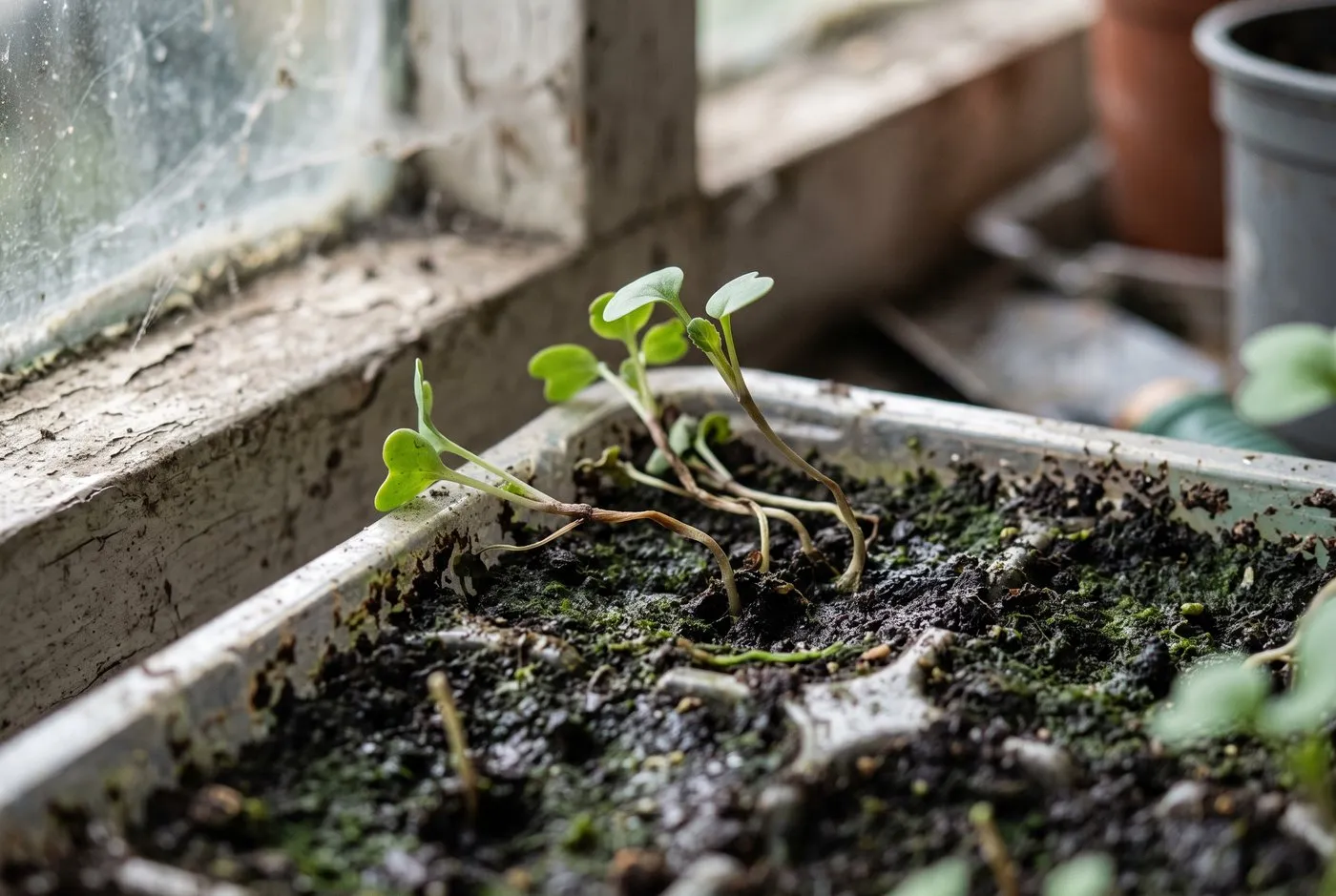 The diagnostic sign: seedlings collapsed at the soil line with a thin, water-soaked brown pinch at the stem base. Above the pinch the leaves can still look green for a day.
The four fungi behind damping off and how they attack
Damping off is not one organism. Four groups cause almost every UK case, and knowing which helps you understand why cold and wet matter so much.
Pythium and Phytophthora are the main culprits. They are not true fungi but water moulds, or oomycetes, and they need a film of water to move. Rhizoctonia solani causes a slightly different picture, often a dry, wiry brown lesion known as wire stem, and it works in slightly warmer, drier compost. Botrytis cinerea, grey mould, moves in on already-weakened or overcrowded seedlings, coating them in fuzzy grey spores.
The attack runs in four stages. Getting the timing straight is what tells you when you can still act.
- Dormant spores wait in the compost or water. Pythium survives as tough oospores in old compost, on dirty trays and in water butts, sometimes for years.
- Free water and cool temperatures wake them. Below about 18C, in saturated compost, oospores germinate. Pythium then releases swimming zoospores that travel through the water film between compost particles.
- The zoospores reach the stem at the soil line. They target the soft hypocotyl, the stem just above the roots, and infect within hours.
- The stem rots and the seedling collapses, usually within 24 to 48 hours. The fungus then spreads sideways to the next seedling, and the patch grows.
The critical mistake most people make is to keep watering and re-sow into the same tray after the first collapse. The compost is now loaded with active spores. Every new seed you sow into it meets a waiting infection. Once you see collapse, that batch of compost is done.
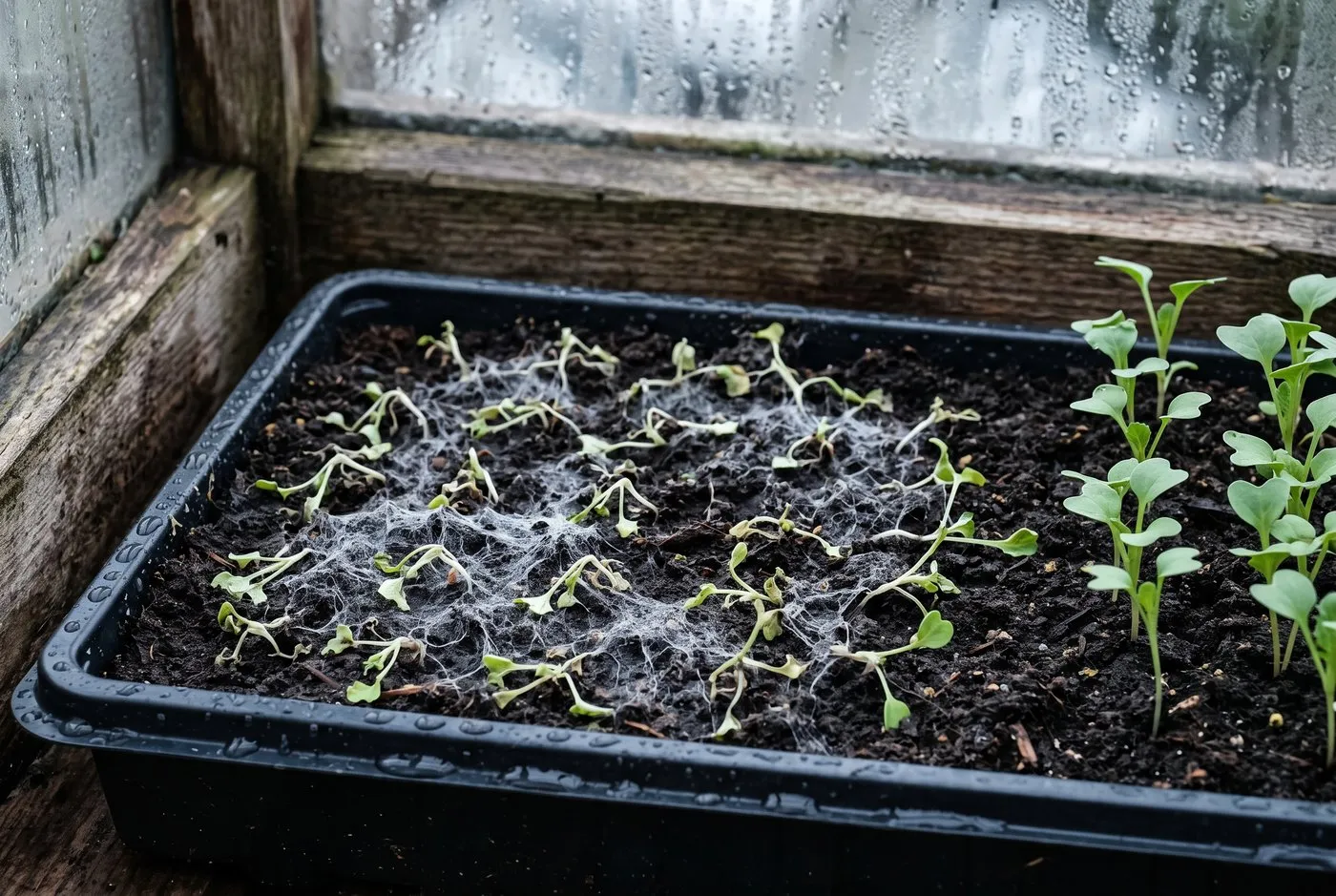 Damping off spreads outward in a patch, not at random. Fine white threads across the wet surface show the fungus moving from seedling to seedling through the water film.
Why cold, wet trays let the fungus take hold
The root cause of damping off is almost never the seed and almost always the growing conditions. Pythium and its relatives are weak competitors. In a warm, airy, fast-draining tray they cannot get established. Give them cold, wet, still, crowded compost and they take over.
Four conditions stack the odds against your seedlings. Low temperature slows germination, so the seedling sits vulnerable in the compost for longer while the water moulds stay active. Waterlogging fills the air gaps with the water film the zoospores swim through. Still air keeps the surface permanently damp and humid. Over-sowing packs seedlings so tightly that air cannot circulate and one infection reaches a dozen neighbours in hours.
Cold and wet together are far worse than either alone. A tray at 10C and soaking is high risk. The same compost at 22C on a heated mat, watered from below and left to surface-dry, is low risk even with the same spores present. This is why bottom heat is such an effective control. It rushes the seedling through its weakest stage before the fungus can strike.
Ranking the controls that actually prevent damping off
The gold-standard combination is the top four together: fresh sterile compost, mains water, thin sowing and a small fan. No single measure fixes damping off, because it attacks from several directions. What each one cannot do matters too. Bottom heat alone will not save a tray drowned in butt water. Thin sowing alone will not help if the compost was infected before you started. Stack the primary controls and the disease has nowhere to gain a foothold.
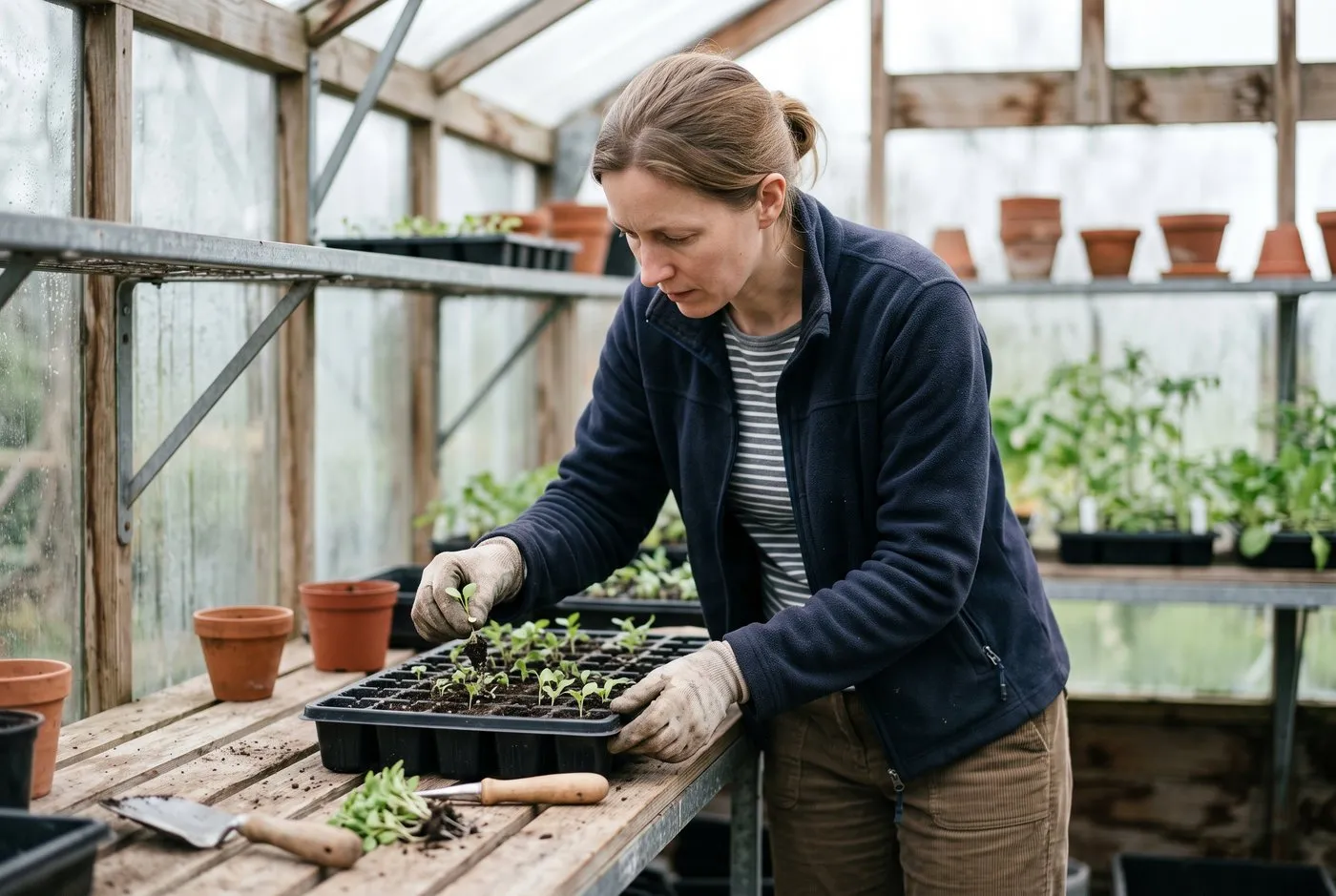 Thin sowing keeps air moving between seedlings and stops the fungus jumping neighbour to neighbour. Thinning early, here at a suburban greenhouse propagator bench, is one of the cheapest controls there is.
Seeds that never come up: the germination failures
Not every seed-sowing failure is damping off. The commonest problem of all is seed that simply never appears, and gardeners usually blame the seed when the fault lies elsewhere.
Three causes account for most of it. Temperature is the biggest. Every species has a minimum soil temperature below which it will not germinate, and many warm-season crops need real warmth. Tomatoes and chillies want 18 to 25C. Aubergines want 25 to 30C. Sow them on a cold windowsill at 12C and they rot before they move. Our seed germination temperatures table lists the figures for the main UK crops so you can match heat to species.
Old or badly stored seed is the second cause. Parsnip seed is notorious, dropping from around 70 percent viability when fresh to under 20 percent after a year. Always check the packet date. Sowing depth is the third. The rule is to cover seed to roughly its own depth. Bury fine seed like lobelia or foxglove and it never reaches the light it needs to trigger germination. Some seed, including many alpines and lettuces in warm spells, needs light and should sit on the surface. When you are planning what to sow and when, the UK seed sowing calendar keeps the timings right so nothing goes in too early into cold compost.
Gardener’s tip: If a tray has not moved after two or three weeks, dig up a few seeds before you give up. Firm, plump seed means it is still viable and just cold, so add gentle warmth. Soft, mushy or hollow seed has rotted, usually from a wet, cold start, and it is time to re-sow fresh into warm compost.
White mould, moss and liverwort on the compost surface
A green or white crust on the compost worries people, but most of it is harmless and simply flags poor conditions.
Fluffy white mould on the surface is nearly always a saprophytic fungus feeding on the organic matter in the compost, not damping off. It does no direct harm to healthy seedlings. It appears when the surface stays wet in still, warm air, and it tells you the exact conditions damping off wants. Scrape it off, water from below and get air moving. If tiny black flies are also present, the two often go together, and our guide to controlling sciarid fly in seed trays explains how the larvae feed on the same soggy compost.
Moss and liverwort form a green or dark, flat, leathery crust across the surface. Liverwort in particular loves the cold, wet, high-phosphate surface of a permanently damp seed tray or module. It smothers small seedlings and seals the surface so water runs off. It is a symptom of overwatering and slow drainage, not a disease. The cure is the same: bottom water, let the surface dry, and topdress with a thin layer of dry grit or vermiculite to break the wet skin.
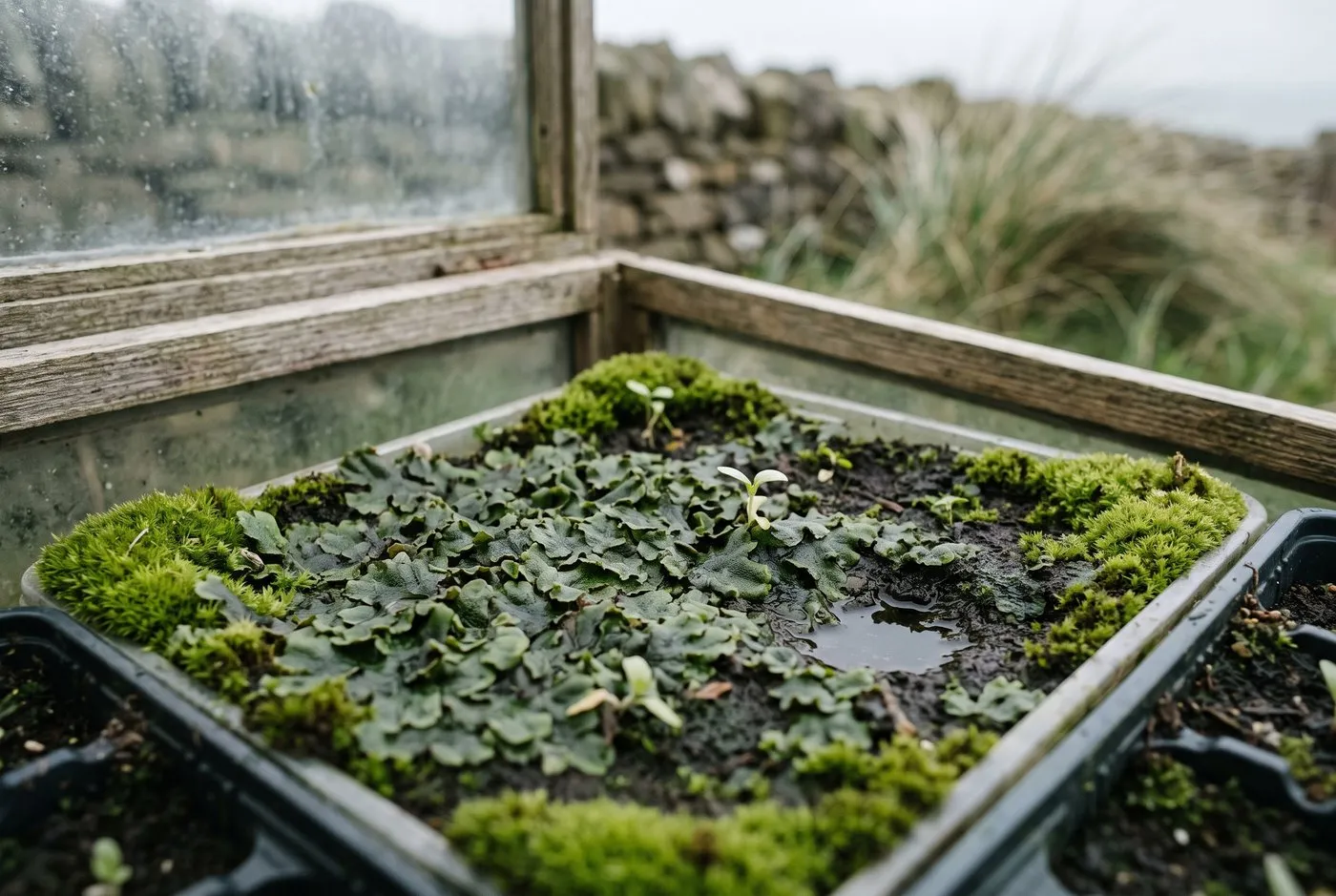 Moss and liverwort seal a permanently wet surface, here in a seaside cold frame. It is a sign of overwatering, not disease. A dry grit topdressing and bottom watering clear it.
Leggy seedlings and seedlings that stall before true leaves
Two more failures look like disease but are not. Both come down to light and warmth.
Leggy seedlings stretch tall, thin and pale, then flop. This is the plant reaching for light that is too weak or too far away. It is not fatal on its own, but the weak, drawn stems are far more prone to damping off, so the two problems often arrive together. The fix is more light, cooler temperatures once germinated, and getting seedlings closer to the source. We cover the full diagnosis in why seedlings go leggy and how to fix it, which pairs directly with this guide.
Stalled seedlings open their first pair of seed leaves, the cotyledons, then sit for weeks and make no true leaves. This is usually cold roots, waterlogging or a total lack of nutrients in a spent compost. Seedlings held in a heated propagator at 20C move on within days once you prick them out into fresh compost. Seedlings stuck at 10C in tired, wet compost simply wait. If they have finally outgrown their module and the roots are circling, that is a different fix, set out in rescuing root-bound seedlings.
Month-by-month seed-sowing calendar for healthy seedlings
Damping off risk changes through the year with temperature and light. This calendar shows the main sowing jobs and the risk to watch, for a typical UK garden.
| Month | Sowing job and damping off risk |
|---|---|
| January | Very high risk. Only sow with heat and grow lights. Chillies, aubergines at 25 to 28C. Keep everything else back. |
| February | High risk. Sow tomatoes, sweet peppers in a heated propagator at 20C. Light is still weak, so watch for leggy, vulnerable seedlings. |
| March | High risk on cold windowsills. Sow tomatoes, brassicas, hardy annuals with bottom heat. Mains water only. Ventilate on mild days. |
| April | Moderate risk. Main sowing month under cover. Warmth is rising but nights still cold. Thin sow and keep air moving. |
| May | Lower risk as compost warms. Sow tender crops and direct-sow hardy annuals outside once soil hits 10C. |
| June | Low risk. Warm compost speeds germination. Direct-sow beans, courgettes, salads. Keep trays out of baking midday sun. |
| July | Low risk. Sow biennials, autumn salads and last successions. Warmth is a help now, not a hindrance. |
| August | Low risk. Sow spring cabbage, overwintering onions and hardy salads. Water in the morning so the surface dries by night. |
| September | Rising risk again as nights cool. Sow hardy annuals and sweet peas in a cold frame. Ventilate freely. |
| October | Moderate risk. Sow broad beans and sweet peas. Keep autumn sowings airy and never let modules sit wet and cold. |
| November | High risk. Little sowing. Protect any cold-frame seedlings, prop the lid open on dry days, and keep water off the crowns. |
| December | Very high risk. Only sow under lights with heat. Otherwise clean and disinfect trays and pots ready for spring. |
Cheshunt compound, copper and the old fungicide question
Older gardening books tell you to drench seed trays with Cheshunt compound, and people still ask for it. It is worth knowing why it has gone.
Cheshunt compound was a copper-based fungicide developed in the 1920s at the Cheshunt research station in Hertfordshire, then a leading glasshouse research centre. It was a mix of roughly two parts copper sulphate to eleven parts ammonium carbonate by weight, dissolved in water and watered onto seed trays to suppress damping off fungi. For decades it was the standard treatment.
You can no longer buy it. Its UK approval lapsed and it was withdrawn from sale, along with most copper garden fungicides, as pesticide rules tightened. Copper does have real activity against these water moulds, which is why it worked, but home gardeners now have no approved copper drench for damping off. Some growers still swear by a weak chamomile or cinnamon infusion watered onto trays, and there is limited evidence these have mild antifungal effects, but neither comes close to good cultural control. The honest position, echoed by the RHS guidance on damping off, is that prevention has replaced treatment entirely. There is nothing to spray, so the whole battle is won or lost before the seedlings emerge.
Common seed-sowing mistakes and how to avoid them
- Watering seedlings with butt water. Stored rainwater is full of the fungi that cause damping off. It is fine for the garden but wrong for a seed tray. Use mains tap water for everything at the seed stage, and save the butt for established plants.
- Sowing far too thickly. A pinch of seed feels efficient but packs seedlings so tightly that air cannot move and one infection spreads to all of them. Sow thinly, space larger seed, and thin or prick out early while stems are still small.
- Reusing old or garden compost unsterilised. Spent compost and garden soil carry resting spores. Either buy fresh seed compost or sterilise your own with heat. Never re-sow into a tray where seedlings have already collapsed.
- Keeping trays cold and wet with no airflow. A soaking tray on a chilly, still windowsill is the perfect damping off nursery. Add gentle bottom heat, water from below, and run a small fan or open a vent to move the air.
- Sowing too early for the light and warmth. February tomatoes on a cold sill grow weak, drawn and disease-prone. Wait for more light and use heat, or the seedlings never gain the strength to shrug off infection.
Warning: Never re-sow fresh seed into a tray of compost where seedlings have already damped off, even if you scrape the surface. The compost is loaded with active Pythium spores, and the new seed will meet the infection the moment it germinates. Empty the tray, wash it in hot soapy water with a splash of disinfectant, dry it, and start again with fresh sterile seed compost.
Damping off feels like bad luck, but it is really a conditions problem you can design out. Fresh compost, clean mains water, thin sowing and a breath of moving air turn a high-risk tray into a reliable one. Get those four right and the fungus never gets going.
Now you can spot and stop damping off, protect the survivors by moving them on at the right moment. Read our guide to fixing root-bound seedlings for the next step, and browse more garden problem guides for help with everything else that goes wrong.
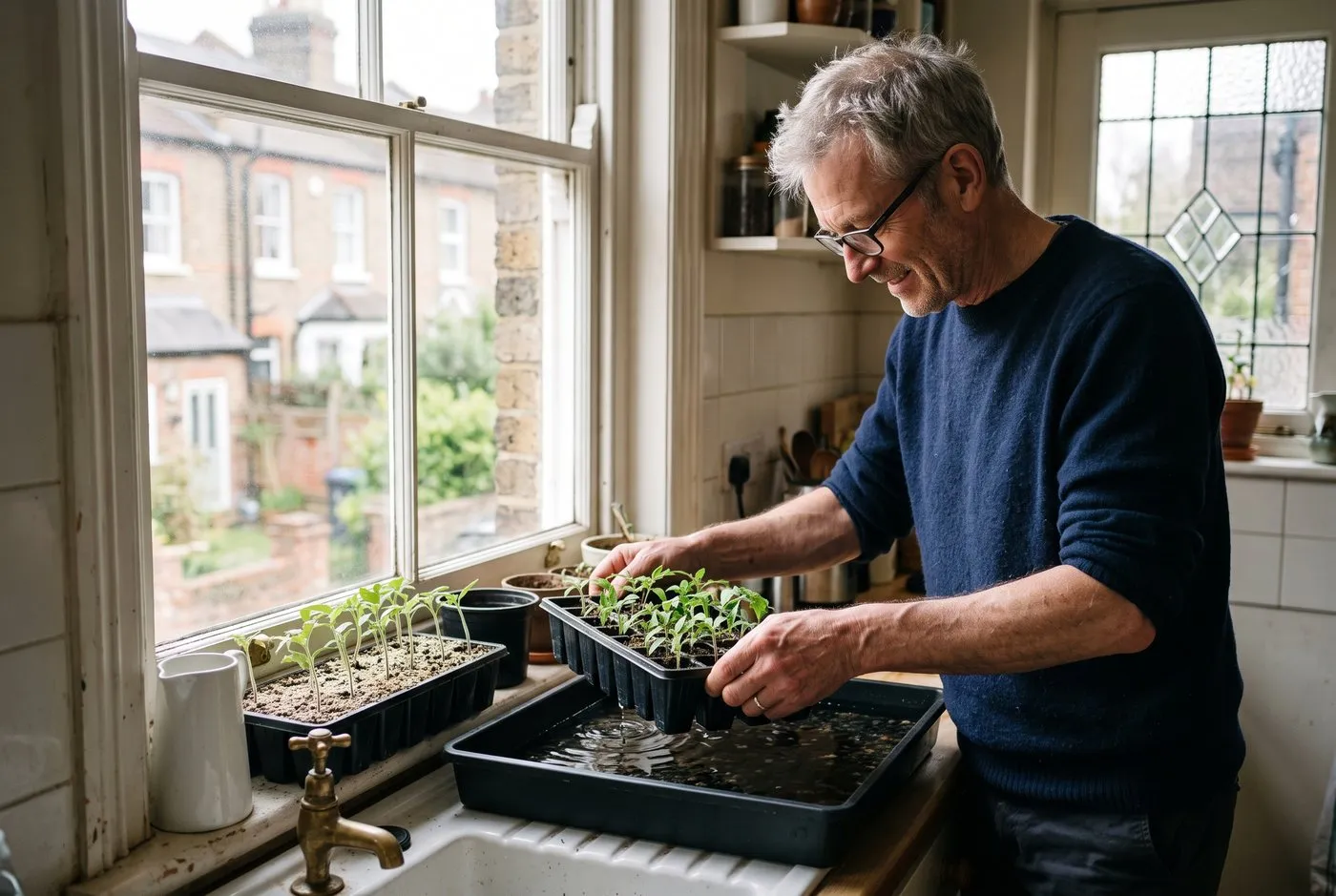 Bottom watering with clean mains water keeps the stem base and surface dry. Standing trays in 2cm of water for ten minutes, here on a terraced-street kitchen windowsill, was our biggest single win against collapse.
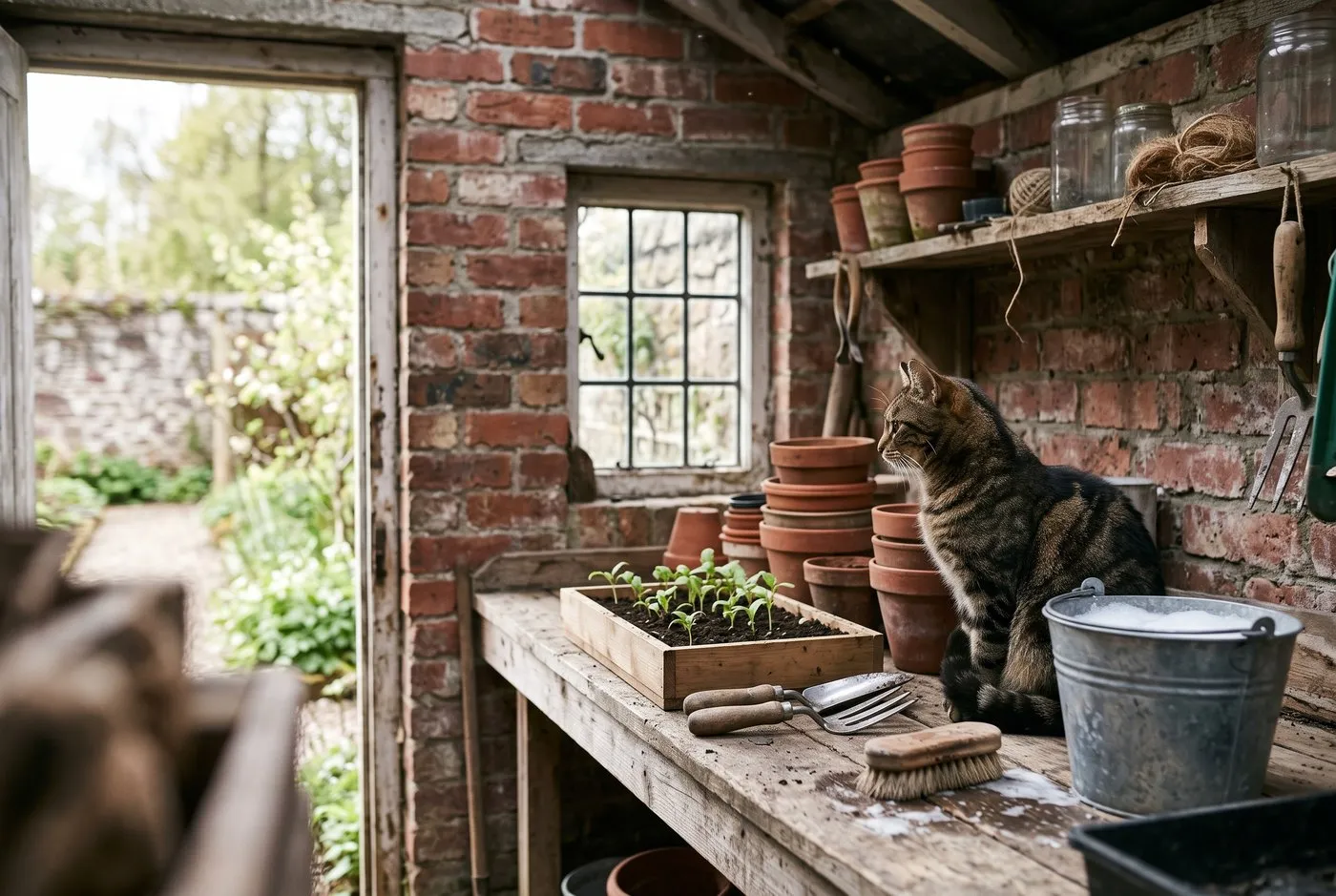 The potting shed is a shared space. Keeping benches, trays and pots clean between sowings matters as much as the compost, because damping off fungi overwinter on dirty kit.
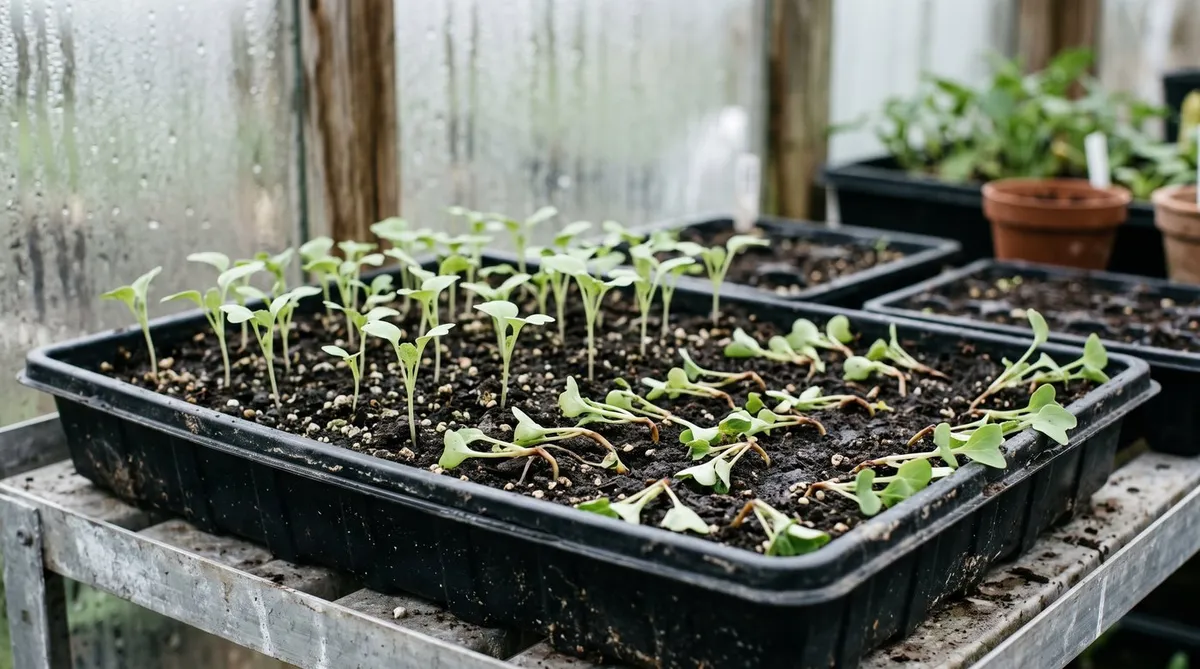
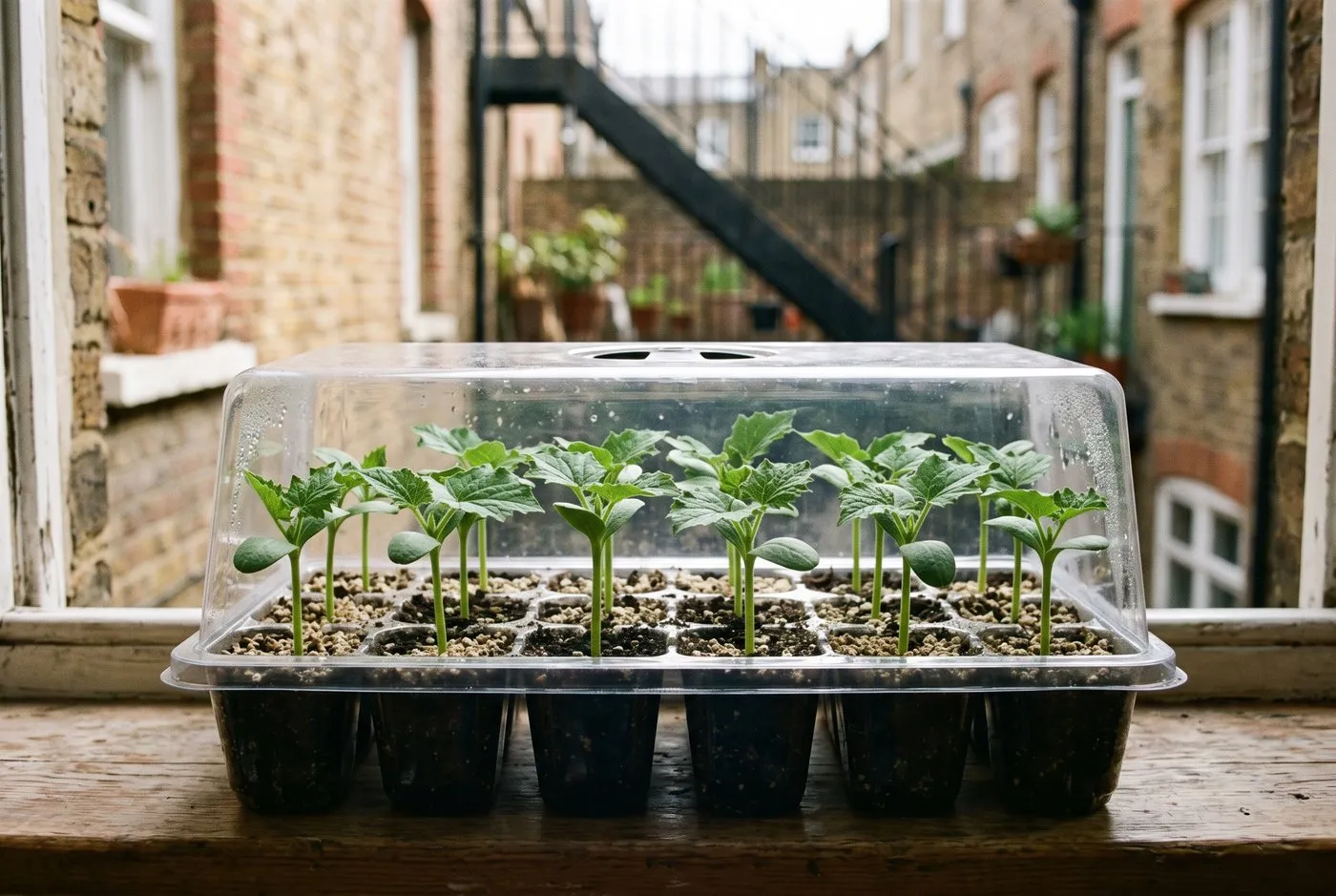 What success looks like: sturdy, evenly spaced seedlings with firm stems and true leaves forming. Grown warm, thin and airy in a city courtyard flat’s windowsill propagator.
Frequently asked questions
What is damping off in seedlings?
Damping off is a fungal disease that collapses seedlings at the soil line. Several soil and water fungi cause it, mainly Pythium, Phytophthora, Rhizoctonia and Botrytis. They rot the thin stem where it meets the compost, so the seedling topples and cannot recover. It spreads fast in cold, wet, crowded trays and can wipe out a whole sowing within a day or two.
How do you stop damping off?
Use fresh sterile seed compost and water from the mains tap, not the butt. Sow thinly, keep the trays in moving air, and add gentle bottom heat to speed germination. Water from below and let the surface dry between waterings. There is no spray that cures it, so every control is about prevention before the seedlings ever emerge.
Can seedlings recover from damping off?
No, a seedling that has collapsed at the soil line cannot recover. The stem tissue has rotted through and will not reseal. Remove affected seedlings at once and move the tray somewhere cooler, brighter and better ventilated to protect the survivors. Any seedling still standing firm may be saved, but the toppled ones are lost for good.
Why are my seeds not germinating at all?
Most seeds fail to germinate because the compost is too cold, too wet or too deep. Each species has a minimum temperature, and many warm-season crops need 18 to 25C to move. Old seed, a dry surface, or burying small seed too deep also stops germination. Check the packet date, the sowing depth and the temperature before blaming the seed.
What is the white mould growing on my seed compost?
The fluffy white growth on seed compost is usually harmless saprophytic mould, not damping off. It feeds on organic matter and appears when the surface stays wet in still, warm air. It rarely harms healthy seedlings, but it signals the damp, stagnant conditions that damping off loves. Improve airflow, water from below and let the surface dry.
Is tap water or rainwater better for seedlings?
Use mains tap water for seed trays, not stored rainwater. Water butts harbour Pythium and other fungi that cause damping off, and the trace chlorine in mains water helps suppress them. Save rainwater for established plants in the ground or in large pots. For the vulnerable seedling stage, clean tap water is the safer choice every time.
Does Cheshunt compound still work against damping off?
Cheshunt compound is no longer sold in the UK, so it is not an option. It was a copper-based fungicide of copper sulphate and ammonium carbonate, developed in the 1920s. Its approval lapsed and it was withdrawn from sale. Modern control relies entirely on prevention: clean compost, clean water, thin sowing and good airflow rather than any chemical drench.
Our team produces practical UK gardening guidance from source research, contributor records and established horticultural practice. Editorial standards are overseen by Matt W.