Key takeaways
- Motion-activated water sprayer: 90% effective in UK trials
- Prickle mats: 85% effective, no maintenance
- Dense ground cover planting blocks cats permanently
- Citrus peel and coffee grounds: 60% effective, need refreshing
- Ultrasonic deterrents: only 40% effective; many UK cats ignore
- Mix 2-3 methods for permanent results
The 7 Methods Ranked by Effectiveness
Each method works to some degree. Combining 2-3 methods gives the best long-term result. Most UK gardeners settle on a sprayer plus dense planting plus citrus-peel touchup.
Method 1: Motion-Activated Water Sprayer
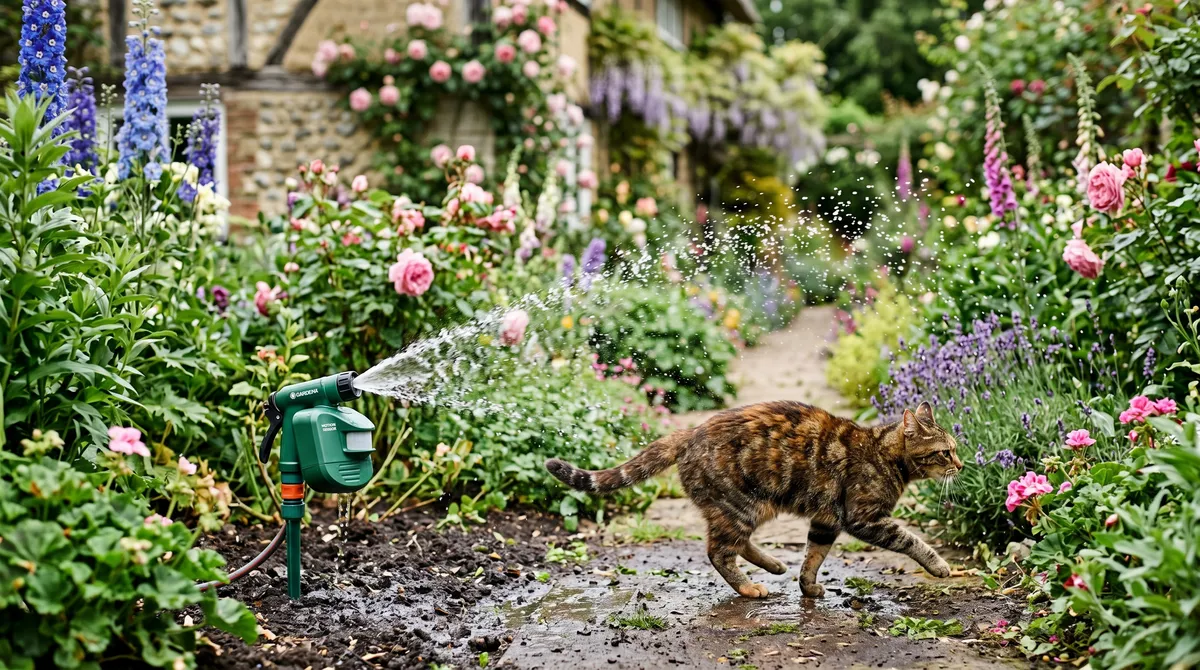
The most effective single method. Cats hate sudden water and learn to avoid the area after one or two encounters.
How it works:
A passive infrared (PIR) motion sensor detects the cat’s body heat against the cooler garden background. The sprayer head fires a 3-5 second pulse of water in the direction of the movement. Cats run.
UK products that work:
- Contech ScareCrow (£35-£60): the original, plastic flamingo design, works on 9V battery
- Hoont Cobra (£40-£70): adjustable spray pattern, USB rechargeable
- PestBye Battery PIR (£25-£40): cheapest reliable option, smaller spray area
- Havahart Spray Away (£50-£80): widest spray pattern, runs from tap
Setup:
- Position sprayer 1-3m from the protected bed
- Aim the spray pattern across the bed at 30-45cm above soil level
- Connect to garden hose (most models) or fill water reservoir (some)
- Set sensitivity to medium-high
- Position so spray does not hit windows, paths, or the gardener at work
Limits:
- Will trigger on dogs, foxes, hedgehogs, and humans
- Spray pattern can hit gardener at work
- Battery operation requires 4 AA changes every 2-3 months
- Effectiveness drops in winter freezes (water lines freeze)
- Cats may simply move to less-protected beds nearby
For UK gardens with multiple neighbouring cats, plan one sprayer per protected bed. Total setup cost for 3-4 protected beds: £100-£200.
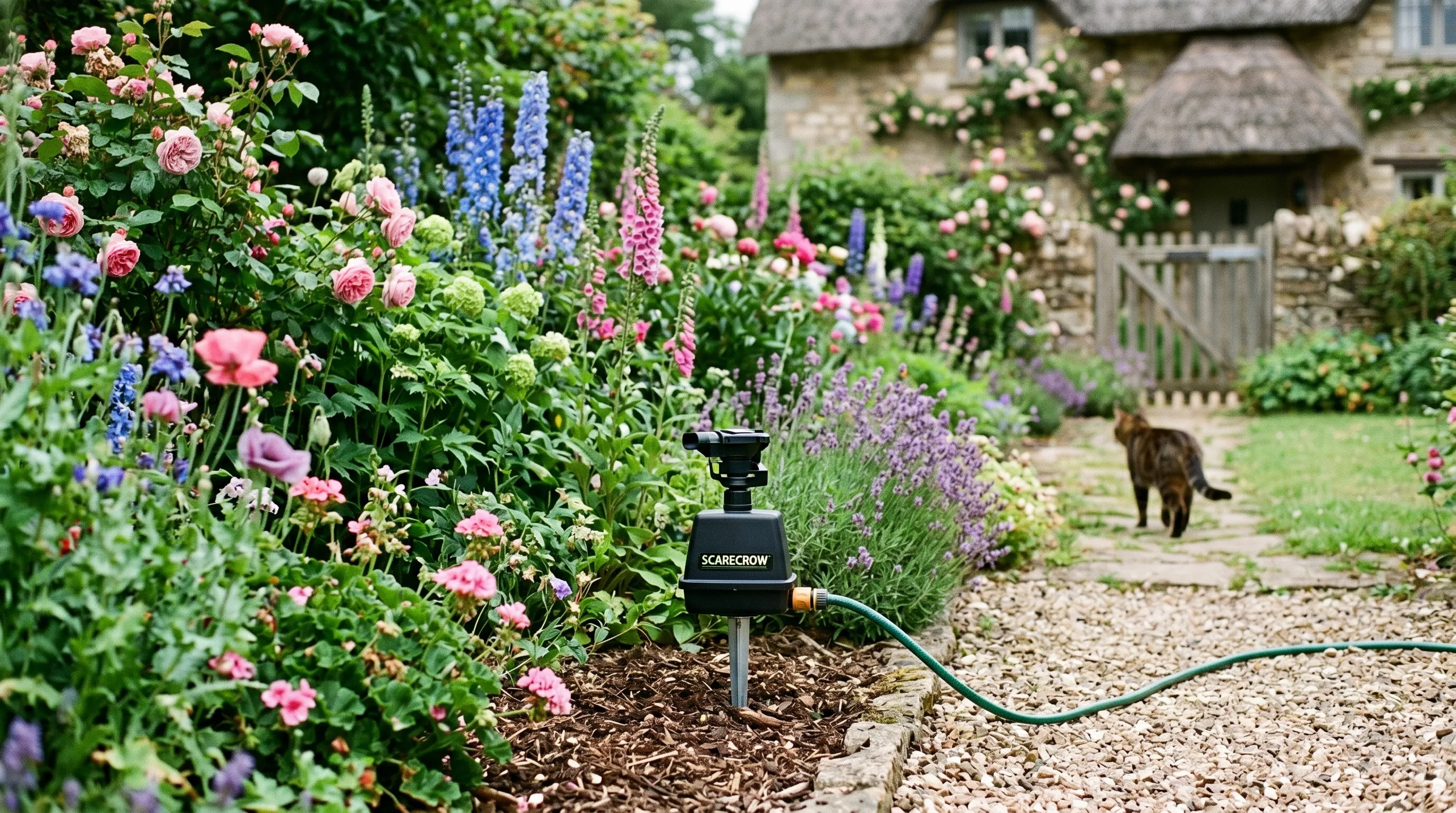 Motion-activated water sprayer in position 2m from a protected flowerbed. Sprayer fires a 3-5 second water pulse on any cat movement within range. Single most effective UK cat deterrent.
Method 2: Netting Over Vulnerable Beds
The most reliable but least attractive method.
Setup:
- Frame the bed with 4-6 short bamboo canes at 200-300mm height
- Stretch fine garden netting (12-25mm mesh) across the canes
- Pin or weight the edges
- Plant through pre-cut slits in the netting
Cats cannot dig through netting. Birds and pollinators access via larger gaps. Cost: £20-£40 for a 5x5m roll of netting.
Best for:
- New seedling beds in spring
- Vegetable beds with bare soil
- Beds during planting establishment (first 6-8 weeks)
- Wildlife-shy gardens where deterrents would harm visitors
Avoid:
- Established borders where netting blocks plant growth
- Areas where birds or small animals could become tangled
- Public-facing flowerbeds (ugly)
Most UK gardeners use netting only for the first 4-8 weeks of establishment, then transition to dense planting which has the same effect.
Method 3: Prickle Mats
Sharp-feeling but harmless plastic spike mats embedded in flowerbed soil.
UK products:
- PestBye Cat Repellent Mats (£15-£25 per m²): rigid plastic, 25mm spikes
- Defenders Prickle Strip (£10-£18 per m): flexible plastic, 20mm spikes
- Pestrol Garden Spike Mats (£20-£30 per m²): mesh-backed, very durable
Setup:
- Cut mats to fit the bed area, leaving small gaps around plants
- Press into the soil 25-50mm deep, spike-side up
- Cover with 25-40mm of mulch to disguise
- Plants emerge between the spikes
- Mats remain in place permanently
Cats walk on the mats, find the surface uncomfortable, and avoid. Spikes are blunt enough not to injure (paws, paws, hands of gardeners doing weeding). Effectiveness lasts 5-10 years before plastic degrades.
Best for:
- Newly-planted herbaceous borders
- Vegetable beds between rows
- Container-edge zones where cats step over
- Long-term protection without ongoing maintenance
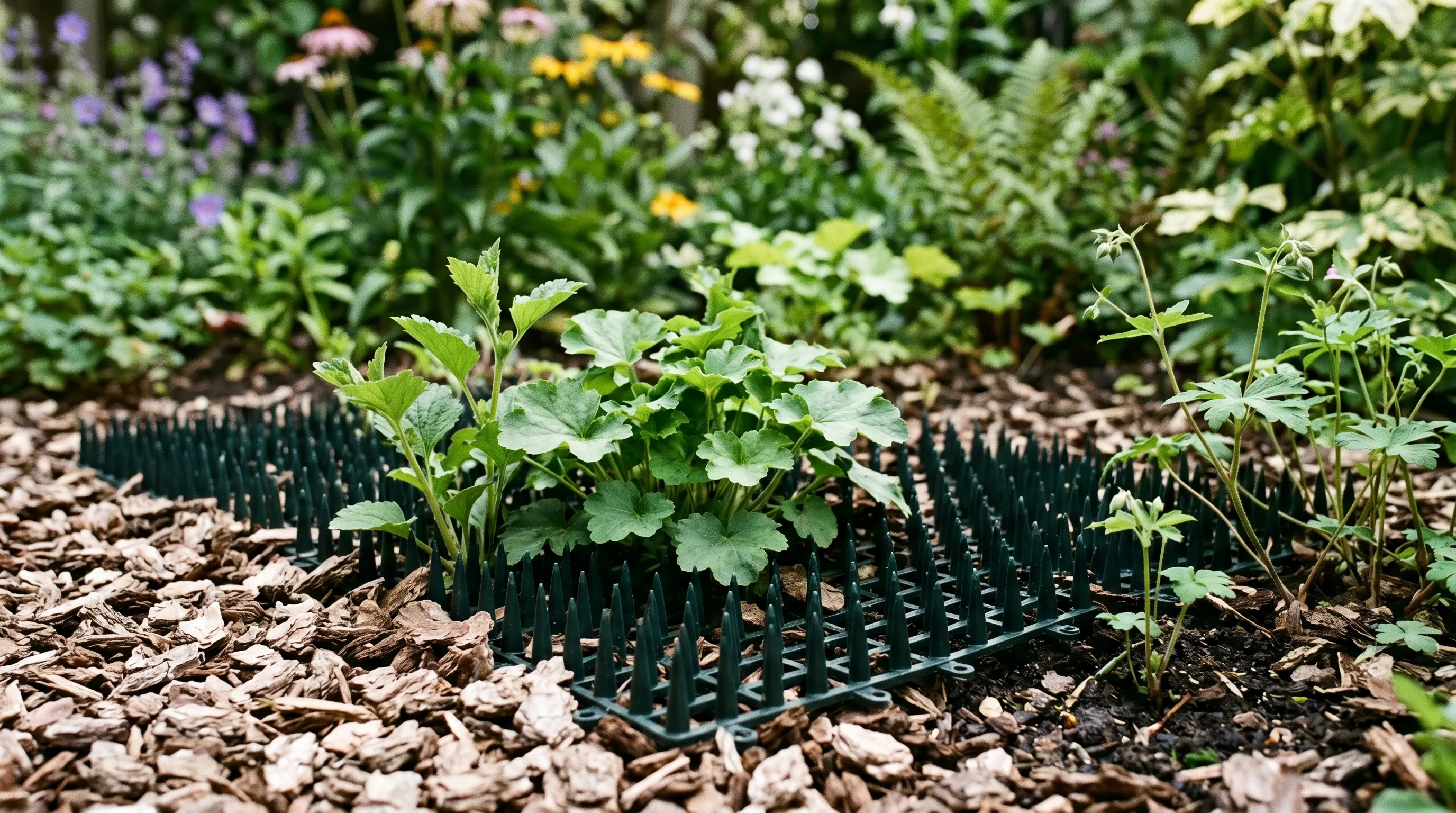 Cat prickle mats embedded in a UK flowerbed, partially disguised under a light bark mulch. The mats sit 25mm above soil and make the surface uncomfortable for cat paws without injuring.
Method 4: Dense Ground Cover Planting
The most permanent method. Cats cannot dig in soil they cannot reach.
UK ground cover plants that block cats effectively:
| Plant | Height | Density | Notes |
|---|---|---|---|
| Lambs ear (Stachys byzantina) | 200-400mm | Very dense felt-textured leaves | Silvery, drought-tolerant |
| Hardy geranium ‘Rozanne’ | 300-450mm | Dense long-flowering mat | Blue summer-long flowers |
| Bugle (Ajuga reptans) | 100-200mm | Dense low mat | Shade tolerant, blue spikes |
| Woodland strawberry | 150-200mm | Spreading runners | Edible berries, semi-shade |
| Bergenia ‘Bressingham Ruby’ | 300-400mm | Very dense large leaves | Evergreen, winter colour |
| Heuchera ‘Palace Purple’ | 300-450mm | Dense clump-former | Long season interest |
| Vinca minor | 100-200mm | Very dense mat | Tough, shade-tolerant |
| Stachys ‘Big Ears’ | 250-400mm | Dense felt-textured | Larger leaves than common Lambs ear |
Plant densely. 6-9 plants per square metre for fast cover. After 12-18 months the plants grow together leaving no exposed soil. Cats lose interest because they cannot dig.
Best for:
- Border edges
- Shade gardens where seedlings struggle
- Large flowerbeds where deterrents would be impractical
- Long-term sustainable garden design
Limits:
- 12-18 months for full establishment
- Some ground cover (vinca) becomes invasive
- Initial planting cost: £40-£100 for a 5m² bed
For the wider plant guide to UK ground cover options, our shade plants guide covers the species that fill the deep shade niche where cats often choose to dig.
Method 5: Citrus Peel and Coffee Grounds
The kitchen-waste solution that works partially.
The science:
Cats find strong citrus oils (limonene, linalool) unpleasant. Used coffee grounds contain caffeine, which cats dislike, plus an abrasive texture they avoid. Both refresh the soil’s surface scent profile.
Method:
- Save citrus peels (orange, lemon, lime, grapefruit) from kitchen use
- Cut peels into 25mm pieces
- Save coffee grounds from cafetiere or filter coffee
- Mix 50/50 in a bucket
- Scatter 25-40mm thick layer across the protected bed
- Refresh every 7-14 days or after rain
- Dig in or compost expired mix monthly
Effectiveness:
Best for:
- Households with daily coffee and citrus consumption
- Supplementing other deterrents
- Wet UK winters where electronic devices may fail
Limits:
- Strong cats ignore citrus completely
- Coffee grounds clump and look untidy
- Daily refresh in wet weather impractical for most UK gardeners
- Does not work for new arrivals (cats not yet trained to associate scent)
 Citrus peel and coffee ground deterrent layer in a Staffordshire flowerbed. Cats find the strong citrus oils and caffeine residues unpleasant. Refresh weekly or after rain for ongoing effect.
Method 6: Lion or Chicken Manure Pellets
The predator-scent approach. UK products use dried lion manure (Silent Roar) or chicken manure (similar effect) as predator-deterrent pellets.
Products:
- Silent Roar (£12-£18 per 500g): impregnated with lion dung, scattered on beds
- PestBye Cat Scarer Pellets (£8-£15): chicken manure-based, milder smell
- Roar Pet & Garden Repellent (£10-£18): granular, all-weather
Effectiveness:
Best for:
- New cat problems where cats are not yet established in the garden
- Supplementing other methods
- Households where children or pets prevent water sprayers
Limits:
- Strong smell unpleasant for some humans
- Cats acclimate over 4-8 weeks
- Wet weather washes the active scent
- Some UK cats ignore predator scents entirely
Method 7: Ultrasonic Deterrents (Avoid)
The most over-rated cat-deterrent product.
Claimed mechanism:
Devices emit high-frequency sound (15-25kHz) that cats find unpleasant but humans cannot hear. Marketing claims 90%+ effectiveness.
Reality:
Why they fail:
- UK cats above 7-8 years old lose much of the ultrasonic hearing range
- Cats acclimate to constant background noise within 4-6 weeks
- Devices fire 24/7, training cats that the sound is harmless
- Range claims (10-15m) often exaggerate by 2-3x
- Battery drain is 4-8 weeks; many UK gardeners forget the change
Save the £30-£60 for a motion-activated water sprayer which costs the same and works 90% better.
Combining Methods: The 95%+ Strategy
For UK gardens with persistent cat problems, no single method gives complete control. The proven combination:
Primary: Motion-activated water sprayer covering the main vulnerable beds.
Secondary: Dense ground cover planting in beds where deterrents are impractical.
Tertiary: Citrus peel and coffee ground refresh on the borders.
Setup cost for a typical UK back garden: £150-£300 for the equipment, £100-£150 for ground cover plants. Total: £250-£450 one-time, with under £30 per year ongoing.
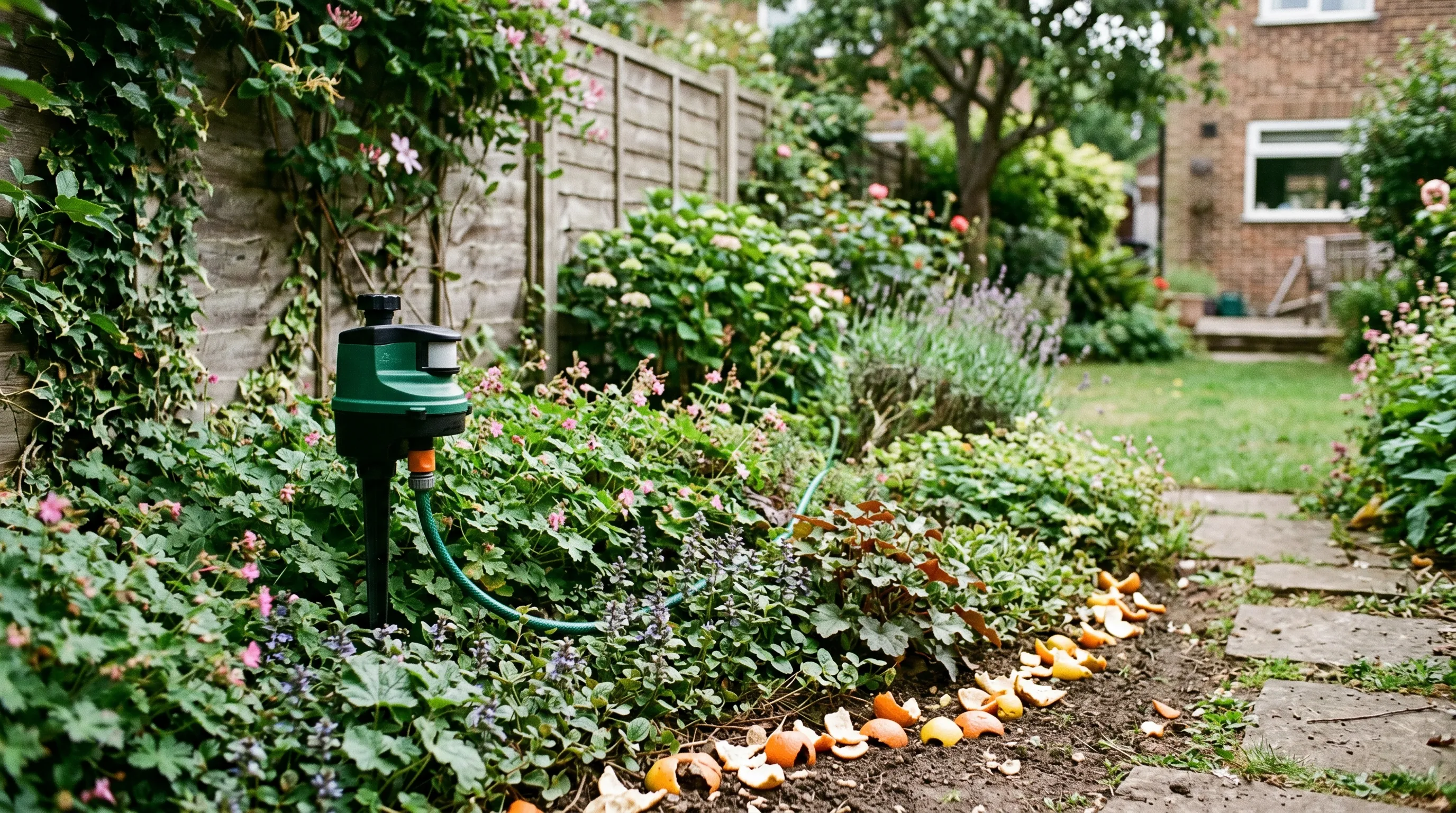 The combined-method UK setup. Water sprayer provides the active surprise deterrent. Dense ground cover (Lambs ear, hardy geraniums, bugle) blocks soil access. Citrus peel reinforces the scent barrier.
Common Mistakes With UK Cat Deterrents
Mistake 1: relying on ultrasonic deterrents alone. They work for 30-50% of cats only. Most UK cats either cannot hear or learn to ignore. Use the water sprayer instead.
Mistake 2: leaving bare soil exposed. Cats target freshly dug or bare soil specifically. Always mulch or net new beds within 48 hours of planting.
Mistake 3: forgetting to refresh citrus. Citrus oils dissipate in 7-14 days and wash off in rain. Without refresh, the deterrent stops working in days.
Mistake 4: punishing the cat. Cats do not associate punishment with their behaviour after the fact. Deterrents must be at the scene of the problem (sprayer, mat, planting) to teach the cat to avoid.
Mistake 5: using harmful substances. Mothballs (toxic to wildlife), pepper sprays (can harm cat eyes), or commercial chemical repellents not labelled safe for use. Use only approved deterrents.
For the wider problem of cats fouling lawns, our companion guide covers lawn and gravel-area cat problems where deterrent methods differ. For plants that are toxic to cats, our toxic plants guide covers the UK species to avoid in cat-frequented gardens.
Cat Deterrent Calendar UK Month-by-Month
| Month | Cat deterrent task |
|---|---|
| January | Check sprayer batteries. Inspect prickle mats |
| February | Plan ground cover planting for spring |
| March | Plant ground cover before nesting season starts |
| April | Refresh citrus peel and coffee grounds in active beds |
| May | Watch for new bare patches from spring planting |
| June | Full sprayer operation period. Battery check |
| July | Peak season for cat visits. All methods active |
| August | Continue weekly citrus refresh |
| September | Plan winter ground cover before frost |
| October | Reduce citrus refresh to fortnightly |
| November | Check sprayer water lines before freeze |
| December | Sprayer off during freezing weather. Mat plus planting only |
Frequently asked questions
What is the best way to stop cats using my flowerbeds as a toilet?
A motion-activated water sprayer (Contech ScareCrow or similar) is the most effective single method. Cats avoid the area for weeks after one or two surprise sprays. Backed up by dense ground-cover planting for permanent results. Together: 95%+ effectiveness.
Do prickle mats really keep cats off flowerbeds?
Yes, well-laid prickle mats reduce cat visits by 80-90% in UK trials. The plastic spikes are uncomfortable but not harmful. Cover the bed area with overlapping mats and disguise with a thin mulch layer. Effective for 5-10 years.
Does citrus peel and coffee grounds keep cats away?
Partially. Citrus peel and coffee grounds reduce cat visits by 50-65% in trials but need refreshing every 7-14 days. Effectiveness drops sharply after rain. Best used as a supplementary method alongside a primary deterrent.
Are ultrasonic cat deterrents worth buying?
Mostly no. UK trials show only 30-50% of cats respond to ultrasonic frequencies. Older cats often cannot hear the higher ranges. Most cats learn to ignore the sound within 4-6 weeks. Save the £30-£60 for a motion-activated water sprayer instead.
What plants stop cats coming into the garden?
Dense ground cover blocks cats from soil access. Lambs ear, hardy geraniums, ajuga, and woodland strawberry create impenetrable mats. Coleus canina (Scaredy Cat plant) has a smell cats dislike but is patchy in effectiveness. Use planting alongside deterrents for permanent results.
 Sprayer setup: 2m from the protected bed, on a wooden stake at 30-45cm height, connected to a Y-splitter from the garden hose so the main hose stays in use for normal watering.
Now plan a cat-resilient garden
Our team produces practical UK gardening guidance from source research, contributor records and established horticultural practice. Editorial standards are overseen by Matt W.