Mushrooms in Lawns UK: Causes and Fixes
Mushrooms in your UK lawn this autumn? What they mean, which to worry about, fairy rings explained, and how to remove them without damaging the turf.
Key takeaways
- Most UK lawn mushrooms are harmless and indicate healthy decomposing soil biology
- Mushrooms appear after wet autumn weather and disappear within 2 to 4 weeks naturally
- Fairy rings are caused by fungi feeding on buried organic matter, often old tree roots
- Hand-pull or mow before mushrooms release spores to limit spread
- Persistent appearance points to excess thatch, poor drainage, or buried wood
- Yellow stainer (Agaricus xanthodermus) is mildly toxic and should be removed if pets or children play on the lawn
- Long-term fix: scarify, aerate, top-dress with sandy loam, and improve drainage
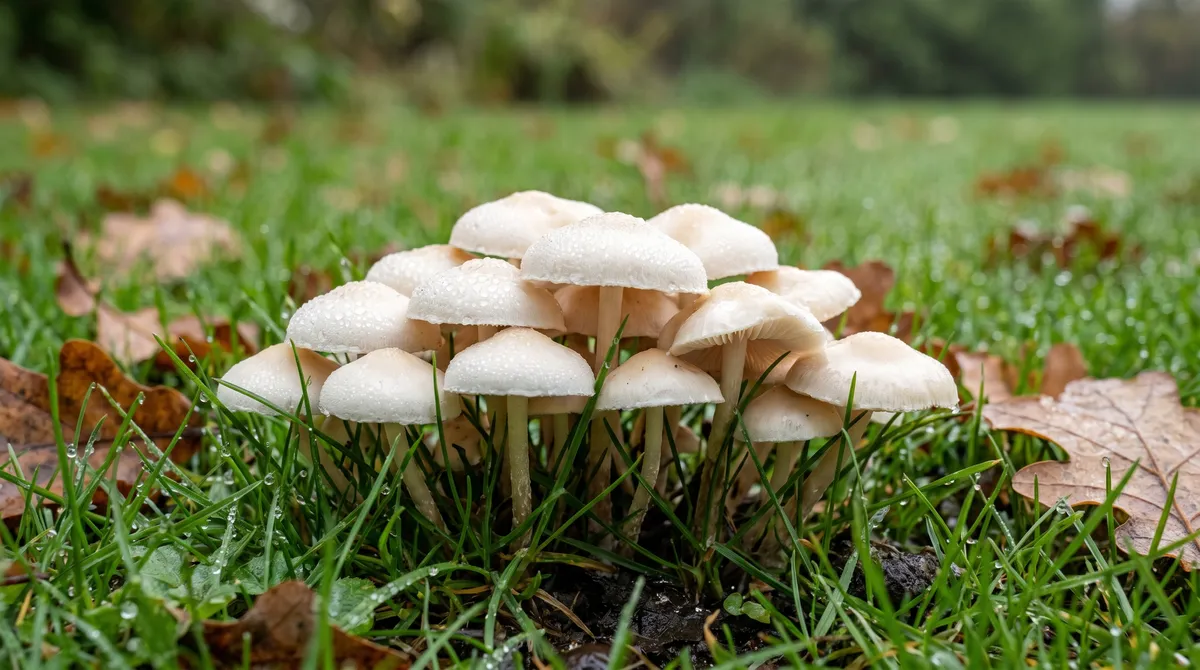
A mushroom popping up in your lawn is one of the most-asked autumn gardening questions in the UK. It triggers a small panic. People assume something is wrong, that the lawn is diseased, that the mushrooms are poisonous, that something needs killing immediately. In almost every case, the truth is the opposite. The mushrooms mean the soil underneath is alive.
This guide covers what causes UK lawn mushrooms, how to identify the four or five types you are most likely to see, when to worry, and the long-term fix that actually works. It is based on six years of observation in our Staffordshire garden plus the broader experience of dealing with two fairy rings, one of which I documented from emergence to disappearance.
For the wider context of UK lawn health and seasonal jobs, see our lawn care calendar UK guide.
Why mushrooms appear in UK lawns
Mushrooms are the fruiting bodies of fungi. The actual fungus lives below ground as a network of fine white threads called mycelium. The mycelium is invisible most of the year but always present in healthy soil. When conditions are right (warm soil, wet weather, sufficient food source) the fungus produces mushrooms above ground to spread spores and reproduce.
The trigger in UK lawns is almost always the same: a wet autumn following a warm summer. Soil temperatures stay above 12C, rainfall keeps the top 5cm of soil moist, and the fungi have time to push fruiting bodies up. Peak mushroom season in UK lawns runs from late September through November. A second smaller flush sometimes happens in mild wet Aprils.
The food source matters more than people think. Mushrooms in lawns are usually feeding on one of:
- Buried organic matter (old tree roots, removed stumps, buried timber)
- Lawn thatch (the layer of dead grass and roots between the soil and the green blades)
- Mowing debris left on the lawn over years
- Buried compost or kitchen waste from previous land use
- Natural soil organic matter, which never produces persistent mushrooms
If mushrooms appear in the same spot year after year, the food source is buried and persistent. If they appear in one autumn after a wet spell and never return, the food source was probably a single load of mowing thatch or surface debris that has now been consumed.
The mushrooms you are most likely to see
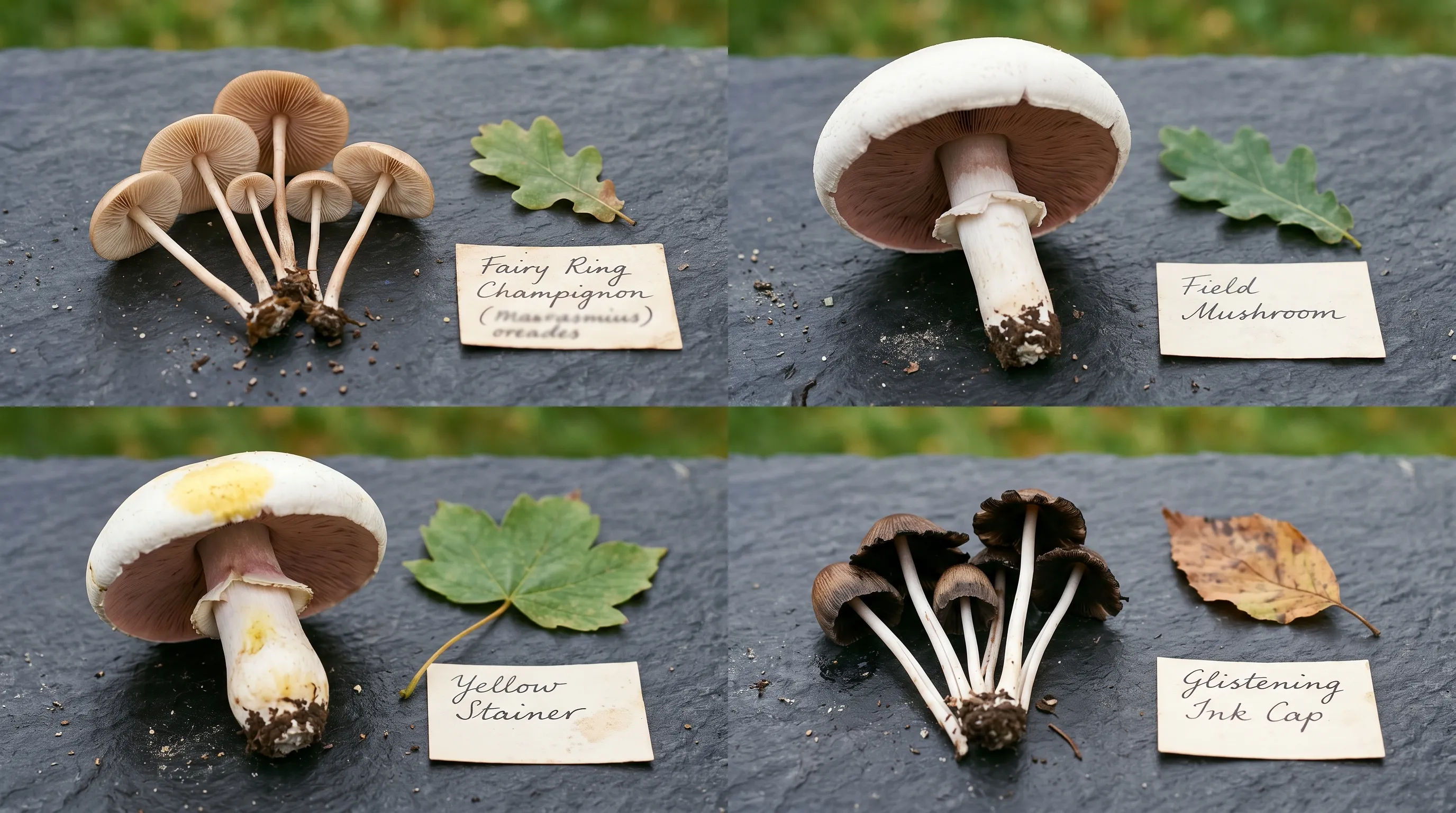
UK lawns produce a fairly predictable set of fungal fruiting bodies. The five below cover 90 percent of what you will see.
| Mushroom | Size | Cap colour | Edible? | Lawn impact |
|---|---|---|---|---|
| Fairy ring champignon (Marasmius oreades) | 2 to 5cm | Pale tan | Yes (when properly identified) | Forms dark or bleached rings |
| Field mushroom (Agaricus campestris) | 3 to 10cm | White | Yes | Harmless to lawn |
| Yellow stainer (Agaricus xanthodermus) | 5 to 12cm | White, yellows when cut | Toxic (stomach upset) | Harmless to lawn but remove for safety |
| Ink cap (Coprinus comatus and similar) | 4 to 10cm tall | Shaggy white | Some edible | Often near rotting wood |
| Puffballs (Lycoperdon) | 2 to 5cm | White, round | Some edible | Indicates healthy soil |
Identification matters most if you have curious dogs or young children. If you are not absolutely certain a mushroom is harmless, remove it. The single common UK lawn mushroom worth specifically watching for is yellow stainer, because the cut flesh turns chrome yellow within seconds of being damaged. It is mildly toxic to dogs and humans and looks similar to the edible field mushroom.
Fairy rings: the one you will definitely notice
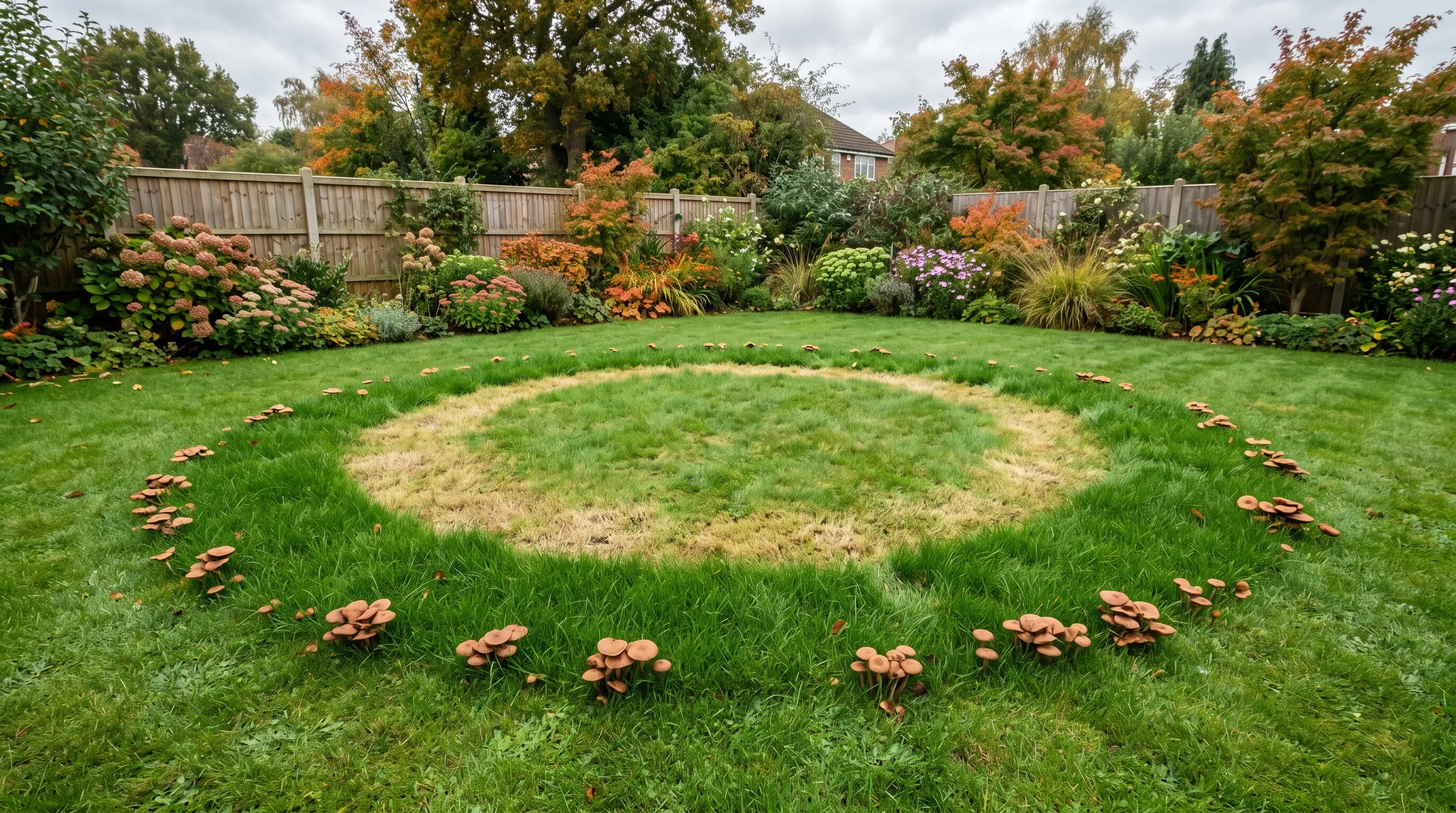
A fairy ring is a circular pattern in a lawn caused by a soil fungus expanding outwards from a central point. The visible signs are one or more of:
- A ring of mushrooms (most often Marasmius oreades) on the perimeter
- A dark green ring of vigorously growing grass
- A bleached or dead ring of grass inside or outside the dark ring
- Sometimes no visible mushrooms at all, just the grass colour pattern
The fungus underneath is producing nitrogen as it breaks down buried organic matter. Nitrogen makes the grass above grow vigorously and look dark green. The same fungus produces a waxy layer in the soil that repels water, which makes the grass on the other side bleached or dead from drought.
Rings grow outwards from the centre by about 15 to 60cm a year. A 3m ring is typically 5 to 8 years old. Some Norfolk rings recorded by the British Mycological Society are over 100m across and several hundred years old.
The most common UK trigger is a removed tree stump. The buried roots feed the fungus for a decade or more. We removed a large sycamore from our Staffordshire garden in 2020. A 3m fairy ring appeared three years later in autumn 2023, almost exactly above where the root plate had been. By the time the visible ring appeared, the fungus had been working on the buried wood for two and a half years.
The Royal Horticultural Society has a useful fairy ring fungal advice page covering identification.
What actually fixes a fairy ring
Most domestic fairy ring “cures” sold online do not work. The fungus is decades old in soil terms and lives 10 to 20cm below the surface. Surface treatments fail.
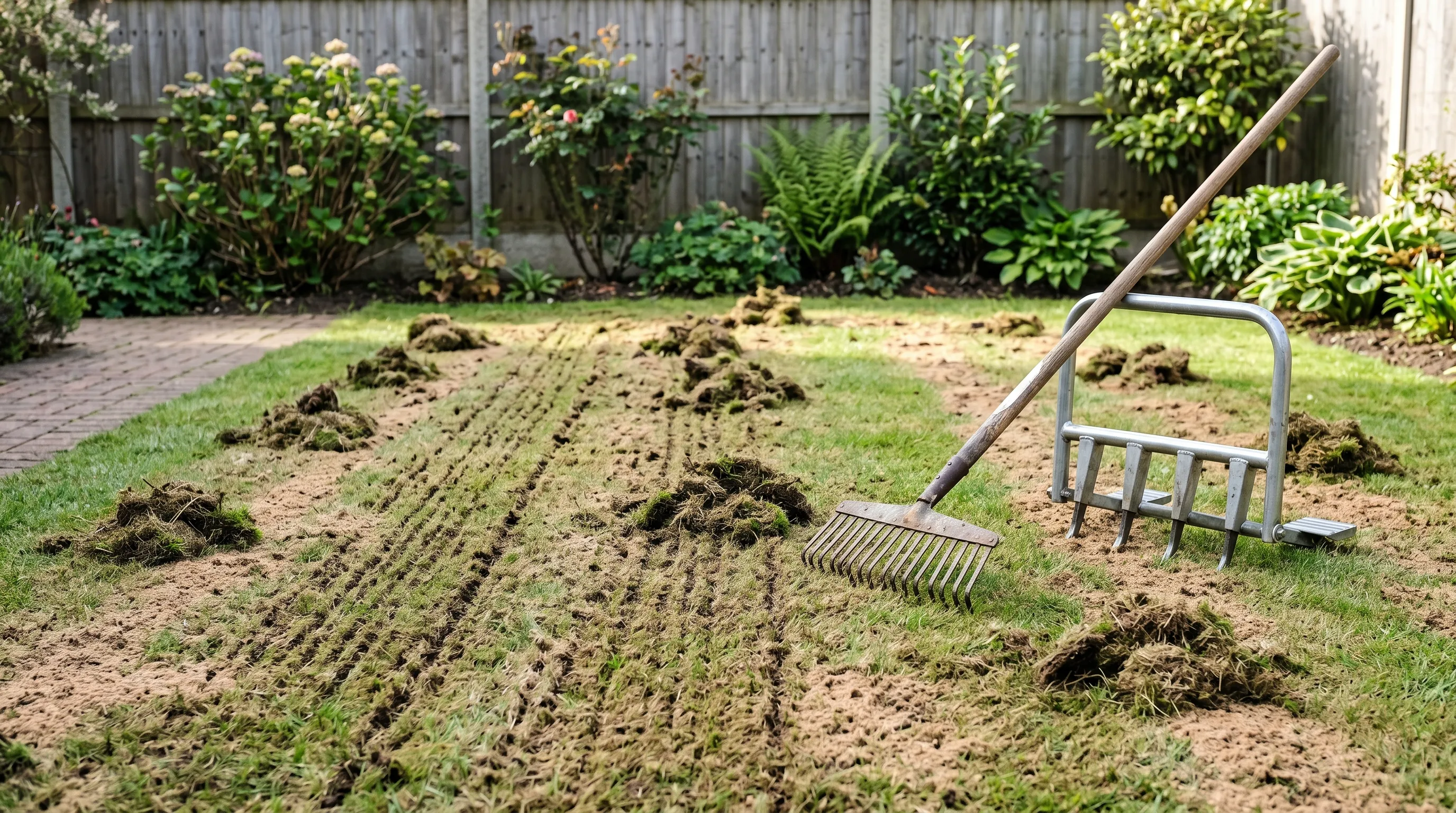
What works is a mechanical approach over two to three years:
Year 1, autumn:
- Core aerate the affected area to 10cm depth using a hollow-tine aerator or a manual fork. Tines should penetrate the hydrophobic layer the fungus has created.
- Top-dress with a sandy loam mix (70 percent sharp sand, 30 percent screened topsoil) at 5kg per square metre. Brush into the holes.
- Apply a balanced autumn lawn feed (high in potassium, low in nitrogen) to support root recovery.
- Water in well if dry weather follows.
Year 1, spring:
- Overseed any bare patches inside the ring with a perennial ryegrass blend.
- Light spring feed (5-6-5 NPK).
- Hand-pull any new mushroom emergence promptly.
Year 2, autumn:
- Repeat core aeration and top-dressing on any persistent ring sections.
- The dark green ring should be fading. The bleached zone should be 50 to 70 percent recovered.
Year 3:
- Most rings are gone by this point. Persistent rings may need a third cycle of aeration and top-dressing.
The single most important intervention is the core aeration. The fungus produces a waxy hydrophobic layer in the soil that repels water. Mechanical perforation breaks this layer and lets water and air through, which both helps the grass recover and weakens the fungus.
Removing mushrooms day-to-day
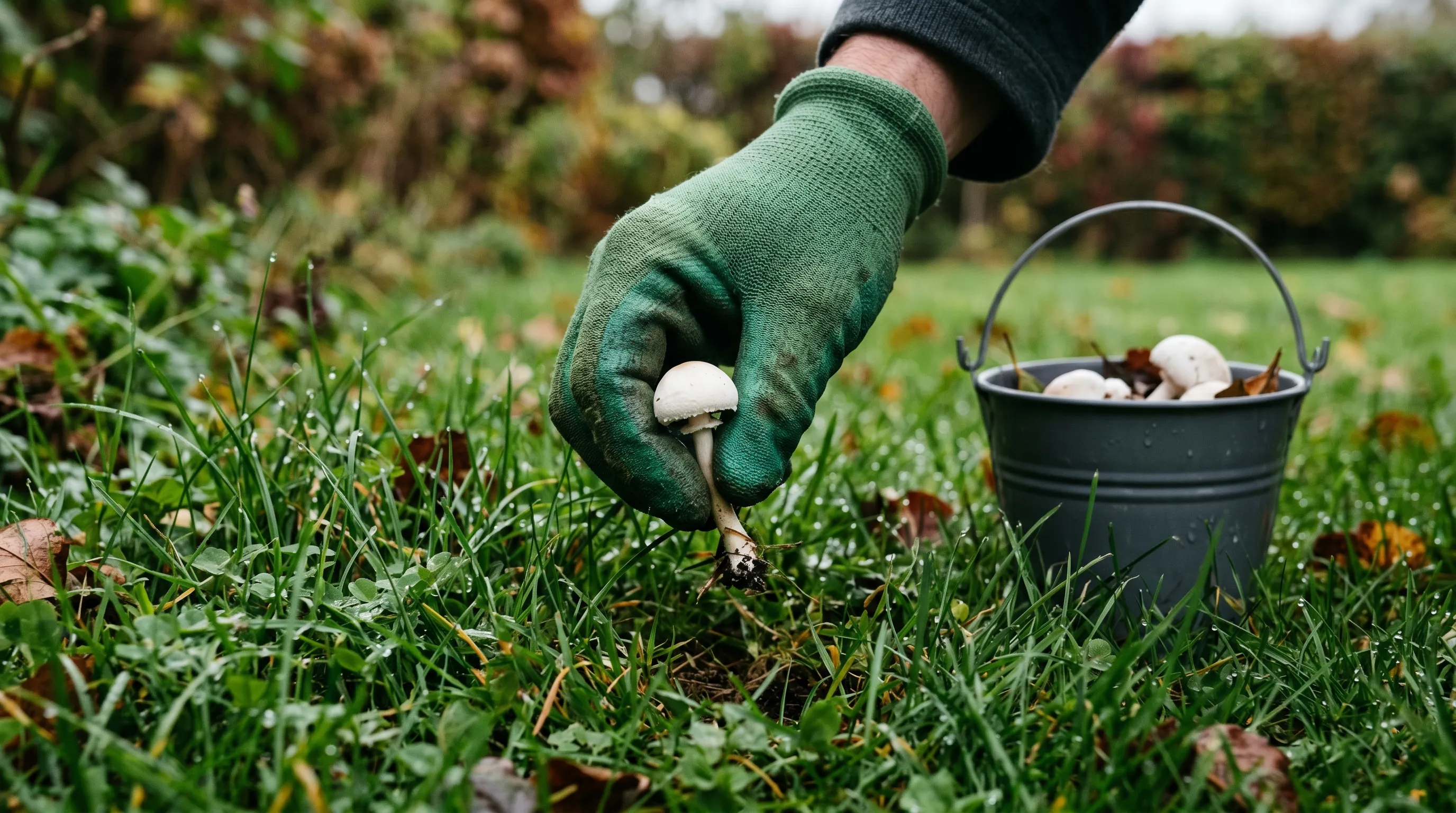
If a fairy ring is the long-term project, individual mushrooms in the lawn are a daily nuisance during autumn. The simple approach:
Hand-pull in the morning. Before they release spores. Grip at the base, twist gently, lift out. Drop into a bucket. Compost the bucket contents at the end of the season (hot heap, not cold) or bag and bin if you are worried about spore spread.
Mow with a rotary mower. A bagged collection mow chops the mushrooms and removes them in the cuttings. Set the cut height slightly higher than usual to avoid scalping. Empty the bag straight to the compost or bin, not back onto the lawn.
Avoid kicking or strimming. Both actions send millions of spores into the air, which seed new fungal colonies in surrounding lawn. Mushrooms removed mechanically should be moved away from the lawn promptly.
For lawns where pets or children play regularly, a morning sweep through the lawn during October and November takes five minutes and removes any newly emerged mushrooms before they are encountered.
Why mushrooms might keep coming back
If mushrooms appear in the same area year after year, the underlying food source needs addressing. The most common UK situations:
Excess thatch. The layer of dead grass and roots between the green blades and the soil. Builds up over years if the lawn is not scarified. Provides food for fungi. The fix is autumn scarification using a powered scarifier or a heavy spring-tine rake. Our scarify and aerate lawn guide walks through the technique.
Poor drainage. Waterlogged soil creates conditions that favour fungi. The fix is core aeration each autumn plus top-dressing with sandy loam to gradually improve the soil profile.
Buried wood or roots. Removed tree stumps, old fence posts, buried garden waste, builder’s debris. The fungus feeds until the wood is gone, which can take 5 to 15 years. Mechanical removal of the buried wood is the only complete fix. Aeration and feeding speed up the decomposition.
Compacted soil under heavy use. Football lawns, dog-run lawns, party lawns. The fix is annual core aeration plus top-dressing.
Too much organic mulch. Some householders pile compost or wood chip too thickly over lawn edges, which feeds fungi. Pull mulches back from lawn edges by 15cm.
For broader lawn health diagnostics, our lawn diseases identification and treatment guide covers other fungal and bacterial issues that look superficially similar to mushroom problems.
The longer view: when to leave mushrooms alone
Most healthy UK lawns produce mushrooms occasionally and never have a problem. The fungal threads breaking down old grass roots and thatch are the same organisms that keep soil fertile. Wiping them out chemically would harm the lawn long term.
If you find mushrooms once or twice in autumn:
- Identify them roughly (any common ID app, RHS website, or British Mycological Society guide)
- Confirm they are not yellow stainer if pets or children use the lawn
- Hand-pull or mow off
- Move on
If mushrooms appear every autumn in the same place:
- Look for buried wood or persistent organic matter
- Scarify in autumn to remove thatch
- Core aerate every 2 to 3 years
- Top-dress with sandy loam to dilute the organic profile
- Feed appropriately for the season
If you have a fairy ring:
- Accept that the fix is a 2 to 3 year mechanical project
- Aerate, top-dress, feed, overseed
- Resist the temptation to dig out the ring (it almost always makes things worse)
The thing to remember is that mushrooms in a lawn are the visible 2 percent of the soil biology. The other 98 percent (bacteria, mycorrhizae, springtails, earthworms) is what keeps the lawn growing. A healthy soil is going to push up mushrooms occasionally. It is not a sign of failure. It is a sign you are doing things right.
For wider lawn-care planning, see our feeding lawn UK guide, top-dressing guide, and patchy lawn repair guide.
Frequently asked questions
The questions below cover the points UK gardeners ask most often when mushrooms show up in autumn.
Lawrie has been gardening in the West Midlands for over 30 years. He grows his own veg using no-dig methods, keeps a wildlife-friendly garden, and writes practical advice based on real UK growing conditions.