Key takeaways
- Leatherjackets are grey-brown larvae of crane flies (daddy long legs), feeding on grass roots September to May
- Peak lawn damage occurs March-April when larvae reach full size at 3-4cm long
- Birds pecking and tearing at turf, especially starlings and rooks, is the earliest sign of infestation
- Steinernema feltiae nematodes applied in October when soil is above 12C give 60-80% control
- No chemical insecticides are approved for home lawn use against leatherjackets since the EU neonicotinoid ban
- Improving drainage and avoiding heavy autumn watering reduces egg survival by up to 50%
Leatherjackets are the most common cause of unexplained brown patches in UK lawns. These grey-brown, legless grubs are the larvae of crane flies, the gangly insects most people know as daddy long legs. They live in the soil, feeding on grass roots from September through to May, and the damage they cause peaks in March and April when the larvae reach full size.
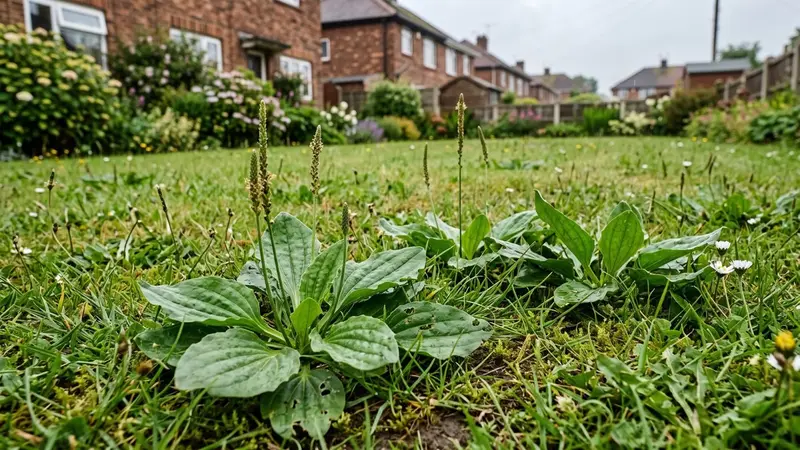
If starlings, rooks, or magpies are ripping chunks out of your turf, leatherjackets are almost certainly the reason. The birds are not the problem. They are telling you about the problem underneath.
What are leatherjackets?
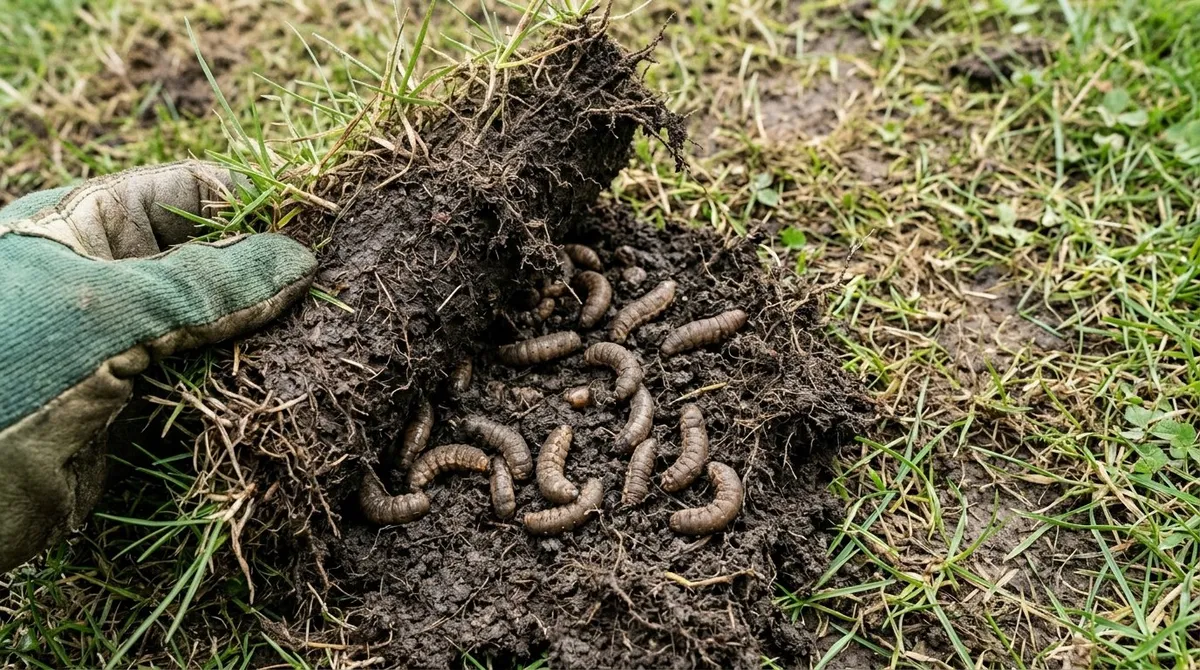
Leatherjackets are the larval stage of crane flies in the family Tipulidae. Two species cause most lawn damage in the UK: Tipula paludosa (the common European crane fly) and T. oleracea (the marsh crane fly). Both produce grey-brown, legless grubs that live in the top 5cm of soil and feed on grass roots, stems, and organic matter.
The name comes from their tough, leathery skin, which is surprisingly resistant to being squashed. Fully grown larvae reach 3-4cm long and are roughly pencil-thickness. They have no obvious head and no legs. The body is cylindrical, tapering slightly at the front, with small fleshy projections at the tail end. When disturbed, they curl slightly but do not form a tight C-shape like chafer grubs.
Crane flies are among the most abundant insects in Britain. A single square metre of damp grassland may contain 300-400 larvae in a bad year. Even a well-maintained garden lawn in an urban area can harbour 50-100 per square metre. At those densities, the damage becomes impossible to ignore.
How to identify leatherjacket damage in lawns
Irregular brown or yellow patches that appear from late autumn onwards are the hallmark of leatherjacket damage. The grass thins, turns yellow, and eventually dies in patches that spread outward. Damaged areas feel spongy underfoot because the root system has been eaten away. Pull gently on the dead grass and it lifts easily, with almost no roots attached.
The damage pattern differs from drought stress, which creates even browning across the lawn. Leatherjacket patches are irregular, often starting near edges or damp areas where eggs were laid. They also differ from fungal lawn diseases, which typically show circular patterns with distinct margins.
Birds tearing at the turf are the most reliable early warning. Starlings arrive in flocks and probe the ground systematically. Rooks and jackdaws pull up chunks of turf. Magpies and blackbirds dig individual holes. The secondary bird damage often looks worse than the larval feeding itself, creating a churned, torn surface that takes weeks to recover.
To confirm leatherjackets, use the wet-sacking method. Soak a section of affected lawn thoroughly in the evening. Lay a piece of damp hessian sacking or thick black polythene over the wet turf overnight. In the morning, lift the cover and count the larvae that have come to the surface. More than 25 per square metre indicates a treatable infestation. More than 100 per square metre will cause severe damage without intervention.
What is the leatherjacket lifecycle in the UK?
Understanding the lifecycle is essential because it determines when each control method works. The cycle runs on an annual clock, and missing the correct window makes most treatments ineffective.
Stage 1 — Adult emergence (August-September). Crane flies emerge from the soil in late summer. T. paludosa adults appear mainly in August and September. T. oleracea has two emergence peaks: May-June and August-September. Adults live only 2-3 days. They do not feed. Their sole purpose is to mate and lay eggs.
Stage 2 — Egg-laying (September-October). Females lay 200-300 eggs into short, moist turf. They prefer lawns that are slightly damp and closely mown. Eggs are black, roughly 1mm long, and pushed into the soil surface with the female’s pointed ovipositor. Eggs hatch within 14-21 days if conditions stay moist. Dry weather kills a significant proportion of eggs before hatching.
Stage 3 — Larval feeding (October-May). Newly hatched larvae are tiny, about 5mm long. They feed slowly through autumn and winter, growing through four instars. Growth accelerates in spring as soil temperatures rise. By March-April, larvae are at full size (3-4cm) and causing maximum root damage. This is when brown patches become most visible.
Stage 4 — Pupation (May-June). Larvae pupate in the soil at 2-5cm depth. The pupa is brown, approximately 2.5cm long. Pupation lasts 2-3 weeks before the adult crane fly emerges to begin the cycle again.
| Lifecycle stage | Timing | Duration | What to look for |
|---|---|---|---|
| Adult emergence | Aug-Sep | 2-3 days | Clouds of crane flies at dusk |
| Egg-laying | Sep-Oct | 14-21 days | Females on short, damp lawn |
| Small larvae feeding | Oct-Dec | 8-10 weeks | No visible lawn damage yet |
| Large larvae feeding | Jan-May | 16-20 weeks | Brown patches, bird activity |
| Pupation | May-Jun | 2-3 weeks | Larvae disappear from soil |
How to get rid of leatherjackets with nematodes
Steinernema feltiae nematodes are the primary biological control for leatherjackets. These microscopic roundworms enter the larvae through natural body openings, release bacteria that kill the host within 48-72 hours, and reproduce inside the dead larva to seek out more targets.
Timing is critical. Nematodes need soil temperatures above 12C to be active. In most of England and Wales, this means applying between late September and mid-October. In Scotland and northern England, the window may be narrower, closing by early October. Check soil temperature with a soil thermometer at 10cm depth before ordering.
Application steps for best results:
- Mow the lawn short (25-30mm) the day before.
- Water the lawn thoroughly to bring larvae near the surface.
- Mix nematodes with water as per the packet instructions.
- Apply in the evening, using a watering can with a coarse rose or a hose-end sprayer.
- Water again immediately after application.
- Keep the lawn moist for at least 14 days after treatment.
Expect 60-80% reduction in larval numbers from a single application. Nematodes do not give 100% control. They work best when combined with cultural methods. A second application the following autumn reduces populations further. For persistent infestations, treat every year for three consecutive seasons. For more on biological pest control with nematodes, see our detailed guide.
Buy nematodes from specialist biological control suppliers. They are living organisms with a short shelf life. Use them within 2-3 days of delivery. Store in a fridge at 5C until application. Nematodes are harmless to children, pets, earthworms, birds, and other garden wildlife.
What cultural controls reduce leatherjackets?
Cultural methods do not kill leatherjackets directly, but they reduce egg survival, discourage egg-laying, and help lawns recover faster from damage. Used alongside nematodes, these methods give far better long-term results.
Avoid overwatering in autumn. Crane fly eggs need moisture to survive. If you irrigate your lawn in September and October, you are creating ideal conditions for egg hatching. Let the lawn dry out naturally during the egg-laying period unless drought stress is severe.
Raise mowing height. Longer grass (40-50mm) makes it harder for females to push eggs into the soil. Raise your cutting height from August to October during the egg-laying window.
Encourage natural predators. Starlings, rooks, jackdaws, and hedgehogs all eat leatherjackets. Badgers also dig for the grubs, so if turf is being lifted in chunks at night, our guide on how to stop badgers digging up your lawn explains the practical fixes. Ground beetles are voracious nocturnal predators of soil-dwelling larvae. Create habitat for these species by maintaining mixed borders, log piles, and rough grass areas near the lawn. A hedgehog-friendly garden provides both slug and leatherjacket control.
Overseed in spring. Bare patches left by leatherjacket feeding should be overseeded in April or September when the larvae are no longer active. Rake the surface, scatter grass seed, and keep it moist. Feed with a spring lawn fertiliser to encourage quick recovery. A healthy, well-nourished lawn tolerates moderate infestations far better than one that is starved and compacted.
Leatherjackets vs chafer grubs vs wireworms
Three main soil-dwelling pests damage UK lawns and borders. Correct identification matters because the treatment timing and methods differ for each. Misidentifying the pest wastes time and money.
| Feature | Leatherjackets | Chafer grubs | Wireworms |
|---|---|---|---|
| Appearance | Grey-brown, legless, tubular | White, C-shaped, 6 brown legs | Yellow-brown, segmented, 3 pairs of legs |
| Adult insect | Crane fly (daddy long legs) | Chafer beetle (cockchafer, garden chafer) | Click beetle |
| Length (mature) | 2-4cm | 1.5-4cm (species dependent) | 1.5-2.5cm |
| Head visible? | No obvious head | Brown head capsule, clearly visible | Small brown head, visible |
| Body shape | Straight, slightly tapered | Tightly curled C-shape | Straight, rigid, wiry |
| Main host | Grass roots | Grass roots | Root vegetables, grass, cereals |
| Peak damage | March-April | June-October | Year-round, worst spring-autumn |
| Nematode species | Steinernema feltiae | Heterorhabditis bacteriophora | No effective nematode available |
| Nematode soil temp | Above 12C | Above 12C | N/A |
| Best application | October | July-September | Cultural control only |
| Bird damage | Severe (starlings, rooks) | Severe (crows, magpies, badgers) | Minimal |
Chafer grubs are the most commonly confused with leatherjackets. The key difference is shape: chafer grubs curl into a tight C when disturbed, while leatherjackets stay straight or curl only loosely. Chafer grubs also have six distinct legs and a visible brown head. The RHS chafer grub page provides detailed photographs for comparison. If chafers turn out to be your culprit, our chafer grub lawn treatment guide covers timing and control.
Wireworms are less common in lawns but are a serious pest in vegetable gardens and allotments. They are the larvae of click beetles and take 3-5 years to reach maturity, making them a persistent problem in newly cultivated ground.
Does wet weather make leatherjackets worse?
Wet autumns produce larger leatherjacket populations the following spring. Crane fly eggs need consistent moisture to survive. In dry Septembers, egg mortality can reach 50-70%. In wet years, almost all eggs hatch successfully, leading to population explosions.
The relationship between rainfall and leatherjacket damage is well documented. The worst outbreaks follow summers with average or above-average rainfall followed by mild, damp autumns. A dry, hot summer followed by a drought in September is the best natural control you can get.
Climate patterns in the UK have shifted towards wetter autumns in many regions, which partly explains why leatherjacket complaints have increased over the past decade. In the West Midlands, September rainfall has been above the 30-year average in 7 of the last 10 years.
Heavy clay soils hold moisture longer, giving eggs more time to hatch. Sandy soils drain faster and dry out at the surface, killing a higher proportion of eggs. If your garden is on clay, you are inherently more vulnerable to leatherjacket infestations.
Waterlogged lawns face a double problem. The saturated conditions favour egg survival, but they also reduce nematode effectiveness because the microscopic worms cannot move efficiently through waterlogged soil. Fix drainage first, then apply nematodes.
When is it too late to treat leatherjackets?
Nematode treatment is ineffective after November in most UK regions because soil temperatures drop below 12C. Once the soil is too cold, nematodes become dormant and cannot seek out larvae. By the time soil warms again in spring, the larvae are too large and their skin too tough for nematodes to penetrate effectively.
Spring nematode applications against leatherjackets are unreliable. Some suppliers sell spring packs, but the consensus among biological control researchers is that autumn application gives significantly better results. The larvae are smaller and more vulnerable in October than in March.
If you miss the autumn window, the best approach is cultural. Let the birds feed. Starlings cause surface damage but they remove a significant number of larvae. Overseed bare patches once larvae pupate in May. Apply nematodes the following October to prevent the next generation.
For severe infestations discovered in spring, consider overseeding with a hard-wearing grass mix in April and feeding with a nitrogen-rich fertiliser to push recovery. The lawn will look rough through summer but should thicken up by autumn if you then treat with nematodes in October.
Can leatherjackets damage vegetable gardens and borders?
Leatherjackets feed on more than just grass. They attack lettuce, brassicas, strawberries, and young transplants in vegetable plots. They sever stems at soil level, mimicking cutworm damage. Seedlings disappear overnight. Established plants wilt and topple.
In borders, leatherjackets occasionally damage perennials and bedding plants. Primulas, violas, and young herbaceous plants are most at risk. The damage is less noticeable than in lawns because it affects individual plants rather than visible patches.
Allotment holders converting grassland to vegetable beds face the worst problems. The existing leatherjacket population has a ready supply of food in the new crop. Cultivate the soil before planting and leave it exposed for birds to feed on the larvae. Starlings will clear a freshly dug plot of leatherjackets within days if given access. A second dig 2-3 weeks later catches any that were missed. See our vegetable pests guide for a full overview of soil-dwelling threats.
In raised beds and containers, leatherjackets are rarely a problem because crane flies prefer to lay eggs in open turf rather than bare compost. However, beds adjacent to infested lawns may see occasional damage.
Frequently asked questions
What do leatherjackets look like?
Leatherjackets are grey-brown, legless, tubular grubs up to 4cm long. They have no obvious head capsule and a tough, leathery skin that gives them their common name. The body tapers slightly at the head end and has small dark projections (spiracles) at the tail. They live in the top 5cm of soil among grass roots. Fully grown larvae are roughly the thickness of a pencil. When disturbed, they do not curl tightly like chafer grubs. Instead, they stay fairly straight or wriggle sideways.
When do crane flies lay eggs in UK lawns?
Adult crane flies lay eggs in UK lawns from late August to mid-October. Peak egg-laying occurs in September, especially after warm, damp evenings when adults swarm at dusk. Females land on short, moist turf and push eggs into the soil surface with their pointed ovipositor. Each female lays 200-300 eggs in clusters. Eggs hatch within 2-3 weeks if the soil stays moist. A dry September can reduce egg survival by 50-70%, which is the most effective natural control.
Do nematodes work against leatherjackets?
Steinernema feltiae nematodes give 60-80% control when applied correctly. Soil temperature must be above 12C for the nematodes to be active. In most of the UK, this means applying in late September to mid-October. Water the lawn thoroughly before and after application. Apply in the evening, as UV light kills nematodes. Keep the lawn moist for at least 2 weeks after treatment. A single application will not eliminate every larva. Repeat annually for three seasons for best results.
Why are birds tearing up my lawn?
Birds pecking at turf usually means leatherjackets or chafer grubs are beneath. Starlings, rooks, jackdaws, and magpies detect larvae by sound and vibration. Starlings probe with their beaks and lever up turf to reach grubs. The secondary damage from bird feeding can be worse than the larval damage itself. The solution is to treat the infestation, not to deter the birds. Birds are actually helping by removing larvae.
Can I use chemicals to kill leatherjackets?
No chemical insecticides are currently approved for home lawn use against leatherjackets. The EU neonicotinoid ban in 2018 removed chlorpyrifos and imidacloprid, which were the last effective chemical options for amateur gardeners. Professional turf managers have limited access to Acelepryn (chlorantraniliprole) under emergency authorisation. Home gardeners must rely on nematodes, cultural controls, and encouraging natural predators.
How do I tell leatherjackets apart from chafer grubs?
Leatherjackets are grey-brown, legless, and tubular; chafer grubs are white, C-shaped, with six legs. Chafer grubs have a distinct brown head capsule and three pairs of legs behind it. Leatherjackets have no visible head and no legs at all. Both live in the top 5cm of soil and both cause brown patches in lawns. Leatherjackets are most active October to May. Chafer grubs feed most heavily from June to October. Different nematode species treat each pest.
Will leatherjackets kill my lawn completely?
Severe infestations can kill large areas of lawn, but most recover with treatment. Counts above 100 larvae per square metre cause significant die-back. At lower densities (25-50 per m2), grass recovers naturally once larvae pupate in May. Overseed bare patches in April-May or September. Feed the lawn with a spring fertiliser to encourage regrowth. Healthy, well-fed lawns tolerate moderate infestations far better than thin, compacted, underfed turf.
Our team produces practical UK gardening guidance from source research, contributor records and established horticultural practice. Editorial standards are overseen by Matt W.