Key takeaways
- Raspberry beetle larvae cause maggoty fruit and can spoil 30 to 70 percent of an untreated summer crop
- Raspberry cane midge has 2 to 3 generations a year and its feeding wounds let in midge blight fungi
- Cane blight, spur blight and cane spot all overwinter on old fruited canes, so cutting them out is the main control
- Most disease is driven by congested rows and poor airflow, not bad luck
- Autumn-fruiting varieties cut to ground each February escape most cane pests and diseases entirely
- Resistant 'Glen' varieties and good hygiene control 80 to 90 percent of problems without chemical sprays
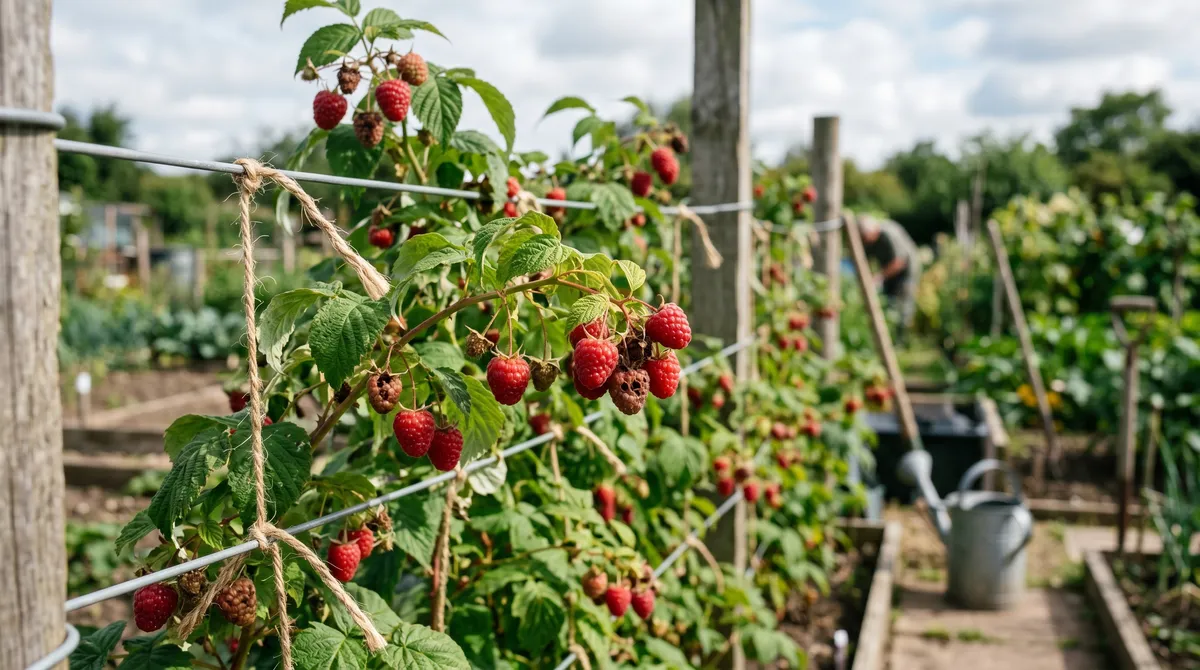
Raspberry pests and diseases are the main reason a promising cane row delivers half the fruit you hoped for. The most common raspberry problems in UK gardens are raspberry beetle, which leaves maggots in the fruit, and a group of cane diseases that kill stems before they ripen. Get on top of these and a single 3 metre row can crop for 6 to 8 weeks.
Raspberry beetle and the maggoty fruit problem
Raspberry beetle (Byturus tomentosus) is the pest that puts maggots in your raspberries. It is the single most common raspberry pest in UK gardens and allotments. In an untreated summer crop it spoils anywhere from 30 to 70 percent of fruit, with the worst damage in warm, dry early summers when adult numbers peak.
The adult is a small, dull brown beetle, 3.5 to 4mm long, covered in fine greyish hairs. It overwinters as a grub or pupa in the soil under the canes, then emerges in late April and May. Adults feed on the flower buds and unopened blossom first, then lay eggs in the open flowers from late May into July. Each female lays around 100 eggs across the flowering period.
The damage is done by the larva. The cream-white grub, 6 to 8mm long with brown plates along its back, hatches into the developing fruit. It feeds at the stalk (plug) end, leaving a dried, crumbly brown patch and often the maggot itself when you pick. Damaged fruit is misshapen and sometimes drops early.
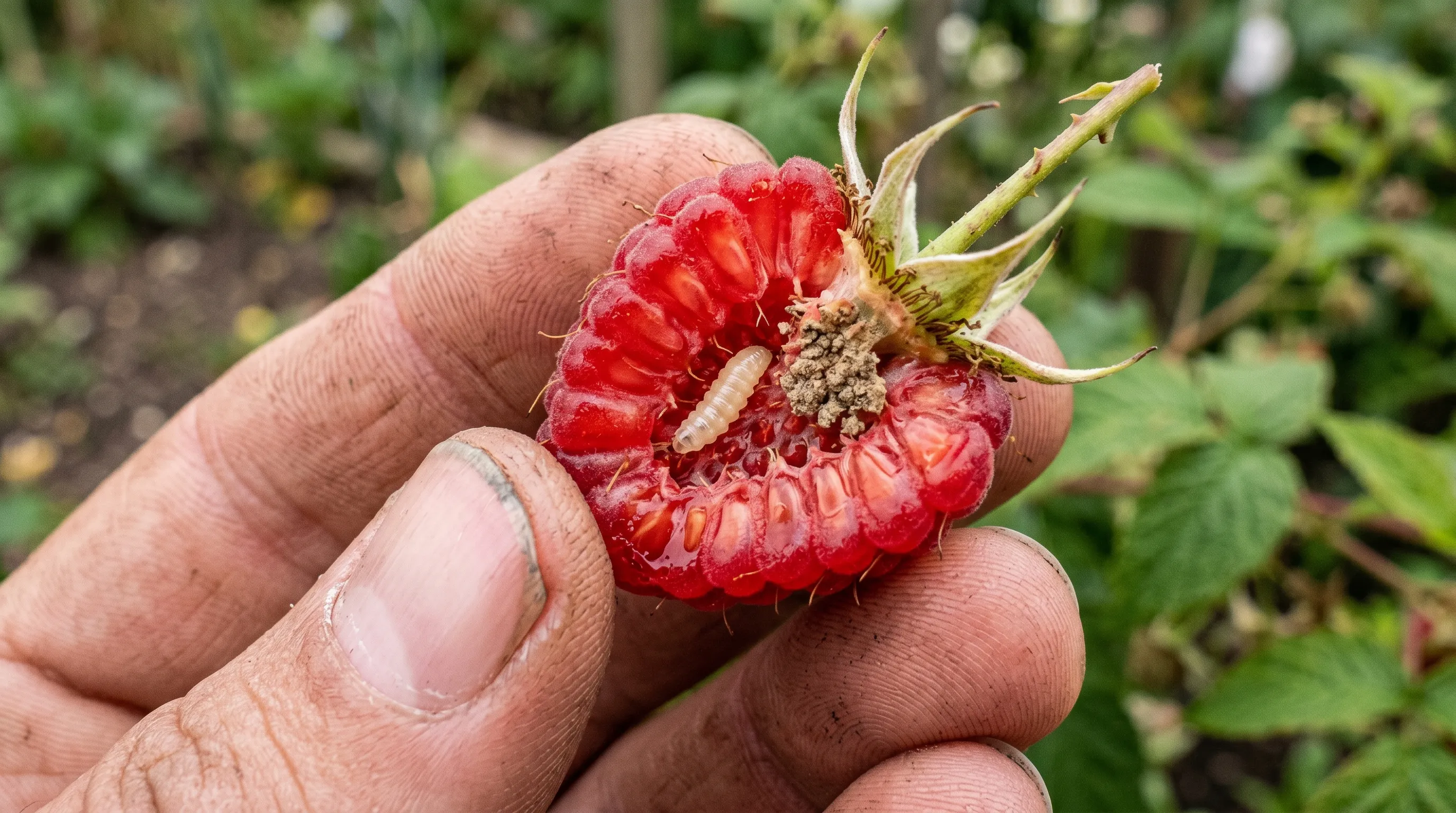 The tell-tale sign of raspberry beetle: a cream maggot at the plug end of an opened berry, with a dried brown patch.
Controlling raspberry beetle
Timing is everything. The control window is the flowering period, when adults are active and eggs are being laid. Once the grub is inside the fruit, no treatment reaches it.
White delta traps baited with the raspberry beetle aggregation lure are the cleanest control. Hang one trap per 3 to 5 metres of row at the start of flowering. They catch egg-laying adults and tell you when activity peaks. Autumn-fruiting varieties dodge the problem because they flower after the beetle’s main egg-laying period has finished. Prompt picking and clearing fallen fruit removes grubs before they drop to pupate in the soil. Where damage is severe, a contact spray approved for raspberries applied at dusk during flowering reduces adult numbers, but check it is safe for pollinators and never spray open flowers in daylight when bees are working.
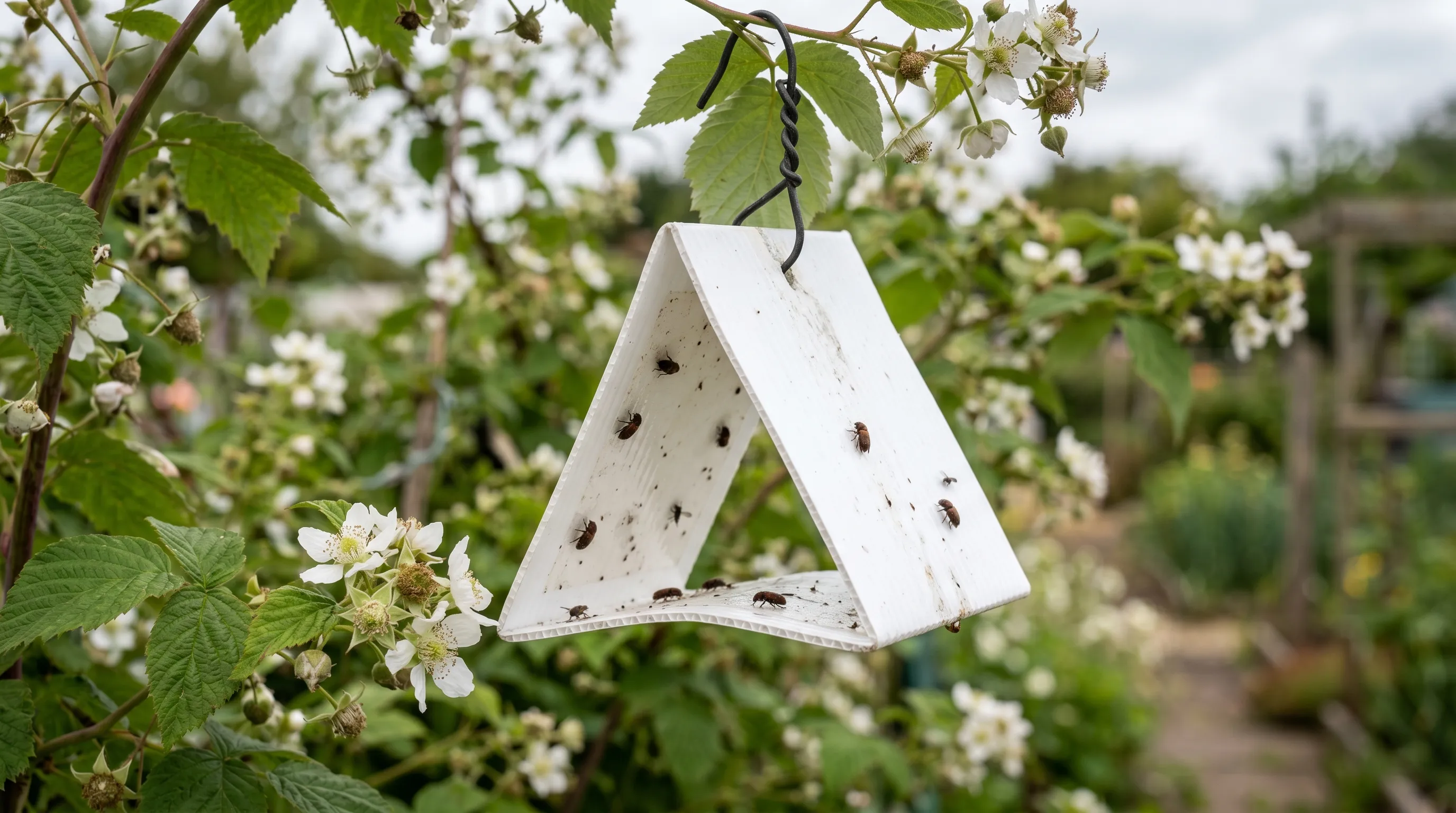 A white delta trap hung at flowering catches egg-laying raspberry beetle adults and shows when activity peaks.
Raspberry cane midge and midge blight
Raspberry cane midge (Resseliella theobaldi) is a tiny fly whose larvae feed under the bark of young canes. On its own the midge does limited harm. The real damage comes from midge blight, a complex of fungi (including Leptosphaeria and Fusarium species) that enter through the splits the larvae create. Midge blight can kill 20 to 40 percent of canes in a badly affected row.
The adult midge is barely 2mm long. It has 2 to 3 generations a year in the UK, flying from May through to September. Females lay eggs in the natural growth splits on this year’s new canes, low down on the stem. The pinkish-white larvae, up to 3mm long, feed in colonies under the bark for 1 to 2 weeks. Their feeding turns the bark dark and the splits widen.
Look for the signature sign in late summer and the following spring. Dark brown to purple patches appear under the bark on new canes, often in bands around the lower 30cm. Peel back the bark and you find feeding larvae or the brown staining they leave. The next spring, affected canes leaf out weakly, then wilt and die between flowering and fruiting as the blight fungi girdle the stem.
Controlling cane midge
The midge lays eggs in growth splits, so reducing splits and removing the worst canes are the main levers.
Cut out and burn any cane showing dark patching at the base, ideally before the next generation emerges. Keep new canes thinned and well spaced so they grow steadily without the deep splits that stressed, crowded canes develop. Autumn-fruiting varieties cut to the ground each winter break the midge cycle completely, because there is no overwintering cane for the spring generation to use. On bad sites, an approved insecticide timed to the first egg-laying generation in May helps, but hygiene and variety choice do most of the work.
Cane blight, the silent cane killer
Cane blight (Leptosphaeria coniothyrium) is the most destructive cane disease of UK raspberries. The fungus enters wounds near the base of the cane, often through cane midge splits, frost cracks or pruning cuts. It then spreads up the stem, killing the cane from the base.
The first sign is usually dark brown or purple-black areas at the base of fruiting canes in early summer. The bark becomes brittle and the cane snaps easily at soil level, often when laden with developing fruit. Cut into the stem and the wood is dark and dead in a ring around the centre. Leaves above the lesion wilt and the whole cane dies. The fungus produces tiny black fruiting bodies on dead bark that release spores in wet weather to infect new wounds.
Cane blight overwinters on infected canes and stubs. It thrives where canes are damaged and where rows stay wet and congested. Wet summers and waterlogged clay soils make it far worse.
Controlling cane blight
There is no effective cure once a cane is infected, so prevention and removal are the only tools.
Cut every infected cane to ground level and burn it, cutting below the visible lesion into clean wood. Disinfect secateurs between cuts with a garden disinfectant or methylated spirit so you do not carry spores cane to cane. Avoid wounding the canes: control cane midge, do not strim near the bases, and tie canes in carefully. Improve drainage on heavy soil with raised rows and grit. Choose resistant varieties such as ‘Glen Ample’ and ‘Glen Prosen’, which show good field tolerance.
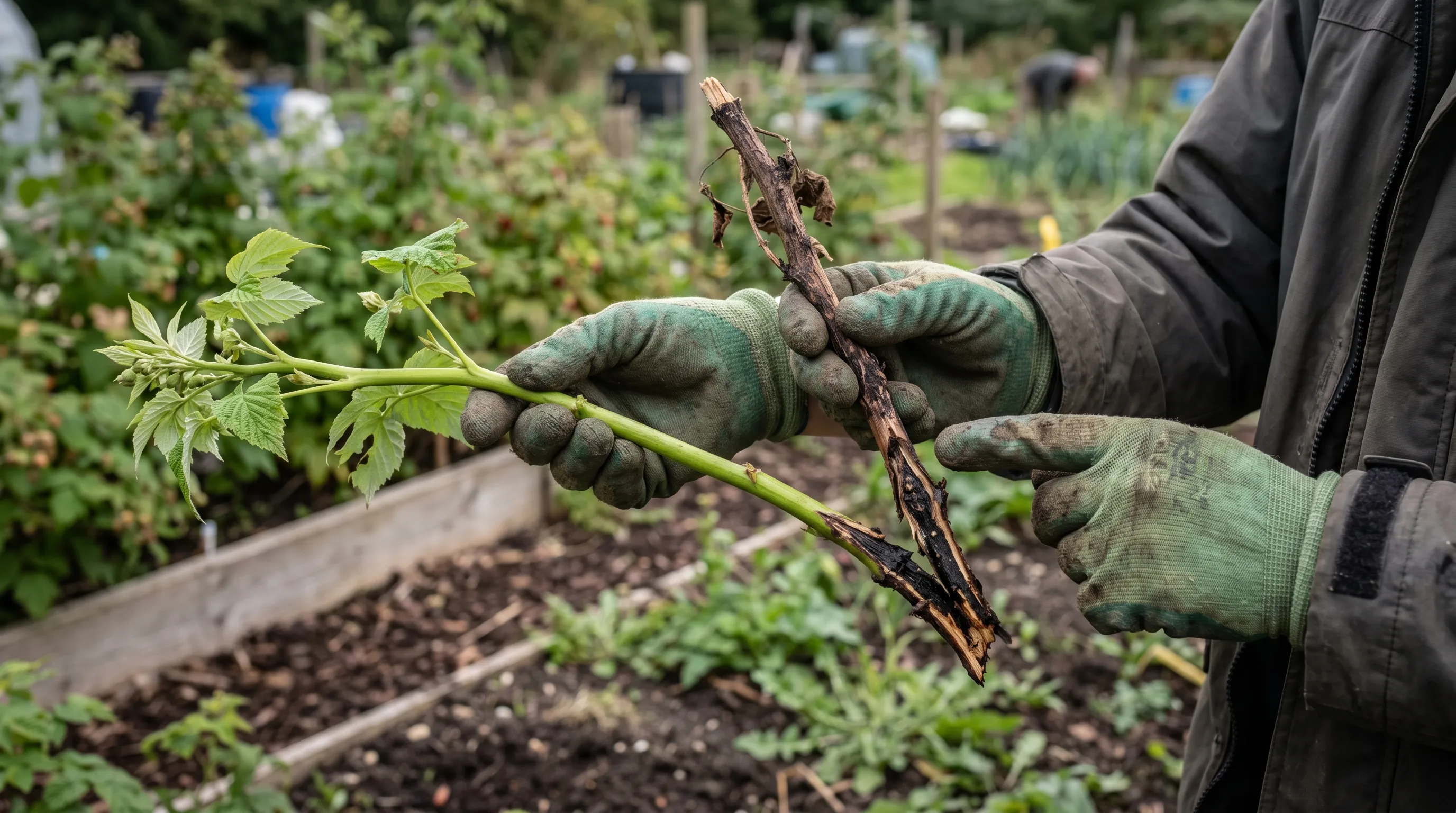 A healthy cane (left) beside a cane blight casualty, dark and brittle at the base where the fungus has girdled the stem.
Spur blight and cane spot
Spur blight (Didymella applanata) and cane spot (Elsinoe veneta) are two more fungal cane diseases that overwinter on old canes and weaken next year’s crop. They rarely kill a cane outright, but they reduce the number of healthy fruiting buds.
Spur blight shows as purple-brown blotches spreading around the buds and leaf joints on this year’s canes, usually from midsummer. The patches turn silver-grey over winter and become dotted with tiny black fruiting bodies. The buds within these zones die or produce weak, low-yielding side shoots the following year. It is worst on soft, sappy growth from over-feeding with nitrogen.
Cane spot (also called anthracnose) appears as small purple spots that develop pale grey centres with a purple border, scattered up the canes, leaves and even the fruit stalks. Severe cane spot cracks the bark, distorts canes and can split the fruit. Both diseases spread by rain-splashed spores in spring and early summer and both favour wet weather and crowded, poorly ventilated rows.
Controlling spur blight and cane spot
The control is the same for both and overlaps with cane blight management.
Grey mould and fruit rots
Grey mould (Botrytis cinerea) is the main reason ripe raspberries collapse into a fuzzy grey mush, on the cane or in the punnet within a day of picking. It is the dominant fruit rot of UK raspberries in wet, warm summers and a major cause of post-harvest loss.
The fungus infects the open flowers first, then stays latent in the developing fruit until it ripens. As the berry softens, the fungus takes over, coating it in the grey, dusty spore mass that gives the disease its name. One infected berry quickly spreads to its neighbours by contact, which is why a damp punnet can rot through overnight. Botrytis spores are everywhere in the air, so the disease needs only moisture and a ripe, soft target.
Grey mould thrives in humidity above 85 percent and at temperatures of 15 to 20C, exactly the muggy conditions of a wet UK July. Dense rows that trap moisture around the fruit make it far worse.
Controlling grey mould
You cannot eradicate botrytis spores, so the strategy is to deny them the moisture and contact they need.
Pick every two days in warm weather, before fruit oversoftens, and remove any mouldy berries the moment you see them so they do not infect the rest. Open up the row by thinning canes and removing low leaves, so air dries the fruit fast after rain. Water at the base, never over the fruit. Cool and use or freeze fruit promptly: chilling to under 4C within an hour of picking dramatically slows rot. Growing under a simple rain cover keeps the fruit drier in a wet summer and cuts losses sharply.
Raspberry rust and other leaf diseases
Raspberry rust (Phragmidium rubi-idaei) is a fungal disease that peppers the leaves with bright orange or yellow pustules, weakening the plant and reducing yield over time. It is more common in wet western and northern parts of the UK and on susceptible varieties.
Rust needs leaf wetness to infect, so it builds fastest in wet seasons and congested rows where foliage stays damp.
Controlling raspberry rust
Hygiene and airflow are the core controls, with resistant varieties as the long-term answer.
Rake up and burn fallen infected leaves in autumn to remove the overwintering spore source. Thin canes and clear weeds to keep air moving and leaves dry. Remove the most heavily spotted leaves through summer to slow the spread. Choose more tolerant varieties where rust is a recurring problem. An approved fungicide at the first sign of pustules helps on bad sites, but most gardens manage rust through hygiene and spacing alone.
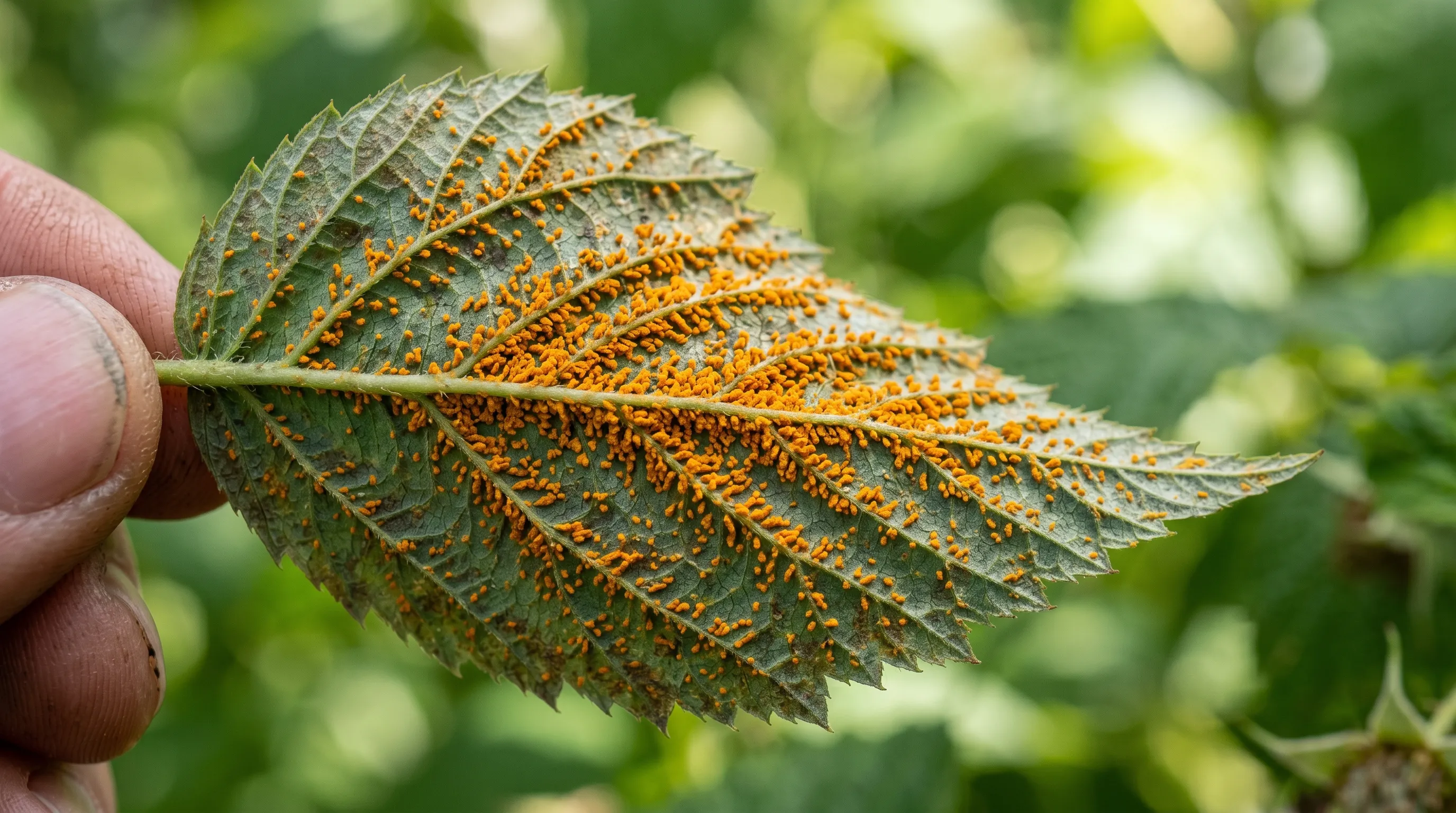 Bright orange rust pustules on a raspberry leaf underside, the spreading stage of raspberry rust in midsummer.
Raspberry viruses and the aphids that spread them
Raspberry viruses, including raspberry mosaic and leaf curl, are spread mainly by aphids feeding on the plants. Unlike fungal diseases, viruses cannot be cured. An infected plant stays infected for life and must be dug out and destroyed.
Raspberry mosaic is the most common. It shows as yellow mottling, blotching or vein-banding on the leaves, often with puckered or distorted growth. Plants lose vigour year on year, canes weaken, and fruit becomes small, crumbly and poor. The large raspberry aphid (Amphorophora idaei) is the main carrier, picking up the virus from infected plants and injecting it into healthy ones as it feeds. Old, neglected raspberry beds and nearby wild brambles act as virus reservoirs.
There is no spray that cures a virus. Control rests entirely on prevention and removal.
Controlling viruses and aphids
Buy certified virus-free stock from a reputable supplier when planting a new bed, and site it well away from old or wild canes. Manage aphids before they build up, since they are the vector. Encourage natural predators such as ladybirds, lacewings and hoverflies, and treat heavy infestations using the methods in our guide on how to get rid of aphids. Dig out and burn any plant showing clear mosaic symptoms straight away, before aphids spread it down the row. Replace virus-prone beds every 8 to 10 years with fresh certified stock on a new site.
Vertebrate and minor pests
Beyond beetles, midges and aphids, a few vertebrate and minor pests take a share of the crop. They rarely threaten the plant’s survival, but they cost you fruit.
Birds are the biggest of these, especially blackbirds and pigeons, which strip ripening fruit fast. Netting the row at colour-up is the only reliable answer. Use a fruit cage or drape netting over a simple frame, keeping it taut so birds do not get tangled. Deer and rabbits browse soft new canes in spring on rural plots; a 1.2m mesh fence keeps rabbits out, while deer need taller protection. Raspberry sawfly larvae chew holes in the leaves in early summer but rarely do enough damage to need treatment. Vine weevil larvae attack roots of container-grown raspberries, controlled with the same beneficial nematodes described in our guide to biological pest control with nematodes.
Ranked control hierarchy for raspberry problems
Not all controls carry equal weight. The table below ranks the main problems by impact and sets out the single most effective control for each, with the rough effectiveness you can expect from good practice.
| Problem | Cause | When it strikes | Best control | Effectiveness | Role |
|---|---|---|---|---|---|
| Raspberry beetle | Byturus tomentosus larvae in fruit | Flowering to harvest, June to Aug | White delta traps at flowering plus autumn varieties | 70-85% fewer maggots | Primary pest control |
| Cane blight | Leptosphaeria coniothyrium in wounds | Early summer, fruiting canes | Cut out fruited canes, avoid wounding | 80-90% loss reduction | Primary disease control |
| Cane midge / midge blight | Resseliella theobaldi under bark | May to Sept, 2-3 generations | Grow autumn fruiters, remove split canes | 70-80% fewer affected canes | Cultural control |
| Spur blight and cane spot | Didymella and Elsinoe on canes | Midsummer onward | Cut out old canes, thin to 10 per metre | 75-85% reduction | Hygiene control |
| Grey mould | Botrytis cinerea on ripe fruit | Wet, warm harvest weather | Pick every 2 days, open up airflow | 60-75% less rot | Harvest management |
| Raspberry rust | Phragmidium rubi-idaei on leaves | Late spring to autumn | Clear fallen leaves, thin canes | 50-70% reduction | Supplementary hygiene |
| Viruses (mosaic) | Aphid-spread, incurable | Any time, builds over years | Certified stock, dig out infected plants | Prevention only | Replacement strategy |
The clear gold standard runs through every row of that table: cut out fruited canes and keep the row open. Tidy hygiene and airflow control cane blight, spur blight, cane spot, grey mould and rust at once. No single spray comes close to that range of protection.
Month-by-month raspberry problem calendar
Each problem has a window when action pays off. This calendar shows what to watch for and do through the UK growing year.
| Month | What to watch for and do |
|---|---|
| January | Plan replacements. Order certified virus-free stock for new beds. |
| February | Cut autumn-fruiting canes to ground level. Removes overwintering midge and disease. |
| March | Check new canes for spur blight silvering. Cut out any badly marked. Mulch, do not over-feed with nitrogen. |
| April | Watch for emerging raspberry beetle adults. Tie in new canes carefully to avoid wounds. |
| May | Hang white delta traps as flowering starts. First cane midge generation flies. |
| June | Peak raspberry beetle egg-laying. Inspect lower canes for dark midge patches. |
| July | Summer harvest. Pick every 2 days against grey mould. Watch for cane blight wilting. |
| August | Cut out fruited summer canes within 2 to 3 weeks of last pick. Burn them. |
| September | Autumn harvest. Rust pustules visible on leaves. Net against birds. |
| October | Rake up and burn fallen rusted leaves. Final autumn picks. |
| November | Tidy beds. Check ties. Improve drainage on wet clay rows. |
| December | Review the season. Mark out any virus-suspect plants for removal. |
Common mistakes that make raspberry problems worse
Most raspberry trouble traces back to a handful of avoidable habits. Fixing these prevents more damage than any spray.
Leaving old fruited canes standing. The dead brown summer canes carry cane blight, spur blight, cane spot and rust spores through winter. Gardeners who skip the post-harvest cut-out hand next year’s crop a ready-made infection. Cut summer canes to the ground within 2 to 3 weeks of the last pick.
Letting the row get congested. Allowing 18 to 20 canes per metre instead of 10 traps humidity, keeps foliage wet and feeds every fungal disease at once. Thin ruthlessly to strong, evenly spaced canes. Airflow is free disease control.
Over-feeding with nitrogen. Heavy nitrogen pushes soft, sappy growth that spur blight and aphids love. Use a balanced feed and a mulch, not repeated nitrogen dressings.
Keeping a virus-infected bed too long. Mosaic builds silently over years until yields collapse. Many growers nurse a tired, mottled bed for a decade. Dig out clear virus cases promptly and replace the whole bed every 8 to 10 years.
Root-cause prevention for a healthy cane row
Reactive spraying treats symptoms. The lasting fix addresses the conditions that let raspberry pests and diseases thrive: stale air, old canes, wounds and susceptible varieties. Get these right and you remove the cause, not just the latest outbreak.
Airflow is the master lever. Most raspberry diseases need leaf or fruit wetness to infect. A row thinned to 10 strong canes per metre, with low leaves stripped and weeds cleared, dries within an hour of rain. A congested row stays damp for hours and feeds botrytis, rust, spur blight and cane spot at once.
Cut out old canes on time. For summer-fruiting types, remove every fruited cane to ground level right after harvest and tie in this year’s green canes to replace them. For autumn-fruiting types, cut the whole row to ground each February. This single step starves the overwintering spores of host material and is covered alongside fruit-tree work in our guide to pruning fruit trees.
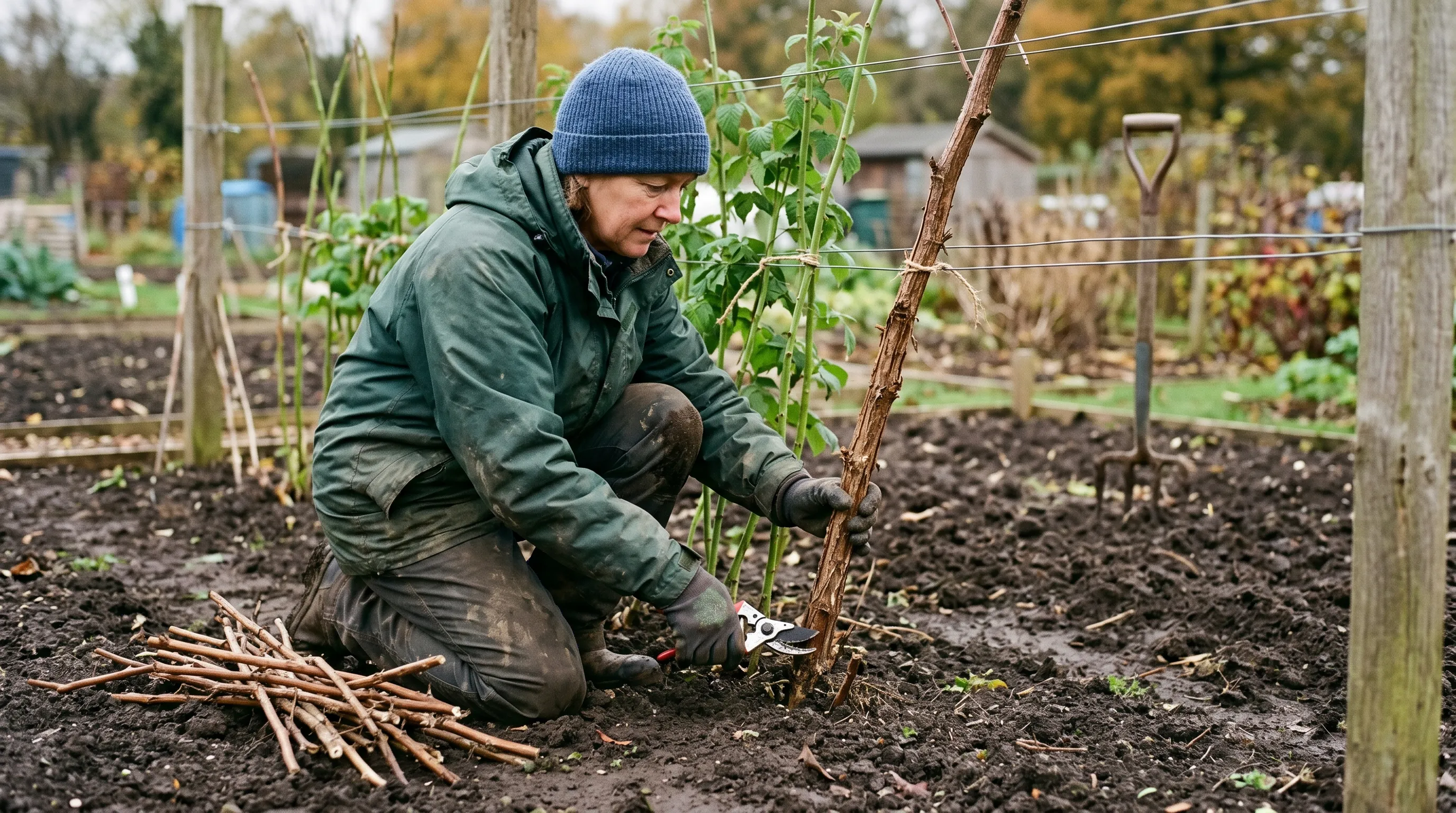 Cutting fruited summer canes to the ground after harvest removes the overwintering reservoir of cane blight, spur blight and rust.
Avoid wounds and choose resistant varieties. Cane blight and midge blight enter through damage, so control cane midge, do not strim cane bases, and prune cleanly with disinfected blades. Plant certified virus-free stock of resistant varieties: the ‘Glen’ series (‘Glen Ample’, ‘Glen Prosen’, ‘Glen Moy’) shows good tolerance to several cane diseases and aphids. The RHS maintains current variety and disease guidance through its advisory service.
Gardener’s tip: When you cut out fruited summer canes, do it on a dry day and burn the prunings rather than composting them. Cool home compost heaps do not reach the temperature needed to kill cane blight and spur blight spores, so composting old canes simply recycles the disease back onto your plot the following spring.
Warning: Never plant new raspberries where you have just dug out a virus-infected or dieback-stricken bed. Soil-borne problems and aphid pressure carry straight over. Move new canes to fresh ground at least 5 metres from old or wild brambles, and wait two to three years before replanting the original site.
For wider soft-fruit pest pressure, the same hygiene and trapping principles apply to currants and gooseberries. Our guide to gooseberry sawfly and the neem oil control method both cover techniques that transfer directly to raspberries.
Frequently asked questions
What are the little maggots in my raspberries?
They are raspberry beetle larvae. The adult beetle lays eggs in the flowers from late May. The grubs then feed inside the developing fruit, leaving a small white or cream maggot and a dried, crumbly patch at the stalk end. They are harmless if eaten but unpleasant, and worse in warm, dry early summers.
Why are my raspberry canes dying off before they fruit?
Cane blight or cane midge damage is the usual cause. Cane blight enters wounds at the base, turning canes dark and brittle so they snap. Cane midge larvae feed under the bark, splitting it and letting in midge blight fungi. Both kill canes between flowering and fruiting. Cut affected canes to ground level and burn them.
Should I cut down raspberry canes after fruiting?
Yes, cut all summer-fruiting canes that have fruited down to ground level. Do this within two to three weeks of the last pick. The old brown canes carry spur blight, cane spot and cane blight spores over winter. Removing them is the single most effective disease control. Tie in this year’s green canes to replace them.
Are raspberry diseases harmful to other fruit?
Some raspberry diseases spread to related cane fruit. Cane blight, spur blight and cane spot also affect blackberries, loganberries and tayberries. Raspberry viruses spread to these too via aphids. Keep new raspberry beds 5 metres or more from old or wild brambles, which act as a reservoir for both fungal spores and virus-carrying aphids.
How do I stop maggots in raspberries without spraying?
Hang white sticky delta traps at flowering and grow autumn varieties. White traps baited with the beetle attractant catch egg-laying adults from late May. Autumn-fruiting raspberries flower after the beetle’s main egg-laying period, so they escape most damage. Picking promptly and clearing fallen fruit also breaks the beetle’s lifecycle in the soil below.
Our team produces practical UK gardening guidance from source research, contributor records and established horticultural practice. Editorial standards are overseen by Matt W.