Key takeaways
- Overwatering causes 70% of string of hearts leaf drop, with soft yellow leaves the main warning sign
- Let the compost dry out fully between waterings, then water roughly every 10-14 days in summer
- Cut watering to once every 3-4 weeks from October to March when UK light is weak
- Give bright indirect light within 1 metre of an east or west window to stop leggy, sparse growth
- Keep the plant above 12C and away from cold draughts and direct radiator heat
- Bare vines regrow if you cut them back to 10cm and lay the cuttings on fresh gritty compost
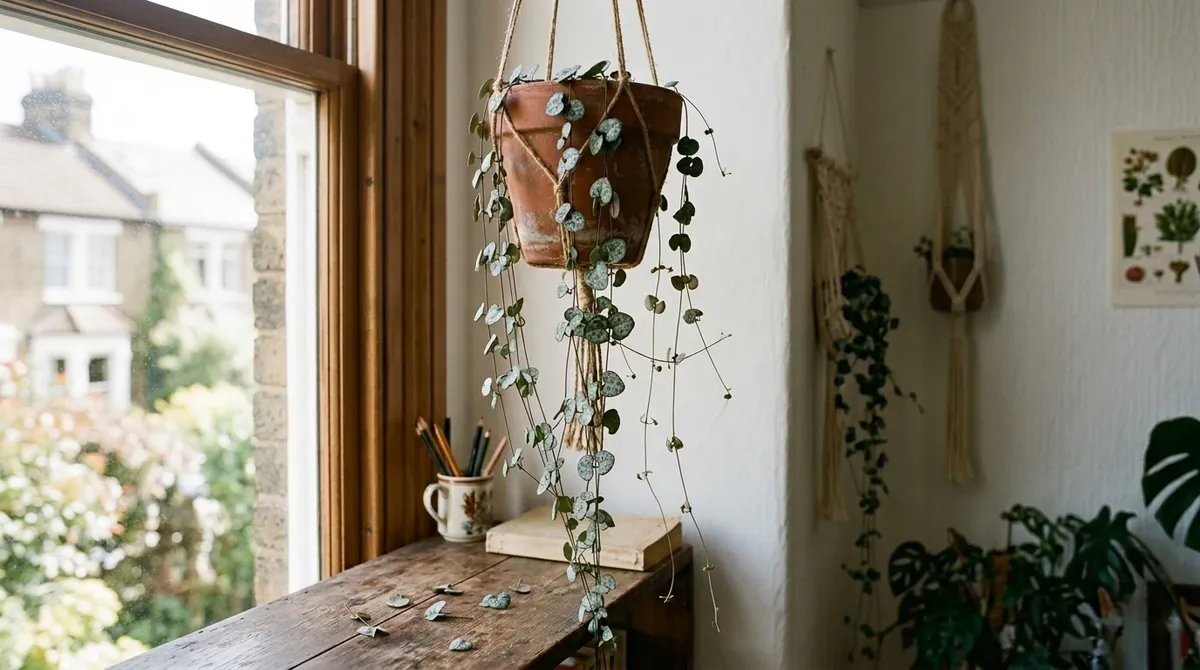
A string of hearts dropping leaves is one of the most common houseplant worries, and the cause is almost always fixable. Ceropegia woodii is a trailing succulent with thread-like vines and small, silver-marbled heart-shaped leaves. When those leaves yellow, shrivel, or scatter across the shelf below, the plant is telling you something is wrong at the roots, in the light, or in the air around it. The good news is that this plant is tough and forgiving once you read the signs correctly. This guide works through every cause of leaf drop, shows you how to diagnose yours in minutes, and explains how to revive even a sad, half-bare pot.
Diagnose the leaf drop first
Before you change anything, work out which problem you have. Reacting to the wrong cause makes things worse. The single most useful test is to feel a dropped or dropping leaf between your fingers.
A soft, squashy, yellowing leaf points to overwatering. A wrinkled, papery, crispy leaf points to underwatering. Those two causes account for most cases, and they need opposite treatments, so never guess. The table below matches symptoms to causes so you can identify yours at a glance.
| Symptom | Likely cause | Fix |
|---|---|---|
| Soft yellow leaves drop, soggy compost | Overwatering and root rot | Stop watering, check roots, repot into gritty compost |
| Shrivelled, wrinkled, crispy leaves | Underwatering | Soak thoroughly, then water when soil is fully dry |
| Long vines, wide gaps, few pale leaves | Too little light | Move within 1m of a bright east or west window |
| Sudden mass leaf drop in winter | Cold draught below 12C | Move away from windows and doors, keep above 15C |
| Sticky leaves, white fluff, distorted growth | Mealybugs or aphids | Wipe with diluted alcohol, isolate, treat weekly |
| Occasional old leaves yellow near the soil | Natural shedding | Normal, no action needed |
Work from the top of the table down. Overwatering is the most likely culprit by a wide margin, so rule that out first. See our problems section for help with other struggling plants.
Overwatering and root rot
Overwatering is the number one killer of a string of hearts and the leading cause of leaf drop. This plant is a succulent. It stores water in its leaves and in the small round tubers along its vines, so it copes with drought far better than with constant moisture. Wet compost starves the roots of oxygen, and they begin to rot within days.
The warning signs are clear once you know them. Leaves turn yellow and translucent, feel soft rather than firm, and drop with the lightest touch. The compost stays dark and wet for over a week. You may notice a sour, musty smell from the pot. Lower leaves near the soil usually go first.
Warning: Never let a string of hearts sit in a saucer of water or a decorative pot with no drainage hole. Standing water rots the roots within days, even if you water correctly. Always tip away excess after watering.
Underwatering and shrivelled leaves
Underwatering is the second cause, and it produces the opposite symptoms to root rot. Because this is a succulent, the leaves act as water stores. When the plant runs dry for too long, those stores empty and the leaves shrivel, wrinkle, and curl before dropping. They feel papery and thin, not soft and squashy.
This usually happens when people treat a string of hearts as a true cactus and forget it for months, or when a pot sits above a hot radiator and dries out fast. The thread-like vines also have very little compost around them in a small pot, so water disappears quickly in summer.
The fix is simple and the recovery is fast. Give the plant a thorough soak until water runs from the drainage hole, then let the excess drain fully. Within two or three days the leaves plump back up and regain their firm, fleshy feel. From then on, water whenever the compost has dried out completely, roughly every 10 to 14 days in summer. A shrivelled plant is far easier to rescue than a waterlogged one, so do not panic if you find crispy leaves.
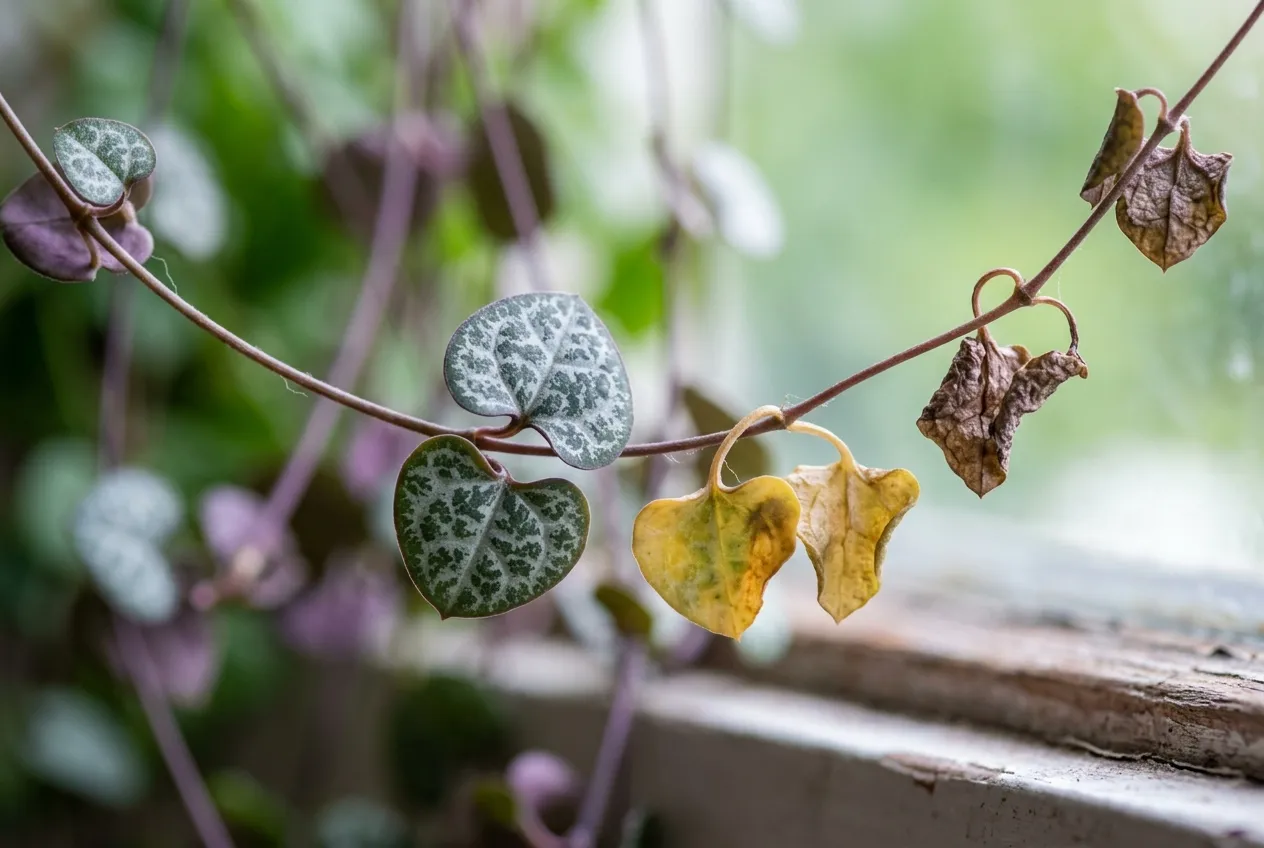 Soft yellow leaves signal overwatering, while wrinkled, papery leaves signal underwatering. Feel a leaf to tell the two apart.
Too little light and leggy growth
Light is the third major cause of a disappointing string of hearts. Without enough of it, the plant grows long, bare vines with wide gaps between small, pale leaves. This stretching is called etiolation. The vine reaches towards the brightest source it can find, spacing its leaves further apart to save energy. The result is a sparse, leggy plant that sheds older leaves and never fills out.
Ceropegia woodii needs bright, indirect light to stay full and to keep its silver marbling. In a UK home, the best spot is within 1 metre of an east or west-facing window. A south window works too if you filter the harshest midday sun with a sheer curtain. A north-facing room rarely gives enough light for dense growth.
UK winters make this worse. Daylight is weak and short from November to February, so a plant that thrived on a summer sill may go leggy by spring. Move it to your brightest window for the winter, or add a small grow light. To fix existing legginess, trim the longest bare vines back hard. The plant responds by branching and producing fuller, bushier growth from the cut points.
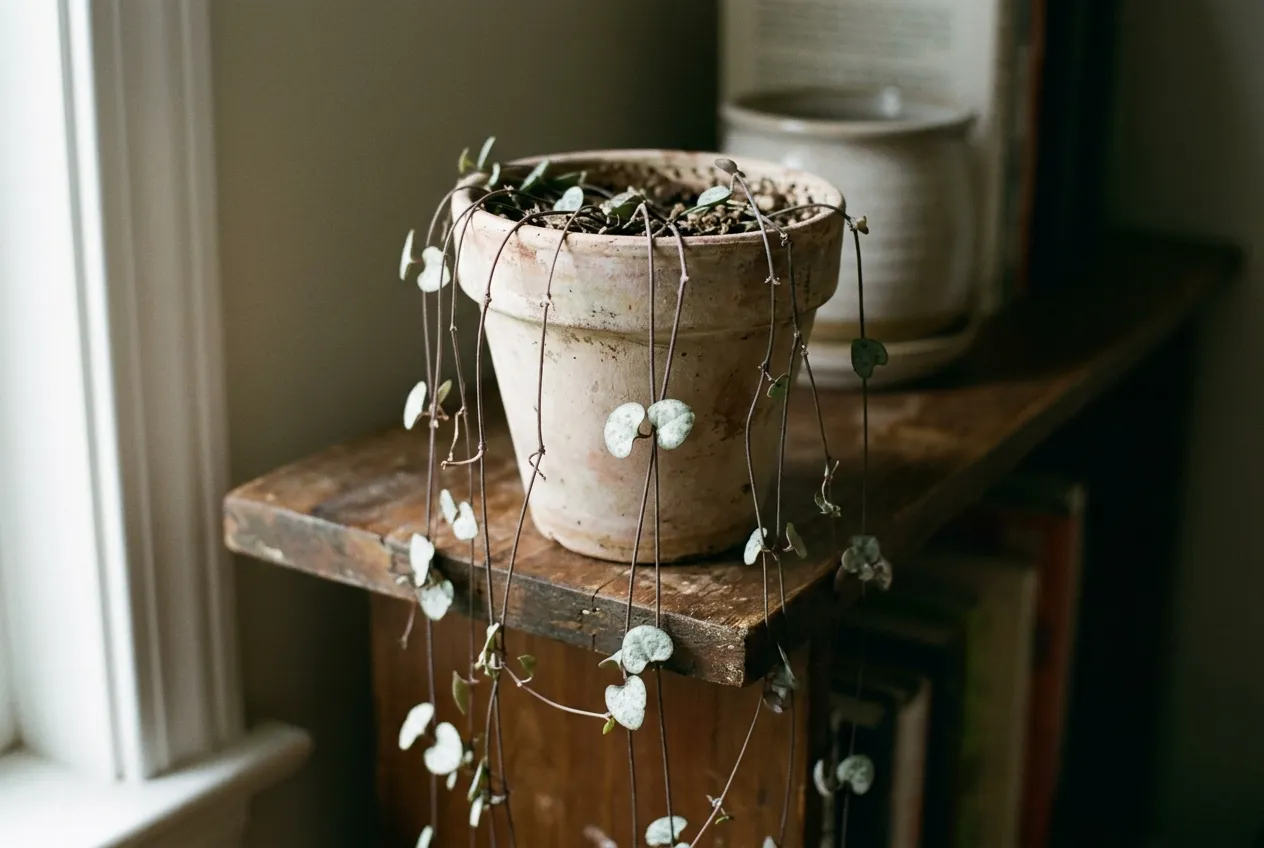 Leggy vines with wide gaps and few leaves are a classic sign of too little light. Trim them back to encourage bushier regrowth.
Temperature stress and cold draughts
Cold triggers sudden, dramatic leaf drop, and it catches many UK owners out in winter. A string of hearts comes from southern Africa and likes warmth. It is happiest between 15C and 26C. Below 12C it suffers, and a sharp cold snap can make it shed leaves across the whole plant within a day or two.
The usual culprits are easy to miss. A pot pressed against a cold single-glazed window loses heat fast on a frosty night. A draught from an external door, a letterbox, or an unheated porch chills the vines every time it opens. Leaves nearest the cold source yellow or blacken and drop first.
Move the plant away from windowsills on cold nights, or pull the curtain so the plant sits on the warm side of it. Keep it clear of draughty doorways and out of unheated conservatories over winter. At the same time, avoid the opposite extreme. Sitting a string of hearts directly above a hot radiator bakes the compost dry and scorches the vines. Aim for a stable, warm spot with steady temperatures and no sudden chills.
Gardener’s tip: On frosty UK nights, never leave a string of hearts trapped between the curtain and a single-glazed window. The air there drops close to freezing after dark. Move the pot into the room before you close the curtains.
Pests that cause leaf drop
Pests are a less common but serious cause of leaf loss. Two attack string of hearts most often. Mealybugs look like tiny blobs of white cotton wool, tucked into leaf joints and along the vines. Aphids are small green or black insects that cluster on soft new growth. Both pierce the plant and suck out sap, which weakens it and makes leaves yellow, distort, and drop.
Check your plant closely whenever leaves fall without an obvious watering or light cause. Look in the leaf joints, under the leaves, and where the vines meet the soil. Sticky residue on the leaves or the shelf below is a strong clue, as both pests excrete a sugary honeydew.
To treat them, first isolate the plant so the pests do not spread to your other houseplants. Wipe off mealybugs with a cotton bud dipped in diluted surgical spirit. For aphids, rinse them off under a gentle tap or wipe the vines with soapy water. Repeat every week for at least three weeks, since eggs hatch in waves. A neglected infestation strips a plant bare, so act quickly and check regularly.
Natural shedding versus a problem
Not every dropped leaf means trouble. A healthy string of hearts sheds the odd old leaf as it grows, usually the oldest leaves nearest the soil. These yellow slowly, one at a time, while the rest of the plant looks full and firm. This is normal and needs no action.
The difference is scale and speed. Natural shedding loses a leaf here and there over weeks. A problem drops many leaves quickly, or the dropping comes with other symptoms like soft yellowing, shrivelling, sticky residue, or a sudden cold spell. If your plant looks healthy overall and you find one or two yellow leaves low down each month, relax.
It also helps to know whether a bare-looking plant is still alive. Scratch a vine gently with a fingernail. Green tissue underneath means the vine lives and can regrow. The small round tubers along the stems store energy, so a plant with plump tubers has plenty in reserve. Brown, hollow, brittle vines are dead and should be trimmed away. Most plants that look finished still have living sections ready to push out fresh growth.
Watering correctly through the UK year
Getting watering right prevents most leaf drop. The golden rule is to let the compost dry out fully between waterings, then water thoroughly and tip away any excess. This succulent would far rather be too dry than too wet. UK light levels change hugely through the year, so your watering must change with them.
In spring and summer, the plant grows actively and uses more water. In autumn and winter, growth slows to almost nothing and the plant needs very little. Overwatering in winter, when weak light means slow drinking, is the classic UK mistake that rots roots. The table below sets out a seasonal routine for an average centrally-heated home.
| Season (UK) | Watering frequency | Light and care notes |
|---|---|---|
| Spring (Mar-May) | Every 10-14 days once soil is dry | Growth resumes, move to brightest window, start feeding monthly |
| Summer (Jun-Aug) | Every 7-14 days once soil is dry | Peak growth, water more in heat, shade from harsh midday sun |
| Autumn (Sep-Nov) | Every 2-3 weeks once soil is dry | Growth slows, reduce water, stop feeding by late October |
| Winter (Dec-Feb) | Every 3-4 weeks, barely moist | Weak light, keep above 12C, away from draughts and radiators |
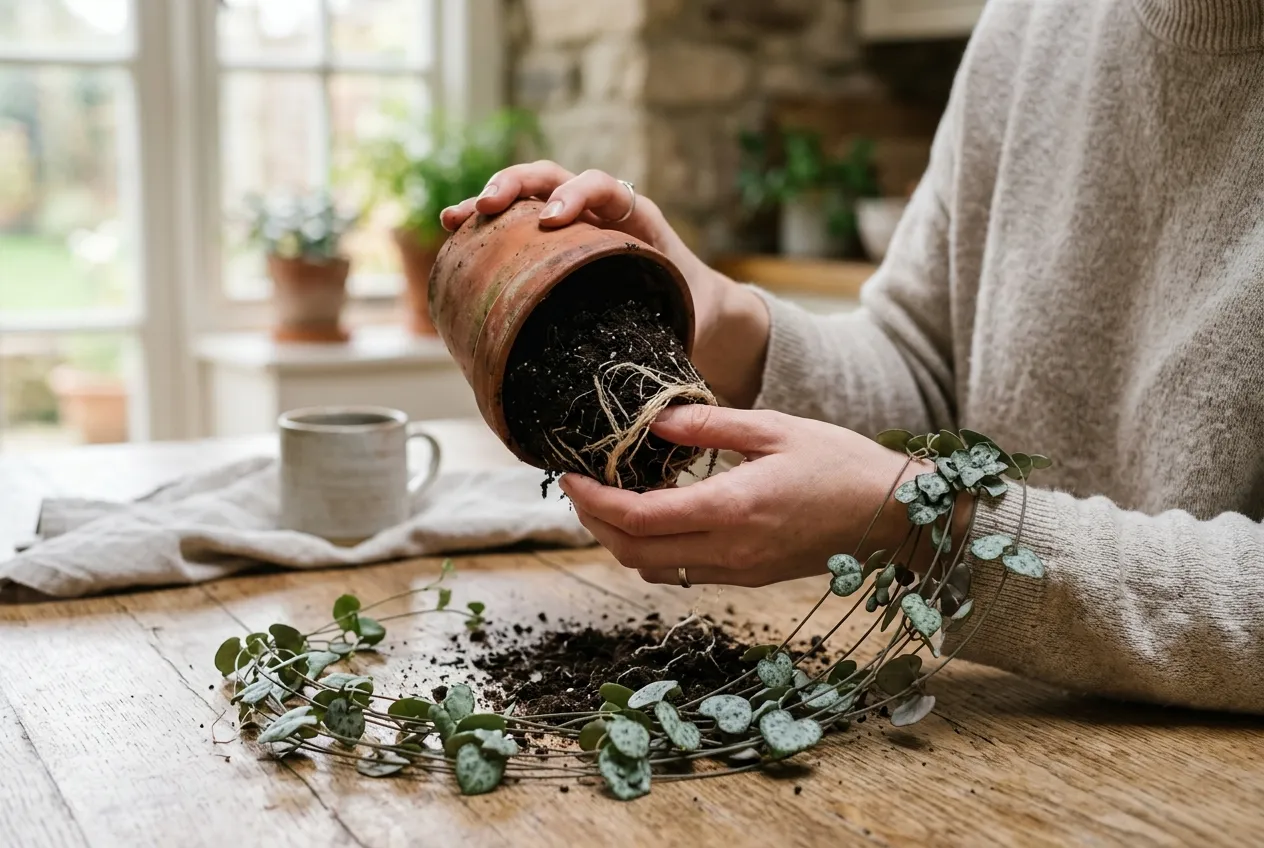 Checking the roots is the fastest way to confirm rot. Healthy roots are pale and firm, while rotten roots are brown and mushy.
Compost, pots, and repotting
The right compost stops leaf drop before it starts. A string of hearts needs a gritty, free-draining mix that never stays soggy. Standard houseplant compost holds too much water and suffocates the roots. Make your own by mixing two parts peat-free houseplant compost with one part horticultural grit or perlite. A ready-made cactus and succulent compost works just as well.
The pot matters too. Always choose one with a drainage hole. Terracotta is ideal because it is porous and lets the compost dry faster, which suits this drought-loving plant. A pot only slightly larger than the root ball is best, since a big pot holds a large volume of damp compost around small roots.
Repot every two or three years in spring, or sooner if you find rot. Ease the plant out, tease away old compost, and trim any soft brown roots. Settle it into fresh gritty mix at the same depth as before, then wait a week before watering so any damaged roots can heal. Handle the thread-like vines gently, as they snap easily. Any pieces that break off will root readily on fresh compost.
 Repot into gritty, free-draining succulent compost in a terracotta pot with a drainage hole. This prevents the soggy conditions that cause root rot.
How to revive bare vines
A string of hearts with long bare vines looks beyond saving, but it usually is not. Bare sections rarely grow leaves again along their length, so the trick is to encourage fresh growth from the base and to thicken the pot with new plants. Both jobs use the same cuttings.
Start by cutting the longest bare vines back to about 10cm from the soil. This feels drastic, but new shoots sprout from the cut points and from the tubers along the remaining stems. The plant puts its energy into bushy, leafy regrowth rather than maintaining long empty strands. Do this in spring or summer when growth is strongest.
Do not waste the trimmed pieces. Lay them flat on top of fresh gritty compost, pressing the leaf nodes lightly into the surface, and keep it barely moist. Each node roots within a few weeks and sends up new vines. Laying several cuttings across the same pot fills it out fast. Within a season, a thin, bare plant becomes a full, cascading one again. Give it bright indirect light and careful watering, and it rewards you quickly.
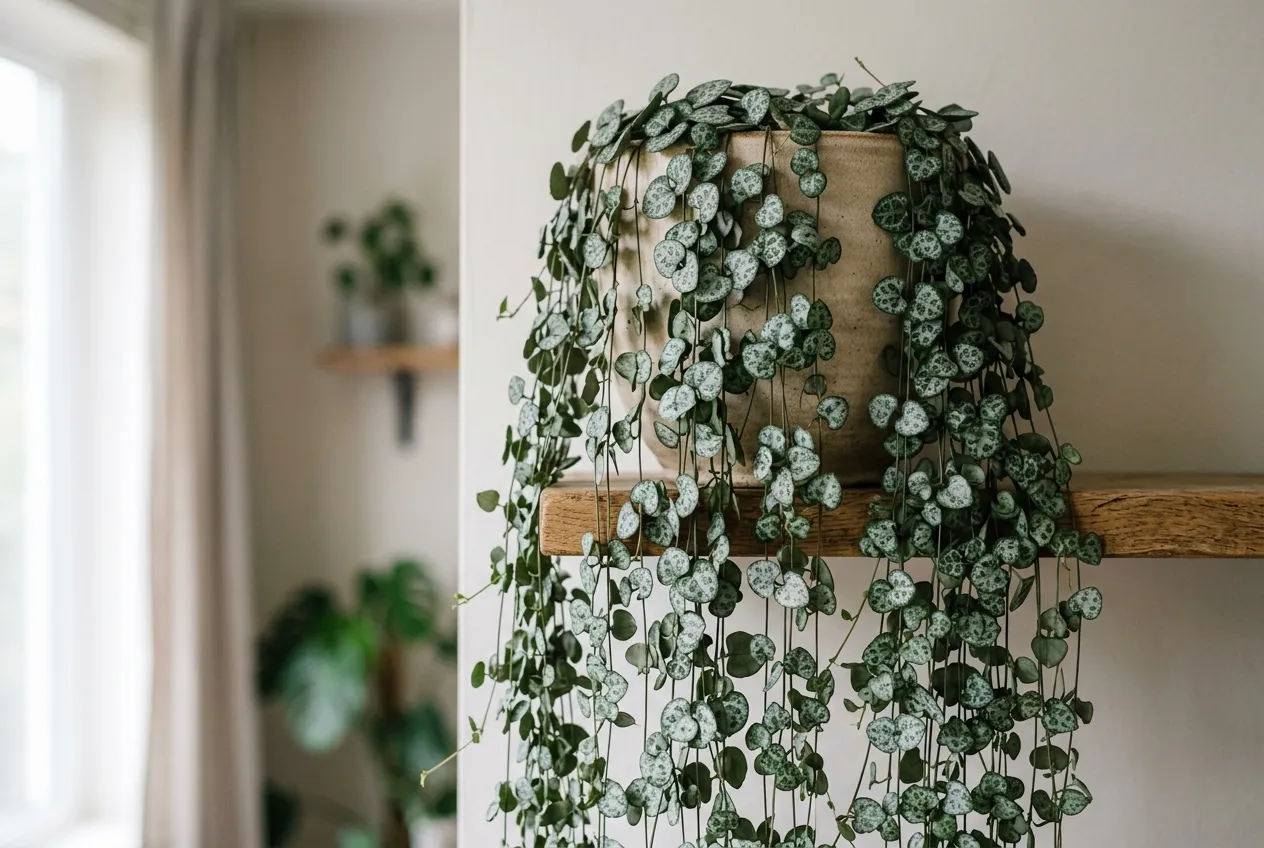 A recovered string of hearts cascades with dense, silver-marbled leaves. Bright indirect light and correct watering produce this full growth.
Common mistakes
Most leaf drop comes down to a handful of avoidable errors. Fixing these prevents the problem returning.
Watering on a fixed schedule
Watering every Sunday regardless of the compost is the fastest route to root rot. The plant uses far more water in July than in December. Always check the soil is bone dry before watering, and let the season guide you. A finger in the compost beats any calendar.
Using a pot with no drainage
A pretty pot with no hole traps water around the roots. Even careful watering then leads to rot, because the excess cannot escape. Always use a pot with a drainage hole, or drop a plastic nursery pot inside the decorative one and lift it out to water.
Leaving it in low light
A string of hearts on a dim shelf stretches, pales, and sheds leaves. People often place it for looks rather than light. Give it bright indirect light within 1 metre of a window, and move it closer in winter when UK daylight fades.
Ignoring winter cold
Leaving the plant on a freezing windowsill or in a draughty hallway causes sudden leaf drop. Keep it above 12C and away from cold glass and doors. This is the most overlooked cause during British winters. See our guide to fixing a drooping snake plant for more on cold-related houseplant stress.
Missing early pest signs
Mealybugs and aphids spread fast when ignored. A weekly glance into the leaf joints catches them early. Treat at the first sign and isolate the plant, rather than waiting until vines are bare. Our guide to yellowing monstera leaves covers similar pest checks.
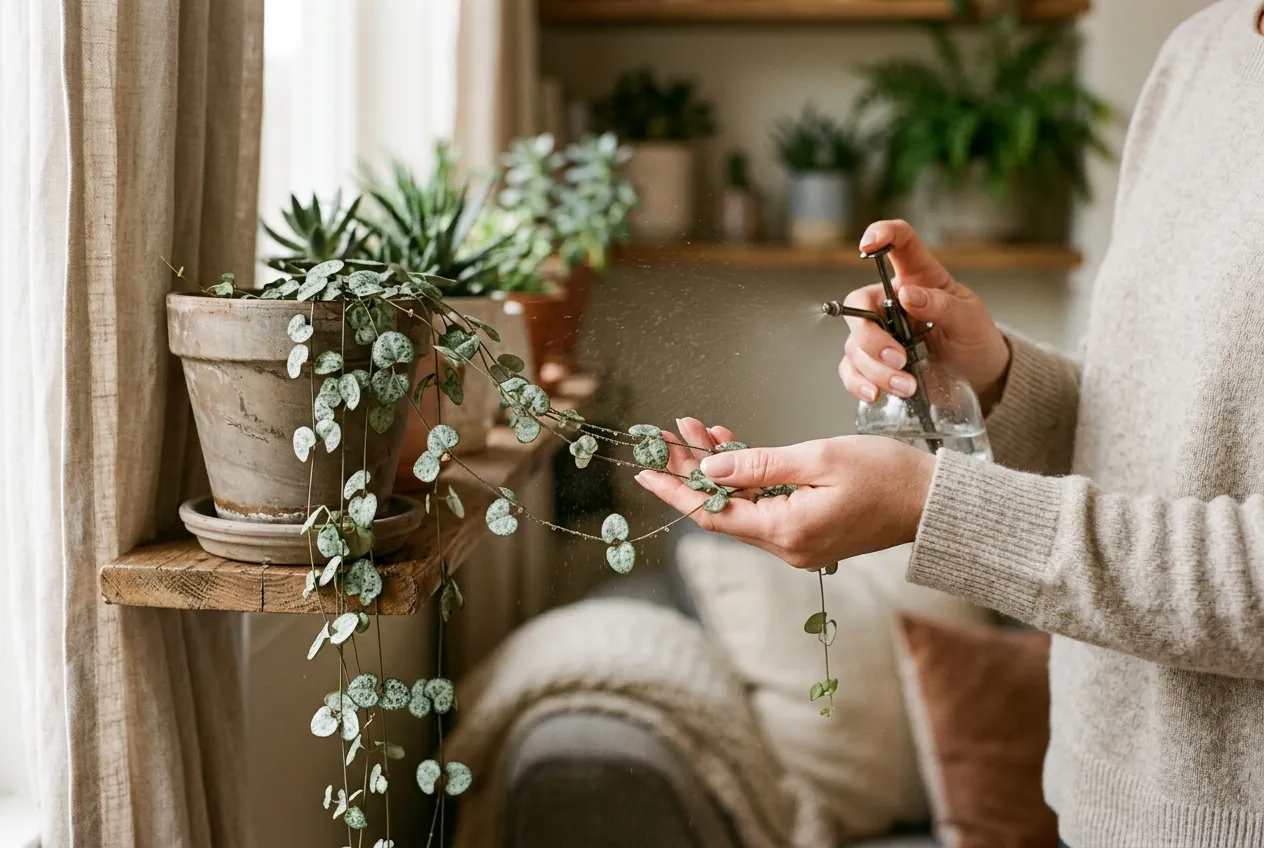 A weekly check of the vines and leaf joints catches pests and watering problems early, before leaves start to drop.
Related reading: Another forgiving succulent worth a windowsill is covered in our guide to caring for Crassula ovata.
Frequently asked questions
Why is my string of hearts losing leaves?
Overwatering is the most common cause. Soft, yellowing leaves that drop easily point to soggy compost and rotting roots. This plant is a succulent and hates wet feet. Let the soil dry out fully between waterings, water far less in winter, and check that the roots are firm and pale rather than brown and mushy.
Why is my string of hearts shrivelling?
Shrivelled, wrinkled leaves usually mean underwatering. The plant stores water in its leaves, so they pucker and curl when it runs dry for too long. Give it a thorough soak until water drains from the bottom, then let the excess drain away. The leaves plump up again within two or three days.
How often should I water a string of hearts in the UK?
Roughly every 10 to 14 days in summer and every 3 to 4 weeks in winter. Always let the compost dry out completely first. UK winter light is weak, so the plant drinks very little from October to March and rots quickly if kept damp. Check the soil with a finger before every watering.
Why is my string of hearts leggy with gaps between leaves?
Too little light causes long vines with wide gaps and few leaves. The plant stretches towards the brightest source it can find. Move it within 1 metre of an east or west-facing window, and closer in winter. Trim the leggy vines back to encourage fuller, bushier regrowth from the cut points.
Can a bare string of hearts vine grow leaves again?
Yes, though bare sections rarely releaf along their length. Cut bare vines back to about 10cm from the soil. New shoots sprout from the cut points and from the tubers along the stems. Lay the trimmed pieces flat on fresh gritty compost, where each node roots and sends up new growth.
What temperature does a string of hearts need?
Keep it between 15C and 26C, and never below 12C. Cold draughts from windows and doors trigger sudden leaf drop. Move the plant away from unheated porches, draughty hallways, and single-glazed windowsills during UK winters. Avoid the opposite extreme too, as a hot radiator bakes the compost dry.
Is my string of hearts dead or dormant?
Check the vines and tubers. If the stems are still green and firm and the round tubers are plump, the plant is alive. Scratch a stem gently with a nail. Green underneath means living tissue ready to regrow. Brown, hollow, brittle vines are dead and should be trimmed away.
Our team produces practical UK gardening guidance from source research, contributor records and established horticultural practice. Editorial standards are overseen by Matt W.