Key takeaways
- Schedule 9 listed: illegal to plant or cause to grow in the wild
- Diagnostic: triangular stem cross-section, drooping white bell flowers
- Not edible wild garlic (broad-leaf Allium ursinum is the edible one)
- Spreads by bulbs, bulbils and seed; 1m² becomes 4m² in 3 years
- Lift bulbs in spring before seed set (March-April)
- Five-year clearance plan for established patches
Three-cornered garlic (Allium triquetrum) is the UK garden’s most-confused invasive. Often mistaken for edible wild garlic, it is actually Schedule 9 listed and spreads aggressively through gardens and wild land. This guide covers identification (the triangular stem is the diagnostic), the legal duties, and the 5-year bulb-removal plan that clears established patches.
ID: Telling Three-Cornered Garlic From Wild Garlic
UK gardeners regularly confuse these two species. The differences are clear once known.
| Feature | Three-cornered garlic (A. triquetrum) | Wild garlic (A. ursinum) |
|---|---|---|
| Stem | Triangular cross-section | Round, smooth |
| Leaves | Narrow strap-shaped, 5-15mm wide | Broad lance-shaped, 25-50mm wide |
| Flowers | White drooping bells, 6-petaled | White star-shaped, upright |
| Flowering | April-May | April-June |
| Smell | Garlic when crushed | Strong garlic when crushed |
| Habitat | UK gardens, shaded banks, escaped to wild | Native UK woodland |
| Legal status | Schedule 9 listed | Native, edible, no restrictions |
The triangular stem is the diagnostic test. Hold the stem and rotate between fingers; three-cornered garlic feels distinctly three-sided. Wild garlic stem is round.
The leaf shape also separates them. Wild garlic leaves are wide enough to wrap around a finger; three-cornered garlic leaves are narrow strap-like, similar to bluebell leaves but with the garlic smell.
For growing the edible wild garlic alternative, our wild garlic guide covers the proper edible species in UK gardens.
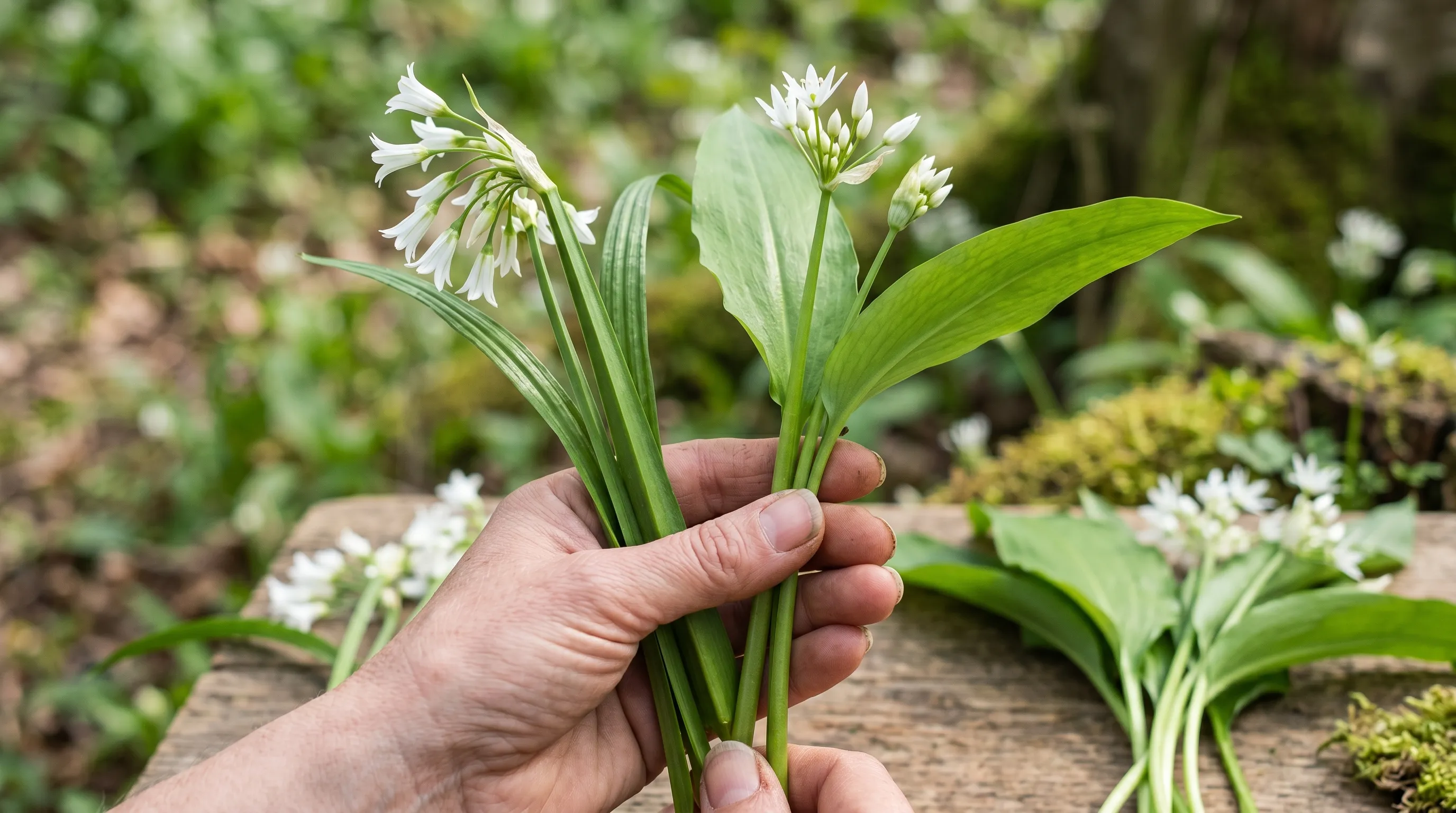 The diagnostic comparison: three-cornered garlic (left) has a triangular stem and narrow strap leaves; wild garlic (right) has a round stem and broad lance-shaped leaves. The triangular cross-section is unmistakable.
The Schedule 9 Legal Position
Three-cornered garlic is listed on Schedule 9 of the Wildlife and Countryside Act 1981 (as amended in 2010). The legal duties:
- Not illegal to have on your own land but encouraged to remove
- Illegal to plant or cause to grow in the wild under Section 14(2)
- Illegal to dispose in council green waste (composted and spread on farmland)
- Penalties: unlimited fine and up to 2 years imprisonment
Practical implications:
- Bag and bin pulled plants in sealed black plastic to landfill
- Never tip on a verge, wild bank or compost heap
- Keep garden populations contained from boundaries
- Report large wild stands to local biological recording centres
For the wider UK Schedule 9 species list and disposal rules, the UK government’s invasive non-native species guidance covers the full framework.
How Three-Cornered Garlic Spreads
Three vectors make this species hard to remove.
1. Bulbs and bulbils. Each mature plant produces 3-8 daughter bulbils per year clustered around the parent bulb. Within 3 years, a single bulb becomes a 10-30 bulb cluster.
2. Seeds. Each flowering plant produces 100-300 viable seeds in May-June. Seeds remain viable in soil for 3-5 years.
3. Garden waste spread. Discarded bulbs in compost or green waste re-sprout when moisture returns. This is the single biggest UK spread vector.
A 1m² patch left unmanaged typically becomes:
- Year 1: 1m² with 50-100 plants
- Year 2: 2m² with 150-300 plants
- Year 3: 4m² with 400-800 plants
- Year 5: 8-12m² with 1500-3000 plants
The Bulb-Lift Method
The only reliable clearance method.
Equipment:
- Long-tined digging fork (300mm tines)
- Garden sieve over a wheelbarrow
- Stout buckets for bulb collection
- Heavy-duty gardening gloves
- Sealed black plastic bags for disposal
Method:
- Time the operation: late March to mid April, before seed set
- Water the bed thoroughly the day before lifting
- Fork the bed in 300x300mm sections at 150-200mm depth
- Lift each forkful onto the sieve over the wheelbarrow
- Pick out every bulb, bulbil and root fragment by hand
- Collect in sealed buckets
- Bag bulbs immediately in black plastic; never leave exposed
- Continue across the full infestation area
- Replant any wanted ornamentals at the end
A 4m² heavy infestation takes 3-4 hours to fork-and-sieve. Output: 200-600 bulbs and bulbils per square metre.
After lifting, water the bed thoroughly. Any missed bulbs will produce green shoots within 21-28 days. Spot-lift these immediately. The 21-day check catches 70-85% of missed bulbs.
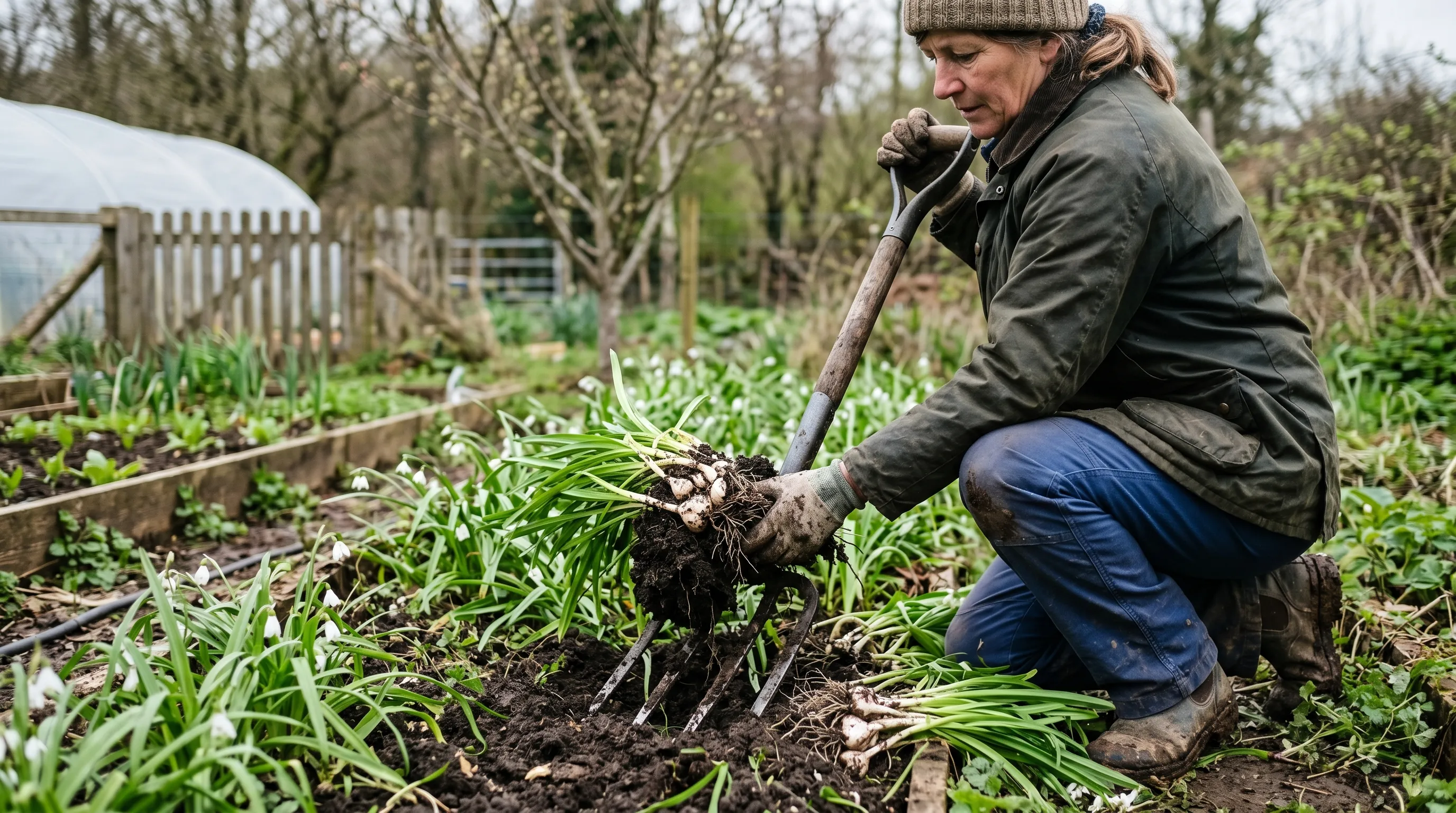 The March bulb-lift on the Staffordshire boundary border. Long-tined fork to 150-200mm depth lifts the whole soil column. Bulbs and bulbils visible in each clump for hand-picking onto the sieve.
The 5-Year Clearance Plan
For established three-cornered garlic infestations (covering 1m²+ for 2+ years).
Year 1:
- Lift all visible bulbs in March-April
- Watch weekly for new emergence
- Spot-lift any missed bulbs
- Expect 60-75% clearance from baseline
Year 2:
- Re-lift any returning bulbs in March-April
- Watch from February onwards for early emergence
- Expect 80-90% clearance from baseline
Year 3:
- Spot-lift any remaining plants
- Watch boundary edges for reinvasion
- Expect 92-96% clearance from baseline
Year 4:
- Monitor weekly during spring (February-May)
- Lift any plants on sight
- Expect 96-99% clearance
Year 5:
- Annual spring monitoring
- Boundary defence (timber edges) against neighbour incursion
- Effectively cleared
Boundary and Neighbour Issues
Three-cornered garlic spreads from neighbouring gardens via:
- Seed dispersal (300-500mm from parent plant)
- Animal-spread bulbils (squirrels, foxes dig and move bulbs)
- Garden waste dumping over boundaries
- Slope wash during heavy rain
Defence:
- Timber edge 100mm deep along the boundary
- Annual spring inspection of boundary 1m strip
- Polite conversation with neighbours about their patches
- Watch local biological recording for community-wide treatment
For UK gardens next to long-established three-cornered garlic populations on verges or wild banks, the realistic plan is annual boundary maintenance rather than full clearance. Lift any emergence in the 1m boundary strip every March.
For the wider invasive weed defence approach, our weedkillers guide covers the chemical-free toolkit.
Glyphosate as a Supplement
Glyphosate (Roundup, Resolva) provides partial control but does not replace bulb lifting.
Method:
- Spray actively-growing foliage at the 4-leaf stage (March-April)
- Use a hood-guarded sprayer to protect surrounding crops
- Wait 14-21 days for foliage death
- Lift bulbs as above (foliage death makes bulbs easier to find)
Glyphosate alone gives 40-60% kill in year 1, drops to 25-40% with no follow-up. Combined with annual bulb lifting, 95-99% kill in 2-3 years.
 A typical bulb cluster from one mature three-cornered garlic plant. Parent bulb at the centre with 5-8 daughter bulbils around. Each bulbil becomes a new plant the following spring if missed.
Common Mistakes With UK Three-Cornered Garlic Removal
Mistake 1: pulling tops only. Plants regrow from bulbs within 4-6 weeks. Always lift the bulb.
Mistake 2: composting bulbs. Bulbs survive composting and re-sprout. Always sealed-bag to landfill.
Mistake 3: lifting after seed set. May-June lifting still spreads seed. Lift in March-April before seed pods form.
Mistake 4: surface forking only. Bulbs sit at 100-200mm depth. Use a long-tined fork minimum.
Mistake 5: stopping after one year. Seed bank persists 3-5 years. Annual lifting required for 5 years.
For the wider weed control across UK gardens, our organic weedkillers guide covers the toolkit. For growing the edible wild garlic correctly, our wild garlic guide covers the proper UK native species.
Three-Cornered Garlic Calendar UK Month-by-Month
| Month | Three-cornered garlic task |
|---|---|
| January | Plan March-April lift; order disposal bags |
| February | Watch for early emergence |
| March | Main bulb-lift window opens |
| April | Peak bulb-lift season; daily inspection |
| May | Late lifts before seed set; bag any remaining tops |
| June | Final cuts to prevent seed; no lifting (seeds shed) |
| July | Monitor for late emergence |
| August | No active work; plant dies back |
| September | Plan next year’s lift areas |
| October | Boundary inspection; replace timber edging if needed |
| November | Order new sieves and fork if worn |
| December | Plan year 2/3/4/5 of clearance programme |
Frequently asked questions
Is three-cornered garlic the same as wild garlic?
No. Three-cornered garlic (Allium triquetrum) has narrow strap-shaped leaves and a triangular stem with drooping white bell flowers. Wild garlic (Allium ursinum) has broad flat leaves and star-shaped flowers on a round stem. Wild garlic is edible and native; three-cornered garlic is Schedule 9 listed as invasive.
Is three-cornered garlic illegal in the UK?
Three-cornered garlic is listed on Schedule 9 of the Wildlife and Countryside Act 1981. It is an offence to plant or cause it to grow in the wild. Garden plants that spread to wild land create the offence. Disposal in council green waste is also prohibited.
Can you eat three-cornered garlic?
Technically yes, but most UK gardeners do not. The plant has the garlic smell and flavour of wild garlic but its Schedule 9 status discourages encouraging it. Foraging guides sometimes recommend eating it to control populations, but escaped garden plants can spread further through garden disposal.
How do I get rid of three-cornered garlic in my UK garden?
Lift every bulb in early spring (March-April) before seed set. Use a long-tined fork to 150-200mm depth. Sieve the lifted soil to catch every bulb and bulbil. Never compost; bag and bin or burn. Expect 4-5 years of annual lifting to clear an established patch.
Does cutting three-cornered garlic stop it spreading?
Only partially. Cutting before seed set (March) prevents that year’s seed spread. But the bulbs continue producing daughter bulbils underground that emerge as new plants the following spring. Bulb lifting is essential for permanent control.
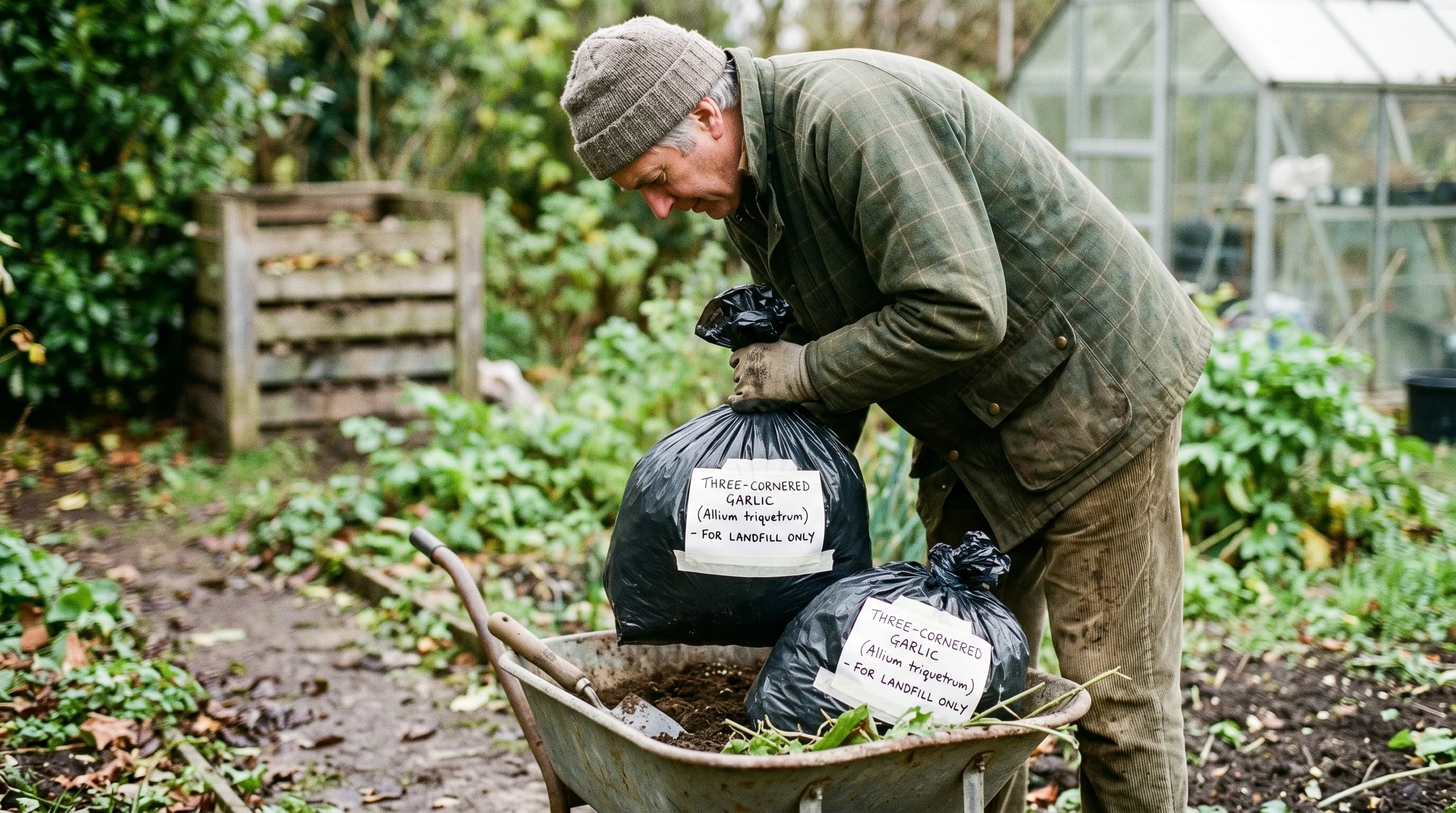 Sealed disposal route: black plastic bags marked clearly for household landfill. Never council green waste, never compost. The 5-year clearance requires consistent annual disposal.
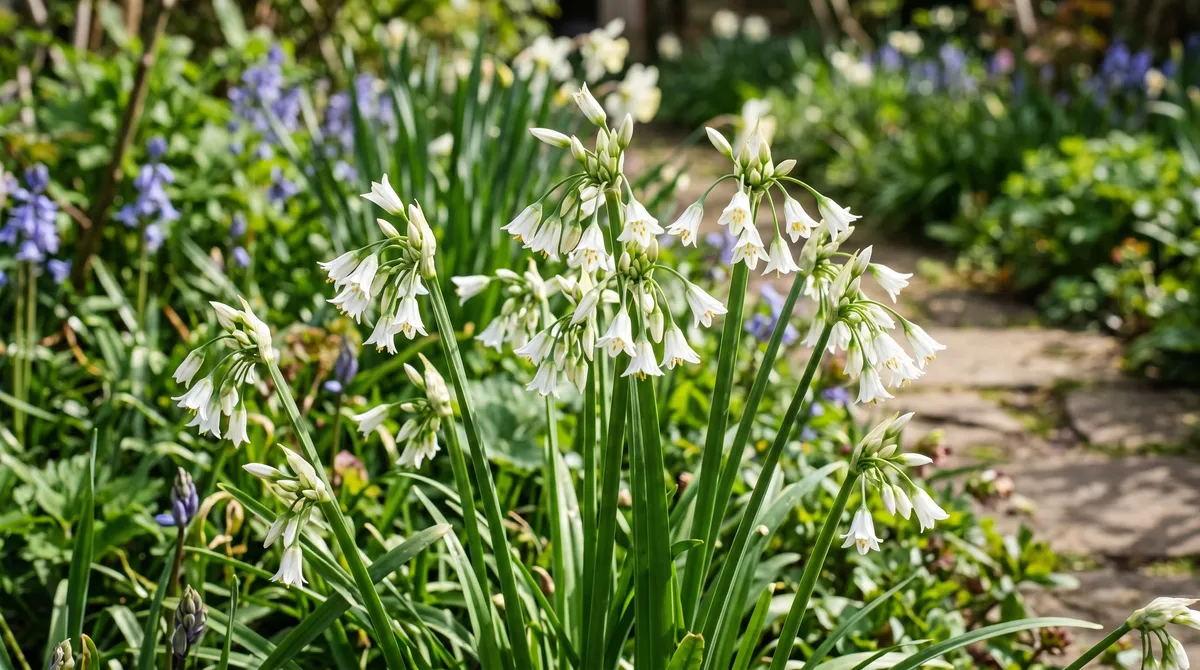
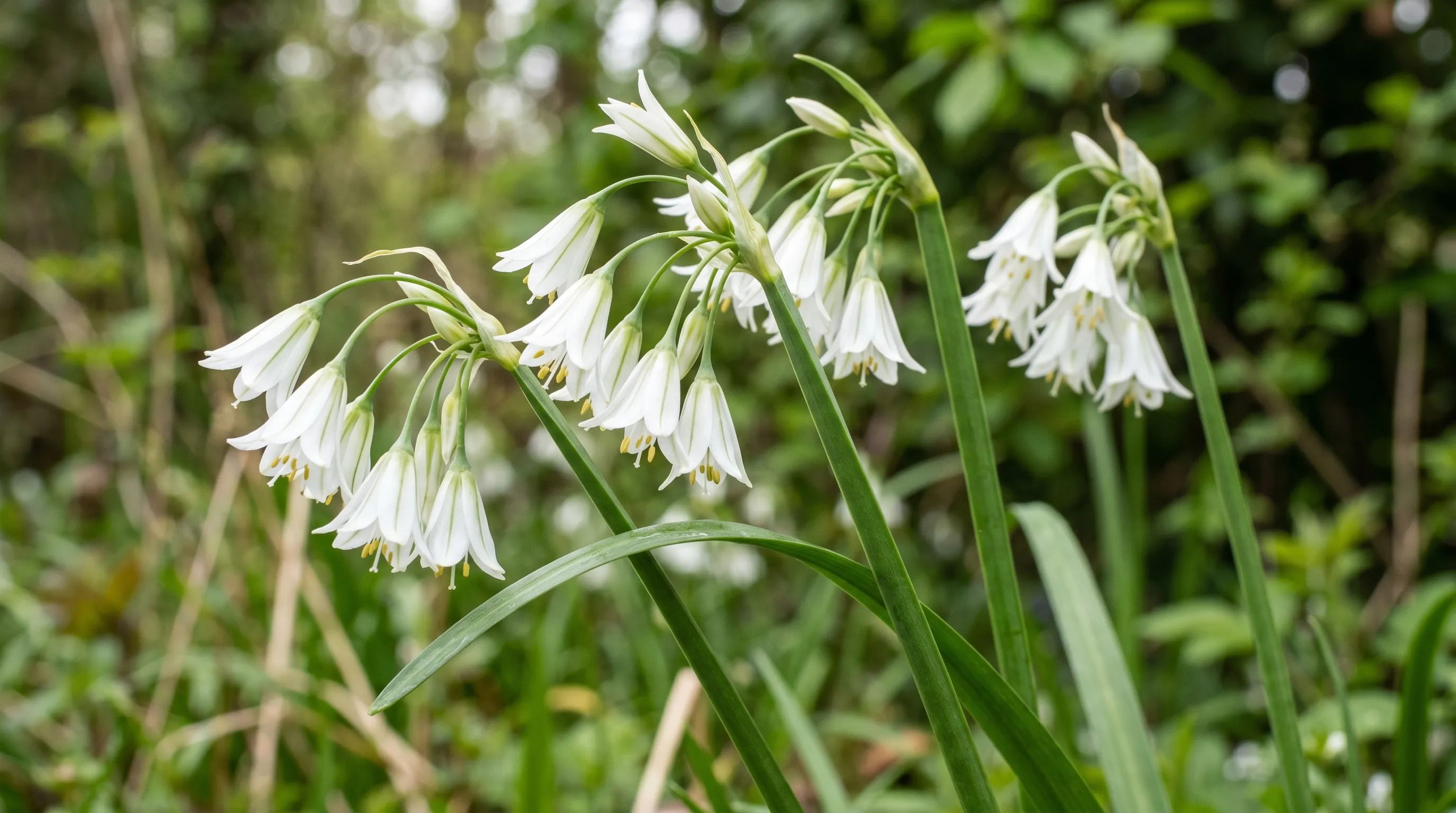 Mid-April peak flowering. White drooping bell flowers (six petals each) on triangular stems. Distinguished from wild garlic by the bell shape and triangular stem, not the star-shape and round stem of edible wild garlic.
Now plan the wider invasive plant defence
Three-cornered garlic is one of several UK Schedule 9 species. For the wider weed control toolkit, our organic weedkillers guide covers chemical-free options. To replace cleared three-cornered garlic with the edible UK native, our wild garlic growing guide covers the legitimate Allium ursinum. And for the wider organic garden approach, our organic pest control guide covers the supporting framework.
Our team produces practical UK gardening guidance from source research, contributor records and established horticultural practice. Editorial standards are overseen by Matt W.