Key takeaways
- Polytunnel tomato diseases are humidity diseases: trapped damp air is the real cause
- Leaf mould is the signature under-cover disease, rare outdoors, with yellow upper blotches and velvety brown mould below
- Grey mould and ghost spot follow cool, damp nights and dying lower leaves
- Blossom end rot is not a disease at all but a watering fault that polytunnels make worse
- Ventilation, base watering and de-leafing beat any fungicide a home gardener can buy
- Resistant varieties such as 'Shirley' and 'Cumulus' sidestep leaf mould entirely
Tomato diseases in polytunnels are not the same fight as tomato diseases outdoors. Under cover the air is warm, still and damp, and that one difference changes everything. The big outdoor worry, blight, becomes a minor risk, while a disease most outdoor growers never meet, leaf mould, becomes the main event. If your polytunnel tomatoes keep getting yellow leaves, fuzzy mould or spotted fruit, the cause is almost always the humid air around them, not bad luck.
Why polytunnel tomato diseases are humidity diseases
Almost every disease that troubles polytunnel tomatoes needs high humidity and still air to take hold, which is why ventilation matters more than anything else. A polytunnel traps warmth and moisture beautifully, which is why tomatoes crop so well in one. The catch is that the same trapped, damp air is exactly what fungal spores need to germinate and spread.
The number to watch is relative humidity. Most of the fungal diseases below need humidity above roughly 85 per cent to get going, and a closed polytunnel sails past that overnight and through the early morning. Warm, moist air meets the cold plastic roof, condenses, and drips back onto the foliage, leaving leaves wet for hours. That long leaf wetness is the trigger. Outdoors, wind and open sky dry the leaves and disperse spores; under cover, nothing moves unless you make it move.
This is the single idea that ties the whole guide together. You are not really fighting six separate diseases. You are managing one condition, damp stagnant air, that lets all of them flourish. Get the humidity down and the air moving, and most problems never appear. The detail on doing that sits in our guide to ventilation and humidity control.
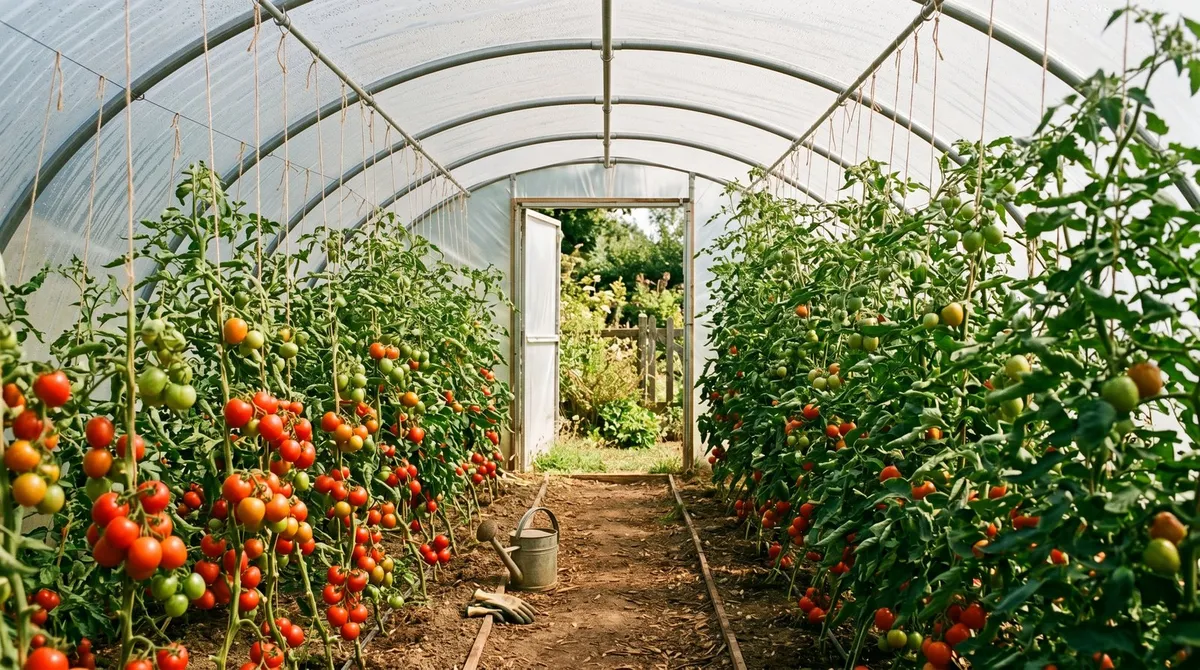
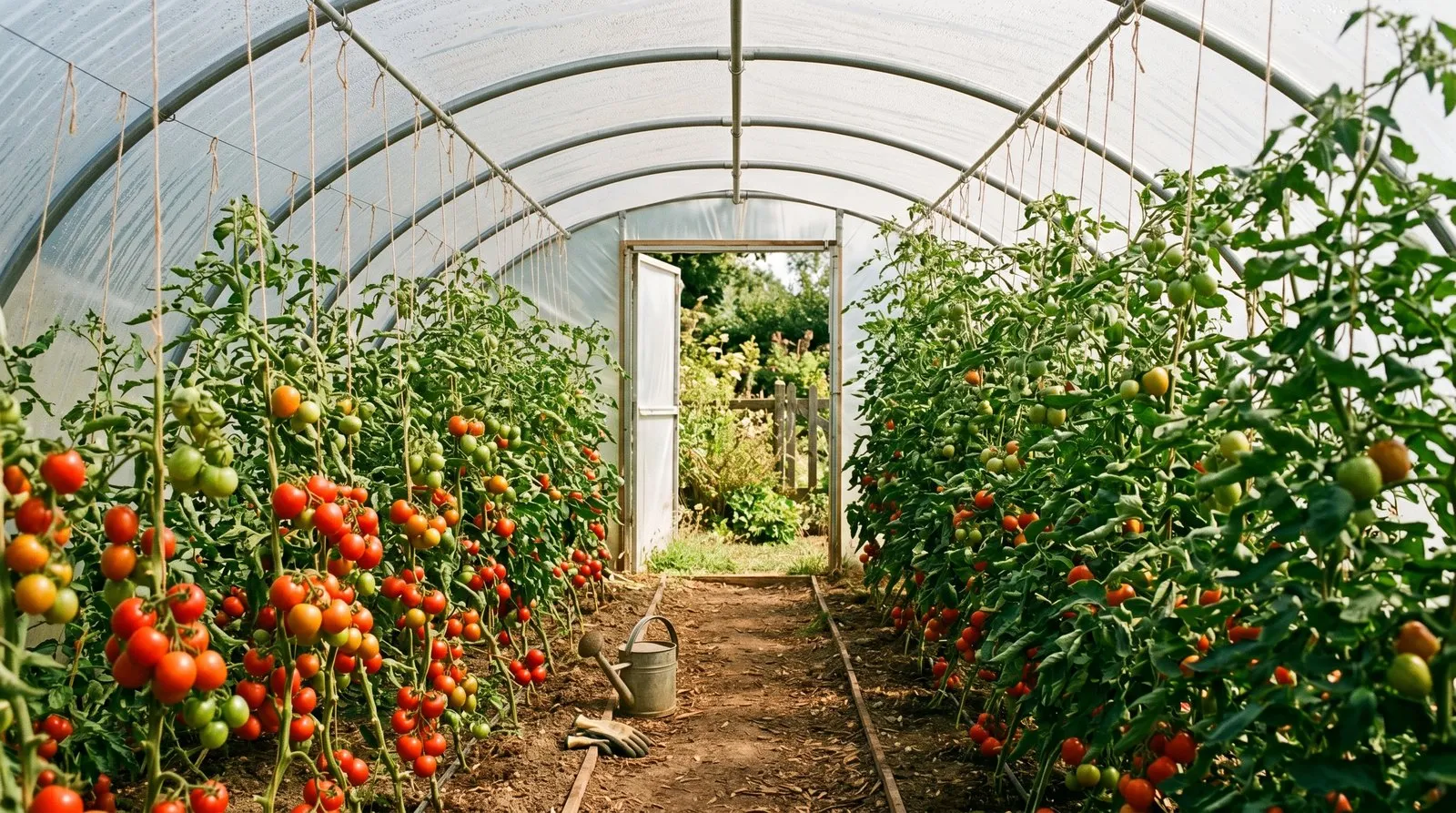 A productive polytunnel is also a humid one. The open door and vent here are doing more to prevent disease than any spray could.
How to identify polytunnel tomato diseases at a glance
The fastest way to diagnose a sick polytunnel tomato is to look at where the symptom sits and what the affected tissue looks like up close. Leaf mould lives under the leaf, grey mould fuzzes over wounds and dying parts, ghost spot rings the green fruit, and blossom end rot blackens the fruit base. Each has a signature you can learn in a minute.
Use this table to match your plant to the likely cause before you do anything. Treating the wrong problem wastes time the disease uses to spread.
| What you see | Disease or disorder | Where it starts | Up-close detail |
|---|---|---|---|
| Yellow blotches above, velvety brown mould below | Leaf mould (Fulvia fulva) | Lowest leaves, Jun–Jul | Olive-brown fuzz only on the underside |
| Grey-brown fuzzy mould on stems, leaves, fruit | Grey mould (Botrytis) | Wounds, dead leaves, flowers | Dusty grey fungal coat over soft tissue |
| Pale rings or halos on green fruit | Ghost spot (Botrytis) | Green fruit skin | Faint translucent rings, fruit stays firm |
| Dark, sunken, leathery patch on fruit base | Blossom end rot (disorder) | Bottom of the fruit | Dry leather, no mould, not infectious |
| Brown leaf patches, white mould below, brown fruit | Blight (Phytophthora) | Leaf tips, in wet spells | Spreads fast, rare if door kept dry |
| White powdery coating on upper leaves | Powdery mildew | Upper leaf surface | Wipes off; thrives in dry-then-humid swings |
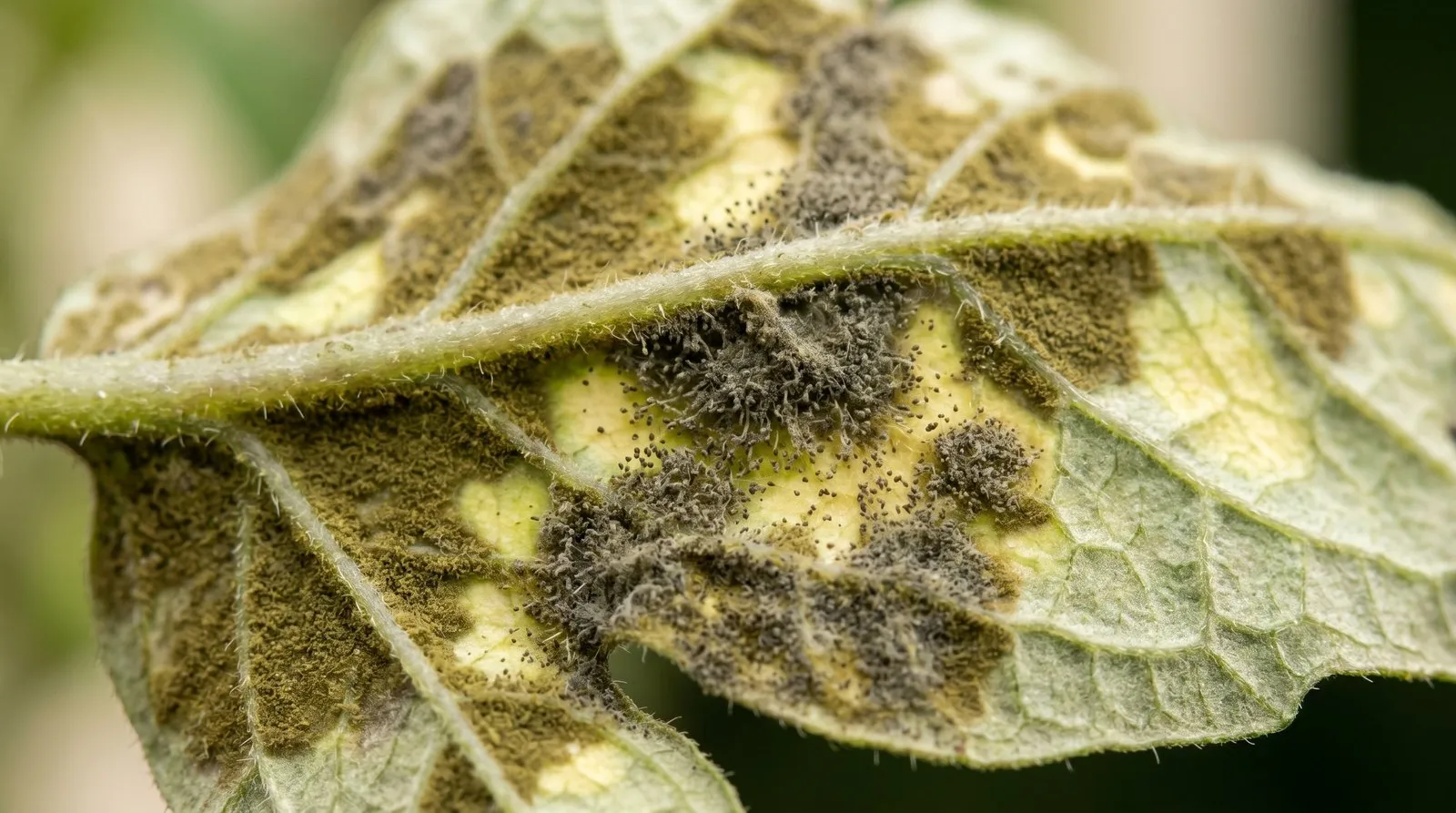 Leaf mould gives itself away on the leaf underside: a velvety olive-brown fuzz beneath each yellow blotch on top.
Leaf mould: the signature polytunnel disease
Leaf mould, caused by the fungus Fulvia fulva, is the disease you get under cover and almost never outdoors, which makes it the defining polytunnel tomato problem. It begins as pale yellow or greenish blotches on the upper surface of the lowest, oldest leaves, usually in June or July. Turn the leaf over and the diagnosis is plain: a velvety olive-brown to greyish mould sits directly beneath each blotch.
Left alone in humid air, it climbs the plant. Affected leaves yellow fully, curl and die, and a bad case strips so much foliage that yield drops. The Royal Horticultural Society notes that the fungus produces vast numbers of spores that spread on air currents, hands and clothing, and that they overwinter on leaf debris and the polytunnel structure itself. That last point matters: an autumn clear-out is part of the cure.
There is no fungicide available to home gardeners for leaf mould, so prevention is the whole game. Keep humidity down, remove and bin affected lower leaves promptly, never compost them in the tunnel, and clean the structure over winter. Best of all, grow a resistant variety. As the RHS leaf mould advice explains, cultivars such as ‘Shirley’ and ‘Cumulus’ carry resistance, and our guide to disease-resistant greenhouse tomato varieties lists more. Resistance can break against new strains, so do not drop your ventilation just because the label promises it.
Grey mould and ghost spot: the damp-night diseases
Grey mould (Botrytis) and its calmer cousin ghost spot appear after cool, humid nights and feed on damp, dying or wounded tissue. Grey mould shows as a dusty grey-brown fuzz on stems, dead leaves, flowers and soft fruit. It loves a fresh wound, so the cut you leave when removing a side shoot or a lower leaf is a common entry point, especially if you do it in damp conditions.
Ghost spot is the same fungus in a milder mood. Botrytis spores land on green fruit, try to infect but fail, and leave behind faint pale rings or halos on the skin. The fruit stays firm and edible; the rings are cosmetic. But ghost spot is a warning sign. It tells you the air is damp enough for the fungus to be active, so it is your cue to ventilate harder before grey mould proper sets in.
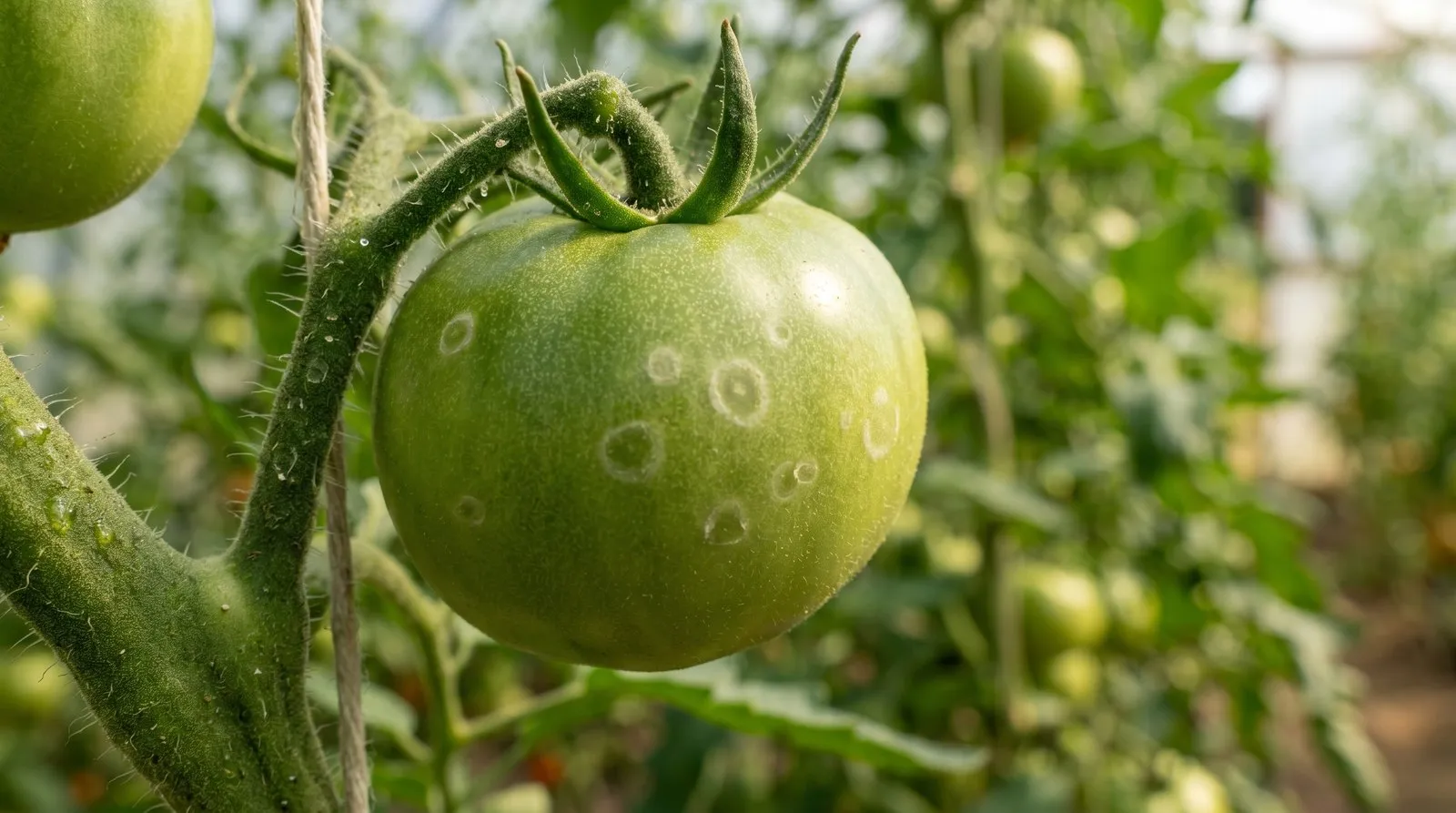 Ghost spot: pale rings where Botrytis tried and failed to infect a green fruit. Harmless in itself, but a sign the air is too damp.
Manage both the same way. Cut out grey-mould-affected parts in dry conditions, bin them, and improve airflow around the base of the plants. Pinch out side shoots and remove leaves on a dry morning, not a damp evening, so the wounds seal before night. The RHS grey mould guidance is clear that good ventilation and prompt removal of dead material are the core controls.
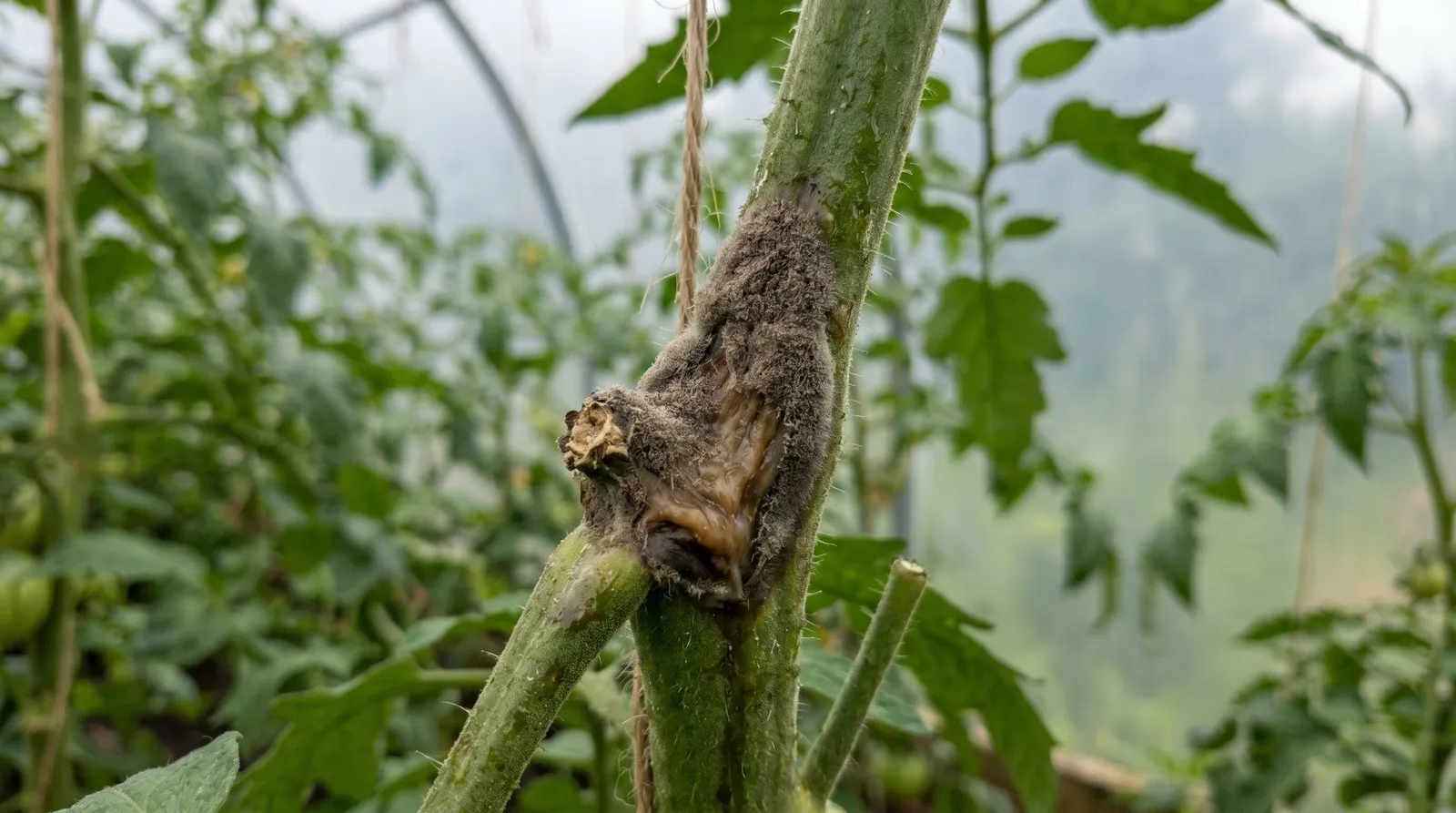 Grey mould colonises wounds and dying tissue. This stem lesion started at a leaf scar left in damp conditions.
Blossom end rot: a watering fault, not an infection
Blossom end rot is the one on this list that is not a disease at all, and treating it like one wastes effort. It shows as a dark, sunken, leathery patch on the bottom of the fruit, the end furthest from the stalk. There is no mould and nothing to catch. It is a physiological disorder caused by a local shortage of calcium in the fruit, and that shortage almost always comes from uneven watering.
Polytunnels make it worse precisely because they grow such thirsty plants in fast-drying soil and grow bags. When a plant dries out and is then drenched, it cannot move calcium steadily to the developing fruit, and the tissue at the far end collapses. Container and grow-bag plants suffer most, because they hold the least water.
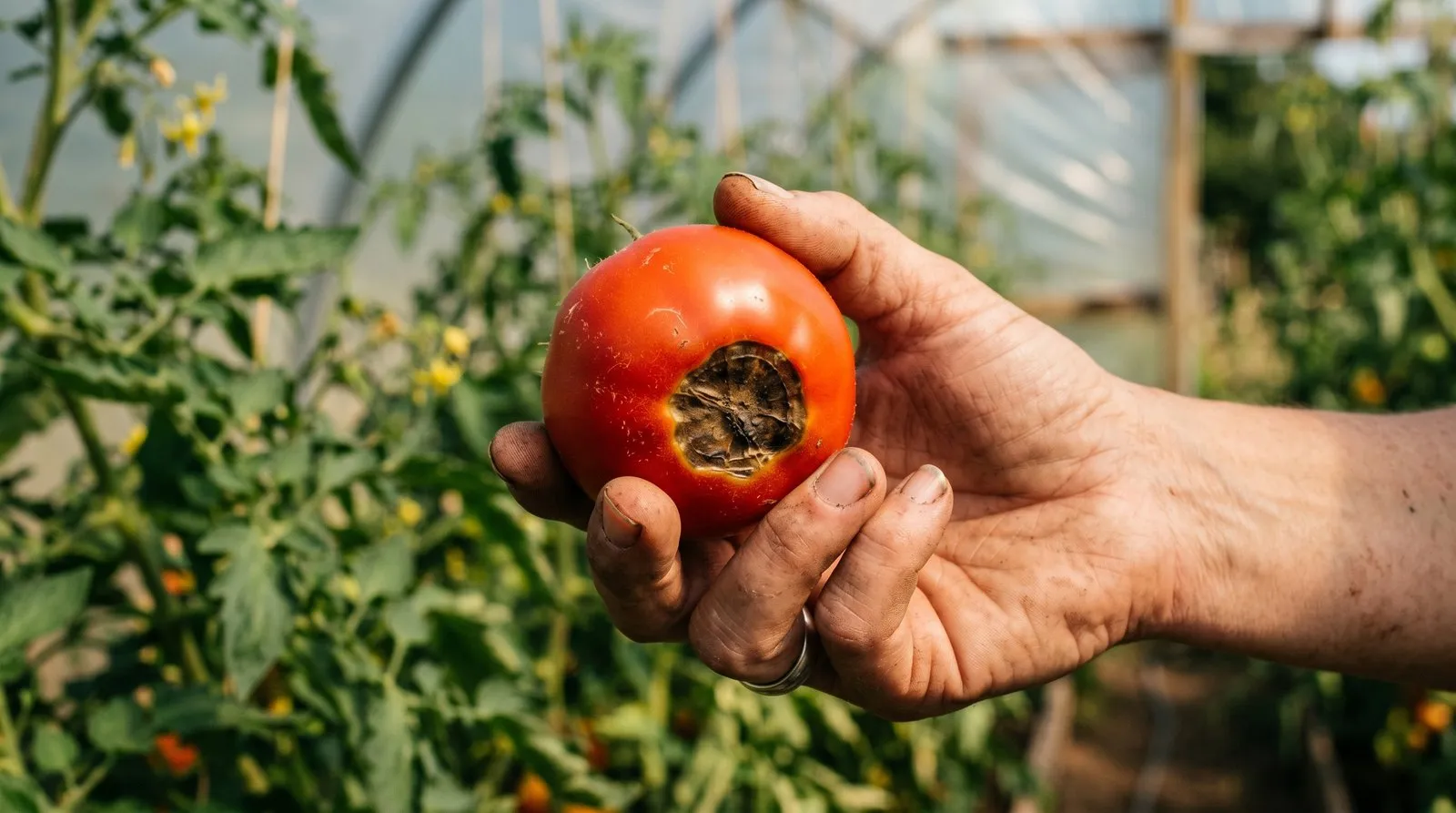 Blossom end rot blackens the base of the fruit. It is a watering fault, not an infection, so no spray will cure it.
The polytunnel routine that prevents disease
A simple daily routine of ventilation, base watering and de-leafing prevents far more disease than any treatment cures. None of it is difficult, but it has to be habit, because the damp conditions build up overnight when you are not watching.
Work to these points through the growing season:
- Open up every day. Doors and vents open each morning, and left open overnight whenever nights stay above about 12 degrees. Cross-ventilation, an opening at each end, pulls air through far better than one.
- Water the soil, never the leaves. Water at the base in the morning so any splash dries by midday. Wet foliage in still air is an open invitation to every fungus here.
- Remove the lower leaves. Strip the leaves below the lowest truss once plants are established, then keep taking off ageing lower leaves. This opens the base to airflow where humidity and wetness linger longest.
- Space them out. Give each plant 45 to 60 centimetres so air moves between the stems. Crowding is half the problem in a busy tunnel.
- Keep it clean. Clear dead leaves and fallen fruit as you go, and clear all plant debris at season end. Spores overwinter in it.
- Grow resistant where you can. A leaf-mould-resistant variety removes the likeliest disease before it starts.
 Stripping the lower leaves opens up the base of the plant, where humid air and leaf wetness otherwise sit for hours.
Should you spray? When it is worth it
The honest summary is that polytunnel tomato diseases are won or lost on humidity. Decide whether a polytunnel even suits your plot with our guide to choosing a polytunnel or greenhouse, get the basics right with our notes on growing tomatoes, and keep one eye on tomato blight in wet summers. Do the daily ventilation, and the velvety mould on the lower leaves becomes a rare visitor rather than a yearly defeat.
For more diagnosis help, browse our full problems section and learn the look of each disease before it spreads.
Frequently asked questions
What is the most common tomato disease in a polytunnel?
Leaf mould (Fulvia fulva) is the most common, because it thrives in the humid, still air under cover and is rarely seen outdoors. It shows as pale yellow blotches on the upper leaf surface with velvety olive-brown mould directly beneath. It starts on the lowest leaves in June or July and spreads upwards if humidity stays high and the air does not move.
How do I stop tomato diseases in my polytunnel?
Lower the humidity and move the air. Open vents and the door daily, leave them open overnight when nights are mild, water the soil not the leaves, and remove the lower leaves to improve airflow around the base. Space plants well and grow resistant varieties. These steps tackle the damp conditions every fungal disease needs, which no home fungicide can do reliably.
Why do my polytunnel tomatoes have grey fuzzy mould?
That is grey mould, or Botrytis, a fungus that colonises damp, dying tissue and wounds. It appears as a grey-brown fuzz on stems, leaves and fruit after cool, humid nights, often where you have removed a leaf or where a flower has died. Cut out affected parts in dry conditions, bin them, improve ventilation, and avoid leaving wet wounds when you pinch out side shoots.
Is blossom end rot a disease?
No, blossom end rot is not a disease and you cannot catch it or spray for it. It is a calcium problem caused by uneven watering, which polytunnels make worse because the soil dries faster under cover. The base of the fruit turns dark, sunken and leathery. The fix is steady, consistent watering and good drainage, not a fungicide or removing nearby plants.
Which tomato varieties resist polytunnel diseases?
For leaf mould, the classic under-cover disease, grow resistant cultivars such as ‘Shirley’ and ‘Cumulus’, though resistance can break down against new strains. For blight risk where doors stay open in wet weather, blight-resistant varieties like ‘Crimson Crush’ and ‘Mountain Magic’ help. No variety replaces good ventilation, but a resistant one removes the disease most likely to strike under cover.
Our team produces practical UK gardening guidance from source research, contributor records and established horticultural practice. Editorial standards are overseen by Matt W.