Key takeaways
- The robin was voted Britain's national bird in 2015, taking 34 percent of over 200,000 votes
- Around 6.7 million robin territories breed in the UK, and the species is on the Green List (BTO)
- Robins need open-fronted nest boxes, not hole-fronted ones, sited 1 to 2 metres up in cover
- Live mealworms are the single best robin food; soak dried mealworms for 20 to 30 minutes first
- Robins are ground and table feeders and struggle on hanging feeders
- British robins follow gardeners because they track dug soil for worms, a habit from following wild boar
- Robins hold territory and sing for about ten months a year, pausing only to moult in July and August
To attract robins, offer mealworms, leave the soil open, and fit an open-fronted nest box in dense cover. The robin is Britain’s favourite garden bird, voted our unofficial national bird in 2015 with 34 percent of more than 200,000 votes. It is also one of the easiest birds to win over.
Why is the robin so tame and easy to attract?
Robins are easy to attract because they already link people with food. In Britain the robin learned to follow the gardener, tracking freshly turned soil for worms and grubs.
This behaviour has deep roots. On the continent robins shadow wild boar and deer, which root through soil and expose invertebrates. In Britain the robin simply swapped the boar for the person with the fork. European robins stay shy and wary, because they are still trapped and shot in parts of southern Europe. Ours are protected, so they grow bold.
The robin (Erithacus rubecula) is resident in almost every UK garden. Around 6.7 million territories breed here according to the BTO, and the species sits on the Green List of least concern.
It is a small, plump bird. Adults weigh 14 to 21g, stand about 14cm long, and span 20 to 22cm across the wings. Males and females look identical, both with the orange-red face and breast. Juveniles have no red at all and are speckled brown. The typical life is short, about two years, though ringed birds have topped eight years.
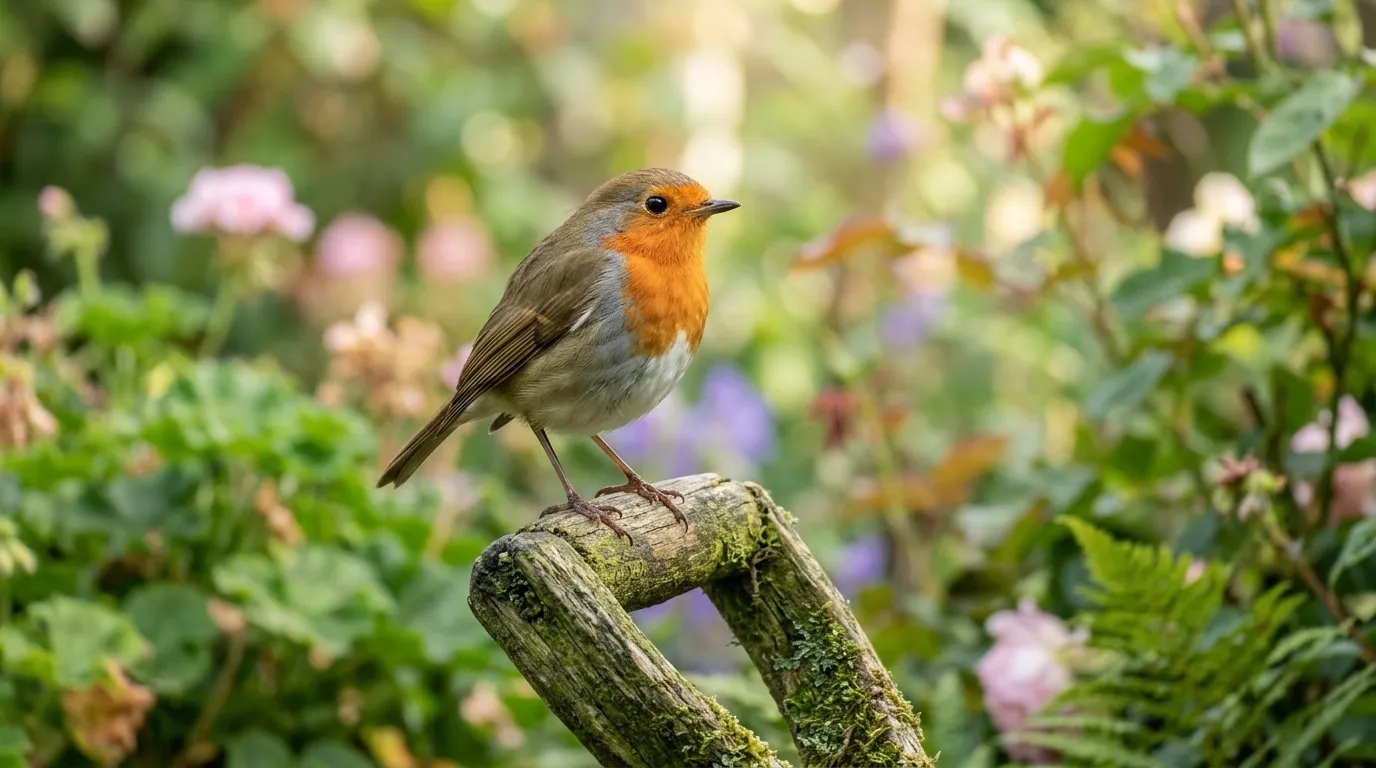 A robin working a freshly dug border in a suburban garden. Turn the soil and the bird arrives within minutes, which is the whole secret to attracting robins.
What do robins eat in a UK garden?
Robins eat mostly insects and other invertebrates: earthworms, beetles, spiders and caterpillars. In winter, when the ground hardens, they switch to berries, seeds, suet and mealworms. They are insect specialists first and seed eaters second.
They also feed low. A robin hops across the soil, watches from a low perch, then drops on its prey. It is not built to cling to a swinging peanut feeder. Give it a bird table, an open ground tray, or bare turned soil and it feeds happily.
The single best food is the mealworm. Live mealworms bring robins in faster than anything else, and dried ones work well once soaked. A daily handful near cover is enough to hold a resident bird all winter, when natural food is scarce.
Robin foods compared
| Food | How robins take it | UK cost | Best season |
|---|---|---|---|
| Live mealworms | Ground tray or bird table | £8-12 per tub, more per kilo | All year, vital for chicks |
| Dried mealworms (soaked) | Ground tray, soak 20-30 min | £20-25 per kg | Autumn to spring |
| Suet pellets | Bird table, open dish | £35 per 12.5kg sack | Winter, high energy |
| Grated mild cheddar | Scatter near cover | Store-cupboard | Cold snaps only |
| Sunflower hearts | Bird table, ground tray | £35 per 12.5kg sack | Autumn to spring |
| Berries and windfall fruit | Left on the ground | Free | Autumn and winter |
Step 1: Feed mealworms, the robin’s favourite food
Mealworms are the fastest way to attract robins, live ones above all. A robin will take live mealworms from a tray within days of you setting it out, and from your hand within weeks.
Buy live mealworms from suppliers like Vine House Farm or Ark Wildlife, at roughly £20 to £25 per kilo, and keep them in the fridge to slow them down. Offer dried mealworms as the cheaper standby, but soak them in warm water for 20 to 30 minutes first. Soaking adds moisture and stops the worms drawing water from a chick’s gut.
Scatter 10 to 15 mealworms in a shallow dish once or twice a day. Do not overdo it. A robin needs live insect food most in the breeding season, when adults carry beakfuls of worms and grubs to the nest. Our seasonal bird feeding guide sets out what to offer month by month.
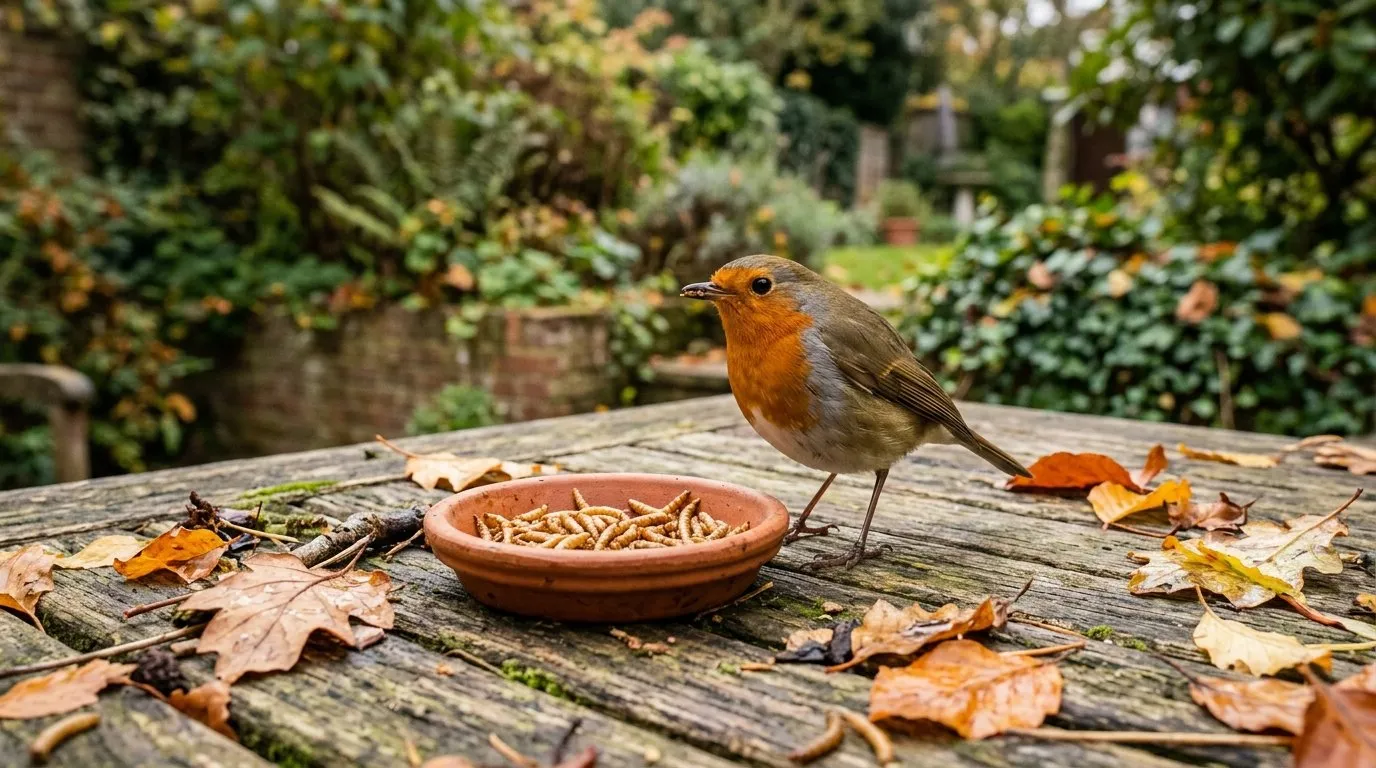 Soaked mealworms on a low tray. Live mealworms attract robins faster still, and a tame bird soon takes them from the hand.
Step 2: Use a bird table or ground feeder, not a hanging one
Robins feed low, so a bird table or ground tray works far better than a hanging feeder. The bird prefers a flat, open surface it can hop onto and scan from, close to the ground where it naturally hunts.
Set up a bird table at 1.2 to 1.5m, or an open ground tray on the lawn near a shrub. A robin uses both. Site the food within 2m of cover so the bird has an escape route from cats and sparrowhawks, but keep a clear metre of open ground around it so no cat can ambush from below.
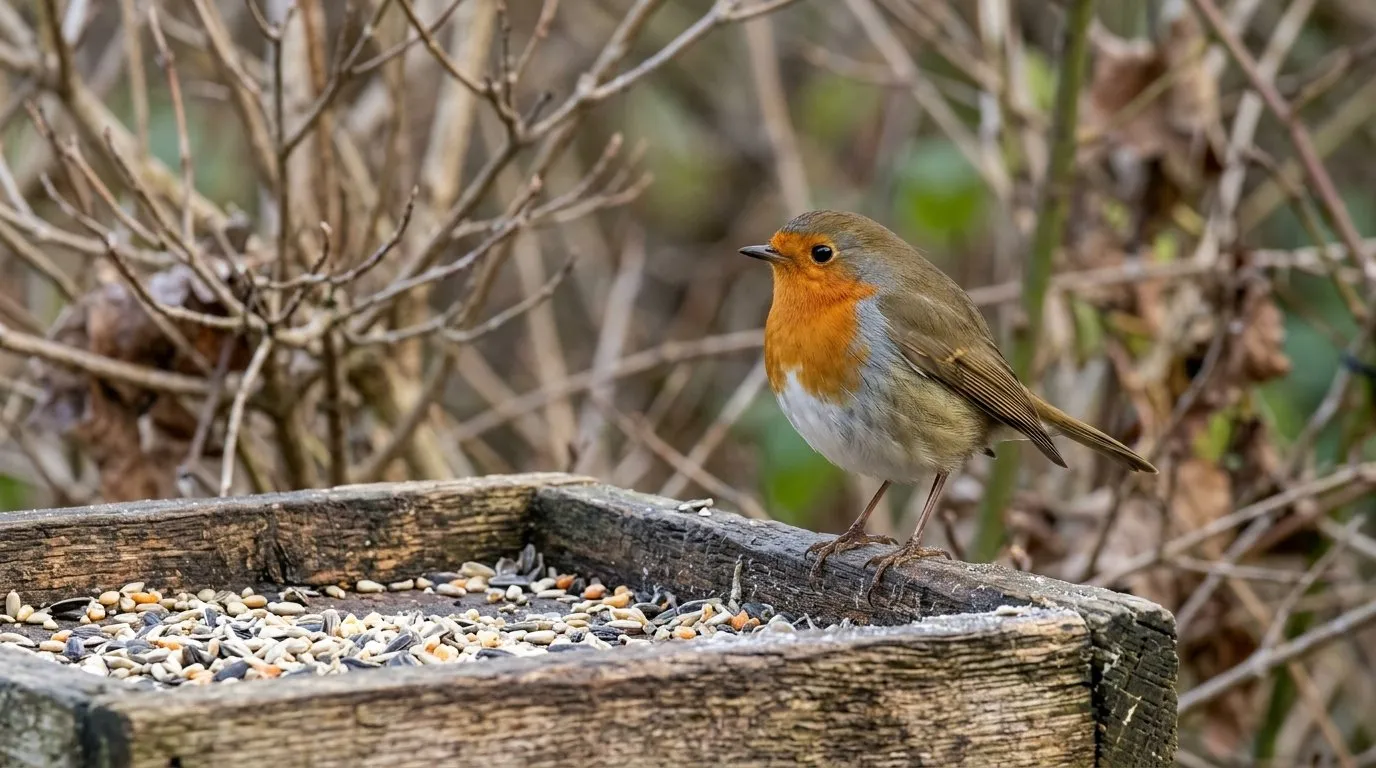 A robin on an open bird table. Flat, low surfaces suit the robin’s ground-feeding habit far better than a hanging feeder.
Step 3: Fit an open-fronted nest box, not a hole-fronted one
Robins nest in open-fronted boxes, not the round-hole boxes used by tits and sparrows. This single detail decides whether a box gets used. The front panel should be half height, leaving an opening about 100mm tall across the full width.
Site the box 1 to 2 metres up, lower than a tit box, tucked into ivy, a climber or a dense shrub so the entrance is screened. Face it north or east to keep the sun and driving rain off the nest. Keep it away from busy feeders, because a robin will abandon a nest it feels is overlooked. An open-fronted box on a bare, exposed wall is almost never used.
An open-fronted box costs £15 to £30 from the RSPB shop, CJ Wildlife or a garden centre. Robins are famous for ignoring boxes and nesting in odd open sites instead: plant pots, watering cans, shed shelves, coat pockets and, in RSPB records, a kettle and even a plane engine. If you leave a shed door ajar in spring, check inside before you slam it.
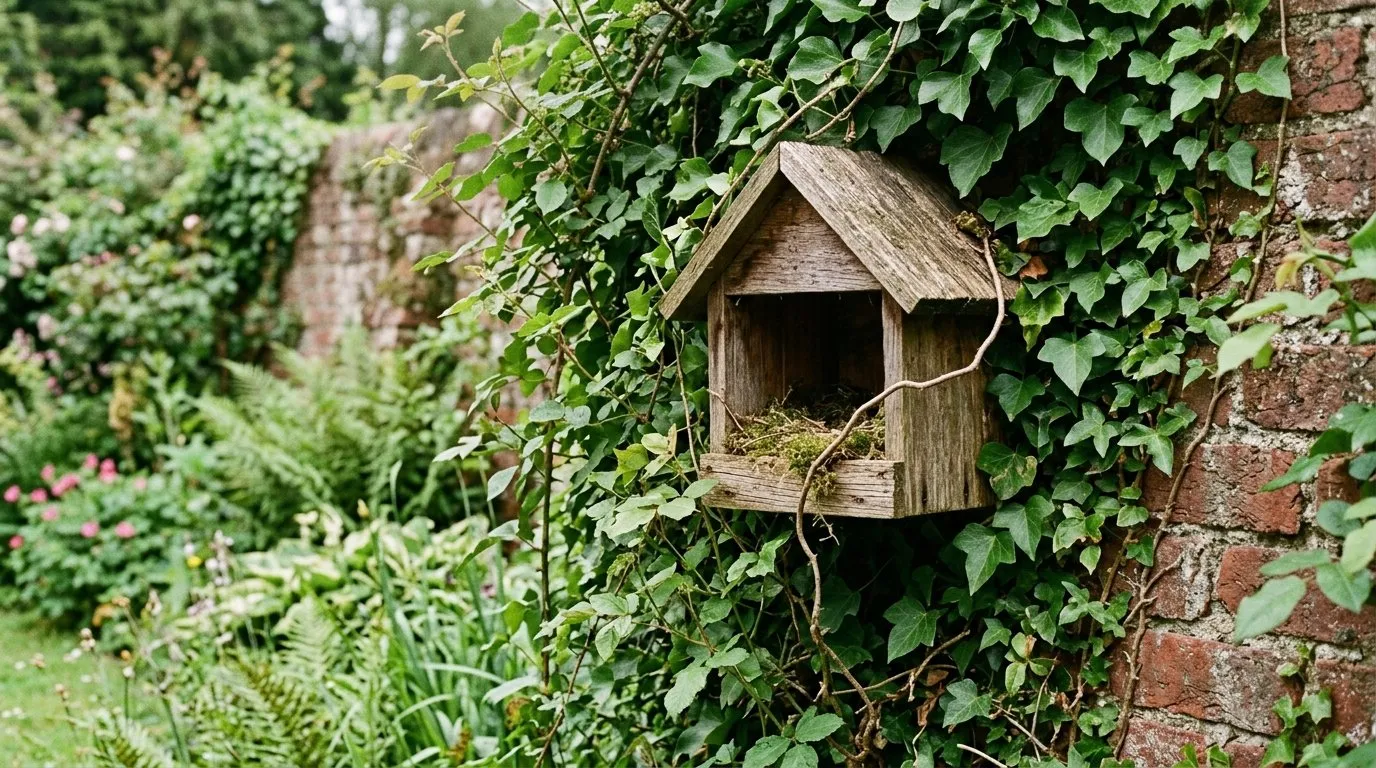 An open-fronted box screened by ivy on a shaded wall. The half-height front is the feature that makes a robin use it, and the foliage screen is what makes it feel safe.
Step 4: Leave dense low cover and clear song posts
Robins need thick low cover to nest in and open perches to sing from, so a garden with both suits them best. The cover hides the nest and gives shelter from predators. The perches let the robin watch for food and hold its territory by song.
Grow shrubs and hedging the bird can slip into: hawthorn, holly, ivy, pyracantha and dense evergreens all work. Hawthorn alone supports over 150 insect species, which feeds robins and their chicks. Leave a wild corner with leaf litter, where the bird can turn over leaves for spiders and beetles.
Just as important are the song posts. A robin sings from a fence top, a low branch or a shed ridge, defending its patch. Leave a few clear perches around the garden. Do not trim hedges between March and August, the legal nesting window, or you risk destroying an active nest. Our guide on when to cut hedges legally sets out the dates.
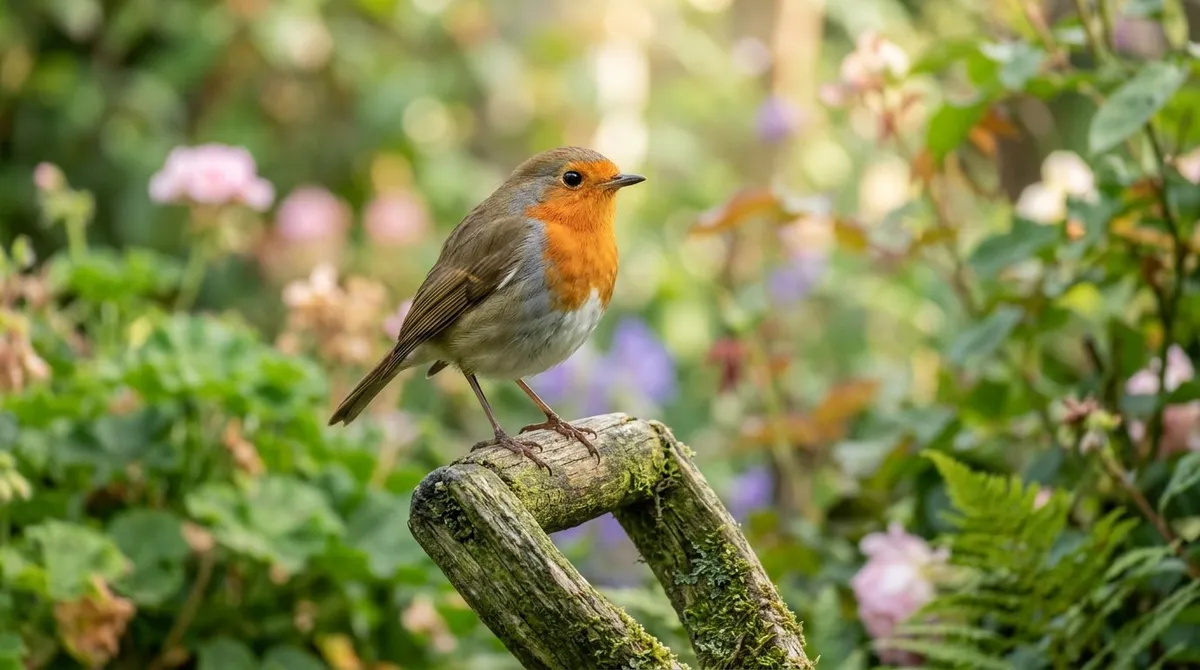
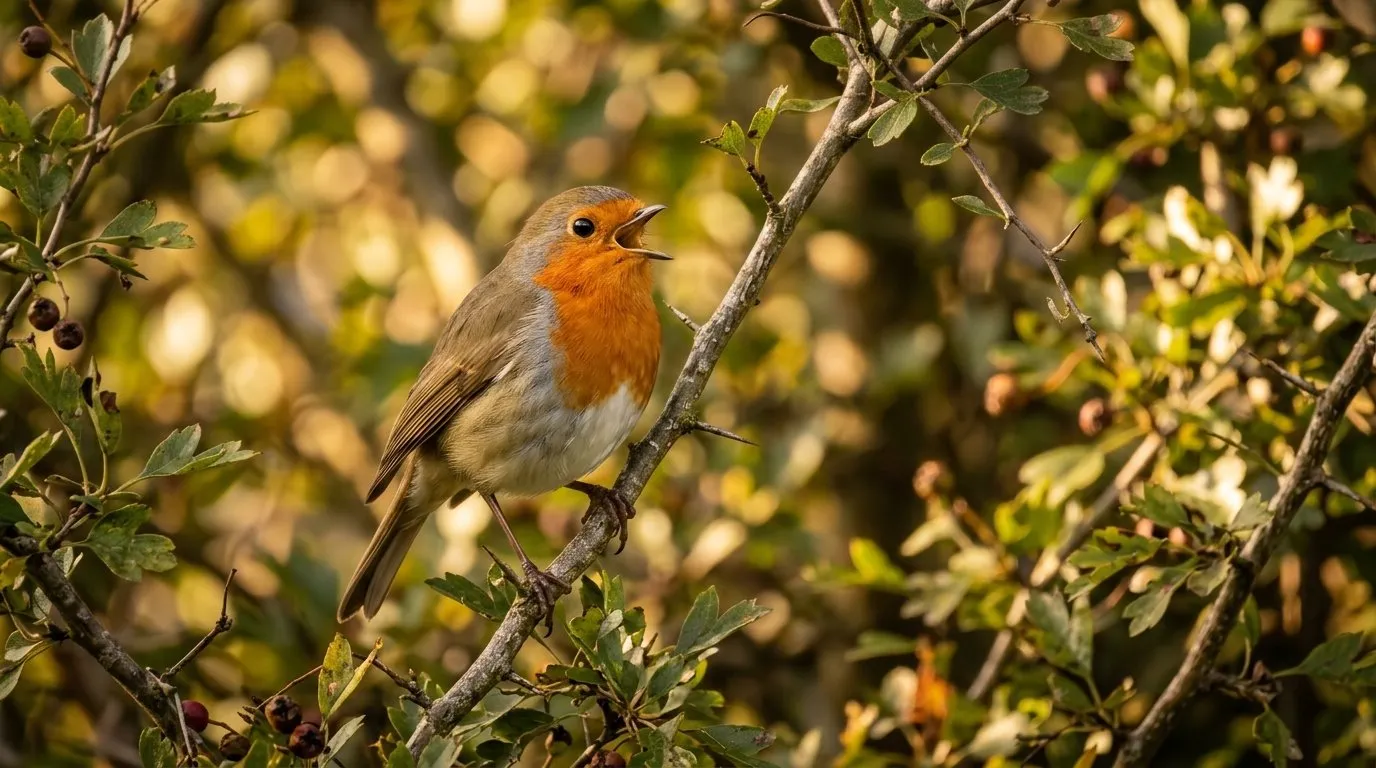 A robin singing from a low perch above dense cover. Robins need both, thick shelter to nest in and open posts to hold their territory.
Step 5: Turn the soil and let the robin follow you
Digging is the oldest robin lure there is, because turned soil exposes the worms and grubs the bird lives on. This is the behaviour that makes the robin feel tame. Dig a border in winter and a robin often appears within a minute.
Use it deliberately. When you plant, weed or turn compost, work slowly and leave the freshly dug soil open for a few minutes. Drop a few mealworms onto the turned earth and the robin learns to associate you with an easy meal. Repeat it through one winter and the same bird will land on your fork handle.
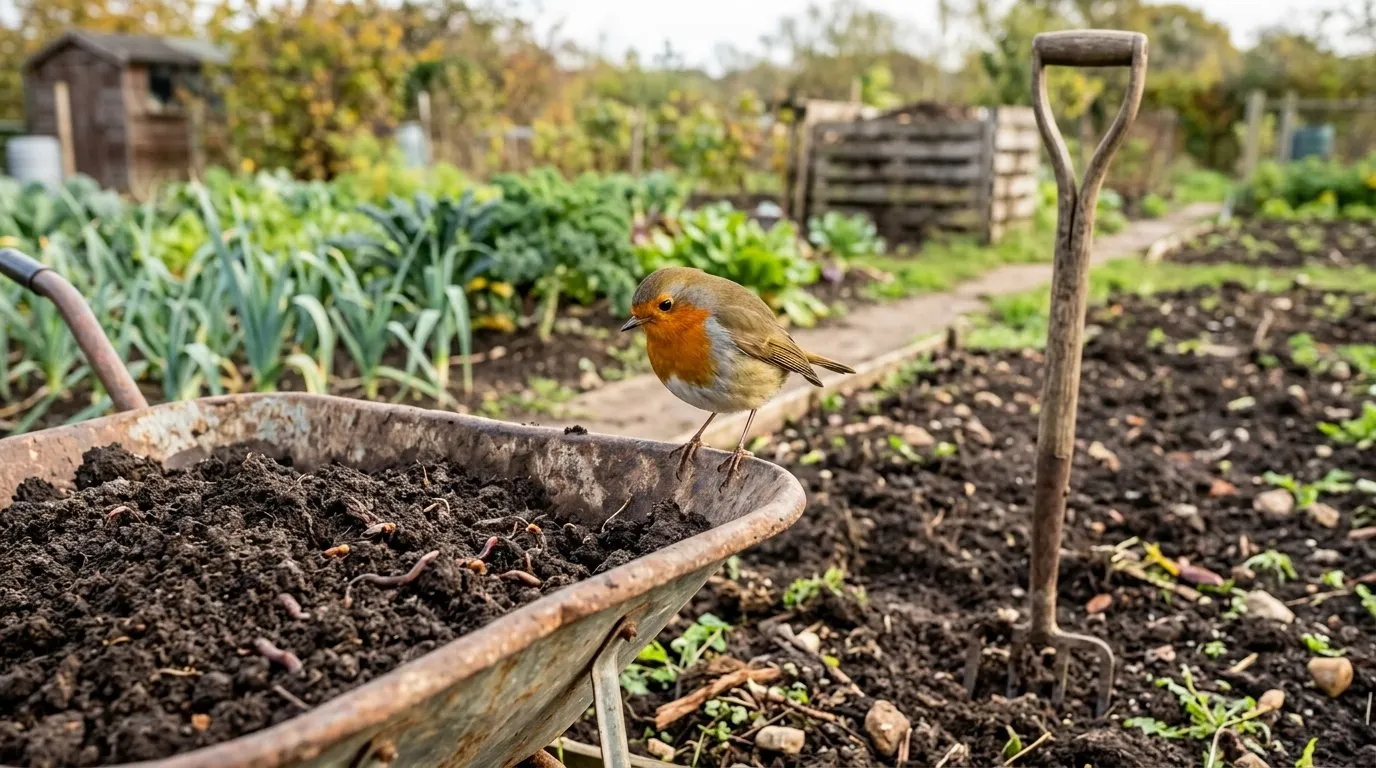 A robin waits on the fork handle while the bed is dug. This soil-following habit is what makes the robin the tamest bird in the garden.
Gardener’s tip: Keep a small tub of dried mealworms by the back door and a lidded flask of water beside it. Before you head out to dig, drop a pinch of worms into the flask lid to soak. By the time you have turned the first spadeful, the mealworms are plump and the robin is watching. Scatter three or four onto the fresh soil. Six weeks of this and the bird treats your arrival as the dinner bell.
Step 6: Give robins shallow water all year
Robins need water for drinking and bathing every day, in winter as much as summer. A reliable water source keeps a robin in your garden when a feeder alone might not.
Use a shallow dish no deeper than 5cm, with a gently sloping or stepped edge the bird can stand on. A robin bathes often, even in cold weather, to keep its feathers in condition. Set the dish near cover so the wet, heavy bird can dive for shelter if a cat appears.
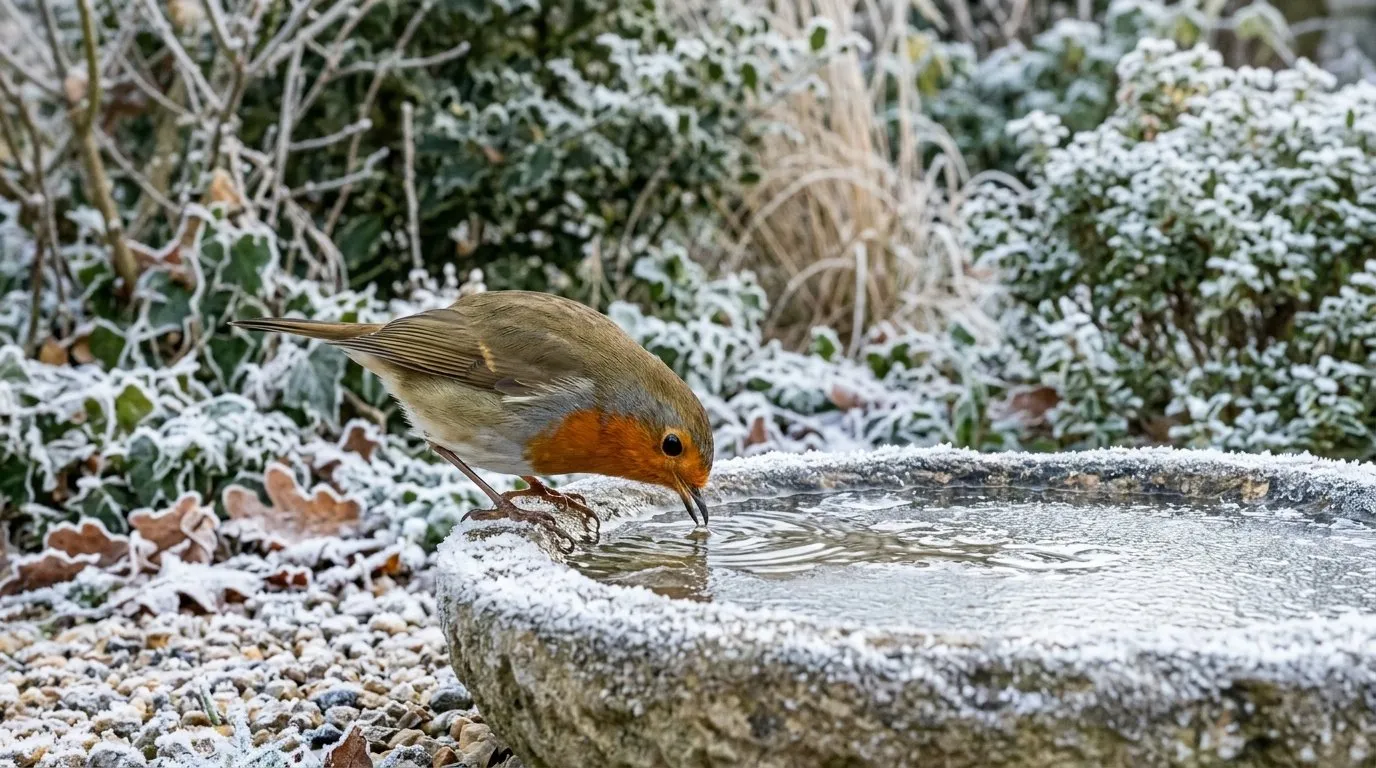 A robin at a shallow water dish. Robins bathe and drink daily all year, so open water matters as much as food.
Step 7: Stop using garden chemicals
Pesticides strip out the insects robins feed to their chicks, so a chemical-free garden is a robin-friendly one. Every spray reduces the worms, caterpillars and beetles the bird depends on, and some chemicals poison birds directly.
Three habits make the biggest difference:
- No slug pellets containing metaldehyde. Robins and hedgehogs eat the poisoned slugs.
- No insecticide sprays on flowering or leafy plants, especially from March to July when chicks need soft insect food.
- No lawn weedkillers if you can avoid them, because they thin out the invertebrates in the turf where robins hunt.
Switch to hand-weeding, mulching and physical barriers. The first season is the hardest. By the second summer, ground beetles, ladybirds and other predators build up and handle most pest problems for free. The same pesticide-free approach helps hedgehogs and every other creature in the garden.
Robin territory and song: why one garden holds one robin
A garden usually holds just one robin, or one pair, because robins are fiercely territorial. Both the male and the female defend a winter territory, which is why you rarely see two together outside the breeding season.
The red breast is a warning flag. A robin fluffs it out and sings to drive rivals off, and if that fails it fights. These fights can be brutal, and territorial disputes are thought to cause up to 10 percent of adult robin deaths. A robin will even attack its own reflection in a window or car mirror.
Song is the other half of the defence. The robin is one of very few UK birds that sings almost the whole year, pausing only during the July to August moult. It also sings at night near streetlights, which is why a “nightingale” heard in a town is usually a robin. Females sing in autumn and winter too, holding their own patches until pairs form again in late winter.
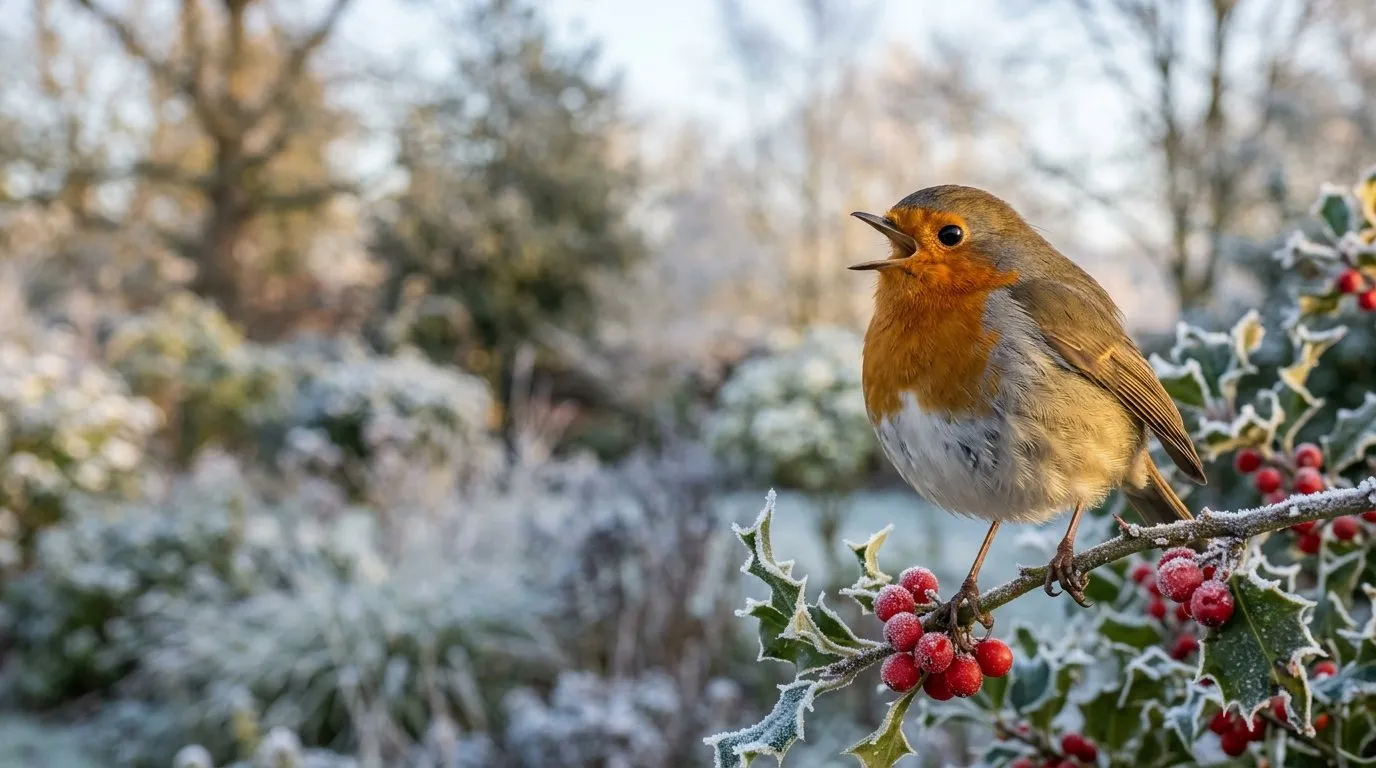 A robin in full winter song. Robins hold territory and sing through the cold months, which is why the bird is tied so closely to a British Christmas.
Month-by-month UK robin calendar
| Month | What to do |
|---|---|
| January | Feed daily. Break ice on water. Watch for early song as pairs form. |
| February | First nests begin in mild years. Put up open-fronted boxes now. |
| March | Nesting starts in earnest. Stop hedge cutting until September. |
| April | Peak nest building. Offer live or soaked mealworms for chicks. |
| May | First broods fledge. Keep insect food coming. Do not spray. |
| June | Second broods. Refill water daily. Watch for spotted juveniles. |
| July | Adults moult and fall quiet. Keep feeding through the gap. |
| August | Moult continues. Birds skulk in cover. Keep water topped up. |
| September | Autumn song restarts as birds claim winter territories. Plant ivy. |
| October | Clean out nest boxes once chicks have gone. Boost seed and suet. |
| November | Bare-root hedge planting window opens. Plant cover for next year. |
| December | Daily food and water critical. A robin needs feeding through freezes. |
Common mistakes when attracting robins
- Using a hole-fronted box. A 32mm round-hole box excludes robins. They need an open-fronted design with a half-height front.
- Hanging the food too high. Robins feed low. A tube feeder at head height goes ignored while a ground tray fills with birds.
- Siting the nest box in the open. An exposed box on a bare wall is almost never used. Screen it with ivy or a shrub.
- Offering dry mealworms unsoaked in spring. Dry worms can dehydrate chicks. Always soak them for 20 to 30 minutes in the breeding season.
- Spraying in May and June. A single insecticide dose at chick-feeding time can clear the insects a brood needs to survive.
- Expecting a flock. Robins are territorial. One garden holds one robin or one pair, not a crowd. That single bird is the prize.
Bringing it all together
Attracting robins is the easiest wildlife win in a UK garden. Offer mealworms low down, leave the soil open when you dig, fit an open-fronted box in cover, and skip the chemicals. Most gardens already have a robin watching from the hedge, and these steps turn that visitor into a bird that greets you at the back door.
Frequently asked questions
What food attracts robins to a garden?
Live mealworms attract robins faster than any other food. Offer them on a ground tray or bird table, never a hanging feeder. Dried mealworms work too, but soak them for 20 to 30 minutes first. Robins also take suet pellets, grated mild cheddar, sunflower hearts and dried fruit. In winter, a daily handful near cover keeps a resident robin close.
What kind of nest box do robins use?
Robins use open-fronted nest boxes, not hole-fronted ones. The front panel is roughly half height, leaving an opening about 100mm tall. Fit the box 1 to 2 metres up, hidden in ivy or a shrub, facing north or east. Site it away from feeders to avoid disturbance. An exposed box in full view is almost never used.
Why do robins follow gardeners?
Robins follow gardeners to catch worms and grubs turned up by digging. On the continent robins shadow wild boar and deer that root through soil. In Britain the robin transferred that habit to people. This is also why British robins are so tame, while European robins stay shy because they are still hunted in some countries.
Do robins come back to the same garden?
Yes, robins are largely resident and hold the same territory for life. A British robin rarely moves more than a few kilometres from where it hatched. Both males and females defend winter territories, which is why you usually see one robin per garden. Feed one through a winter and it often stays for its whole life, about two years on average.
When do robins nest in the UK?
Robins nest from March to July, raising two or three broods. Each clutch holds four to six eggs, incubated for about 13 days. Chicks fledge roughly 13 to 14 days after hatching. They nest low in cover, ivy, or odd open sites like plant pots, sheds and kettles. Avoid trimming hedges between March and August to protect active nests.
Do robins eat from hanging bird feeders?
Robins struggle on hanging feeders and prefer to feed low down. They are ground and table feeders by nature, taking food from bird tables, open trays and the soil surface. A few learn to cling to caged suet feeders, but most give up. For reliable robin feeding, use a bird table or a ground tray placed near cover.
Are robins aggressive towards other robins?
Yes, robins are fiercely territorial and fights can be fatal. Territorial disputes are thought to cause up to 10 percent of adult robin deaths. A robin will attack another robin, and even its own reflection, to defend its patch. This is why most gardens hold just one robin or one pair. The red breast is the badge it uses to warn rivals off.
Our team produces practical UK gardening guidance from source research, contributor records and established horticultural practice. Editorial standards are overseen by Matt W.