Key takeaways
- Dig a pit 0.5 to 1m deep and 1 to 2m wide, below the 30cm UK frost line
- Part-fill with rubble, broken brick, logs and stone to leave frost-free air voids
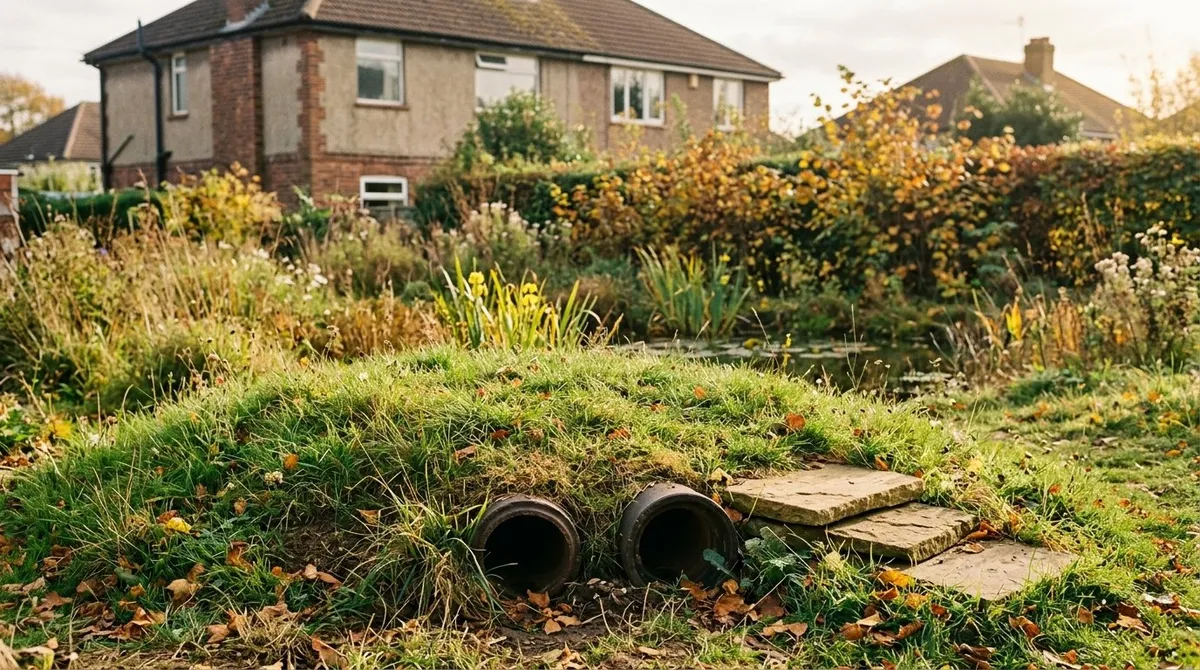
- Fit 2 to 3 entrance pipes of about 10cm bore, opening at ground level
- Site the hibernaculum within 10m of a pond in a quiet, undisturbed corner
- Slow worms (Anguis fragilis) and grass snakes are protected under the Wildlife and Countryside Act 1981
- Build in late summer or autumn, then leave undisturbed from October to March
What a hibernaculum is and which species shelter inside
A hibernaculum is an artificial refuge that stays frost-free through winter, letting cold-blooded animals brumate safely. Brumation is the reptile and amphibian version of hibernation. Body processes slow almost to a stop, so the animal needs somewhere that never freezes and never floods.
Five UK species are the main users:
- Common frog (Rana temporaria): overwinters in damp mud and voids, often near pond margins.
- Common toad (Bufo bufo): burrows into loose soil, log piles and rubble on land.
- Smooth newt (Lissotriton vulgaris) and great crested newt (Triturus cristatus): shelter in damp crevices under logs and stone.
- Slow worm (Anguis fragilis): a legless lizard, not a snake, that hibernates in compost and rubble.
- Grass snake (Natrix helvetica): uses warm, dry cavities and often lays eggs in compost heaps.
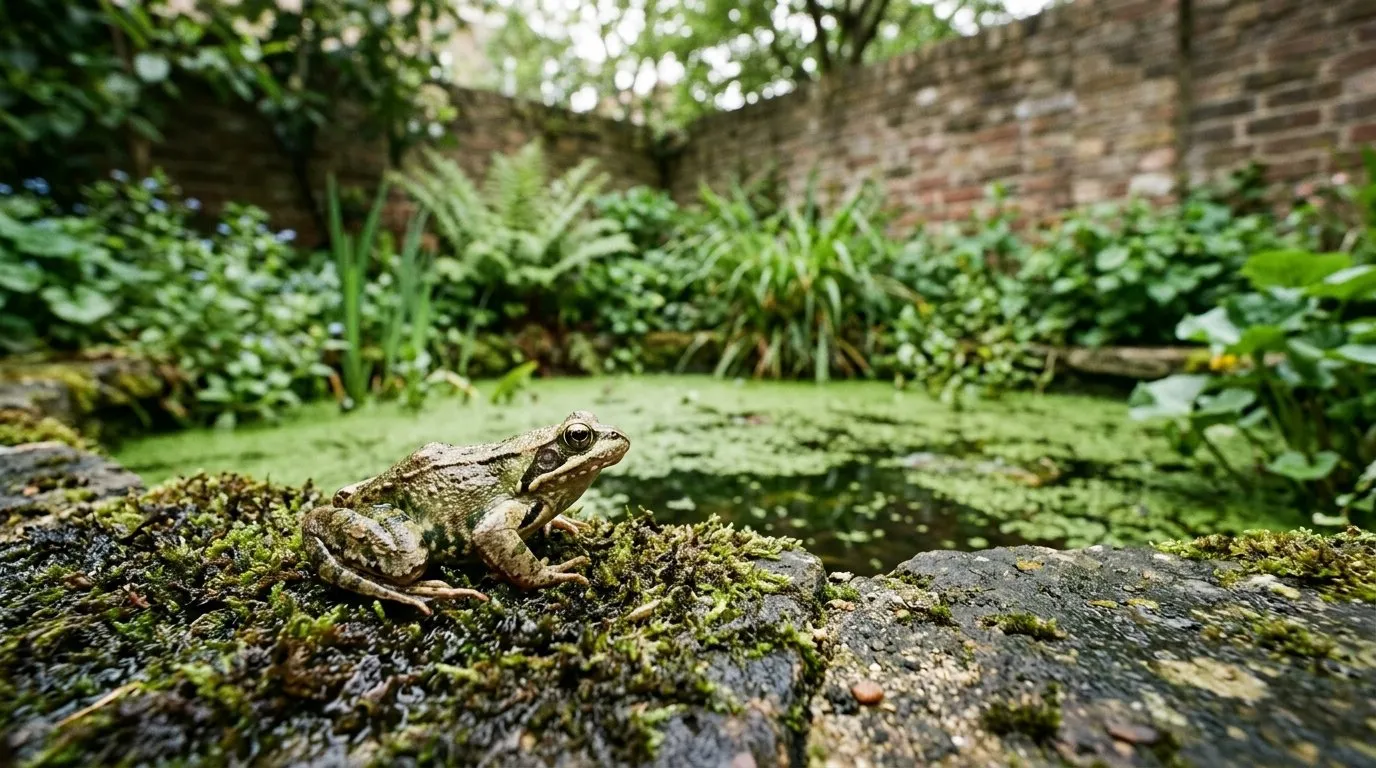 A common frog at the pond edge. Site a hibernaculum close to water and the same frogs will use it to overwinter.
Why frogs, toads and newts need a frost-free refuge
Cold-blooded animals cannot make their own heat. When soil temperature drops below about 4C, frogs, toads and newts shut down and rely entirely on their surroundings. A hard frost that reaches them is often fatal. This is the root cause a hibernaculum solves. It puts a body of insulating material between the animal and the freezing surface.
UK ground frost rarely penetrates deeper than 30cm, even in a severe winter. Below that line the soil holds the earth’s stored warmth. A pit dug to 0.5 to 1m places the air voids well under the frost line, in ground that stays around 3 to 8C all winter.
Where to site a hibernaculum in a UK garden
Position decides whether wildlife ever finds the hibernaculum. Three factors matter: distance to water, disturbance and aspect.
Site it within 10m of a pond. Frogs, toads and newts move between water and land shelter twice a year. A short journey across the garden means fewer road, cat and drying-out risks. If you are building a pond at the same time, our wildlife pond guide pairs the two into one project.
Pick a quiet, undisturbed corner. Avoid ground you mow, dig or walk over. A back border, the base of a hedge or a shady fence corner all work. Wildlife will not settle where it is disturbed every week.
Aspect gives you the best of both worlds. Angle the mound so one side faces south or south-west. That sunny edge warms fast in spring and lets basking reptiles raise their body temperature. Keep the opposite, shaded side damp and cool for amphibians. The Wildlife Trusts hibernaculum guide makes the same point about combining sun and shade in one structure.
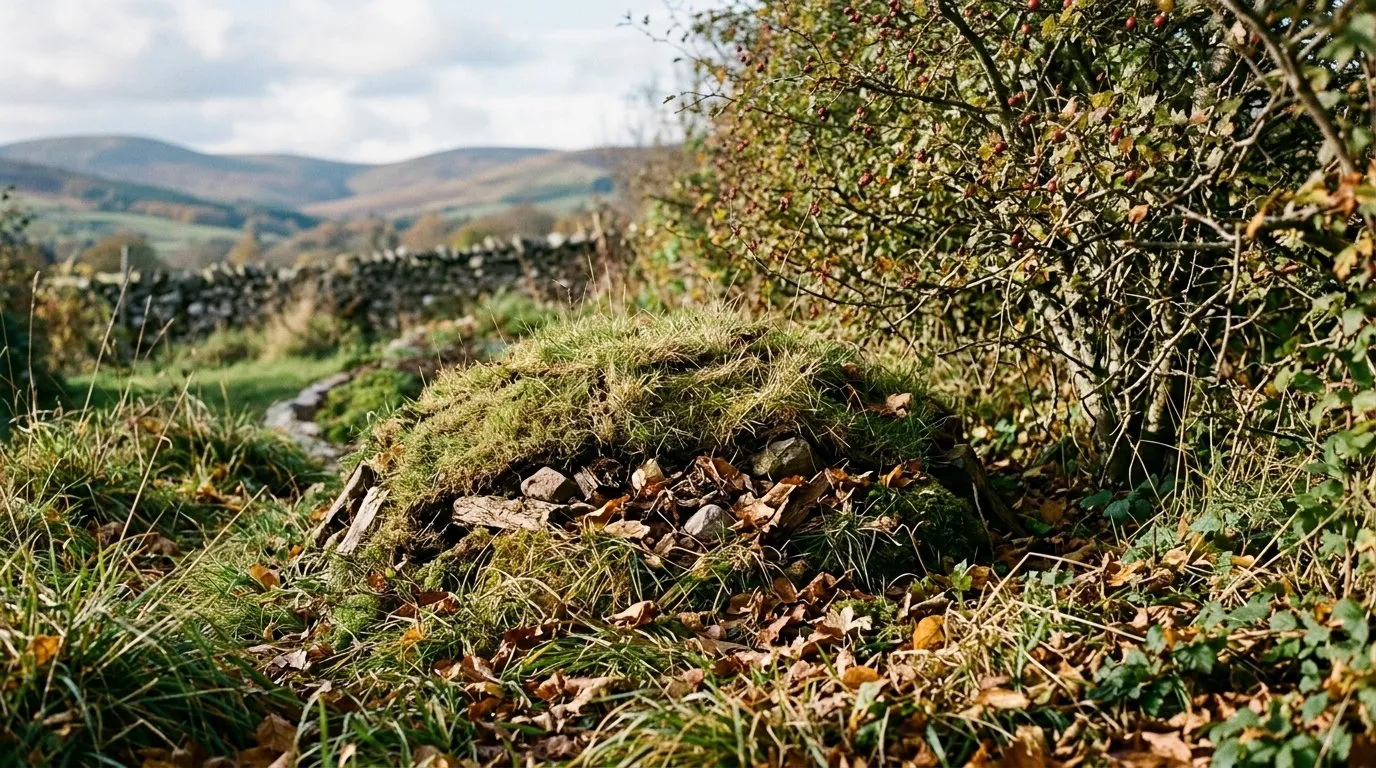 A back-garden corner near the hedge base. Quiet, undisturbed ground within reach of a pond is the ideal site.
How to build a hibernaculum step by step
A hibernaculum is a one-afternoon job for one or two people with a spade. You need a pit, hard fill and a few pipes. Total cost runs from nothing to about £40 if you buy pipe and reclaimed rubble.
Gather your materials first:
- Hard fill: broken bricks, old paving slabs, rubble, stone and chunky logs. Reclamation yards give this away or sell it cheaply.
- 2 to 3 lengths of pipe: perforated land-drainage pipe of about 10cm (100mm) bore, from Wickes or Screwfix, cut to 60 to 90cm.
- The excavated spoil: keep every barrow of soil to cap the mound.
- Turf or a wildflower seed mix to green the top.
Then work in order:
- Dig the pit. Excavate 0.5 to 1m deep and 1 to 2m wide. Angle the sides. Pile the spoil to one side.
- Build the rubble core. Layer bricks, slabs, stone and logs loosely, leaving plenty of air voids. Do not pack it tight. The gaps are the animal habitat.
- Insert the entrance pipes. Push 2 to 3 pipes into the core so they slope gently down from ground level into the voids. These are the doors.
- Cap with spoil. Cover the core with the excavated soil, leaving pipe ends open at the surface. Build a low mound 30 to 50cm proud of the ground.
- Turf or seed the top. Lay turf or sow a wildflower mix to bind the soil and blend the mound in.
- Leave a sunny stone edge. Set a few flat stones or logs on the south side as basking spots.
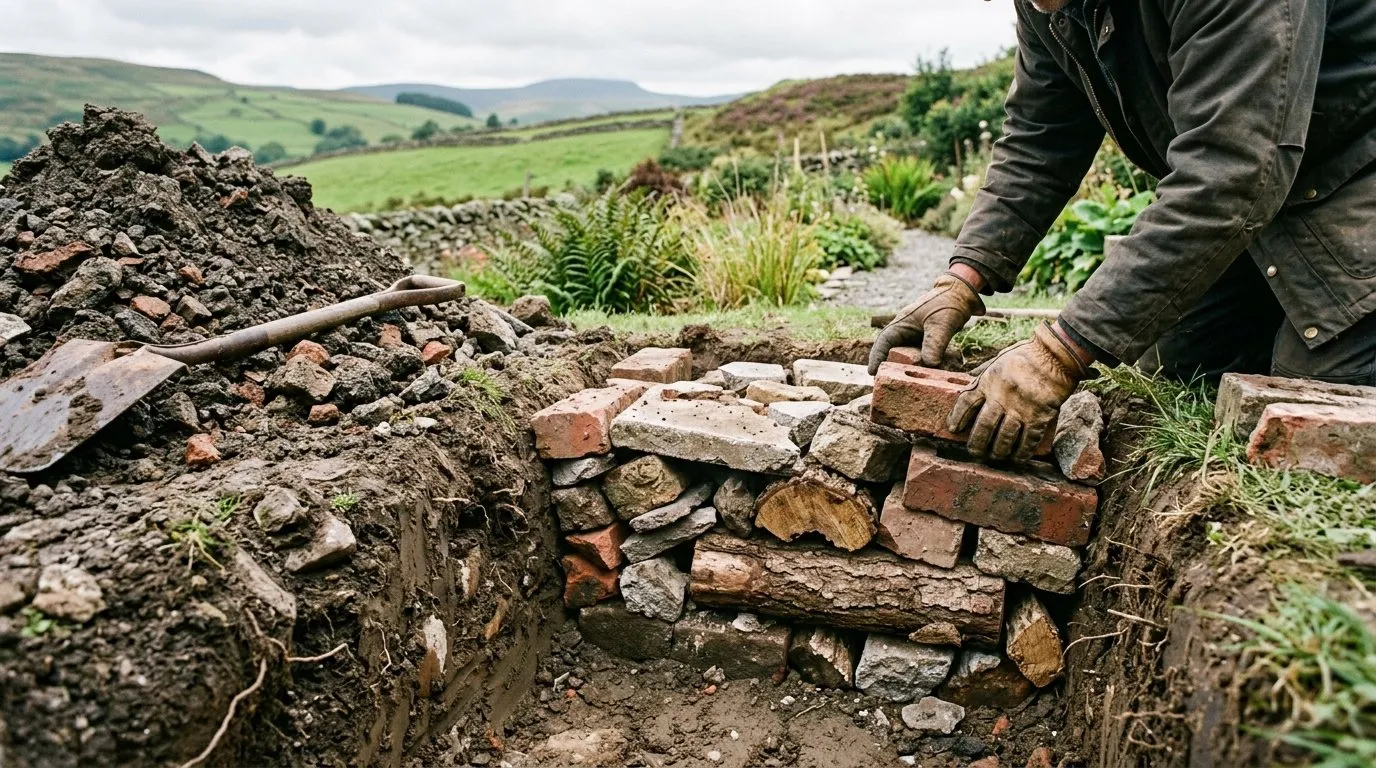 Building the rubble core with loose gaps left between bricks and logs. The air voids are the habitat, so never pack the fill tight.
Why each layer works: thermal mass, humidity and drainage
Every layer of a hibernaculum does a specific job. Understanding them is what separates a shelter that works from a heap that floods or freezes.
The deep voids give frost protection. Below the 30cm frost line, the dense rubble stores ground warmth. This is the thermal mass at work. It keeps the coldest chamber above freezing even in a February cold snap.
The mid layers hold humidity. Amphibian skin must stay moist. Frogs and newts breathe partly through their skin, so a dry refuge kills them as surely as a frozen one. Damp soil around logs and stone keeps the air inside close to saturated.
The upper layers stay warmer and drier. Slow worms and grass snakes prefer this zone. It sits above the wettest ground but still under an insulating soil cap.
Drainage ties it together. The structure must never flood. A waterlogged void in a freeze becomes a block of ice. Build on ground that drains, or raise the mound higher, and slope the base so water runs away. This is the mistake that kills more hibernacula than cold ever does.
Gardener’s tip: Dig on a slight slope or a free-draining spot. On heavy clay, build the mound taller and wider rather than deeper, so the voids sit above the winter water table.
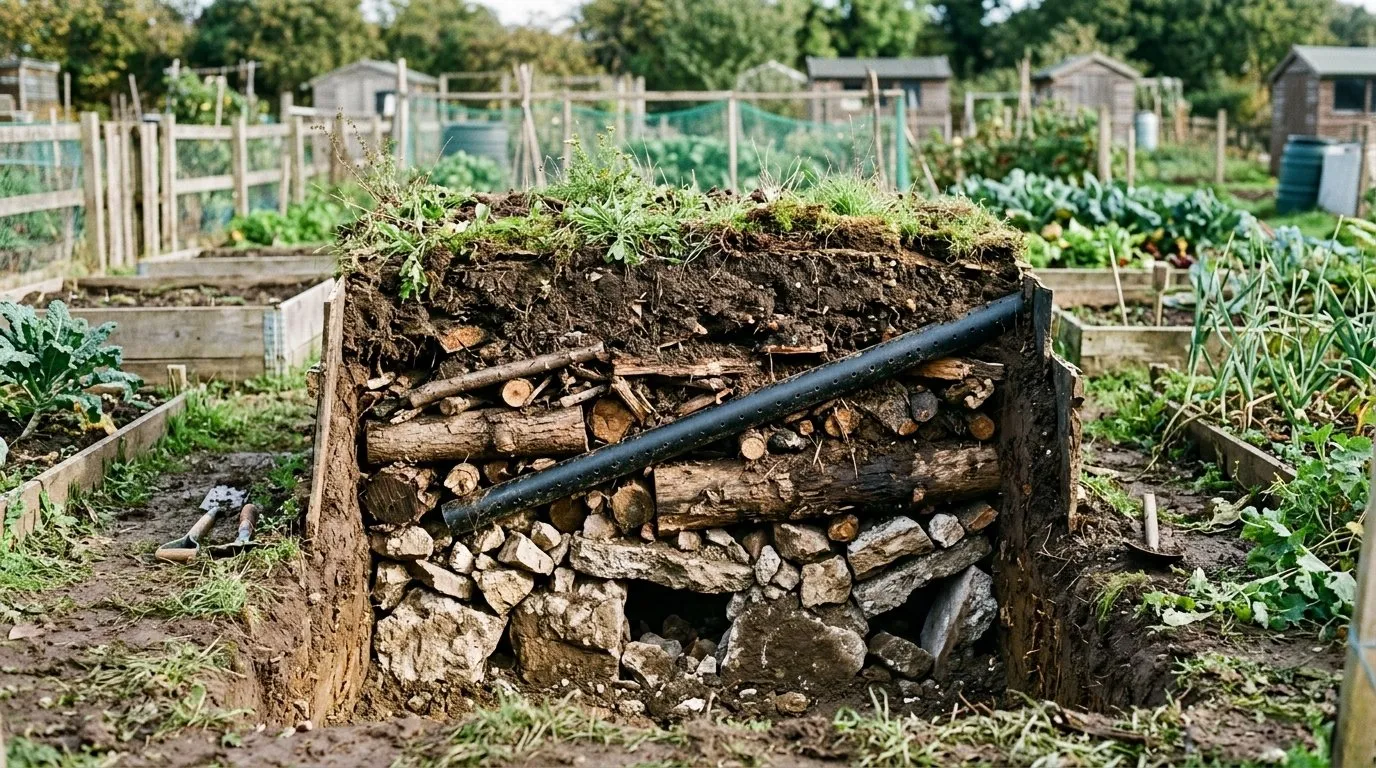 A cross-section through the mound: deep rubble voids for frost protection, damp mid layers for humidity, and a turfed soil cap on top.
Entrance pipes and basking spots for reptiles
The pipes and the sunny edge are the details most people skip, and both change how much wildlife uses the mound.
Entrance pipes are the animals’ doors. Use 2 to 3 pipes of about 10cm bore, angled to slope gently down into the core. Perforated land-drain pipe is ideal because the slots let animals slip out along the length. Open pipe ends at ground level, tucked among plants so a frog or newt can reach them under cover. Without clear entrances, a sealed rubble mound gets far less use.
Basking spots serve the reptiles. Slow worms and grass snakes must warm up in spring sun before they can move and feed. Set flat stones, roof tiles or a log on the south-facing edge. A sheet of corrugated tin or a rubber mat laid nearby also traps warmth and gives slow worms a favourite hiding spot underneath.
Plant low, dense cover around the mound. Long grass, bramble and a nearby wildlife log pile give safe cover for the short journey in and out. The combination of warm edge, cool core and cover close by is what turns a rubble heap into a used refuge.
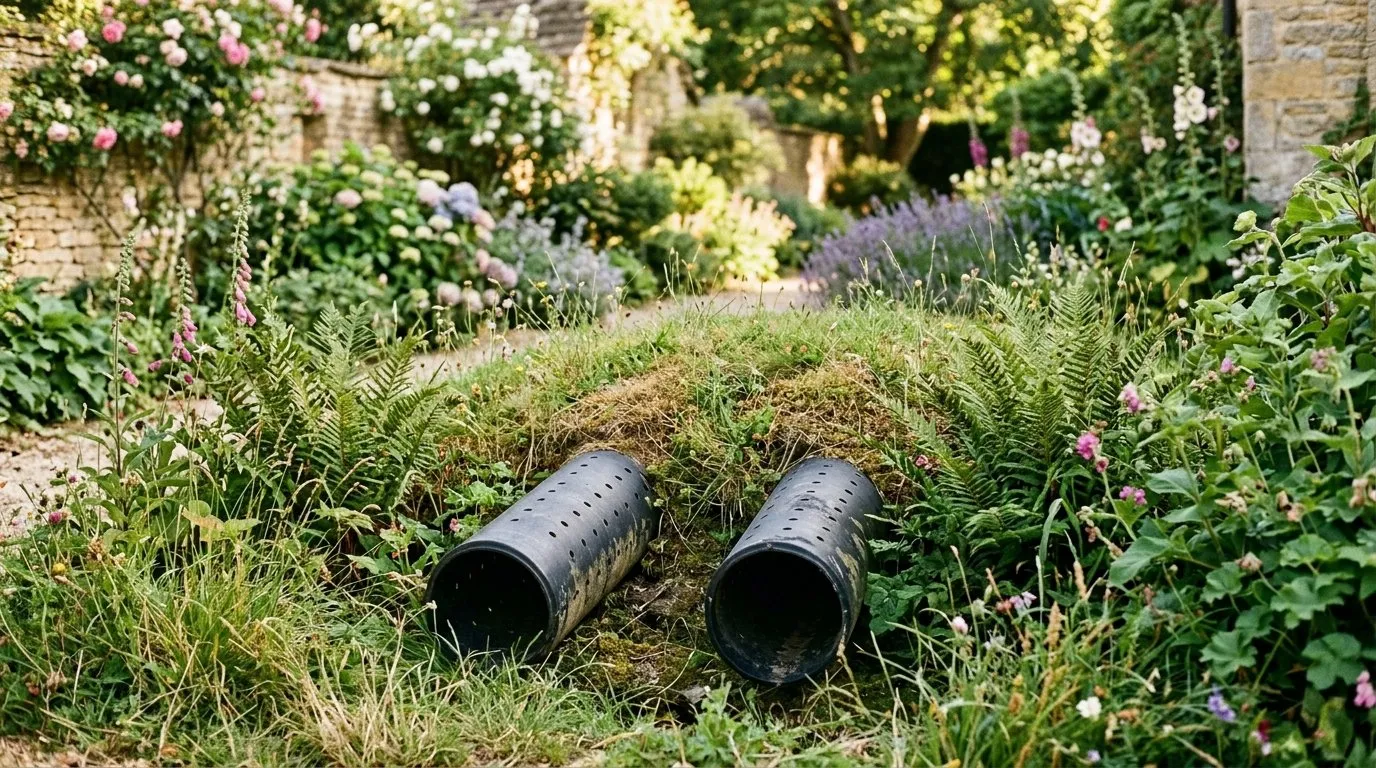 Entrance pipes sloping into the core, tucked among plants. These are the doors that let frogs, newts and slow worms move in and out.
The law: slow worms and grass snakes are protected
Reptiles carry legal protection that garden amphibians mostly do not, so it pays to know the rules.
Slow worms (Anguis fragilis) and grass snakes (Natrix helvetica) are protected under the Wildlife and Countryside Act 1981. It is an offence to kill or injure them deliberately. The great crested newt (Triturus cristatus) has even stronger protection under the same Act and European law, covering the animal and its habitat.
For a gardener this rarely causes a problem. Building shelter for these species is exactly what the law encourages. The risk comes from disturbance. If you find a slow worm or newt while digging, stop, cover it and let it move on. Never harm it.
Warning: Do not disturb a hibernaculum, compost heap or log pile between October and March. Animals inside are torpid and cannot escape. Turning a heap in winter can kill hibernating slow worms, newts and frogs. Save any rebuilding for late summer.
If a great crested newt turns up, that is a strong sign of a healthy garden, and it is best left undisturbed.
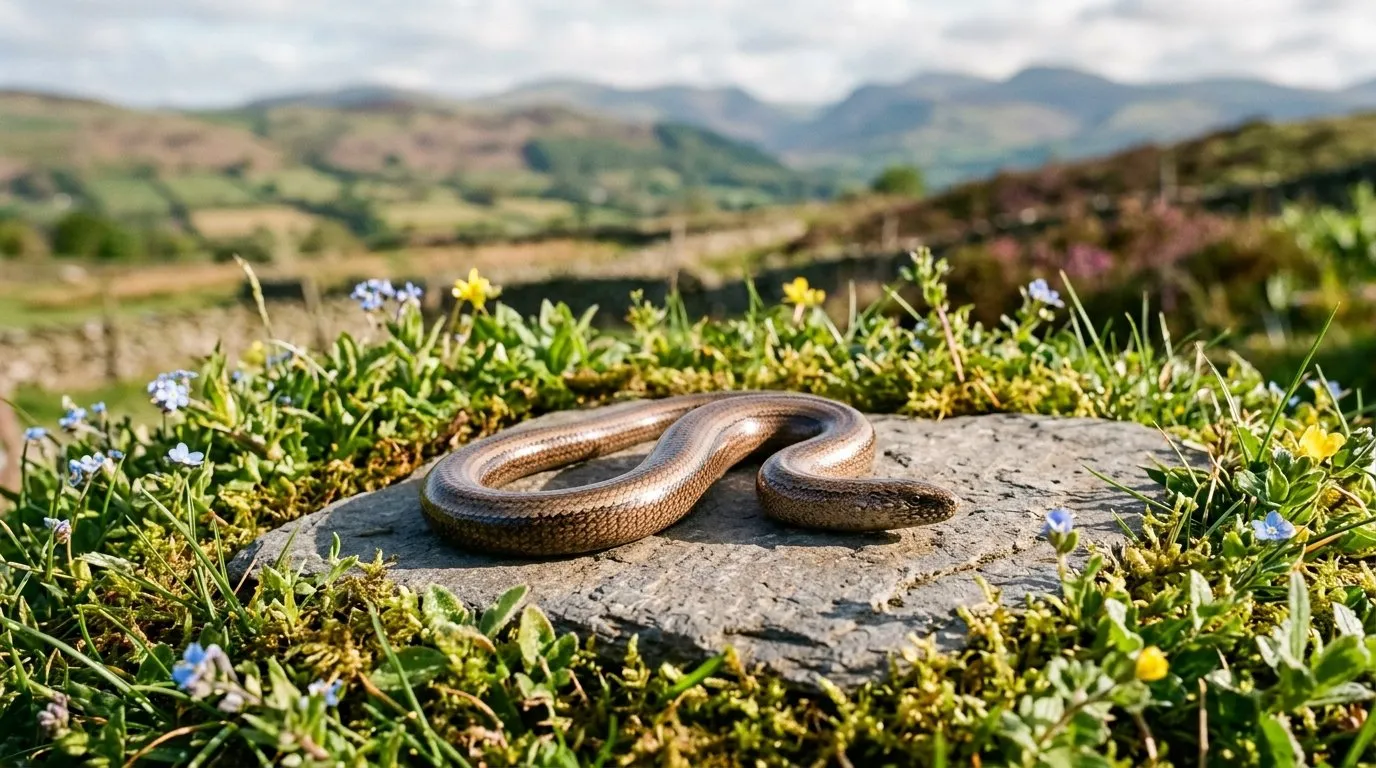 A slow worm basking on a sun-warmed stone. This legless lizard is protected by law and uses the drier upper layers of a hibernaculum.
Hibernaculum vs log pile, compost heap and rockery
Four garden structures give wildlife winter shelter, and they are not equal. A hibernaculum is the most reliable for frost protection because it is dug below the frost line. A compost heap offers warmth from decomposition and is a slow-worm favourite. A log pile is quick and doubles as summer habitat. A rockery gives basking and crevices but shallow frost cover.
| Structure | Main species sheltered | Build effort | Frost protection | Lifespan | Best for |
|---|---|---|---|---|---|
| Hibernaculum | Frogs, toads, newts, slow worms, grass snakes | Half a day, a spade | Very high (voids below 30cm) | 10-20 years | Reliable frost-free overwintering near a pond |
| Compost heap | Slow worms, grass snakes, toads | Ongoing | High (heat from decomposition) | Indefinite | Reptiles, egg-laying grass snakes |
| Log pile | Toads, newts, beetles, hedgehogs | 1 hour | Moderate (above ground) | 6-10 years | Quick cover, summer and winter habitat |
| Rockery | Slow worms, common lizards | 1-2 days | Low to moderate (shallow) | 20+ years | Basking reptiles, dry crevices |
For the widest species range and the best frost protection, the hibernaculum wins. For pure ease, a log pile or an undisturbed compost heap does much of the same work.
 Basking rocks on the sunny south edge. Reptiles warm up here in spring before they can hunt, so keep this face clear of shade.
Month-by-month hibernaculum calendar
| Month | Task |
|---|---|
| January | Leave the mound completely undisturbed. Animals are torpid inside. |
| February | Do not dig or turn nearby heaps. The surface may freeze; the core will not. |
| March | Watch for the first frogs and newts emerging on mild evenings. Still no disturbance. |
| April | Slow worms start basking on the south edge. Note which species appear. |
| May | Clear any smothering weed growth off basking stones. Keep cover intact. |
| June | Peak activity. Top up the nearby pond. Leave the mound alone. |
| July | Check the sunny edge stays open. Trim back only if grass fully shades it. |
| August | Best month to build a new hibernaculum or repair one. The ground is workable. |
| September | Finish any building now. Animals begin seeking winter shelter. |
| October | Hibernation begins. Stop all digging near the mound. Add a late log or two. |
| November | Leave undisturbed. Insulating leaf litter around the base helps. |
| December | Do nothing. The structure does its work with no input from you. |
Common mistakes when building a hibernaculum
- Building too shallow. A pit under 30cm sits inside the frost zone, so the voids freeze. It happens because digging deep is hard work. Always excavate at least 0.5m, and 0.8m on cold or exposed sites.
- Packing the fill too tight. A solid rubble block has no habitat. People tip in hardcore and level it. Leave large air voids instead: the gaps are where animals live.
- Siting it in a wet hollow. A void that floods becomes ice in a freeze. Low ground looks damp and wildlife-friendly, but standing water is fatal. Build on free-draining ground or raise the mound.
- Forgetting the entrances. A sealed mound with no pipes gets little use. Builders cap it neatly and block every gap. Fit 2 to 3 sloping pipes so animals can get in.
- Disturbing it in winter. Turning or rebuilding between October and March kills the occupants. It is tempting to tidy. Do all work in August, and leave the mound untouched once cold sets in.
Bringing it all together
A hibernaculum is the most productive half-day you can spend for garden wildlife. Dig below the 30cm frost line, leave big air voids, fit sloping pipes, and cap it with turfed spoil near a pond. Add a sunny stone edge for reptiles. Then step back and leave it alone from October to March. One structure shelters frogs, toads, newts and slow worms for a decade or more.
Now you have the winter shelter built, read our guide to a hedgehog highway so the mammals that use the same corner can move freely between gardens.
Frequently asked questions
What is a hibernaculum?
A hibernaculum is a frost-free underground refuge where wildlife hibernates. It shelters frogs, toads, newts, slow worms and sometimes grass snakes through the coldest months. In UK gardens it is a rubble and log filled pit, part-buried and capped with turf, sited near a pond.
How deep should a hibernaculum be?
Dig the pit 0.5 to 1m deep, below the frost line. UK ground frost rarely reaches past 30cm, so the deepest voids stay above freezing. A 0.8m pit gives a reliable frost-free chamber even in a hard winter. Width matters less: 1 to 2m across is plenty.
Where should I put a hibernaculum in my garden?
Site it within 10m of a pond, in a quiet corner. Amphibians travel between water and shelter, so short journeys reduce risk. Choose an undisturbed spot away from mowing and digging. Leave the south-facing edge open to the sun for basking reptiles.
When should I build a hibernaculum?
Build in late summer or autumn, before hibernation begins. This gives the structure time to settle and vegetation to establish. Wildlife starts moving into shelter from October. Avoid disturbing a finished hibernaculum between October and March, when animals are inside.
Are slow worms snakes?
No, slow worms are legless lizards, not snakes. Anguis fragilis has eyelids and can shed its tail, which snakes cannot. It hibernates in compost heaps and hibernacula from October to March. Slow worms are protected under the Wildlife and Countryside Act 1981.
What animals use a hibernaculum?
Frogs, toads, newts, slow worms and grass snakes all use hibernacula. Common frogs (Rana temporaria) and smooth newts overwinter in the damp lower voids. Slow worms and grass snakes prefer the warmer, drier upper layers. Bumblebees, beetles and hedgehogs may also move in.
Do hibernacula need to be near water?
Yes, for amphibians a hibernaculum works best near a pond. Frogs, toads and newts breed in water and shelter on land. A site within 10m keeps their autumn and spring journeys short and safe. Reptiles are less tied to water but still use the same refuge.
Our team produces practical UK gardening guidance from source research, contributor records and established horticultural practice. Editorial standards are overseen by Matt W.