Key takeaways
- Site a bird bath 2 to 3 metres from a shrub, in an open spot with a clear view of approaching cats
- Keep water shallow: 2.5cm at the rim sloping to no more than 10cm in the middle
- Add a few 2 to 5cm pebbles so small birds and insects can stand and drink safely
- Rinse and refill every 1 to 2 days and scrub weekly with hot water and a bird-safe disinfectant
- Dirty baths spread trichomonosis, which has cut UK greenfinch numbers by around two thirds since 2005
- In winter float a ball or add warm water, and never use salt, antifreeze or glycerine
A bird bath is the fastest way to pull more birds into a UK garden, often quicker than a feeder. Site the bird bath well and clean it often, and you will draw blackbirds, robins, sparrows and finches within days. Get it wrong and it sits empty, or worse, it spreads disease through the very birds it should help. The difference is rarely the design or the price. It comes down to three things: where you put it, how deep the water sits, and how clean you keep it.
This guide draws on three years of running two bird baths side by side in Staffordshire. It covers placement, safe water depth, moving water, a cleaning routine that stops disease, and how to manage the bath through frost and heatwaves. Get the siting and hygiene right and the birds do the rest.
Where to put a bird bath in a UK garden
A bird bath works best in an open spot with a clear line of sight, sited 2 to 3 metres from a shrub or hedge. That gap is the whole trick. Close enough that a bird can dash to cover from a sparrowhawk, far enough that a cat cannot hide in the foliage and ambush it. Birds will not settle at a bath with dense cover right at the rim.
Keep it away from busy paths, doorways and the mower’s usual line. Birds want calm to bathe, because a soaked bird flies poorly for a minute or two. A quiet corner of the lawn or border beats a spot beside the patio table.
You have two heights to choose from. A pedestal bath at around 1.2 to 1.5m gives high visibility and keeps water clear of ground predators. A ground-level dish suits blackbirds, thrushes and dunnocks, which prefer to bathe low, but it needs a clear 2m radius so cats cannot creep up. Many gardens do best with one of each.
Why part shade and open sightlines matter
The right spot decides whether birds trust the water and whether it stays fresh. Both come down to simple behaviour and biology, not luck.
Then there is algae. Water in full sun warms fast and grows a green film within days, especially from June to August. Part shade, ideally dappled light for part of the day, keeps the water several degrees cooler and slows that growth. In our testing, moving a bath from full sun into hawthorn shade stretched the time to a green film from four days to nine or ten. That halved the cleaning workload across a summer.
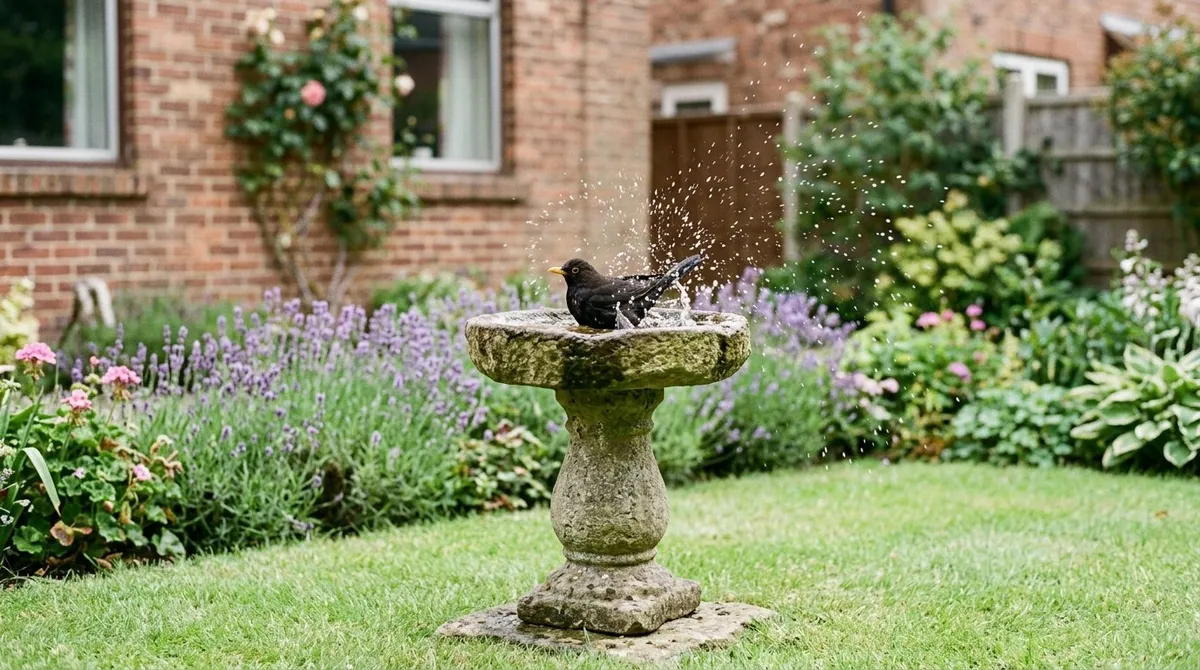
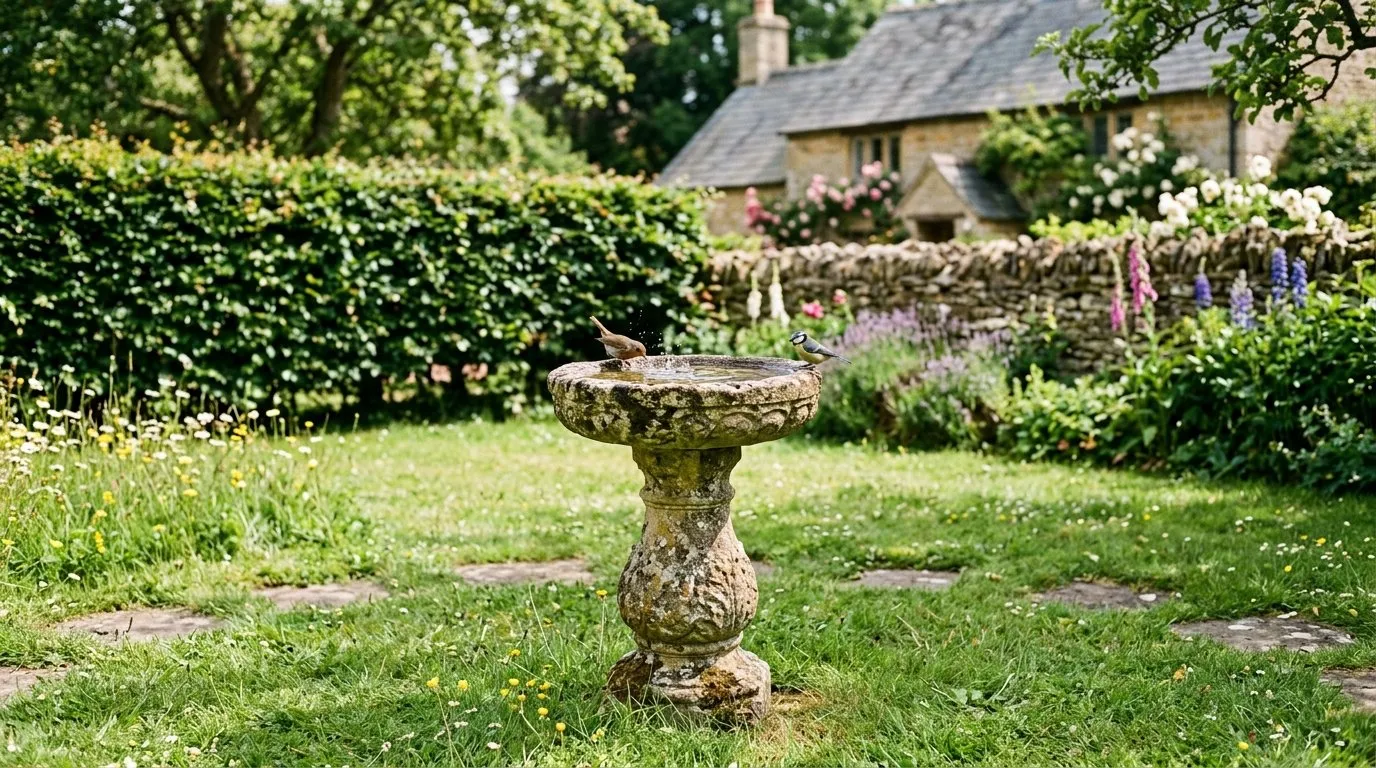 A pedestal bath set 3 metres from cover with an open outlook. Close enough to dash to safety, far enough that a cat cannot lie in wait.
The safe depth and non-slip surface
Depth is where most shop-bought baths get it wrong. Birds bathe by wading, so the water must be shallow with a gentle slope. Aim for 2.5cm at the edge, deepening to no more than about 10cm in the middle. A deep, steep-sided bowl drowns fledglings and frightens off smaller birds entirely.
Surface matters as much as depth. A smooth glazed or polished bowl gives no grip, and a bird that cannot feel a footing will not stay. Choose a rough, textured base, or roughen a slippery one. Stone, concrete and unglazed ceramic all work well.
The simplest fix for any bath is to add a handful of pebbles or flat stones, 2 to 5cm across, in the centre and towards one edge. They give small birds a landing perch and let bees, hoverflies and other insects stand and drink without drowning. They also break the water into shallow bays that suit sparrows and blue tits.
Gardener’s tip: Slope one side of the pebbles up to the rim like a beach. Even a big deep bath becomes usable when birds can wade in from ankle depth and back out fast, and any hedgehog or fledgling that falls in can climb straight out.
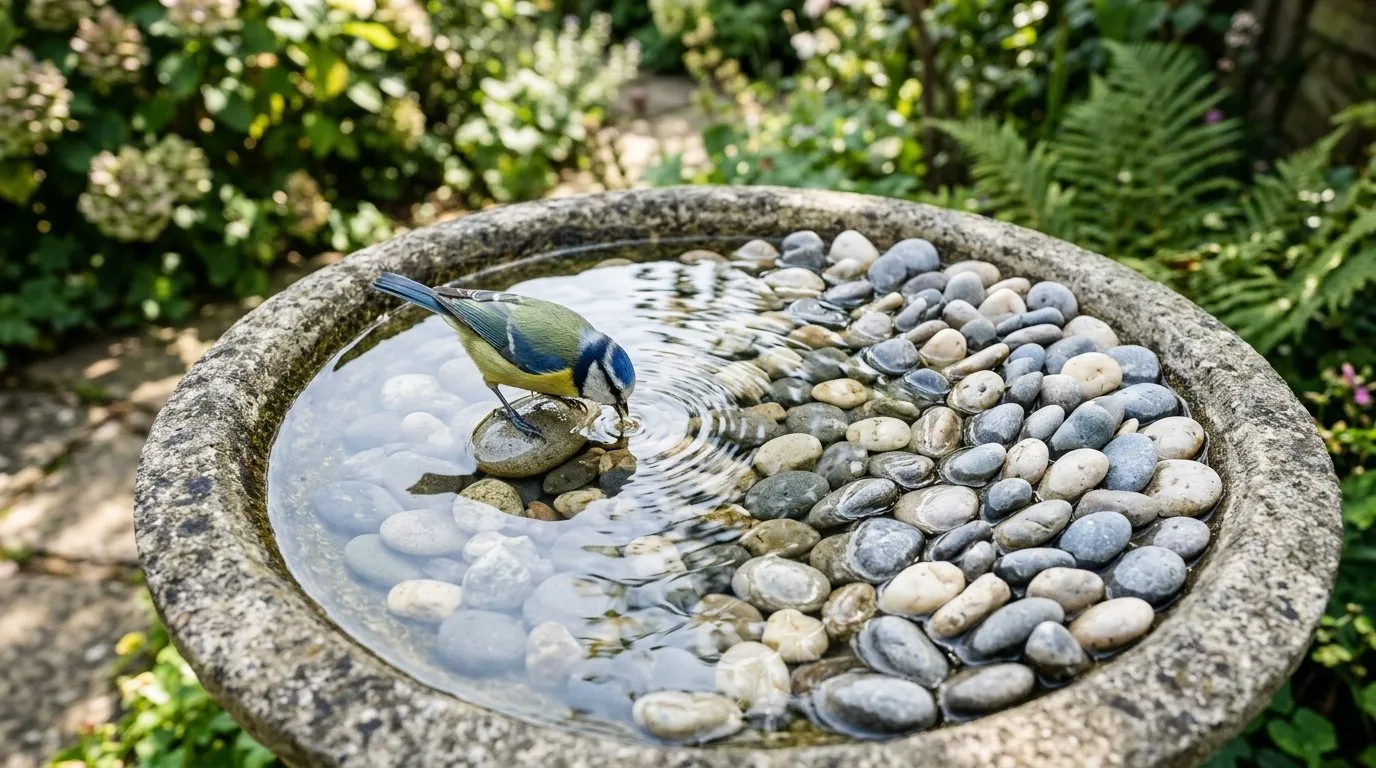 Pebbles added to the basin. They shorten the safe standing depth, give grip on a slick surface, and let insects drink without drowning.
Moving water pulls in far more birds
Still water works, but moving water is the single biggest upgrade you can make. Birds hear and see the ripple from a distance, and a dripping or trickling sound draws species that would fly straight past a stagnant bowl. Movement also slows algae and keeps mosquito larvae from settling.
You have three easy options. A dripper, a slow-release pipe or an upturned bottle that drips onto the surface, adds sound for pennies. A small solar fountain, typically a 1.4 to 2.5W floating panel and pump, sends up a low jet whenever the sun is out and costs around £20 to £40. A mains pump gives a constant flow if you have an outdoor socket.
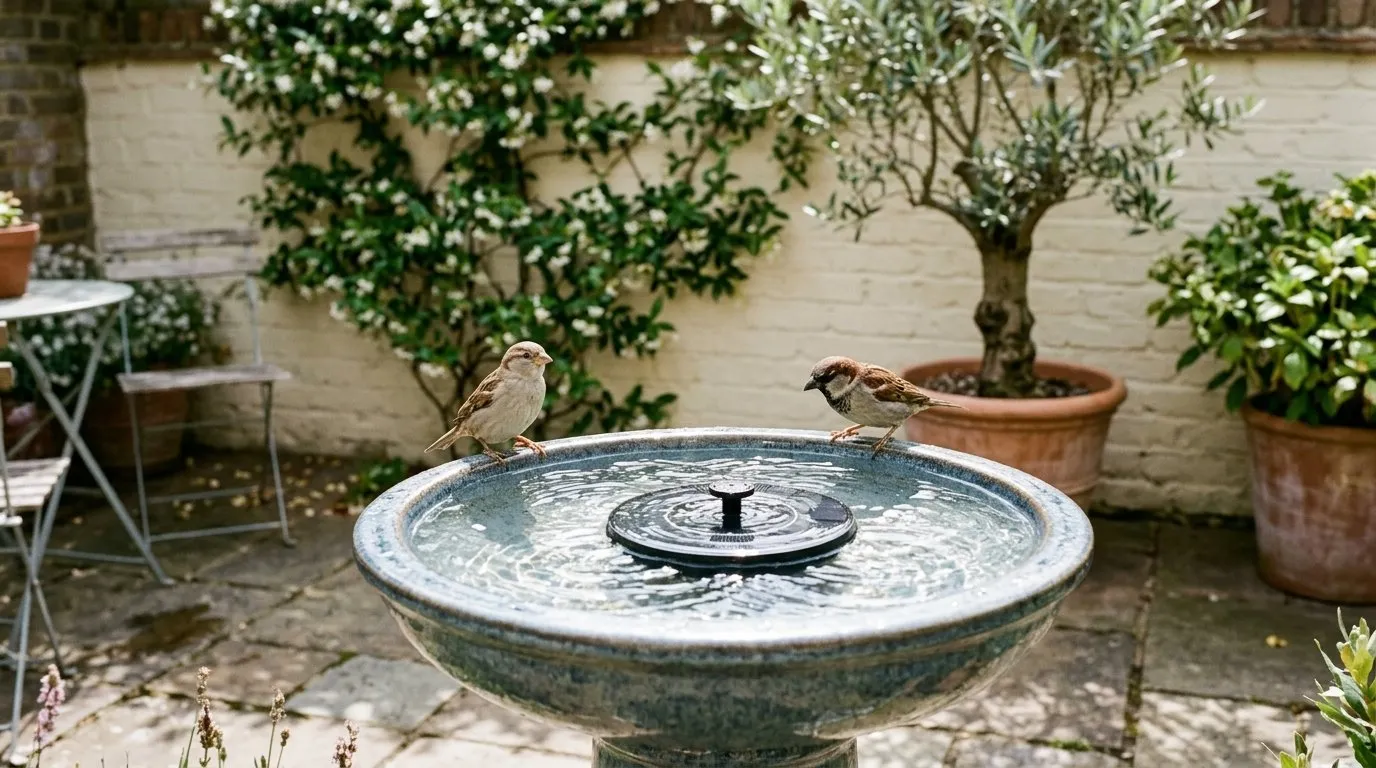 A floating solar fountain throwing a low ripple. The sound and movement draw far more birds than a still bowl, and slow algae at the same time.
How to clean a bird bath the right way
Cleaning is not optional. A bird bath concentrates droppings, feathers and saliva in a small volume of water, which is exactly how disease passes between birds. A simple routine keeps it safe.
Do a quick job daily and a proper scrub weekly:
- Empty the old water onto a border, never leave it to stagnate.
- Scrape off algae and droppings with a stiff brush kept only for the bath.
- Wash with hot water and a bird-safe disinfectant such as Ark-Klens, diluted per the label.
- Rinse thoroughly two or three times so no cleaner remains.
- Let it dry in the sun for an hour if you can, as drying kills many pathogens.
- Refill with fresh, clean water.
Rinse and refill every 1 to 2 days in normal weather, and scrub weekly. In a heatwave or during heavy use, scrub every few days. The same discipline applies to feeders, and the two go together, so our guide to cleaning bird feeders safely covers the products and method in full.
 Scrubbing off the algae film with a brush kept only for the bath. Empty, scrub, disinfect, rinse and dry, then refill with clean water.
Bird bath diseases: trichomonosis and avian pox
This is the reason hygiene matters so much, and it is the part most gardeners miss. A dirty bath does not just look bad. It actively spreads two serious diseases.
Trichomonosis, caused by the parasite Trichomonas gallinae, is the big one. It attacks the throat and gullet, so infected birds cannot swallow and slowly starve. Since it emerged in UK finches in 2005, greenfinch breeding numbers have fallen by around two thirds, with chaffinches badly hit too. The parasite passes in saliva and regurgitated food at shared water and feeding points. Avian pox and salmonella spread the same way, through contaminated surfaces.
The root cause is standing, shared water that never dries out. Here is the useful science: Trichomonas gallinae cannot survive drying. It dies quickly once the surface is clean and dry, which is why emptying and drying a bath matters as much as scrubbing it. Never site a bath directly under a hanging feeder, where husks, droppings and saliva rain into the water. Keep feeders and baths a few metres apart, and read our seasonal bird feeding guide for how to space a feeding station safely.
Warning: If you see a bird sitting fluffed up with a wet or crusted beak, or watch several birds die, stop using the bath and feeders at once. Empty everything, disinfect it, and leave it dry for two weeks to break the cycle before you start again.
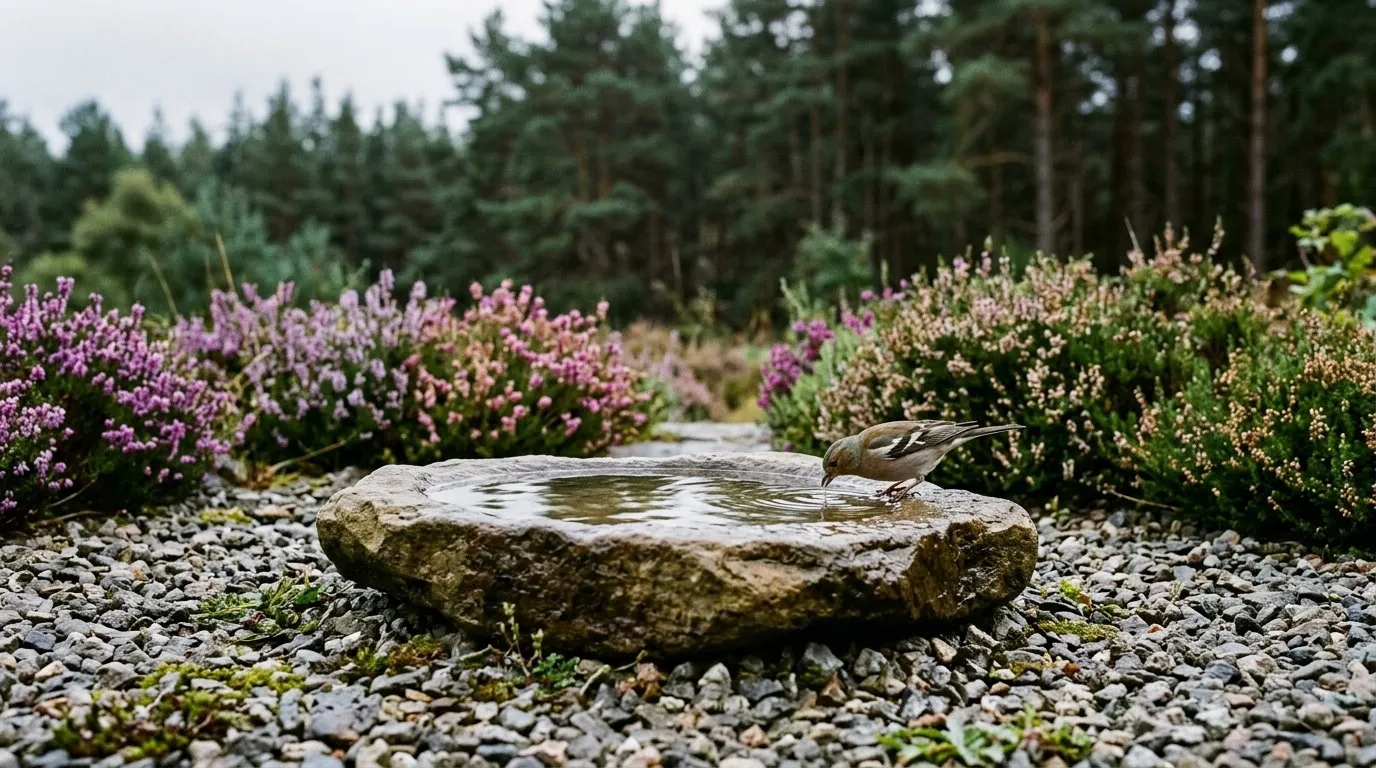 A ground-level bath sited well away from feeders, with low cover a couple of metres back. Keeping water clear of falling husks cuts the disease risk sharply.
Keeping the water ice-free in winter
Birds need water in winter as much as summer, both to drink and to keep their feathers in condition. Frozen baths leave them nowhere to go, so keeping the surface open matters through cold snaps.
Two simple methods work. Float a light plastic ball, a table-tennis ball is ideal, so the breeze keeps it moving and holds a small hole open in thin ice. Or pour on warm, not boiling, water each morning to melt the surface. Boiling water can crack a cold stone bath, so let a kettle cool for a few minutes first.
Never reach for chemical shortcuts. Salt, antifreeze and glycerine are all toxic to birds or strip the natural oils that keep feathers waterproof and warm. A bird that bathes in treated water can chill and die overnight. Keep the water completely plain. A cheap trick is to line the bowl with a loose plastic sheet at night, then lift out the ice sheet whole in the morning and refill.
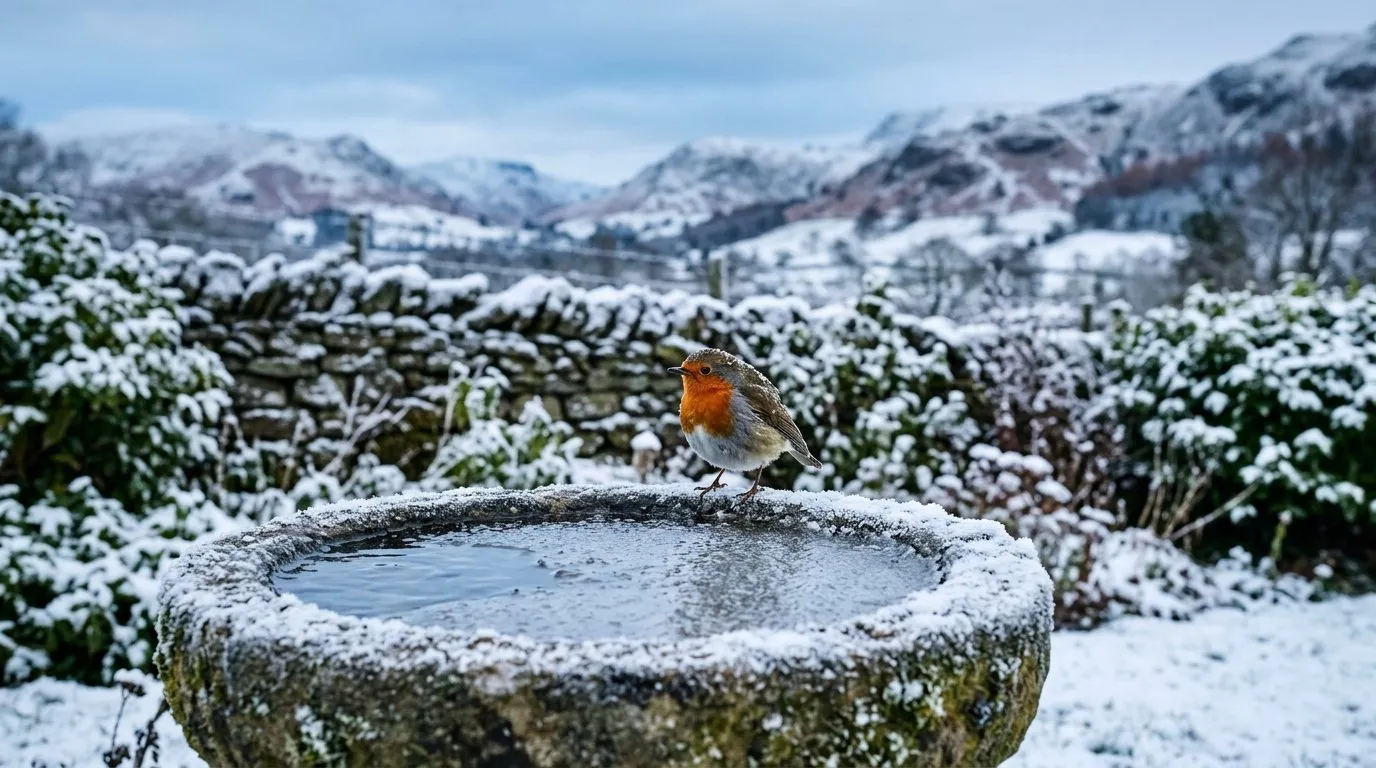 A robin at a part-thawed bath on a frosty morning. Birds need open water in winter as much as summer, so keep a hole clear in the ice.
Bird baths in a summer heatwave
In a UK heatwave, water becomes the thing birds need most, more than food. During drought, natural puddles and soft ground vanish, so a clean bird bath can be the only drinking and bathing water for streets around.
Top up daily, sometimes twice, because shallow water evaporates fast in full sun. A bath that holds 2.5cm at the rim can dry out in a single hot afternoon. Move a portable bath into shade if the water is running warm by midday. Warm, low water also greens up within days, so scrub more often through July and August.
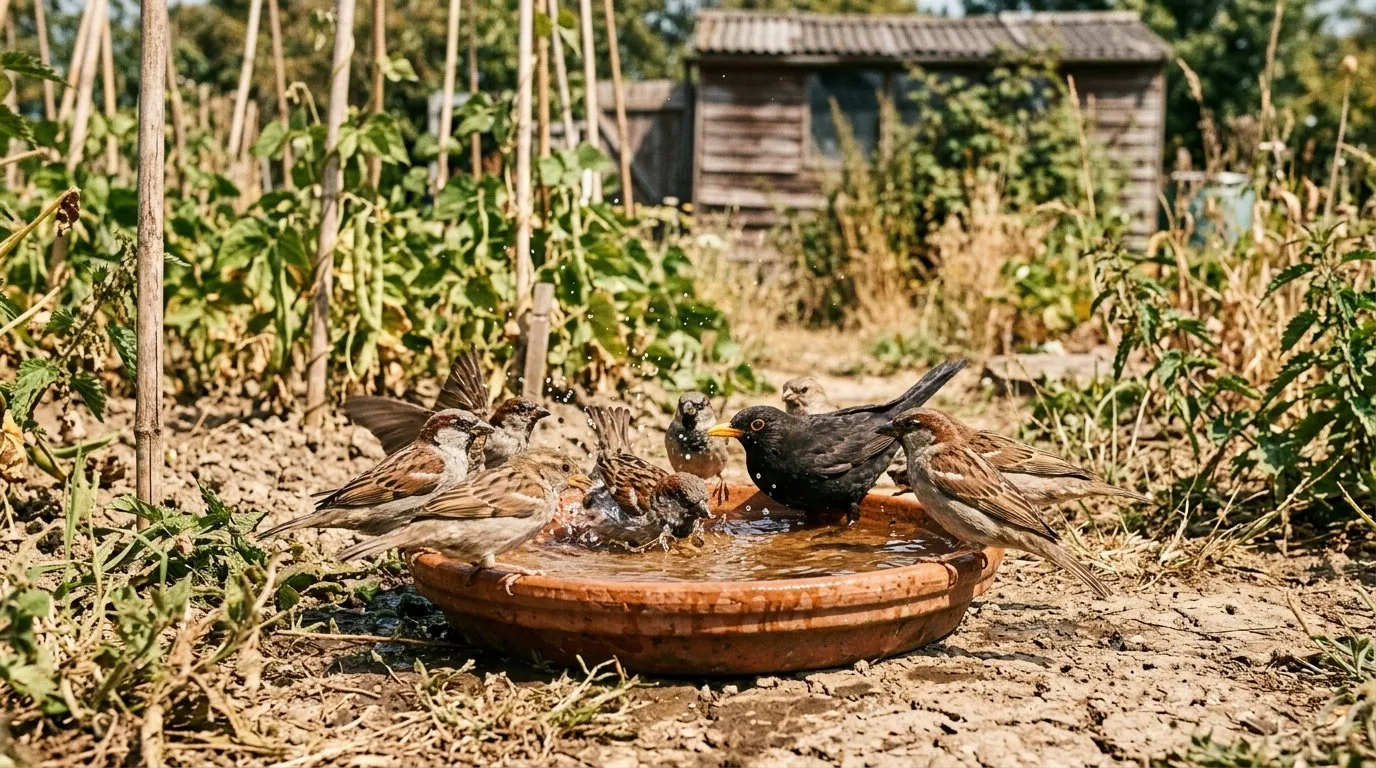 Birds crowding a shallow bath in a July heatwave. In drought, clean water is the single most valuable thing a garden can offer.
Bird bath types compared
Four common designs suit different gardens and budgets. Choose by your space, your predators and the birds you want to draw.
| Type | Cost | Cat safety | Draws birds | Best for |
|---|---|---|---|---|
| Pedestal (1.2-1.5m) | £25-£120 | High, raised with open view | High, all-round | Open lawns, high visibility, mixed species |
| Ground-level dish | £10-£40 | Lower, needs 2m clear radius | High for ground feeders | Blackbirds, thrushes, dunnocks, hedgehogs |
| Hanging bath | £12-£35 | Very high, out of reach | Moderate, low capacity | Balconies, small yards, tits and finches |
| Solar-fountain bath | £20-£90 | High | Very high, movement pulls birds in | Attracting the most birds, sunny gardens |
For most gardens a pedestal bath plus one ground-level dish covers every species. Add a solar fountain to either and visits climb. A hanging bath is the answer where there is no ground space at all, such as a city flat balcony.
Month-by-month bird bath care calendar
| Month | Task |
|---|---|
| January | Keep ice open with a floating ball or warm water each morning. Scrub weekly even in cold. |
| February | Check the bowl for frost cracks. Refresh water daily. Birds start pairing and bathing more. |
| March | Algae returns as light strengthens. Move to weekly scrubs. Breeding season begins. |
| April | Refill daily. Birds bathe hard to keep feathers in condition for nesting. Add pebbles for fledglings. |
| May | Watch for green film in sunny spots. Move the bath to part shade if needed. First fledglings appear. |
| June | Solar fountain season. Top up in warm spells. Keep the bath clear of any feeder drips. |
| July | Heatwave month: top up daily or twice. Scrub every few days. Provide a ground-level dish too. |
| August | Peak algae and peak disease risk. Scrub every 2 to 3 days. Watch for fluffed-up, sick finches. |
| September | Moulting birds bathe often. Keep water clean. Deep-clean before autumn leaves start to fall. |
| October | Clear fallen leaves daily, as they foul the water fast. Do a full scrub and disinfect. |
| November | First hard frosts. Start morning ice checks. Float a ball ready for winter. |
| December | Manage ice by hand. Add warm water at dawn. Keep drinking water available through cold snaps. |
Common mistakes to avoid with bird baths
- Water too deep or steep-sided. A deep bowl drowns fledglings and scares small birds off. It happens because most ornamental baths are designed to look good, not to be waded in. Keep depth to 10cm maximum and add pebbles.
- Siting it in full sun. Warm water greens within days and can run hot in summer. People place baths for the view, not the birds. Choose part shade to keep water cool and slow algae.
- Putting the bath under a feeder. Husks, droppings and saliva fall straight into the water. It looks tidy to group them, but it concentrates disease. Keep feeders and baths a few metres apart.
- Topping up without emptying. Adding fresh water to old lets algae and pathogens build. It feels quicker, but it never cleans the bath. Always empty, scrub and refill, not just top up.
- Chemical de-icers in winter. Salt, antifreeze or glycerine poison birds or wreck feather waterproofing. Gardeners reach for them to save effort in the cold. Use a floating ball or warm water instead.
Frequently asked questions
Where is the best place to put a bird bath?
Put it in an open spot 2 to 3 metres from cover. Birds want a clear view of approaching cats, plus a shrub close enough to dash to. Choose part shade to keep the water cool and slow algae. Keep it away from busy paths and out from directly under feeders.
How deep should a bird bath be?
No deeper than 10cm in the middle, 2.5cm at the edge. Shallow, sloping sides let small birds wade in and out safely. Deep, steep-sided baths drown fledglings and put off smaller species. Drop in a few pebbles to shorten the safe standing depth further.
How often should you clean a bird bath?
Rinse and refill every one to two days, scrub it weekly. In hot weather or after heavy use, scrub every few days instead. Empty the old water first, remove algae and droppings, then refill with fresh water. A quick daily rinse stops most disease building up.
What can I use to clean a bird bath?
Hot water and a bird-safe disinfectant like Ark-Klens, never bleach. Scrub with a stiff brush kept only for the bath, then rinse thoroughly and let it dry. Household detergents leave residues that harm birds. Bleach traces strip the natural oils from feathers.
How do I stop my bird bath freezing?
Float a small ball or add warm water each morning. A light plastic ball moves in the breeze and keeps a hole open in thin ice. Pour on warm, not boiling, water to melt a frozen surface. Never tip in boiling water onto stone, as it can crack.
Can I put antifreeze or salt in a bird bath?
No, both are toxic to birds and ruin feather waterproofing. Antifreeze, salt and glycerine all strip the oils birds rely on to stay warm and dry. A wet, chilled bird can die overnight. Keep the water plain and manage ice by hand instead.
Why do birds ignore my bird bath?
Usually it is too deep, too slippery, or too exposed to predators. Smooth glazed bowls give no grip, so add pebbles for footing. A bath with no cover within a few metres feels unsafe. Water sitting in full sun also goes warm and green fast.
Our team produces practical UK gardening guidance from source research, contributor records and established horticultural practice. Editorial standards are overseen by Matt W.