Key takeaways
- The harlequin ladybird (Harmonia axyridis) is invasive, arrived in the UK in 2004, and is now the commonest ladybird
- It is larger than most natives at 6-8mm, with brown legs and a variable colour pattern
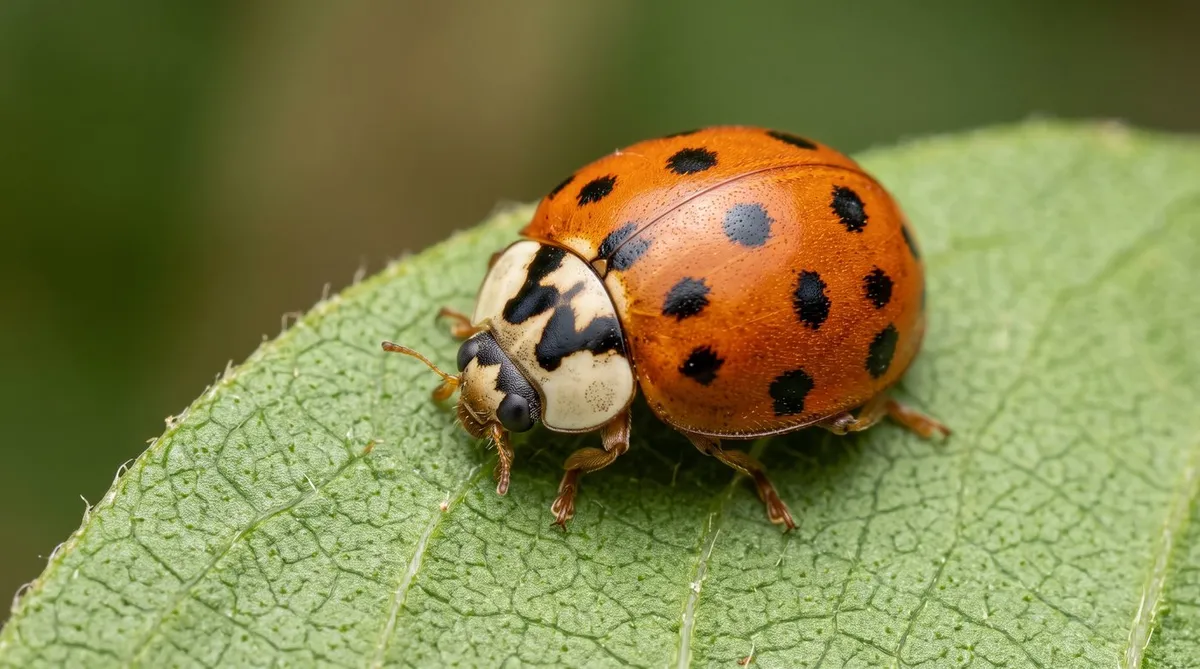
- The key ID is a white pronotum marked with a black M or W shape behind the head
- It threatens natives by eating their eggs and larvae and outcompeting them for aphids
- Native 7-spot ladybirds are smaller, red with seven black spots, and have black legs
- Control is not practical, but recording sightings for the UK Ladybird Survey helps track it
If you have noticed bigger, bolder ladybirds in your garden in recent years, with colours that do not match the tidy red-and-seven-spots of the ladybird in a child’s book, you have almost certainly met the harlequin ladybird. Harmonia axyridis is an invasive species that arrived in Britain in 2004 and, within about a decade, became our most common ladybird. It is a fine aphid eater, but it is also a genuine threat to our native ladybirds, which it outcompetes and even eats. Telling it apart from the natives is a useful garden skill, and it takes only a couple of features.
How to identify a harlequin ladybird
The harlequin is a challenge to identify precisely because it is so variable, but a few features cut through the confusion. Start with size and legs, which settle most cases.
The harlequin is large for a ladybird, 6-8mm, noticeably bigger than most natives. It has brown or reddish-brown legs, where our common natives like the 7-spot and 2-spot have black legs. That single leg-colour check, combined with size, identifies the great majority of harlequins in the field without a hand lens.
The clinching feature is the pronotum, the shield just behind the head. On a harlequin it is cream or white with a black marking that often forms an M or W shape, or a solid black trapezoid. The wing cases themselves are hugely variable:
- Orange to red with up to 21 black spots, the commonest form.
- Black with two or four red or orange spots, a dark or melanic form that confuses many people.
- Almost every combination in between, which is exactly why the neat spot-counting that works for natives fails here.
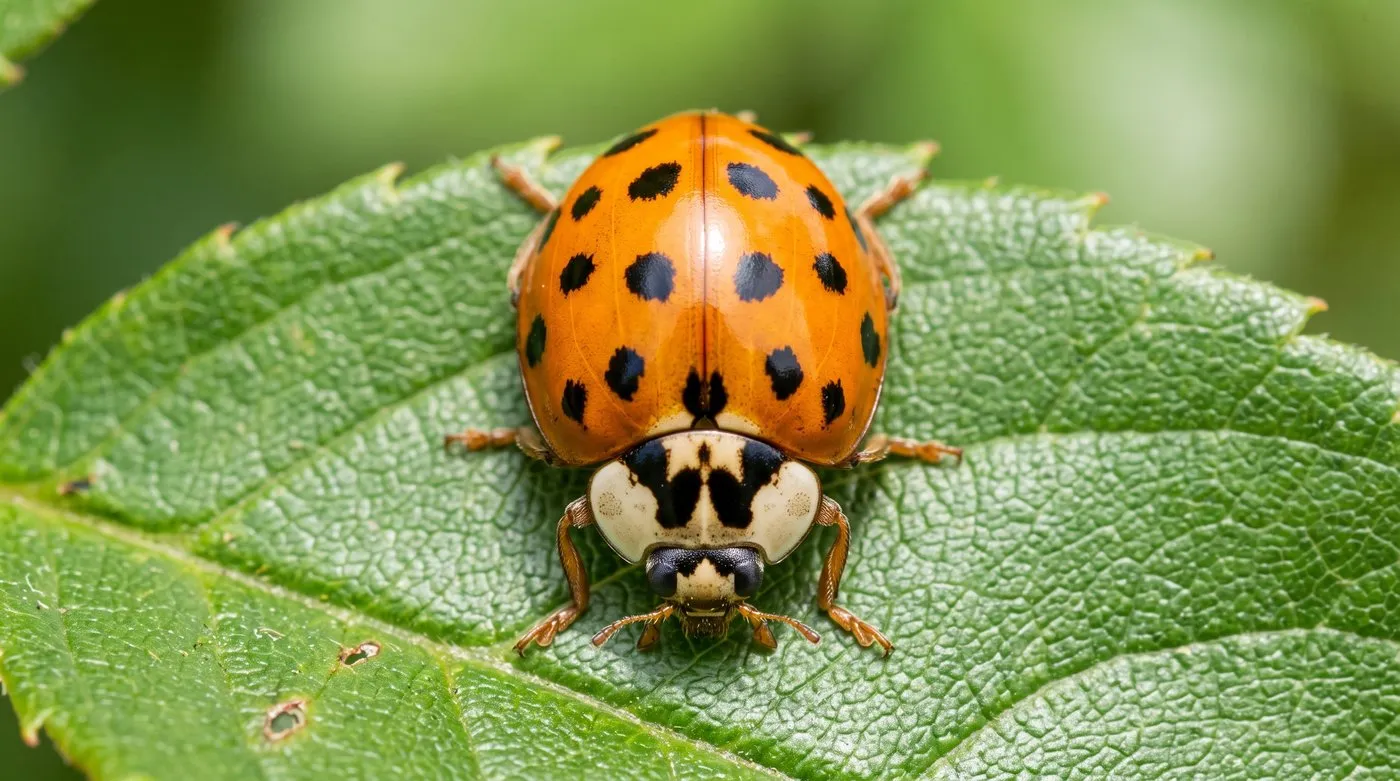 The commonest harlequin form: large, orange with many spots, brown legs, and the white pronotum with its black M marking behind the head.
Harlequin or native? The key differences
The confusion is almost always between the harlequin and our familiar natives, so here is the direct comparison. The 7-spot ladybird is the classic native: red with exactly seven black spots, about 5-8mm, with black legs and a black pronotum with two white front corners. It counts its spots reliably, which the harlequin does not.
| Feature | Harlequin | 7-spot (native) | 2-spot (native) |
|---|---|---|---|
| Size | 6-8mm, large | 5-8mm | 4-5mm, small |
| Legs | Brown | Black | Black |
| Pattern | Highly variable, 0-21 spots or black with red | Red, exactly 7 black spots | Red with 2 black spots, or black with red |
| Pronotum | White with black M or W | Black, white front corners | Black with white sides |
| Status | Invasive | Native, common | Native, declined |
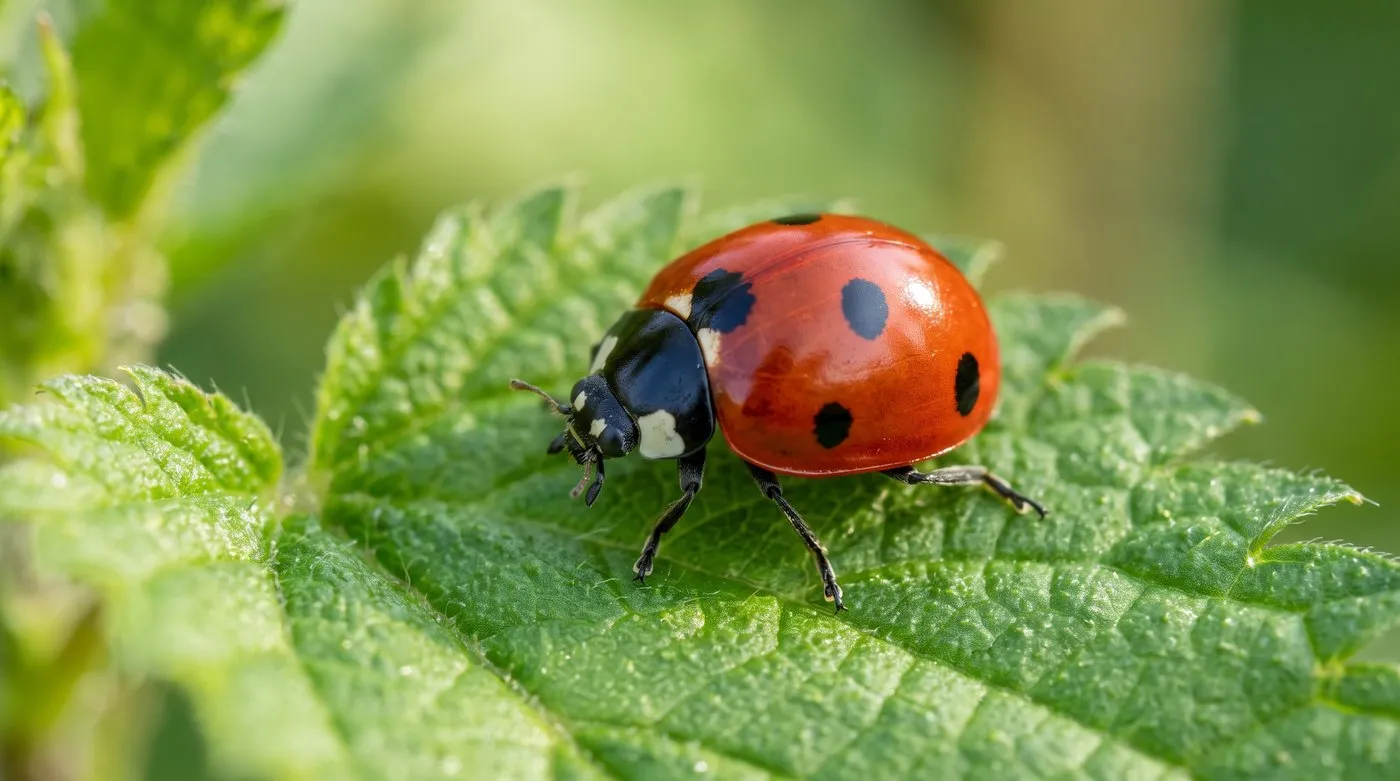 The native 7-spot: red with exactly seven spots, black legs, and a smaller, neater look than the variable harlequin. Spot-counting works here.
Why the harlequin’s spread matters
The harlequin is not just another ladybird. Its arrival has been linked to real declines in native ladybirds, and understanding why explains the concern.
The harlequin is an aggressive generalist. It eats aphids in huge numbers, which sounds helpful, but it competes directly with native ladybirds for that same food and usually wins. Worse, when aphids run short, the harlequin turns to eating the eggs, larvae and pupae of other ladybirds, including natives. This direct predation of native young, on top of the competition for food, is a double blow.
This is why the harlequin sits in an awkward category. As a lone aphid predator it does a job, but as an invasive species it is reshaping our native ladybird fauna, and not for the better. The creating a wildlife garden approach of supporting a diversity of natives matters more than ever against that background.
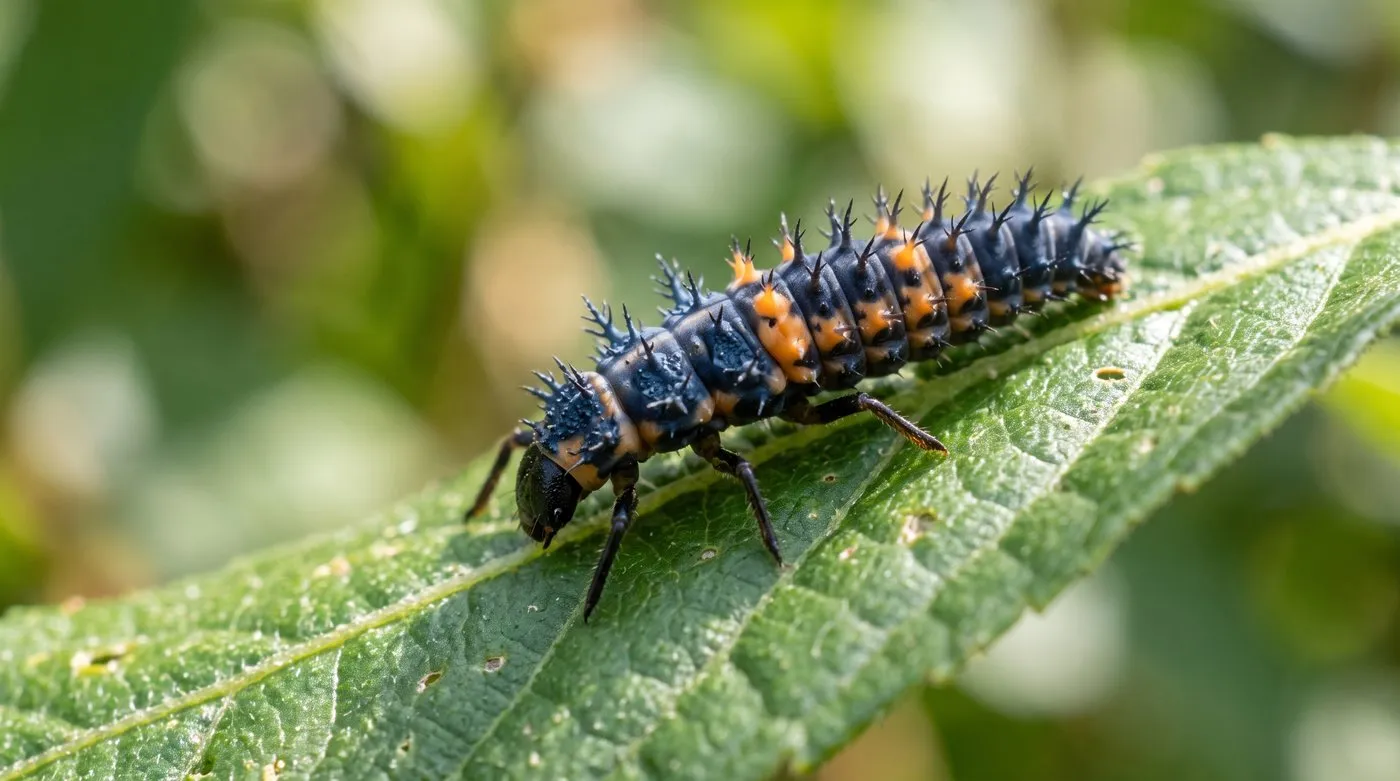 The harlequin larva: spiky, blue-black with orange markings, and a voracious predator not only of aphids but of native ladybird eggs and larvae.
The harlequin as a household visitor
There is a second reason people notice harlequins: they come indoors in autumn. Unlike most natives, harlequins gather in large aggregations to overwinter, and sheltered buildings suit them.
From October, you may find clusters of them on window frames, in the corners of rooms, in lofts and porches, sometimes dozens together. They are drawn to pale, warm, sheltered surfaces. They are harmless: they do not breed indoors, do not eat furnishings, and carry no disease that affects people. Two minor nuisances are worth knowing. Disturbed harlequins can reflex-bleed, leaving a small yellow stain, so squashing them on a pale surface marks it. And hungry autumn individuals occasionally give a harmless nip to bare skin, which startles more than it hurts.
The kind response is simple. Gently sweep or vacuum them up and release them outside, or leave them to overwinter undisturbed if they are out of the way. There is no need for insecticide indoors, which is both unnecessary and undesirable.
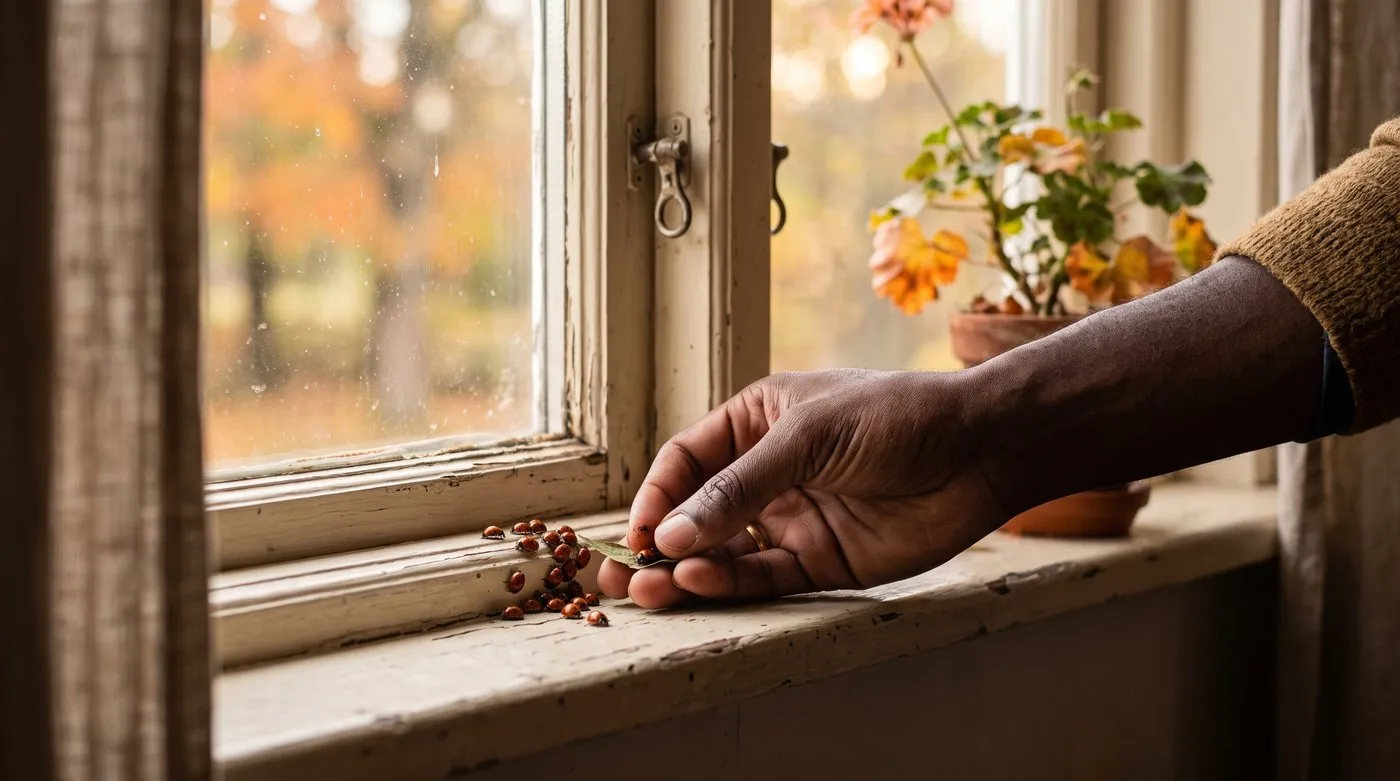 Harlequins cluster indoors to overwinter from October. Sweep or gently collect them and release them outside, rather than reaching for a spray.
Gardener’s tip: If harlequins cluster on a sunny window every autumn, a fine insect mesh over the opening window in September keeps them out without harming them. Once they are in and settled, a glass and a piece of card returns them outside as easily as it does a spider.
What to do about harlequin ladybirds
The honest position on control is that there is very little you can or should do, and one thing you genuinely can.
Do not try to control them by killing. Harlequins are established across the whole of Britain in enormous numbers. Removing the individuals in one garden makes no measurable difference to the population, and the effort is wasted. Worse, anyone squashing ladybirds risks killing natives by mistake, which is exactly the wrong outcome. Never destroy a ladybird you have not identified.
Do not use insecticide. Ladybirds of all kinds are beneficial aphid predators, and a spray that kills harlequins kills natives, lacewings and hoverfly larvae too. It would do far more harm than the harlequin does. Our guide to getting rid of aphids covers the aphid problem itself without resorting to broad sprays.
Do record what you see. This is the one valuable action. The UK Ladybird Survey collects records of all ladybirds, native and harlequin, from across the country. Those records track the harlequin’s spread and, crucially, monitor how the natives are faring against it. A photograph, a location and a date, submitted to the survey, turns a garden sighting into useful science.
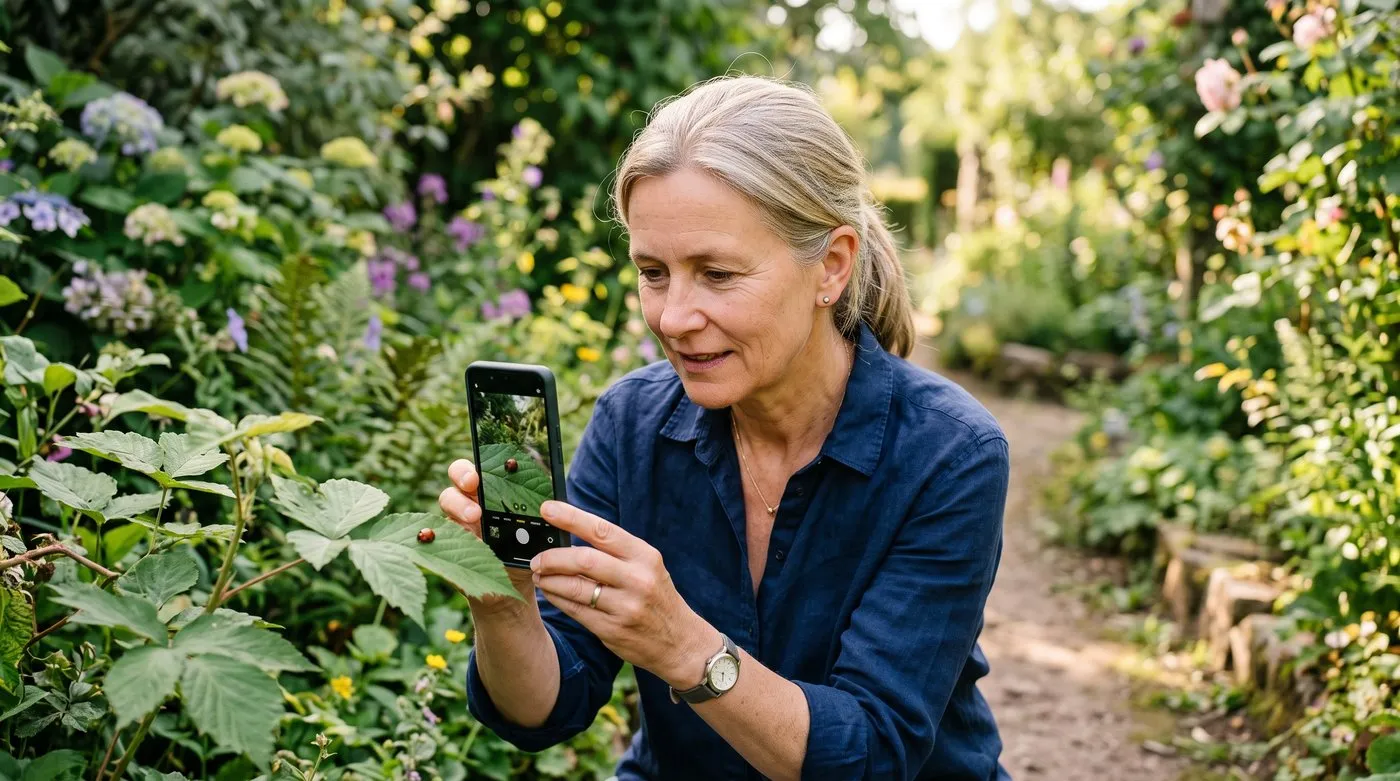 Recording ladybirds, native and harlequin, for the UK Ladybird Survey is the single most useful thing a gardener can do about the invasion.
Common mistakes with ladybird identification
- Counting spots on a harlequin. The harlequin’s pattern is hugely variable, so spot-counting fails. Check the legs and size instead, and look for the M on the pronotum.
- Assuming any big orange ladybird is native. The orange, many-spotted form is the commonest harlequin. Size and brown legs give it away.
- Confusing a black harlequin with a 2-spot. The size difference settles it: a 2-spot is a dainty 4-5mm, a black harlequin a chunky 7mm.
- Killing ladybirds to control harlequins. Pointless against an established species and likely to kill natives by mistake. Record, do not destroy.
- Fearing harlequins indoors. They are harmless overwintering visitors. Sweep them out gently rather than reaching for a spray.
The short version on harlequin ladybirds
The harlequin ladybird is the big, variable, brown-legged ladybird that has taken over British gardens since 2004. Tell it from our natives by its size, its brown legs, and the black M on its white pronotum, and do not bother counting its ever-changing spots. It eats aphids well, but it also eats native ladybird young and outcompetes them, which is why its runaway success is a concern rather than a bonus.
You cannot control it, and you should never kill a ladybird you have not identified, because the natives it threatens need every survivor. What you can do is learn the few ID features, enjoy watching them, sweep the autumn indoor visitors gently outside, and record every sighting for the UK Ladybird Survey. For more on the native ladybirds worth protecting, see the wildlife section, and the UK Ladybird Survey is the place to identify and submit your records.
Frequently asked questions
How do I identify a harlequin ladybird?
Look for a large 6-8mm ladybird with brown legs and a white pronotum marked with a black M shape. Harlequins are bigger than most natives and hugely variable in colour, from orange with up to 21 spots to black with red spots. The brown legs and the M-marked pronotum behind the head are the most reliable features. Native ladybirds are usually smaller with black legs.
Are harlequin ladybirds bad for the garden?
They are good aphid eaters but bad for native ladybirds. Harlequins eat aphids voraciously, which helps in the garden, but they also eat the eggs and larvae of native ladybirds and outcompete them for food. They are blamed for declines in several native species. So they are a mixed character: useful against aphids, but a genuine threat to our native ladybird diversity.
What is the difference between a harlequin and a 7-spot ladybird?
Size, legs and pattern. The 7-spot is red with exactly seven black spots and black legs, and is a native. The harlequin is larger, has brown legs, a white pronotum with a black M mark, and a variable pattern that is rarely a neat seven spots. If it has brown legs and is over 6mm, it is almost certainly a harlequin.
Should I kill harlequin ladybirds?
There is no practical way to control them, and killing individuals achieves little. Harlequins are firmly established across Britain, so removing the ones in your garden makes no difference to the population. Never kill native ladybirds by mistake. The most useful action is to record sightings for the UK Ladybird Survey rather than to try to control them.
Why do ladybirds gather in my house in autumn?
That is usually harlequins looking for a place to overwinter. They aggregate in large numbers in sheltered spots, including window frames, lofts and corners of rooms, from October. They are harmless, though they can leave a yellow stain if squashed. Gently sweep or vacuum them and release them outside, or let them see out the winter undisturbed.
Do harlequin ladybirds bite?
They can give a harmless nip but are not dangerous. In autumn, hungry aggregating harlequins occasionally nibble at exposed skin, which feels like a tiny pinch and does no harm. They are not venomous and carry no disease that affects people. There is no need to fear them, and they do not infest homes in the way true pests do.
Which native ladybirds are most at risk?
The 2-spot ladybird has declined most since the harlequin arrived. Studies link the harlequin’s spread to falls in the 2-spot and several other natives, through both competition for aphids and direct predation of their young. Recording all ladybirds, native and harlequin, helps scientists track which species are most affected over time.
Our team produces practical UK gardening guidance from source research, contributor records and established horticultural practice. Editorial standards are overseen by Matt W.