Key takeaways
- Around 95% of garden insects are beneficial or harmless, so spraying broadly kills more friends than foes
- One ladybird eats up to 5,000 aphids in its lifetime, and its larva eats roughly 400 before pupating
- Ladybird larvae look alien and are killed by mistake more than any other beneficial in UK gardens
- A lacewing larva clears about 200 aphids in two weeks, and a ground beetle takes 40-plus slug eggs a week
- Centipedes are predators you want, millipedes mostly eat decay, and only a few of each cause real damage
- Tolerate a low aphid level for two to three weeks and predators usually arrive and crash the colony for free
Good bugs and bad bugs live side by side in every UK garden, and telling beneficial insects from garden pests is the single most useful skill a gardener can learn. Most insects you meet are not pests at all. Around 95% are predators, pollinators, decomposers or simply passing through, and only a small group actually damages plants. Reach for a spray at the first six-legged thing on a leaf and you are far more likely to kill a friend than a foe.
This guide sorts the common species into friend, foe and the awkward middle ground. It shows you the beneficials people kill by mistake, like the alien-looking ladybird larva. It explains how predators and prey balance each other, why a few aphids are bait rather than a crisis, and the mistakes that turn a healthy garden into a chemical treadmill.
Why most garden insects are on your side
Around 95% of the insects in a UK garden are beneficial or harmless. A single mature garden supports hundreds of species, and only a handful feed on living plant tissue in numbers that matter. The rest hunt other insects, pollinate flowers, break down dead material or eat decaying matter in the soil. Buglife, the UK invertebrate charity, estimates Britain has over 27,000 insect species, and the great majority play a useful or neutral role.
This ratio is the reason broad spraying backfires. A contact insecticide does not pick targets. It kills the ladybirds, lacewings, hoverfly larvae and ground beetles that were already eating your aphids, along with the aphids themselves. The pests recover faster than the predators, because pests breed faster, so the colony rebounds with nothing left to check it. You end up needing to spray again, then again.
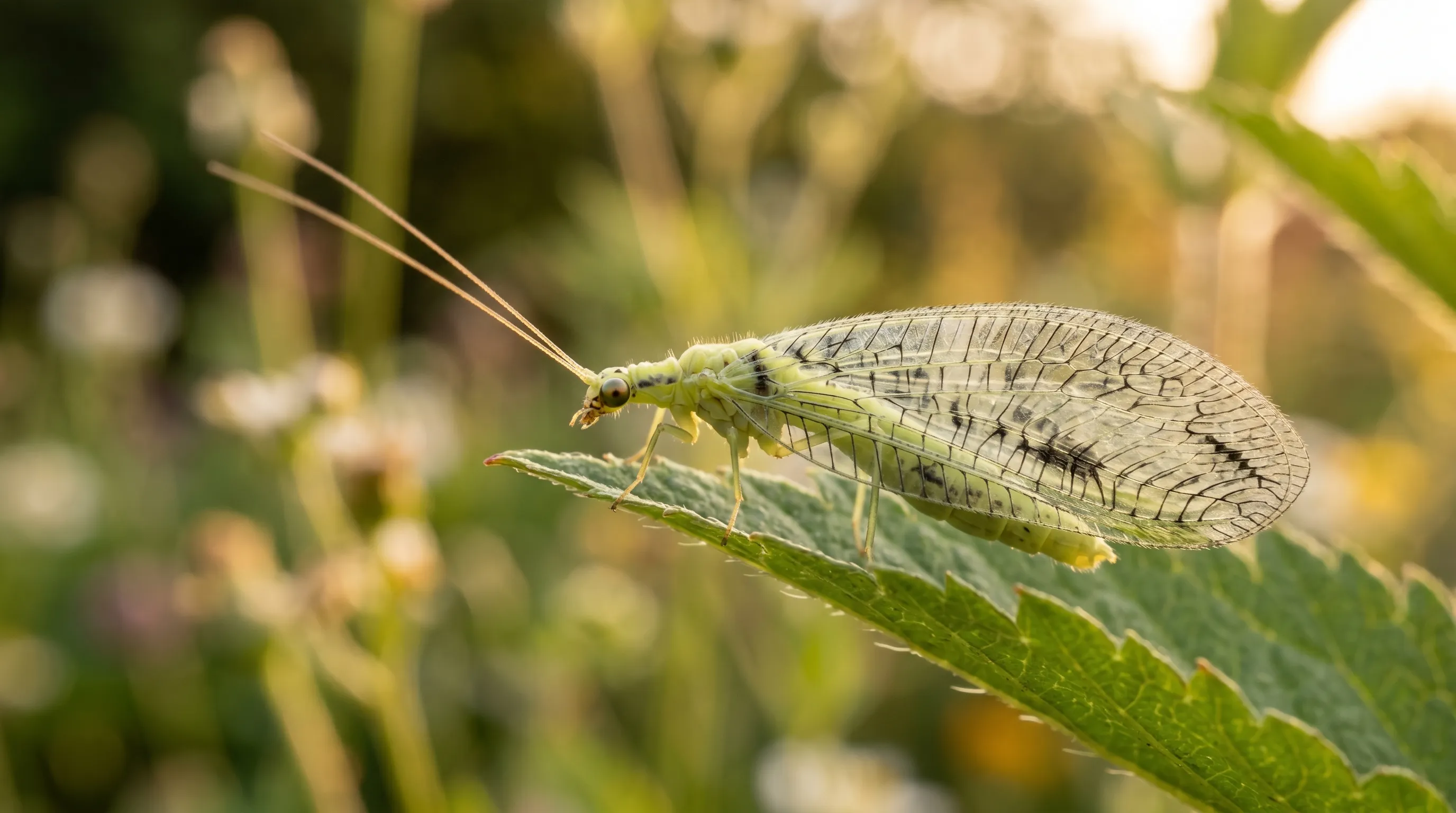 An adult green lacewing. Its larvae are voracious aphid predators, clearing around 200 aphids each in a fortnight.
The garden insect identification table
This table sorts the most common UK garden insects into friend, foe or mixed. Use it to check what you are looking at before you act. Identification is the whole game: get it right and you stop killing the insects doing your pest control for free.
| Insect | Friend or foe | What it does | How to identify | What it eats or damages |
|---|---|---|---|---|
| Ladybird (7-spot) | Friend | Top aphid predator, adult and larva | 5-8mm, red domed shell, seven black spots | Eats aphids, scale, mealybug |
| Lacewing | Friend | Larvae are major aphid hunters | Green or brown, lacy wings, 15mm | Larvae eat aphids, thrips, mites |
| Hoverfly | Friend | Pollinator adult, predatory larva | Black-yellow wasp mimic, hovers, 2 wings | Larvae eat 200-plus aphids each |
| Ground beetle | Friend | Night hunter of soil pests | 10-25mm, black, fast, shiny | Eats slugs, slug eggs, larvae, roots of weeds |
| Parasitic wasp | Friend | Lays eggs inside pests | Tiny, 1-5mm, often unseen | Parasitises aphids, caterpillars |
| Honey bee / solitary bee | Friend | Pollination | Furry, on flowers, varied | Nectar and pollen, no plant damage |
| Garden spider | Friend | Catches flying pests | Web-building, cross marking | Eats flies, aphids, moths |
| Earthworm | Friend | Aerates and enriches soil | Segmented, pink-brown, in soil | Eats decaying matter, builds structure |
| Centipede | Friend | Soil predator | Fast, flat, 1 leg pair per segment | Eats slugs, larvae, insects |
| Wasp (social) | Mixed | Predator in spring, nuisance in autumn | Black-yellow, narrow waist | Hunts caterpillars, then seeks sugar |
| Millipede | Mixed | Decomposer, occasional pest | Slow, round, 2 leg pairs per segment | Eats decay, sometimes seedlings, soft fruit |
| Ant | Mixed | Aerates soil, but farms aphids | 2-6mm, in trails and nests | Protects aphids for honeydew |
| Aphid | Foe | Sap sucker, spreads virus | 1-3mm, green, black or grey, clustered | Sucks sap, distorts shoots, spreads disease |
| Lily beetle | Foe | Strips lily foliage | 8mm, bright scarlet, on lilies | Eats lily and fritillary leaves |
| Vine weevil | Foe | Adult notches leaves, grub eats roots | 9mm black adult, C-shaped white grub | Grubs kill potted plants at the roots |
| Slug and snail | Foe | Shreds seedlings and leaves | Soft-bodied, slime trails | Eats seedlings, hostas, salad crops |
| Cabbage white caterpillar | Foe | Defoliates brassicas | Green or yellow-black, on cabbages | Strips brassica leaves to ribs |
| Box tree moth | Foe | Caterpillar destroys box hedging | Green caterpillar, black head, webbing | Defoliates and kills box plants |
| Capsid bug | Foe | Sap feeder, distorts growth | 6mm, green or brown, fast-moving | Tattered, holed young leaves |
| Scale insect | Foe | Sap sucker under a shell | Brown limpet bumps on stems | Sucks sap, drops sticky honeydew |
| Mealybug | Foe | Sap sucker in white fluff | White woolly blobs in leaf joints | Sucks sap, weakens houseplants |
| Woolly aphid | Foe | Sap sucker in white wax | White fluffy patches on apple bark | Sucks sap, causes bark lumps |
Beneficial insects you keep killing by mistake
The biggest reason gardens stay stuck on the spray treadmill is that the larvae of beneficial insects look nothing like the adults. People recognise a red ladybird but squash the predator stage that does most of the eating. Learning these four lookalikes stops you destroying your own pest control.
Ladybird larvae are the most killed beneficial in UK gardens. The larva is a 6 to 12mm grey or blue-black grub, segmented and spiky, with orange or yellow spots. It looks like a tiny alligator and people assume it is a pest. It is not. Each larva eats around 400 aphids before it pupates. If you see one on an aphid-covered shoot, it is clearing the colony for you.
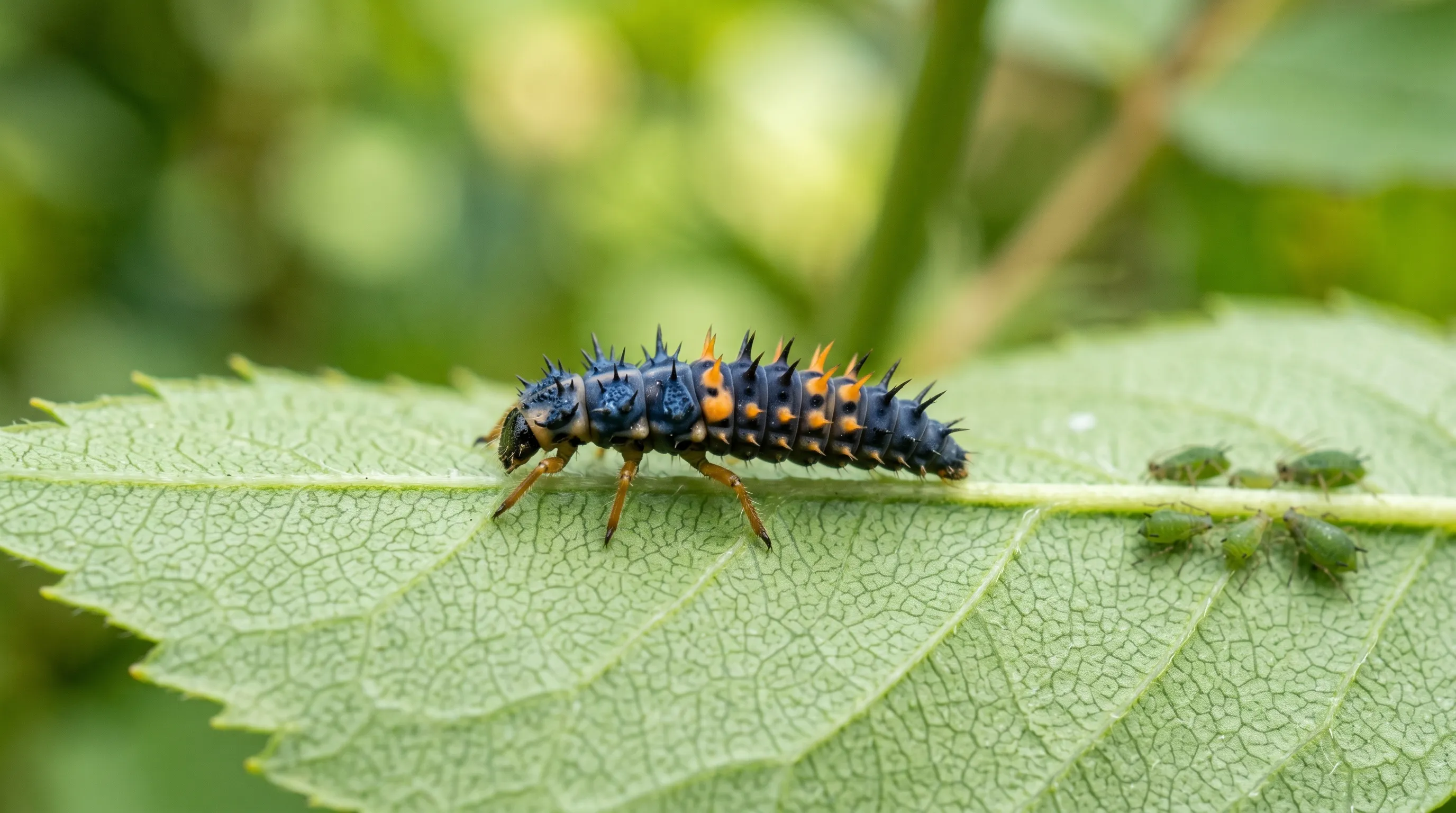 The ladybird larva: spiky, alligator-like and killed by mistake more than any other beneficial. Each one eats around 400 aphids.
Lacewing larvae are tiny brown larvae with curved jaws, often carrying a heap of debris on their backs as camouflage. They patrol leaves for aphids, thrips and mites. The lacewing pest control guide explains why these larvae outperform the adults for aphid clearance.
Centipedes get crushed because people confuse them with millipedes. The centipede is the predator you want, hunting slugs and larvae in the soil. The next section sorts the two apart.
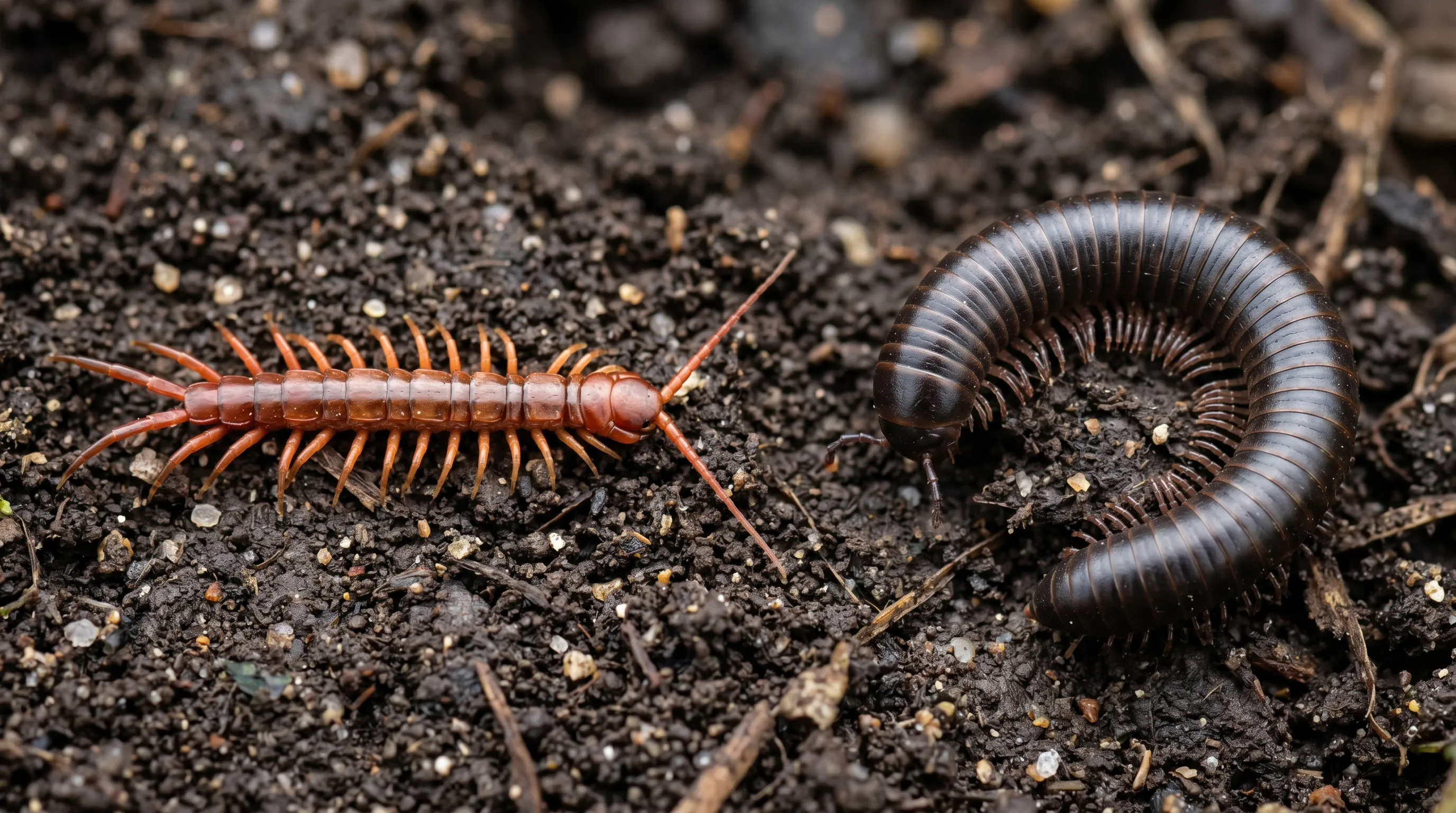 Diagnostic shot: the centipede (left) is flat and fast with one leg pair per segment, the millipede (right) is round and slow with two.
Centipede versus millipede in three seconds
Centipedes are predators, most millipedes are harmless decomposers. Telling them apart takes three seconds once you know the rule. Centipedes have one pair of legs per body segment, are flattened, move fast, and are usually chestnut to orange-brown. They hunt slugs, insect larvae and other soil pests, so they earn their place in any border.
How predators and prey keep each other in check
A garden runs on a predator-to-prey lag, not on zero pests. Predators need prey to be present before they arrive and breed. This is the part most gardeners miss. If you remove every aphid the moment you see one, the ladybirds, hoverflies and lacewings have nothing to lay their eggs near, so they go elsewhere and never establish.
The numbers explain why tolerance pays. One seven-spot ladybird eats up to 5,000 aphids across its life, and each of its larvae takes around 400 before pupating. A single hoverfly lays eggs that hatch into larvae eating 200-plus aphids apiece. A lacewing larva clears about 200 in a fortnight. A ground beetle takes 40-plus slug eggs a week from the soil. These appetites only kick in once there is prey to draw them.
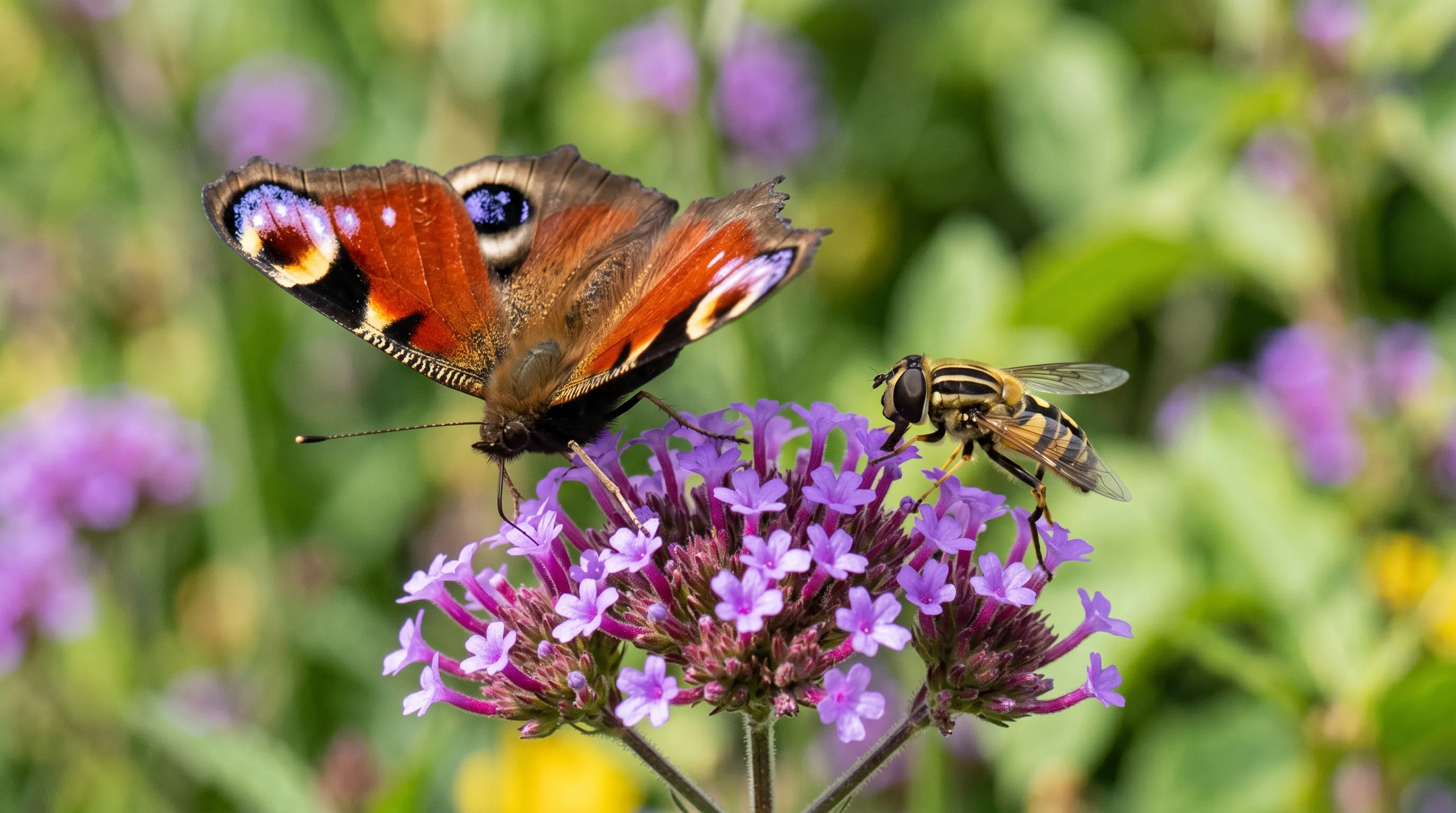 Proof of life: a peacock butterfly and a hoverfly share a verbena flower. Adult hoverflies pollinate while their larvae hunt aphids nearby.
The garden pests that actually cause damage
A short list of insects does real harm, and these are the ones worth identifying precisely. Aphids top the list. They suck sap, distort new growth and spread plant viruses, clustering on shoot tips in green, black or grey colonies. The black bean aphid is the classic UK example, swarming broad bean tips in early summer.
Slugs and snails shred seedlings and soft foliage overnight, leaving slime trails. Vine weevil is the quiet killer of pots: the 9mm black adult notches leaf edges, but its C-shaped white grubs eat roots underground and can kill a potted plant before you notice. Lily beetle is the bright scarlet 8mm beetle that strips lily and fritillary leaves, and its larvae hide under their own droppings. The lily beetle control guide covers how to catch them early.
Other reliable foes include the cabbage white caterpillar, which reduces brassica leaves to ribs, and the box tree moth, whose caterpillars spin webbing and defoliate box hedging fast. Capsid bugs leave tattered, holed young leaves. Scale insects, mealybugs and woolly aphids are all sap suckers hiding under shells, white fluff or waxy wool, dropping sticky honeydew as they feed. These genuine pests justify targeted action, not a blanket spray. Some alarming finds are harmless, too; the trunk-snouted elephant hawk moth caterpillar looks like a small snake but deserves to be left alone.
The neutral and mixed insects that confuse everyone
Some garden insects sit awkwardly between friend and foe, and that is fine. Social wasps are the clearest example. Through spring and early summer they are excellent pest predators, hunting caterpillars, aphids and flies to feed their grubs. A single nest removes thousands of pest insects across a season. They only become a nuisance in late summer when the queen stops laying, the workers run out of grubs to feed, and they switch to seeking sugar from fruit and drinks. Tolerate a nest that is not by a doorway.
Millipedes are mostly decomposers that recycle dead leaves into the soil, but a few species nibble seedlings and fruit on the ground, so they earn a mixed rating. Ants aerate soil and prey on some pests, but they also farm aphids, protecting them from predators in exchange for honeydew. A trail of ants up a stem often points to an aphid colony they are guarding. Removing the aphids removes the ants. None of these three needs killing. They need understanding and, at most, a light touch in the few situations where they cause trouble.
Common mistakes that wreck the garden’s balance
A handful of predictable errors keep a garden on the chemical treadmill. Avoid these and the natural balance does most of your pest control.
Spraying at the first aphid. This is the number one mistake. A broad spray kills the ladybird larvae, hoverfly larvae and lacewings already eating the aphids. The pests rebound faster than the predators, so you have to spray again. Tolerate a low level and let the predators arrive.
Squashing the larvae. Ladybird, hoverfly and lacewing larvae look like pests and get killed on sight. These are the hardest-working predators in the garden. Learn the four lookalikes above before you remove anything that is not an adult you recognise.
Killing every centipede. Centipedes get crushed alongside millipedes because they look similar. The centipede is a predator hunting slugs and larvae. Count the legs per segment before you act.
Treating all insects as the enemy. The mindset that any bug is a bad bug is the root error. Most are neutral or helpful. Identify first, act second, and only against the short list of genuine pests.
Gardener’s tip: Before you treat anything, spend two minutes watching what the insect actually does. Predators move fast and hunt. Pollinators visit flowers. Pests sit still and feed in groups on stems or leaves. Behaviour tells you friend from foe faster than any field guide.
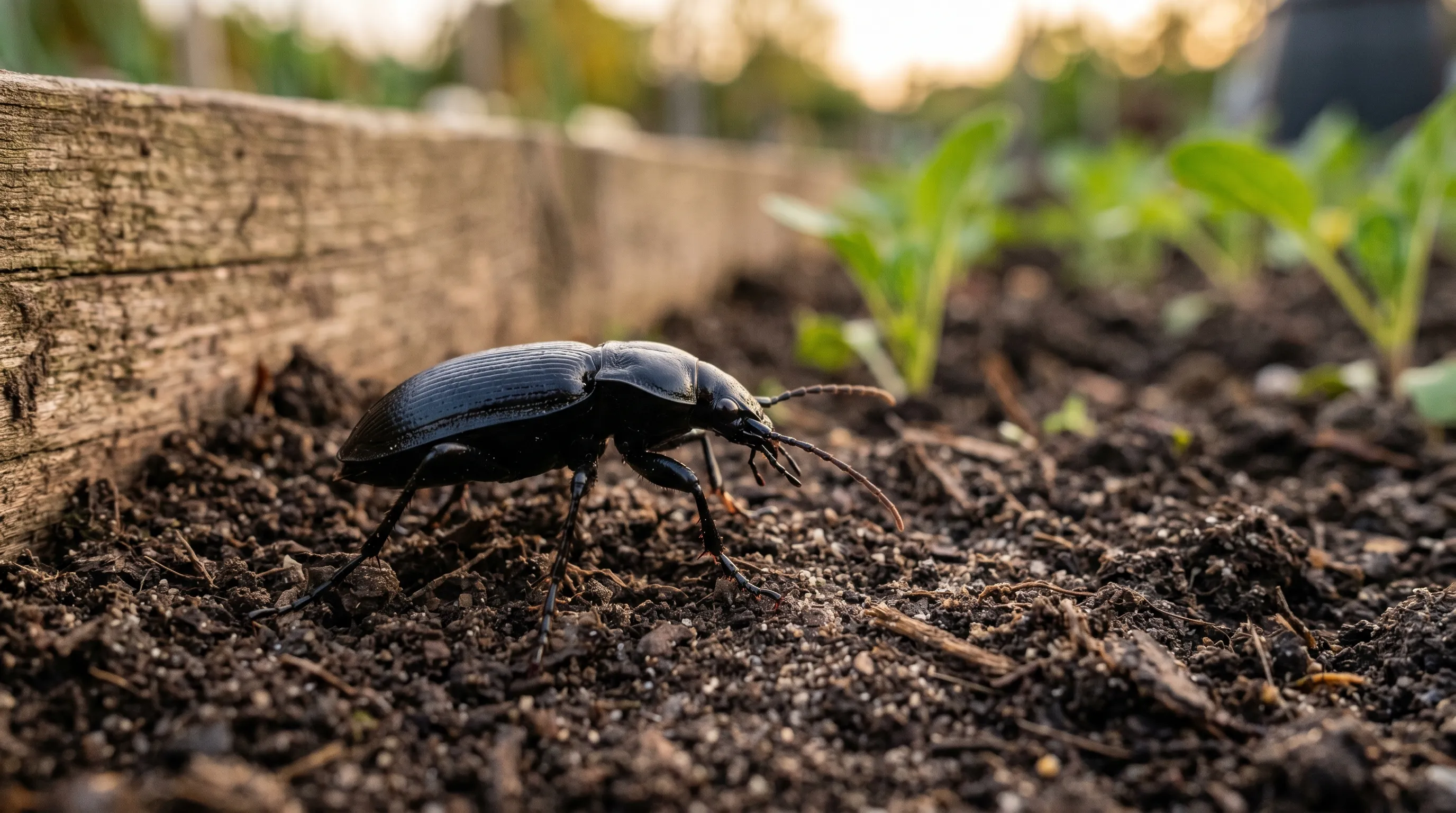 A ground beetle on the hunt at dusk. One beetle takes more than 40 slug eggs a week from the top layer of soil.
A seasonal guide to garden insect activity
Knowing when each group is active helps you read the garden and time any action. The table below shows the typical UK pattern across the year.
| Month | What is active | What to do |
|---|---|---|
| March to April | First aphids, ground beetles waking | Leave aphids, do not spray, let predators find them |
| May to June | Lily beetle, aphid peak, lacewings | Hand-pick lily beetles, tolerate aphids for predators |
| June to July | Ladybird and hoverfly larvae peak | Do nothing, the predators are working hard |
| July to August | Cabbage white, box tree moth, wasps useful | Net brassicas, check box, leave wasp nests alone |
| August to September | Vine weevil grubs, wasps turn to sugar | Apply nematodes to pots, cover ripening fruit |
| October to November | Predators seeking shelter | Leave leaf litter and hollow stems for overwintering |
| December to February | Most insects dormant | Build log piles, plan a wildlife border for spring |
This rhythm explains why timing beats spraying. Aphids peak before their predators, so the gap in May and June feels alarming. Hold steady. By late June the ladybird and hoverfly larvae are at full strength and the colonies collapse.
Frequently asked questions
How do I tell a good bug from a bad bug in the garden?
Good bugs hunt or pollinate, bad bugs feed on your plants. Watch what the insect is doing. Predators like ladybirds and ground beetles move fast and chase prey. Pollinators visit flowers for nectar. Pests sit still on stems, leaves or fruit and feed in groups, like aphids clustered on a shoot tip. The identification table above sorts the common UK species into friend, foe or mixed so you can check before acting.
What does a ladybird larva look like?
A ladybird larva looks like a tiny black alligator with orange spots. It is 6 to 12mm long, segmented, spiky and dark grey or blue-black with orange or yellow markings. It looks nothing like the round red adult, which is why people squash it by mistake. It is one of the most useful predators in the garden. Each larva eats around 400 aphids before it pupates, so always leave it alone.
Are wasps good or bad for the garden?
Wasps are mostly good for the garden as predators and pollinators. Through spring and summer they hunt caterpillars, aphids and flies to feed their grubs, which makes them genuine pest control. They only become a nuisance in late summer when the nest stops breeding and adults seek sugar from fruit. They also pollinate flowers while visiting. Tolerate a nest that is not near a doorway or a play area.
Should I kill aphids or leave them for ladybirds?
Leave a small aphid colony for two to three weeks before acting. Predators need prey to arrive. If you wipe out every aphid at first sight, ladybirds, hoverflies and lacewings have nothing to feed on and never settle in. A low aphid level is the bait that builds a working predator population. Only step in if a colony explodes on a young or fragile plant before predators have arrived.
Are centipedes or millipedes the pest?
Millipedes are the more likely pest, centipedes are predators on your side. Centipedes are fast, flat, with one pair of legs per segment, and they hunt slugs, larvae and insects. Millipedes are slow, round-bodied, with two pairs of legs per segment, and mostly eat dead plant matter, though some nibble seedlings and soft fruit. Count the legs per segment to tell them apart, and always protect the centipede.
Our team produces practical UK gardening guidance from source research, contributor records and established horticultural practice. Editorial standards are overseen by Matt W.