Key takeaways
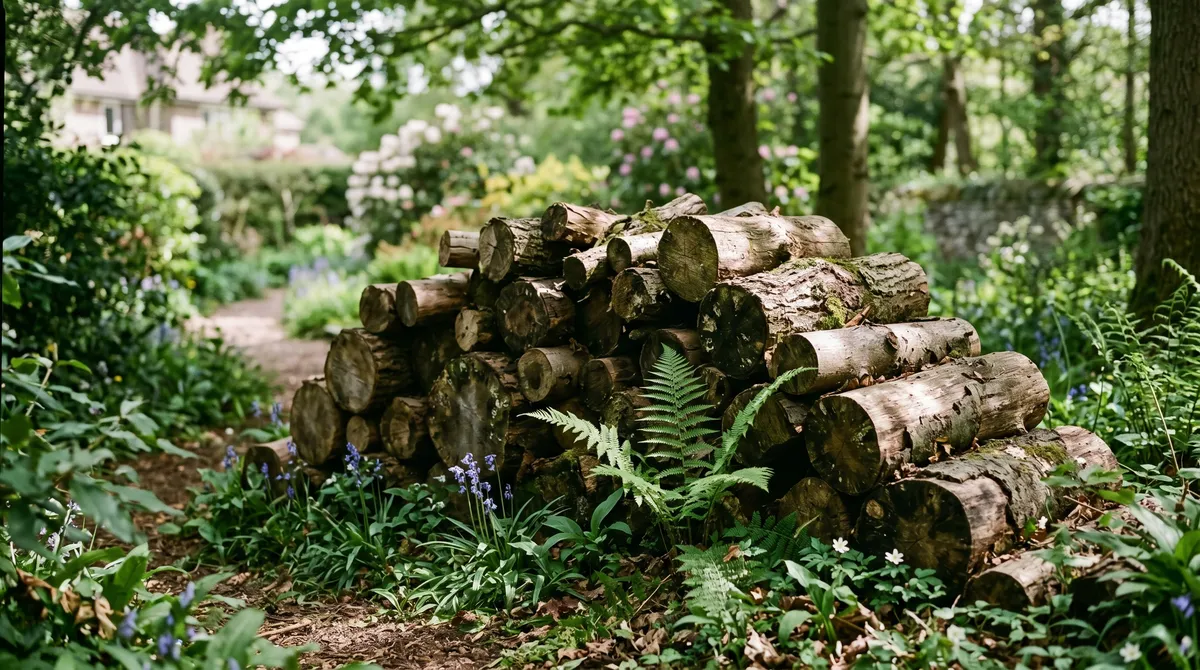
- Optimum size is 1m x 1m x 1.5m with logs 100-300mm diameter
- Hardwood (oak, beech, birch) lasts 8-15 years versus 2-4 years for softwood
- Site in deep shade on bare soil, never on plastic or paving
- British stag beetle larvae need 3-7 years of buried decaying hardwood to develop
- Position 5m from compost heap and 10m from a pond to link three habitat zones
- Add new logs every 3 years rather than starting again from scratch
A wildlife log pile is the highest-value habitat you can install for under £40. It turns garden waste into a living ecosystem that supports declining British species: stag beetles down 85% in some counties since the 1970s, slow worms now a UK BAP priority, and hedgehogs lost from a quarter of British gardens. This guide walks through how to build a wildlife log pile UK gardeners can rely on. You will see how to choose timber, dimensions, location, and how to maintain the pile across 5 to 10 years of slow decay.
Why Log Piles Outperform Most Wildlife Features
Most wildlife features attract only one or two species groups. A bird feeder feeds tits and finches. A pond serves amphibians. A log pile, in contrast, layers habitat across decay stages, which is what UK wildlife actually needs.
Fresh logs in year one host bark-dwelling invertebrates like woodlice and ground beetles. By year two, white-rot and brown-rot fungi penetrate the wood, breaking down lignin and cellulose. By year three, stag beetle larvae (Lucanus cervus) and lesser stag beetle larvae (Dorcus parallelipipedus) can colonise the buried sections. By year five the pile becomes spongy and friable, ideal for slow worm hibernation and toad shelter. Year seven onward the bottom logs return to soil, releasing nutrients into surrounding planting.
This succession is the information gain competitors miss. A log pile is not a static object. It is a five-stage habitat machine, and you need to build it knowing decay is the goal.
Hardwood vs Softwood for UK Wildlife Log Piles
Hardwoods (oak, beech, birch, ash, sycamore, hornbeam) have dense growth rings, slow decay, and retain moisture. Oak is the gold standard for stag beetle habitat. Beech holds bracket fungi exceptionally well. Birch decays slightly faster than oak but is widely available from arborists.
Softwoods (pine, spruce, larch, leylandii) decay rapidly. They contain resins that suppress some fungi, and their lower density means they crumble within 2-4 years. They are not useless, but they cannot anchor a long-term pile.
| Timber | Density (kg/m³) | Decay rate | Years of use | Stag beetle suitability |
|---|---|---|---|---|
| Oak | 720 | Very slow | 10-15 | Excellent |
| Beech | 710 | Slow | 8-12 | Excellent |
| Hornbeam | 750 | Very slow | 10-15 | Excellent |
| Birch | 670 | Moderate | 6-8 | Good |
| Ash | 680 | Moderate | 6-8 | Good |
| Sycamore | 620 | Moderate | 5-7 | Moderate |
| Scots pine | 510 | Fast | 3-4 | Poor |
| Leylandii | 380 | Very fast | 2-3 | Poor |
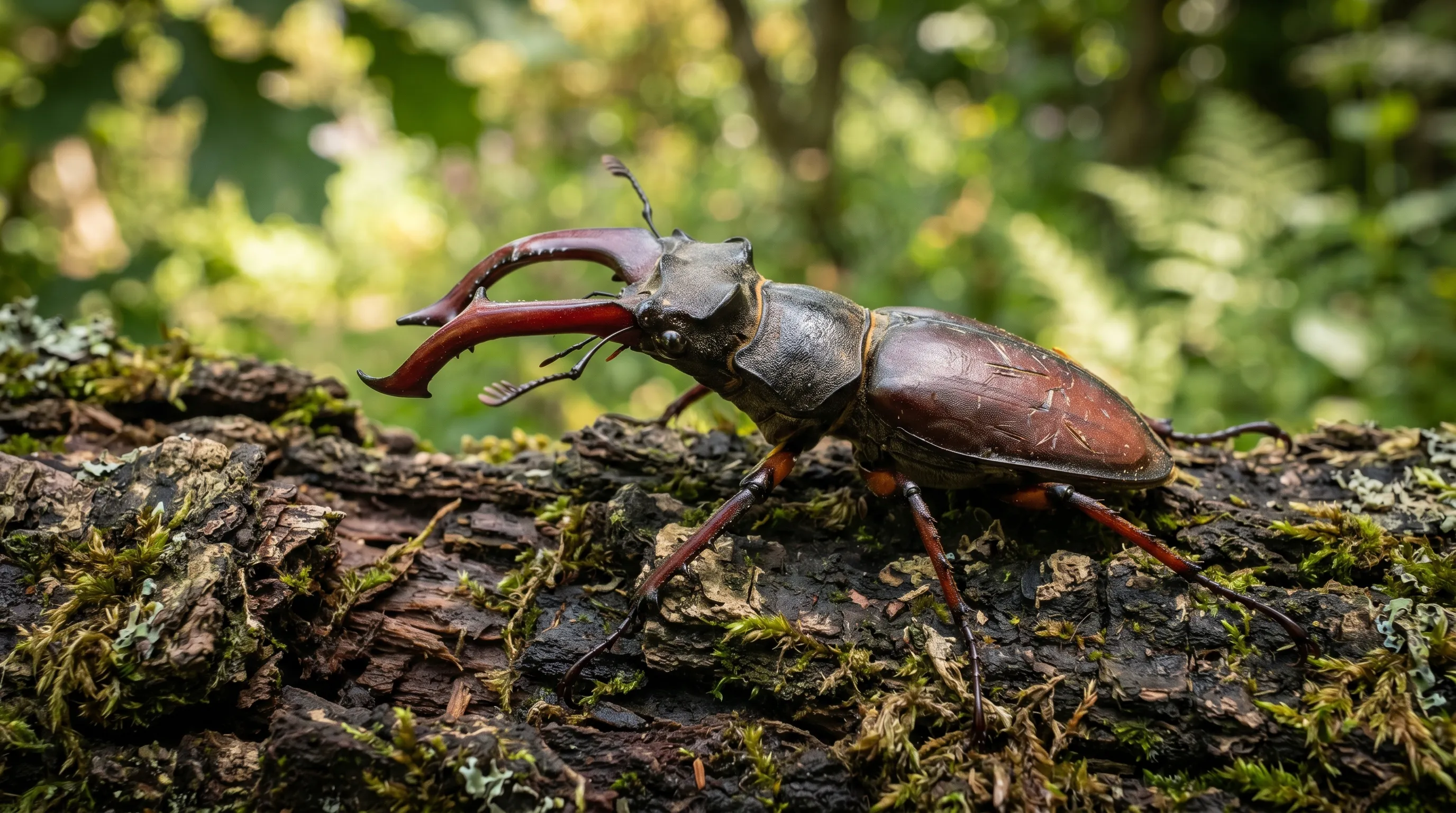 The British stag beetle (Lucanus cervus) is the largest UK terrestrial beetle. Larvae need 3-7 years of buried hardwood to develop.
Log Diameter and Why 150mm Is the Critical Threshold
Diameter dictates moisture retention and thermal buffering, both of which drive larval survival.
Logs below 100mm diameter dry out within a single hot week. They also chill below freezing within hours during a winter cold snap. Logs above 150mm diameter buffer both extremes. Inside a 200mm oak log, temperatures stay within 4-18C across most of a UK growing year even when outside air swings from -5C to 30C.
For your pile, aim for the following mix:
- Foundation layer: 8-12 logs at 200-300mm diameter, each 50-80cm long. These are the structural base and the long-term stag beetle habitat.
- Middle layers: 15-25 logs at 100-200mm diameter, 40-60cm long. These pack the gaps and give 3-5 year decay.
- Top layer: Smaller pieces 50-100mm diameter, plus a covering of brash or twigs to deter scavenging birds from disturbing nesting wrens.
If you can only source one diameter, choose the larger end. A pile of 200mm logs always outperforms a pile of 80mm logs for biodiversity.
How to Build a Wildlife Log Pile Step by Step
Construction takes one to two hours. Materials are free if you can collect from tree surgeons or local woodland (with permission only, never strip dead wood from public nature reserves).
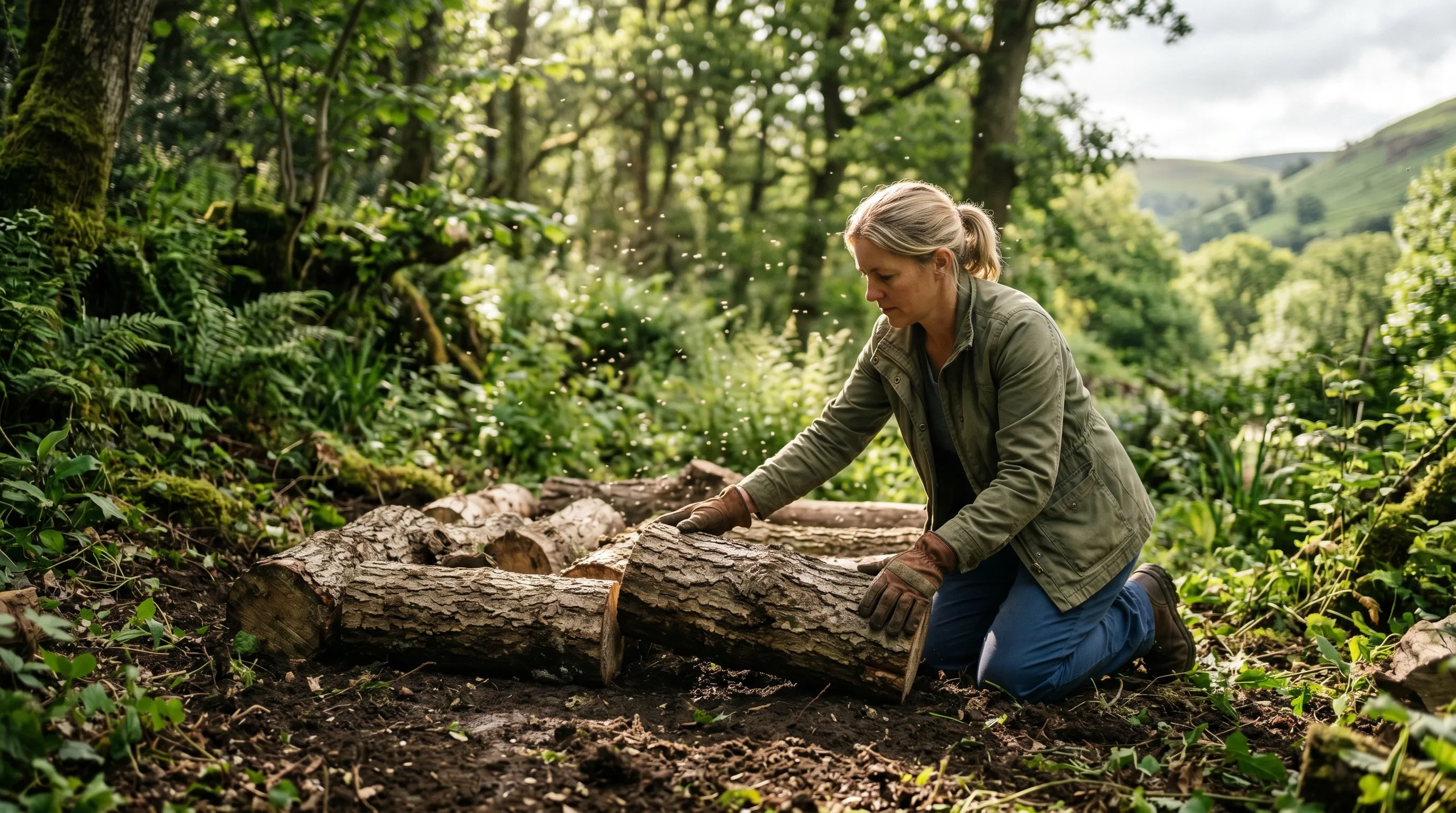 The base layer of logs sits directly on bare soil. Skip any membrane or weed fabric. Stag beetle larvae need to reach the earth.
Step 1: Choose the Site
Pick a shady, undisturbed corner. North or east-facing is ideal. Avoid south-facing dry spots. Site the pile 5m from your compost heap and within 10m of any pond or boggy area. This creates a linked habitat triangle: shelter, food source, and water.
Step 2: Prepare the Ground
Strip turf or vegetation from a 1.2m x 1.2m area. Leave the bare soil rough and undug. Skip plastic membrane, gravel, or paving slabs underneath. These all break the fungal soil link and prevent ground-dwelling larvae from burrowing.
Step 3: Lay the Foundation Logs
Place 8-12 of your largest logs (200-300mm diameter) in two rows on the bare soil. Bury the bottom 25-50mm of each log slightly into the earth by twisting or rocking them. This contact is what enables fungal mycelium to colonise the wood from below.
Step 4: Build the Middle Tiers
Stack the next layer at 90 degrees to the foundation. Continue alternating directions like a Jenga tower. Use the medium logs (100-200mm) here. Build to roughly 1m tall at this stage. Leave intentional gaps and cavities for slow worms, toads, and hedgehogs.
Step 5: Cap the Top
Add smaller pieces, twigs, and brash to a total height of around 1.5m. Loose brash on top protects nesting wrens and dunnocks from sparrowhawks. Do not compress the pile; air gaps are part of the design.
Step 6: Seed With Decay
This is the step almost every guide skips. Drop in a handful of well-rotted leaf mould, mushroom compost, or a few decaying logs collected from existing woodland (always with landowner permission). This inoculates the pile with fungi and saprophytic invertebrates and accelerates colonisation by 12-18 months.
Species That Use a UK Wildlife Log Pile
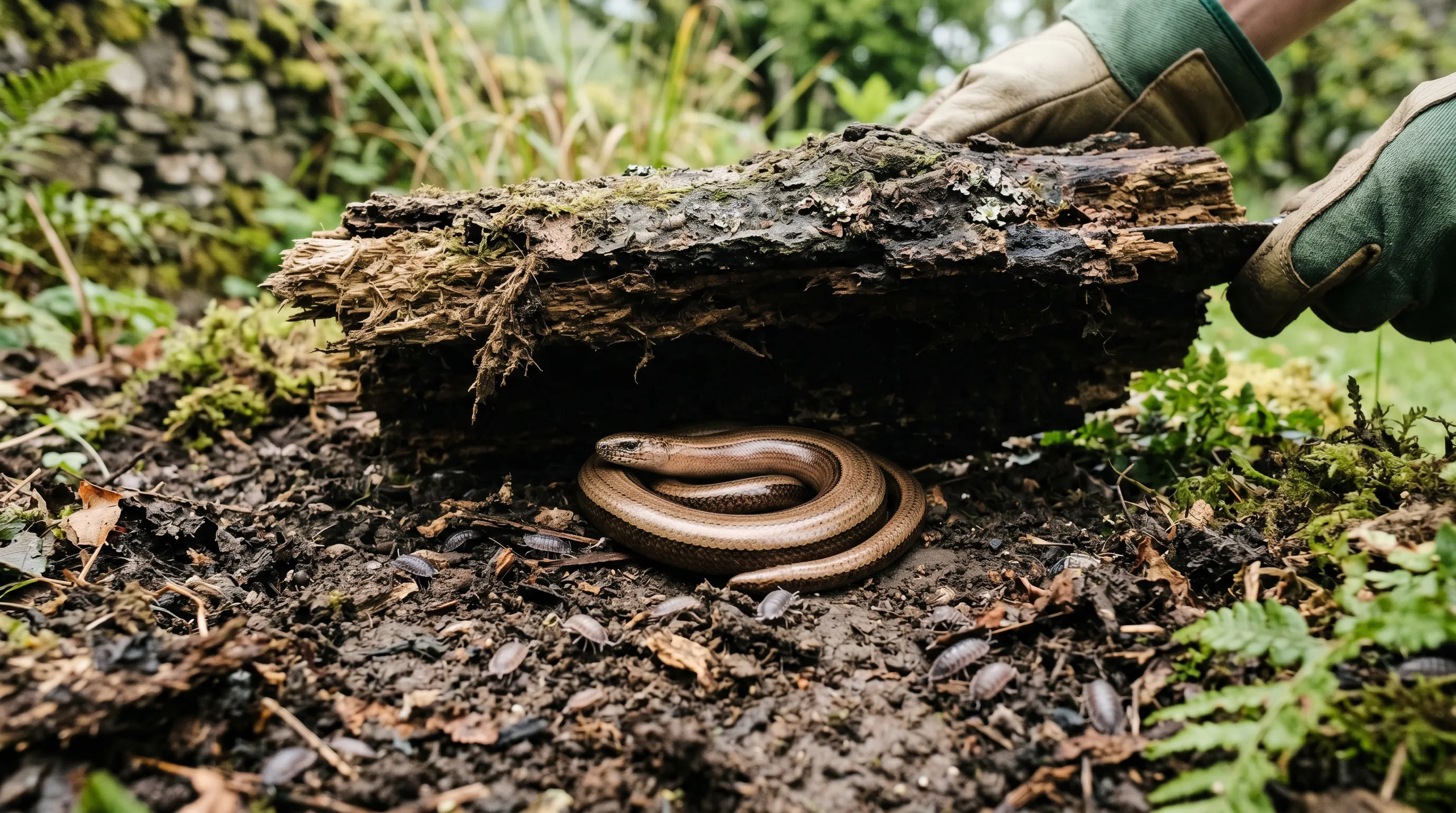 Slow worms (Anguis fragilis) are legless lizards, not snakes. They use log piles for hibernation between October and March.
Stag Beetles and Lesser Stag Beetles
The British stag beetle (Lucanus cervus) is the UK’s largest terrestrial beetle, with males reaching 75mm. Females lay eggs in soil next to rotting hardwood. Larvae feed underground for 3-7 years on decaying root wood and buried logs. Lesser stag beetles do the same on a shorter cycle. Both species are now restricted to southern England and the Severn corridor, but log piles can extend their range gradually.
Slow Worms and Toads
Slow worms (Anguis fragilis) and common toads (Bufo bufo) use the lower cavities of log piles year-round. Slow worms hibernate from October to March in the warmest, driest pockets. Toads use shaded log piles as summer aestivation sites and winter hibernacula. Both species are protected under the Wildlife and Countryside Act 1981.
Hedgehogs and Wrens
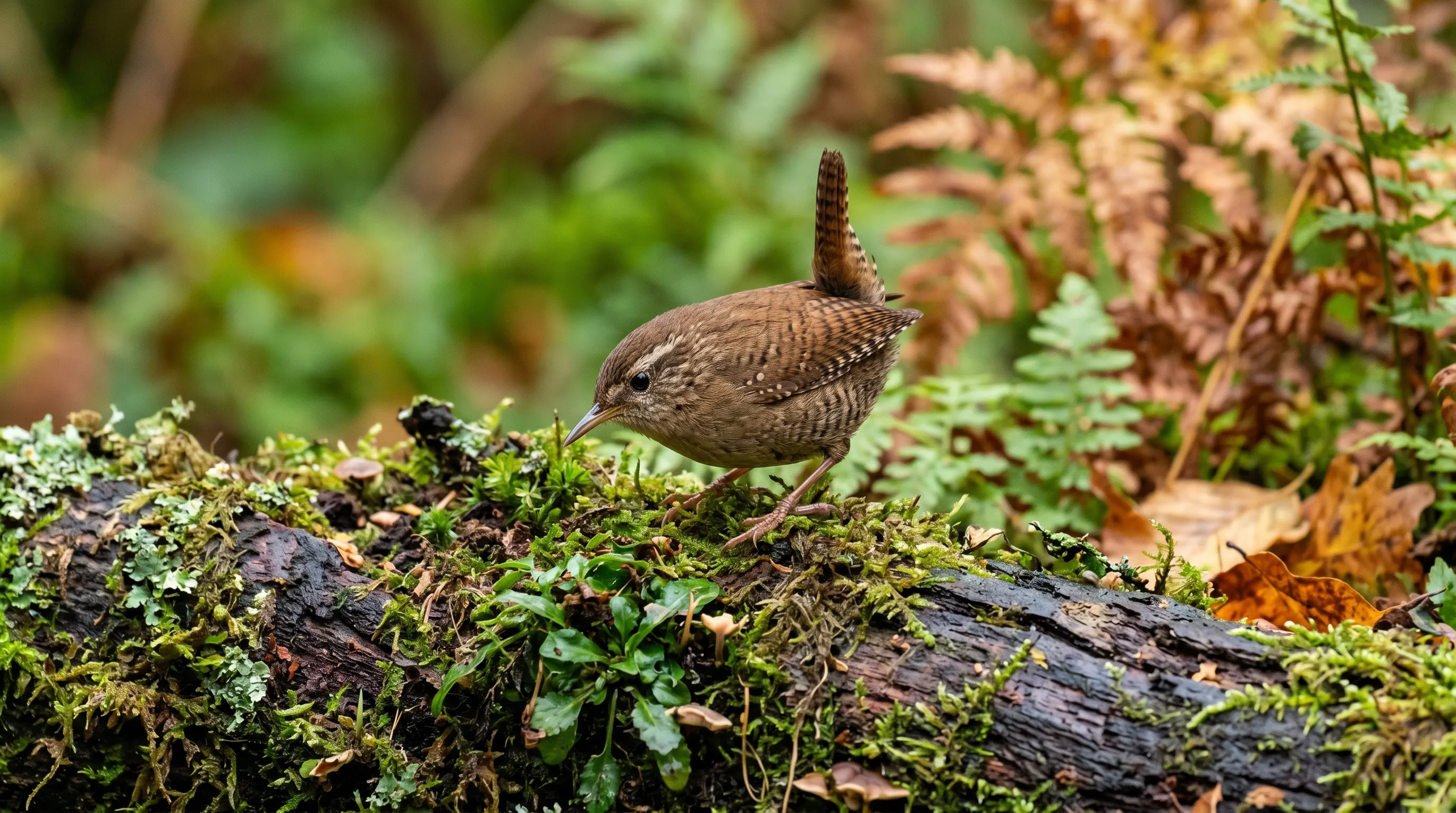 Wrens forage for invertebrates inside log piles daily. A mature pile can support a wren pair through the breeding season.
Fungi and the Decay Engine
White-rot fungi (turkey tail, Trametes versicolor) and brown-rot fungi colonise within 12-18 months. By year three, jelly fungi, candlesnuff, and yellow stagshorn appear. By year five, you can expect 15-30 fungal species. These are the engine of decay; without them, no invertebrates colonise.
Site Placement Inside Your Garden
Place the pile within these distances:
- 5m from compost heap: Toads and slow worms move between the two for prey and warmth.
- 10m from pond: Frogs use log piles as summer cover after leaving the pond.
- 3m from hedgerow: Birds use the pile as a stop-off when foraging along hedge corridors.
- Avoid placing within 2m of the house: Hedgehog disturbance and risk of carpenter ants entering the building.
Warning: Never site a log pile next to timber decking, fence panels, or wooden sheds. Wood-rot fungi will bridge across given the chance. Keep at least 1m clear of any structural timber you want to preserve.
Log Pile Maintenance Over 5 to 10 Years
Maintenance is mostly leaving the pile alone. The few interventions that matter are timed against the decay cycle.
| Year | Decay stage | Action |
|---|---|---|
| 0-1 | Fresh wood, bark intact | Leave alone. Bark beetles arrive |
| 1-2 | Bark loosening, first fungi | Add 2-3 new logs on top in autumn |
| 2-3 | White-rot established, soft outer layer | Avoid disturbance, larvae now present |
| 3-5 | Heart wood softening, friable | Top up with mid-sized logs in autumn |
| 5-7 | Lower logs collapsing to soil | Add fresh foundation logs alongside the pile |
| 7-10 | Bottom returning to soil | Build a new pile next to the old one, do not demolish |
Year-by-Year Calendar
| Month | Task |
|---|---|
| January | Leave pile undisturbed. Hibernating reptiles and hedgehogs present |
| February | Check pile from a distance. Look for entry holes |
| March | Continue to avoid disturbance until 10C minimum night temperature |
| April | Wrens may nest. Stop any work on the pile |
| May | Source new logs from tree surgeons doing spring work |
| June | Watch for stag beetles at dusk, peak emergence is mid-May to early July |
| July | Inspect upper layers for shrinkage. Add nothing yet |
| August | Source autumn top-up logs |
| September | Add new logs on top of pile after wren broods finish |
| October | Final top-up. Slow worms preparing to hibernate |
| November | Cease all disturbance. Hedgehogs may settle in |
| December | Leave alone. Monitor at distance only |
Dead Hedges as a Linear Alternative
If you do not have space for a 1m x 1m log pile, a dead hedge is the next best thing. It is two parallel rows of hazel or chestnut stakes 50-60cm apart, filled with brushwood, prunings, and small logs to a height of 1-1.5m.
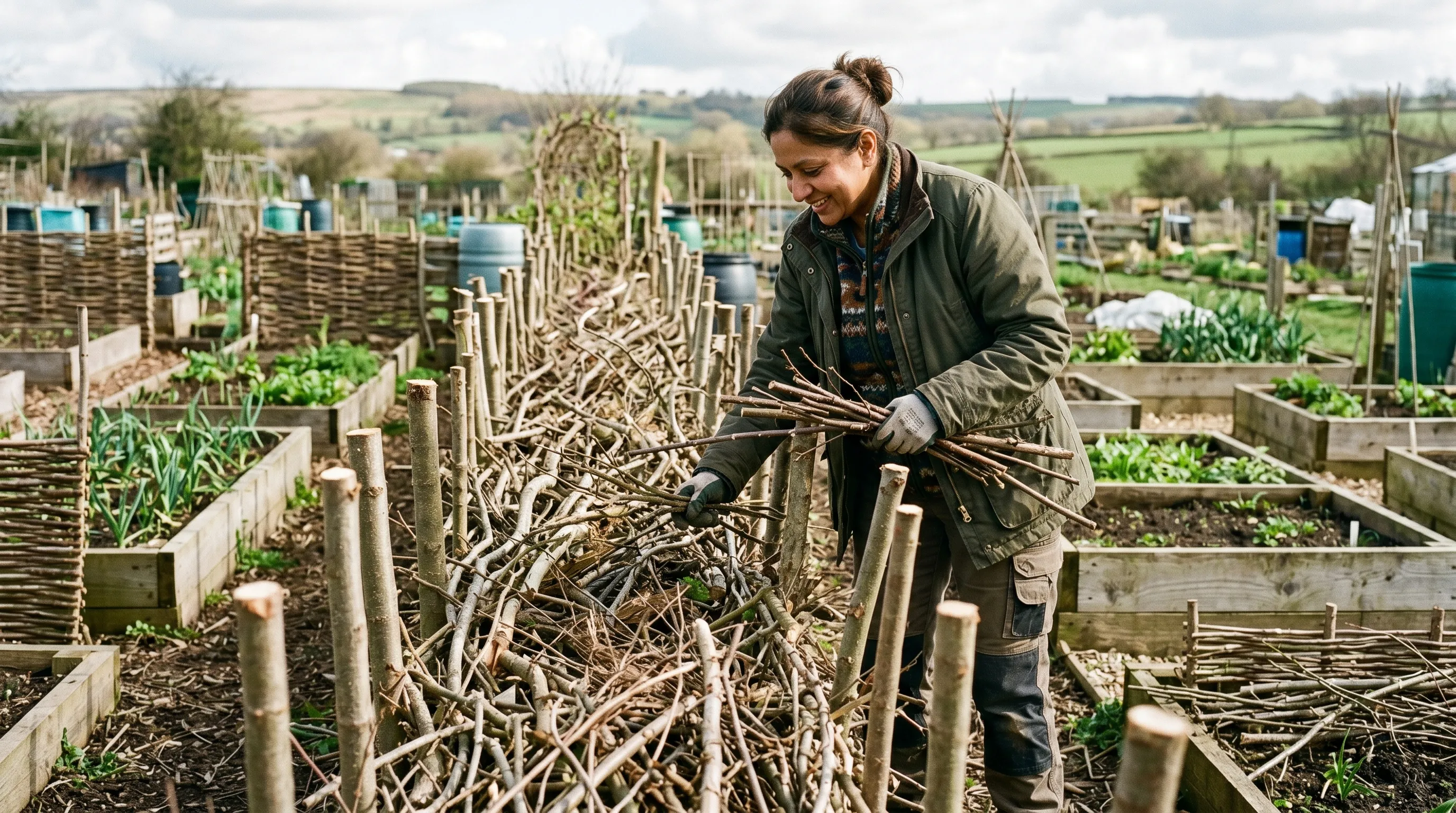 A dead hedge is a linear alternative to a log pile. It doubles as a windbreak and stock-proof boundary.
Dead hedges support similar invertebrates but fewer larger species. Stag beetles need bigger log diameters than most dead hedges provide. However, dead hedges suit allotments, garden boundaries, and small urban plots. They also use prunings you would otherwise burn or skip.
For a deeper habitat plan, our hedgehog highway guide explains how to connect log piles and dead hedges across gardens with a 13cm fence gap, which is critical for the species’ decline reversal.
Common Mistakes to Avoid
Five mistakes account for nearly every log pile that fails to deliver wildlife value.
Building on plastic membrane or paving. This is the single biggest error. Stag beetle larvae need soil contact. Membrane stops mycorrhizal fungi colonising from below and the pile becomes inert wood, not habitat.
Using treated, painted, or pressure-treated timber. Copper-chrome-arsenic and creosote preservatives are toxic to invertebrates. Old fence posts and reclaimed pallets often contain these chemicals. If in doubt, leave it out.
Demolishing and rebuilding every few years. Year 3-7 is when the pile is most biodiverse. Pulling it apart destroys stag beetle larvae and slow worm hibernacula. Always top up rather than rebuild.
Siting in full sun. A south-facing pile dries out in days during a UK heatwave. Pile temperatures above 35C inside the wood kill most invertebrate eggs and larvae. North or east-facing aspects are the rule.
Tidying the pile. Loose bark, fallen twigs, and surface debris are habitat in their own right. Sweeping the pile or removing fallen pieces destroys micro-habitat for ground beetles and woodlice.
Mature Piles: What 5 Years Looks Like
A five-year-old hardwood pile bears little resemblance to a freshly built one. Bark has fallen. White-rot has softened the outer 30-50mm of every log. Yellow stagshorn fungi, turkey tail brackets, and candlesnuff colonise the surfaces. Inside, the wood is friable and burrowable.
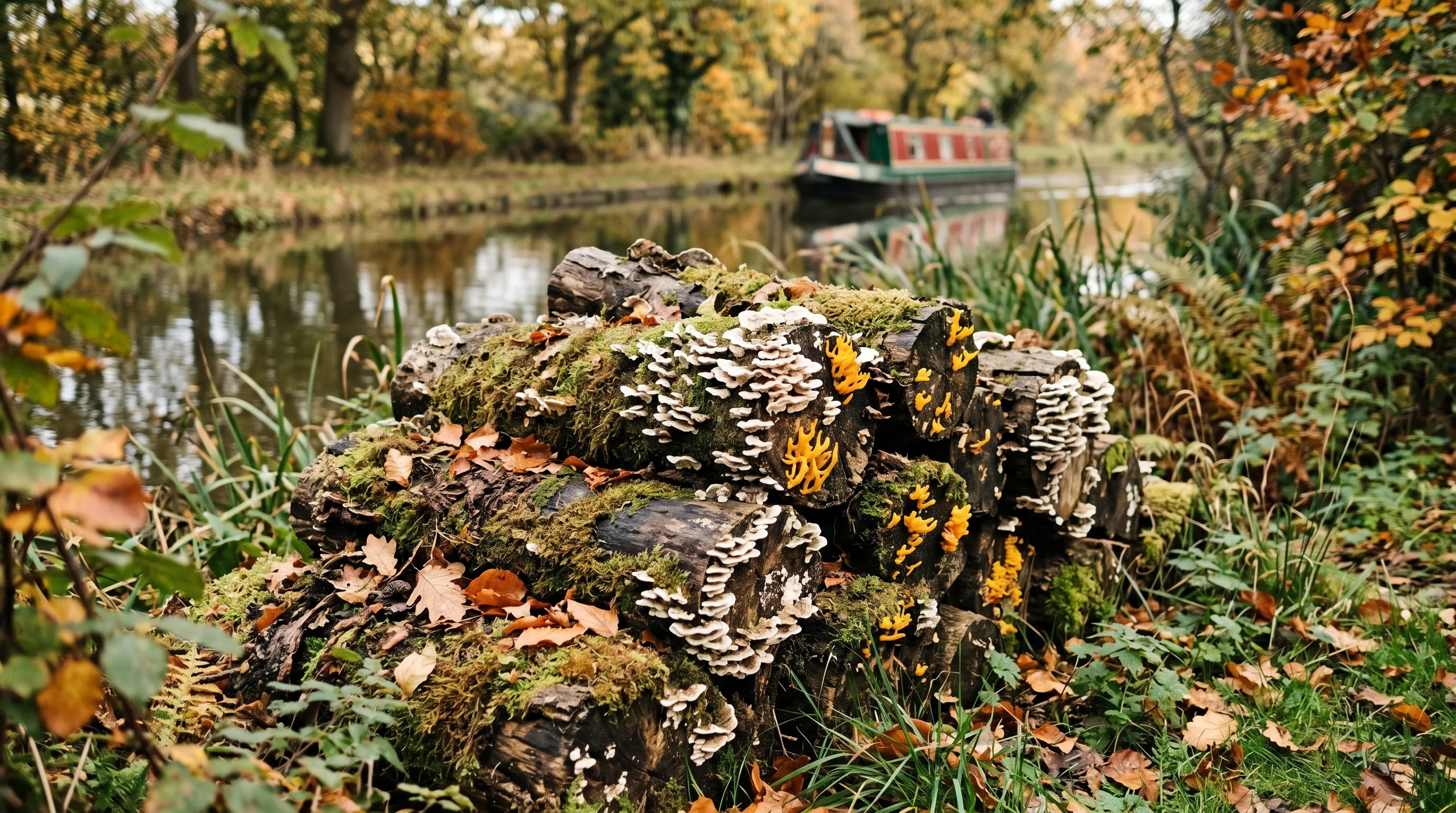 A mature pile after five years. White-rot and brown-rot fungi colonise the wood. This is when stag beetle larvae are at peak density.
The lesson is patience. A new log pile looks dead. A five-year-old log pile is alive in a way nothing else in the garden can match.
For sourcing, contact local tree surgeons (BS3998 qualified arborists are easy to find via the Arboricultural Association), community woodland projects, or your local Wildlife Trust. Many councils run free wood-chip and log schemes for residents. Our nearest scheme in Staffordshire offers free hardwood cordwood collection in autumn each year.
Build a Pile This Weekend
You can build a useful log pile in two hours. Even a small 50cm pile of mixed hardwood in a shady corner outperforms most “wildlife features” sold at garden centres. The key actions are: pick hardwood, aim for 1m x 1m x 1.5m, sit it on bare soil in shade, and leave it alone.
Our team produces practical UK gardening guidance from source research, contributor records and established horticultural practice. Editorial standards are overseen by Matt W.