Dog's Tooth Violet
Erythronium dens-canis
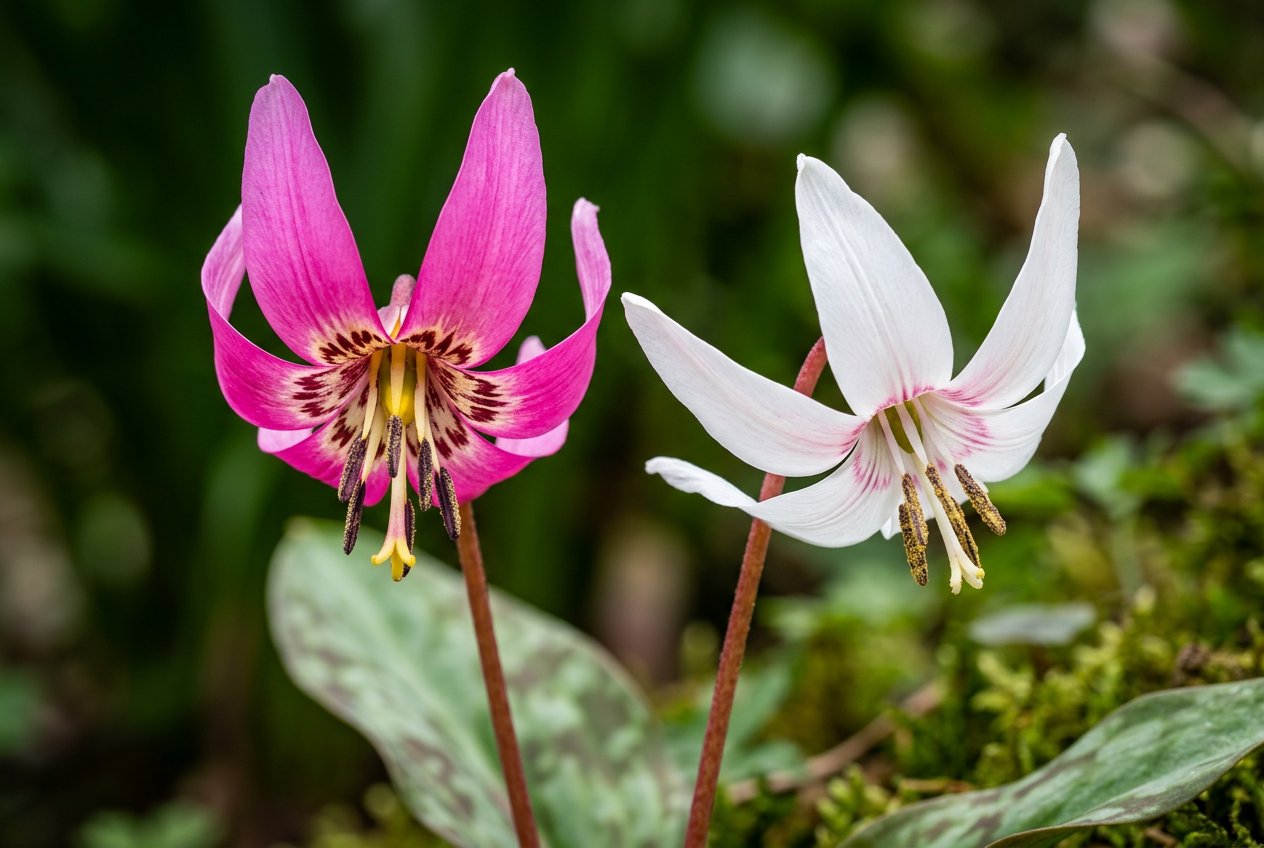
A woodland gem producing elegant swept-back pink or white flowers above beautifully mottled brown and green leaves in March and April. The name comes from the fang-shaped bulbs. Thrives in cool moist shade. Slow to establish but long-lived. One of the most elegant spring bulbs for woodland gardens across the UK.
Where to plant
Best aspect
Border position
When to plant and expect flowers
Plant
Flowers
How to grow dog's tooth violet
Plant 10cm deep in autumn. Keep tubers moist before planting — they desiccate quickly. Needs cool humus-rich soil in dappled shade. Do not let bulbs dry out. Add plenty of leaf mould. Slow to establish but increases steadily once happy.
Soil requirements
Soil type
loam
Moisture
moist
pH
neutral, acid
Aftercare
Allow foliage to die back naturally after flowering. Remove spent flower heads to prevent self-seeding.
Propagation
- Offsets in autumn
- Seed
Wildlife value
Toxicity
This bulb is not known to be toxic to pets or people.
Common problems
- Tubers dry out quickly if not planted promptly
- Slugs
- Slow to establish
Similar bulbs to grow
Related guides
The 70-30 Rule for Better Garden Borders
The 70-30 planting rule splits a border into 70% structure and foliage and 30% seasonal flowers for year-round interest in UK gardens.
Air-Purifying Houseplants UK
What the science really says about air-purifying houseplants, plus 10 best low-care UK varieties, pet-safe picks, and how to truly clean indoor air.
Allium White Rot: The 20-Year Soil Problem
Allium white rot UK identification and prevention. Sclerotia persist 20+ years. Covers symptoms, spread, decoy planting, and raised bed workarounds.