Lilium henryi
Lilium henryi
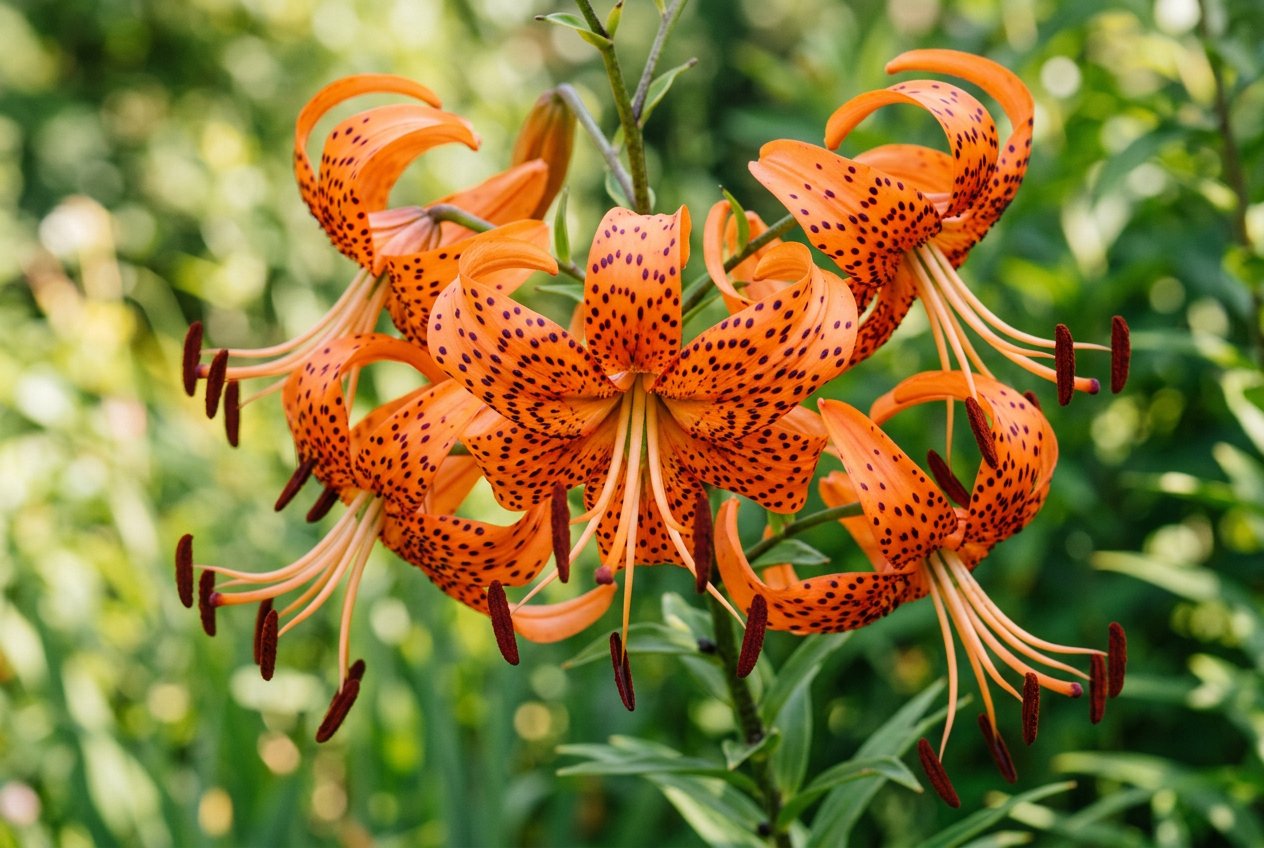
Henry's lily is one of the tallest and most vigorous species lilies, producing arching stems bearing up to 20 pendant orange turk's cap flowers from August to September. Very easy and long-lived. Tolerates alkaline soil unlike most lilies. Self-supporting despite its height. Excellent for the back of large borders.
Where to plant
Best aspect
Border position
When to plant and expect flowers
Plant
Flowers
How to grow lilium henryi
Plant 15-20cm deep in autumn. Unusually for a lily, tolerates alkaline soil. The tallest garden lily — place at the back of borders. Self-supporting despite the height. Very long-lived and increases well. One of the easiest species lilies.
Soil requirements
Soil type
loam, sand
Moisture
well drained
pH
neutral, alkaline
Aftercare
Allow foliage to die back naturally after flowering. Remove spent flower heads to prevent self-seeding.
Propagation
- Scales
- Bulbils
- Offsets
- Seed
Wildlife value
Toxicity
Highly toxic to cats — even small amounts can cause fatal kidney failure. Mildly toxic to dogs and humans.
Common problems
- Lily beetle
- Slugs on young shoots
- Botrytis (grey mould)
- Vine weevil in containers
Similar bulbs to grow
Related guides
The 70-30 Rule for Better Garden Borders
The 70-30 planting rule explained: 70% structure and foliage, 30% seasonal flowers, measured by area, so your UK border looks full in every month.
Air-Purifying Houseplants: What They Really Do
Do air-purifying houseplants work? The honest answer, the ten easiest plants to grow anyway, which are pet-safe, and what actually freshens indoor air.
Allotment Planner: Month-by-Month
A friendly month-by-month allotment planner for the UK: what to sow, plant, pick and tidy each month, plus a handy sowing and harvest chart.