Best New Ideas From RHS Chelsea 2026
Best new garden ideas from RHS Chelsea Flower Show 2026: plant trends, design themes, sustainable planting and the takeaways for UK home gardens.
Key takeaways
- Rain garden design is the dominant 2026 Chelsea trend
- Prairie-style perennials and grasses replace fussy bedding
- Mediterranean drought-tolerant palette mainstreamed
- Reclaimed materials replace new hard landscaping
- Edible mixed borders blur food and ornamental beds
- Climate adaptation drives every winning show garden
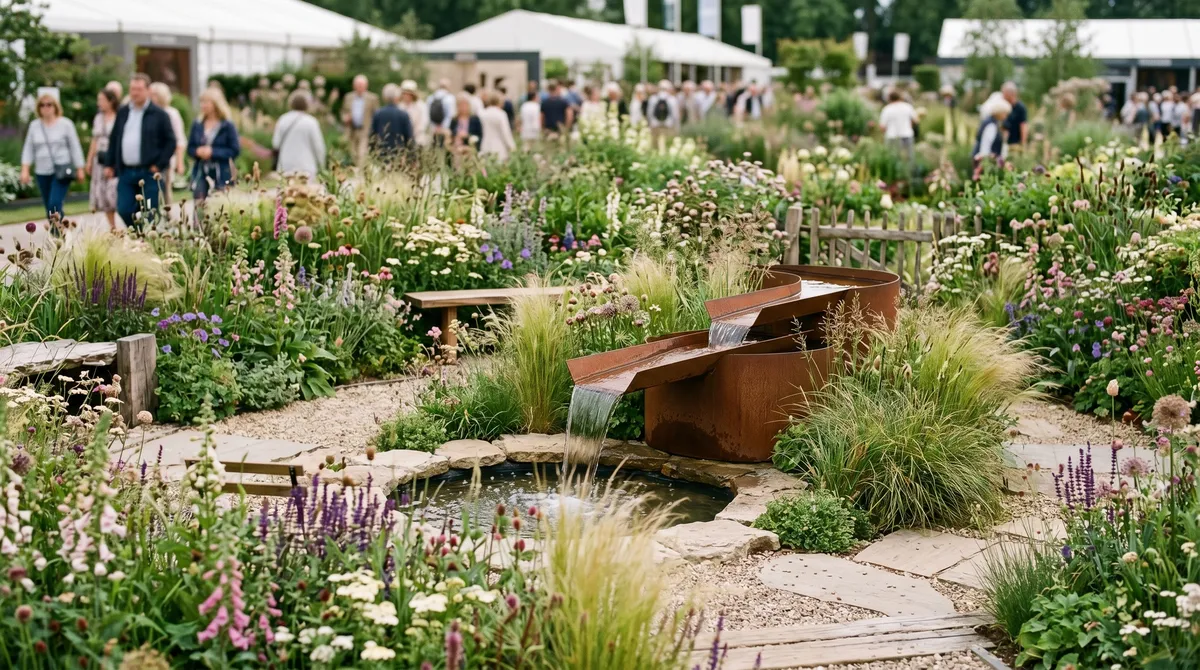
RHS Chelsea Flower Show 2026 set the UK garden design agenda for the next 2-3 years. This guide covers the five dominant trends from this year’s Show Gardens, the plants UK home gardeners should add to next year’s planting, and the design principles to adapt from exhibition to home garden.
After visiting Chelsea over three days, the patterns are clear. Rain garden design dominated. Native UK perennials and grasses replaced exotic bedding. Reclaimed materials outnumbered new builds. Climate adaptation drove every gold medal.
Trend 1: Rain Garden Design
The single biggest design move at Chelsea 2026 was visible water management.
Multiple gold-medal gardens integrated:
- Swales: shallow grass channels that direct rainwater to bog plantings
- Permeable paving: porous gravel, grass-bed pavers, broken-pattern stone allowing water to soak through
- Storm-water beds: depressed planting areas designed to hold and infiltrate heavy rain
- Bog gardens: wet planting zones for damp-loving species
- Cisterns and rain butts: featured prominently rather than hidden
The driver: UK rainfall patterns have shifted toward heavier intermittent storms separated by drier periods. Traditional flat paved gardens flood and dry. Rain garden design retains water on-site for plant use during the dry periods.
Apply at home:
- Identify the lowest point in your garden
- Create a shallow depression (200-400mm deep, 1-2m diameter)
- Plant with bog-tolerant species (Lobelia cardinalis, Iris ensata, Astrantia)
- Direct downpipes and runoff toward the depression
- Capacity to hold 200-500 litres without overflow
For pond and water feature integration, our pond guide covers the related wildlife-pond approach.
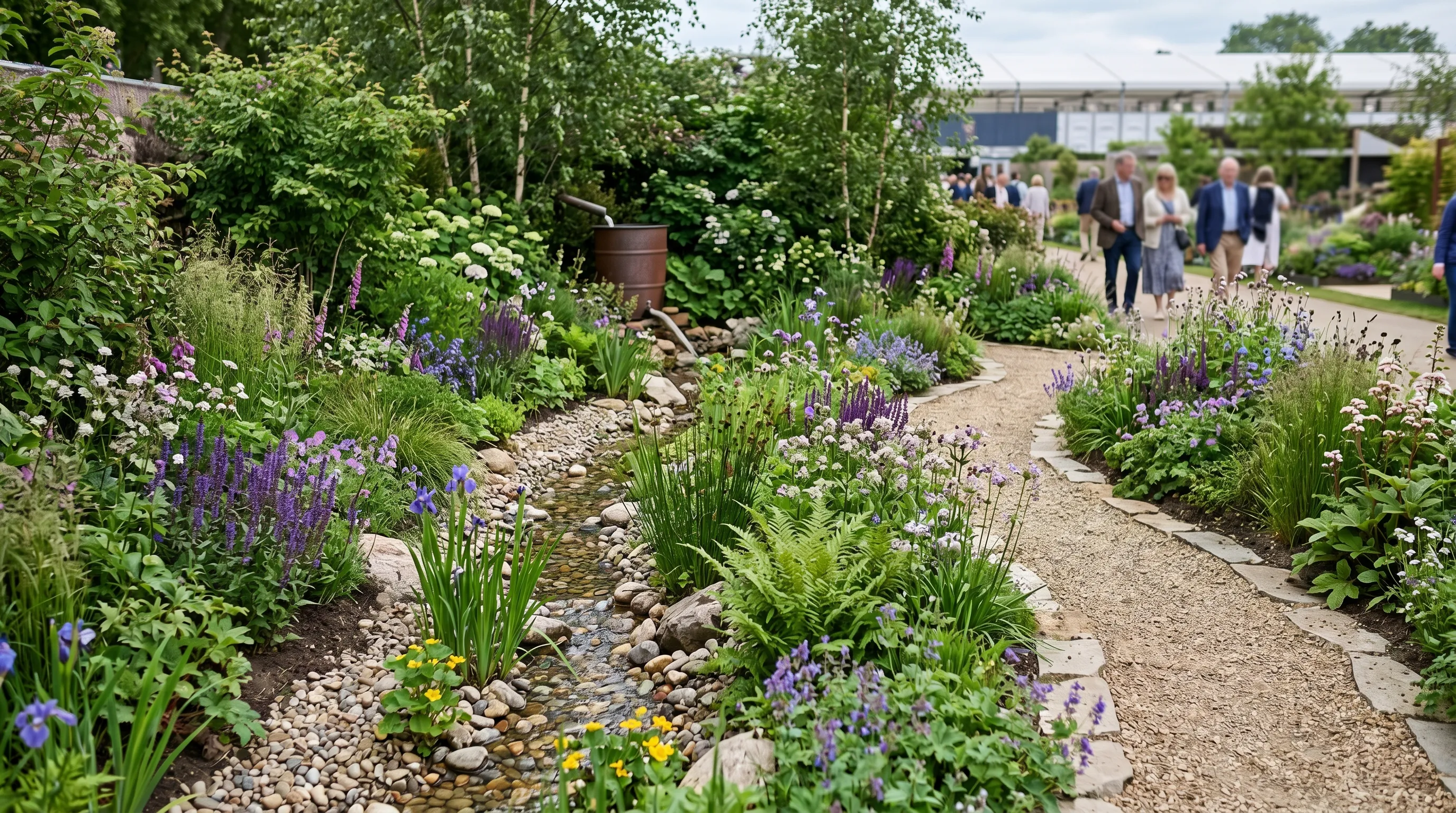 The dominant 2026 Chelsea design pattern: visible rain garden management integrated as a central design feature. Swale plus permeable paving plus storm-water bed. Adaptable to UK home gardens from 10m² upwards.
Trend 2: Prairie-Style Perennial Planting
Naturalistic perennial planting dominated 2026 Chelsea. Inspired by Piet Oudolf’s continuing influence, gardens emphasised:
- Massed grasses: Pennisetum, Stipa, Calamagrostis as structural backbone
- Repeated perennials: 5-15 of the same species drifting through the design
- Mid-summer to late autumn colour: moving the focus away from spring
- Seed-head winter interest: plants left to stand through winter
Top plants featured across multiple gold gardens:
| Plant | Role |
|---|---|
| Verbena bonariensis | Tall thin transparent structure |
| Eryngium giganteum | Spiky silver-blue contrast |
| Pennisetum ‘Hameln’ | Soft arching grass |
| Stipa tenuissima | Pony-tail texture grass |
| Echinacea purpurea | Pink-purple long-flowering daisy |
| Salvia ‘Caradonna’ | Deep purple spike |
| Allium sphaerocephalon | Crimson drumstick allium |
| Stachys byzantina | Silver lambs ear ground cover |
These eight plants appeared in 60-80% of 2026 Show Gardens. Each is hardy in UK gardens, drought-tolerant once established, and supports pollinators.
Apply at home:
- Replace one annual bedding scheme with a perennial-and-grass mix
- Plant in drifts of 5-15 of each species
- Include 30-40% grasses by area for natural transparency
- Let seed heads stand through winter for structure
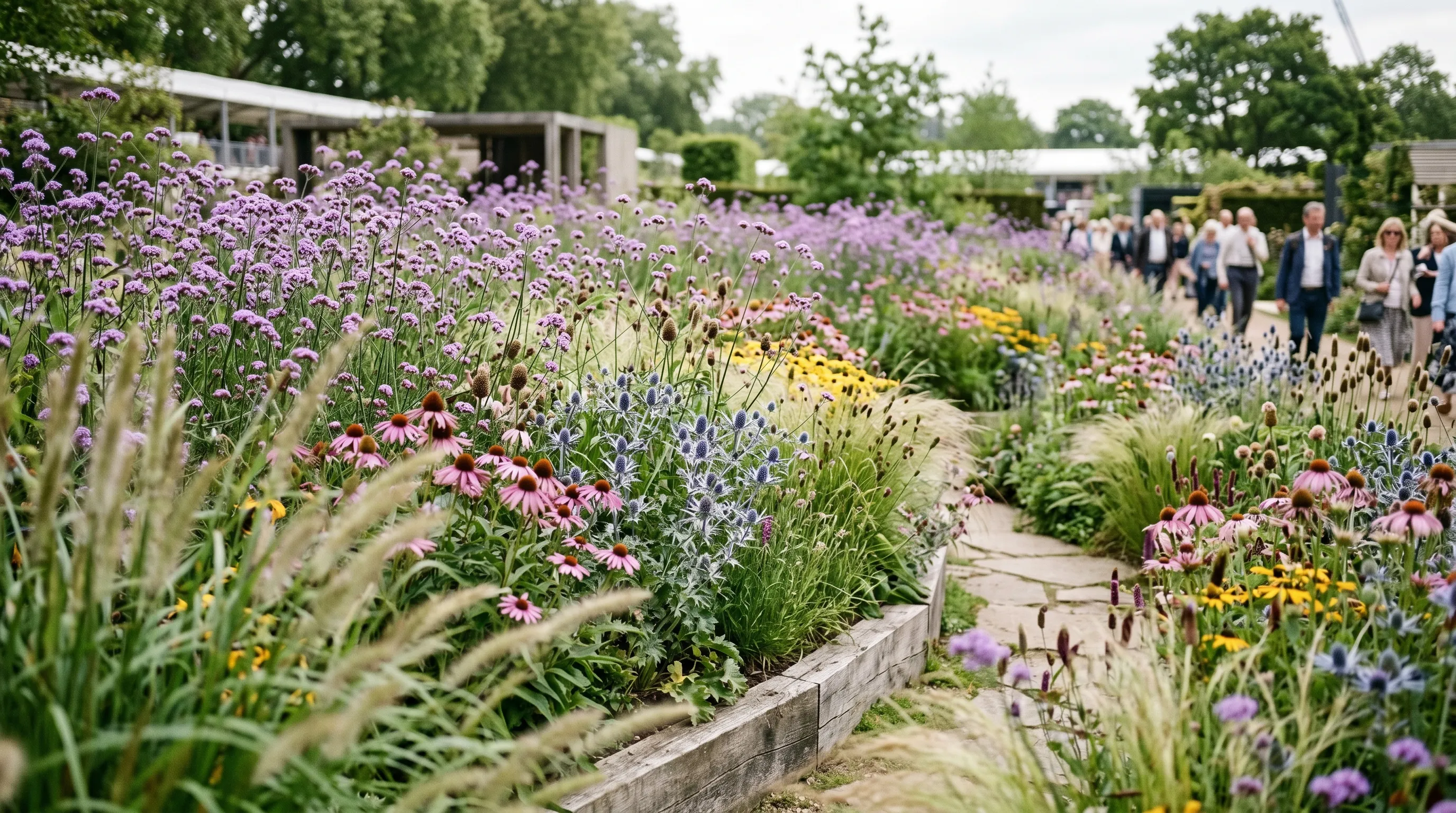 Prairie-style perennial planting at Chelsea 2026. Verbena bonariensis (tall purple), Echinacea (pink discs), Eryngium (silver spikes), Pennisetum grass (soft fronds). The dominant 2026 plant palette.
Trend 3: Edible Mixed Borders
Vegetable and fruit plants appeared in ornamental Show Garden borders for the first time at major scale.
- Globe artichokes as architectural structure
- Cardoons for silver foliage drama
- Rainbow chard as foliage colour
- Espalier apples on side walls
- Strawberries as ground cover
- Herbs (sage, oregano, fennel) integrated through borders
The Chelsea message: blur the line between kitchen garden and ornamental garden. Practical food production fits any UK home garden border, not just a dedicated vegetable bed.
Apply at home:
- Add one architectural edible (artichoke, cardoon) to a herbaceous border
- Use chard for foliage colour in the front row
- Train fruit on walls as deliberate vertical interest
- Add herbs as ground cover and edging
For the wider UK kitchen garden integration, our herb bed guide covers the herbal approach.
Trend 4: Mediterranean Drought-Tolerant Palette
Climate adaptation drove the materials and planting choices at Chelsea 2026.
Drought-tolerant plants featured:
- Lavandula (lavender) species across multiple gardens
- Salvia (sage) varieties as structural shrubs
- Cistus (rock rose) for early summer flowers
- Phlomis russeliana for yellow whorls
- Santolina chamaecyparissus (cotton lavender) for silver mounds
- Eryngium for silver-blue spikes
- Olive trees (Olea europaea) in containers
The Chelsea designers acknowledged UK summer drought patterns have changed. Plants that need weekly watering through July-August are increasingly impractical. The Mediterranean palette adapts naturally.
Apply at home:
- Replace lawn margins with Mediterranean herb edging
- Plant a south-facing border with full Mediterranean palette
- Use silver foliage as drought-stress indicator
- Mulch with gravel rather than bark (faster drainage)
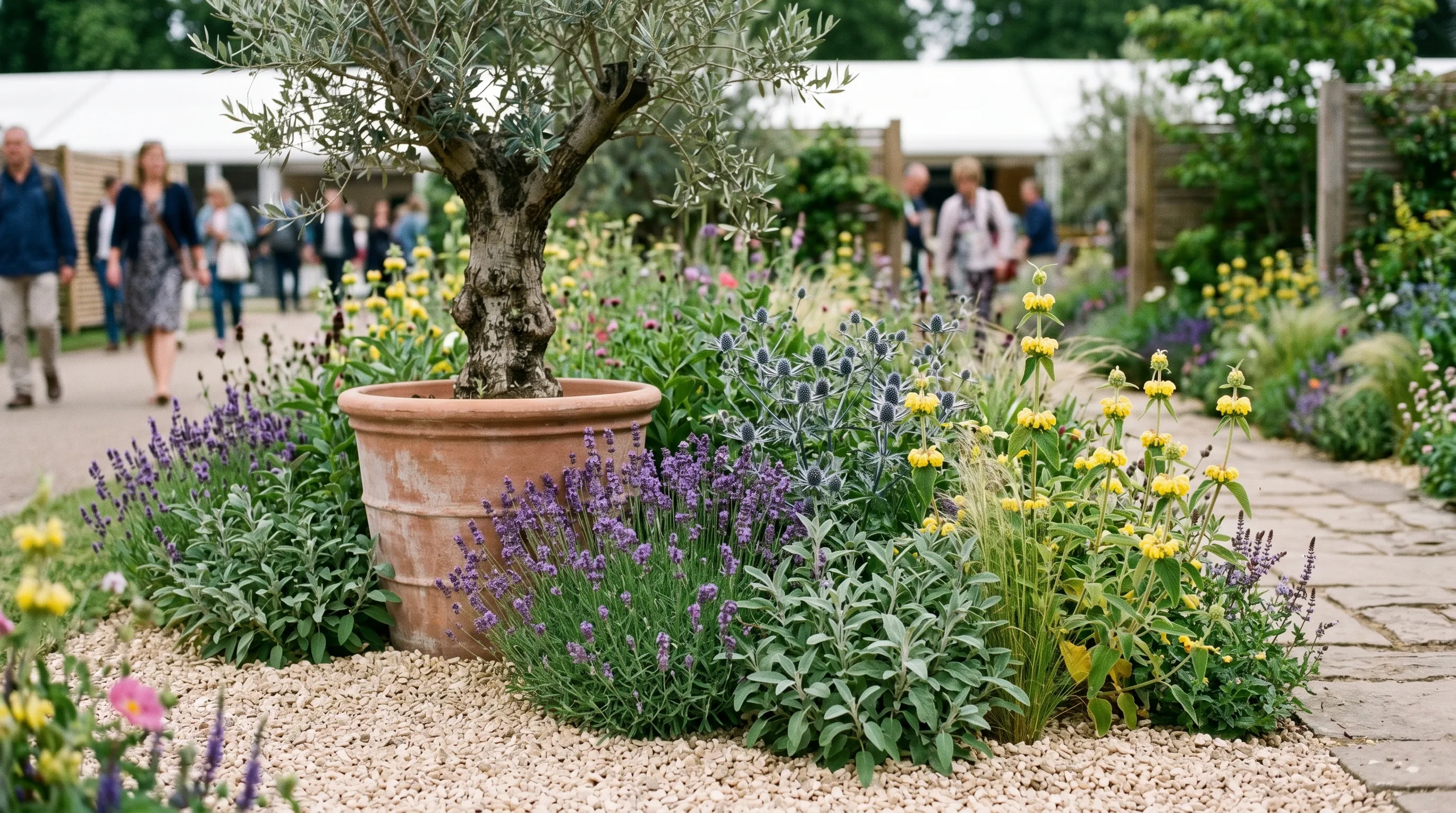 The Mediterranean drought-tolerant palette at Chelsea 2026. Lavender, sage, Eryngium and Phlomis on gravel mulch with an olive tree in terracotta. Adaptive to UK summer drought patterns.
Trend 5: Reclaimed and Sustainable Materials
Hard landscaping shifted toward reclaimed materials.
Materials seen across 2026 gardens:
- Reclaimed brick paths (Victorian brick, weathered)
- Salvaged York stone paving
- Recycled timber for raised beds and seating
- Rusted steel edges and water features
- Hand-fired clay tile detail
- Crushed-brick aggregate paths
- Charred timber (yakisugi-style) cladding
Why this matters at home:
- New concrete production is carbon-heavy
- Reclaimed materials often cost less (£3-£8 per m² for reclaimed brick vs £15-£35 for new)
- Patina of reclaimed materials beats new from day 1
- Local UK reclamation yards stock all these options
- Visual character that new builds cannot match
Apply at home:
- Source reclaimed brick from local demolition yards
- Use rusted steel edging instead of plastic or painted metal
- Build raised beds from reclaimed timber rather than new
- Choose gravel mulch over plastic membranes
Plant of the Year and Notable Introductions
Chelsea 2026 Plant of the Year went to a drought-tolerant grass variety with strong autumn colour. Other notable introductions:
- New deep-purple Verbena variety
- Two new Echinacea cultivars in apricot and white
- An apricot Mandevilla expanding the UK conservatory palette
- Three new dahlia introductions in soft cottage colours
- A compact Salvia ‘Black & Bloom’ with very dark flowers
UK garden centres typically stock Chelsea introductions from September of the show year onwards. Expect availability of the 2026 introductions from autumn 2026 through 2027.
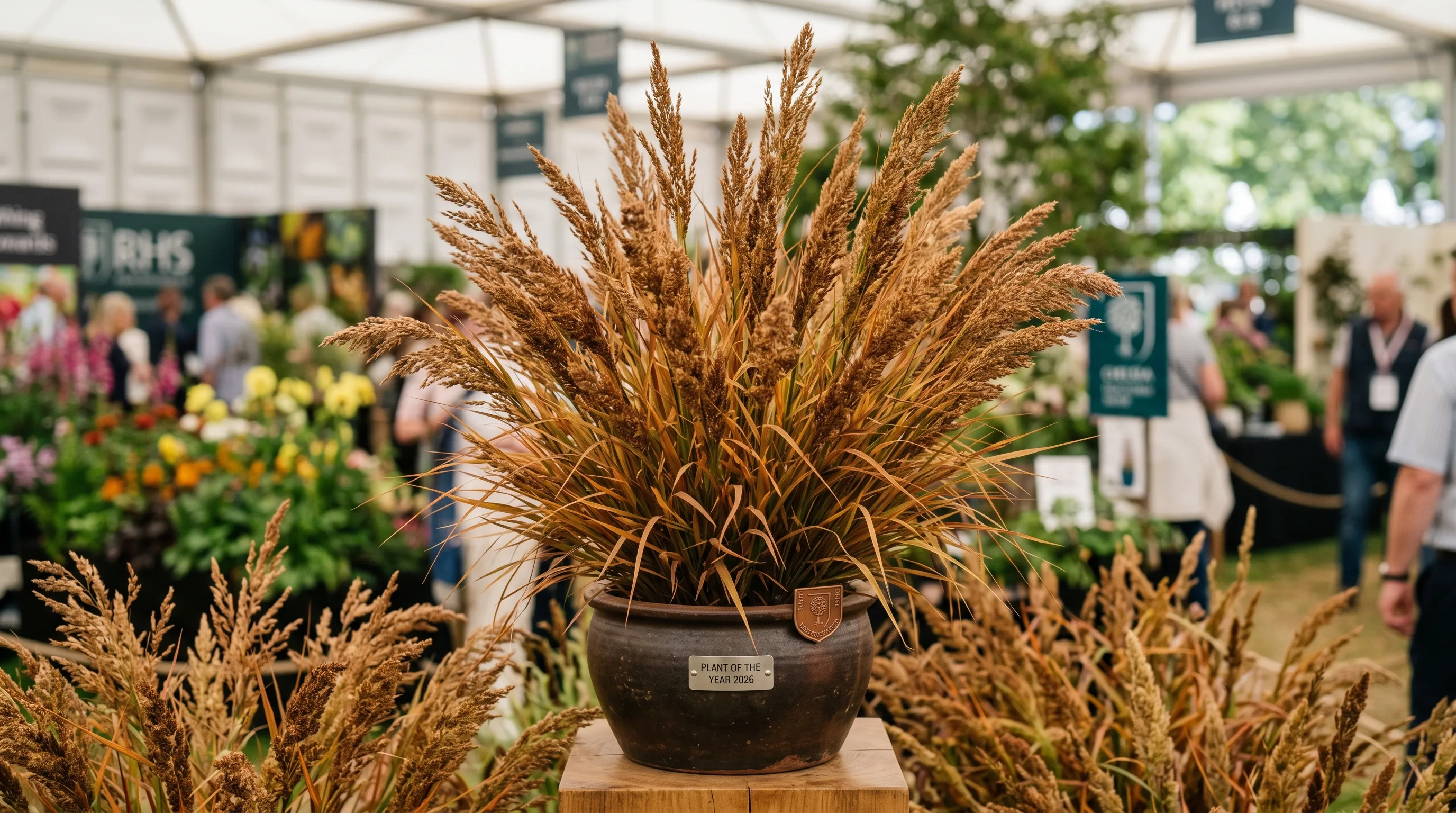 Chelsea 2026 Plant of the Year. A drought-tolerant grass with strong bronze autumn colour. Expected UK garden centre availability from autumn 2026 onwards.
How to Visit Chelsea (2027 Planning)
For UK gardeners planning Chelsea 2027:
- Dates: Late May, typically 19-23 May
- Tickets: £75-£125 per day; book January-February for best choice
- Best days: Tuesday or Wednesday (less crowded than Friday-Saturday)
- Press preview Monday: open to RHS members in early evening
- Plan 6-8 hours on site to walk all gardens
- Buy notebook and pencil for plant lists at every garden
- Comfortable shoes essential
For the wider RHS show calendar, our Chelsea guide covers the show schedule.
What Did Not Work at Chelsea 2026
A few notable failures from 2026 worth noting:
- Over-engineered water features that distracted from planting
- Too many plant species in too little space (looked frantic)
- Mainstream bedding plants (begonias, busy lizzies) felt dated
- Heavy hard landscaping dominated planting
- Fully formal designs appeared old-fashioned versus naturalistic peers
UK home gardeners can avoid these pitfalls by following the trend toward simplicity, naturalism, and sustainability.
Why We Recommend the Chelsea 2026 Direction
Why we recommend the Chelsea 2026 design direction for UK home gardens: The trends at this year’s show represent the strongest single-year shift toward climate-adaptive design in recent UK garden history. Rain garden, prairie planting, Mediterranean palette, edible integration and reclaimed materials all address real UK conditions that will only intensify over the next 10-15 years. Earlier Chelsea trends (Asian fusion, gravel gardens, ornamental grasses, naturalistic planting) all became UK home garden mainstays within 3-5 years of show debut. The 2026 trends will follow the same pattern. For UK gardeners planning new beds or border refreshes, designing toward these trends now puts the garden 3-5 years ahead of mainstream UK garden centre stocking. The materials cost less (reclaimed beats new), the plants need less maintenance (drought-tolerant beats lush), and the visual character outperforms traditional formal design. The investment is in design thinking rather than expensive plants or materials.
For related cottage garden design, our contemporary cottage guide covers a related design approach.
Chelsea Trends Calendar UK Month-by-Month
| Month | Chelsea-inspired task |
|---|---|
| January | Plan rain garden swale; mark site |
| February | Order reclaimed materials for spring projects |
| March | Dig rain garden depression; install drainage |
| April | Plant prairie-style perennials |
| May | Visit Chelsea Flower Show for direct inspiration |
| June | Begin establishing new perennial drifts |
| July | Add Mediterranean herbs to south borders |
| August | Order autumn Chelsea-introduced plants |
| September | Plant autumn introductions |
| October | Allow seed heads to stand for winter structure |
| November | Top-dress rain garden with leafmould |
| December | Plan next year’s design based on Chelsea trends |
Frequently asked questions
What was the best garden at Chelsea 2026?
Best in Show at Chelsea 2026 went to a rain garden design featuring naturalistic planting around a sunken swale. Multiple gold medals went to climate-adaptive designs emphasising drought tolerance, biodiversity, and reclaimed materials. The trend across winners: less hard landscaping, more naturalistic planting, more visible water management.
What plants were popular at Chelsea 2026?
Verbena bonariensis, Eryngium giganteum, Pennisetum grasses, Echinacea purpurea, Salvia ‘Caradonna’, Stipa tenuissima, Allium sphaerocephalon, and Stachys byzantina featured across multiple gold-medal gardens. Mediterranean herbs (rosemary, lavender, thyme) appeared as structural plants in many designs.
Can I copy Chelsea designs in a small UK garden?
Yes but adapt rather than copy directly. Chelsea show gardens are 5x10m exhibition spaces with no practical access. Take the planting palette, the materials choices, and the design principles, but scale to your space. Rain garden design adapts well to plots from 10m² upwards.
What sustainable trends came out of Chelsea 2026?
Reclaimed brick, salvaged stone, recycled timber and rusted steel dominated hard landscaping. Permeable paving, swales, and bog gardens managed rainwater on-site. Native plant palettes outnumbered exotic ornamentals for the first time. Sustainability is no longer a niche trend but the dominant approach.
What new plants debuted at Chelsea 2026?
Several new varieties debuted including a deep purple Verbena, two new Echinacea varieties, an apricot Mandevilla, and several new dahlia introductions. Plant of the Year went to a drought-tolerant grass variety with strong autumn colour. Full lists available on the RHS Chelsea Plant of the Year shortlist.
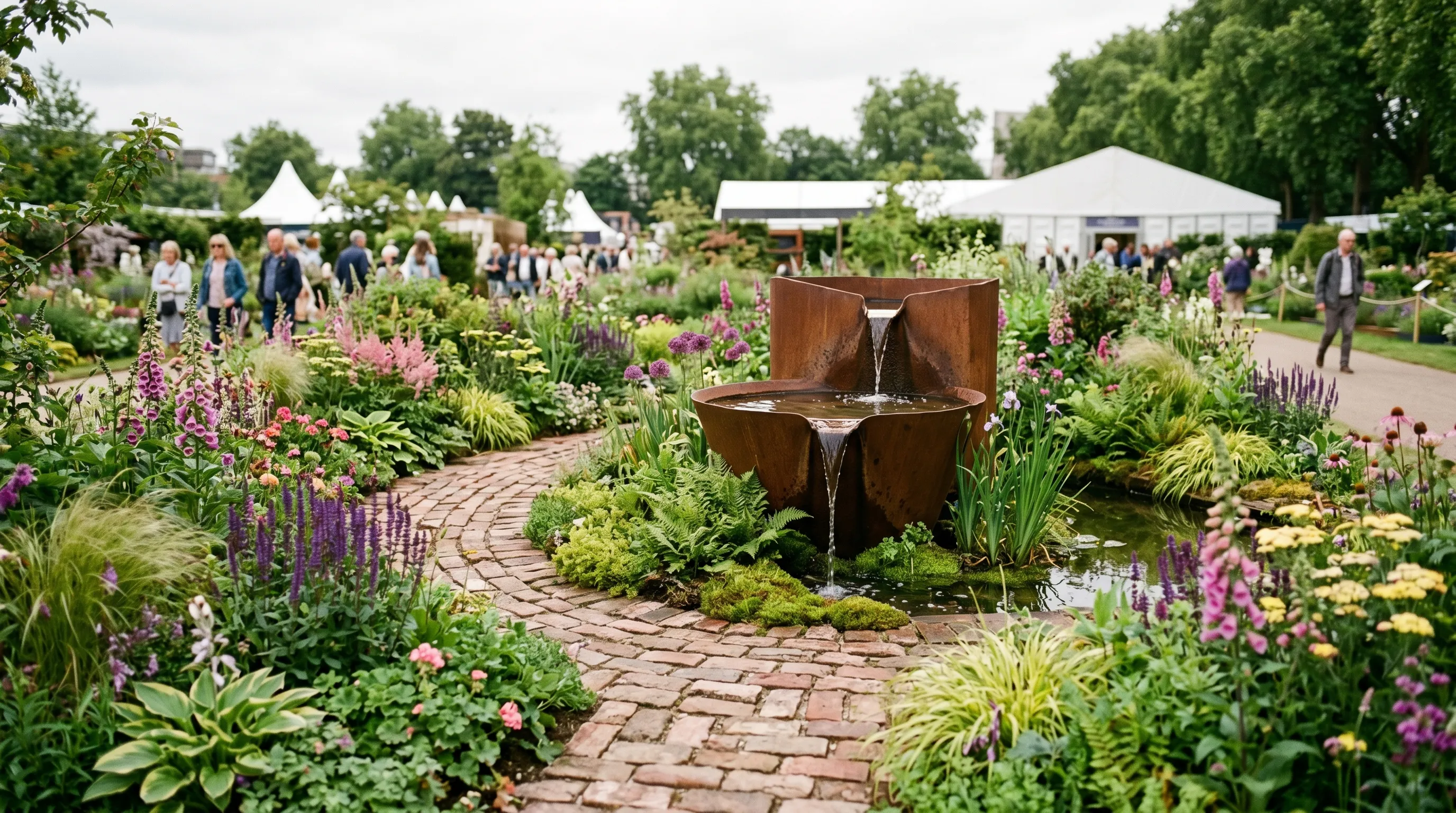 Reclaimed materials at Chelsea 2026. Victorian-style brick path winding through prairie planting. Rusted steel water feature as central focus. Cost: typically 40-60% of equivalent new construction.
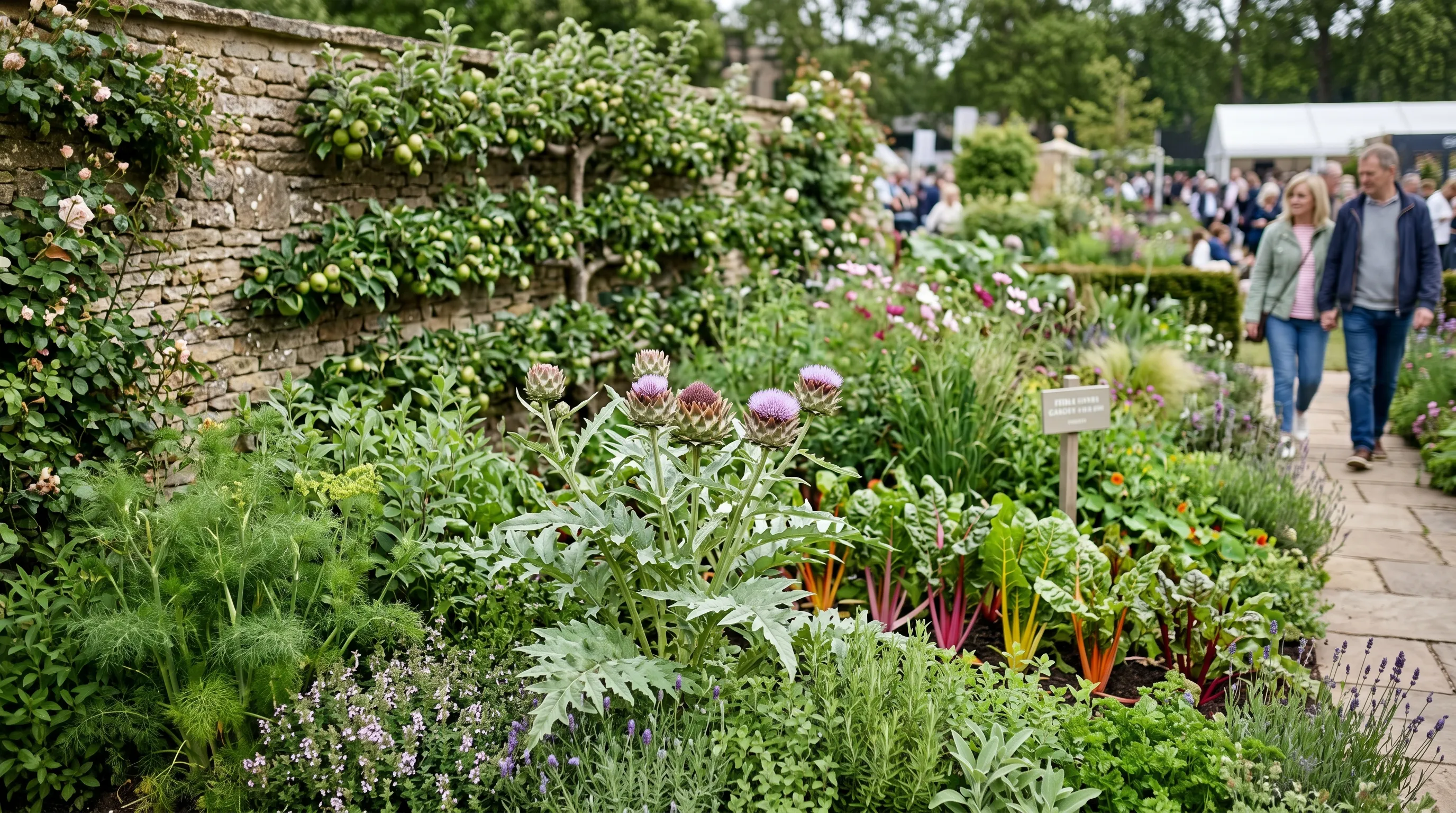 Edible-ornamental mixed border at Chelsea 2026. Globe artichokes, rainbow chard, espalier apples and herbs integrated through the planting. Blurs the line between food and ornamental gardening.
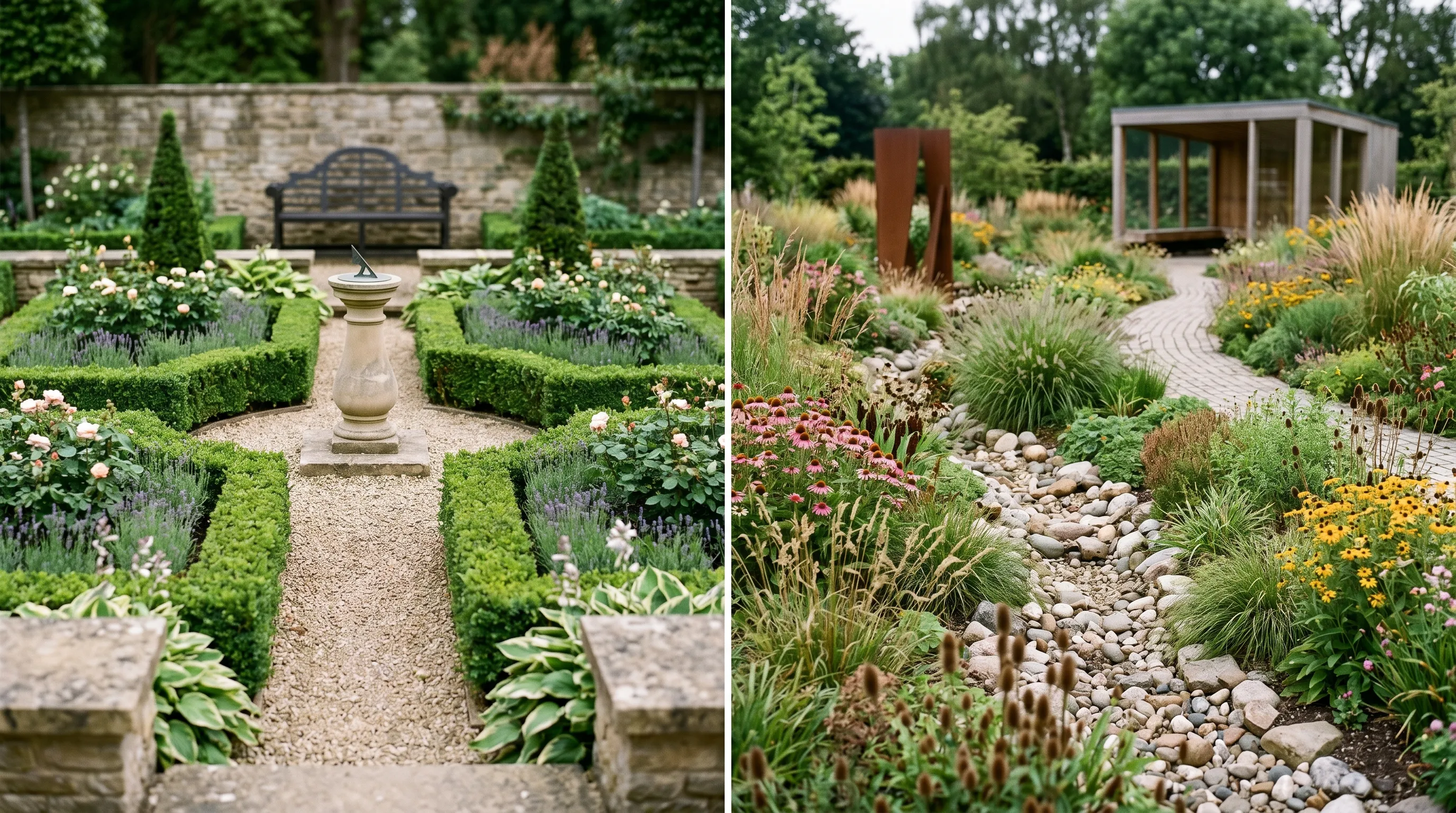 The 2010s formal style (left) versus the 2026 naturalistic rain-garden style (right). UK garden design has shifted decisively toward climate adaptation, biodiversity and lower maintenance across the intervening 15 years.
Now plan the Chelsea-inspired UK garden
Chelsea trends translate to home gardens with adaptation. Our contemporary cottage garden guide covers a related naturalistic UK approach. For the wider UK garden design framework, our planting plan guide covers cottage-style design. To support the wildlife that Chelsea 2026 emphasised, our wildlife garden guide covers habitat design. And for the show calendar beyond Chelsea, our Chelsea Flower Show guide covers visit planning and ticket strategy.
Lawrie has been gardening in the West Midlands for over 30 years. He grows his own veg using no-dig methods, keeps a wildlife-friendly garden, and writes practical advice based on real UK growing conditions.