Key takeaways
- Spend your money on structure (paths, edges, one good tree); get plants cheap or free
- Division, seed and cuttings can fill a whole border for the price of three parent plants
- Reclaimed brick, gravel and pallet timber cut hard-surface costs by 50-70% versus new
- Stage the build over two or three seasons so the cost spreads and nothing is rushed
- Buy perennials in 9cm pots, not 2-litre: they cost a third and catch up within a season
- A small-garden redesign costs £300-£800 DIY, against £5,000+ for a designed-and-built scheme
This guide shows you how to design a garden on a budget the way professionals actually do it: spend on the structure that lasts, get the plants cheap or free, and stage the work so the cost spreads. It includes the real UK numbers from a dozen budget redesigns, and the one rule that decides whether a cheap garden looks designed or just thrifty.
The rule that changes everything: structure before plants
Most people start a budget garden at the garden centre, fill a trolley with plants, and dot them about. The result almost always looks like a collection of plants, not a garden. The professionals do the opposite. They spend the early money on structure, the permanent bones of the plot, and add planting last.
The budget logic is simple. Structure is what you cannot easily change later and what makes the garden feel finished, so it earns the spend. Plants are cheap to source and easy to add over time, so they wait.
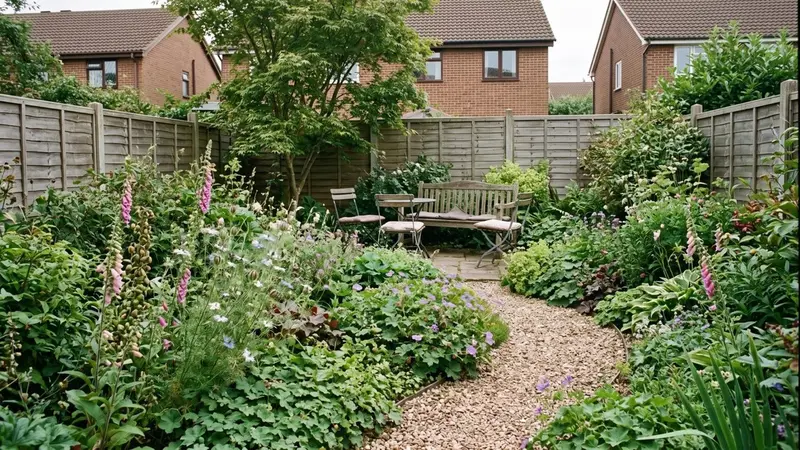
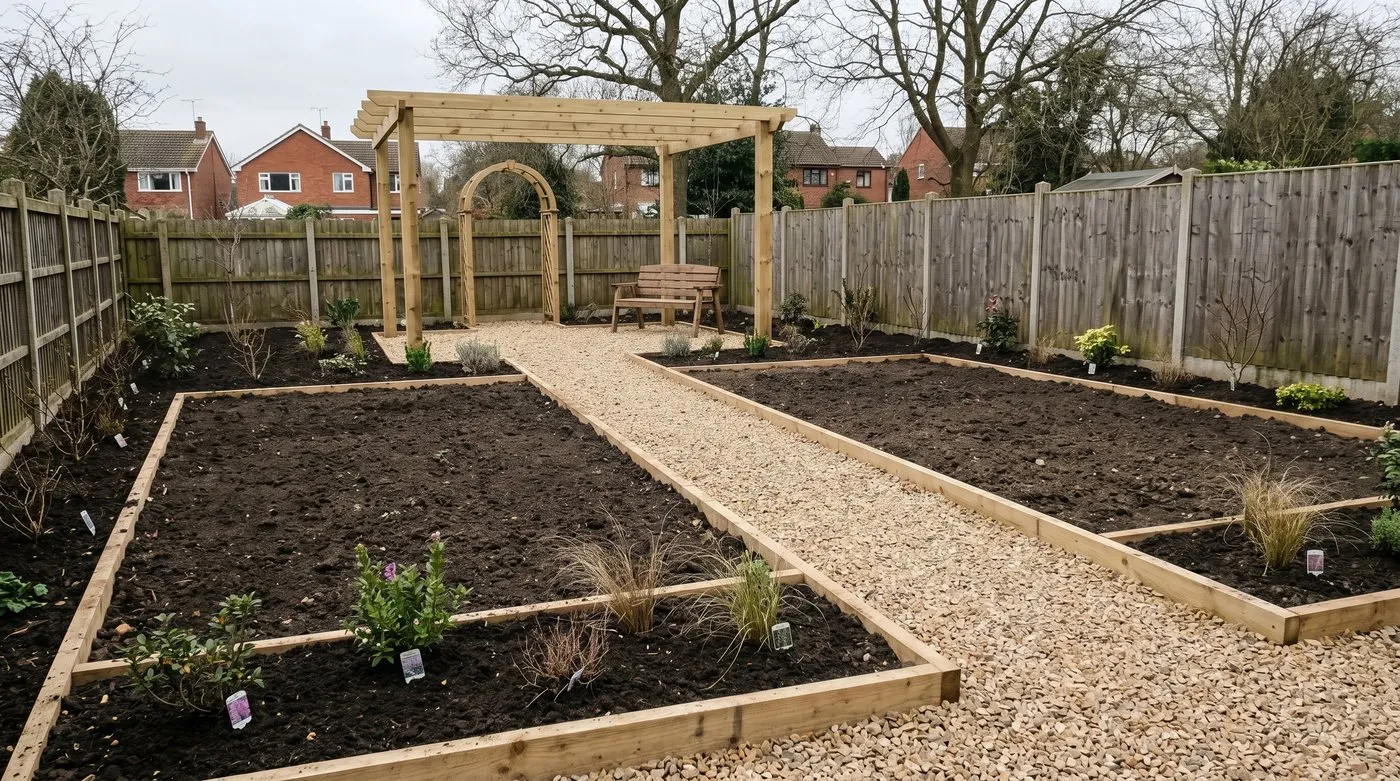 Structure first: a clear path and crisp timber edging make this plot read as designed before a single border is filled. The bones do the work that plants cannot.
Where to spend, and where to save
The pattern is clear. Permanent things that set the design earn the money. Everything that grows, fades, or can be replaced gets done on the cheap.
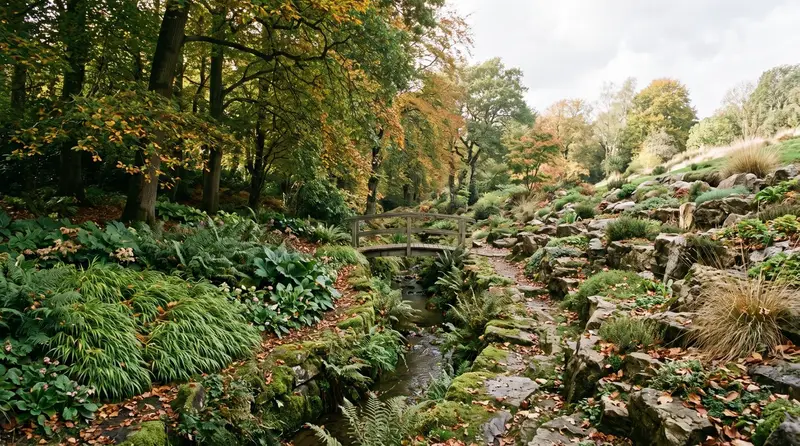
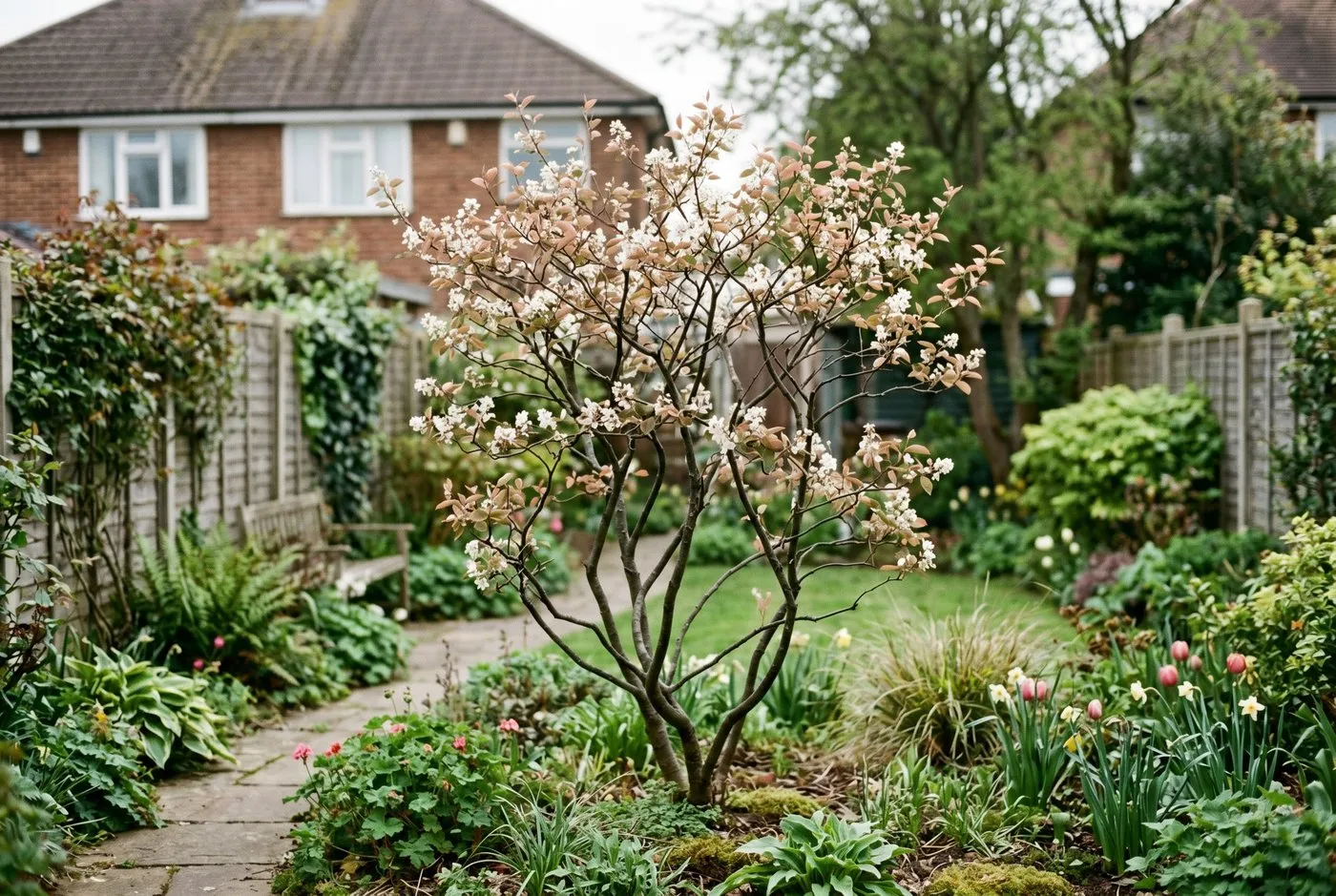 Spend the budget on one good multi-stem tree. A single Amelanchier anchors the whole garden for decades.
How to get plants for almost nothing
Plants are where budget gardens are won or lost. A border filled from a garden centre in 2-litre pots can swallow hundreds of pounds in an afternoon. The same border filled by propagation costs almost nothing and teaches you more.
Division: three plants become fifteen
Most clump-forming perennials, geraniums, hostas, daylilies, ornamental grasses, can be lifted and split into three to five pieces every few years, each a full plant. One mature parent fills a stretch of border for free. Autumn and early spring are the windows. Our guide to the best perennials for UK gardens shows which ones divide most generously.
Seed and cuttings
A £2 packet of hardy annuals, cosmos, calendula, nigella, fills gaps all summer. Shrubs like lavender, salvia, and hydrangea root readily from cuttings taken in summer. It is slower than buying, but a budget garden trades money for time, and propagation is the heart of that trade.
Swaps and surplus
Gardeners give plants away. Local gardening groups, plant swaps, allotment surplus, and “free to a good home” social posts are full of divided perennials and self-sown seedlings. Take what is offered and your borders fill for the cost of a trip across town.
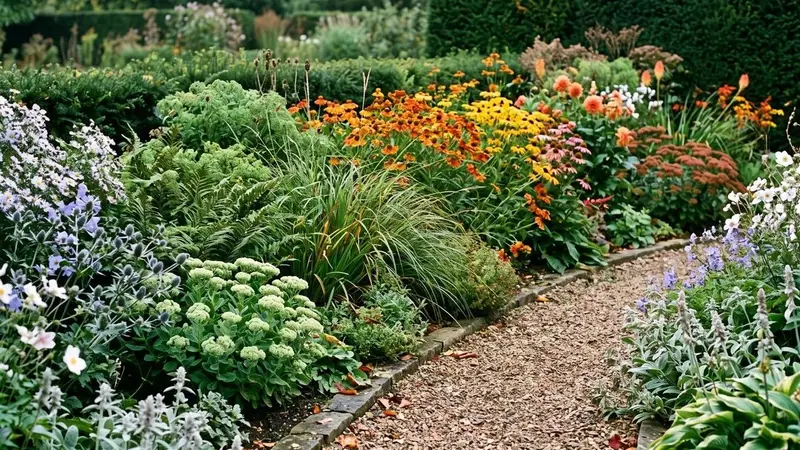
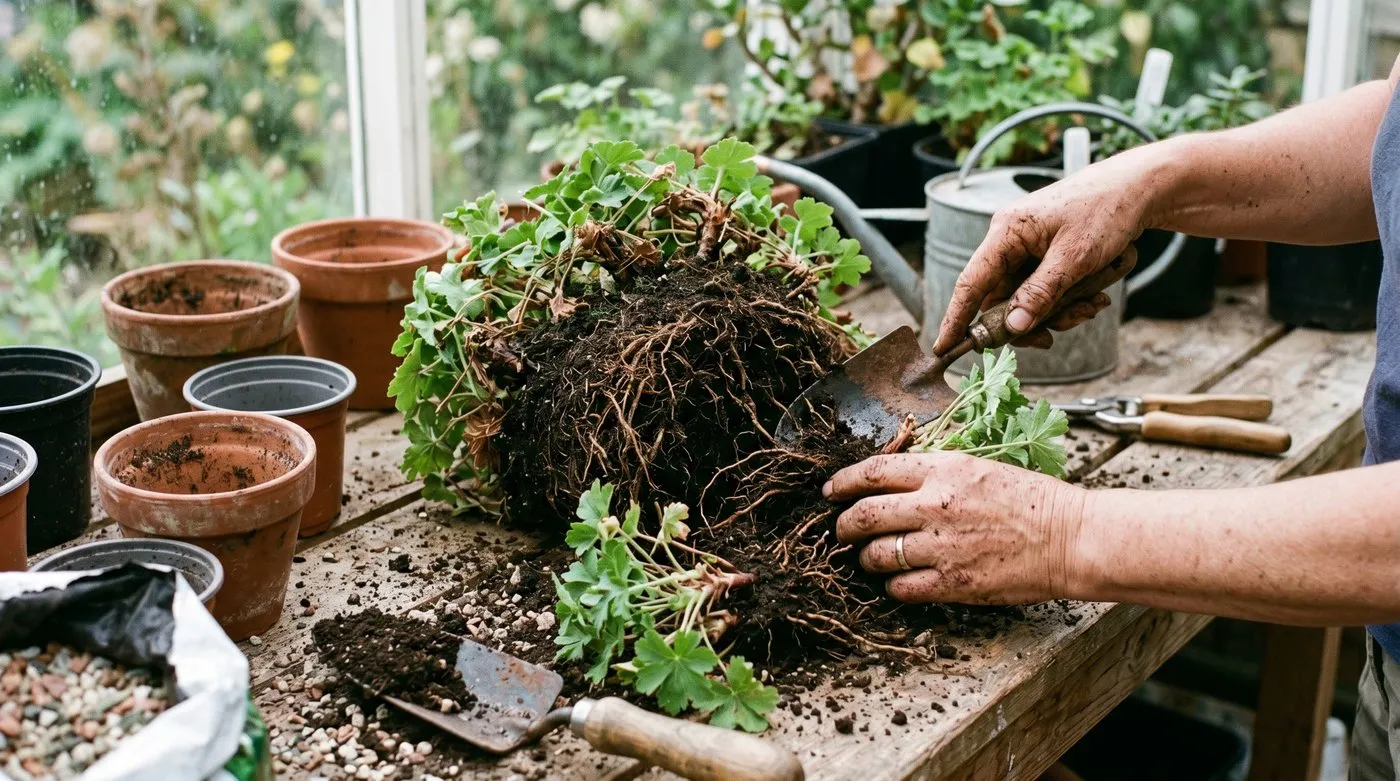 Division turns one perennial into several. A single mature clump split in autumn can fill a metre of border, which is why propagation is the biggest saving in any budget garden.
Cheap hard surfaces that still look good
You do not need expensive paving to make a path or a seating area. The trick is a proper base under a cheap surface, which always beats an expensive surface laid badly.
Avoid the false economy of the cheapest slabs laid on a thin bed of sand. They sink, crack, and look tired within two years. A good base under reclaimed materials lasts decades.
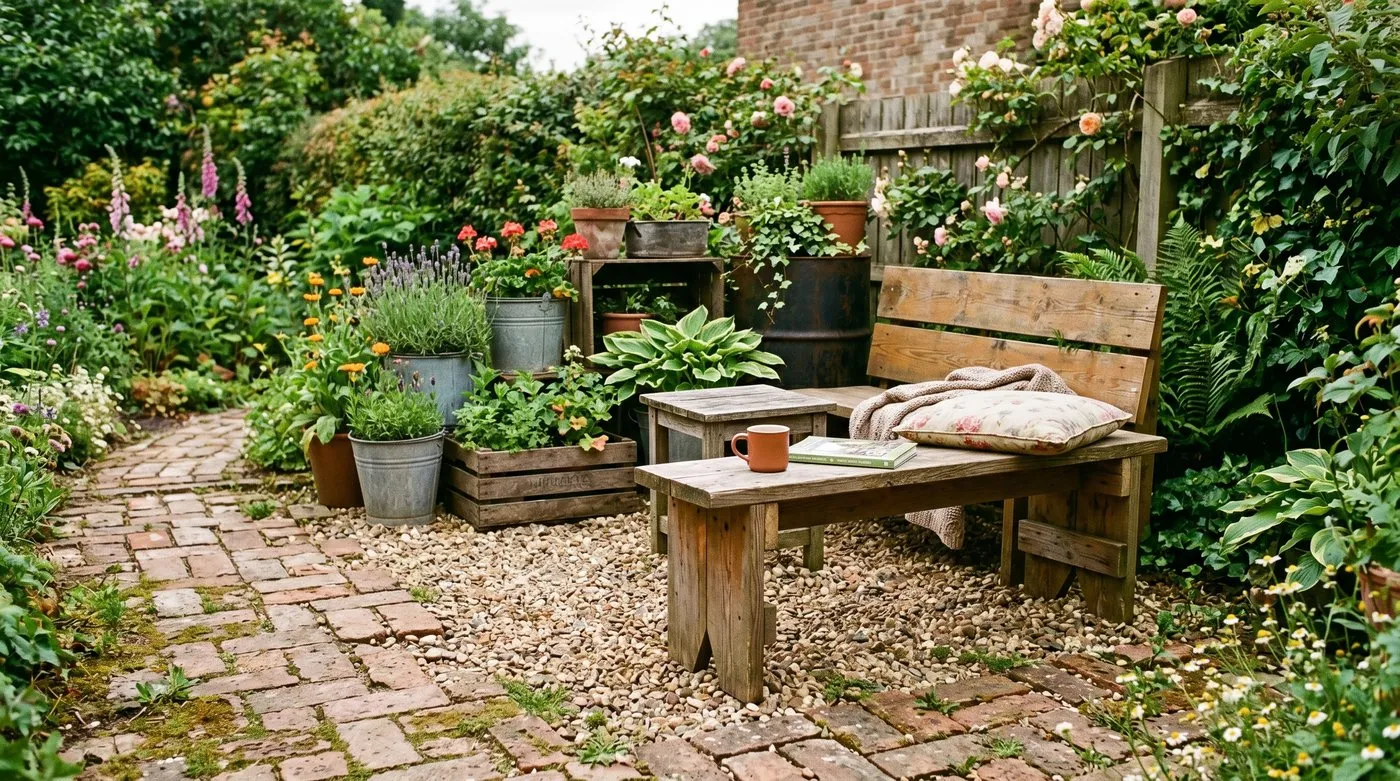 Reclaimed brick and gravel make a seating area for a fraction of new paving. The base underneath matters more than the surface on top.
Stage the work over several seasons
The fastest way to blow a garden budget is to try to finish in one go. You end up buying full-price plants in a hurry to fill space. Stage the work instead.
A typical three-season plan keeps costs low and quality high:
- Year one: structure. Lay paths, set edges, improve soil, plant the one focal tree. This is where the money goes.
- Year two: main planting. Fill the borders with divisions, seed-grown plants, and cuttings you started in year one. Buy only what you cannot propagate.
- Year three: refinement. Add containers, the final cuttings, and any furniture. By now the garden is established and you are filling gaps, not buying wholesale.
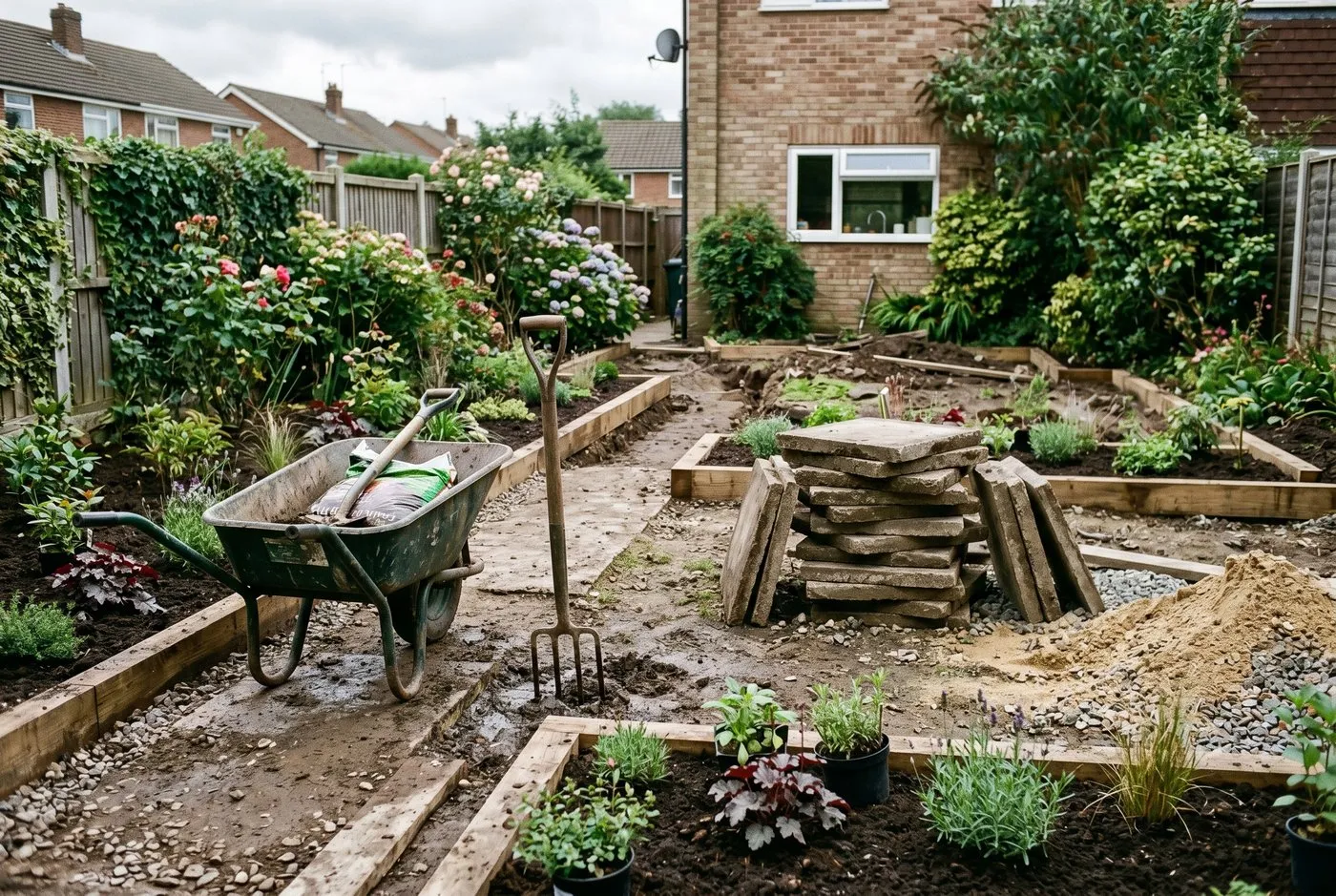 Stage the work over two or three seasons. Finish the structure and one border well rather than spreading thin.
A real budget: small garden, £300-£800
To put numbers on it, here is what a small-garden redesign actually costs done this way, against the contractor price for the same plot.
| Approach | Plants | Hard surfaces | Labour | Total |
|---|---|---|---|---|
| DIY, propagated, reclaimed | £50-£150 | £200-£500 | Your time | £300-£800 |
| DIY, bought plants, new materials | £400-£800 | £600-£1,200 | Your time | £1,200-£2,500 |
| Designed and built by contractor | £1,000+ | £2,000+ | £2,000+ | £5,000+ |
Matt’s Tip: Buy small, plant well. A perennial in a 9cm pot costs about a third of the same plant in a 2-litre pot and catches up within a season or two. Spend the difference on good soil improvement instead. A small plant in great soil beats a big plant in poor soil every time, and costs less.
Common budget garden mistakes
These errors quietly waste the money you were trying to save.
Spreading the spend too thin
A little money on everything leaves nothing looking finished. Concentrate the spend on structure and one focal point, and let the rest be cheap. A garden with strong bones and sparse planting beats one with weak bones and full borders.
Buying plants before the design
Plants bought on impulse rarely fit the plan and often die in the wrong spot. Design first, propagate to suit, buy last. Every plant should have a place before it has a price.
Cheap surface, no base
The classic false economy. Cheap slabs on sand sink and crack within two years. Spend on the base, save on the surface. A reclaimed brick path on good hardcore outlasts new paving laid badly.
Forgetting free wildlife value
Skipping soil improvement
Spending on plants while ignoring soil is throwing money away. Improve the soil first with bulk compost and homemade leaf mould, and every cheap plant performs like an expensive one.
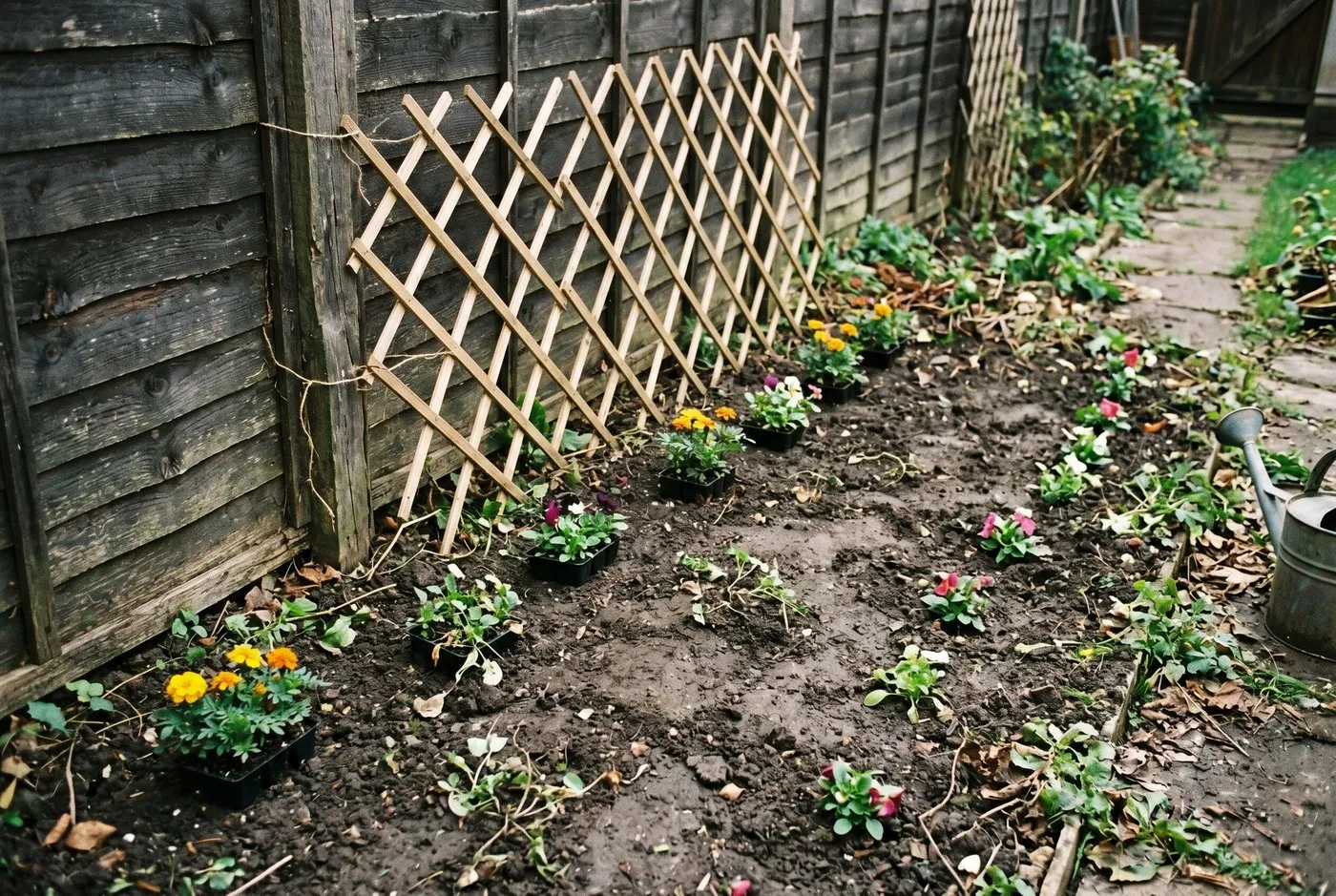 The classic budget mistake: scattered tiny bedding plants and flimsy trellis. Fewer, larger plants in bold groups look far better.
Frequently asked questions
How can I design a garden cheaply?
Spend on permanent structure and save on everything else. Lay out clear paths and edges first, then fill the borders with plants you grow from seed, division, or cuttings. Use reclaimed materials for hard surfaces and stage the work over several seasons. The design comes from good lines and one focal point, not from how much you spend on plants.
What is the cheapest way to transform a garden?
Gravel over a compacted base is the cheapest durable hard surface, at £25-£45 per square metre. Reclaimed brick and pallet timber cut costs further. For planting, grow your own from seed and division. The biggest saving of all is supplying your own labour, which is usually more than half the cost of a built scheme.
How much does it cost to redesign a small garden yourself?
A small-garden DIY redesign typically costs £300-£800 in materials if you propagate plants and use some reclaimed materials. The same plot designed and built by a contractor usually starts around £5,000. The gap is labour and the markup on supplied plants, both of which you remove by doing the work and growing your own.
Where should I spend money in a budget garden?
Spend on structure that lasts: a well-laid path, firm edging, good soil improvement, and one quality tree or focal point. These set the bones of the garden and rarely need redoing. Save on plants, containers, and decoration, which you can source cheaply or free and replace easily as the garden grows.
How do I get plants for free?
Divide existing perennials, take cuttings from shrubs, collect and sow seed, and swap with other gardeners. Many perennials divide into three to five plants every few years. Local gardening groups, plant swaps, and social media “free plant” posts are full of surplus. A single packet of hardy annual seed fills a border for under £2.
Is it cheaper to buy small plants or large ones?
Much cheaper to buy small. A perennial in a 9cm pot costs roughly a third of the same plant in a 2-litre pot and catches up within a season or two. Buy small, plant in good soil, and be patient. The only time to buy large is for an instant focal point like a single specimen tree.
How long does a budget garden makeover take?
Plan for two to three seasons. Doing the structure in year one, the main planting in year two, and the refinements in year three spreads the cost and lets you propagate your own plants as you go. Rushing a budget garden usually means buying full-price plants in a hurry, which is exactly the cost you set out to avoid.
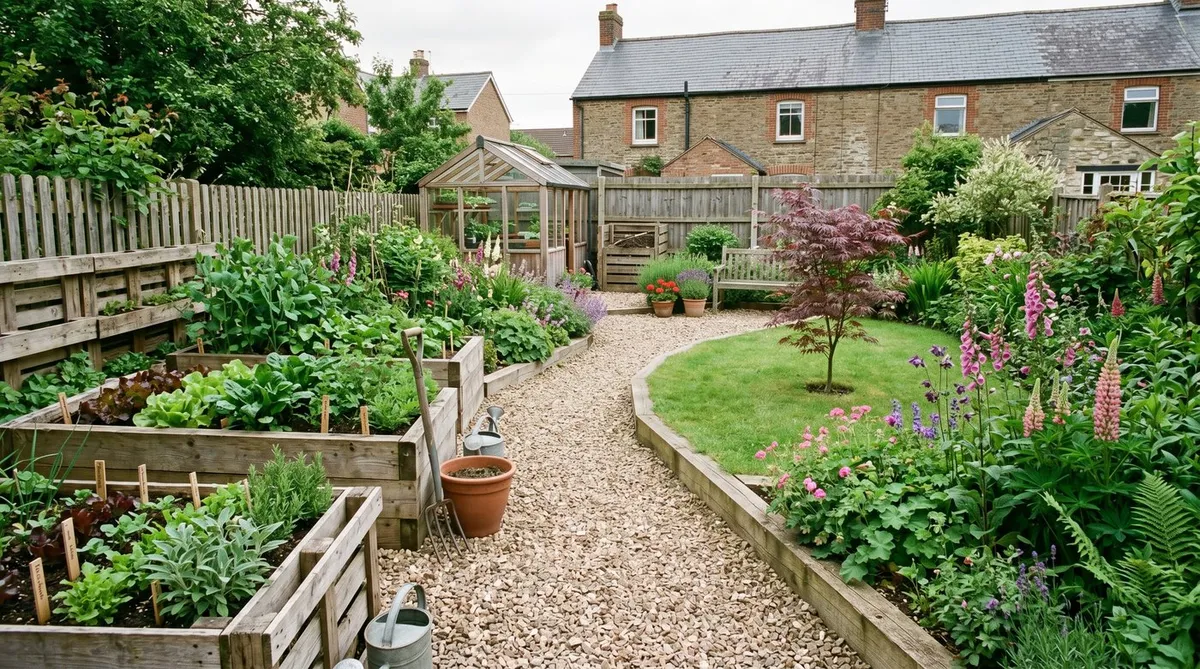
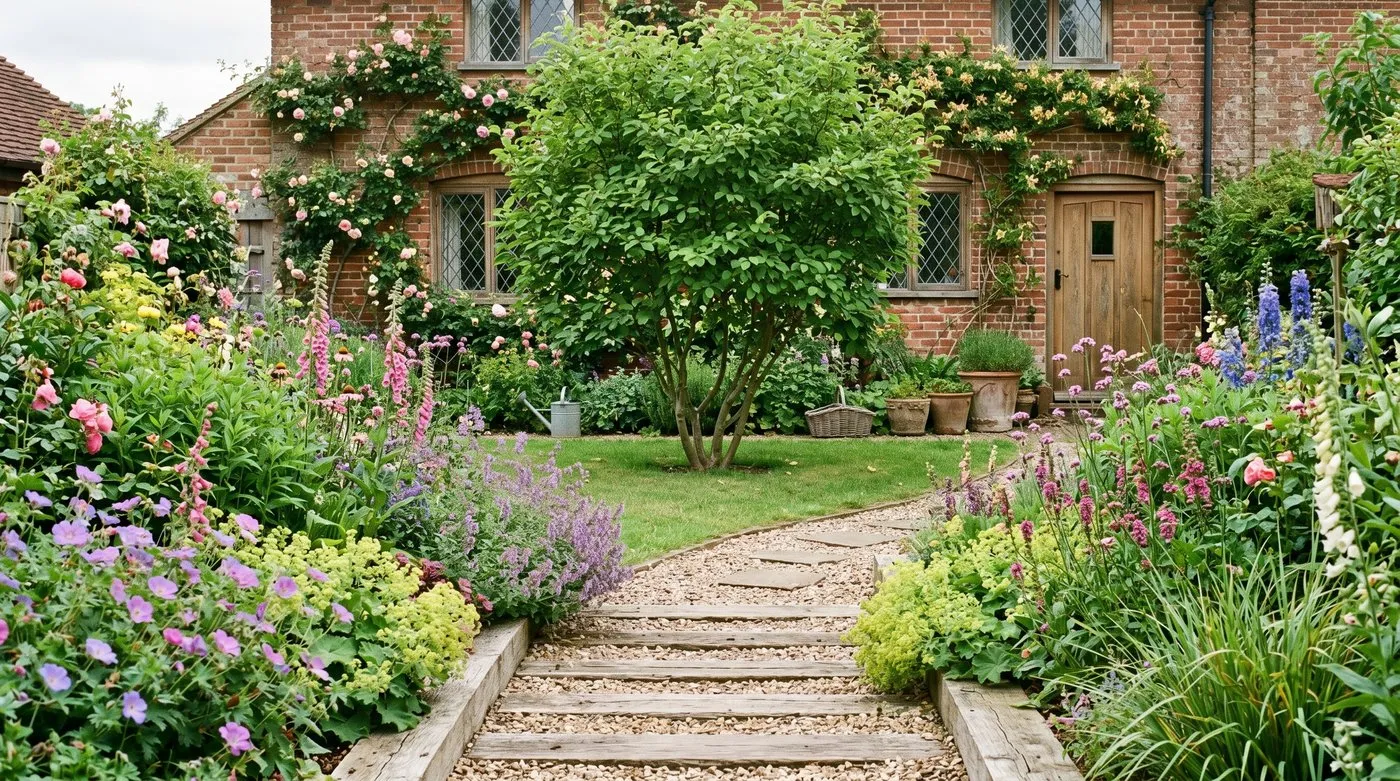 Two seasons of staged, propagated planting around strong structure and one focal tree. This is what a £500 garden looks like when the money goes to the right places.
Our team produces practical UK gardening guidance from source research, contributor records and established horticultural practice. Editorial standards are overseen by Matt W.