Key takeaways
- Wait one full year before removing anything; photograph the garden monthly
- Phase 1 is safety: reveal paths, find manholes and taps, clear hazards
- Repeated mowing tames rough grass into lawn over a single season
- Identify Japanese knotweed before strimming; cutting spreads it
- Tackle bramble, bindweed and ground elder by digging, not instant glyphosate
- Prioritise quick wins; a full rescue takes one to two seasons
A neglected garden looks like a disaster on day one. Waist-high weeds, brambles over the path, a fence you cannot reach. The instinct is to clear the lot in one weekend. Do not. The garden has secrets, and the rescue works far better as a calm, ordered plan than a panic.
After two full rescues at Staffordshire, the pattern is clear. Wait a year before you rip anything out. Work in phases, safety first. Keep the good bits the previous owner left behind.
Phase 0: Wait One Year Before You Touch It
The hardest advice is to do nothing structural for twelve months.
A neglected garden in January tells you almost nothing. Bulbs sit dormant underground. Perennials are cut to the soil. A self-sown sycamore looks the same as a 40-year-old apple. Dig in winter and you destroy things you would have paid good money for.
What the waiting year shows you:
- Spring bulbs: snowdrops in February, daffodils in March, bluebells in April
- Hidden perennials: rhubarb crowns, peonies, hardy geraniums pushing up in April
- Good trees and shrubs worth keeping versus self-sown rubbish
- Where the sun falls in June versus where it never reaches
- Which corners stay wet after rain and which dry out fast
Take one photograph from the same spot on the first of every month. After a year you have a free survey worth more than any plan drawn on paper.
Phase 1: Safety and Access First
Once the year is up, your first real work is safety, not beauty.
A long-neglected garden hides genuine hazards. Buried broken glass. Rusted wire. Forgotten ponds under brambles. Manhole covers and stop taps you must be able to find. Cut back enough to reveal the bones of the garden, then walk every inch of it.
Phase 1 checklist:
- Cut back growth blocking paths, gates and the back door
- Find the boundaries: where does your plot actually end?
- Locate manhole covers, the outside tap and any drain access
- Clear broken glass, sharp metal and rubbish into a skip
- Check for old wells, ponds or steps hidden under growth
- Identify hazardous plants before you cut anything (see below)
Identify the dangerous plants before you cut
Three UK plants change the plan completely. Find them before you strim.
Japanese knotweed has bamboo-like hollow stems, zigzag leaf nodes and shovel-shaped leaves. Never strim or dig it. A fragment the size of a fingernail starts a new plant. Confirm it against the gov.uk guidance on Japanese knotweed and treat it properly first.
Giant hogweed has huge umbrella flower heads and sap that burns skin in sunlight. Do not touch it bare-handed.
Brambles are not dangerous but they are the bulk of the work. Cut high first, then dig the crowns.
Phase 2: The Big Cut-Back
With hazards mapped, the satisfying work begins. This is where the garden starts to look rescued.
The big cut-back has three jobs: reclaim the lawn, cut overgrown shrubs hard, and lift the tree canopy so light reaches the ground.
Cut overgrown shrubs hard. Most UK shrubs respond well to hard renovation pruning. Take old laurel, dogwood and overgrown roses down by a third to a half. Do the bulk between November and March while they are dormant. Leave anything you cannot identify until after it flowers.
Lift the canopy. Remove the lowest tree branches to let light and air down to the soil. Small jobs are yours. Large limbs over a boundary or near a power line are a tree surgeon’s job, not a borrowed ladder’s.
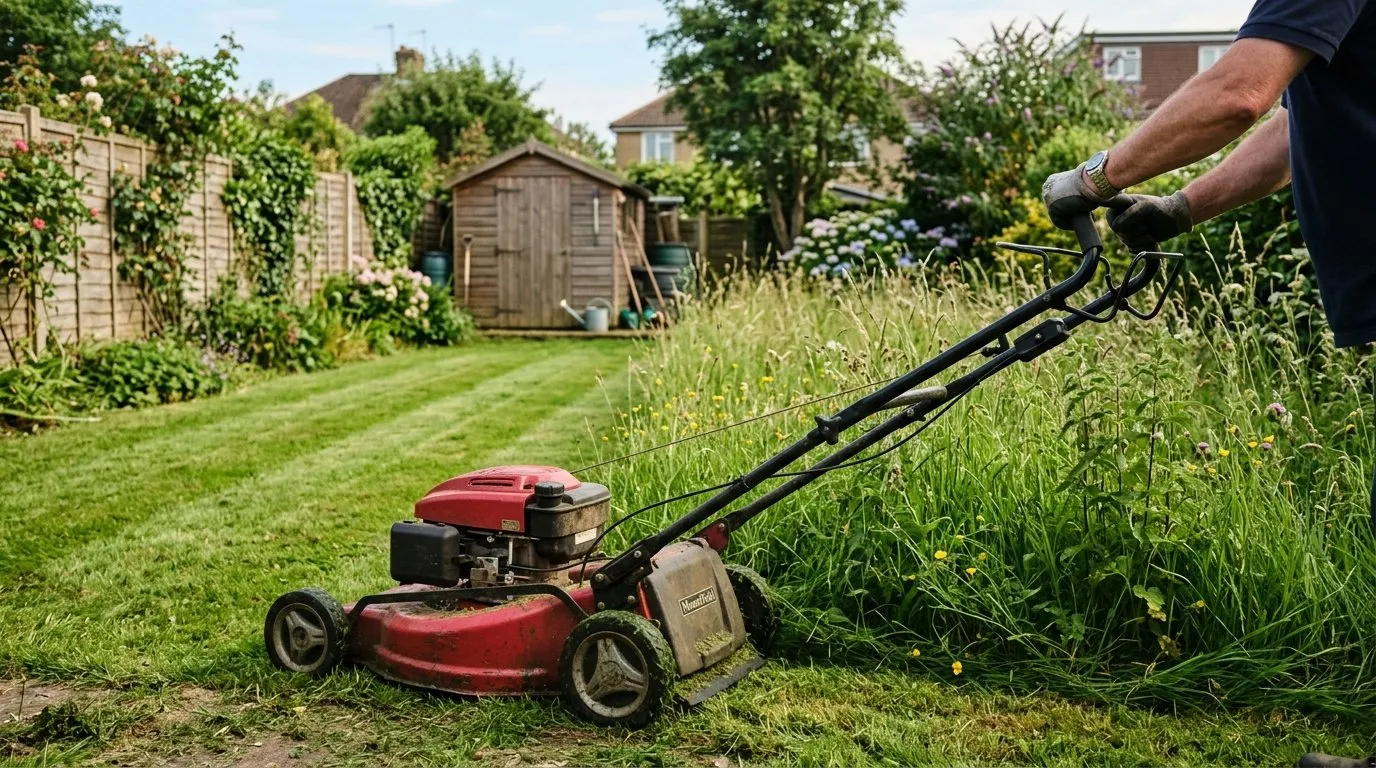 Reclaiming rough grass at Staffordshire in July. First cut on the highest setting, then dropped over six weeks. Repeated mowing alone turned a weed-choked patch into usable lawn in one season, no digging or turf needed.
Phase 3: Clear, Assess and Tackle the Weeds
Now the garden is open, you can see the soil and the borders properly.
Dig over the cleared borders by hand and you learn the soil in minutes. Heavy clay clings to the spade. Sandy soil falls away. Note where the worms are; plenty of worms means healthy ground.
Keepers versus goners. Be honest. Keep healthy mature shrubs, good trees, established fruit and any perennial you recognise. Lose self-sown saplings, diseased plants and anything in the wrong place that fights you every year.
Tackle the perennial weeds properly. Bramble, bindweed, ground elder, couch grass and nettle all regrow from root fragments. Reaching straight for glyphosate is rarely the right first move. Dig the roots out while the soil is open and you can follow them.
| Weed | How it spreads | Best clearance method |
|---|---|---|
| Bramble | Tip-rooting canes and crowns | Cut high, then dig out the crown |
| Bindweed | Brittle white roots, deep | Dig out every fragment; fork repeatedly |
| Ground elder | Spreading rhizomes | Sieve soil; remove all white roots |
| Couch grass | Underground runners | Fork through; lift every runner |
| Nettle | Yellow surface roots | Dig the mat; easy on open soil |
For a gentler approach to clearing weeds, our guide to organic weedkillers for UK gardens covers what works without harsh chemicals, and preventing weeds without chemicals explains mulching and ground cover that stops them coming back. If your reclaimed lawn is more weed than grass, our lawn weeds identification and control guide helps you name what you are dealing with.
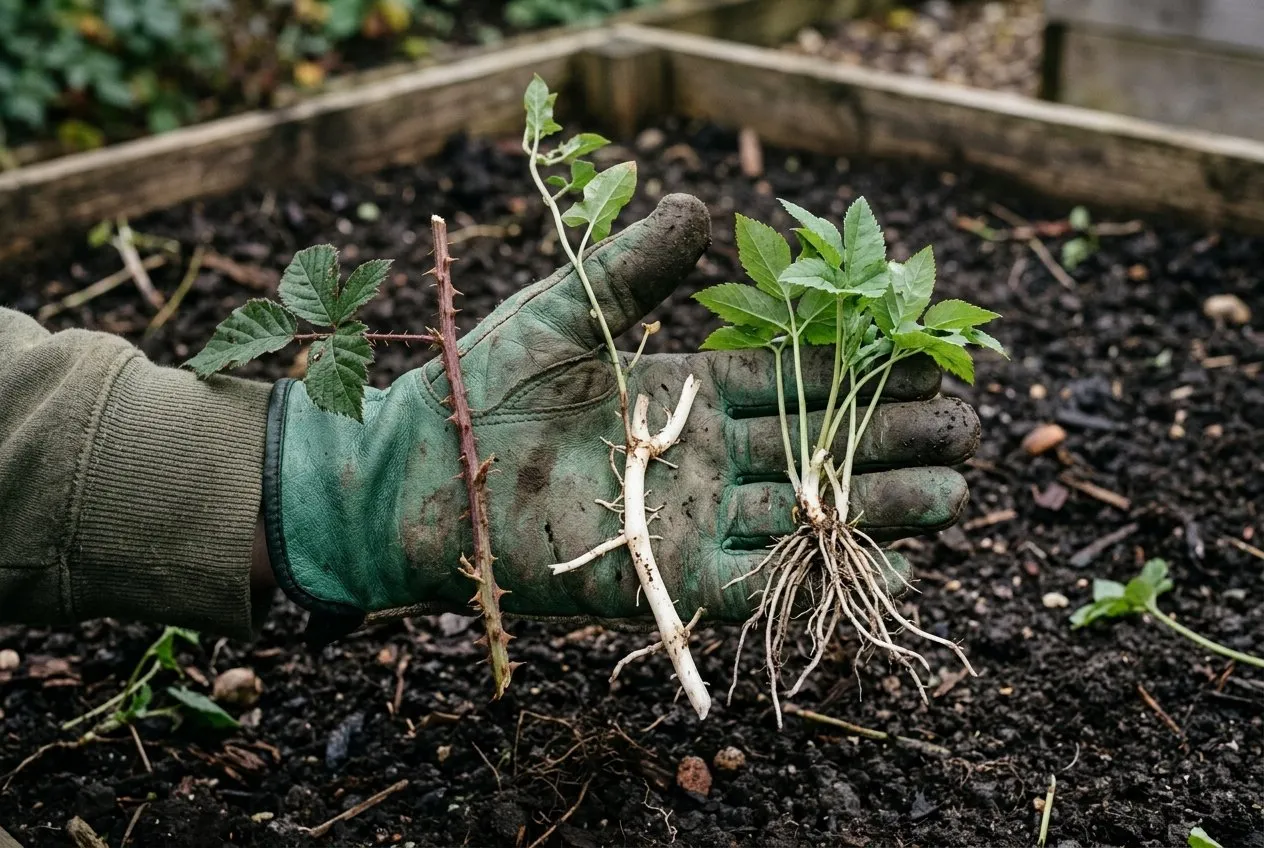 Three perennial weeds from a Staffordshire border in May: bramble, bindweed and ground elder. All regrow from root fragments. On open, cleared soil they pull out far more completely than under established planting.
Phase 4: Decide, Plan and Bank the Quick Wins
With the garden cleared and the soil known, you can finally plan.
You do not need a designer or a grand scheme. A pencil sketch of the plot, marked with sun, shade and wet areas from your photo survey, is enough to start. Mark what stays. Mark the path you actually walk. Mark where you want to sit in the evening sun.
Bank the quick wins first. A tidy edge, a cleared path and a mown lawn transform how a garden feels for very little money. Big planting schemes can wait for autumn.
Quick wins, in order:
- Edge the lawn cleanly with a half-moon edging iron
- Mulch the cleared borders to suppress weeds and feed the soil
- Repair or repaint the fence now you can reach it
- Plant a few cheap, fast perennials for instant colour
- Add one good seat in the sunniest dry corner
Tools, Time and Realistic Costs
A garden rescue costs less than people fear, but it costs time.
You need surprisingly little kit. A sharp spade, a bow saw, long-handled loppers, a half-moon edging iron, leather gauntlets and a wheelbarrow handle most of it. A petrol rotary mower earns its keep on rough grass. Hire a mini-digger or chipper for a day only if the job genuinely needs it.
| Job | Realistic time | Typical cost |
|---|---|---|
| Phase 1 safety clear (average plot) | 2-3 weekends | £50-£150 skip hire |
| Reclaiming a rough lawn by mowing | One season of weekly cuts | £0 beyond fuel |
| Hard-pruning overgrown shrubs | 2-4 days, spread over winter | £0, hand tools |
| Clearing perennial weeds by hand | Ongoing across one season | £0, your labour |
| Tree surgeon for one large tree | Half a day, professional | £300-£800 |
| Mini-digger hire for heavy clearance | One day | £80-£150 plus operator |
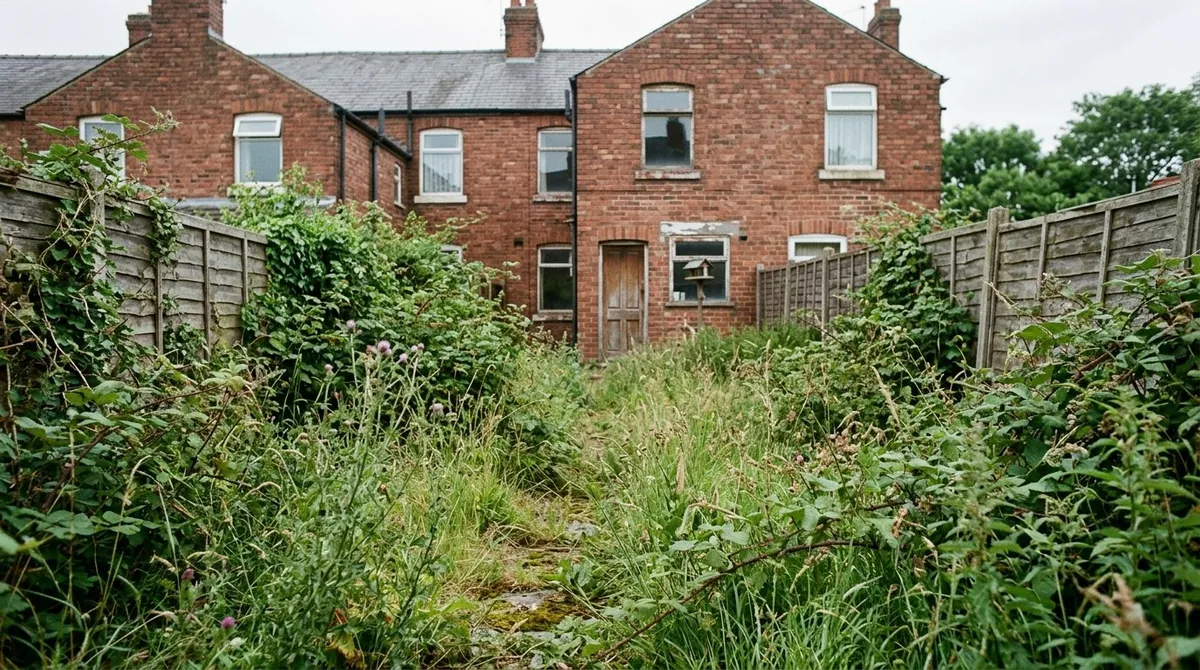
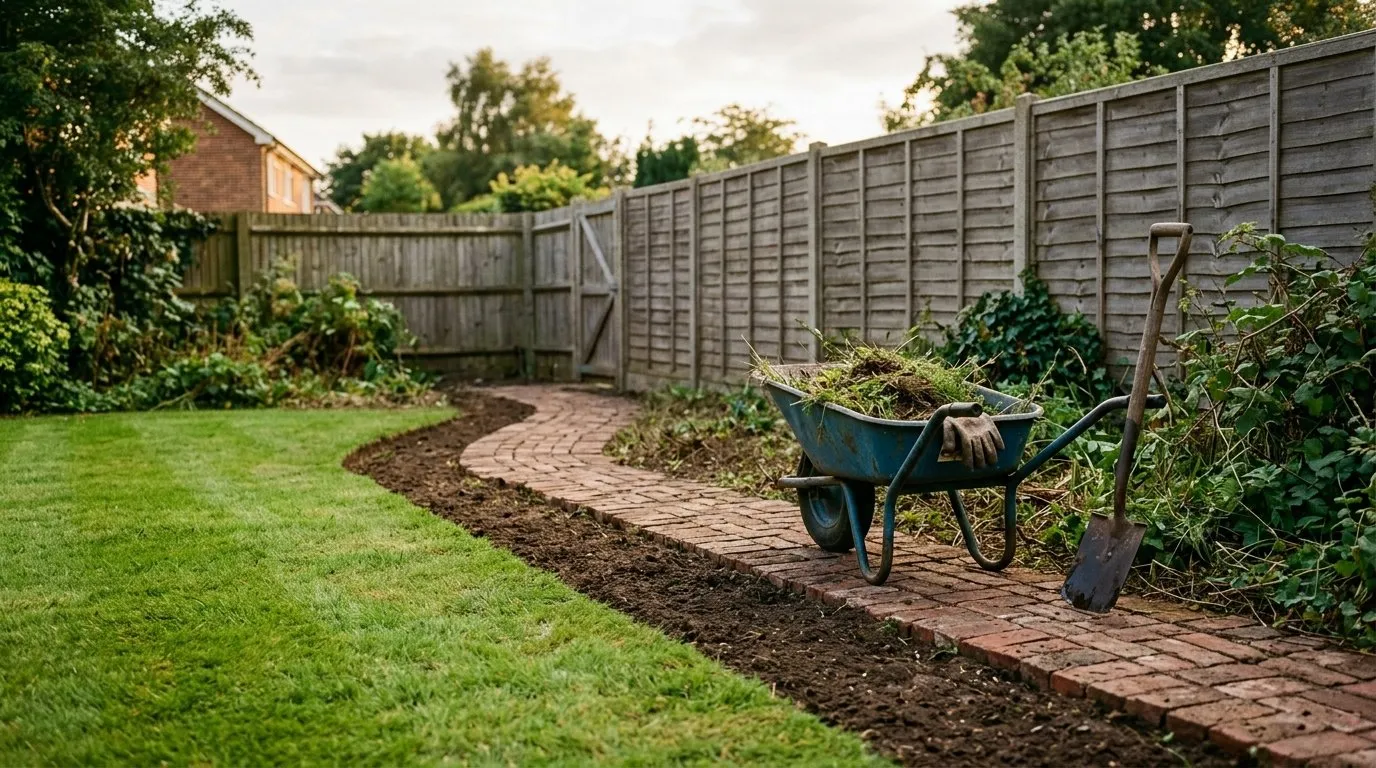 The same suburban plot part-cleared in late summer. The brick path was completely hidden under brambles in spring. Revealing the existing hard surfaces first, before any new building, saved both money and weeks of work.
What to Tackle, Season by Season
Timing makes the work easier and protects what you keep.
The waiting year teaches you the garden. The work year then follows the seasons. Hard pruning suits winter. Weeding suits the open soil of spring. Lawn reclaiming runs through summer. Planting and edging finish in autumn.
| Season | Main rescue jobs |
|---|---|
| Winter (Nov-Feb) | Hard-prune shrubs, lift tree canopy, clear hazards while growth is down |
| Spring (Mar-May) | Dig out perennial weed roots on open soil, watch for emerging bulbs |
| Summer (Jun-Aug) | Reclaim the lawn by repeated mowing, edge, mulch borders |
| Autumn (Sep-Nov) | Reseed bare lawn, plant keepers and quick-win perennials, repair fences |
Follow the order and the garden recovers in roughly the time it takes the seasons to turn once.
Frequently asked questions
Should I clear a neglected garden straight away?
No, wait one full growing year before removing anything. Dormant bulbs, perennials and good shrubs are invisible in winter. Photograph the garden on the first of each month. You will see what comes up, where sun and shade fall, and which areas stay wet. Then clear with knowledge instead of guesswork.
How do I get rid of a lawn full of weeds and long grass?
Mow it repeatedly rather than digging it up. Rough grass and many weeds cannot survive regular cutting. Set the mower high for the first cut, then drop the height over six to eight weeks. By late summer most rough grass tames into a usable lawn. Reseed bare patches in September.
How do I identify Japanese knotweed before clearing?
Look for bamboo-like hollow green-and-red stems with zigzag leaf nodes and shovel-shaped leaves. It dies back to brown canes in winter. Never strim or dig suspected knotweed; cutting spreads it through tiny fragments. Confirm with the RHS or gov.uk guidance, then treat it properly or hire a specialist before any other work.
What is the cheapest way to rescue an overgrown garden?
Hand tools, repeated mowing and patience cost almost nothing. A bow saw, loppers, a sharp spade and a wheelbarrow handle most of the work. Hire a mini-digger or tree surgeon only for genuine hazards. Most of the real saving comes from keeping the plants already there instead of buying new ones.
When should I call a professional for an overgrown garden?
Call a pro for large dangerous trees, suspected Japanese knotweed, or giant hogweed. Tree work near power lines or over boundaries needs a qualified surgeon. Knotweed often needs a licensed treatment plan for mortgage purposes. Everything else, including the big cut-back, is within reach of a fit gardener over a season.
Now plan the rest of your rescued garden
Our team produces practical UK gardening guidance from source research, contributor records and established horticultural practice. Editorial standards are overseen by Matt W.