Key takeaways
- Lay the main lawn, patio or path at 45 degrees, not parallel to the fences
- A circular lawn or patio ignores the angled boundaries completely
- Split the plot into 2-3 zones so the full triangle is never visible
- Turn the narrow tip into a focal point: a tree, obelisk or hidden seat
- Deep borders of 1.2m or more blur the acute corners and soften the shape
- Corner plots need layered hedging for privacy from two or three frontages
A triangular or wedge-shaped garden has no natural rectangle to work with. The boundaries pull away from each other, and the eye gets dragged straight to the awkward narrow point. The trick is to stop fighting the shape and design across it on the diagonal instead.
After designing three of these plots across Staffordshire and the West Midlands, the pattern is clear. Work on the diagonal. Hide the sharp tip behind a focal feature. Blur the corners with deep planting.
Why Triangular Gardens Feel Awkward
The problem is sightlines. In a square garden the eye runs straight down the length and stops at the back fence. In a wedge-shaped plot the two side fences converge, so the eye is funnelled to a single point. That point is usually a sharp, useless acute corner.
Most people then make it worse. They lay a straight lawn against the longest boundary and a straight path down the middle. Every line now points at the tip. The garden announces its own awkward shape.
You see this most on three plot types:
| Plot type | Where the triangle comes from | The usual mistake |
|---|---|---|
| Corner plot | Two roads meeting at an angle | Square lawn squashed against one road |
| Tapering rear garden | Plot narrows away from the house | Straight path running to the narrow end |
| Front triangle | Pavement cuts across at an angle | Bare gravel and no privacy |
The fix for all three is the same idea: stop drawing parallel to the fences.
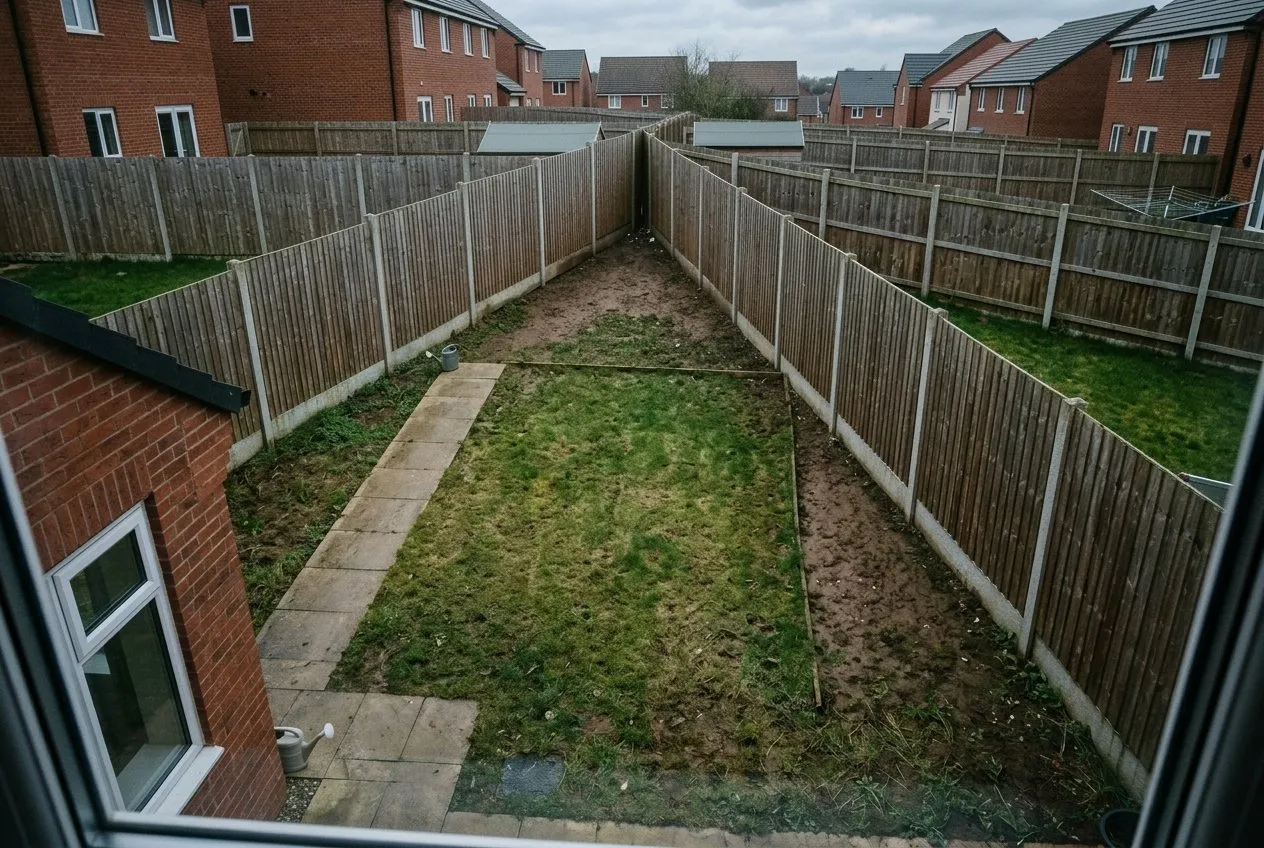
Idea 1: Work On The Diagonal
The single most useful move is to rotate the whole design 45 degrees to the boundaries.
A diagonal cuts the longest possible line across a triangle. Instead of the eye stopping at the narrow tip, it travels corner to corner across the widest span. The fences become a backdrop rather than the main event.
In practice this means:
- Set the lawn or patio at 45 degrees to both side fences
- Run the main path on the diagonal, not down the centre
- Place the longest view from the back door across the widest part
- Let the triangular gaps left at the edges fill with deep planting
The leftover triangles along the fences are not waste. They are exactly where borders, a shed or a compost area go. The useful rectangle sits in the middle, turned on the angle.
Idea 2: Use Curves And Circles
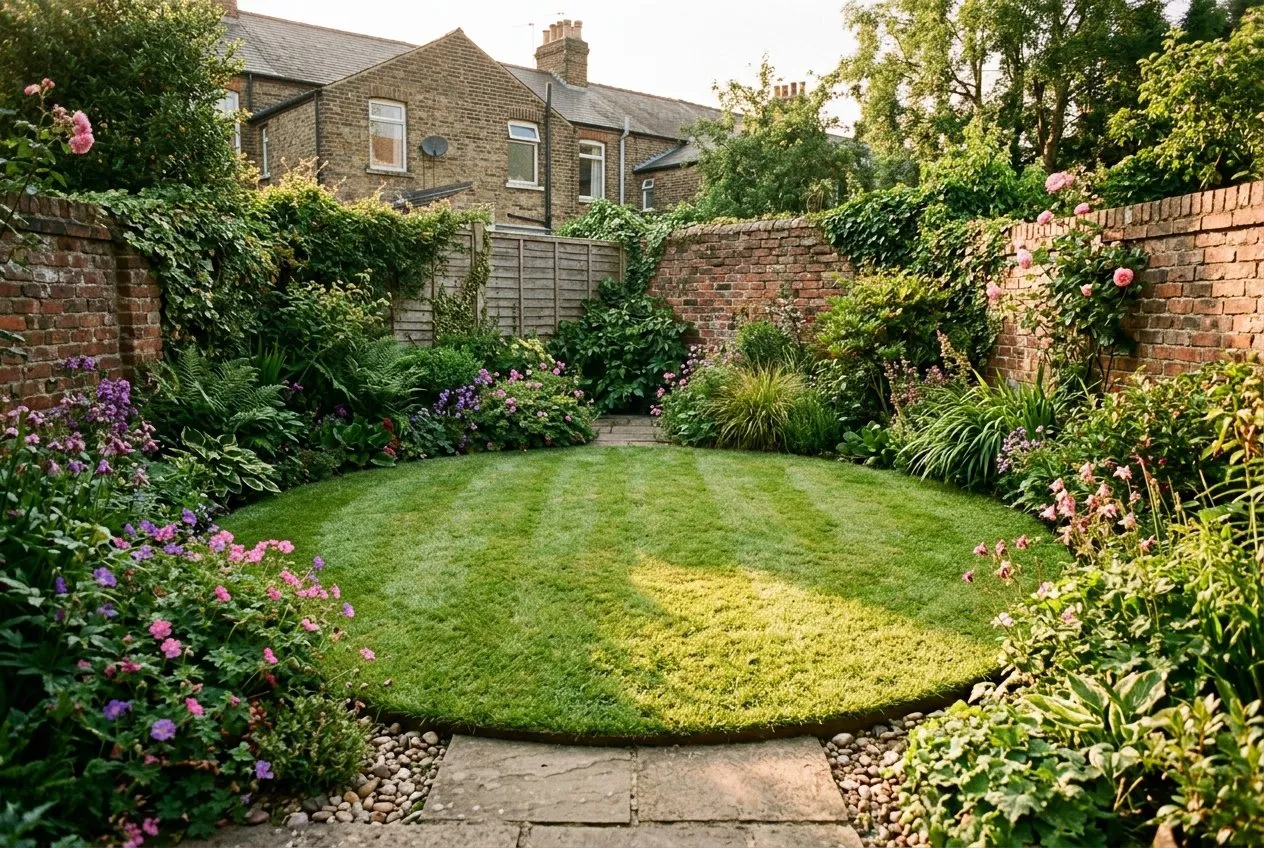
A circle has no sides to clash with the fences. That makes it the perfect shape for a triangular plot.
Set a circular lawn or a circular patio in the centre of the garden and it simply ignores the angled boundaries. The eye follows the curve round and never notices that the fences are converging behind the planting. The shape reads as deliberate, not accidental.
A circular lawn or patio works because its geometry does not compete with any boundary. Fill the remaining wedges with deep planting and the eye follows the curve instead of the converging fences.
Curves work elsewhere too:
- A curved path that sweeps rather than points
- Curved border edges that soften the acute corners
- A round pond or a circular gravel seating area at the wide end
Idea 3: Divide Into Zones
The reason a triangle looks awkward is that you see the whole shape at once. So stop showing the whole shape at once.
Split the plot into two or three garden rooms. A screen, an arch, a hedge or a change of level breaks the sightline. You only ever see one part of the garden at a time, and no single view contains the full triangle.
A common plan for a tapering rear garden:
- A wide patio zone nearest the house, in the broadest part
- A lawn or planting zone in the middle, behind a low screen or arch
- A quiet seating or working zone at the narrow far end
Each zone feels like its own space. The journey between them gives the garden depth. Dividing the plot also lets you hide the worst of the taper in the last room, where it does no harm.
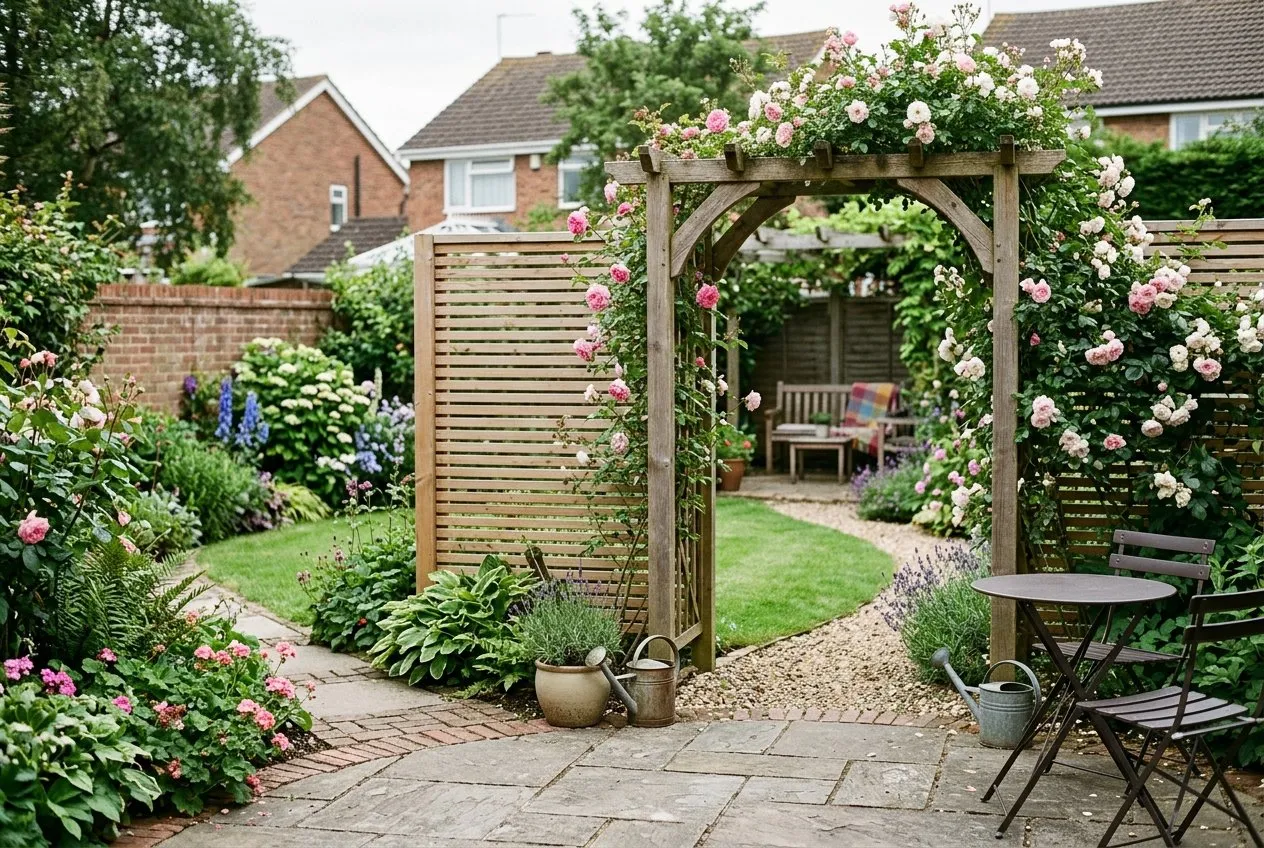 A cul-de-sac wedge plot split into rooms with a timber screen and a planted arch. You never see the whole triangle in one view. Each zone reads as its own space, and the awkward shape disappears.
Idea 4: Make The Narrow Point Do A Job
The acute tip drags the eye, so give the eye something worth arriving at. Turn the point into a focal feature instead of dead space.
Good uses for the narrow point:
- A small tree such as Amelanchier lamarckii or a multi-stem birch
- An obelisk with a climbing rose or clematis
- A hidden seating nook, screened so it is a surprise
- A store, shed or bin store tucked into the angle
- A small raised pond or a water bowl
The point becomes a destination. Your eye travels the diagonal towards it, which is exactly the sightline you want. The trick is to make the tip the reward, not the problem.
Idea 5: Blur The Boundaries With Planting
Deep borders are the quickest way to lose a triangle. A thin 30cm strip along a fence does nothing. A border 1.2m or deeper softens the line and swallows the acute corners.
Layered planting hides where the fences meet. Put tall shrubs or small trees at the back, mid-height perennials in front, and ground cover at the edge. The eye reads green depth, not a hard angled corner.
Practical planting moves for a triangle:
- Make the corner borders the deepest, 1.5m or more
- Plant the sharpest corner densely so the angle never shows
- Use evergreen structure so the corners stay hidden in winter
- Repeat two or three key plants around the garden to tie it together
Repetition matters in an odd-shaped plot. Running the same grass or the same shrub through every border unifies a space that the boundaries are trying to pull apart.
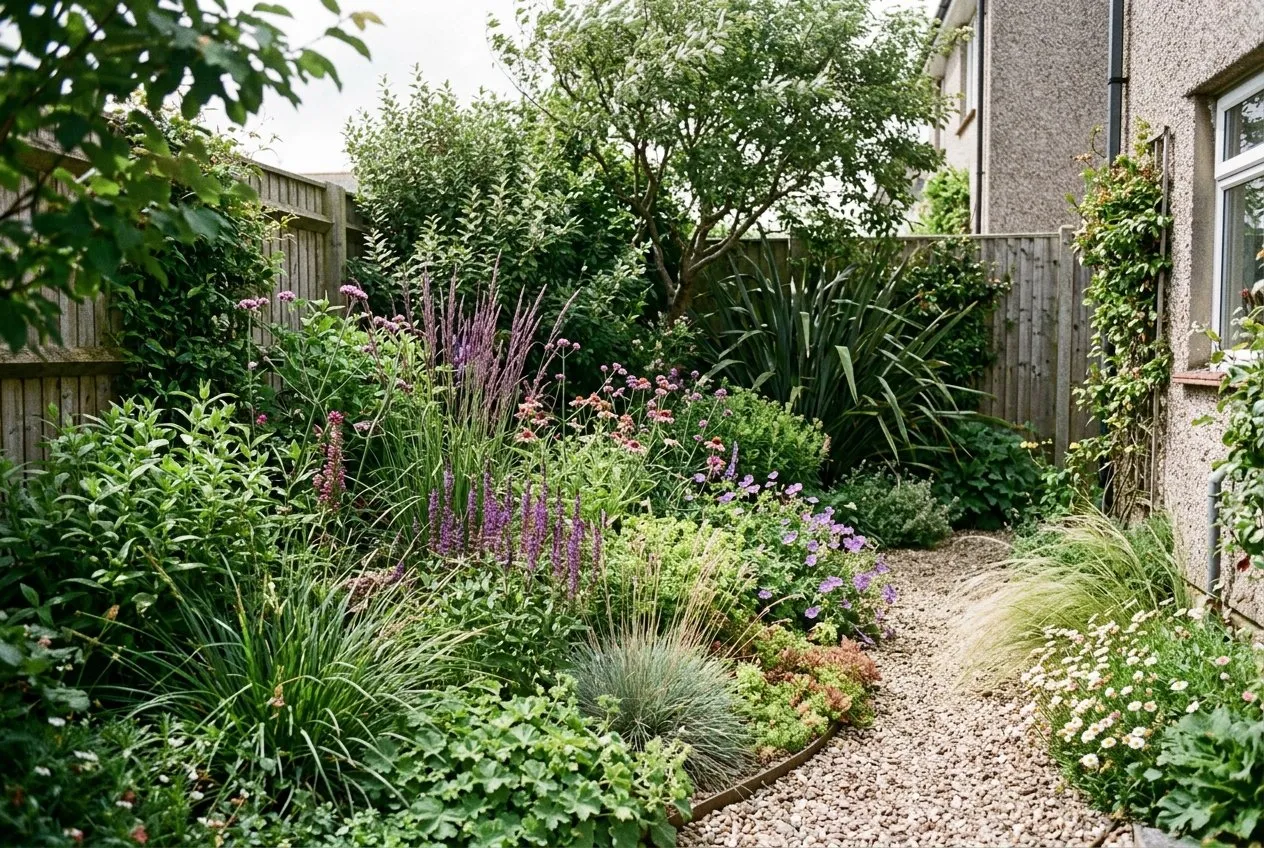 Deep layered borders, 1.5m at the corner, hiding where two fences meet in a seaside-town plot. The eye reads green depth, not a hard angle. Evergreen structure keeps the corner hidden through winter.
Idea 6: Make A Triangle Look Bigger
False perspective is an old trick that suits triangular plots perfectly, because they already taper.
Lean into the taper. Put bold, warm plants and larger leaves near the house. Put cooler, smaller, finer-textured plants at the far narrow end. Warm colours feel close; cool colours feel far away. The garden reads as longer than it is.
A path that narrows slightly as it runs away from you exaggerates the depth. So does a smaller piece of furniture or a scaled-down feature at the far point. These tricks make the awkward narrow end work for you.
A few rules that hold up:
- Big leaves and warm colours near the house, fine and cool at the far end
- Narrow the path gently towards the tip
- A reflective surface, water or a mirror at the point adds false depth
- Lighter foliage recedes, so plant silver and pale greens at the tip
Corner Plots And Front Triangles
Corner plots come with their own problem: privacy. They usually face two or three road frontages, so the garden is overlooked on more than one side.
The answer is layered hedging, not a single tall fence. A solid 2m fence on a corner feels like a fortress and often breaks planning rules at the front. Instead, set a 1.5-2m hedge of hornbeam, yew or beech behind a low front border. Stagger the heights so it reads as planting, not a wall.
For front triangles, keep it simple and low-maintenance. A small tree, a clipped evergreen and a gravel or planted area give kerb appeal without demanding much. Privacy is less of an issue at the front, so the goal is to look deliberate from the pavement.
Designing on the diagonal gives the longest available sightline and stops the eye being dragged straight towards the narrow point. A circular lawn or patio ignores the angled fences, while two or three zones prevent the whole triangle being read at once. Turn the acute point into a destination with a small tree, sculpture or seat, then repeat a short plant palette to unify the layout.
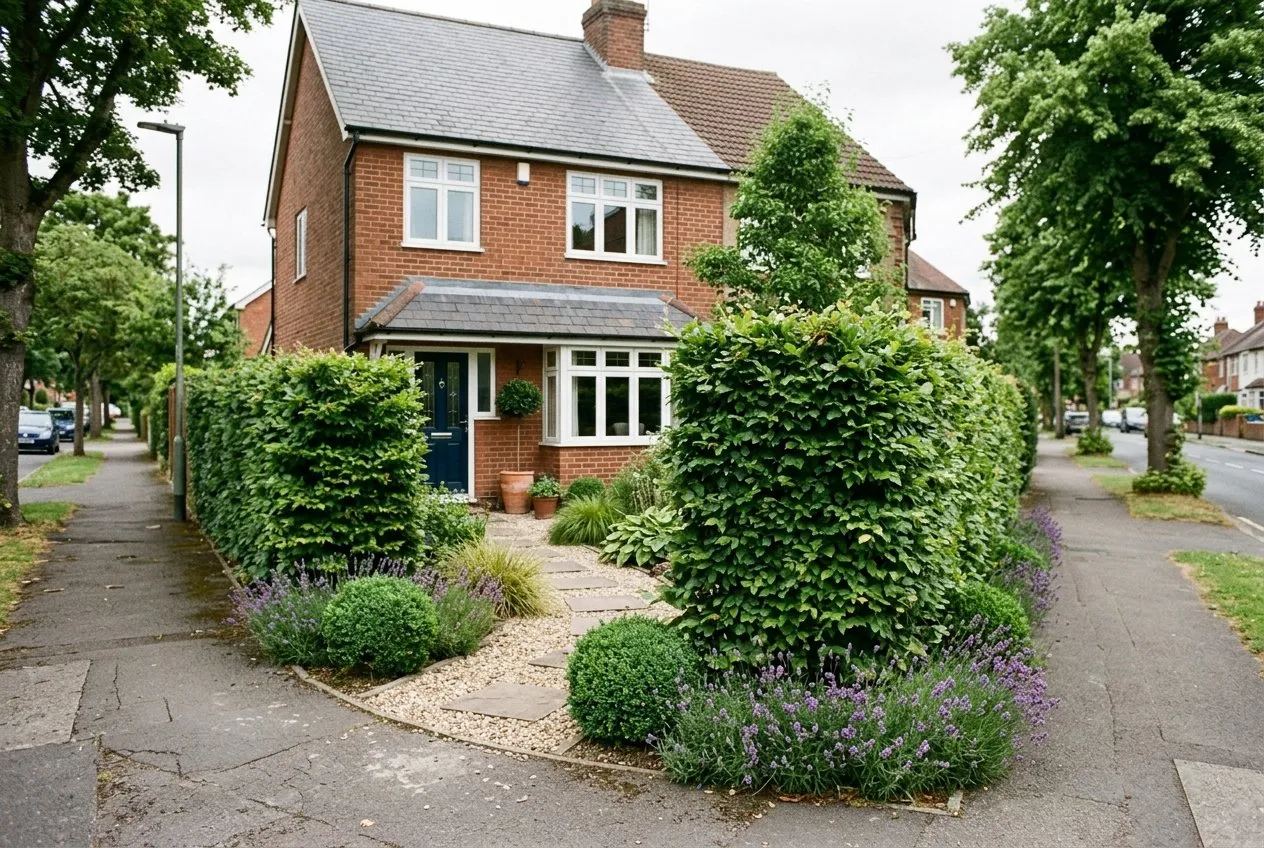 A corner-plot front garden screened with a layered hornbeam hedge behind a low border. Staggered heights give privacy from two frontages without the fortress look of a solid 2m fence.
A Quick Comparison Of The Strategies
Different plots suit different fixes. Here is how the seven ideas stack up.
| Strategy | Best for | Effort | What it hides |
|---|---|---|---|
| Diagonal layout | Any triangle | Design only | The narrow point |
| Circular lawn/patio | Medium and large plots | Moderate | All angled fences |
| Zoning into rooms | Long tapering gardens | Higher | The whole shape at once |
| Focal point at tip | Sharp acute corners | Low | The dead-end feeling |
| Deep blurred borders | Every triangle | Planting time | The acute corners |
| False perspective | Narrow tapering plots | Low | The short length |
| Layered hedging | Corner plots | Higher | Overlooking neighbours |
Most good designs combine three or four of these. A diagonal lawn, deep corner borders, a focal tree at the tip and a screen across the middle will rescue almost any wedge.
The garden design trends guide shows how curves and zoning are being used in UK gardens right now. For the wider principles behind every move here, the Society of Garden Designers is the UK professional body worth reading.
Frequently asked questions
How do you design a triangular garden?
Rotate the whole design 45 degrees to the boundary fences. This creates the longest sightline across the plot and hides the awkward narrow point. Use a circular lawn or patio, divide the space into zones, and turn the acute tip into a focal feature like a tree or seat.
Why does a wedge-shaped garden look awkward?
The eye is dragged straight to the narrow point. Most people then square everything off against the longest fence, which highlights the taper. A diagonal or circular layout breaks that sightline and makes the shape feel deliberate rather than a mistake.
What can I put in the narrow point of a triangular garden?
Turn the tip into a focal feature, not dead space. A small tree, an obelisk, a hidden seating nook, a store or shed, or a small pond all work. The point becomes the destination your eye travels to, which disguises the awkward angle.
How do I make a corner plot garden private?
Use layered hedging, not a single fence line. Corner plots usually face two or three road frontages. A 1.5-2m hedge of hornbeam or yew, set behind a low front border, gives privacy without feeling like a fortress. Stagger heights so it reads as planting, not a wall.
Where should the patio go in a triangular garden?
Not always against the house. Place the patio where you get sun and the best view back across the plot, often at an angle in the widest part. A circular patio set away from the boundaries works well and follows the sun rather than the fence line.
Now plan your own triangular plot
Our team produces practical UK gardening guidance from source research, contributor records and established horticultural practice. Editorial standards are overseen by Matt W.