Key takeaways
- A standard 240L wheelie bin measures about 1100 x 580 x 740mm; measure yours before you build or buy
- DIY timber bin stores cost £80 to £150 in materials; bought wooden stores run £150 to £400
- Leave 20mm clearance each side and a 40mm base gap so bins slide out and air moves
- Stand any store on slabs or gravel, never bare soil, or the base sinks 20 to 40mm and the timber rots
- Never block the pull-out route to the kerb; many UK councils require bins presented at the property boundary
Working out how to hide wheelie bins is the single most common front-garden problem we get asked about. Good wheelie bin storage takes three ugly plastic boxes off the kerb and hands you back the first thing visitors see. The fix is not hard, but it is easy to get wrong. Build too small and the lids will not open. Skip the base and the whole thing sinks into wet ground within a year.
This guide ranks seven ways to hide bins, from a simple timber store to a living screen. It gives real UK sizes and costs, and the one rule most people forget: the collection crew still has to reach the bins. Get the size, the base and the access right, and a bin store lasts a decade.
Why UK front gardens end up ruled by bins
Most UK homes now juggle three or four wheelie bins: general waste, mixed recycling, garden waste and often a separate food caddy. Fortnightly collections mean bins live at home for two weeks at a time, and the front garden is usually the only spot near the kerb. So the bins sit on show, right where the house makes its first impression.
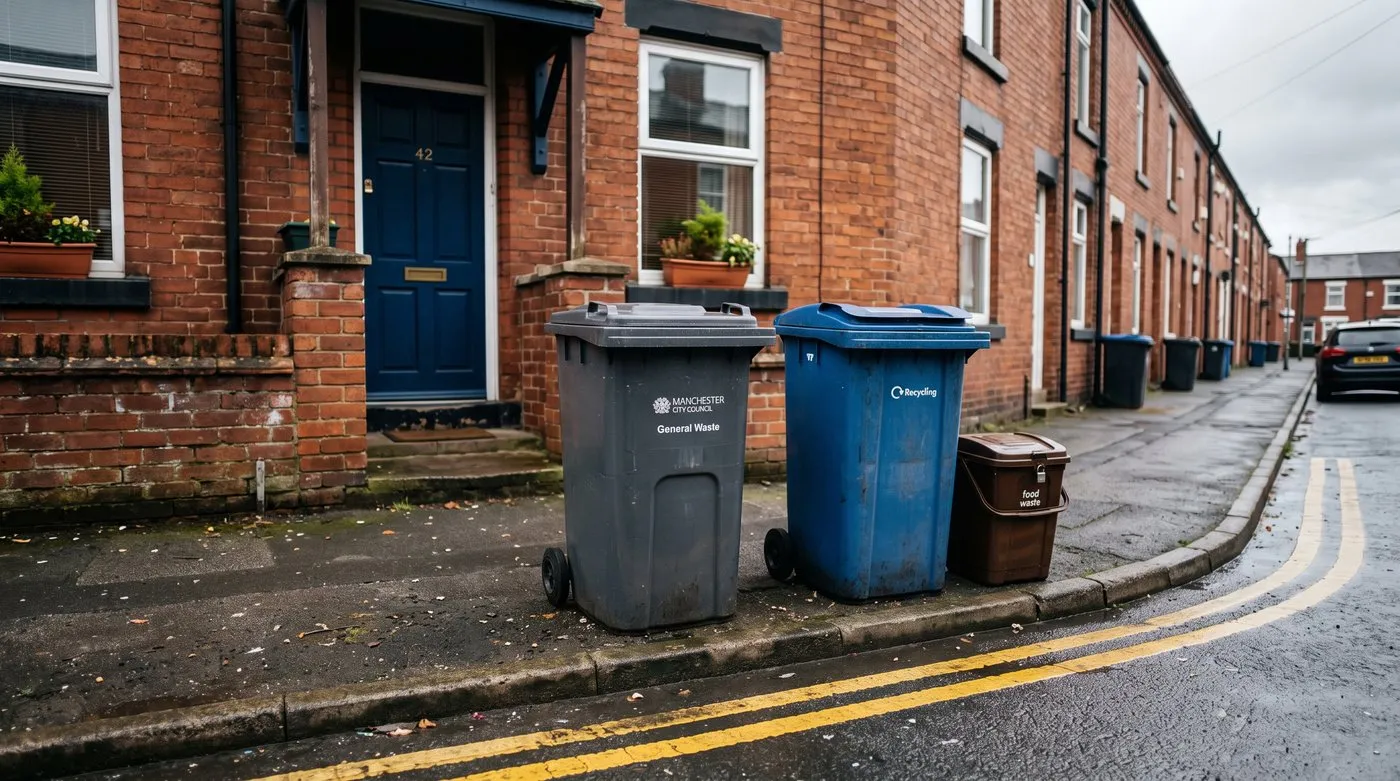 The default UK scene: general, recycling and food bins on show by the kerb. A store or screen hides all three without blocking the collection route.
Measure your bins before you build or buy
The single most useful thing you can do is measure your actual bins before spending a penny. Bin sizes vary between councils and makers by 20 to 60mm, and that gap decides whether a store fits or fails. A store that looks big enough online often traps the lid by 30mm once the real bin goes in.
Measure each bin closed, then measure it again with the lid open to its natural stop. The open lid needs headroom inside the store, or you will be lifting the lid by hand every time. Add at least 20mm clearance on each side so the bin slides in and out without scraping.
Here are the common UK wheelie bin sizes as a starting point. Check yours against them.
| Bin size | Height | Width | Depth | Typical use |
|---|---|---|---|---|
| 140L | 1070mm | 480mm | 540mm | Small households, general waste |
| 240L | 1100mm | 580mm | 740mm | Standard general and recycling |
| 360L | 1100mm | 850mm | 865mm | Large families, shared bins |
| 23L food caddy | 490mm | 300mm | 400mm | Kerbside food waste |
A store for three 240L bins needs an internal width of about 1800mm once you add clearance, and an internal depth of 760 to 800mm. Build to your measured bins, not to a generic plan.
Measure every bin closed and open before building or buying. A 30mm error is enough to trap the lid or scrape the bin on the way out.
Seven ways to hide wheelie bins, ranked
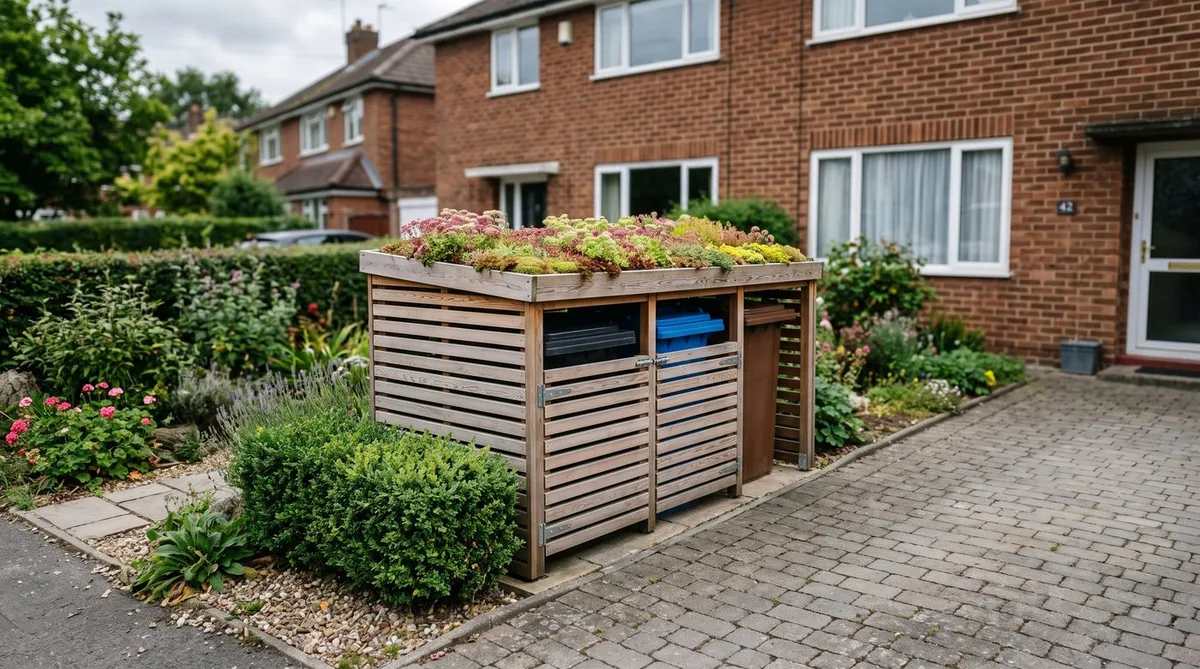
A slatted timber store with a sedum roof takes our top spot. It hides bins completely, ventilates well, and the green roof adds habitat and a tidy view from upstairs windows. A bought flat-pack store is the fast, low-effort runner-up. A rendered or brick store hides bins just as well but the cost and labour push it down the list for most homes.
Timber bin stores: the reliable default
A timber bin store is a three-sided box with a lift-up or drop-front lid and hinged doors. It suits almost every front garden and is the option most people should start with. You can build one in a weekend or buy a flat-pack version that assembles in an hour.
For a DIY build, use treated softwood battens or larch for the frame and slatted cladding. Larch and cedar weather to a silver-grey and resist rot without treatment. Softwood is cheaper but needs a preservative coat every two to three years. Leave 15 to 20mm gaps between the slats so air moves and the bins stay dry inside.
Bought stores range from £150 to £400 for wood and £300 to £600 for heavy galvanised metal. Metal stores last longest and shrug off foxes, but they rattle in wind and heat up in full sun. For a shaded spot, wood is quieter and cooler. Either way, check the internal size against your measured bins before ordering.
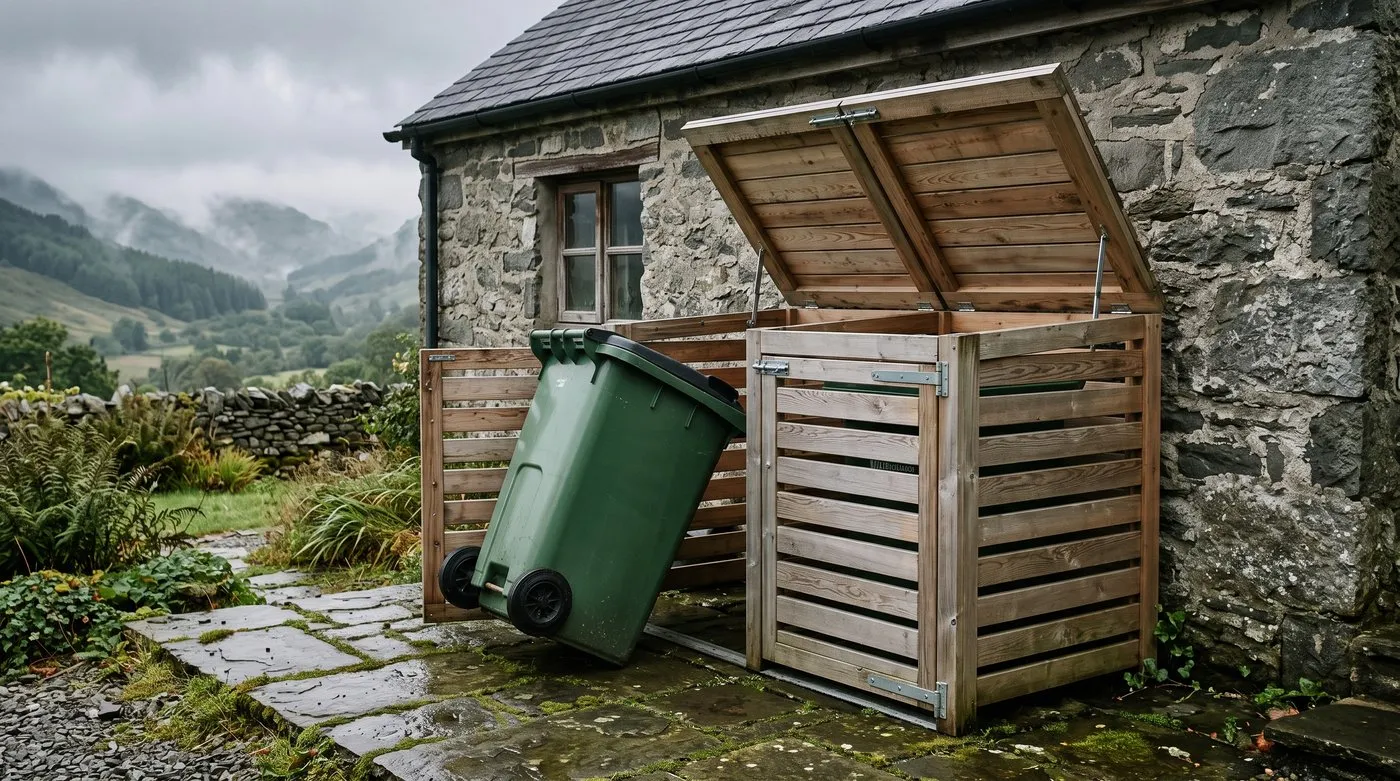 A slatted larch store beside a Welsh cottage. The 15mm slat gaps let air through, and the lift-up lid clears the open bin lids inside.
Slatted screens and trellis for a lighter fix
If a full store feels heavy, a slatted screen or trellis panel hides bins for far less money and ground space. A single panel set in front of the bins blocks the view from the road while leaving the tops open for easy access. This is the cheapest quick win, at £40 to £150 for a panel, post and fixings.
Timber screens with horizontal slats read as modern and tidy. A trellis panel does the same job and doubles as support for a climber. Set the panel 300 to 400mm in front of the bins so you can still swing the lids open. Fix it to a post concreted into the ground, or bolt it to an existing wall or fence.
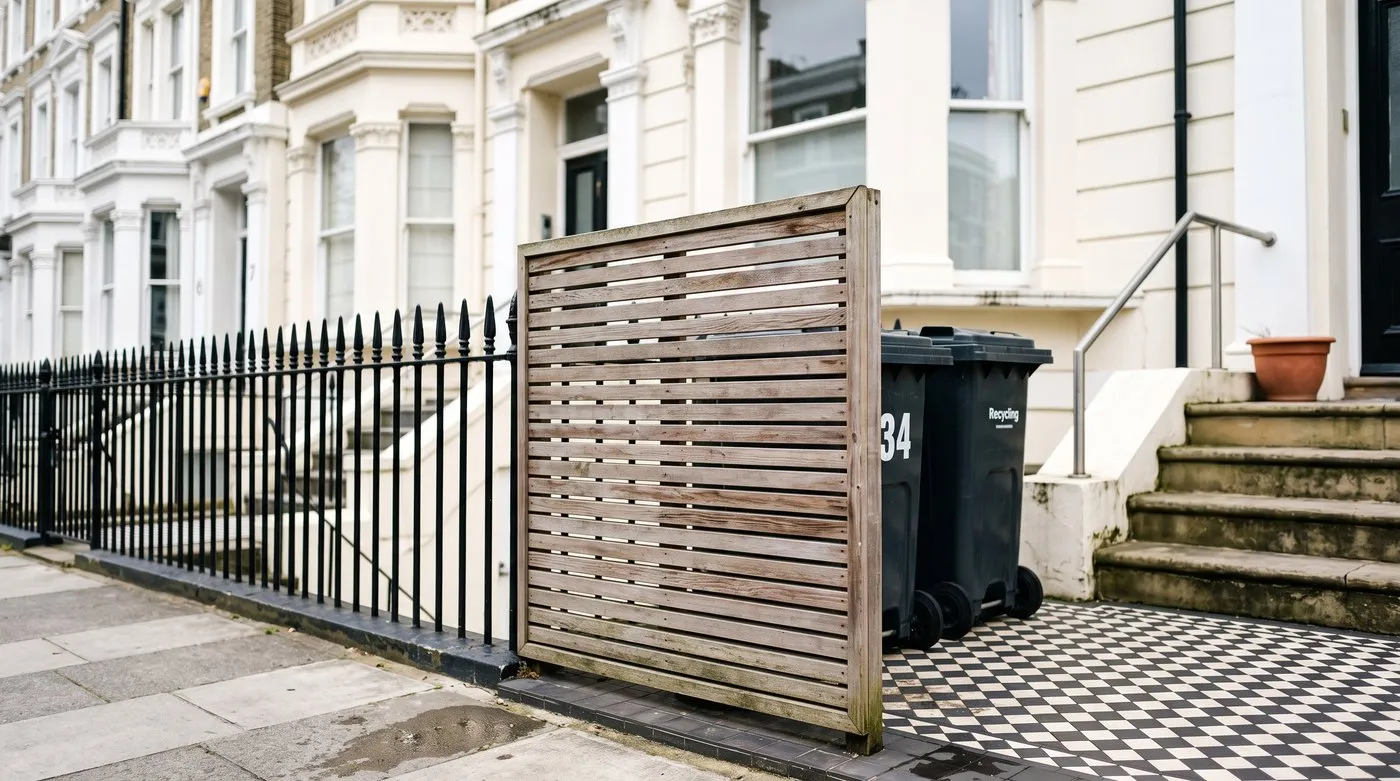 A single slatted screen hides bins beside a London townhouse. It costs a fraction of a full store and keeps the bin tops open for daily use.
Living screens: hedging and climbers that soften bins
A living screen hides bins with plants rather than timber, and it improves every year as it grows. The two routes are an evergreen hedge in front of the bins or a climber trained up a trellis panel. Both add wildlife value and seasonal change that no wooden box can match.
For a low evergreen hedge, choose tough, front-garden-hardy plants. Pittosporum tenuifolium, small-leaved and dense, screens to head height in three to four years. Yew clips to a crisp block and lives for decades. Portugal laurel or a box alternative such as Ilex crenata suit a formal look. Our comparison of slow-growing hedging plants for UK gardens explains which hold a tidy shape near a boundary.
For a climber on trellis, star jasmine (Trachelospermum jasminoides) is the pick: evergreen, scented, and drought-tolerant once settled. Clematis armandii gives early spring flowers and evergreen cover. Grow either up a panel set in front of the bins. Our guide to evergreen climbers for year-round cover ranks the toughest for an exposed front garden, and there is a full method in how to grow star jasmine in the UK.
Gardener’s tip: Front gardens are the hottest, driest, most exposed part of most UK plots, often baked by reflected heat off paving and walls. Pick drought-tolerant evergreens and water them well for the first two summers. A screen plant that dies in a July heatwave leaves the bins on show at the worst time of year.
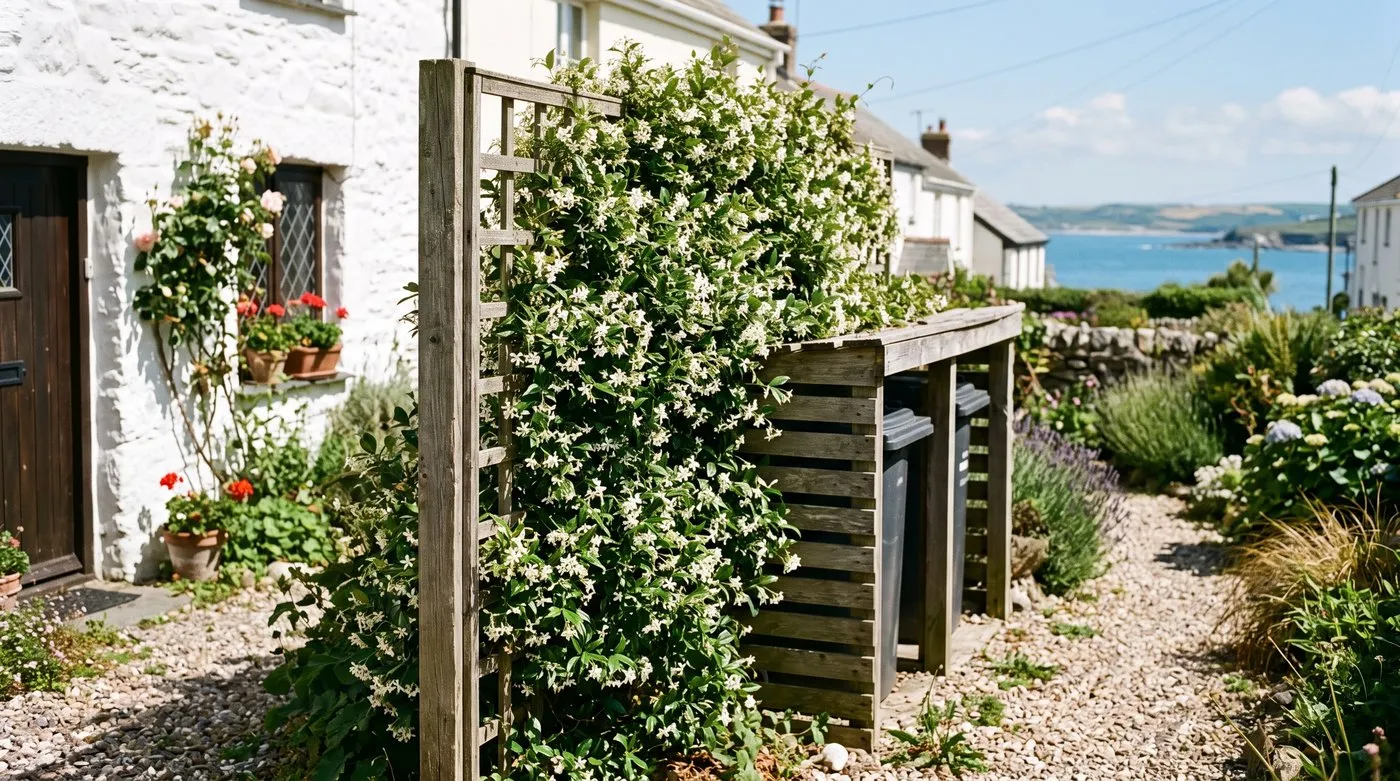 Star jasmine on a trellis panel softens a bin store in a Cornish seaside garden. The evergreen cover hides bins and scents the front path in summer.
Green-roof bin stores for habitat and a view from above
A green-roof bin store puts a shallow tray of sedum matting on top of a standard timber store. From upstairs windows and from a neighbour’s house the bins vanish under a low carpet of flowering stonecrop. It is the detail that turns a functional box into a feature, and it adds real habitat for pollinators.
The build is simple. Cap the store with a waterproof liner, add a 50mm timber lip to hold the substrate, then lay sedum matting on 40 to 50mm of lightweight growing medium. A ready-made sedum tray kit costs £40 to £80 and drops straight on. Pitch the roof at 15 degrees so rain sheds cleanly, and drill weep holes at the low edge.
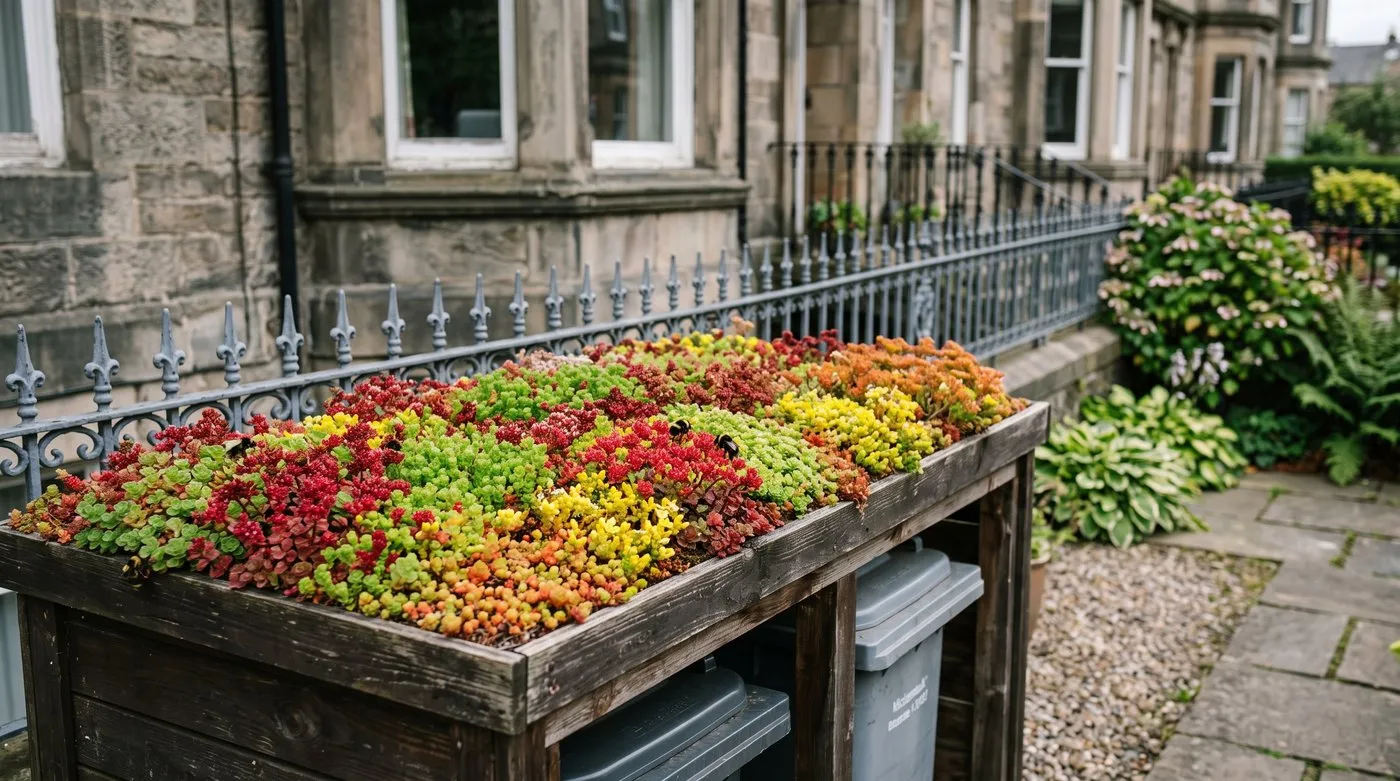 A sedum-roofed bin store in an Edinburgh front garden. The living roof hides bins from upstairs windows and feeds bees from June to September.
What a bin store really costs in the UK
Costs vary with material and whether you build or buy, but the hidden extras catch people out. A cheap store on bare soil fails fast, so the base is not optional. Here is a realistic UK breakdown, including the parts most guides leave off.
| Item | DIY timber store | Bought wooden store | Metal store |
|---|---|---|---|
| Store or materials | £80 to £150 | £150 to £400 | £300 to £600 |
| Base (slabs or gravel) | £30 to £60 | £30 to £60 | £30 to £60 |
| Sedum green-roof kit (optional) | £40 to £80 | £40 to £80 | Not suitable |
| Softening plants (2 to 3) | £10 to £45 | £10 to £45 | £10 to £45 |
| Preservative or maintenance (per coat) | £15 to £25 | £15 to £25 | Minimal |
| Realistic all-in cost | £120 to £250 | £200 to £450 | £340 to £660 |
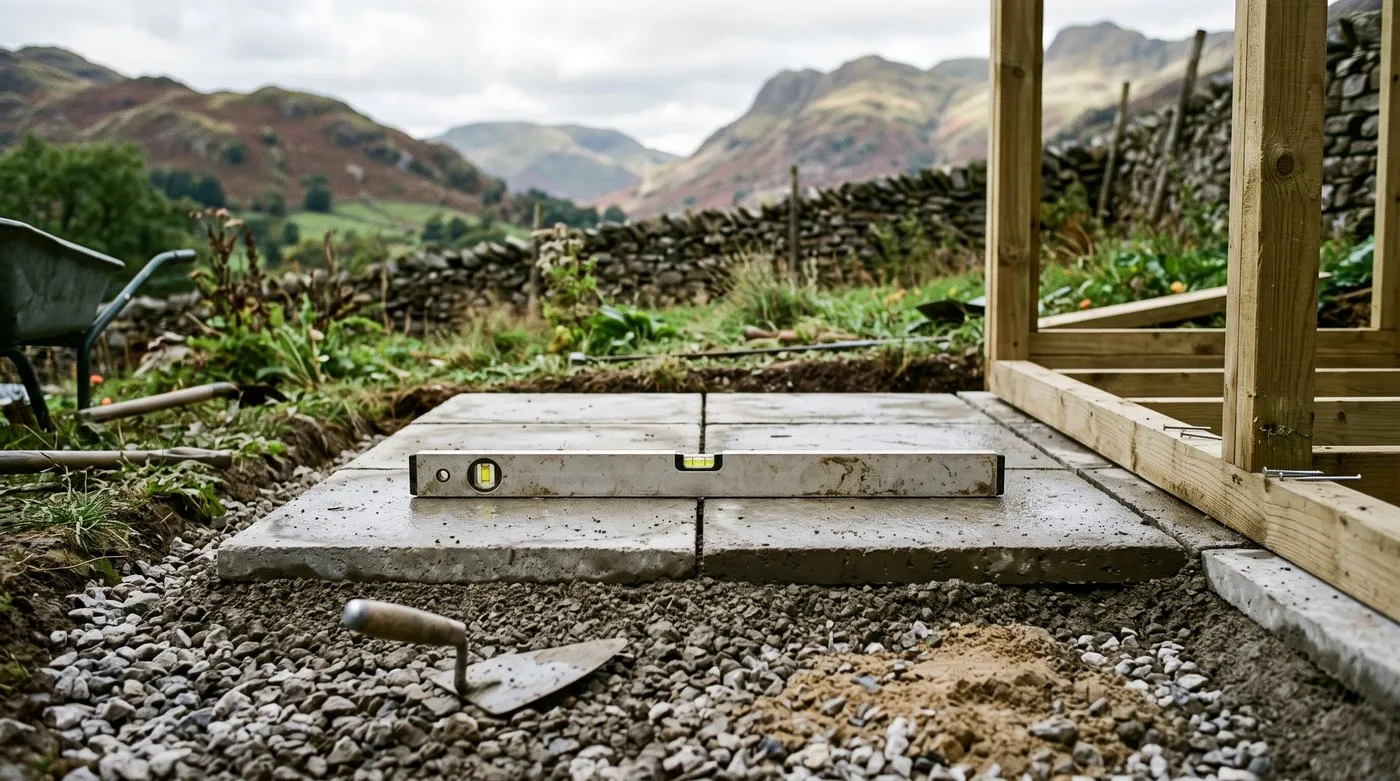 A slab-and-gravel base under a bin store in the Lake District. The 40mm base gap and hard footing stop the timber sinking and rotting.
Keeping bins accessible: base, airflow and collection rules
The prettiest bin store fails if you cannot get the bins out on collection day. Access is the constraint that beats aesthetics every time. Design the hiding around it, not the other way round.
Three practical rules keep a store working. First, keep the pull-out route to the kerb clear. Many UK councils require bins presented at the property boundary by a set time, and crews will not enter enclosed stores or move screens. Second, stand the store on a hard base so bins roll rather than drag. Third, allow airflow: gaps between the slats and a 40mm base gap clear the heat and gases that make bins reek in summer.
If you are paving to make bin or parking space, UK guidance favours permeable surfaces to cut surface-water run-off. The RHS advice on greening grey front gardens explains why gravel, planting and permeable paving beat a sealed slab, both for drainage and for the street.
Warning: Never build a store that blocks a shared path, overhangs the pavement, or traps a bin behind a locked door the crew cannot open. Councils can refuse to collect bins that are not accessible, and a store that obstructs the highway may have to come down. Check your council’s bin presentation rules before you fix anything in place.
Planning your bin store: a timing checklist
Bin storage is not seasonal like planting, but the jobs still run in an order. Use this checklist to plan a store from idea to finished feature.
| Stage | Task |
|---|---|
| Week 1 | Measure every bin closed and open. Note the collection point and pull-out route. |
| Week 1 | Check council bin presentation rules and any front-garden or parking permeability guidance. |
| Week 2 | Choose the method from the ranking table. Set a budget using the cost breakdown. |
| Week 2 | Prepare a firm, level base: four slabs or 50mm gravel over compacted sub-base. |
| Week 3 | Build or assemble the store to your measured sizes, with 20mm side clearance and airflow gaps. |
| Week 3 | Fit the roof at a 15-degree pitch. Add a sedum tray now if you want a green roof. |
| Week 4 | Plant a low evergreen or a climber on trellis in front to soften the store. |
| Ongoing | Recoat softwood every 2 to 3 years. Rinse bins in summer. Keep the kerb route clear. |
Common mistakes when hiding wheelie bins
How our Staffordshire bin store held up
Frequently asked questions
How do you hide wheelie bins in a front garden?
Use a slatted timber bin store, screen or evergreen hedge sized to your bins. Stand it on a hard, level base with airflow gaps so bins stay dry and lids open. Keep the route to the kerb clear so the collection crew can still reach the bins. A store plus a low evergreen in front hides them from every angle.
What size is a standard wheelie bin?
A 240L wheelie bin is about 1100mm tall, 580mm wide and 740mm deep. The smaller 140L bin is roughly 1070mm tall, 480mm wide and 540mm deep. Larger 360L bins reach 1100mm tall and 850mm wide. Always measure your own bins, as councils and makers vary by 20 to 60mm.
How much does a wheelie bin store cost?
A DIY timber store costs £80 to £150 in materials. Bought wooden stores run £150 to £400, and heavy-duty metal ones £300 to £600 or more. A sedum green-roof kit adds £40 to £80. Hedging plants to soften a store cost £5 to £15 each. Base slabs or gravel add £30 to £60.
Can I put a wheelie bin store in my front garden?
Yes, in most cases you can put a bin store in your front garden. Keep bins accessible for your household and the collection crew, and do not block a shared path or pavement. If you are paving over soft ground, use permeable materials to meet front-garden drainage rules. Check your council’s bin presentation rules first.
What plants hide wheelie bins best?
Evergreen screens like pittosporum, star jasmine or a small yew hide bins year-round. Choose tough, drought-tolerant plants, as front gardens are hot, exposed and often dry. A climber on a trellis panel covers the most area for the least ground space. Leave room for the plant to grow without blocking bin access.
Do wheelie bin stores need ventilation?
Yes, bins smell and sweat without airflow. Leave 15 to 20mm gaps between slats and a 40mm gap along the base. Air moving through the store dries condensation and clears the gases that make bins reek in summer. A sealed box traps heat and makes the smell far worse in warm weather.
How do I stop my wheelie bin store smelling?
Ventilate the store, stand it off the ground, and keep the bins easy to pull out for cleaning. Airflow gaps and a raised base cut the heat that drives odour. Rinse bins every few weeks in summer and sprinkle bicarbonate of soda inside. A shaded, north-facing spot also keeps the contents cooler.
Our team produces practical UK gardening guidance from source research, contributor records and established horticultural practice. Editorial standards are overseen by Matt W.