Key takeaways
- Dry-laid cobble edging costs 8 to 25 pounds per metre; mortar-bedded runs 20 to 40 pounds
- Bury larger rocks by about a third so they look settled and resist mower knocks
- Lay all stone edging over a weed-suppressing membrane on a 50mm compacted base
- Set the edge low and level so a mower wheel can run over it without catching
- Stone outlasts timber 5 to 1 and shelters ground beetles and frogs that plastic never will
Types of rock and stone for garden edging
The stone you pick sets the whole look, so match it to your house and soil rather than the cheapest bulk bag. Costs below are rough UK rates for a single-row edge, materials only, fitted yourself.
- Rounded cobbles and setts: 100 to 200mm waterworn stones, the classic cottage edge. Bulk bags cover 5 to 8 metres at 8 to 15 pounds per metre.
- Scottish beach pebbles: smooth grey and buff pebbles, lovely for a coastal look. 10 to 18 pounds per metre.
- Slate: paddlestones (flat ovals) for laying, blue-grey slate chippings for filling, or upright slate set on edge. 12 to 30 pounds per metre.
- Flint: knapped or whole nodules, the traditional stone of chalk counties like Norfolk and the Chilterns. 18 to 35 pounds per metre.
- Local sandstone and limestone rockery stone: irregular quarried lumps, ideal for a settled natural edge. 12 to 28 pounds per metre.
- Reclaimed stone: weathered York stone or old kerbs with instant age. 25 to 45 pounds per metre.
- Granite setts: hard, square, near-indestructible. 20 to 40 pounds per metre.
- Gabion stone: angular fill held in a steel cage for a low wall edge. 30 to 60 pounds per metre including the cage.
Colour matters as much as shape. Honey Cotswold limestone suits warm stone houses. Welsh slate gives a cool blue-grey modern line. Scottish cobble reads grey and rounded, soft enough for any cottage plot. Always buy local where you can; haulage is the hidden cost that pushes imported stone up.
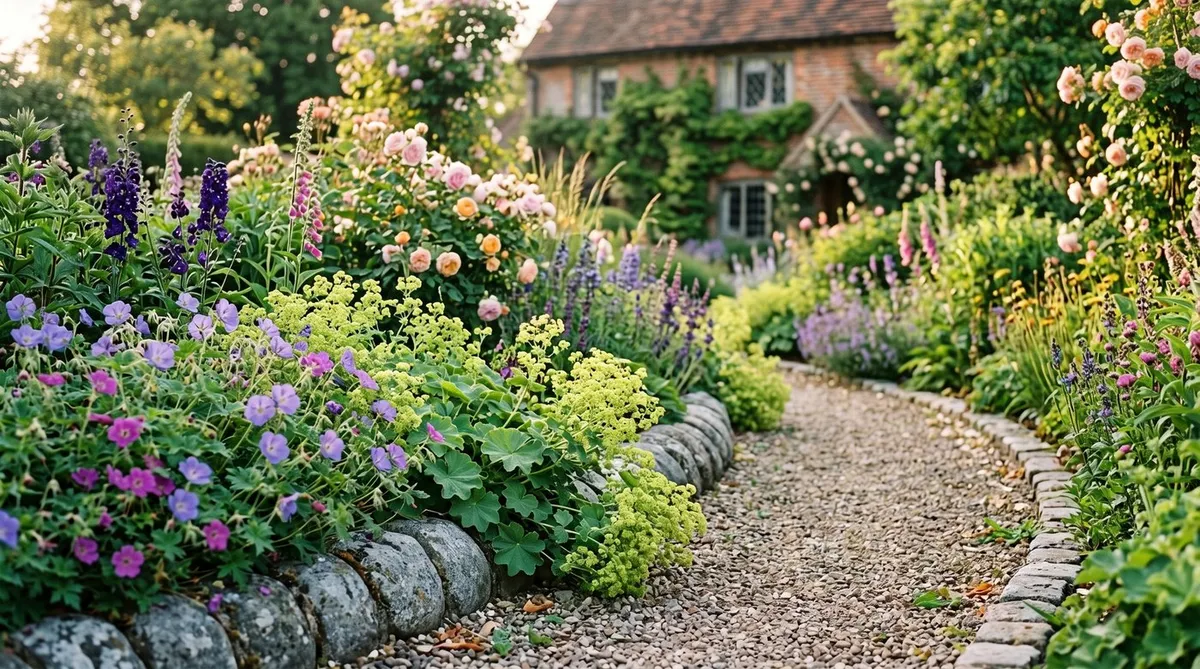
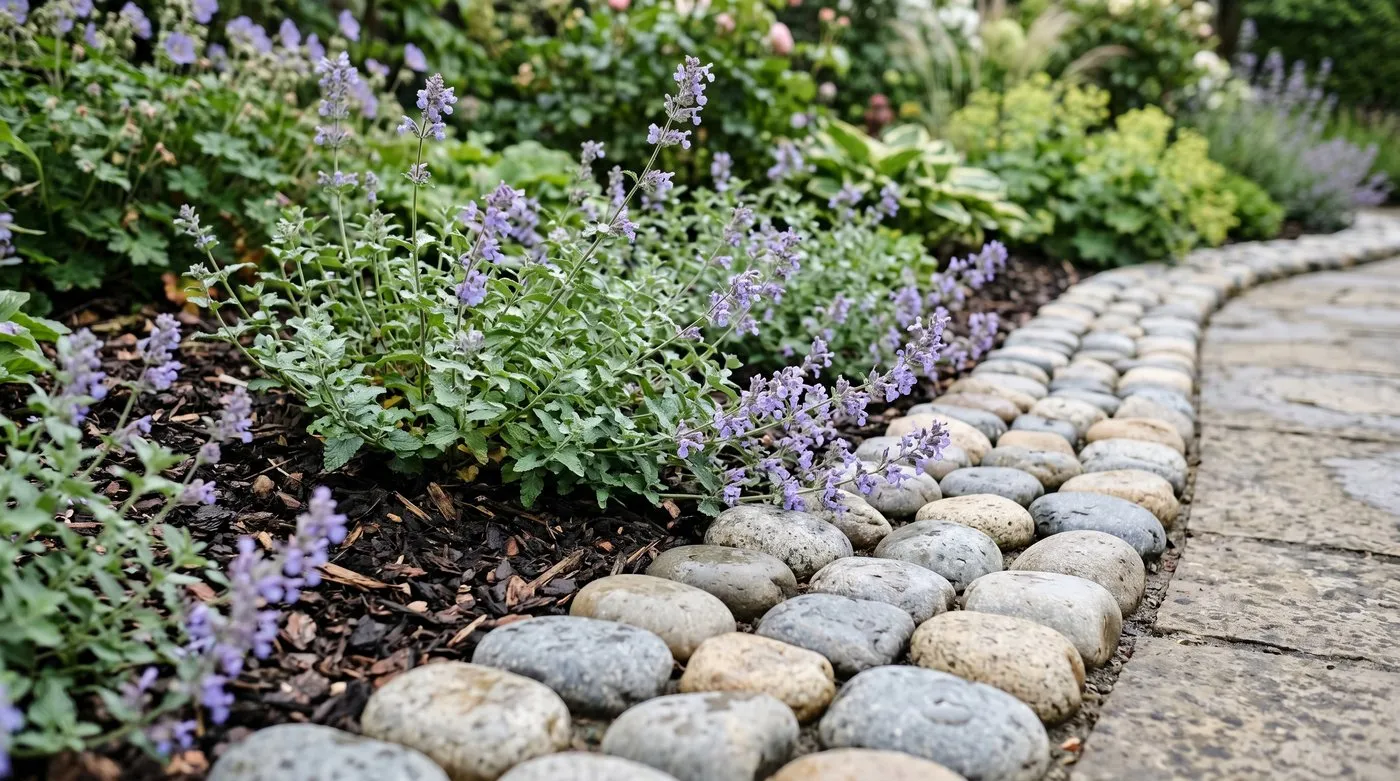 Rounded Scottish cobble along a mixed border. Buy a sample bag first to check the colour against your house stone.
How to set rock edging so it lasts
A stone edge stands or falls on the base under it. Skip the groundwork and your line sinks, shifts and grows weeds within a season. There are two main methods, and the right one depends on whether you mow up to the edge.
Dry-laid edging
Dry-laying suits cobbles, pebbles and irregular rockery stone. Dig a shallow trench 50 to 80mm deep along the bed line. Compact the base with the back of a spade or a hand tamper. Lay a weed-suppressing membrane along the trench and up the bed side, then add a 30mm bed of sharp sand or 6mm grit. Set the stones, butted tight, and tap each one level. Backfill behind with soil or gravel so nothing rolls out. Dry-laid edges are cheap, quick and easy to alter, but they need a yearly tidy.
Mortar-bedded edging
Mortar-bedding suits slate on edge, setts and any run you mow over. It is the route to a permanent, mower-proof line. Dig down 100mm, lay a 50mm compacted base of MOT type 1 or sharp sand, then bed the stone in a 1:4 cement-to-sharp-sand mortar. Point the joints once set. Mortar locks every stone, so frost heave and mower knocks cannot move them. The whole point of mortar is to set the edge low enough that a mower wheel runs over it cleanly.
For larger rocks and boulders, bury about a third of each stone. A boulder sitting on the surface looks dumped. The same boulder with a third sunk reads as if it surfaced there naturally, and the buried mass anchors it against knocks.
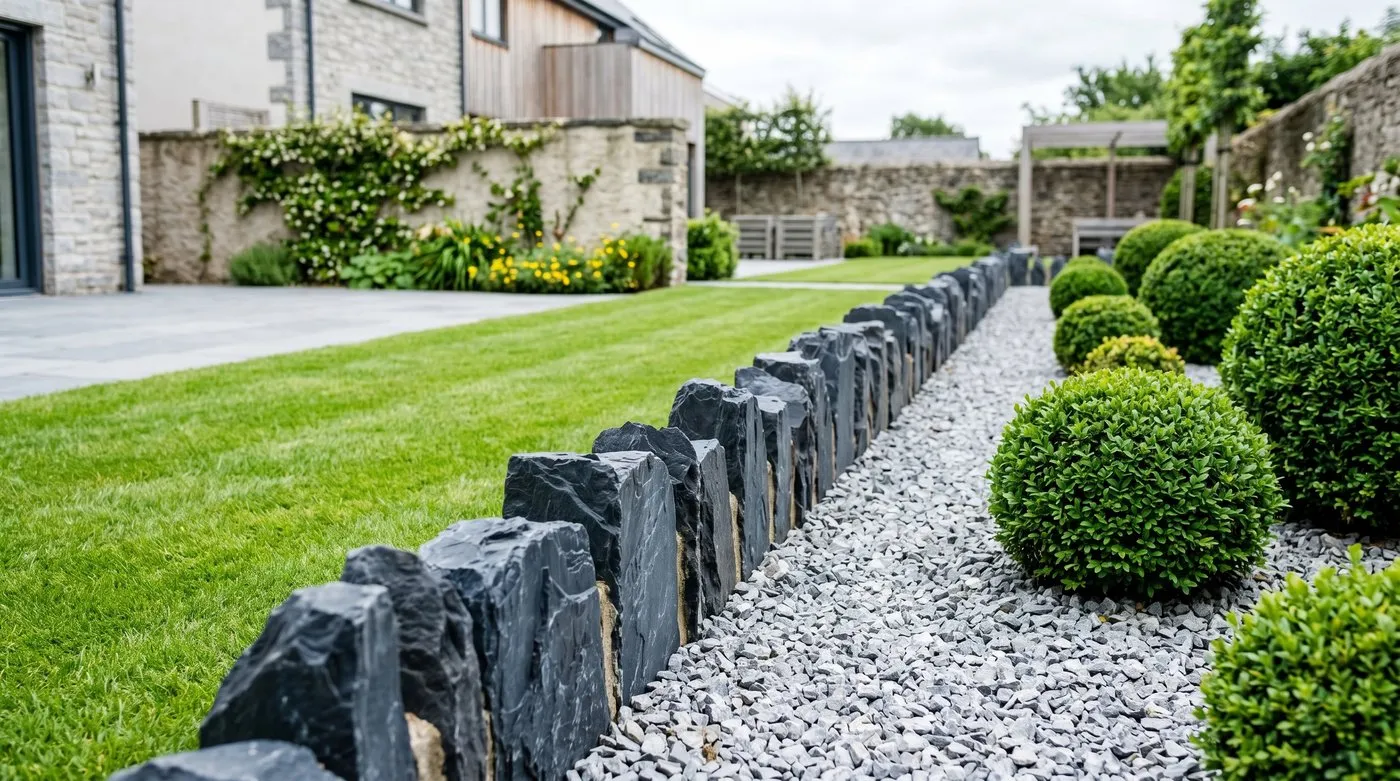 Welsh slate set upright and mortar-bedded. Setting slate on edge gives the sharpest line of any stone edging.
Eight rock edging style ideas with planting
The best edge does two jobs: it holds the line and it carries planting that softens it. Here are eight styles that work in UK gardens, each tied to plants that suit the stone.
Cottage-garden rounded cobble edge
A single row of waterworn cobbles, butted and dry-laid, is the friendliest edge there is. It suits informal mixed borders. Plant hardy geraniums, lady’s mantle (Alchemilla mollis) and catmint to flop over the stone and blur the join. The cobbles hold the mulch; the planting hides the gaps.
Coastal pebble border
Smooth grey and buff pebbles give a beach feel, brilliant near the sea or around a gravel garden. Set them in a wide 200mm band rather than a single row. Plant sea thrift (Armeria maritima), sea holly (Eryngium) and grasses like Stipa tenuissima. The look pairs naturally with a gravel garden.
Alpine and rockery scree edge with creeping plants
Pile small to medium rockery stone into a low scree edge and tuck plants into the gaps. This is the prettiest edge of all by summer. Plant creeping thyme (Thymus serpyllum), houseleeks (Sempervivum) and aubrieta to spill over and root between the rocks. It works beautifully as the lip of a rockery.
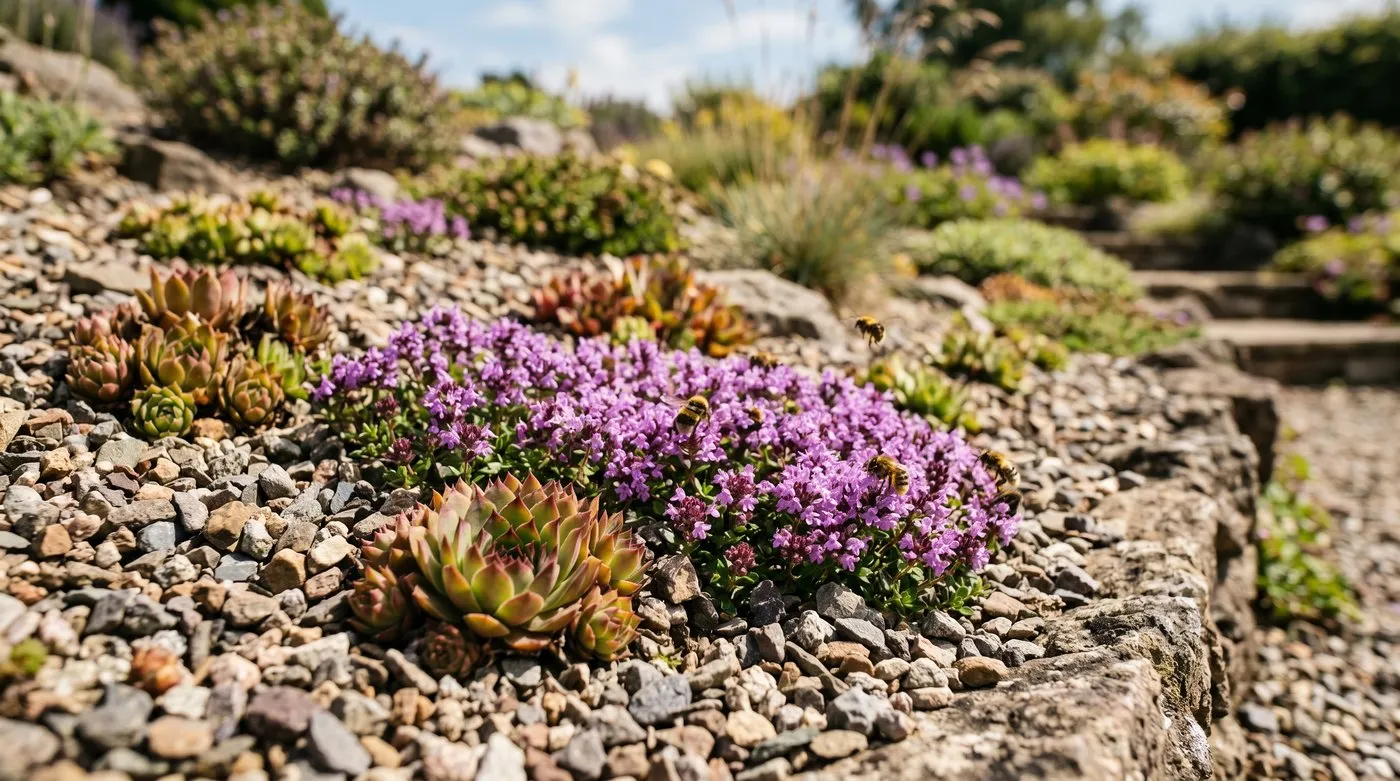 A scree edge with creeping thyme rooting between the stones. The planting cuts weeding and softens the line by midsummer.
Modern slate-on-edge line
For a clean, contemporary look, set slate paddlestones upright in a continuous mortar-bedded line. The dark blue-grey reads sharp against gravel or a clipped lawn. Keep the planting restrained: box balls, low grasses or architectural euphorbia. This edge suits courtyard and city gardens.
Gabion low wall edge
A shallow gabion cage filled with angular stone makes a 200 to 400mm raised edge that doubles as a retaining lip. It suits modern and sloping plots. Plant trailing rosemary or aubrieta along the top to break the hard line. Gabions also make a strong frame for a raised bed.
Flint border
Whole or knapped flint nodules give a knobbly, distinctive edge true to chalk-county gardens. Bed them in mortar to stop them rolling. Their grey-and-white faces suit traditional planting: lavender, nepeta and old roses. Flint is hard and never weathers away.
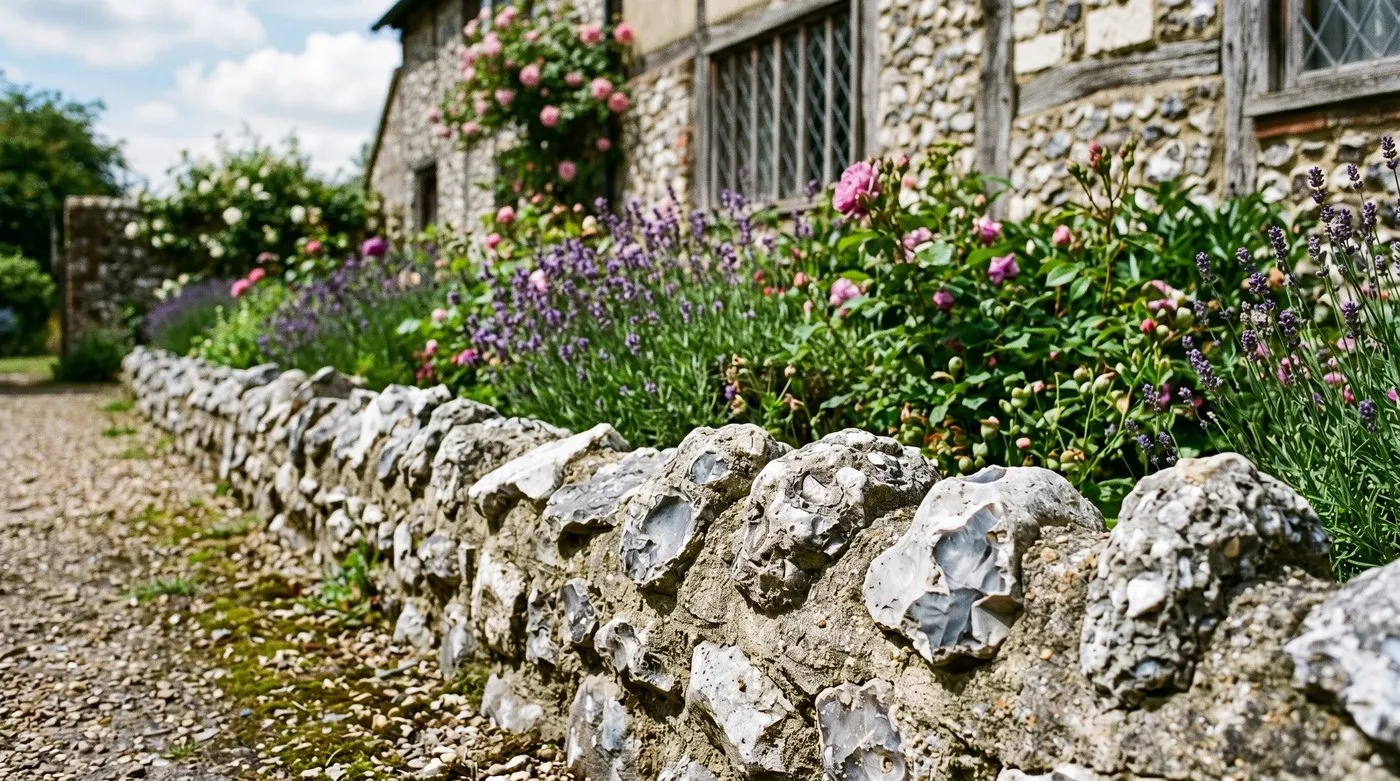 A mortar-bedded flint edge in a chalk-county garden. Flint reads grey and white and never breaks down.
Dry stone mini-kerb
A two-course dry stone wall, just 150 to 250mm high, makes a smart raised edge for a border on a slope. Use flat local sandstone or limestone. Plant erigeron (Mexican fleabane) and wall valerian to self-seed into the joints, exactly as they do on old walls.
Stepping-stone-and-pebble path edge
Edge a path with flat setts or paddlestones set level with the surface, then fill the bed side with pebbles. This holds the path edge and stops gravel migrating into the border. It pairs naturally with broader garden path ideas.
Rock edging versus timber, metal and plastic
Stone is not the only edging material, so weigh it against the alternatives before you commit. The differences come down to lifespan, cost, weeding, mowing and what the edge does for wildlife.
| Edging type | Lifespan | Cost per metre | Weeding | Mowing | Wildlife value |
|---|---|---|---|---|---|
| Dry-laid stone | Decades | £8-£25 | Moderate (plant to cut it) | Set low to mow over | High (gaps shelter beetles, frogs) |
| Mortared stone | Decades | £20-£40 | Very low | Excellent if flush | Low to moderate |
| Treated timber | 7-10 years | £6-£12 | Low | Good if flush | Low (rots, harbours slugs) |
| Steel or aluminium | 20+ years | £10-£25 | Very low | Excellent | None |
| Plastic | 3-7 years | £3-£8 | Low | Good | None |
Stone wins on lifespan and looks. Timber rots and harbours slugs against the wood. Metal lasts well and mows cleanly but offers nothing to wildlife and can look stark. Plastic is the cheapest and the shortest-lived; UV makes it brittle within a few years. The real edge stone has is drainage and shelter. Water drains through a dry-laid stone edge, and the gaps house ground beetles, which eat slug eggs, plus the odd frog in a damp border. The Royal Horticultural Society notes that piles of stones and log edges provide valuable shelter for garden invertebrates.
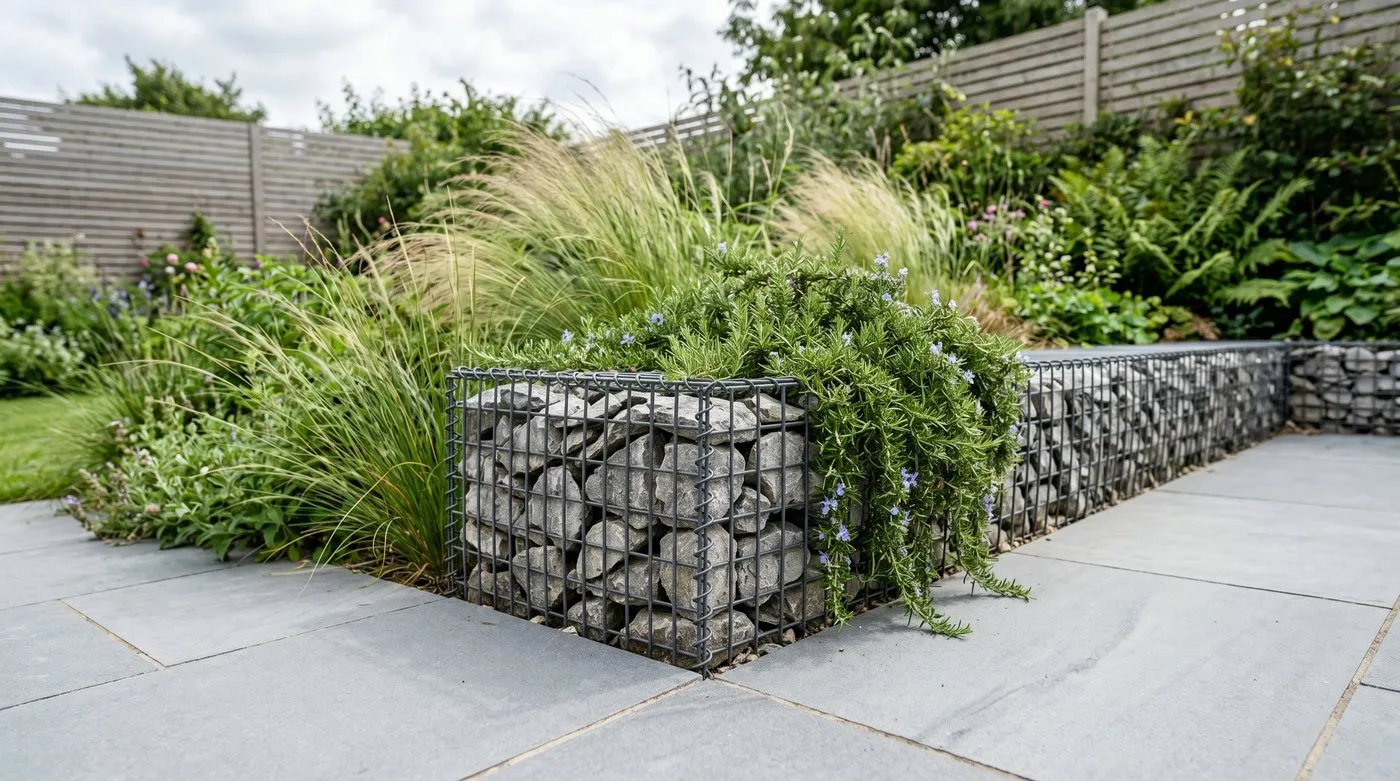 A low gabion edge doubles as a retaining lip. The cage holds angular fill stone and never needs repointing.
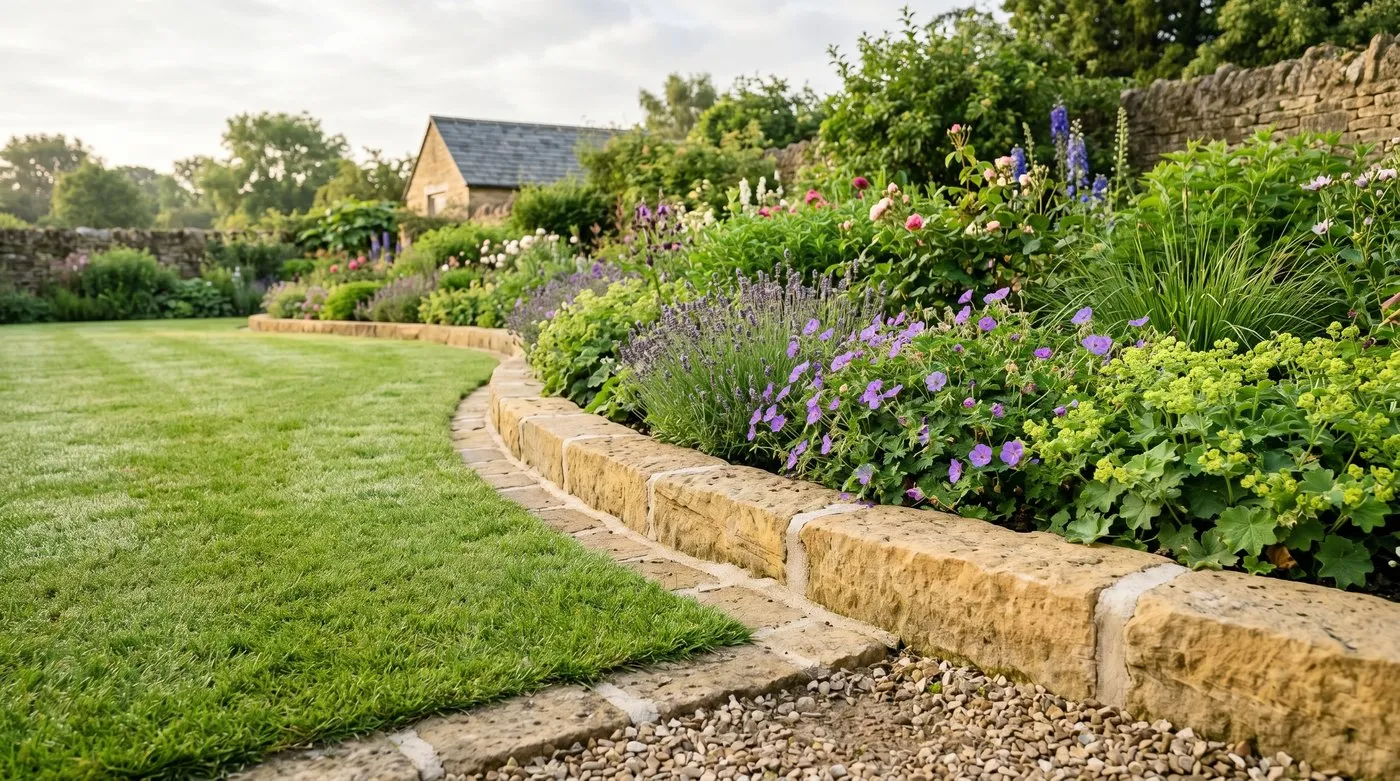 A mortar-bedded sandstone kerb. Mortar locks every stone, so frost heave and mower knocks cannot move the line.
Common rock edging mistakes to avoid
These five errors account for most disappointing stone edges in UK gardens. Each is easy to dodge once you know it.
Loose rocks scattering into the mower. Cobbles that sit proud and unbedded roll onto the lawn and into the mower blades. Set every stone low and level, and butt them tight, or mortar-bed any run you mow over.
No membrane, so weeds grow between the stones. This is the single biggest reason loose edges look scruffy within a year. Always lay a weed-suppressing membrane under the stone, folded up the bed side, before you set a single rock.
Wrong scale. Tiny pebbles vanish against a big border and read as mess. Boulders too large to mow round trap grass behind them. Match stone size to bed size: 100 to 200mm cobbles for most borders, larger rockery stone only on big plots.
Not bedding the stones, so they sink or shift. A stone dropped on soft soil sinks unevenly and tilts. Always compact a base and set each stone in sand or mortar. On clay, frost heave will lift any stone that is not bedded deep enough.
Mixing too many stone types. Three different stones in one edge looks accidental. Pick one stone and one size for any single run. You can change material between separate areas of the garden, but keep each line consistent.
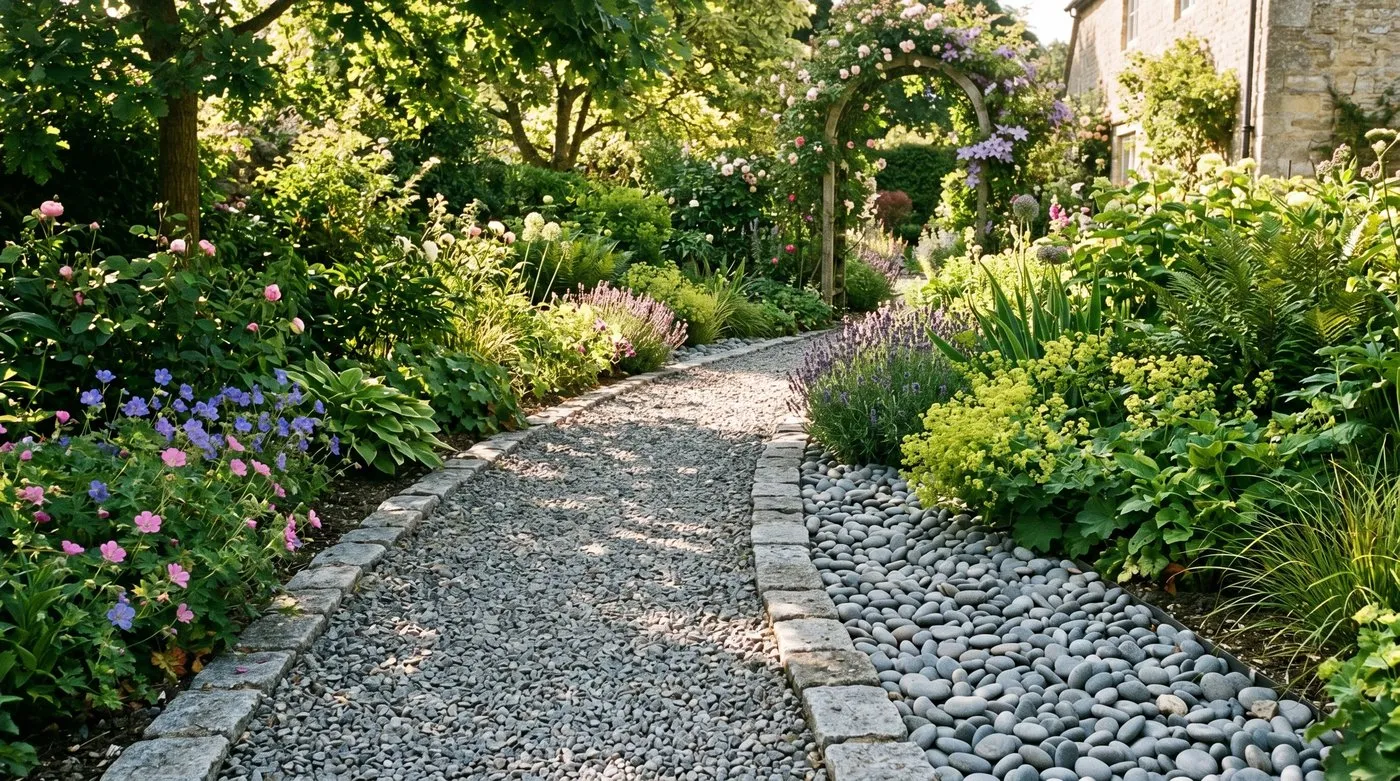 Flat setts set level with a path, with pebbles filling the bed side. This stops gravel migrating into the border.
Choosing the right stone for your edge
The table below pulls the main stone types together so you can match look, cost, effort and best use at a glance. Read it next to the photos above.
| Stone type | Look | Rough cost/metre | Effort to fit | Best style |
|---|---|---|---|---|
| Rounded cobbles | Soft, informal | £8-£15 | Low (dry-lay) | Cottage border |
| Scottish pebbles | Smooth, coastal | £10-£18 | Low (dry-lay) | Coastal, gravel garden |
| Slate on edge | Sharp, modern | £12-£30 | High (mortar) | Contemporary line |
| Flint | Knobbly, traditional | £18-£35 | High (mortar) | Chalk-county border |
| Local sandstone | Natural, settled | £12-£28 | Medium | Rockery, dry stone kerb |
| Granite setts | Hard, formal | £20-£40 | High (mortar) | Path kerb, mowing strip |
| Gabion stone | Bold, modern | £30-£60 | Medium | Raised retaining edge |
A planting note for softening hard edges
A bare stone edge can look raw for the first season. Plants are the fix. Low, spreading and self-seeding plants knit the stone into the bed and cut weeding by shading the gaps.
For a sunny stone edge, rock roses are hard to beat. They sprawl over warm stone, flower for weeks and thrive in the sharp drainage a dry-laid edge gives. Our guide to growing cistus rock rose covers the best varieties for a UK edge. Thyme, aubrieta and erigeron all do the same job in different colours. Plant them on the bed side, 200 to 300mm back from the stone, and let them creep forward over the line.
Warning: Never lay stone edging straight onto bare clay without a compacted base. Clay swells when wet and shrinks when dry, and it heaves in frost. Any stone set on it will tilt and lift within a winter. Always dig down, compact, and bed on sand or mortar.
Now you have your stone edge planned
Our team produces practical UK gardening guidance from source research, contributor records and established horticultural practice. Editorial standards are overseen by Matt W.