Key takeaways
- Edging defines beds, stops grass creeping in, holds mulch and levels, and gives a crisp finish
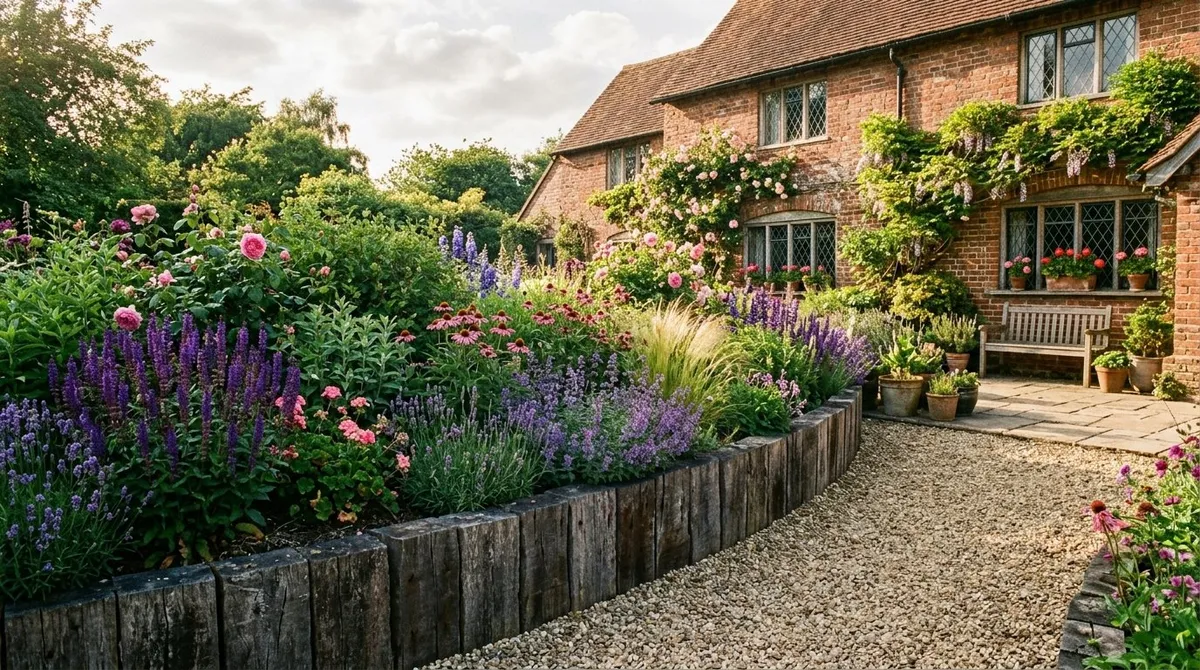
- Railway sleepers give bold raised edges; choose new oak or softwood over creosoted reclaimed near food
- Natural rock and stone suit informal gardens; bury at least a third of each stone for stability
- Cast concrete is the cheapest durable option and can be formed to any curve
- Set brick or steel flush as a mowing strip so the mower wheel runs along it, with no hand-trimming
- Reclaimed creosoted sleepers were restricted in 2003 and must not touch skin, crops or play areas
Edging is the detail that separates a sharp garden from a scruffy one. It is the line between bed and lawn, the thing that stops grass invading the border and mulch spilling onto the path. Get it right and the whole garden looks finished, deliberate and easy to maintain.
The choice of material sets the style and the budget. Chunky railway sleepers say bold and modern; natural rock says informal and soft; cast concrete is the cheap, durable workhorse; brick and steel give the crispest low-maintenance line. This guide compares the main options for UK gardens, with realistic costs, the practical fitting that makes each one last, and the mistakes that send edging tipping over within a season.
Why edge a bed or border at all?
Edging earns its keep in four ways.
- It defines the shape. A clean edge makes a bed read as a deliberate shape, not a vague patch.
- It keeps grass out. A physical barrier stops grass roots and runners creeping into the border, the job a re-cut spade edge does only temporarily.
- It holds levels and mulch. Raised edging retains soil in a bed and keeps bark or gravel mulch where it belongs.
- It eases mowing. A flush mowing strip lets the mower run right to the edge, so you never trim by hand.
That last point matters more than people expect. The RHS lawns advice and our own lawn edging guide both make the case: a good edge is as much about saving work as about looks.
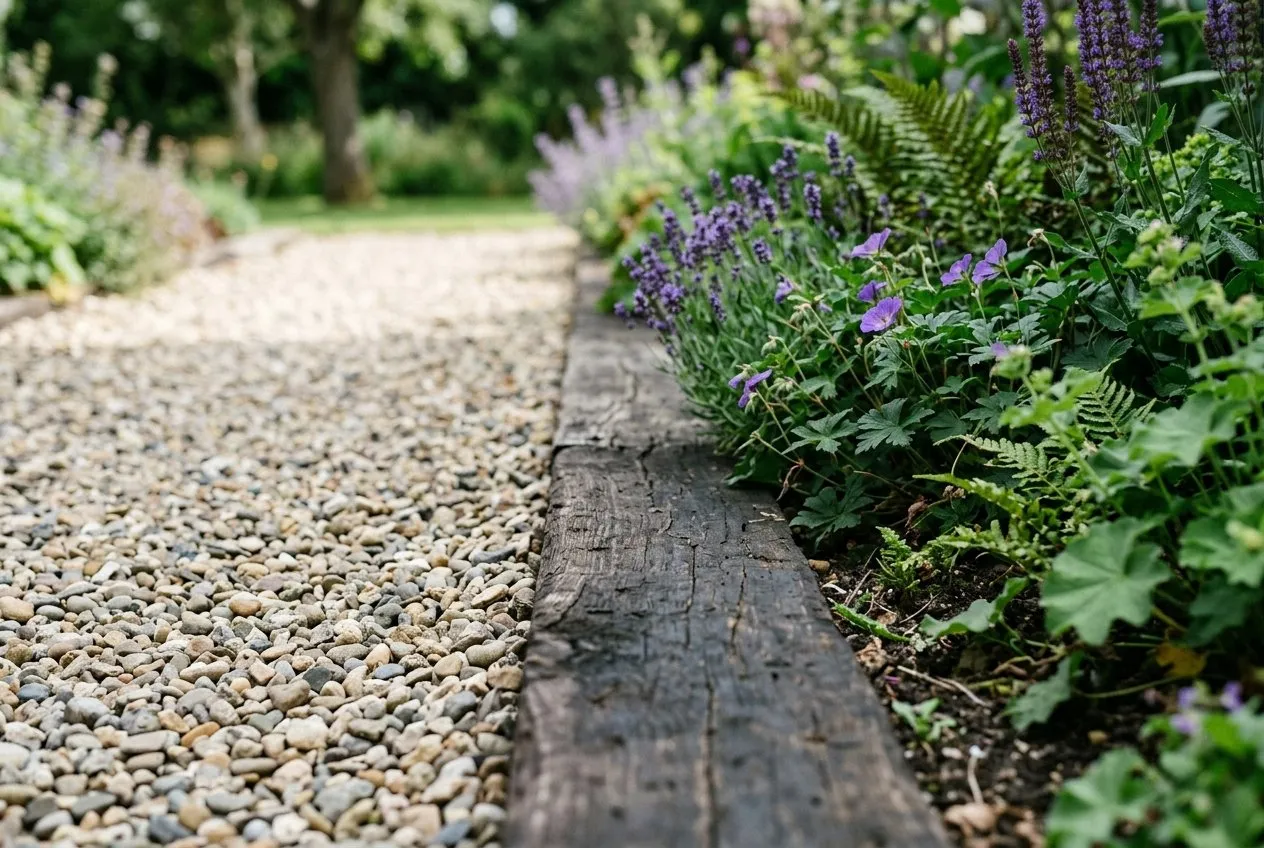 Edging is the line between bed and path. The right material sets the style and stops grass, soil and mulch wandering where they should not.
Garden edging materials compared
Each material has a clear best use. This is how they stack up for a UK garden.
| Material | Look | Durability | Rough cost | Best for |
|---|---|---|---|---|
| Railway sleepers | Bold, chunky, modern | 8-25 years | £15-35 per m | Raised beds, retaining levels |
| Natural rock and stone | Informal, soft | Lifetime | £10-40 per m | Cottage and rockery styles |
| Cast concrete | Clean, any curve | 30 years plus | £5-15 per m | Cheap durable curves |
| Brick on edge | Traditional, warm | 25 years plus | £15-30 per m | Mowing strips, formal beds |
| Steel or Corten | Sleek, modern | 20 years plus | £18-40 per m | Crisp curves, modern gardens |
| Setts and cobbles | Characterful | Lifetime | £25-45 per m | Period and town gardens |
| Timber log roll | Cheap, rustic | 5-8 years | £8-15 per m | Quick, informal, low cost |
Order your shortlist by the look you want first, then by budget. The fitting detail matters as much as the material, so the sections below cover the three big choices in turn.
Railway sleeper edging
Sleepers give the boldest edge and double as low retaining walls for raised beds. They suit modern and productive gardens, and a single sleeper edges over two metres at a stroke.
- Choose new over reclaimed near food. New oak and softwood sleepers are clean and safe. Reclaimed creosoted sleepers were restricted under the 2003 creosote regulations and should never touch skin, food crops or play areas, as the tar leaches and is carcinogenic.
- Lay flat or on edge. Flat gives a wide, low edge and a seat; on edge gives more height to retain a raised bed.
- Fix them together with long timber screws or steel rebar pins driven through into the ground. A single course rarely needs more.
- Bed them on firm ground with a little grit for drainage so the timber does not sit wet.
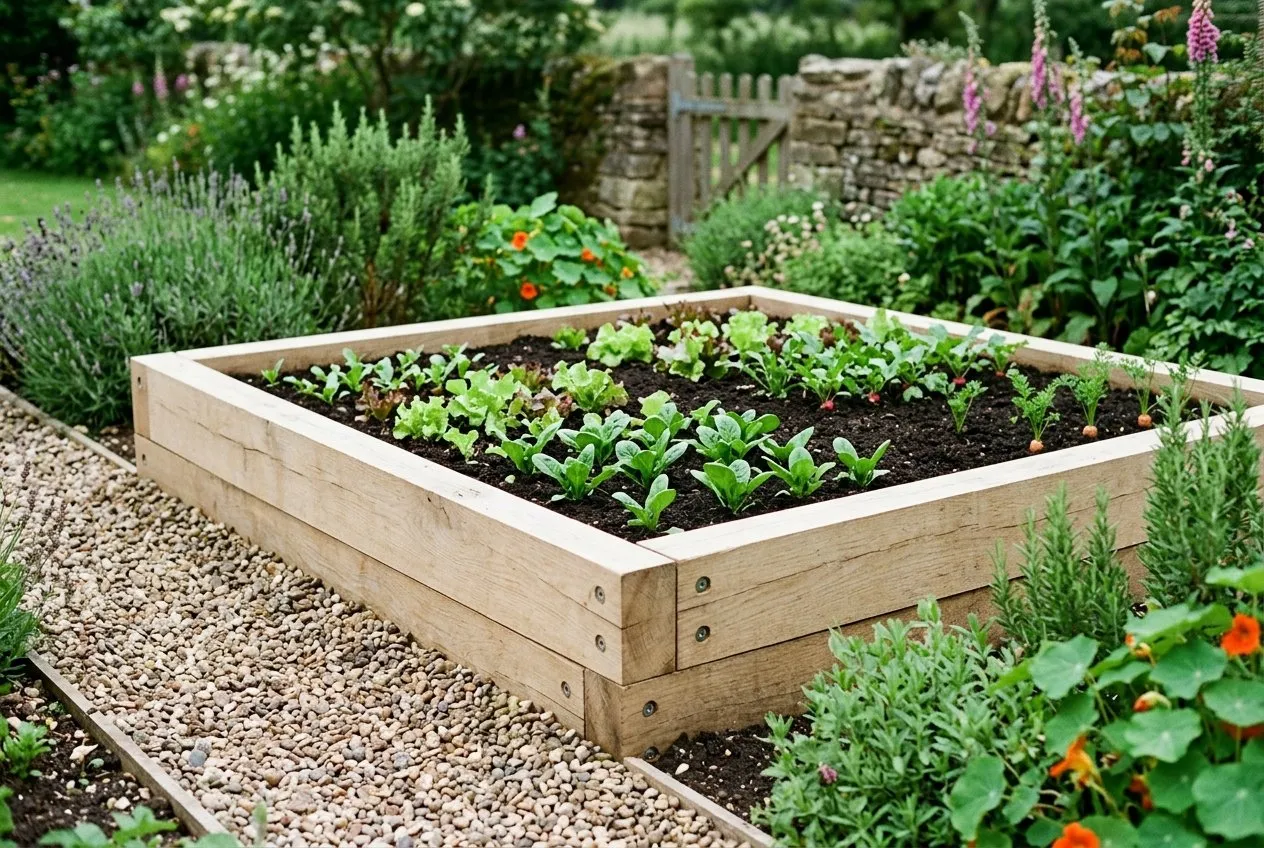 New oak sleepers laid on edge make a bold raised bed. Choose new timber over creosoted reclaimed sleepers near food crops.
Rock and stone edging
Natural stone gives the softest, most informal edge, and it lasts a lifetime. It suits cottage gardens, gravel gardens and anywhere a relaxed look fits.
- Pick stones of similar size for a settled, rhythmic line, or mix sizes for a more natural tumble.
- Bury at least a third of each stone. This is the rule that keeps a rock edge from being kicked out of place. Stones perched on the surface always wander.
- Dry-lay for informality, or bed larger stones on mortar where they must hold a level or a path edge.
- Leave planting pockets between stones for alpines, thyme or aubretia to soften the line.
Local stone always looks right, because it matches the geology around you. The same stone works beautifully in a rockery or a gravel garden, tying the whole garden together.
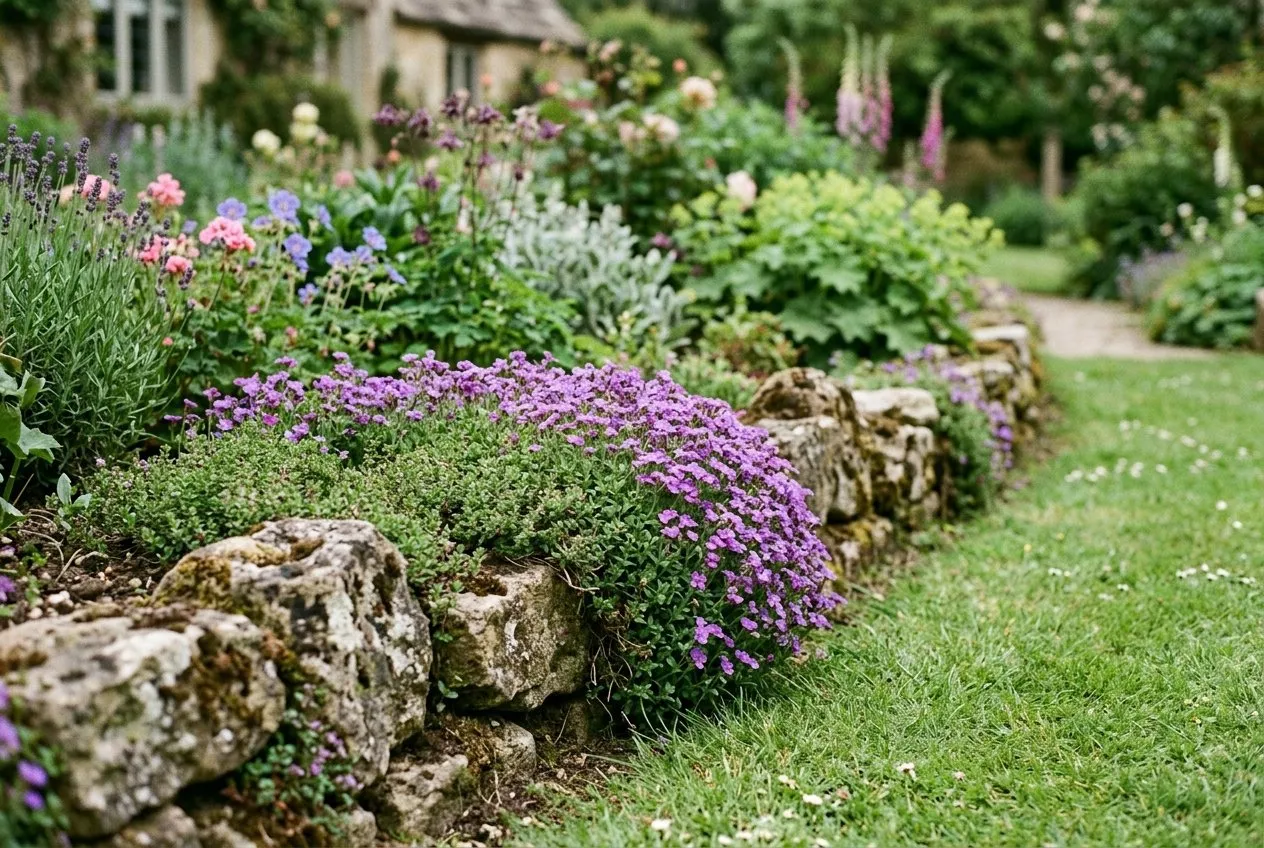 Natural stone gives a soft, informal edge. Bury at least a third of each stone and leave gaps for low plants to soften the line.
Concrete edging
Concrete is the cheapest durable edging, and the most versatile, because it can be cast to any shape. It has shaken off its dull reputation thanks to board-formed and exposed-aggregate finishes.
- Cast in place by pouring concrete into simple curved timber formwork. This follows any curve and costs only a few pounds per metre in materials.
- Board-formed concrete picks up the grain of the timber shuttering for a textured, architectural finish.
- Pre-cast kerb units lay quickly on a mortar bed for a fast, neat edge.
- Exposed aggregate washes the surface to reveal the stone for a softer look.
Concrete suits modern gardens and high-traffic edges. Leave occasional gaps or use a flexible jointing compound on long runs so it can move without cracking.
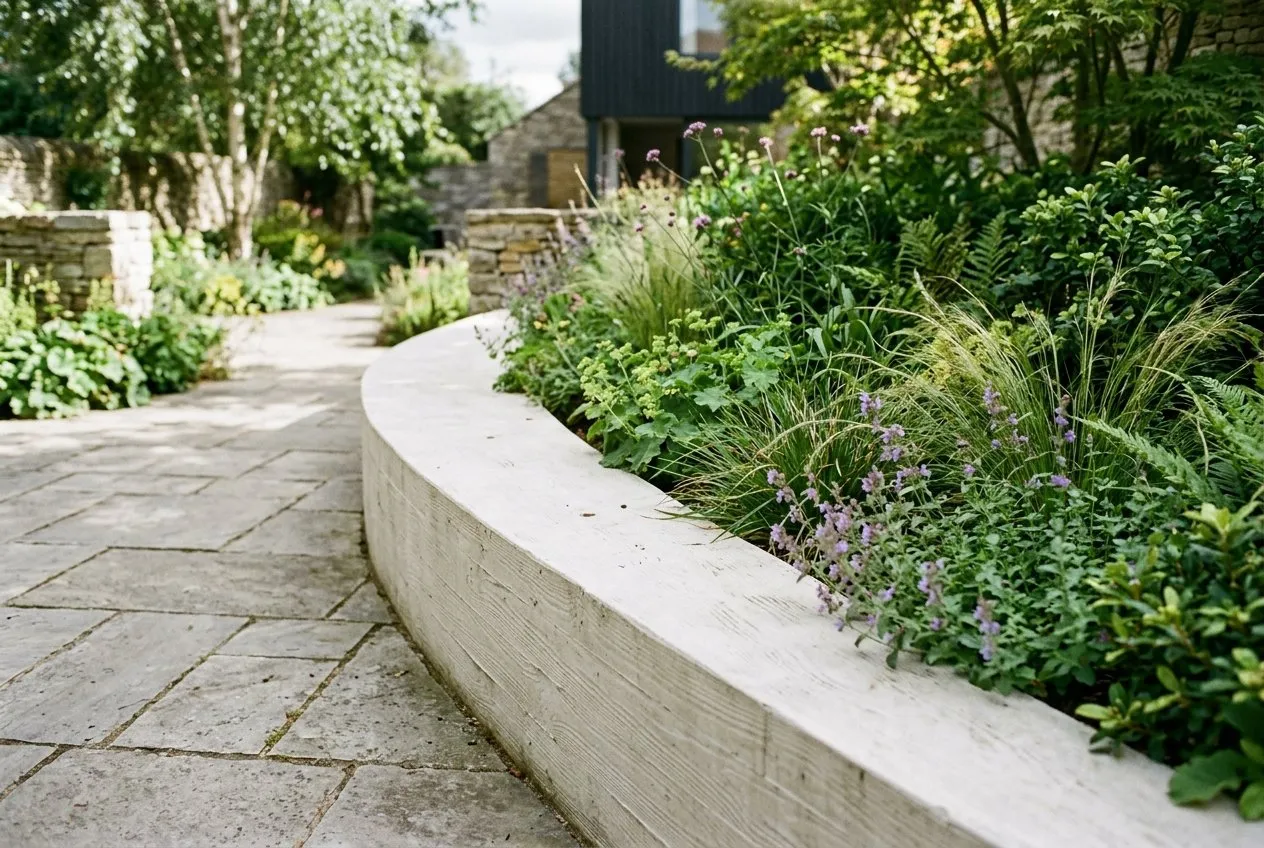 Cast concrete is cheap, tough and bends to any curve. A board-formed finish gives it a textured, modern look that suits contemporary gardens.
Brick and steel: the crispest edges
For a clean, low-maintenance line, brick and steel are hard to beat, especially as a mowing strip.
Brick on edge set flush with the lawn makes a traditional mowing strip. Lay the bricks on a mortar bed with a haunching of mortar behind to hold them, and the mower wheel runs straight along the top. A soldier course or bullnose brick gives a more formal look for a path edge.
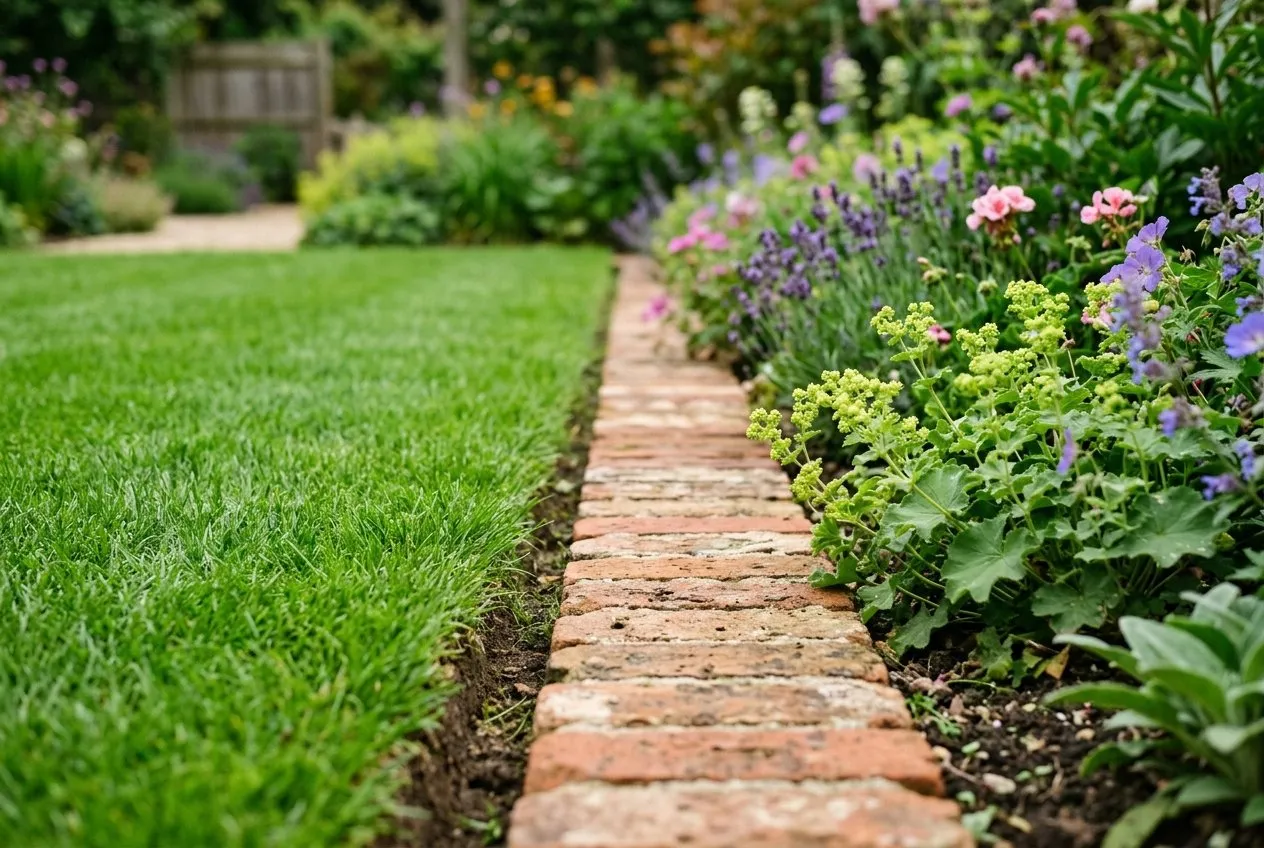 A flush brick mowing strip is the lowest-maintenance edge of all. The mower wheel runs along the brick, so the line never needs trimming.
Fitting edging so it lasts
Whatever the material, a few rules decide whether an edge lasts decades or fails in a season.
- Mark the line first. Use a string line for straight runs and a hose for curves, then dig to it.
- Dig a firm trench. Edging needs a solid bed, not loose soil. Compact the base.
- Bury enough depth. At least a third of any sleeper or stone goes below ground. Mowing strips sit flush.
- Haunch where needed. Brick and kerb edging needs a wedge of mortar behind it to hold the line.
- Allow drainage. Leave gaps or a gravel backfill so water does not pond against timber and rot it.
Take the time at the base and the edge holds. Rush it and the prettiest material tips over within the year.
A rough cost guide
| Project | Budget approach | Higher spend |
|---|---|---|
| Small bed edge | Log roll or cast concrete, £30-60 | Steel or Corten, £150 plus |
| Raised vegetable bed | Softwood sleepers, £80-150 | New oak sleepers, £250 plus |
| Mowing strip to a lawn | Reclaimed brick, £40-90 | New brick on mortar, £200 plus |
| Informal border | Local stone, free to £80 | Imported stone, £200 plus |
Common garden edging mistakes
- Not burying it deep enough. Surface-perched stone and sleepers tip and wander. Bury a third.
- Using creosoted sleepers near food. They leach tar and are restricted. Use new timber around edibles.
- No haunching behind brick. Unsupported brick edging falls into the border. Mortar behind it.
- Edging proud of a mowing line. A raised lip you cannot mow over means hand-trimming forever. Set strips flush.
- Mixing too many materials. Three edging materials in one garden looks busy. Pick one or two and repeat them.
Choose the material for the style, fit it deep and firm, and a garden edge will hold its line for decades with almost no upkeep.
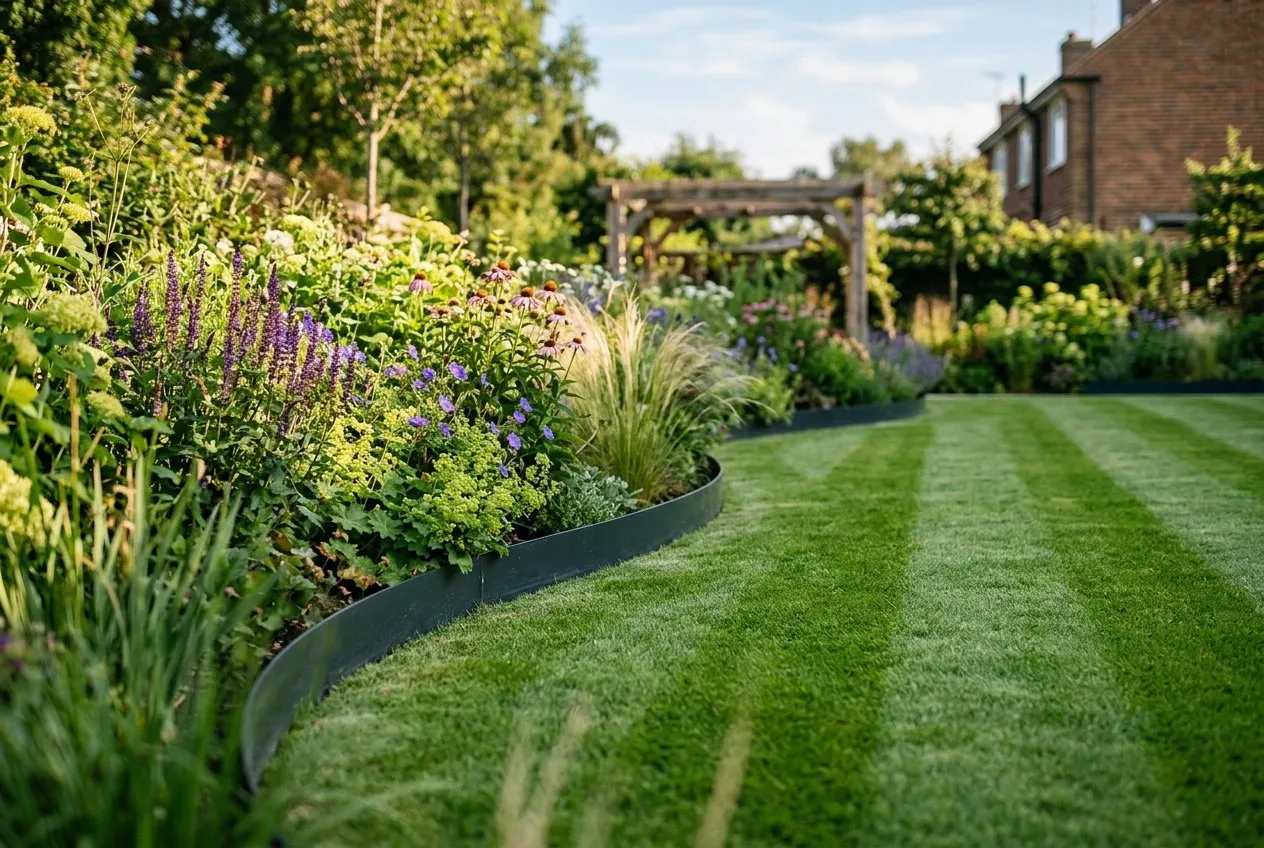 The payoff: a crisp, well-fitted edge that holds its line for years, keeps grass out of the border and makes the whole garden look finished.
Our team produces practical UK gardening guidance from source research, contributor records and established horticultural practice. Editorial standards are overseen by Matt W.