Key takeaways
- Grafting joins a vigorous rootstock to a chosen scion variety, giving strong roots plus good fruit on one plant
- Suppliers claim up to 75% more fruit and 6 to 8 trusses per grafted tomato plant
- UK grafted crops include tomatoes, aubergines, sweet peppers, chillies and cucumbers
- Common rootstocks are 'Aegis' F1 and 'Estamino' F1 for the tomato family, 'Triumph' for cucumbers
- Grafted plants cost about £7 to £9 each against £3 to £4 for a seed packet of 20-plus plants
- Keep the graft union above the soil or the top variety roots itself and the vigour is lost
- Rootstocks resist soil-borne problems like fusarium and verticillium wilt and root-knot nematodes
Grafted vegetable plants join the roots of a tough, vigorous variety to the top of a variety chosen for its fruit, giving you one plant with the best of both. It is the old apples-and-roses trick, now applied to the summer greenhouse. The result is a plant that crops harder, starts earlier, and shrugs off the soil problems that build up in a border you cannot rotate.
The claims on the label are bold. Up to 75% more fruit. Cropping weeks ahead. Resistance to the wilts that flatten ordinary plants. This guide sorts the real numbers from the marketing, shows which crops are worth buying grafted, and covers the one planting rule that decides whether you get any benefit at all.
What are grafted vegetable plants and how do they work?
A grafted vegetable plant is two plants fused into one: a rootstock chosen for strong roots and disease resistance, and a scion, the top variety chosen for its fruit. The grower joins them as young seedlings so the cut surfaces knit together and share one sap system.
The RHS explains grafting as joining the roots of one plant to the stem of a related one so they fuse and grow as a single plant. The join heals in a warm, humid chamber over several days.
The point is division of labour. The rootstock does not fruit, it just powers the plant with a bigger, more disease-resistant root system. The scion above the join carries the tomatoes, aubergines or peppers you actually want. You get vigour and fruit quality in one plant, rather than choosing between them.
Common rootstocks tell the story. For the tomato family, growers use ‘Aegis’ F1 and ‘Estamino’ F1, both bred for resistance to soil-borne disease. For cucumbers and melons, the rootstock is often the squash-based ‘Triumph’. These names rarely reach the buyer, because the plant is sold under the scion variety’s name.
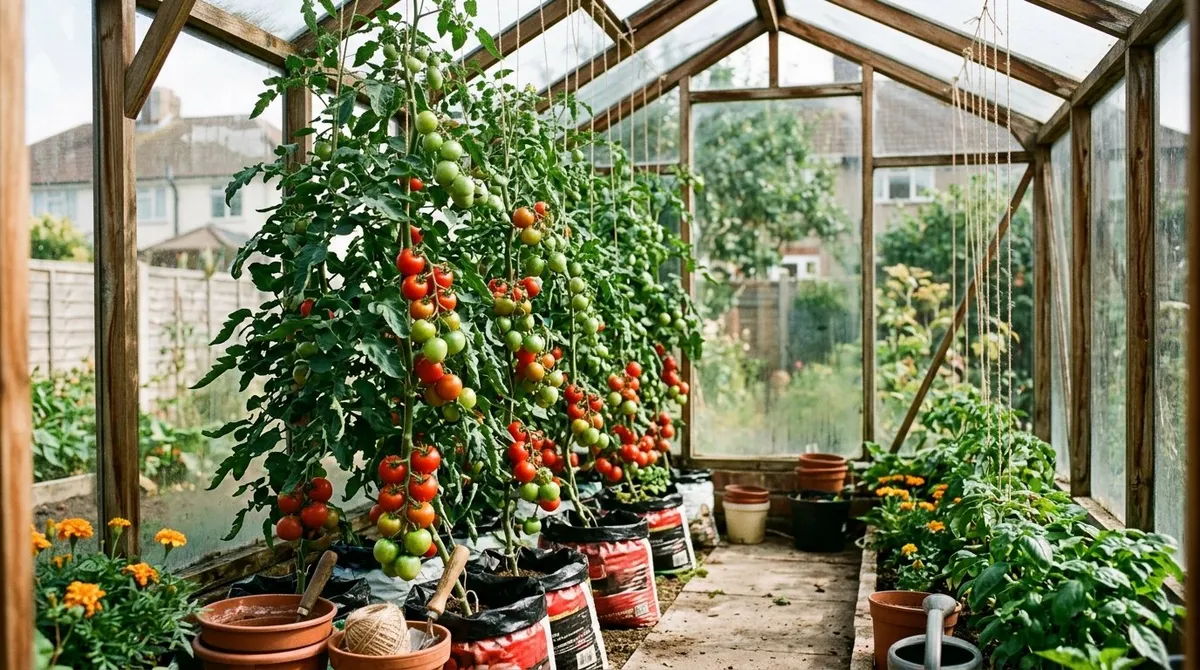
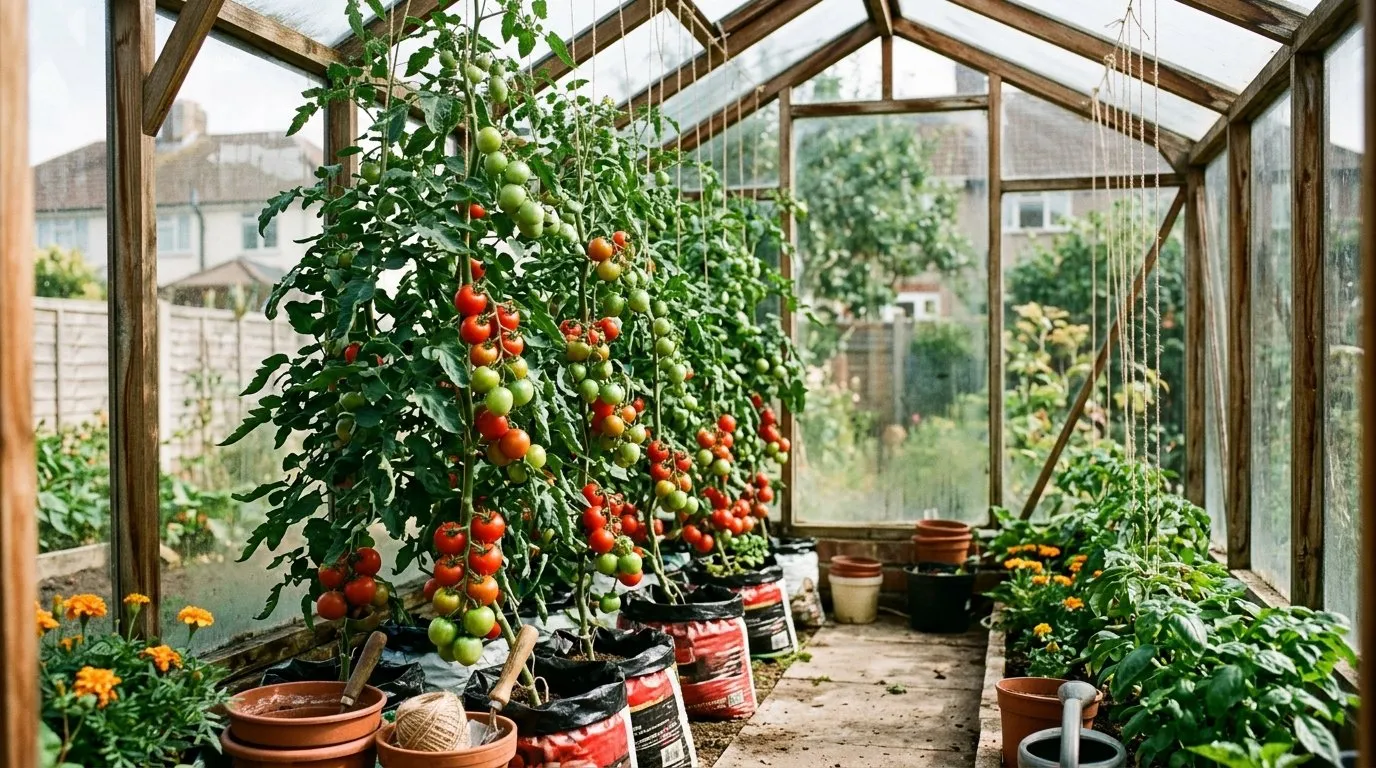 Grafted vegetable plants in a suburban greenhouse border. The vigorous rootstock drives heavier trusses than seed-raised plants on the same tired soil.
Why do grafted vegetables crop more?
Grafted vegetables crop more because the rootstock builds a larger, tougher root system that feeds the plant harder all season. More roots mean more water and nutrients reaching the fruit, so trusses set faster and swell bigger.
Suppliers put a figure on it. Suttons and Thompson & Morgan both claim grafted plants give up to 75% more fruit than an ordinary plant of the same variety, and 6 to 8 trusses per tomato plant. Commercial glasshouse trials are more modest, often reporting yield gains around 20%, but even that pays for the plant several times over.
The second benefit is disease resistance. A vigorous rootstock resists the soil-borne problems that punish repeat planting: fusarium wilt, verticillium wilt, corky root rot, and root-knot nematodes. This matters most in a greenhouse border, where the same soil grows tomatoes year after year and pathogens build up. Our guide to tomato fusarium wilt shows exactly the disease a grafted rootstock is bred to beat.
The third gain is earliness. The stronger roots drive faster early growth, so grafted plants often crop two to three weeks sooner. Aubergine is the standout, with grafted ‘Scorpio’ sold as fruiting up to two months ahead of a standard plant. In a short British summer, earlier fruit is real fruit, not green trusses caught by autumn.
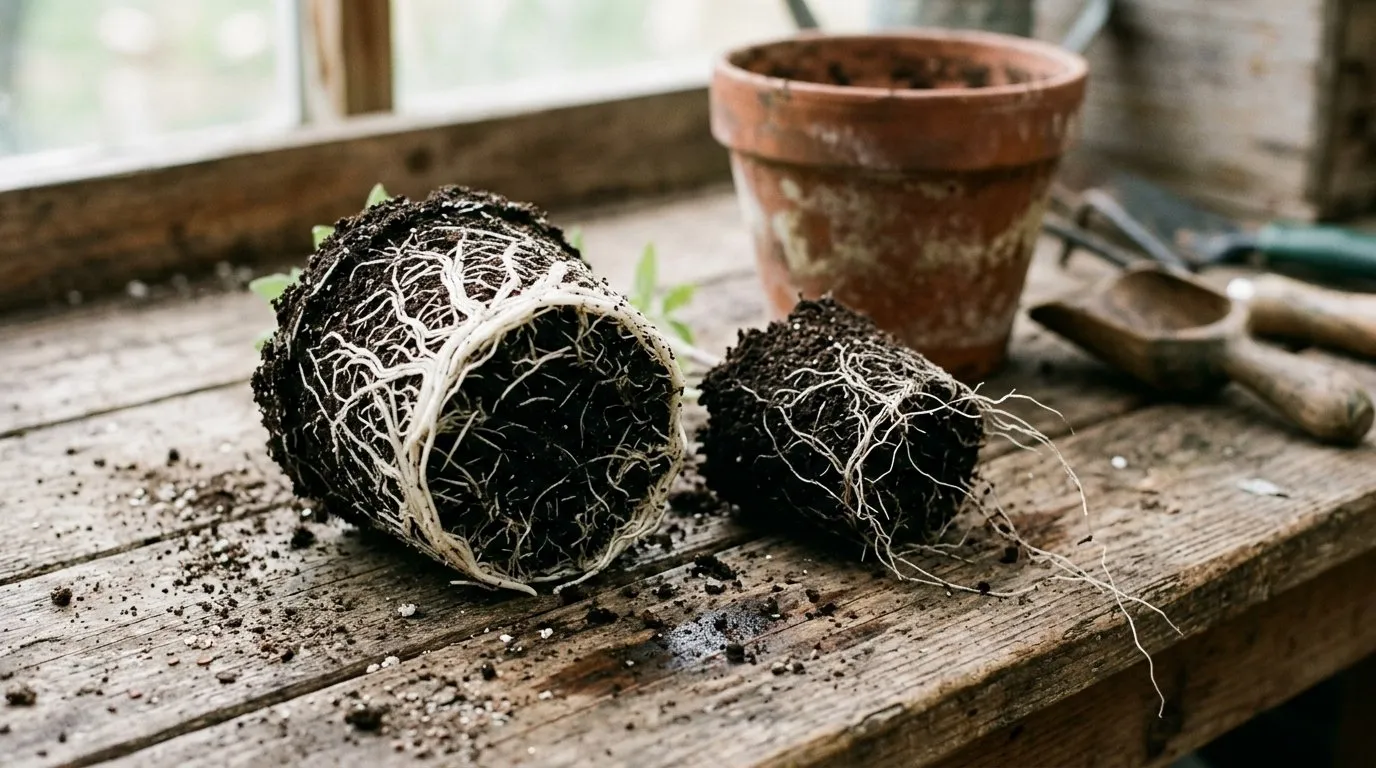 The dense rootstock of grafted vegetable plants dwarfs a seed-raised root ball. More roots mean more water and feed reaching the fruit.
Gardener’s tip: Grafting earns its keep on old ground, not fresh compost. If you plant into new growing bags every year, an ordinary plant already has clean roots and the yield gap narrows sharply. Save the grafted plants for the greenhouse border you never dig out.
Which vegetables are sold grafted in the UK?
Five crops make up almost all the grafted vegetable plants sold in the UK: tomatoes, aubergines, sweet peppers, chillies and cucumbers. All except cucumbers belong to the same family, so they share the vigorous Solanaceae rootstocks.
Tomatoes are the biggest seller by far. Cordon and bush varieties both come grafted, from mini-plums like Suttons’ ‘Aviditas’ to beefsteaks. This is where the 75% and 6-to-8-truss claims are aimed. If you grow tomatoes in a border, this is the crop to try grafted first. Beginners should still start with our tomato growing guide for the basics of feeding and support.
Aubergines benefit hugely from grafting in the UK, where our cool summers usually leave them sulking. A grafted plant like ‘Scorpio’ can carry over fifteen fruits and start two months early. Pair the extra vigour with the warmth advice in our aubergine growing guide.
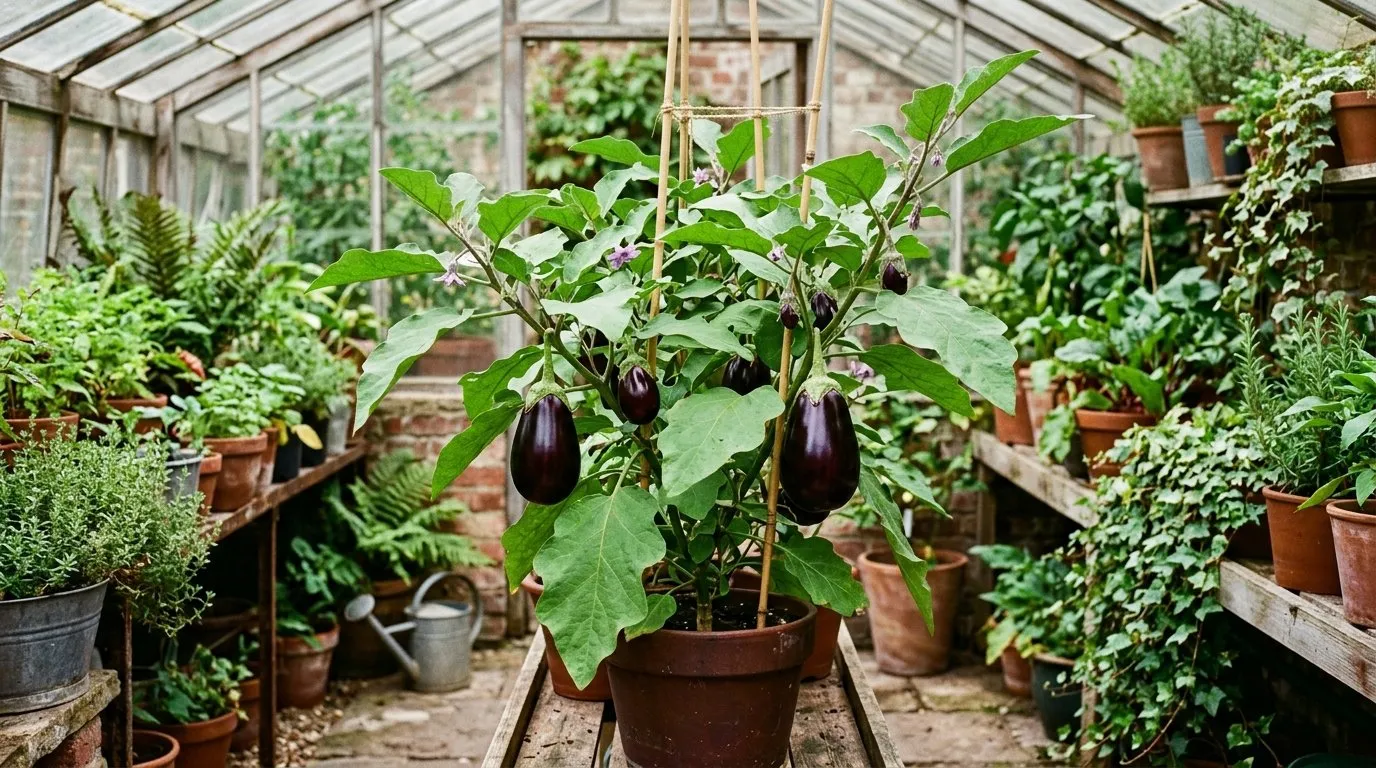 Grafted vegetable plants let aubergines crop in cool UK summers. A grafted ‘Scorpio’ can carry over fifteen fruits and start two months early.
Sweet peppers come grafted too, such as ‘Thor’ F1 with fruits up to 25cm long, and they resist late blight and soil-borne disease better than seed-raised plants. Our sweet pepper guide covers ripening them to full colour.
Chillies appear grafted less often, but plants like ‘Medina’ F1 at 30,000 Scoville show up each spring. The vigour helps in a cool greenhouse. See our chilli growing guide for heat and ripening.
Cucumbers use a squash rootstock for cold tolerance and mildew resistance, giving a long crop from July to October. Our cucumber guide explains training and watering. Grafted melons exist too, and pair well with the advice in our greenhouse melon guide.
Grafted crops compared
| Crop | Typical rootstock benefit | What to expect grafted | Best for |
|---|---|---|---|
| Tomato | Wilt resistance, vigour | Up to 75% more fruit, 6-8 trusses | Greenhouse borders |
| Aubergine | Cold tolerance, vigour | 15-plus fruits, cropping 2 months early | Cool UK summers |
| Sweet pepper | Disease resistance | Larger fruit, fewer soil problems | Outdoor and glasshouse |
| Chilli | Vigour in cool sites | Heavier crop in a cold greenhouse | Unheated glass |
| Cucumber | Mildew and cold resistance | Long crop July to October | Border and grow bag |
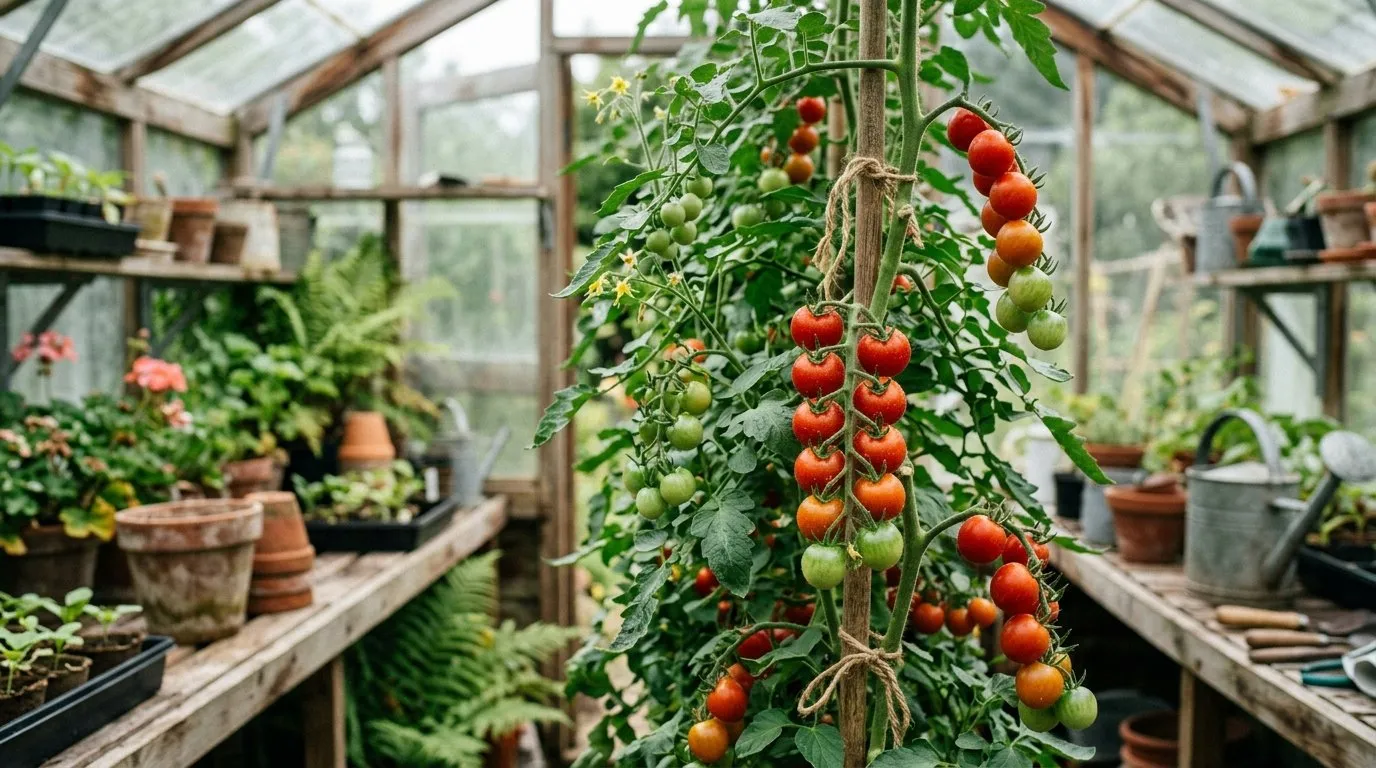 Grafted vegetable plants set six to eight trusses under glass. The rootstock keeps sap flowing to the top of the plant late into the season.
How much do grafted vegetable plants cost?
Grafted vegetable plants cost around £7 to £9 each, several times the price of a seed-raised plant. Suttons runs a pick-and-mix offer at three plants for £21, which works out at £7 apiece, and lists individual plants from about £8.99.
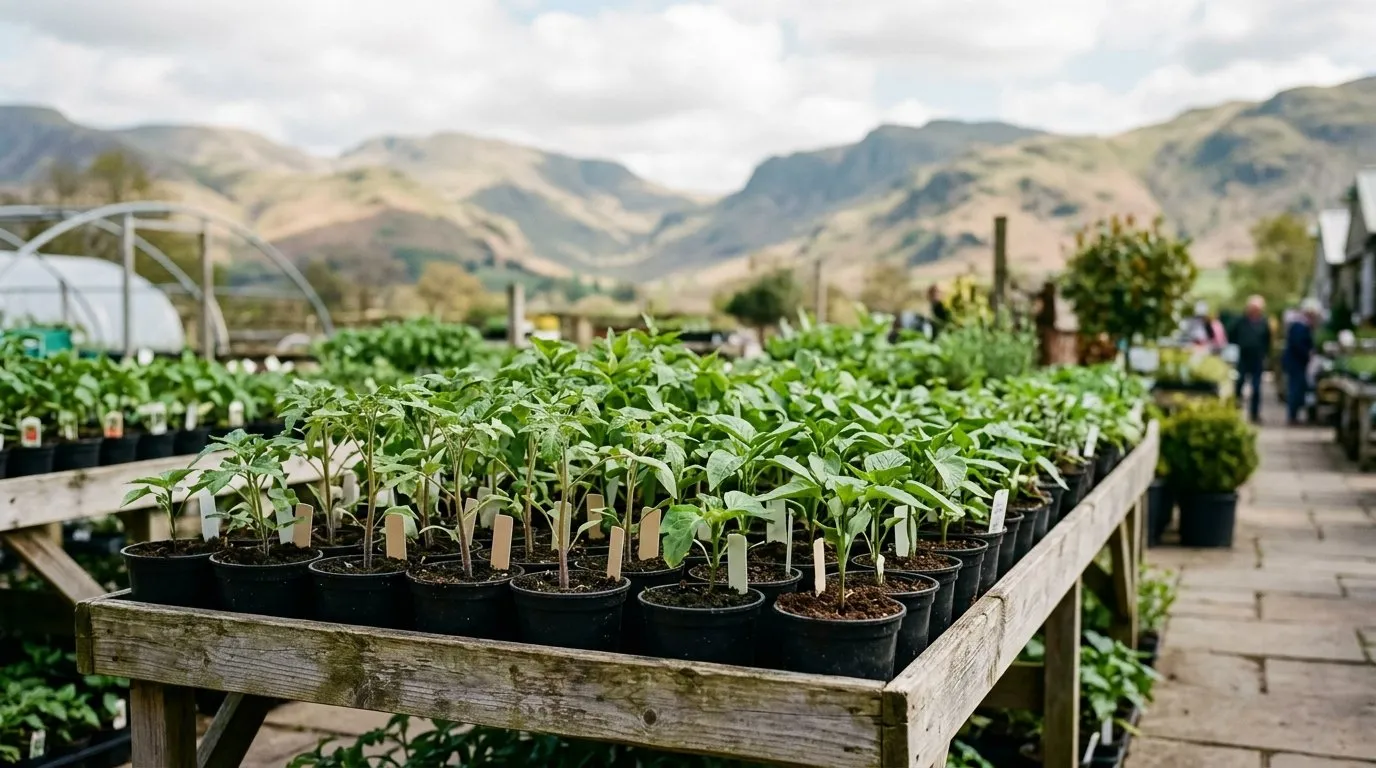 Grafted vegetable plants cost about £7 to £9 each. On tired border soil the heavier crop pays that back several times over.
Set that against seed. A packet of good tomato seed costs £3 to £4 and holds 20 or more seeds, so a home-raised plant costs pennies. A tray of six ordinary plug plants runs to about £6 to £10. On paper the grafted plant looks dear.
The value depends entirely on where you grow. In a fresh growing bag or clean compost, an ordinary plant already has healthy roots, so the yield gap is small and cheap seed wins. Our grow bag guide is the low-cost route for most people.
In a greenhouse border on soil that has grown tomatoes for years, the picture flips. That soil carries wilt and nematodes, and an ordinary plant may crop poorly or die. A grafted plant resists all of it and can double your harvest, so £8 buys a crop the cheap plant cannot deliver. Buy one or two grafted plants for the worst ground and raise the rest from seed.
Where should the graft union sit when planting?
The graft union must sit at least 2cm above the soil, never buried. This is the single rule that decides whether grafting works, and it catches out most first-timers.
The graft union is the visible bump low on the stem where the two plants were joined. Look for a slight kink and a change in stem colour or thickness. If you plant so that bump is under the compost, the top variety puts out its own roots into the soil. Once it does, it no longer relies on the rootstock, and you lose every scrap of the vigour and disease resistance you paid for.
This is the exact opposite of ordinary tomato advice. Standard tomatoes are planted deep, right up to the lower leaves, because they root along the buried stem and grow stronger for it. With a grafted plant that same deep planting is a mistake. Keep the union proud of the surface.
The rule holds in pots and bags as well as borders. When you pot on or plant out, set the rootball so the graft stays a couple of centimetres clear, and top-dress carefully so you never bury it later. When you plant out into the greenhouse, harden the plants off first, because a cold check stalls even a grafted plant.
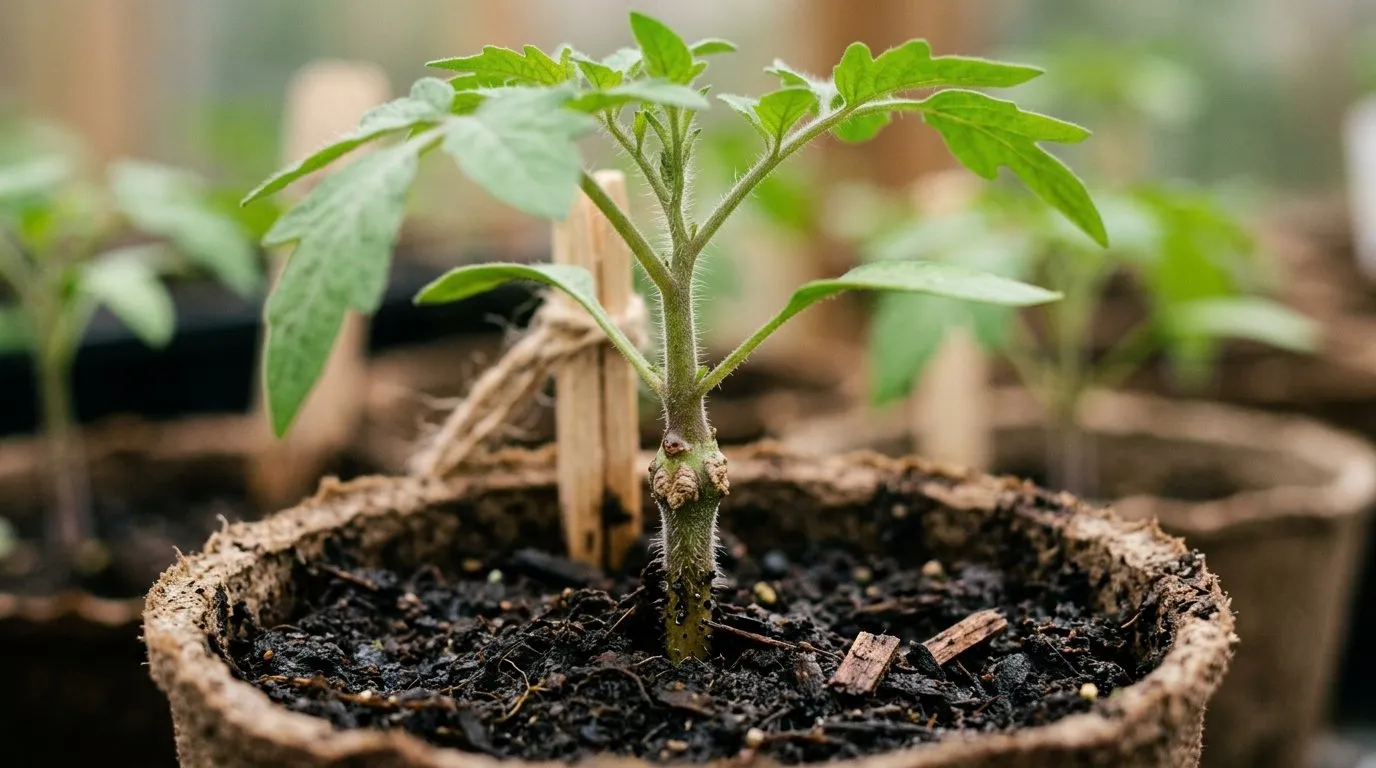 The graft union on grafted vegetable plants must stay above the soil. Bury this bump and the scion roots itself, cancelling the rootstock advantage.
Can you graft your own vegetable plants at home?
Yes, you can graft your own vegetable plants, and the saving is large, but it needs warmth, humidity and patience. Rootstock seed costs more than ordinary seed, yet still works out far cheaper than buying finished grafted plants if you want a dozen or more.
The method is splice grafting. Sow the rootstock and scion at the same time so their stems match in thickness, usually when plants reach about 10cm tall. Cut both stems at a matching 45-degree angle, press the cut faces together with no gap, and hold them with a silicone grafting clip sized to the stem.
Then comes the hard part, the healing chamber. Keep the joined plants in the dark or deep shade at 22 to 24C and 85 to 95% humidity for two days, with no direct light to stress the wilting scion. Open the cover a little on days three and four to harden them back to normal air. Mist if they flag.
Expect losses. Even skilled growers reckon on losing about two grafts in every twenty, so sow spares. The first 24 hours decide it: if the scion is still wilted and limp the next morning, the join failed and that plant is lost. Get the technique right and you graft a whole greenhouse for the price of two shop-bought plants.
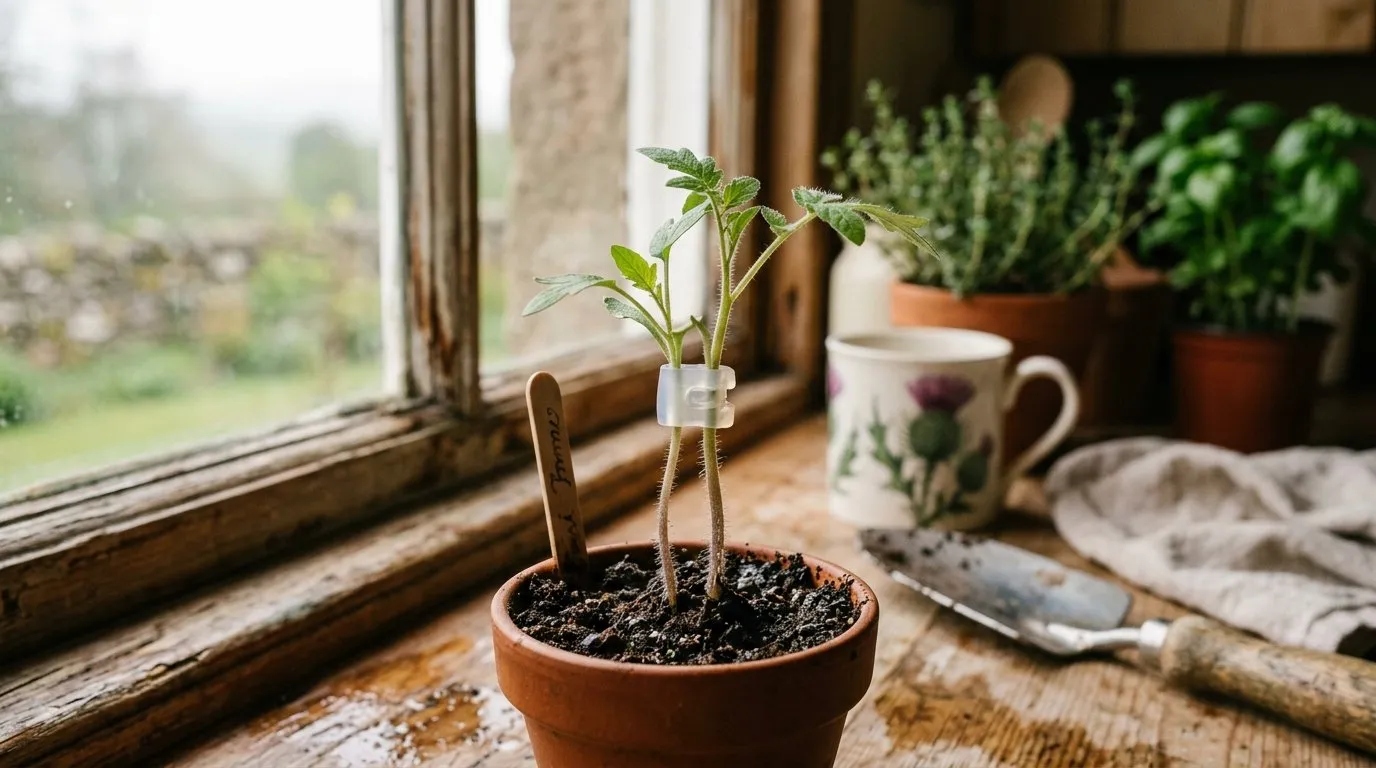 Splice-grafting grafted vegetable plants at home with a silicone clip. The join heals in a humid chamber at 22 to 24C over several days.
How do you grow grafted plants for the best yield?
Grow grafted plants like any strong plant of the same crop, but feed them harder because the vigorous roots demand more. The extra root power is wasted if the plant runs short of water or potash while carrying a heavy crop.
Move plants on before they check. Pot up or plant out once a tomato reaches about 40cm tall or shows its first flowers, keeping that graft union clear each time. A grafted plant still needs the wider RHS tomato routine. Space cordon tomatoes 45 to 60cm apart in a border to let light into the extra foliage.
Feed for fruit, not leaf. Start a high-potash tomato feed as soon as the first flower buds open, and by high summer a well-cropping grafted plant may want feeding twice a week. Getting the potash-versus-nitrogen balance right keeps the crop coming.
Water deeply and steadily. Grafted plants pull water fast, so a border dries quicker than you expect and erratic watering splits fruit. Water thoroughly, ideally in the evening, and mulch the surface to hold moisture. Keep sideshoots pinched out on cordon types, and stop the plant at six or seven trusses under glass so it ripens what it has set. Watch the base and rub off any shoot rising from below the graft union, because that growth comes from the rootstock and bears nothing you want.
Are grafted vegetable plants worth it?
Grafted vegetable plants are worth it on difficult ground and a waste of money on easy ground.
Buy grafted if you grow in a greenhouse border you cannot rotate, if past crops have wilted or died from soil disease, or if your summers are too cool to ripen aubergines and peppers well. In those cases the rootstock earns its £8 several times over, and the earlier, heavier crop is real.
Skip grafted if you grow in fresh growing bags or clean compost every year, or if you raise plenty of plants and enjoy sowing from seed. Here an ordinary plant crops nearly as well for a fraction of the cost, and the grafted premium buys little.
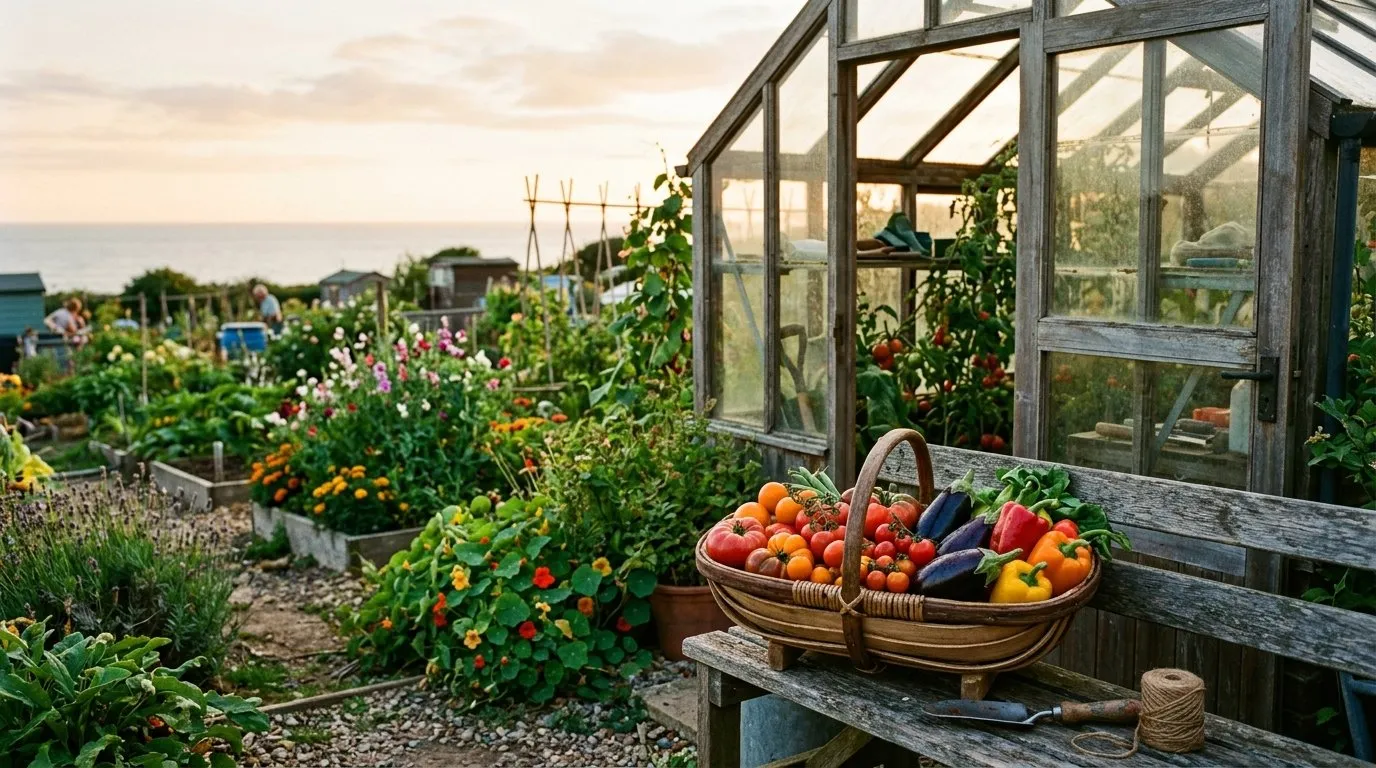 A season’s crop from grafted vegetable plants on a coastal allotment. On tired border soil the rootstock turns a poor harvest into a heavy one.
Frequently asked questions
Are grafted vegetable plants worth the money?
Yes, on tired soil or in a greenhouse border you cannot rotate. Grafted plants cost about £7 to £9 each against £3 for a seed packet, but the vigorous rootstock resists soil-borne wilts and lifts yields by roughly half to three-quarters. On fresh compost in bags the gain is smaller, so the maths tips back towards cheap seed-raised plants.
How deep do you plant grafted tomatoes?
Plant so the graft union sits at least 2cm above the soil. The graft is the visible bump low on the stem where the two plants were joined. Bury it and the top variety grows its own roots, which cancels the rootstock’s vigour and disease resistance. This is the opposite of the deep planting advice for ordinary tomatoes.
Which vegetables can you buy grafted in the UK?
Tomatoes, aubergines, sweet peppers, chillies and cucumbers are the main grafted crops sold. Melons and squashes are grafted too but harder to find. Suttons and Thompson & Morgan list named grafted varieties each spring, usually dispatched as young plants in April and May once the risk of a cold shock has passed.
Can you graft your own vegetable plants at home?
Yes, but it needs a warm, humid healing chamber and a steady hand. Sow rootstock and scion together, cut both stems at a matching angle, join them with a silicone clip, then keep them at 22 to 24C and 85 to 95% humidity for several days. Losing two grafts in twenty is normal, so sow spares.
Do grafted plants crop earlier?
Yes, usually two to three weeks earlier than seed-raised plants. The stronger root system drives faster early growth, so the first trusses set and swell sooner. Aubergine ‘Scorpio’ is sold as cropping up to two months ahead of a standard plant. Earlier fruit matters most in a short northern summer.
Do you still remove sideshoots on grafted tomatoes?
Yes, treat the top of a grafted cordon tomato exactly like any other. Pinch out sideshoots weekly and stop the plant at six or seven trusses under glass. The only difference is at the base: never let shoots grow from below the graft union, because those come from the rootstock and carry no fruit worth having.
Can you save seed from grafted plants?
You can save seed from the fruit, but it will not grow true to a grafted plant. The seed carries only the top variety’s genes, not the rootstock, so seedlings grow as ordinary plants. Most grafted varieties are F1 hybrids anyway, so saved seed gives mixed, unpredictable results. Buy fresh grafted plants each spring instead.
Our team produces practical UK gardening guidance from source research, contributor records and established horticultural practice. Editorial standards are overseen by Matt W.